• KGS/USD = 0.01143 0%
  • KZT/USD = 0.00216 0%
  • TJS/USD = 0.10684 -0.28%
  • UZS/USD = 0.00008 0%
  • TMT/USD = 0.28571 0%
  • KGS/USD = 0.01143 0%
  • KZT/USD = 0.00216 0%
  • TJS/USD = 0.10684 -0.28%
  • UZS/USD = 0.00008 0%
  • TMT/USD = 0.28571 0%
  • KGS/USD = 0.01143 0%
  • KZT/USD = 0.00216 0%
  • TJS/USD = 0.10684 -0.28%
  • UZS/USD = 0.00008 0%
  • TMT/USD = 0.28571 0%
  • KGS/USD = 0.01143 0%
  • KZT/USD = 0.00216 0%
  • TJS/USD = 0.10684 -0.28%
  • UZS/USD = 0.00008 0%
  • TMT/USD = 0.28571 0%
  • KGS/USD = 0.01143 0%
  • KZT/USD = 0.00216 0%
  • TJS/USD = 0.10684 -0.28%
  • UZS/USD = 0.00008 0%
  • TMT/USD = 0.28571 0%
  • KGS/USD = 0.01143 0%
  • KZT/USD = 0.00216 0%
  • TJS/USD = 0.10684 -0.28%
  • UZS/USD = 0.00008 0%
  • TMT/USD = 0.28571 0%
  • KGS/USD = 0.01143 0%
  • KZT/USD = 0.00216 0%
  • TJS/USD = 0.10684 -0.28%
  • UZS/USD = 0.00008 0%
  • TMT/USD = 0.28571 0%
  • KGS/USD = 0.01143 0%
  • KZT/USD = 0.00216 0%
  • TJS/USD = 0.10684 -0.28%
  • UZS/USD = 0.00008 0%
  • TMT/USD = 0.28571 0%

Viewing results 2101 - 2106 of 3651

Bridging East and West: Kazakhstan’s Changing Foreign Policy in the 2020s

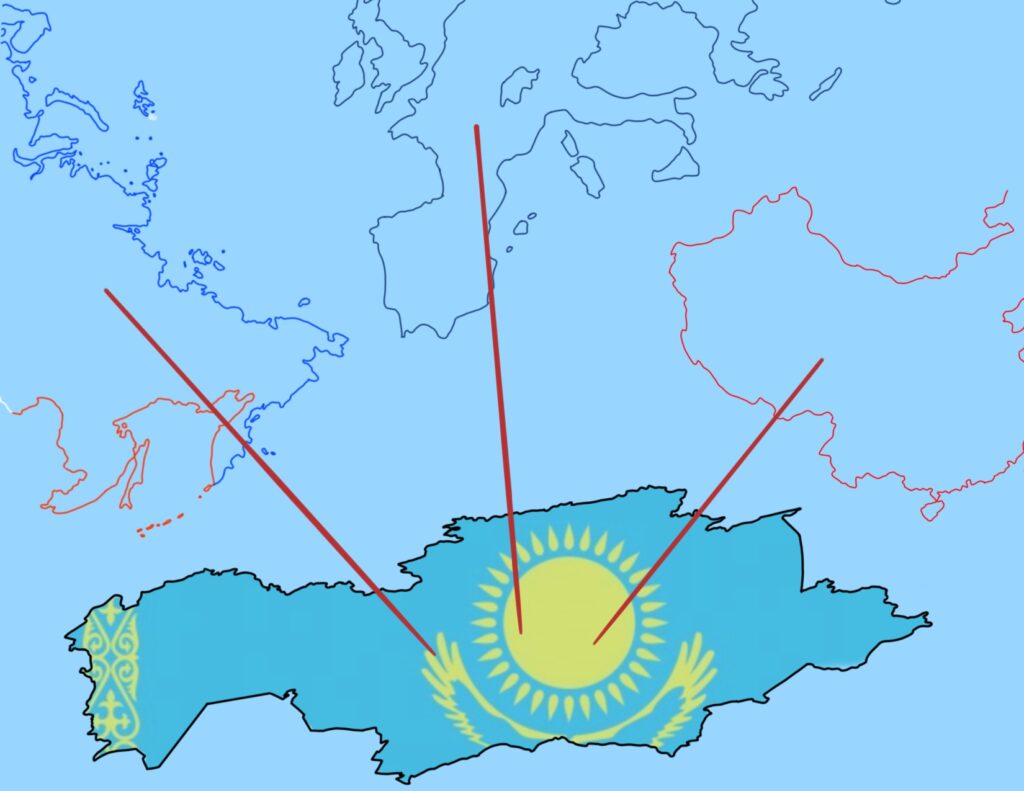
In the wake of significant geopolitical and social change, Kazakhstan has been noticeably reassessing its official and economic relations with foreign powers. Formerly a part of the USSR, Kazakhstan has positioned itself since the collapse of the bloc in 1991 as a country with a triangulated approach to foreign relations. This means that it attempts to maintain cordial relationships with both of its powerful neighbors, Russia and China, whilst also improving relations with countries in the West. Now, this multi-vector foreign policy appears to be shifting as Kazakhstan re-evaluates its priorities in a world that has seen both a global pandemic and Russia’s invasion of Ukraine.   Russia Kazakhstan is allied with Russia in the Collective Security Treaty Organisation (CSTO), but this relationship was put under strain even prior to Russia’s war in Ukraine. In a memorable speech from September 2014, Russian President Vladimir Putin expressed his view that “Kazakhs never had any statehood,” and that their desire to align themselves more closely with Russia was “profound.” These statements caused Nursultan Nazarbayev, then President of Kazakhstan, to threaten to remove his country from the Eurasian Economic Union (EAEU), a bloc largely dominated by Russia. This threat was not acted upon, however, and Kazakhstan remains a member to this day. Nonetheless, it was an indication of cooling relations long before the current global state of affairs, and a precursor to a shift in how Astana sees Kazakhstan being positioned on the world stage in future. Since Russia launched its full-scale invasion of Ukraine on 24th February 2022, Kazakhstan’s foreign relations have taken an ever more decisive turn. While Astana does not officially support international sanctions against Russia, citing the knock-on effects these sanctions create for Kazakhstani businesses - Russia remains a strong trade partner and a key part of Kazakhstan’s supply chain for land-based trade due to their long, shared border - it has nevertheless complied with them. This purely economic reasoning for not officially supporting international sanctions places Kazakhstan at odds with Belarus, which is an example of a former Soviet state that remains allied to Russia and whose leader, Aleksandr Lukashenko, derided by many as a dictator, has been vocal in his support of Russia’s political actions, allowing Belarusian territory to be used to further Russia’s strategic goals in the war against Ukraine. In sharp contrast, Astana has made it clear that it will not allow Russia to use Kazakh territory in an attempt to circumvent international sanctions. In an effort to avoid incurring secondary international sanctions due to its ties with Russia, Kazakhstan has invested in an electronic monitoring system, launched in spring 2023, for goods purchased from Western countries passing through its territory for re-export to the EAEU. This system tracks goods until they reach their final destination, thus aiming to prevent foreign players who wish to help Russia evade international sanctions through this method, known as “parallel imports”. In October 2023, Kazakhstan also halted the export of over 100 products to Russia (including drones, military equipment,...


Kazakhstan Continues Countdown Ahead of Move to Single Unified Time Zone

In less than two weeks, the stroke of midnight will unify all of Kazakhstan in a single timezone. On the night of February 29th-March 1st, residents of twelve regions - as well as the cities of Astana, Almaty and Shymkent - will have to move their clocks back an hour unifying the country in a single timezone (UTC+5). But not all citizens are happy about it, with some arguing it will impact their health. Residents of the East Kazakhstan region are especially fierce in defending their perceived rights. Earlier this year, a lawyer from Ust-Kamenogorsk filed a grievance against then-Prime Minister Alikhan Smailov demanding compensation for damages due to the time change. For that reason, scientists were dispatched to the region to explain the benefits of the timezone change to local residents. Among the advantages they noted were the elimination of time barriers between residents of different regions of Kazakhstan, more favorable conditions for doing business, streamlining the work of government agencies and emergency services, and improved coordination of transport and communication. Professor Sultan Tuleukhanov, head of the Department of Biophysics and Biomedicine of the Kazakh State University, agrees with the residents of East Kazakhstan. "There is such a concept as desynchronises, a type of inconsistency. In particular, it's a change to the chrono-structural parameters of biological rhythms of the human organism," he noted. Desynchronosis causes irritability and fatigue while also reducing the efficiency of the body. However, according to other specialists, residents of most regions will experience this only in the short term. There is one more concern, however. In some cities, it will get dark earlier after the time change, meaning people will have to work under artificial lights and turn on electricity earlier, meaning expenditure on electricity will increase. Yeraly Shinasilov, the director of the national dispatching center of the system operator, KEGOK (Kazakhstan Electricity Grid Operating Company), said that the change of time zones will only affect the finances of residents slightly. "Our consumption grows about 2% every year. Due to the fact that our peak demand will move to an hour earlier, it will all dissolve into the natural growth of consumption during the year," he stated. Only time will tell how effective the single time zone will be for Kazakhstan.

Cocaine Smuggled Into Kazakhstan From Italy and Poland Hidden in Coffee Capsules

One channel of illicit cocaine smuggling into Kazakhstan has been blocked, according to website polisia.kz. In Almaty, authorities found that a rented apartment was being used for the distribution of illegal drugs, which were imported into the country from Italy and Poland. Police seized plastic capsules disguised as coffee - inside of each was a unit of cocaine weighing 250 grams. Furthermore, Almaty police seized a parcel at a Kazpost office that belonged to the suspect. It held plastic jars that contained drugs, the total weight of which was about 0.5-1.0 kilogram (kg) of cocaine and more than 400 grams of ecstasy. In total, that's more than 3,000 single doses. It turned out that the detained foreigner had been acting as a courier for three months. "A pre-trial investigation is being conducted against the detainee for the illegal acquisition and possession of a particularly large amount of narcotic drugs for the purpose of their sale. Further measures are being carried out to establish the channels of cocaine supply in the country," said the deputy head of the department for combating drug crimes of the Ministry of Internal Affairs of the Republic of Kazakhstan, Bakhytzhan Amirkhanov. Possession and sale of drugs in Kazakhstan is punishable by harsh prison terms ranging between 10 to 15 years and the confiscation of property. According to the latest data, 47 anti-drug operations were carried out last year, including in cooperation with the corresponding authorities of Russia, Kyrgyzstan, and Australia. Eight international and 14 regional drug-trafficking operations were eliminated. According to the Ministry of Internal Affairs, the annual illicit trafficking of narcotic substances in Kazakhstan amounts to 20-25 tons, 95% of which are from cannabinoid group drugs. Most often they are smuggled into the country from Tajikistan, Kyrgyzstan, Uzbekistan, Afghanistan, and Iran via the Caspian Sea. Additionally, the transit of synthetic drugs from Europe is also an issue accounting for about 5% of the total, with less than 1% in the form of opium, heroin, and other types of hard drugs. Also, a number of drug laboratories have been discovered in Kazakhstan itself, with Astana, Almaty and Shymkent considered to be the leaders in terms of production sites and sales of new types of drugs. In total, 67 participants in criminal drug organizations were detained in 2023, and 483.2 kg of psychotropic substances, 11 kg of heroin, 32.8 kg of opium, 63.7 kg of hashish, 41.6 kg of marijuana, more than 17 tons of poppy raw materials and more than 22 tons of chemical reagents seized. At the same time, more than 3,000 people were convicted for crimes related to the trafficking of synthetic drugs. Statistics show that over the last 10 years, the number of drug addicts globally has increased by 23% and reached 296 million people. Currently in Kazakhstan, the illegal drug market has almost completely moved on to cyberspace, making it much more difficult to track down drug dealers.

Uzbekistan’s Lake Julturbas Added to List Of Vital Wetlands

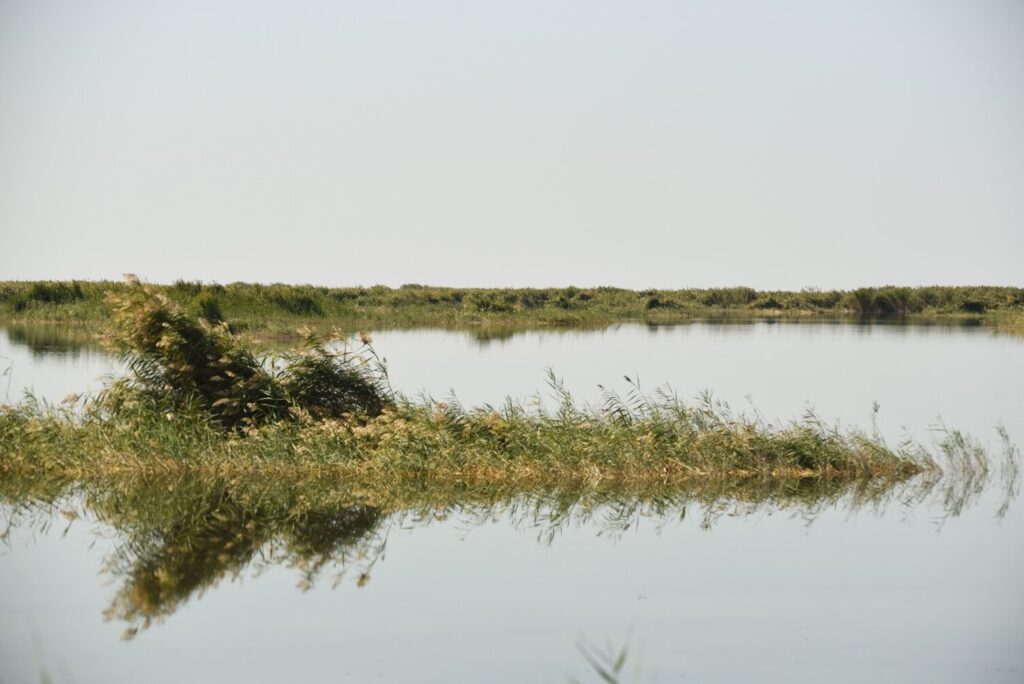
Lake Julturbas in Uzbekistan’s northwestern Karakalpakstan region has been added to the List of Wetlands of International Importance by the Ramsar Convention on Wetlands – the intergovernmental treaty that governs the conservation and wise use of wetlands and their resources. This was announced on February 12th during the 14th Conference of the Parties to the Convention on Migratory Species of Wild Animals (CMS COP14), which is taking place in Samarkand, Uzbekistan this week.  Lake Julturbas was once part of a bay of the Aral Sea, the fourth-largest lake in the world until around 1960, along with the nearby Sudochye Lake System, which is also a Wetland of International Importance.  Since the severe reduction in the Aral Sea area, Lake Julturbas has become an important stopover for many birds migrating along the Central Asian and African-Eurasian flyways. It supports about 25,000 waterbirds annually, and 1% of the regional populations of at least seven bird species, including ferruginous duck, red-crested pochard, and white-headed duck.  There are 15 species of fish, and five of them are endemic to the Aral Sea region, including two critically endangered species – the dwarf sturgeon and the Amu Darya sturgeon. There are also some land animals living around the periphery of the lake, such as the vulnerable goitered gazelle.  Activities such as cattle grazing, reed harvesting, fishing and hunting are allowed for the local communities living around the lake. 

Why Are You Allowed and We Are Not? Japarov Responds to U.S. on Foreign Agents Law

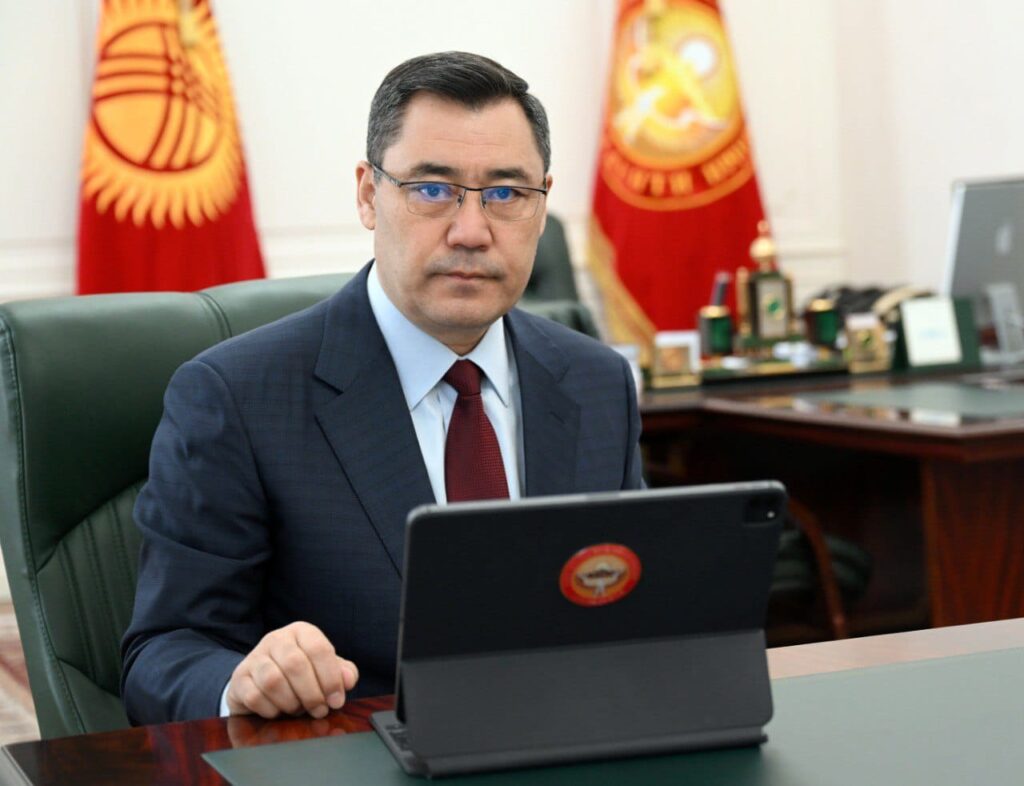
The Kyrgyz presidential administration published a letter of response from Sadyr Japarov to U.S. Secretary of State, Antony Blinken. It follows a letter to the Kyrgyz leader in which the top U.S. diplomat expressed concern about the draft law titled "On Non-Profit organizations," which tightens control over their activities in Kyrgyzstan. In his response letter to Blinken, Japarov thanked the American official for his appreciation of the work of the 78th UN General Assembly last September, where the Kyrgyz President urged the international community to support Kyrgyzstan's environmental and green projects. But, he also noted with regret that U.S. authorities are interfering in Kyrgyzstan's internal affairs, emphasizing that the desire for justice and freedom is a distinctive feature of his home nation. "Regarding your concerns about the draft law on foreign agents... there are tens of thousands of non-governmental (NGOs)/non-profit organizations (NPOs) that are successfully working throughout Kyrgyzstan, addressing many problems on which the state previously had neither the will nor the desire to do something. At the same time, it should be recognized that some NGOs/[NPOs] receive funding from abroad, and not only from the U.S. and EU countries," the president wrote. According to Japarov, the Kyrgyz state, by legal definition, intends to control such organizations - namely, where their money comes from and for what purposes it is used. The president emphasized that the draft law - which MPs initiated and adopted in its first reading - is very similar to the Foreign Agents Registration Act (FARA) adopted in 1938 in the United States. According to the president, the analogous American law assigns the status of a foreign agent and controls not only the mass media but also any individuals and legal entities financed from abroad. At the same time, violations of this law or delays in registering an organization in the United States are fraught with not only administrative but also criminal penalties. "In this connection, the question cannot [help] but arise: why are you allowed and we are not allowed?" the Kyrgyz President asked rhetorically. In his letter, Japarov said that in accordance with the Constitution of Kyrgyzstan, human and civil rights and freedoms - including the right to freedom of speech and the right to association - may be restricted by law to protect national security, public order, health and public morals, as well as to protect the rights and freedoms of others. In this right, Kyrgyzstan is no different from other countries. Japarov noted that it seems to him that when Blinken addressed him, he relied on unreliable information from NGOs who had earlier criticized the draft law. Japarov said that this information didn't allow the U.S. foreign policy chief to draw an objective picture of the situation with human rights and freedoms in Kyrgyzstan. "Only a small number, but a [quite] vociferous group, of these structures financed by foreign states... is a source of inaccurate information for their grantors. In addition, these nongovernmental structures often spread false, inaccurate information among the people, which...

Kyrgyz Court Rules in Favor of Shutting Down another Mass Media Outlet

Bishkek's Oktyabrsky District Court has ruled in favor of liquidating a public foundation named Kloop Media. The official reason, as stated in a social network post by Kloop Media, is discrediting state and municipal bodies. According to the publication's staff, Bishkek prosecutor Emilbek Abdymannapov filed a lawsuit in court last August seeking to liquidate Kloop Media. The prosecutor had argued that most of the publication's stories were negative and aimed at discrediting certain representatives of state and municipal bodies. On August 22nd 2023, Kloop Media published a journalistic investigation focusing on corruption schemes undertaken by top officials in Kyrgyzstan - and later published more material criticizing the president of the republic and his relatives. Consequently, in September 2023, access to the Kloop Media website was blocked, and now the foundation itself has been closed by the authorities following the court's decision, which states that Kloop Media is not listed in the state register of Kyrgyz media and that the organization's charter doesn't specify its main activity, which is the dissemination of information. The Civil Code of the Kyrgyz Republic allows for the liquidation of legal entities if they systematically carry out activities which don't correspond to the objectives set out in their charters. Lawyers for the public fund in turn stated that the court session contained multiple violations, and they will appeal the decision to a higher authority. The public foundation, Kloop Media was established in 2007 and positioned itself as a human rights media outlet. Kloop primarily hired young writers and trained them in investigative journalism. On the day the court's decision was announced, the international organization, Reporters without Borders called on the Media Freedom Coalition to take action against what they called an "arbitrary and unjustified decision." In April 2023, the Lenin Court of Bishkek ruled in favor of a lawsuit brought by the Ministry of Culture, Information, Sports and Youth Policy of Kyrgyzstan that called for the shutdown of Azattyk Media, which was the Kyrgyz service of Radio Free Europe/Radio Liberty, financed by the U.S. State Department. The Ministry objected to material published about fighting on the border between Kyrgyzstan and Tajikistan. The authorities claimed that the content contained "elements of hostility and unconfirmed information about an alleged attack by the Kyrgyz side on Tajikistan, inflaming the situation in society and causing hatred, discrimination and division among citizens when covering the events in Batken Oblast."