• KGS/USD = 0.01144 0%
  • KZT/USD = 0.00216 0%
  • TJS/USD = 0.10659 0%
  • UZS/USD = 0.00008 0%
  • TMT/USD = 0.28530 0%
  • KGS/USD = 0.01144 0%
  • KZT/USD = 0.00216 0%
  • TJS/USD = 0.10659 0%
  • UZS/USD = 0.00008 0%
  • TMT/USD = 0.28530 0%
  • KGS/USD = 0.01144 0%
  • KZT/USD = 0.00216 0%
  • TJS/USD = 0.10659 0%
  • UZS/USD = 0.00008 0%
  • TMT/USD = 0.28530 0%
  • KGS/USD = 0.01144 0%
  • KZT/USD = 0.00216 0%
  • TJS/USD = 0.10659 0%
  • UZS/USD = 0.00008 0%
  • TMT/USD = 0.28530 0%
  • KGS/USD = 0.01144 0%
  • KZT/USD = 0.00216 0%
  • TJS/USD = 0.10659 0%
  • UZS/USD = 0.00008 0%
  • TMT/USD = 0.28530 0%
  • KGS/USD = 0.01144 0%
  • KZT/USD = 0.00216 0%
  • TJS/USD = 0.10659 0%
  • UZS/USD = 0.00008 0%
  • TMT/USD = 0.28530 0%
  • KGS/USD = 0.01144 0%
  • KZT/USD = 0.00216 0%
  • TJS/USD = 0.10659 0%
  • UZS/USD = 0.00008 0%
  • TMT/USD = 0.28530 0%
  • KGS/USD = 0.01144 0%
  • KZT/USD = 0.00216 0%
  • TJS/USD = 0.10659 0%
  • UZS/USD = 0.00008 0%
  • TMT/USD = 0.28530 0%

Viewing results 1195 - 1200 of 2507

Kashagan LPG to Fuel Kazakhstan’s Domestic Market

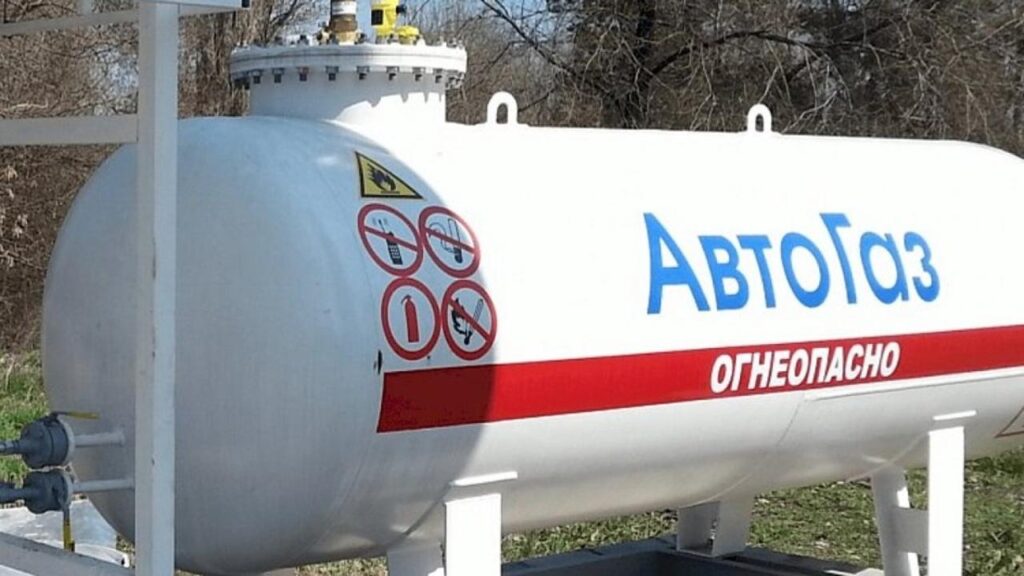
The Ministry of Energy of Kazakhstan announced on September 4 that following the negotiations between the partners of the North Caspian Project and Kazakhstan’s national gas company QazaqGaz, with the participation of the Ministry of Energy of Kazakhstan, an agreement had been signed regarding the sale and purchase of liquefied petroleum gas (LPG) from Kazakhstan’s Kashagan oil field. The North Caspian Project was developed under the North Caspian Sea Production Sharing Agreement signed in 1997, by Kazakhstan and an international consortium including KazMunayGas (16.88%), Eni (16.81%), Shell (16.81%), ExxonMobil (16.81%), TotalEnergies (16.81%), CNPC (8.33%), and INPEX Ltd (7.56%). The move comes amid the increasingly high demand for LPG, which cheaper than gasoline, is the most popular and economical fuel amongst Kazakhstan's vehicle owners. According to the agreement, supplies of LPG from Kashagan will be released at the end of 2025 and by 2027, on completion of work on the infrastructure, reach over 700,000 tons per year. The Ministry of Energy believes that supplies from Kashagan will help reduce the chronic shortage of LPG in Kazakhstan, and positively impact the socio-economic situation in the country's regions. As recently reported  by The Times of Central Asia, supplies have long failed to meet demand. In July, Kazakhstan’s Minister of Energy, Almasadam Satkaliyev, stated that in 2023, Kazakhstan had 582,000 motor vehicles running on LPG, an 18% increase compared to 2022 (491,000), resulting in a rise in consumption by 400,000 tons, or 28%. Last year, LPG consumption volumes amounted to 2.2 million tons compared to 1.8 million in 2022, and according to analysts, may increase this year by a further 200 thousand tons and reach 2.4 million annually. According to the Minister, Kazakhstan produced 1.6 million tons of LPG in 2023 and plans the same volume for 2024.
Uzbekistan and Bulgaria to Increase Middle Corridor Freight Transport

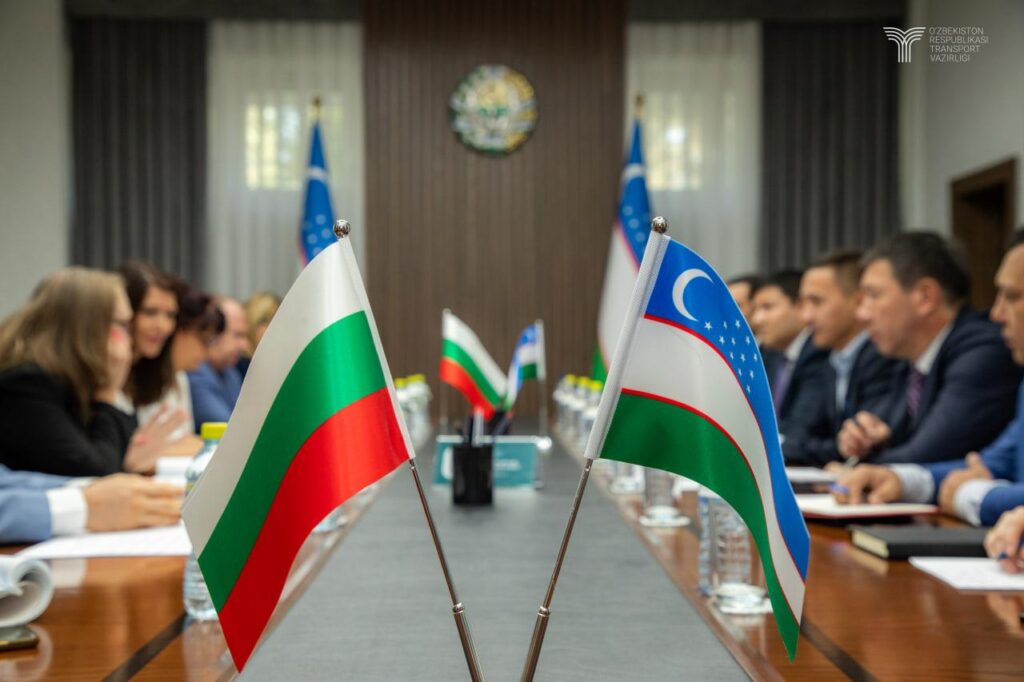
On 3-4 September, the Uzbek-Bulgarian Commission on International Road Transport met in Tashkent to discuss expanding bilateral cooperation in international freight transport by road and creating more favorable conditions for national carriers from both countries. As reported by the Uzbek Ministry of Transport, the agenda focused on increasing the volume of freight traffic to EU countries via Bulgaria, using the Trans-Caspian International Transport Route (TITR), also known as the Middle Corridor, which connects China and Europe via Central Asia and the Caucasus. After the meeting, the parties exchanged additional permit forms for trucks entering their countries for the remainder of 2024, and agreed to increase the issue of mutual permit forms 15-fold in 2025. The Uzbek Ministry added that to enhance cargo transportation to EU countries, an agreement had been made with Romania to waive the requirement of permits from April 1, 2024.

A Model of Cooperation: Kyrgyzstan Selecting Dam Type for Kambarata-1 Hydropower Plant

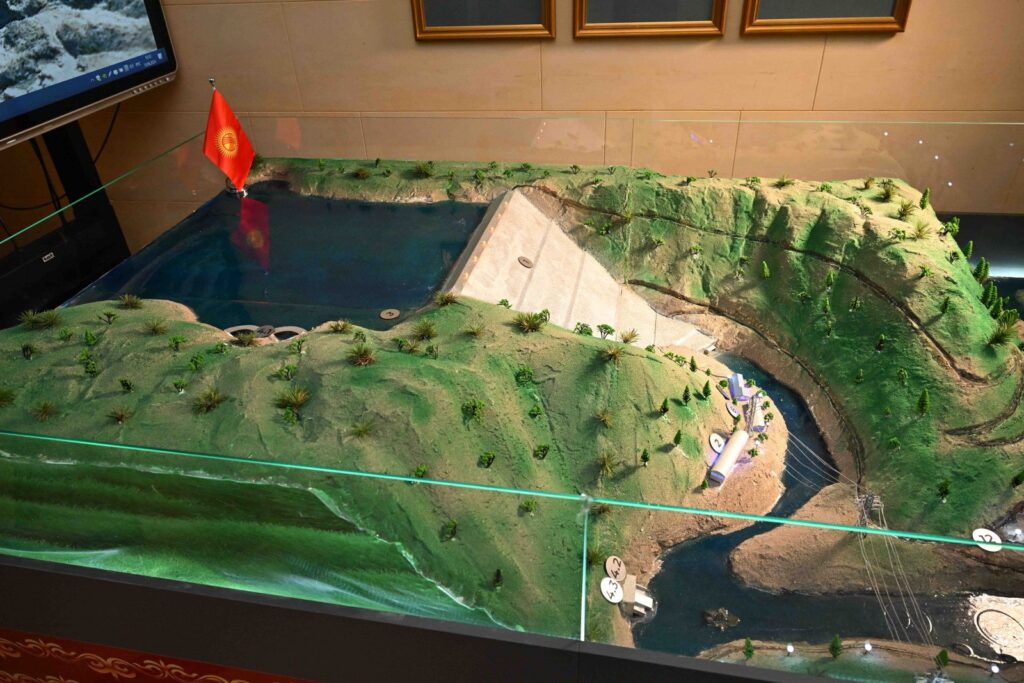
On September 4, in Bishkek, Kyrgyzstan’s Cabinet of Ministers and the World Bank organized a roundtable on dam type selection for the country’s flagship Kambarata-1 Hydropower Plant (HPP). As the Kyrgyz Ministry of Energy reported, Swiss engineering company AFRY presented possible dam types for the flagship energy project at the meeting. A feasibility study will be prepared by May 2025 based on the type of dam chosen. According to Maksudjon Safarov, Senior Energy Specialist with the World Bank, the institution is financing comprehensive preparations for the Kambarata-1 HPP's construction. “The Swiss company AFRY is preparing the project’s feasibility study, with world-class experts involved in the work to ensure that the project is efficient, environmentally friendly, and sustainable," Safarov stated. The Kambarata-1 HPP will be situated in the upper reaches of the Naryn River in Kyrgyzstan. Its installed capacity will be 1,860 megawatts, with an average annual generation of 5.6 billion kilowatt-hours of electricity. The preliminary construction cost for the project is more than $4 billion. At the roundtable, Deputy Chairman of the Kyrgyz Cabinet of Ministers, Bakyt Torobayev, emphasized that time is critical in developing the Kambarata-1 HPP. “As part of the construction, trilateral agreements were signed between the Ministries of Energy of the Kyrgyz Republic, the Republic of Kazakhstan, and the Republic of Uzbekistan. This is a unique case when three countries in the region come to a common understanding and support for the project. We are confident that joint work will create a high-quality project to provide Central Asia with clean and renewable energy, improve water and energy resources, and strengthen regional cooperation." Kyrgyz Energy Minister Taalaibek Ibrayev noted significant progress in the ongoing preparations. “To date, several important works have already been completed. On August 30, the construction of a 1,388-meter transport tunnel was completed. Work is underway to build 15 km of concrete roads. We are working to provide electricity [for the future construction site], with 80% of overhead transmission lines now complete. Completion of a 110 kv power transmission line and a substation is scheduled for the end of 2024. Construction of a bridge across the Naryn River is underway, and at the same time, a workers' camp is being built. All work is going according to plan, and we are confident that all preparatory stages will be completed by next May,” the Minister stated. To support the project, a Donor Coordination Committee for constructing Kambarata-1 HPP was established at the Kyrgyz Republic International Energy Investment Forum, held in Vienna on June 10, 2024. The Committee comprises major international financial institutions and development partners, including the World Bank, the OPEC Fund, the Asian Development Bank, the Asian Infrastructure Investment Bank, the Islamic Development Bank, and the European Bank for Reconstruction and Development.

Proposed Temporary Moratorium on Russian Citizenship for Central Asians

Sergey Mironov, leader of the “A Just Russia – For Truth” party, has written  on his social media page of the necessity to introduce a temporary moratorium on granting Russian citizenship to immigrants from Central Asia. Since problems related to migration are currently central to the attention of legislators, he believes that the party's previous proposal of a similar initiative should be revisited. According to Mironov, the state should oppose "mass passports for workers" and protect its interests in national security, by introducing a moratorium on granting Russian citizenship to residents of Central Asian countries, “at least until 2026. And during this time, it will be possible to regulate the legislation, reform the migration service, clear it of bribe-takers, and check the legality of previously issued passports." Mironov's recommendation follows in the wake of a previous report by The Times of Central Asia and the President of Uzbekistan's opinion that the increase in geopolitical tensions and disputes, as well as the lack of mutual trust, harm the development of international cooperation in the fight against the threats of terrorism and extremism.

Uzbek Security Chief: SCO Must Help Afghanistan to Fight Islamic State Khorasan Province

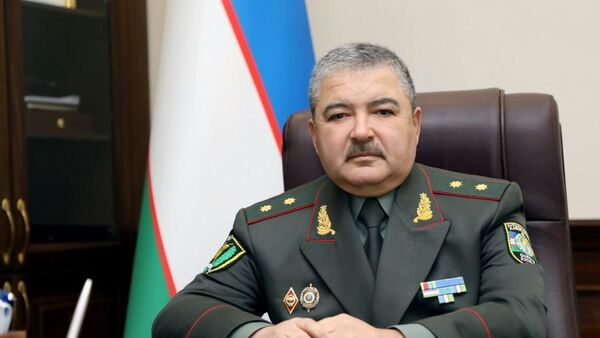
The Shanghai Cooperation Organization (SCO) is holding its 10th regional anti-terrorism conference in Tashkent. The conference is being held on September 4 and 5. At the conference's plenary session, Lieutenant General Abdusalam Azizov, the head of Uzbekistan's State Security Service, emphasized that the member countries of the SCO must work together to fight against international terrorism, extremism, and radicalism. “The Afghan government is fighting international terrorism based on its capabilities and resources, and the Afghan special service is leading the fight against the Islamic State and achieving results. We must fight together against the enemy,” Azizov said. Regarding the branch of Islamic State known as Islamic State Khorasan Province (ISKP), which has claimed responsibility for several fatal attacks in SCO member countries, including the attack on the Crocus City concert hall outside Moscow earlier this year, Azizov said: “It is important to help Afghanistan in the fight against ISKP, because the weakening of countermeasures will lead to the strengthening of this group, which, in turn, poses a threat to the security of the region.” ISKP was formed in 2014 as a collective of defectors from groups including al-Qaeda, Tehrik-e-Taliban (TTP), and former Taliban fighters from Afghanistan and Pakistan. It is estimated that ISKP has between 4,000 and 6,000 members. Since the Taliban killed its leader Sanaullah Ghafari in 2023, it is unclear who runs the group.

Uzbekistan and Kazakhstan Plan to Launch Satellites into Space

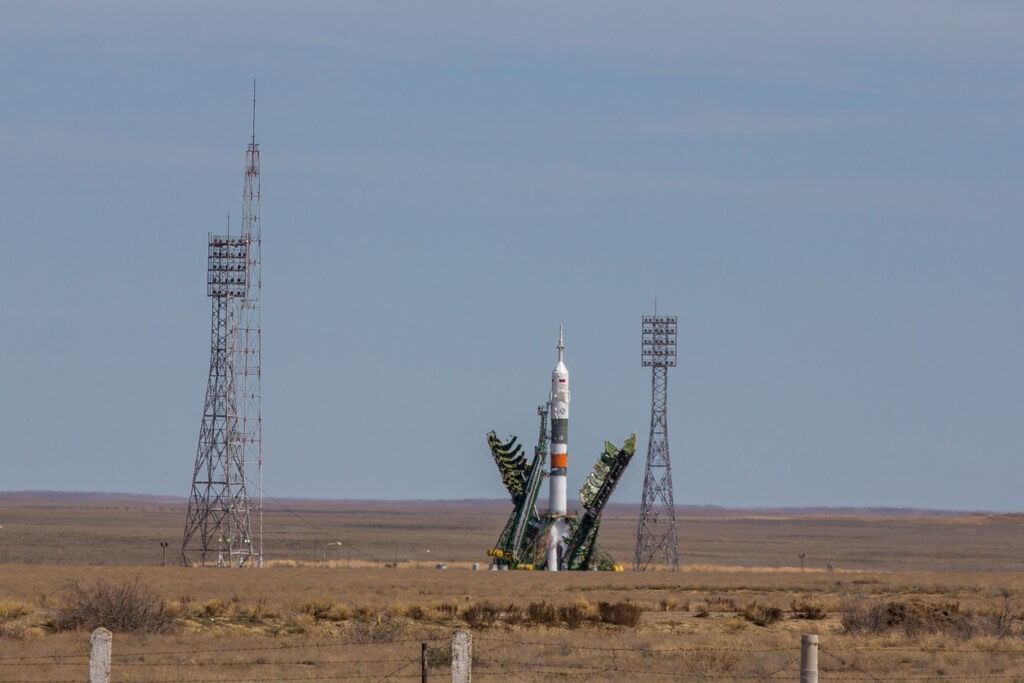
Representatives of Uzbekistan's Ministry of Digital Technologies attended the recent Asia-Pacific Conference on Digital Transformation, which was held in Astana on September 2-3. The event was organized by the United Nations Economic and Social Commission for Asia and the Pacific (UNESCAP). The conference touched upon possible cooperation between Uzbekistan and Kazakhstan on launching a group of satellites into space. In August Uzbekistan became a signatory to the Outer Space Treaty, which regulates international cooperation in space exploration. The Times of Central Asia has also reported that Kazakhstan plans to use Amazon's "Project Kuiper" satellite internet, a competitor to Elon Musk’s famous Starlink.