• KGS/USD = 0.01144 0%
  • KZT/USD = 0.00211 0%
  • TJS/USD = 0.10460 0.19%
  • UZS/USD = 0.00008 0%
  • TMT/USD = 0.28490 0%
  • KGS/USD = 0.01144 0%
  • KZT/USD = 0.00211 0%
  • TJS/USD = 0.10460 0.19%
  • UZS/USD = 0.00008 0%
  • TMT/USD = 0.28490 0%
  • KGS/USD = 0.01144 0%
  • KZT/USD = 0.00211 0%
  • TJS/USD = 0.10460 0.19%
  • UZS/USD = 0.00008 0%
  • TMT/USD = 0.28490 0%
  • KGS/USD = 0.01144 0%
  • KZT/USD = 0.00211 0%
  • TJS/USD = 0.10460 0.19%
  • UZS/USD = 0.00008 0%
  • TMT/USD = 0.28490 0%
  • KGS/USD = 0.01144 0%
  • KZT/USD = 0.00211 0%
  • TJS/USD = 0.10460 0.19%
  • UZS/USD = 0.00008 0%
  • TMT/USD = 0.28490 0%
  • KGS/USD = 0.01144 0%
  • KZT/USD = 0.00211 0%
  • TJS/USD = 0.10460 0.19%
  • UZS/USD = 0.00008 0%
  • TMT/USD = 0.28490 0%
  • KGS/USD = 0.01144 0%
  • KZT/USD = 0.00211 0%
  • TJS/USD = 0.10460 0.19%
  • UZS/USD = 0.00008 0%
  • TMT/USD = 0.28490 0%
  • KGS/USD = 0.01144 0%
  • KZT/USD = 0.00211 0%
  • TJS/USD = 0.10460 0.19%
  • UZS/USD = 0.00008 0%
  • TMT/USD = 0.28490 0%

Viewing results 1381 - 1386 of 2359

Pakistan Can Become a Transport Hub for Central Asian Countries

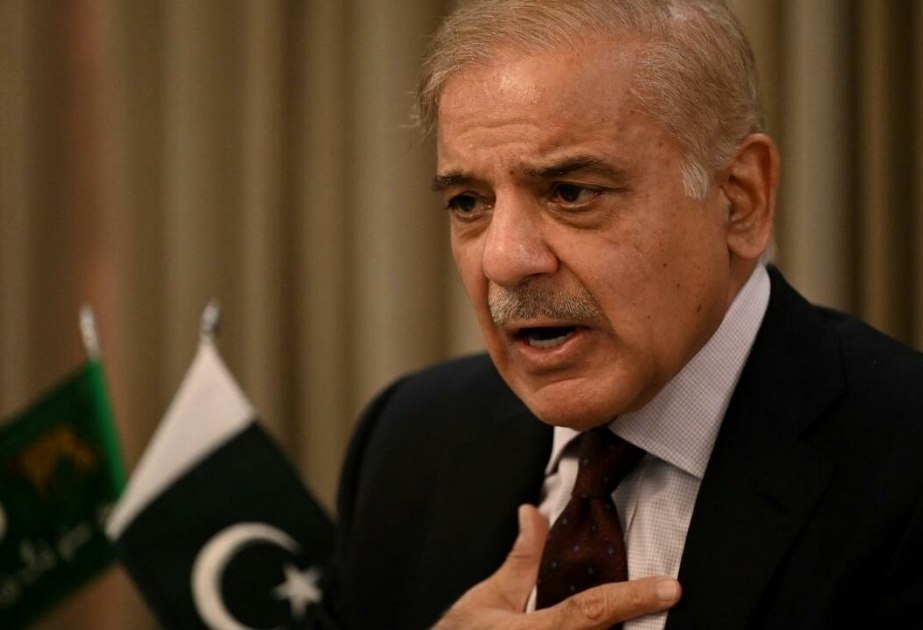
The Prime Minister of Pakistan, Shahbaz Sharif has chosen Tajikistan for his first foreign visit after being re-elected as the head of government. On July 2, he will hold talks with Tajik President Emomali Rahmon in Dushanbe, before traveling with him to the SCO summit in Astana. The head of Tajikistan and Sharif are expected to discuss the implementation of agreements reached during Rahmon's visit to Pakistan two years ago. Pakistan's capital, Islamabad, is interested in speeding up the start of the CASA-1000 energy project and expanding cooperation in transport and security. In exchange, Tajikistan is seeking access to Pakistan’s ports of Karachi and Gwadar. In December 2022, Rahmon visited Islamabad, where eight documents were signed at the end of negotiations with Sharif. “The fact is that Tajikistan’s intelligence services have historically not had warm relations with Pakistan, whose intelligence services have supported various militant groups in Afghanistan. But times are changing. In addition, it should be noted that today, Pakistan is closely cooperating with China economically and politically in the same way that active cooperation between China and Dushanbe is taking place,” said Alexander Vorobyov, a researcher at the Institute of Oriental Studies of the Russian Academy of Sciences and head of the Center for Public Diplomacy and World Policy Analysis. According to Vorobyov, improving relations between Tajikistan and Uzbekistan, whose authorities are actively promoting a project to create the Trans-Afghan railway “Termez–Mazar-i–Sharif–Kabul—Peshawar,” will help improve Tajikistan’s transport connectivity with the outside world and offer the possibility of access to South Asia. The shortest route from Tajikistan to the sea passes through Afghanistan to Pakistan. It is approximately 2,720 kilometers from Dushanbe to Karachi or Gwadar, whilst it is 3,400 kilometers to the Iranian port of Bandar Abbas in the Strait of Hormuz. Tajikistan is separated from Pakistan by the Wakhan Corridor, a narrow strip of territory in the Badakhshan province of Afghanistan. This corridor is about 350 kilometers long. Experts believe that if Afghanistan's stability and security can be ensured, then Pakistan can become a transport hub for the countries of Central Asia. Pakistan's interest in Central Asian meanwhile, lies in energy resources, of which it is desperately short. To access them, the Pakistani government is promoting several major transit projects in the region that will open access to global markets and trade opportunities for the region's countries. However, as Hina Rabbani Khar, who served as Pakistan's deputy foreign minister in February 2023, said, the situation in Afghanistan is preventing Pakistan from realizing its potential in relations with Central Asia. In particular, the Central Asia-South Asia-1000 (CASA-1000) project to transmit electricity from Tajikistan and Kyrgyzstan to Afghanistan and Pakistan still needs to be completed. The World Bank stopped financing the project after the Taliban came to power. Following an appeal by the project's participants, implementation of CASA-1000 was resumed in May 2024 with the financial support of the World Bank. In recent years, Tajikistan and Kyrgyzstan have required additional kilowatts, so the completion date of the construction still...
U.S. State Department Criticizes Tajikistan for Religious Restrictions

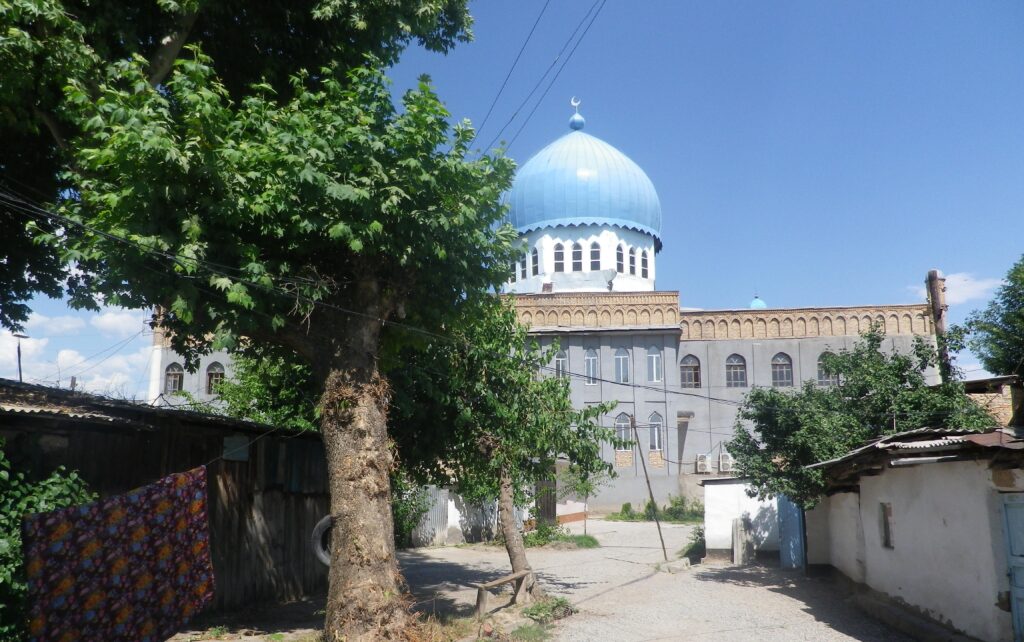
The U.S. State Department's 2023 World Religious Freedom Report lists Tajikistan as a country of "particular concern" due to "gross violations of religious freedoms." The report cited evidence of religious restrictions by the state, including a ban on the hijab, restrictions on minors and women performing namaz in mosques, and the harassment of Jehovah's Witnesses. The authors of the report also noted that residents of  Tajikistan refrain from freely discussing religion for fear of persecution by the authorities. This is not the first time the Tajik government has been criticized for restricting religious freedoms, including religious observance, but President Emomali Rahmon continues to support his government's policy on these issues. In Tajikistan, 90% of the population is Muslim, predominantly followers of the Hanafi madhhab, whilst 4% are Ismailis. The central part of the Christian community are followers of the Orthodox Church. There are 4,058 religious organizations and associations officially registered in the country, including 66 which are non-Muslim. The authors of the report noted that the activities of these organizations were under strict control. According to the Tajik Interior Minister, Ramazon Rakhimzoda, 195 alleged members of "extremist" and "terrorist" organizations were detained in Tajikistan in the first half of 2023. The Norwegian human rights NGO for religious freedom, Forum-18, reported that at least 19 people were convicted last year for exercising the right to freedom of worship.

Islamic State Khorasan Province as Part of the Struggle for Central Asia

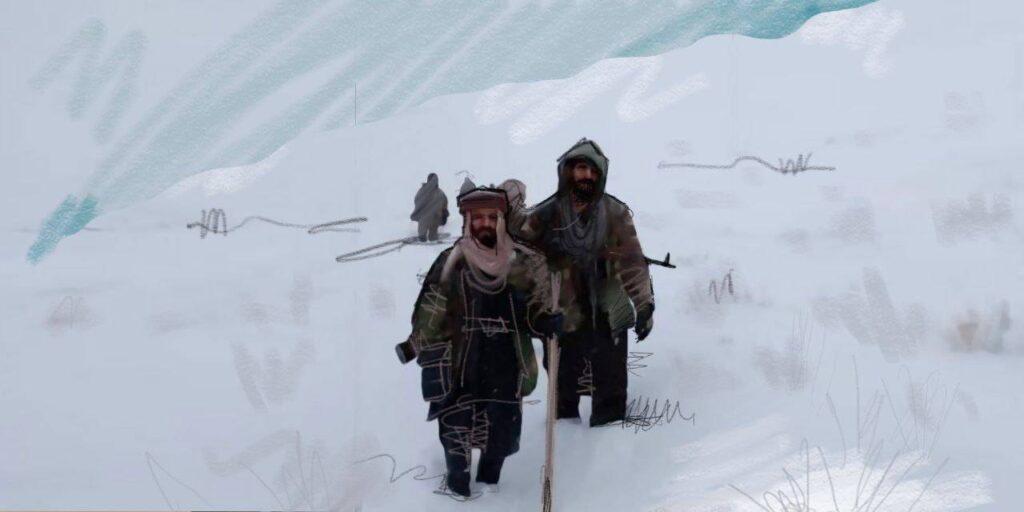
Following the high-profile terrorist attack at Moscow’s Crocus City Hall in March and reports that eight Tajik immigrants were arrested in the U.S., the media spotlight has once again fallen on Islamic State Khorasan Province (ISKP), also known as "Wilayat Khorasan", and the "Khorasan Project.” Many observers link ISKP to the countries of Central Asia, even though the terrorist organization, as it has been designated for a long time, has purely Afghanistani roots. In addition, there is a lot of talk about its geopolitical ambitions for “recreating” the state of “Khorasan.” Where this region’s boundaries lie is the subject of debate. The most expansive definitions include northeastern Iran, western and northern Afghanistan, eastern Turkmenistan, and parts of Tajikistan and Uzbekistan. It is important to understand, however, that clear boundaries have never existed, and neither has a state with that name. In modern times, the term “Khorasan” has only historical and cultural connotations, with no political meaning attached to it. ISKP has suffered a clear military defeat in the borderlands of Afghanistan and Pakistan, and faces significant opposition there. Still, weakening and even destroying the Taliban remains an important goal for the organization. It continues to fight in several regions of Afghamistan, which has prompted the Taliban to intensify their counter-terrorism efforts. [caption id="attachment_19644" align="alignnone" width="1920"] Sanaullah Ghafari, Emir of ISIS-K has a U$10 million bounty on his head; image: rewardsforjustice.net[/caption] The countries of Central Asia, having emerged out of the Soviet Union, are attractive for ISKP ideologists in the sense that they share a common historical and cultural past, while there are even linguistic similarities with Afghanistan (between the Persian languages). The Russian internet portal and analytical agency, TAdviser, points out that ISKP, through its online propaganda publication, announced the start of a new campaign against the countries of the post-Soviet space in April 2022. In June of that year, the ISKP publication, written in the Uzbek language, declared that the countries of Central and South Asia would be united under the flag of the “Islamic Caliphate.” TAdviser highlights that Turkmenistan has a special place in ISKP propaganda because according to the group a large part of what is now Turkmenistan was previously part of “Greater Khorasan,” while the foreign policy of the Turkmen authorities of actively cooperating with the Taliban is wholly at odds with the core goals of ISKP. The Lapis Lazuli corridor linking Afghanistan to Turkey, along with the Turkmenistan-Afghanistan-Pakistan-India gas pipeline (TAPI) which is being developed, are identified as priority targets for ISKP. But what in fact is ISKP? As previously noted by The Times of Central Asia, the answer to this question is known by only a very narrow circle. Indeed, no one can provide objective data on the qualitative and quantitative composition of ISKP. Nevertheless, the group is taking on real dimensions in the media. The threat to Central Asia from ISKP looks more virtual than real at this point. Any small group of terrorists can declare themselves part of ISKP, and, without any...

U.N. Chief to Deliver Peace Message during Central Asia Tour

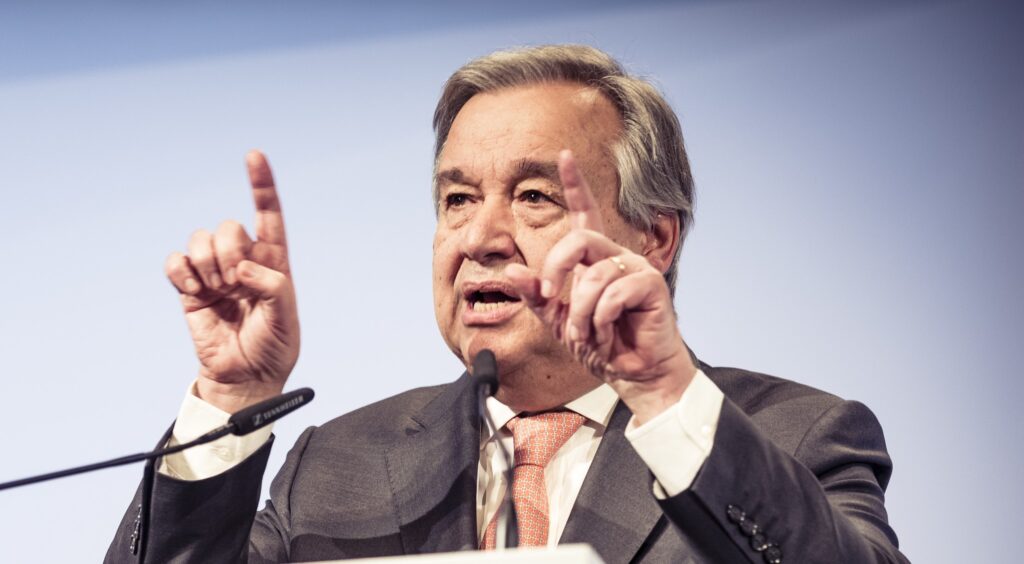
This week, U.N. Secretary-General Antonio Guterres is in Central Asia, where he will call for peace at a time of heightened international tension. Guterres arrived in Uzbekistan on the weekend and will also travel to Kyrgyzstan, Kazakhstan, Tajikistan and Turkmenistan. He´ll be in the Kazakh capital of Astana on Thursday to address the summit of the Shanghai Cooperation Organization (SCO), a regional group that was founded in 2001 by China, Russia and several Central Asian countries. The SCO is a forum for discussion of security, economic and political issues that is viewed in some circles as a counter to Western power and alliances, although Central Asian countries also have longstanding ties with Europe and the United States. Guterres will highlight “our common commitment” to multi-lateralism, international law and human rights, and is ”also expected to underscore that today’s deep global divisions are preventing countries from coming together to resolve the two serious threats emerging from climate change and digital technologies,” United Nations spokesman Stéphane Dujarric said in New York on Friday. Guterres delivered a similar message at last year’s SCO meeting, which was hosted via video-conference by India. The U.N. chief said divisions and geopolitical tensions were growing even as the need for countries to work together was becoming more urgent. Delegates at last year’s SCO meeting mostly avoided direct references to Russia’s war against Western-backed Ukraine, a major source of geopolitical tension that has disrupted food and fuel supplies to many countries. China-West tensions are also on the rise. The SCO’s members are China, Russia, Kazakhstan, Kyrgyzstan Tajikistan, Uzbekistan, Iran, India and Pakistan. Belarusian President Alexander Lukashenko, a close ally of Russian President Vladimir Putin, has said he expects Belarus to become a new member of the group at the Astana meeting.

Uzbekistan and Turkey to Develop Military and Technical Cooperation

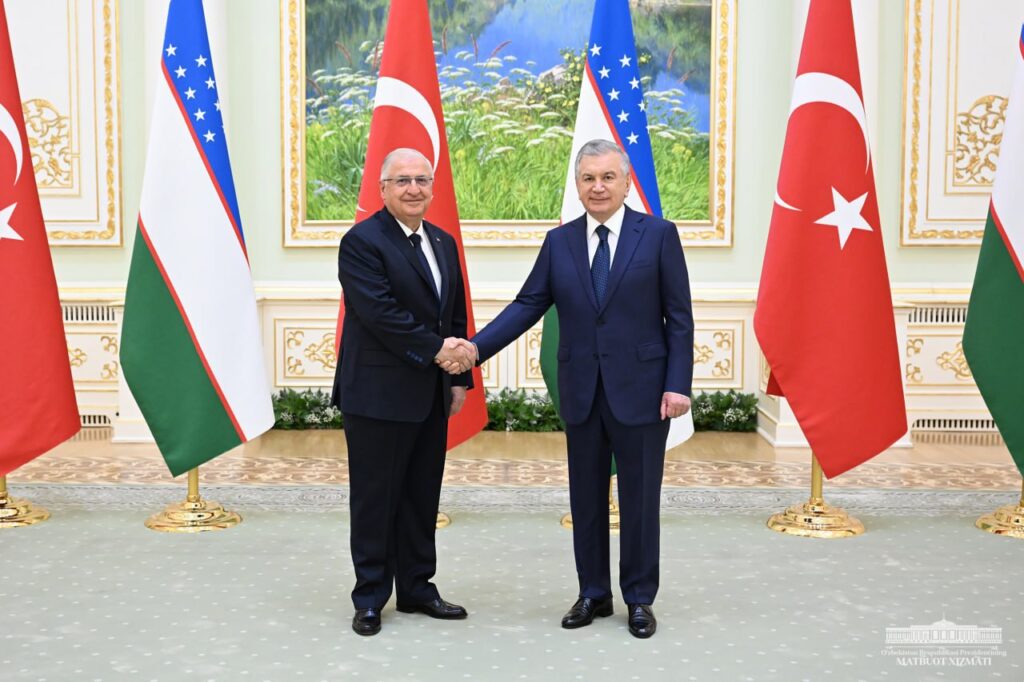
On June 26, the President of Uzbekistan, Shavkat Mirziyoyev, received a delegation headed by the Minister of National Defense of Turkey, Yashar Guler, who was in Tashkent on a business visit, the President of Uzbekistan's press service has reported. Considering the agreements reached during Mirziyoyev's high-level visit to Ankara on June 5-6, urgent issues of deepening the comprehensive strategic partnership between Uzbekistan and Turkey were discussed. Prospects for developing military and military-technical cooperation, including strengthening close interdepartmental relations, organizing joint events, training military specialists, and other issues, were discussed. Special attention was paid to strengthening and coordinating cooperation in security and fighting terrorism, extremism, and radicalism. The delegations exchanged views on ensuring peace and stability in the region, including Afghanistan.

Investigation into ISIS-linked Group Smuggling Uzbek Migrants into the U.S.

The US Department of Homeland Security is investigating a cross-border group that smuggled more than 400 migrants into the country in connection with ISIS, CNN reported. Officials said the group claimed it was smuggling migrants into the country, not terrorists. However, another criminal organization related to this group was “blacklisted” last summer due to its links with ISIS. This led to all those associated being added to the list of suspects. It has been confirmed that the group being investigated for its ties to ISIS, brought more than 400 people to the United States. The majority were citizens of Central Asia, and particularly, Uzbekistan. In a press report issued on June 26, Secretary of Internal Security of the United States, Alejandro Mayorkas stated that no evidence had been found regarding connections between the 400 migrants and ISIS. However, it was noted that the group that brought them into the country may have provided indirect support to the terrorist organization. Over the past month, the United States has intensified checks on immigrants from Central Asian countries such as Tajikistan and Uzbekistan. In recent raids, eight citizens of Tajikistan were arrested on suspicion of being connected to terrorist groups. The state leadership has been tasked to determine whether citizens of Uzbekistan are associated with criminal groups.