• KGS/USD = 0.01144 0%
  • KZT/USD = 0.00200 0%
  • TJS/USD = 0.10470 -0.19%
  • UZS/USD = 0.00008 0%
  • TMT/USD = 0.28490 0%
  • KGS/USD = 0.01144 0%
  • KZT/USD = 0.00200 0%
  • TJS/USD = 0.10470 -0.19%
  • UZS/USD = 0.00008 0%
  • TMT/USD = 0.28490 0%
  • KGS/USD = 0.01144 0%
  • KZT/USD = 0.00200 0%
  • TJS/USD = 0.10470 -0.19%
  • UZS/USD = 0.00008 0%
  • TMT/USD = 0.28490 0%
  • KGS/USD = 0.01144 0%
  • KZT/USD = 0.00200 0%
  • TJS/USD = 0.10470 -0.19%
  • UZS/USD = 0.00008 0%
  • TMT/USD = 0.28490 0%
  • KGS/USD = 0.01144 0%
  • KZT/USD = 0.00200 0%
  • TJS/USD = 0.10470 -0.19%
  • UZS/USD = 0.00008 0%
  • TMT/USD = 0.28490 0%
  • KGS/USD = 0.01144 0%
  • KZT/USD = 0.00200 0%
  • TJS/USD = 0.10470 -0.19%
  • UZS/USD = 0.00008 0%
  • TMT/USD = 0.28490 0%
  • KGS/USD = 0.01144 0%
  • KZT/USD = 0.00200 0%
  • TJS/USD = 0.10470 -0.19%
  • UZS/USD = 0.00008 0%
  • TMT/USD = 0.28490 0%
  • KGS/USD = 0.01144 0%
  • KZT/USD = 0.00200 0%
  • TJS/USD = 0.10470 -0.19%
  • UZS/USD = 0.00008 0%
  • TMT/USD = 0.28490 0%

Viewing results 1465 - 1470 of 2209

Tajikistan To Reconnect To Central Asia’s Unified Energy System

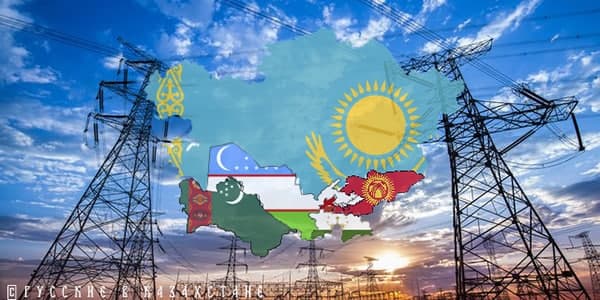
Tajikistan will soon connect itself to Central Asia's unified energy system. The unified system for energy distribution was created in 1960, when the systems of Uzbekistan, southern Kyrgyzstan, northern Tajikistan and southern Kazakhstan's Shymkent junction were connected to work in parallel through 110- and 220-kV power lines. This system operated in isolation from the Soviet Union's general scheme. In 2003 Turkmenistan left the energy system, having decided that it was able to provide itself with electricity on its own. And in early November 2009, the entire southern part of the Tajik energy system was automatically de-energized due to a spontaneous shutdown of units at the Nurek HPP. Tajikistan and the south of Uzbekistan remained without electricity for a day. After that Uzbekistan announced its withdrawal from the energy "ring". After that Uzbekistan completely de-energized the lines connecting its energy system with the Tajik system. As a result, Tajikistan's energy system automatically remained isolated from the rest of the region. Thus, the system ceased to exist as such in 2009, but was recreated again in 2019. Currently, it includes Kazakhstan, Uzbekistan, and Kyrgyzstan.

IFC to Support Central Asian Tech Startups With New Fund

The International Finance Corporation (IFC) is allocating $5 million to a new fund that will be used to support technology startups in Central Asia, Gazeta.uz reports. IFC is reportedly investing in Sturgeon Emerging Opportunities, a new venture capital fund managed by Sturgeon Capital, a major venture capital investor in emerging markets. Sturgeon Emerging Opportunities will focus on supporting startup projects in areas such as fintech, business-to-business platforms, agri-tech, healthcare and education. The investment in Sturgeon is part of IFC's Startup Catalyst program, which aims to address financial challenges in undervalued venture capital ecosystems by investing in incubators, gas pedals and funds in emerging markets. "The fund will help start-up entrepreneurs to expand their businesses, improve operational efficiency and create long-term employment opportunities," the statement said. Besides investing  in projects in Central Asia, the fund also intends to work in other emerging markets such as Egypt and Pakistan. Sturgeon Capital estimates that the IT startup market in these countries could generate nearly $300 million in annual digital revenue by 2030. However, startups in these countries are currently struggling to raise capital to launch and scale their products and services.

EU’s Central Asia Representative Reaffirms the Union’s Commitment to the Region

Teri Hakala, Special Representative of the European Union for Central Asia, has recently spoken about the EU's goals for its presence in the Central Asian region, and plans for the coming years. Speaking at the conference, "Turkmenistan and the EU: 30 years of cooperation", Ms Hakala said: "The EU has a very strong presence in the Central Asian region. And our goal is to contribute to the development and welfare of these countries and sustainability. In the next 30 years we plan to continue our work in Turkmenistan and in other Central Asian countries, partners, for the benefit of these countries and the EU." She also spoke about the EU-Central Asia Transport Investment Forum, which was held in Brussels earlier this year. "In January, the EU organized an investment forum and in March too there were discussions about our commitment and obligations related to the allocation of $10 billion from the EU for the Trans-Caspian Corridor project, which will help to expand trade relations, to include more and more people in their activities. This will contribute to the expansion of not only the transport corridor, but also the energy corridor," Ms Hakala added. The Trans-Caspian Transport Corridor is a route connecting Europe and Central Asia. It is expected that once complete, cargo will be delivered along it in just 15 days.

UNDP Launches Project in Turkmenistan to Help Women and Young People Find Jobs

The United Nations Development Program (UNDP) in Turkmenistan, in partnership with the UNDP Knowledge Project, is joining the global FutureSkills4All initiative to increase employment opportunities for women and young people in the country. According to Turkmenportal, this initiative will involve at least 660 people from Turkmenistan. They will have access to the cutting-edge online learning platform Coursera, where they will be able to complete various training programs to acquire in-demand professional skills. In addition to accessing online courses, learners will also receive guidance and mentoring from local experts, to help them acquire interpersonal skills, such as resilience.

Kazakhstan Launches Battle against Counterfeit Medicines

From 1 July 1, 2024, in an effort to rid the country of counterfeit drugs flooding the local market,  labeling of all medicines in Kazakhstan will become mandatory. According to the World Health Organization (WHO), every tenth package of medicines distributed in developing countries is counterfeit, and in Kazakhstan, exceeds 10% of the volume of imported medicines. This is not only an economic issue, but one that poses a direct  threat to people's lives and the health of the nation.  Under the new initiative, all drugs will be assigned an electronic passport detailing both its source and  path to the consumer. The Ministry of Health of the Republic of Kazakhstan stated that the key aim of the project is to eradicate illegal trade in medicines, including those used within the state's medical programs and mandatory social health insurance. Confident that mandatory labeling will prove effective in dealing with gray imports in the pharmaceutical market,  economist Andrei Chebotarev remarked, "When the manufacturer's goods are labeled, you can trace their  route all the way to your home medicine cabinet. Everyone will know, for example,  where the pills were produced and how they were imported into the country. At present, there is no  guarantee that  goods are genuine. Where was this medicine produced? In India, in Germany? It is almost impossible to check the source." In short, he continued, labeling is the surest way of "letting the cat out of the bag." Another positive impact of the introduction of labeling concerns  an increase in tax revenues and customs duties. Pharmacies in Kazakhstan already sell drugs labeled with the DataMatrix code. Specialists believe that the pharmaceutical industry is ready to exit the shadow turnover. During the first two months of 2024, almost 5,000 tons of various drugs worth $275.7 million, were imported by Kazakhstan.  

U.S. Authorities Asked to Sanction Violators of Religious Freedoms in Tajikistan

In early May, the U.S. Commission on International Religious Freedom (USCIRF) published its annual report on violations of religious freedom around the world. As a result of the report, the Commission called on the U.S. government to impose targeted sanctions against government agencies and officials in Tajikistan responsible for serious violations of religious freedom. This is reported by Radio Ozodi. The U.S. Commission on International Religious Freedom (USCIRF) is an independent, bipartisan federal government organization created by the U.S. Congress to monitor, analyze, and report on religious freedom abroad. USCIRF makes foreign policy recommendations to the President, Secretary of State, and Congress to deter religious persecution and promote freedom of religion and belief. Its annual report describes and evaluates U.S. international religious freedom policy. USCIRF criticizes the Tajik authorities for punishing oppositionists and critics of Emomali Rahmon's government under the pretext of combating extremism, closing mosques due to failure to fulfill the plan to draft into the Armed Forces of Tajikistan, restricting the activities of certain Aga Khan-related facilities in the Gorno-Badakhshan Autonomous Oblast, banning the activities of Jehovah's Witnesses, etc. The Commission emphasizes that the situation of religious freedom in Tajikistan, despite earlier recommendations, did not improve in 2023. "In 2023, the government of Tajikistan continued to restrict the religious activities of citizens, including those living abroad," the report states. For this reason, the Commission recommended that the U.S. government impose targeted sanctions against government agencies and officials responsible for serious violations of religious freedom, freeze their assets, and bar them from entering the United States. A similar recommendation was announced last May. USCIRF also called on the U.S. State Department to place Tajikistan, along with 16 other countries, on a "red" list of countries "of particular concern" because their governments commit or tolerate particularly serious violations of the right to freedom of religion or belief. In addition to Tajikistan, the list includes Burma, China, Cuba, Nicaragua, North Korea, Pakistan, Russia, Saudi Arabia, Turkmenistan, Vietnam and others. The Tajik authorities have not yet responded to the report, but the Tajik Committee on Religious Affairs responded to Radio Ozodi's request in January this year that it "considers the situation with religious freedom in the country to be good" and "not all the data in the reports correspond to reality". Tajikistan's challenges with violent extremism were highlighted recently following the claim by an offshoot of the Islamic State terrorist group, known as Islamic State-Khorasan, for the April attack on the Crocus City concert hall outside Moscow, which resulted in at least 143 fatalities. Russian investigators have determined that the assault was carried out by four individuals, all of whom were identified as Tajik nationals.