• KGS/USD = 0.01143 0%
  • KZT/USD = 0.00216 0%
  • TJS/USD = 0.10633 -0.28%
  • UZS/USD = 0.00008 0%
  • TMT/USD = 0.28571 0%
  • KGS/USD = 0.01143 0%
  • KZT/USD = 0.00216 0%
  • TJS/USD = 0.10633 -0.28%
  • UZS/USD = 0.00008 0%
  • TMT/USD = 0.28571 0%
  • KGS/USD = 0.01143 0%
  • KZT/USD = 0.00216 0%
  • TJS/USD = 0.10633 -0.28%
  • UZS/USD = 0.00008 0%
  • TMT/USD = 0.28571 0%
  • KGS/USD = 0.01143 0%
  • KZT/USD = 0.00216 0%
  • TJS/USD = 0.10633 -0.28%
  • UZS/USD = 0.00008 0%
  • TMT/USD = 0.28571 0%
  • KGS/USD = 0.01143 0%
  • KZT/USD = 0.00216 0%
  • TJS/USD = 0.10633 -0.28%
  • UZS/USD = 0.00008 0%
  • TMT/USD = 0.28571 0%
  • KGS/USD = 0.01143 0%
  • KZT/USD = 0.00216 0%
  • TJS/USD = 0.10633 -0.28%
  • UZS/USD = 0.00008 0%
  • TMT/USD = 0.28571 0%
  • KGS/USD = 0.01143 0%
  • KZT/USD = 0.00216 0%
  • TJS/USD = 0.10633 -0.28%
  • UZS/USD = 0.00008 0%
  • TMT/USD = 0.28571 0%
  • KGS/USD = 0.01143 0%
  • KZT/USD = 0.00216 0%
  • TJS/USD = 0.10633 -0.28%
  • UZS/USD = 0.00008 0%
  • TMT/USD = 0.28571 0%

Viewing results 133 - 138 of 744

Kazakhstan Drug Seizure Tops Six Tons in First Half of 2025

Kazakh authorities seized 6.4 tons of narcotic substances in the first half of 2025, Interior Minister Yerzhan Sadenov announced at a recent meeting of the Interdepartmental Commission on Crime Prevention. For comparison, the Ministry of Internal Affairs reported a total of 21 tons of drugs confiscated in 2024. That figure included 547 kilograms of synthetic substances, 2.5 kilograms of heroin, over 10 tons of marijuana, and 572 kilograms of hashish. Authorities also recorded more than 8,000 drug-related offenses, dismantled 63 drug laboratories, and identified 7,400 internet resources involved in the distribution of drug-related content. Between January and June 2025, the volume of synthetic drugs seized nearly doubled compared to the same period last year, reaching 570 kilograms. In addition, law enforcement blocked over 17,000 drug-related websites and detained 474 individuals on drug charges, including 28 administrators of Telegram channels. Authorities shut down 103 underground drug labs and uncovered 63 drug smuggling cases. Twenty-one criminal cases have been opened against organized drug trafficking groups, including three transnational networks. Health Minister Akmaral Alnazarova reported that more than 17,000 individuals suffering from drug addiction are registered with medical facilities across Kazakhstan. While the number of opioid users has declined by 50 percent over the past five years, there has been a marked rise in addictions linked to synthetic stimulants and poly-drug use. In response to these developments, Prime Minister Olzhas Bektenov has ordered the implementation of stricter mechanisms to identify and block online drug content and to restrict financial transactions associated with drug trafficking. “The increase in drug use among young people is particularly concerning,” Bektenov stated. “Distribution occurs via the internet, postal services, hidden ‘stash’ drops, and anonymous electronic payments, removing direct contact between dealers and consumers.” The Prime Minister also called for tighter control over the dispensation of addictive pharmaceuticals, the expansion of rehabilitation centers including those for minors, and stronger efforts for early detection and treatment of drug dependence. As previously reported by The Times of Central Asia, Central Asia remains a significant transit corridor for narcotics smuggled from Afghanistan. However, the situation is becoming increasingly complex, as more drugs are now being consumed within the region itself.

Kazakhstan to Increase Penalties for Attacks on Medical Workers

Kazakhstan is preparing legislative amendments that will significantly increase criminal liability for violence against medical personnel, equating such offenses with attacks on law enforcement officers. The initiative follows a directive from President Kassym-Jomart Tokayev, who urged the government to take stronger action to protect medical staff amid a growing number of violent incidents. At a recent meeting, Prime Minister Olzhas Bektenov reviewed proposals presented by Health Minister Akmaral Alnazarova. The Ministry of Health is drafting legislation that would classify attacks on healthcare workers in the same legal category as assaults on police officers. Proposed measures also include equipping staff with smart video badges, installing comprehensive security systems in hospitals, and deploying permanent police posts in emergency departments. Under the current Criminal Code, an attack on a law enforcement officer is punishable by up to 10 years in prison, while attempted murder carries a sentence of 10 to 15 years with property confiscation. Speaking at a briefing, Minister Alnazarova announced the introduction of a new article in the Criminal Code addressing threats and violence against medical workers. Threats alone could result in up to two years' restriction of liberty. Violence against a single medical worker may carry a sentence of 1 to 10 years, while attacks involving multiple perpetrators or targeting groups of workers could lead to up to 15 years of imprisonment. “These are adequate and necessary measures to protect our medical workers,” Alnazarova said, adding that the bill would be submitted to the Mazhilis, the lower house of parliament, in September. According to the Health Ministry, over 170 cases of violence against doctors, nurses, paramedics, and other healthcare staff have been recorded in Kazakhstan since 2019. “Such incidents must be resolutely suppressed by legal means,” Bektenov emphasized. “I instruct the ministries of health, internal affairs, and justice to develop and submit the necessary legislative amendments to parliament within ten days.” As previously reported by The Times of Central Asia, two recent assaults on medical personnel in Kazakhstan resulted in hospitalizations. In response, the health minister issued a public appeal urging an end to violence against medical staff.

Secret 450-Meter Smuggling Tunnel Uncovered on Kazakhstan-Uzbekistan Border

Kazakhstan’s Financial Monitoring Agency has uncovered a secret underground tunnel used to smuggle petroleum products across the border with Uzbekistan. The tunnel, discovered in the Turkestan region, extended 450 meters underground. According to the agency, a transnational criminal group operated the tunnel for approximately two months, using it to illegally transport fuel and lubricants. The scheme reportedly involved foreign financing and a carefully organized logistics network to facilitate cross-border smuggling. The operation to dismantle the network was coordinated by the Prosecutor’s Office of the Turkestan region and the Department of Financial Monitoring, with assistance from Uzbek law enforcement. Authorities have identified all members of the group, including several Uzbek nationals. Five Kazakh citizens have been formally named as suspects. Officials confirmed that the investigation is complete and the case has been referred to court. This is not the first such case. In December 2024, a similar tunnel was discovered under joint operations between Kazakhstan and Uzbekistan. That tunnel also measured around 450 meters and was used to move an estimated 5 to 7 tons of fuel daily. In April 2024, Kyrgyz authorities uncovered a separate underground passage in the Jalal-Abad region along the border with Uzbekistan. That tunnel was reportedly used for smuggling both people and goods. According to Kyrgyzstan’s Osh regional police department, officers arrested a woman from Uzbekistan who had illegally entered Kyrgyz territory through the tunnel. These repeated discoveries highlight the persistence and complexity of smuggling operations across Central Asia’s borders. Authorities in Kazakhstan, Uzbekistan, and Kyrgyzstan have intensified joint efforts to locate and dismantle underground smuggling routes used by organized criminal groups. Kazakhstan’s Financial Monitoring Agency emphasized that cross-border cooperation will continue in order to prevent similar incidents and strengthen regional border security.

Embezzlement Scandal at Kazakh Charity Fund Implicates Influential Officials

A high-profile scandal is unfolding in Kazakhstan involving the alleged embezzlement of billions of tenge from the Biz Birgemiz Qazaqstan (“We Are Together”) charity fund. Testimony from the fund’s embattled director, Perizat Kairat, alongside ongoing press investigations, has implicated several prominent officials. The Rise and Fall of Perizat Kairat Charitable giving in Kazakhstan remains underdeveloped, with many humanitarian organizations struggling to secure adequate funding. The Biz Birgemiz Qazaqstan fund, however, stood out. Backed by donations from large banks, business leaders, and individuals, it quickly amassed substantial sums. Established in June 2021, the fund came under scrutiny after Kairat’s arrest in November 2024. She was initially charged with embezzling more than KZT 1.5 billion ($2.8 million) raised during the spring 2024 floods, the worst to hit Kazakhstan in 80 years, affecting twelve regions and leaving thousands homeless. Subsequent investigations raised the alleged embezzled amount to KZT 2.9 billion ($5.4 million). The authorities claim Kairat and her mother, Gaini Alashbaeva, used the funds to purchase luxury real estate, vehicles, designer goods, and pay for lavish travel. Funds collected for humanitarian aid to Gaza residents were also reportedly misappropriated. Additional allegations include collecting over KZT 105 million ($200,000) for festivals such as Central Asia Fest and Almaty Uni, which were never held, and for a rehabilitation center, which was never built. Support for the fund was boosted by advertising through Kazakhstan’s largest financial platform, Kaspi.kz, which promoted it within its mobile app. During court proceedings, Kaspi.kz confirmed transferring KZT 620 million ($1.2 million) to the fund. Another major contributor, Jusan Bank (now Alatau City Bank), reportedly also donated KZT 300 million ($560,000). Misplaced Trust Public trust in the fund was bolstered by the widespread belief that it was affiliated with the state. For instance, an elderly woman from Pavlodar testified that she donated KZT 1 million, believing it was a government initiative. Parents from Nazarbayev Intellectual Schools (NIS) who transferred KZT 901,000 are now demanding its return to assist a seriously ill teacher. Witnesses claim Kairat collected cash through intermediaries using large market-style bags. Political Connections and Allegations Perizat Kairat’s defense has drawn high-level political figures into the spotlight. On July 14, she requested the court summon Bauyrzhan Baybek, former mayor of Almaty and ex-first deputy chairman of the ruling Amanat Party (formerly Nur Otan), for questioning. Kairat alleges that the fund was “created under the leadership of Baybek,” claiming all its founders, except herself, were current or former party employees. Amanat, Kazakhstan’s dominant political party, has publicly denied any connection to Kairat or the foundation. Though President Kassym-Jomart Tokayev resigned from the party leadership in April 2022, Amanat remains politically influential and retains close ties to many government officials. Kazakh outlet Orda.kz examined Kairat’s social media to explore potential links between the fund and state institutions. It found the foundation's founders had associations with the BizBirgemiz volunteer movement, launched during the COVID-19 pandemic under a state initiative of the same name. Just a month after its registration, the foundation hosted a charity...

Closed Court Begins for 19 Suspects in Crocus City Hall Attack

The Second Western District Military Court in Moscow has begun preliminary closed-door proceedings for 19 suspects charged in the March 22, 2024, terrorist attack at Crocus City Hall in Krasnogorsk, according to Russian state agency TASS. The attack left 149 people dead and caused an estimated 6 billion rubles in damages. Court spokesperson Irina Zhirnova stated that the session would follow Article 234 of the Russian Criminal Procedure Code, meaning a single judge will preside over the preliminary hearing, which is not open to the public. “We will take unprecedented security measures,” she added. Federal security personnel are tasked with guarding the courtroom. The case will be heard by a three-judge panel. The evidence dossier spans more than 470 volumes and includes forensic materials and the results of over 200 expert examinations. A key issue still to be resolved is the trial venue: facilities at Moscow City Court are under renovation and cannot accommodate all parties involved in the high-profile case. The court has not yet determined whether the main trial will be open to the public and the media. Under Russian law, that decision will be made when the main hearing opens and the indictment is formally read. The court retains the right to close any session in the interest of security. The Prosecutor’s Case According to TASS’s summary of the prosecution’s case, two wanted Tajik nationals and several unidentified individuals allegedly acted “in the interests of Ukraine’s political leadership.” They are accused of organizing three cells of the extremist group “Vilayat Khorasan,” affiliated with the Islamic State (ISIS), and of recruiting 19 Tajik citizens, appealing to their religious beliefs. The defendants include Shamsiddin Fariduni, Dalerjon Mirzoev, Muhammadsobir Faizov, and Saidakram Muradali Rachabalizoda, all of whom are on Russia’s official list of banned terrorists. Prosecutors allege that Rachabalizoda, Faizov, Mirzoev, and Fariduni were instructed to carry out the armed assault and arson at Crocus City Hall. Other defendants, such as the Islomov brothers and Alisher Kasimov, allegedly provided financial and logistical support, including accommodations and vehicles. Hussein Medov, Jabrayil Aushev, and others are accused of manufacturing and delivering weapons and ammunition. The Soliev brothers, along with suspects Ismoilov, Gadoev, and Hamidov, reportedly helped transport arms to the attackers. Prosecutors say Rachabalizoda’s cellmates also contributed funds. Following the attack, the four main perpetrators attempted to flee to Ukraine but were apprehended in Russia’s Bryansk Region and later transferred to Moscow for trial.  Security and Legal Implications The Crocus City Hall attack shocked the whole of Russia. In response, the military court is conducting the preliminary phase behind closed doors amid heightened security. The upcoming full trial will establish a timeline for the presentation of evidence by both the defense and prosecution. It will culminate in verdicts and, if found guilty, sentences under Russia’s anti-terrorism laws.

Despite Kazakh-led Inquiry, Azerbaijan to Take Plane Crash Case to International Courts

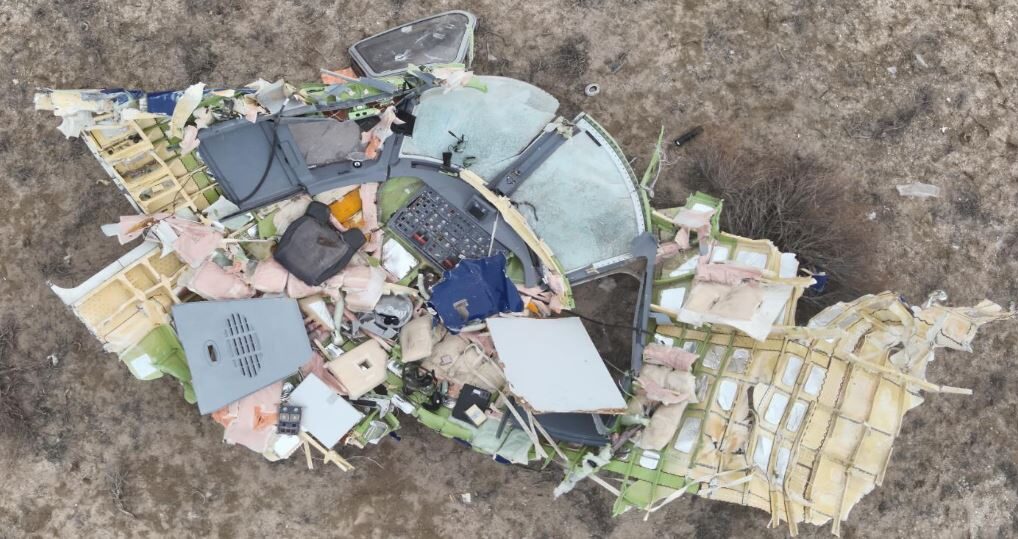
After months of collaborating with an investigation led by Kazakhstan, Azerbaijan now also plans to seek redress in international courts over the Dec. 25, 2024, crash of an Azerbaijan Airlines plane that it says was hit by Russian ground fire before diverting to the western Kazakh city of Aktau. Azerbaijan’s turn to international institutions reflects frustration with what it views as Russian intransigence in the investigation of what happened to Flight 8243, as well as the sensitivities for Kazakhstan as it leads a probe that could implicate Russia, its powerful neighbor and key trading partner. In a sense, Kazakhstan is caught in the middle, unable so far to satisfy Azerbaijan’s push for accountability for the crash and apparently unable to get full cooperation from Russia in the investigation. Unlike Azerbaijan, Kazakhstan has refrained from criticism of Russia, even though six Kazakhstanis were among those who died in the plane crash, and Kazakh emergency crews went into potential danger after rushing to pull survivors from the wreckage. Kazakhstan’s low-key approach is possibly an outcome of its efforts to appear impartial during the inquiry as well as its policy of maintaining smooth diplomatic ties, despite any disagreements or tension with major regional players, including Russia and China. Flush with military victories over Armenia and buoyed by close ties with allies such as Türkiye, Azerbaijan feels less constrained to nurture its traditional relationship with Moscow, its ruler during Soviet and Russian colonial times. On Saturday, President Ilham Aliyev of Azerbaijan referred to years of international investigations and inquiries that found Russia-backed separatist rebels had shot down Malaysia Airlines Flight 17 over eastern Ukraine in 2014, and that Russia bore responsibility – a conclusion rejected by Moscow. Aliyev said Azerbaijan was prepared to wait just as long to clear up the case of the Azerbaijan Airlines crash, in which 38 of 67 people on board died. “We will not forget,” Aliyev said, according to Minval Politika, an Azerbaijani news outlet. “We are currently preparing, and we have already informed the Russian side that we are preparing a dossier for submission to international courts on this matter. We understand that this may take time. In the case of the Malaysia Airlines Boeing, it took more than ten years. We are ready to wait ten years, but justice must prevail.” The remarks by Azerbaijan’s leader at a media forum in the Azerbaijani city of Shusha show that ties between the two nations face protracted tension as long as the dispute persists, though there are other sources of friction between them, including detentions of each other’s citizens. Russian President Vladimir Putin has apologized for the crash without taking responsibility or providing details about what happened at a time when, according to Russia, the area around Grozny was under attack from Ukrainian drones. Azerbaijan also wants those responsible to be punished, compensation to be paid to families of the victims, and Azerbaijan Airlines to be compensated for the loss of the Embraer 190 plane that crashed. The aircraft...