• KGS/USD = 0.01144 0%
  • KZT/USD = 0.00191 -0%
  • TJS/USD = 0.10838 0.37%
  • UZS/USD = 0.00008 0%
  • TMT/USD = 0.28571 0.28%
  • KGS/USD = 0.01144 0%
  • KZT/USD = 0.00191 -0%
  • TJS/USD = 0.10838 0.37%
  • UZS/USD = 0.00008 0%
  • TMT/USD = 0.28571 0.28%
  • KGS/USD = 0.01144 0%
  • KZT/USD = 0.00191 -0%
  • TJS/USD = 0.10838 0.37%
  • UZS/USD = 0.00008 0%
  • TMT/USD = 0.28571 0.28%
  • KGS/USD = 0.01144 0%
  • KZT/USD = 0.00191 -0%
  • TJS/USD = 0.10838 0.37%
  • UZS/USD = 0.00008 0%
  • TMT/USD = 0.28571 0.28%
  • KGS/USD = 0.01144 0%
  • KZT/USD = 0.00191 -0%
  • TJS/USD = 0.10838 0.37%
  • UZS/USD = 0.00008 0%
  • TMT/USD = 0.28571 0.28%
  • KGS/USD = 0.01144 0%
  • KZT/USD = 0.00191 -0%
  • TJS/USD = 0.10838 0.37%
  • UZS/USD = 0.00008 0%
  • TMT/USD = 0.28571 0.28%
  • KGS/USD = 0.01144 0%
  • KZT/USD = 0.00191 -0%
  • TJS/USD = 0.10838 0.37%
  • UZS/USD = 0.00008 0%
  • TMT/USD = 0.28571 0.28%
  • KGS/USD = 0.01144 0%
  • KZT/USD = 0.00191 -0%
  • TJS/USD = 0.10838 0.37%
  • UZS/USD = 0.00008 0%
  • TMT/USD = 0.28571 0.28%
11 November 2025

Viewing results 1 - 6 of 13

Putin in Tajikistan for CIS Summit Amid Migration Tensions

When President Vladimir Putin arrives in Dushanbe on 8 October for his first state visit, Tajikistan will briefly become the focal point of regional diplomacy. Currently holding the rotating chair of the Commonwealth of Independent States (CIS), Dushanbe is preparing to host both the CIS Heads of State Council and the second Russia–Central Asia summit. For Moscow, Central Asia has remained a priority since the invasion of Ukraine, and the visit highlights what is at stake for both Russia and its host. Tajikistan depends heavily on Russia for security, trade, and employment opportunities for its citizens, but relations have been tested by the aftermath of the March 2024 Crocus City Hall attack, which exposed the fragility of migration-driven economics and the risk of renewed extremism. An Old Relationship Tested by New Tensions Russia and Tajikistan have been closely entwined since the collapse of the Soviet Union. Putin has already made twelve trips to Tajikistan since taking office, and this will be his first with state‑visit status. Security cooperation remains the backbone of the relationship. Russia’s 201st military base in Tajikistan - formerly the 201st motor rifle division and now Moscow’s largest overseas facility - has long been billed as a shield along the Afghan frontier; the two sides continue to coordinate through the CSTO (Collective Security Treaty Organization), and within the SCO (Shanghai Cooperation Organization) framework. Trade between the two nations has expanded despite sanctions headwinds. On the eve of the visit, presidential aide Yuri Ushakov said bilateral turnover rose by more than 17 % in the first seven months of 2025, and reached about US$1.5 billion in 2024. Russia accounts for over 22 % of Tajikistan’s foreign trade. Meanwhile, more than 1.2 million Tajik citizens work in Russia, making up about 16 % of all foreign workers there. They remitted US$1.8 billion back home last year, roughly 17 % of Tajikistan’s GDP. This symbiosis means that the two leaders routinely discuss labor migration and social issues alongside security and trade. Yet the relationship has been strained by a wave of xenophobia following the Crocus City Hall attack, which killed 145 people, which the Russian authorities accused militants from Tajikistan of perpetrating. As previously reported by The Times of Central Asia, following the arrest of four Tajik suspects, Central Asian migrants in Russia have faced arson attacks, beatings, and boycotts of their businesses. Russian law enforcement has launched aggressive street inspections and created special units to check hostels and businesses frequented by Central Asians. Even long‑time Tajik residents with Russian citizenship have reported menacing phone calls and threats. In the wake of the attack, diaspora leaders urged compatriots not to leave their homes, and the Tajik interior ministry publicly rebutted Russian media reports, stating that three of the four suspects named were not involved. Those pressures hit a country heavily reliant on remittances. The World Bank’s 2025 update estimates that money sent home by migrants accounted for 49 % of Tajikistan’s GDP in 2024. Since the start of the Ukraine war, Russian politicians and media have become increasingly hostile toward Central Asian migrants, leading Moscow to deactivate all foreign‑owned SIM cards and...

Lawyers for Crocus City Hall Victims Seek Agalarov Asset Seizure

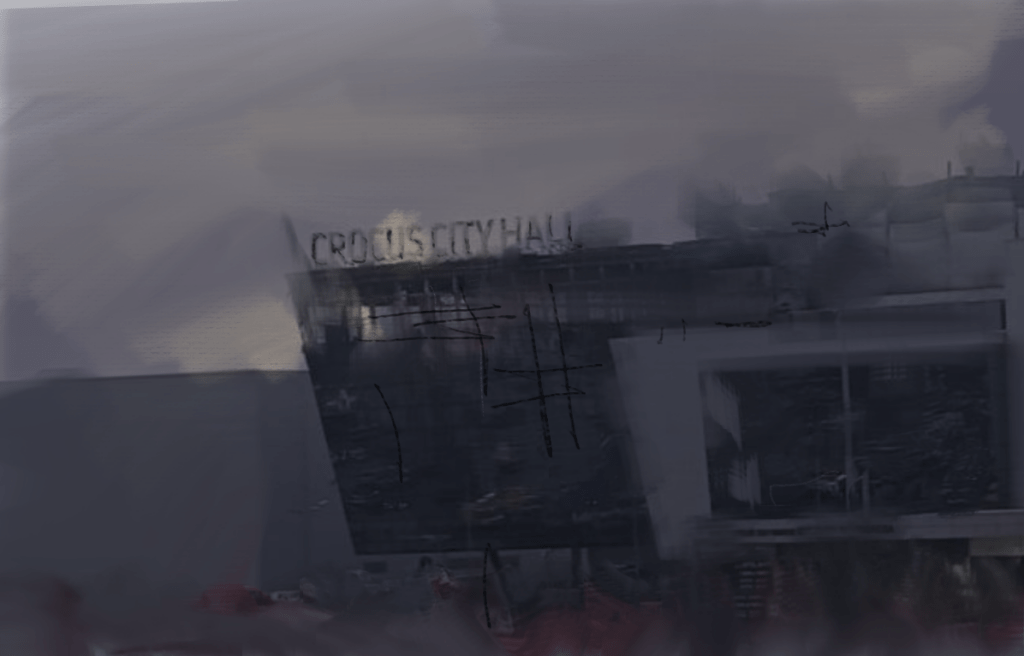
Lawyers representing victims of the March 2024 terrorist attack at Crocus City Hall near Moscow have petitioned Russia’s Investigative Committee to freeze the assets of businessmen Araz and Emin Agalarov. Attorney Igor Trunov, who represents several victims, told RBC, a major Russian business news outlet, that the request targets companies under the Agalarovs’ Crocus Group: JSC Crocus, the private security firm Crocus Profi, and JSC Crocus International. According to Trunov, JSC Crocus was responsible for the fire suppression system and evacuation mechanisms at the venue. Crocus Group organized cultural events at Crocus City Hall, while Crocus Profi provided security services. Lawyers argue that these companies failed to ensure adequate safety and should bear partial responsibility for the attack’s human toll. “We are requesting data from the Unified State Register of Rights to identify remaining assets, as properties are being sold and funds moved abroad,” Trunov said. He added that the petition forms part of the broader criminal investigation, which includes two separate proceedings: one targeting the perpetrators of the attack, now in court, and another examining the actions of those responsible for managing the building. The Crocus City Hall attack occurred on March 22, 2024, when armed assailants stormed the concert venue during a performance and set fire to parts of the building. The attack killed 146 people and injured hundreds more, making it one of the deadliest terrorist incidents in modern Russian history. In addition to the terrorism charges, a parallel case was opened in March under Article 238 of Russia’s Criminal Code, which covers the provision of services that fail to meet safety standards when such violations result in deaths. Investigators concluded that the fire suppression system did not activate, allowing the blaze to spread rapidly. The use of highly flammable construction materials during renovation further intensified the disaster. According to Trunov, at least 45 people died directly from extreme heat and toxic smoke inhalation, deaths that might have been prevented had safety systems functioned properly. The Agalarov family, long prominent in Russia’s business and entertainment spheres, has also faced scrutiny in Central Asia. In Uzbekistan, Araz Agalarov’s plans to develop the Sea Breeze Charvak resort complex near Tashkent sparked intense public backlash earlier this year. Environmental activists raised concerns about the potential destabilization of fragile clay soil along the Charvak reservoir and broader ecological risks. Despite widespread opposition, the Uzbek government approved the project, fueling national debates on transparency, environmental governance, and the role of foreign developers in the tourism sector. RBC reported that it had requested comment from representatives of the Agalarovs regarding the asset seizure petition, but no official response has been issued. For the victims’ legal teams, the central question is whether accountability for the Crocus City Hall massacre will be confined to the attackers themselves or extended to those responsible for ensuring the safety of one of Russia’s most prominent cultural venues.

Turkmen Migrants Face Deportations as Russia Escalates Crackdown

Russian authorities are intensifying their deportation of foreign nationals under a sweeping crackdown on irregular migration, with Turkmen citizens increasingly targeted, according to Turkmen News. Deportation Without Trial Under new rules introduced in February 2025, Russian police and migration officials can summarily expel foreign nationals without awaiting court decisions. The measures coincide with a significant uptick in Turkmen migration: nearly 90,000 Turkmen citizens entered Russia in 2023, triple the number recorded in 2022. Now, reports of deportations are mounting. In July alone, media outlets across several Russian regions reported hundreds of foreigners, many of them from Turkmenistan, being forcibly removed. Key figures include: Astrakhan Region: 200 people Nizhny Novgorod Region: 518 people Republic of Dagestan: 260 people Stavropol Krai: 127 people Raids have also been carried out in other areas, though officials often refrain from disclosing detainees’ nationalities. For example, in early July, Moscow police raided hostels and prayer houses, detaining over 500 foreigners. More than 30 were later expelled for immigration violations, according to Kommersant. A recent case in Saratov Region highlighted the situation. On July 30, the Federal Bailiff Service (FSSP) announced the deportation of three Turkmen citizens for violating migration laws. Among them: a 27-year-old former student who overstayed his registration in Kazan, a 55-year-old man whose legal stay had expired in 2024, and a 47-year-old businessman who failed to obtain a work permit. All three cited lack of funds to return home. They were escorted to a Moscow-area airport and deported, receiving five-year re-entry bans. According to Turkmen News, they will also be placed on a "no-exit" list upon return, barring them from leaving Turkmenistan in the near future. Tougher Migration Regulations Millions of Central Asians live and work in Russia, forming the backbone of the country's migrant labor force. Official figures indicate that nearly 4 million citizens of Kazakhstan, Kyrgyzstan, Uzbekistan, Tajikistan, and Turkmenistan currently reside in Russia. An additional 670,000 foreigners are believed to be in the country without legal status. Uzbekistan and Tajikistan account for the largest share of migrant laborers. In 2023, over one million Tajik citizens entered Russia for work. However, the overall number of Central Asian migrants has been declining, driven by tighter restrictions, growing xenophobia, and fears of forced conscription. In 2024 alone, Russian authorities expelled around 15In 2025, Moscow introduced a new set of migration regulations aimed at curbing irregular migration. These measures authorize law enforcement to carry out deportations without judicial review, establish a centralized registry of undocumented foreigners, and set a deadline of September 10, 2025, for migrants to legalize their status. Those who fail to comply will face deportation and multi-year bans on re-entry. These efforts build on previous policies, including mandatory fingerprinting and photographing of all incoming migrant workers, reducing visa-free stays from 180 days to 90, and expanding the list of deportable offenses. The crackdown intensified following the March 2024 terrorist attack at Crocus City Hall in Moscow, which was allegedly carried out by suspects of Central Asian origin. The incident sparked a...

Closed Court Begins for 19 Suspects in Crocus City Hall Attack

The Second Western District Military Court in Moscow has begun preliminary closed-door proceedings for 19 suspects charged in the March 22, 2024, terrorist attack at Crocus City Hall in Krasnogorsk, according to Russian state agency TASS. The attack left 149 people dead and caused an estimated 6 billion rubles in damages. Court spokesperson Irina Zhirnova stated that the session would follow Article 234 of the Russian Criminal Procedure Code, meaning a single judge will preside over the preliminary hearing, which is not open to the public. “We will take unprecedented security measures,” she added. Federal security personnel are tasked with guarding the courtroom. The case will be heard by a three-judge panel. The evidence dossier spans more than 470 volumes and includes forensic materials and the results of over 200 expert examinations. A key issue still to be resolved is the trial venue: facilities at Moscow City Court are under renovation and cannot accommodate all parties involved in the high-profile case. The court has not yet determined whether the main trial will be open to the public and the media. Under Russian law, that decision will be made when the main hearing opens and the indictment is formally read. The court retains the right to close any session in the interest of security. The Prosecutor’s Case According to TASS’s summary of the prosecution’s case, two wanted Tajik nationals and several unidentified individuals allegedly acted “in the interests of Ukraine’s political leadership.” They are accused of organizing three cells of the extremist group “Vilayat Khorasan,” affiliated with the Islamic State (ISIS), and of recruiting 19 Tajik citizens, appealing to their religious beliefs. The defendants include Shamsiddin Fariduni, Dalerjon Mirzoev, Muhammadsobir Faizov, and Saidakram Muradali Rachabalizoda, all of whom are on Russia’s official list of banned terrorists. Prosecutors allege that Rachabalizoda, Faizov, Mirzoev, and Fariduni were instructed to carry out the armed assault and arson at Crocus City Hall. Other defendants, such as the Islomov brothers and Alisher Kasimov, allegedly provided financial and logistical support, including accommodations and vehicles. Hussein Medov, Jabrayil Aushev, and others are accused of manufacturing and delivering weapons and ammunition. The Soliev brothers, along with suspects Ismoilov, Gadoev, and Hamidov, reportedly helped transport arms to the attackers. Prosecutors say Rachabalizoda’s cellmates also contributed funds. Following the attack, the four main perpetrators attempted to flee to Ukraine but were apprehended in Russia’s Bryansk Region and later transferred to Moscow for trial.  Security and Legal Implications The Crocus City Hall attack shocked the whole of Russia. In response, the military court is conducting the preliminary phase behind closed doors amid heightened security. The upcoming full trial will establish a timeline for the presentation of evidence by both the defense and prosecution. It will culminate in verdicts and, if found guilty, sentences under Russia’s anti-terrorism laws.

Detention Extended for Four Suspects in Moscow Crocus City Hall Attack

The Moscow City Court has extended the detention of four Tajik citizens accused of participating in the deadly terrorist attack at Crocus City Hall in March. According to the court’s press service, the suspects will remain in custody for an additional three months and 28 days. The individuals, Fariduni Shamsiddin, Saidkrom Rachabalizoda, Dalerjon Mirzoev, and Muhammadsobir Faizov, have been named by Russian authorities as the primary perpetrators. They reportedly opened fire and set the concert venue ablaze on the evening of March 22. All four have been officially added to Russia’s federal list of terrorists and extremists. The attack, which occurred during a live performance at Crocus City Hall in Krasnogorsk, just outside Moscow, left 146 people dead. The gunmen used automatic weapons and later ignited a fire in the main concert area, making it one of the deadliest terrorist incidents in Russia in recent history. Russia’s Investigative Committee has charged 27 individuals in total in connection with the attack. Committee Chairman Alexander Bastrykin confirmed that all have been formally charged and that the investigation is ongoing. So far, 12 people have been arrested, with the principal suspects all identified as Tajik nationals. As previously reported by The Times of Central Asia, Turkish prosecutors are also pursuing charges related to the attack. The Istanbul Prosecutor’s Office is seeking prison terms ranging from 7.5 to 15 years for five Central Asian nationals believed to be connected to the same network. Investigations in both Russia and Turkey are continuing as authorities work to uncover the full scope of the group responsible for the massacre.

Russia Sentences Kyrgyz Citizen for Justifying Crocus City Hall Attack

A 30-year-old Kyrgyz citizen has been convicted in Russia for publicly justifying the terrorist attack at Crocus City Hall. The Second Western District Military Court found Abdinasir uulu Bekzat guilty of supporting the attackers, as reported by the Russian state news agency, TASS. According to the court ruling, “Abdinasir uulu Bekzat, who worked as an installer of low-current systems at Atrium LLC in Moscow, was found guilty of committing a crime under Part 2 of Article 205.2 of the Criminal Code of the Russian Federation - public calls to carry out terrorist activities using the internet. The court imposed a sentence of three years' imprisonment in a general-regime penal colony.” Additionally, the court banned Bekzat from administering websites for two years, confiscated the cell phone used to commit the crime, and ordered the destruction of the SIM card seized during his arrest. Bekzat was detained in November 2024 and required an interpreter from Russian into his native language during the trial. He fully admitted his guilt and cooperated with the investigation. Prosecutors had sought a four-year sentence, but the court counted his pre-trial detention as part of the term under the “day-for-day” formula. In early April 2024, Bekzat posted a comment under a video of the terrorists’ interrogation on the Telegram channel Migrants.ru, writing: “Beautiful guys, such a movement requires a huge spirit, it's a pity they got caught.”  The charge against Bekzat carried a maximum penalty of up to seven years in prison.