• KGS/USD = 0.01143 -0%
  • KZT/USD = 0.00193 -0%
  • TJS/USD = 0.10881 0%
  • UZS/USD = 0.00008 0%
  • TMT/USD = 0.28575 0%
  • KGS/USD = 0.01143 -0%
  • KZT/USD = 0.00193 -0%
  • TJS/USD = 0.10881 0%
  • UZS/USD = 0.00008 0%
  • TMT/USD = 0.28575 0%
  • KGS/USD = 0.01143 -0%
  • KZT/USD = 0.00193 -0%
  • TJS/USD = 0.10881 0%
  • UZS/USD = 0.00008 0%
  • TMT/USD = 0.28575 0%
  • KGS/USD = 0.01143 -0%
  • KZT/USD = 0.00193 -0%
  • TJS/USD = 0.10881 0%
  • UZS/USD = 0.00008 0%
  • TMT/USD = 0.28575 0%
  • KGS/USD = 0.01143 -0%
  • KZT/USD = 0.00193 -0%
  • TJS/USD = 0.10881 0%
  • UZS/USD = 0.00008 0%
  • TMT/USD = 0.28575 0%
  • KGS/USD = 0.01143 -0%
  • KZT/USD = 0.00193 -0%
  • TJS/USD = 0.10881 0%
  • UZS/USD = 0.00008 0%
  • TMT/USD = 0.28575 0%
  • KGS/USD = 0.01143 -0%
  • KZT/USD = 0.00193 -0%
  • TJS/USD = 0.10881 0%
  • UZS/USD = 0.00008 0%
  • TMT/USD = 0.28575 0%
  • KGS/USD = 0.01143 -0%
  • KZT/USD = 0.00193 -0%
  • TJS/USD = 0.10881 0%
  • UZS/USD = 0.00008 0%
  • TMT/USD = 0.28575 0%
21 December 2025

Viewing results 385 - 390 of 566

Kazakh Tourists Who Left Greece Face Charges in Island Fire

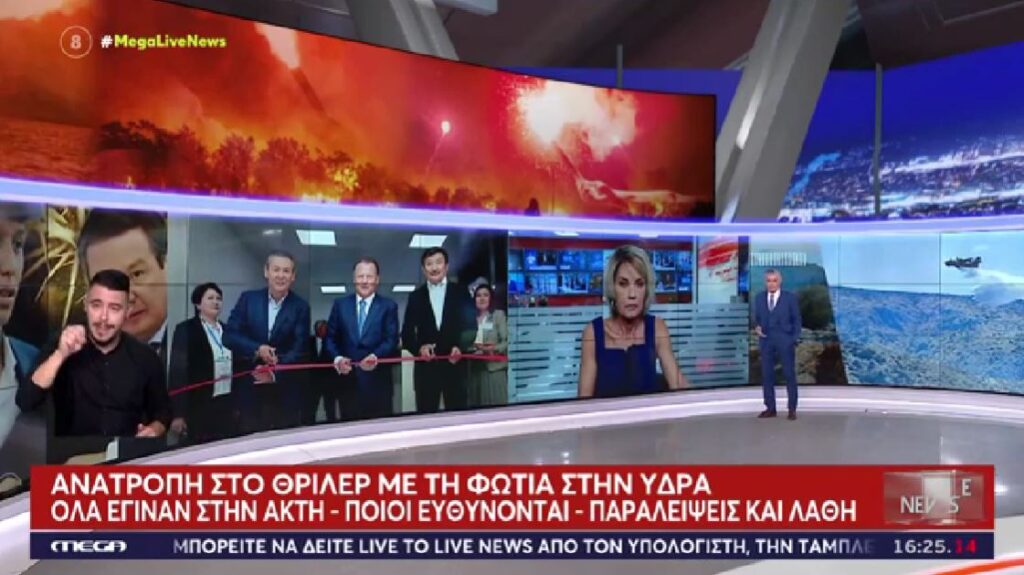
The Greek authorities have charged eight Kazakh citizens with complicity in arson after a forest fire that was allegedly caused by fireworks on the tourist island of Hydra, according to Greek media. Some of the tourists are believed to be wealthy, prominent figures in Kazakhstan and the case has stirred anger in Greece, which has experienced high temperatures and wildfires in recent weeks. The Kazakh tourists were on a luxury boat near Hydra around the time of the fire on the night of June 21, but are unlikely to appear in a Greek court soon because they left Greece by plane on the morning after the blaze. Media reports say a number of minors with the Kazakh group have not been charged. Greek outlet tovima.com said the charge was a misdemeanor. The captain and 12 crew-members of the vessel Persephone were charged with the felony of arson and authorities are investigating how the boat passengers from Kazakhstan were able to leave the country before they could be questioned. The charges against the Kazakh tourists came after investigators found the remains of firecrackers on a Hydra beach and concluded that the passengers were on the beach at the time. Initial reports said fireworks were fired from the boat but have since been discounted. Greek authorities have asked their Kazakh counterparts for help in the case, reported Kathimerini, a Greek newspaper. Another media outlet, Proto Thema, said “the only possibility” that the suspects could be brought to court is if they return voluntarily to Greece, though it also said they could theoretically be subject to arrest and transfer to Greece if they are found in another European country. Citing a “manifest obtained by journalists,” the OCCRP, an investigative reporting group, listed the names of some of the Kazakh passengers who were on the Persephone. The names are now circulating in Greek media, with some reports referring to them as “oligarchs.”

Kuandyk Bishimbayev Murder Sentence Appeal Rejected

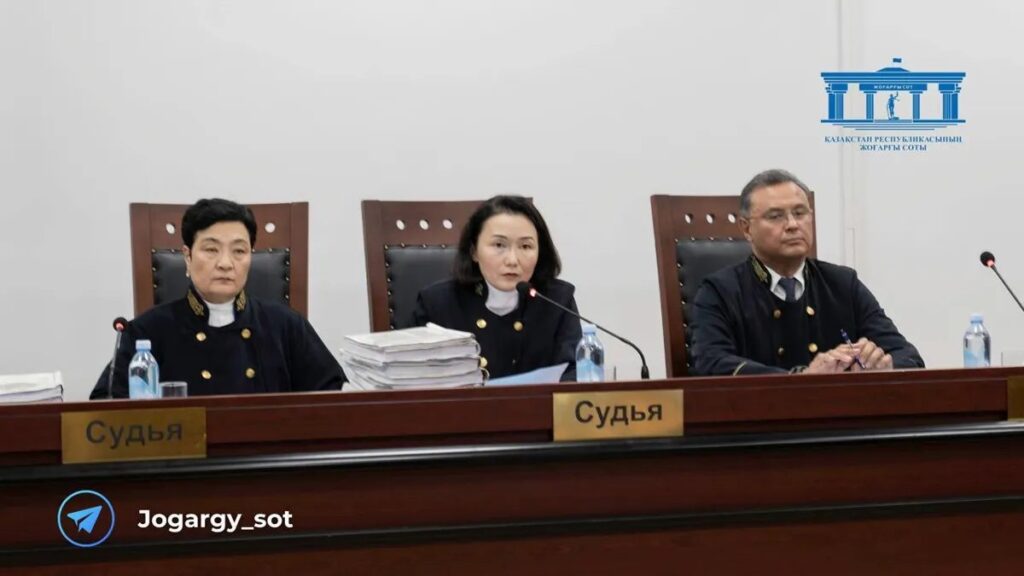
On June 26 an appeal court in Kazakhstan's capital Astana upheld the 24-year prison sentence for murder handed down to the country's former minister of national economy, Kuandyk Bishimbayev. On 13 May Bishimbayev, a minister in the government of Kazakhstan's first president Nursultan Nazarbayev, was found guilty of killing his common-law wife, Saltanat Nukenova, at a restaurant in Astana late last year. The appeal court ruling states: "The judicial board decides that the verdict of the Specialized Interdistrict Court on criminal cases of Astana from May 13, 2024, in respect of Kuandyk Bishimbayev, made with the participation of jurors, should be left unchanged." The owner of the restaurant where Nukenova was murdered, Bakhytzhan Baizhanov, was found guilty of harboring a particularly serious crime. Baizhanov was sentenced to four years in prison in a medium security penal institution. His sentence has also been upheld. During the trial, as public outrage over Nukenova’s killing simmered in Kazakhstan, president Kassym-Jomart Tokayev signed a new law in April in line with OECD standards which tightens the penalties for domestic violence and provides more help for survivors. The legislation became widely-dubbed, “Saltanat’s Law.” Bishimbayev's lawyer, Nazken Kusainova, has commented that Bishimbayev intends to make further appeals to the Supreme Court of Kazakhstan and the Human Rights Committee.

Kazakhstan’s Attempts to Address Disinformation and Media Freedom

On June 19, President Tokayev signed amendments to the law governing Kazakhstan's mass media. Meanwhile, public debate on foreign and domestic media that allegedly receive financing from abroad continues. While human rights activists focus on the principle of freedom of speech, political analysts are concerned about a string of disinformation campaigns attempting to destabilizing the country. The respective changes to legislative acts affect a wide range of issues. In particular, a new and broader concept of mass media has been introduced which includes internet resources. It is envisaged that a Unified Media Platform will be created to implement the state’s information policy, including grants for non-state media and accreditation of journalists to state bodies and organizations through a simplified accreditation procedure. In addition, the statute of limitations for claims brought against the media to refute information that does not correspond to facts and defames honor, dignity, and business reputation has been reduced to one year. Under the new law, Kazakhstan's Ministry of Foreign Affairs has the right to deny accreditation to foreign journalists "in case of a threat to the national security of the Republic of Kazakhstan." A few months ago, the Ministry did not issue accreditation to 36 correspondents from Azattyk. The publication subsequently filed a lawsuit, and in April, the media outlet and the Ministry reached a mediation agreement. While the new law focuses mainly on foreign funded domestic media, experts cite recent examples of pressures on Kazakhstan’s society and authorities through disinformation campaigns that mostly originated from abroad. For instance, a week ago in Kyiv, Ukrainian authorities claimed an assassination attempt was made on Kazakhstani national Aidos Sadykov, the creator of a YouTube channel called Bәse. Sadykov and his wife Natalya were placed on the wanted list in Kazakhstan in October 2023 for “inciting social, national, clan, racial, class, or religious discord.” Their inclusion on the list is linked to the January 2022 coup attempt and riots, as well as their ties to controversial fugitive billionaire Mukhtar Ablyazov, who currently has judgements against him in U.S. and UK courts exceeding $5 billion. Ablyazov faced murder charges in Kazakhstan following the death of the CEO of a local bank that he later took over and reportedly defrauded. According to government authorities, Sadykov repeated Ablyazov's calls for violence surrounding the January 2022 coup attempt as well as the Mazhilis elections in March 2023, where the channel openly called for organizing riots. Furthermore, on the one-year anniversary of the January 2022 events, his Bәse channel gave instructions to overthrow the government in Kazakhstan, following the example of events in Ukraine. The four-minute video includes information on how to create coordination committees for regime change. Natalya Sadykova has also worked for the Respublika newspaper, allegedly funded by Ablyazov. Aidos Sadykov had previously served two years in Kazakhstan for hooliganism and fled to Kyiv in 2014. The alleged perpetrators of the attack on Sadykov, Meiram Karataev and Altai Zhakanbaev, are Kazakhstani citizens. Shortly after the purported assassination attempt, Natalya Sadykova accused Kazakhstan’s...

Uzbekistan Launches Mechanism for Recognizing Foreign Citizens as “Undesirable” Elements

In its second and third readings, the Legislative Chamber of the Oliy Majlis (parliament) approved amendments to the law regulating the legal status of foreign citizens and stateless persons within the country. The key innovation was a move to recognize foreign citizens as undesirable elements who will not be permitted to stay in Uzbekistan. The grounds for declaring the stay of foreign citizens and stateless persons unacceptable may be public calls or actions that contradict state sovereignty, territorial integrity and security of the country, provoke interstate, social, national, racial, and religious enmity, or discredit the honor, dignity, and history of the people of Uzbekistan. The law provides for a five-year ban on such persons entering Uzbekistan, opening bank accounts, acquiring real estate, participating in the privatization of state property, and entering into financial and contractual relations. The document also defines the procedure for deporting persons not permitted to stay in the country. Before this new law can enter into force, it must be approved by the Senate and signed by the president.

Virtual Academy on Countering Corruption to Start Work in Uzbekistan

On January 1, 2025, Uzbekistan will launch the Virtual Academy on Combating Corruption. This electronic platform aims to continuously improve the knowledge of both civil servants and the public about fighting corruption. According to the press service of the Anti-Corruption Agency, President Shavkat Mirziyoyev has signed a decree to this effect. The decree outlines priority areas for continuously enhancing knowledge about combating corruption. These priorities include raising legal awareness and culture, fostering societal resistance to corruption, and instilling values of integrity in the younger generation. In addition, it aims to improve the knowledge, skills, and qualifications of employees responsible for combating corruption, and those in civil service positions that are most exposed to risks associated with corruption. The system also includes assessing and certifying civil servants' anti-corruption knowledge and maintaining a register of those who have received certification. The Anti-Corruption Agency and the Law Enforcement Academy will organize and conduct training activities in the virtual academy. In addition to civil servants, the virtual academy is open to business entities, representatives of non-governmental, non-profit organizations, and other civil society institutions, students of educational organizations, and employees of enterprises with state participation. Training is organized into introductory and special courses. Basic courses will be free for all users, and advanced training in special classes will be on a paid contract basis. Training will be mandatory for civil servants, who will have to take the course within three months of being hired. The periodicity of civil servants' professional development will be at least once every three years. For other categories, training will be voluntary.

Turkmenistan Province Bans Child Labor in Cotton Harvesting

The Chronicle of Turkmenistan reported that on 3 June, the governor of Lebap Province called a meeting with heads of agricultural associations of etraps - administrative-territorial units - to discuss issues regarding the production of cotton and in particular, the growing employment of children in harvesting. In order to halt this worrying trend, he warned, "If children are seen in the fields, the heads of the agricultural associations will be held responsible and as such, should advise parents of the inadmissibility of child labor." He also recommended that families of tenants on neighboring plots form brigades and cooperate in agro-technical activities on each other's plots. In addition, heads of the associations were promised that if their tenants bought fertilizers at their own expense and provided receipts, the agricultural enterprise would provide compensation when paying for the harvest.