• KGS/USD = 0.01144 0%
  • KZT/USD = 0.00194 0%
  • TJS/USD = 0.10841 -0.37%
  • UZS/USD = 0.00008 0%
  • TMT/USD = 0.28490 0%
  • KGS/USD = 0.01144 0%
  • KZT/USD = 0.00194 0%
  • TJS/USD = 0.10841 -0.37%
  • UZS/USD = 0.00008 0%
  • TMT/USD = 0.28490 0%
  • KGS/USD = 0.01144 0%
  • KZT/USD = 0.00194 0%
  • TJS/USD = 0.10841 -0.37%
  • UZS/USD = 0.00008 0%
  • TMT/USD = 0.28490 0%
  • KGS/USD = 0.01144 0%
  • KZT/USD = 0.00194 0%
  • TJS/USD = 0.10841 -0.37%
  • UZS/USD = 0.00008 0%
  • TMT/USD = 0.28490 0%
  • KGS/USD = 0.01144 0%
  • KZT/USD = 0.00194 0%
  • TJS/USD = 0.10841 -0.37%
  • UZS/USD = 0.00008 0%
  • TMT/USD = 0.28490 0%
  • KGS/USD = 0.01144 0%
  • KZT/USD = 0.00194 0%
  • TJS/USD = 0.10841 -0.37%
  • UZS/USD = 0.00008 0%
  • TMT/USD = 0.28490 0%
  • KGS/USD = 0.01144 0%
  • KZT/USD = 0.00194 0%
  • TJS/USD = 0.10841 -0.37%
  • UZS/USD = 0.00008 0%
  • TMT/USD = 0.28490 0%
  • KGS/USD = 0.01144 0%
  • KZT/USD = 0.00194 0%
  • TJS/USD = 0.10841 -0.37%
  • UZS/USD = 0.00008 0%
  • TMT/USD = 0.28490 0%
17 December 2025

Viewing results 721 - 726 of 1047

Uzbekistan Park Managers Arrested for Mass Distribution of Toys

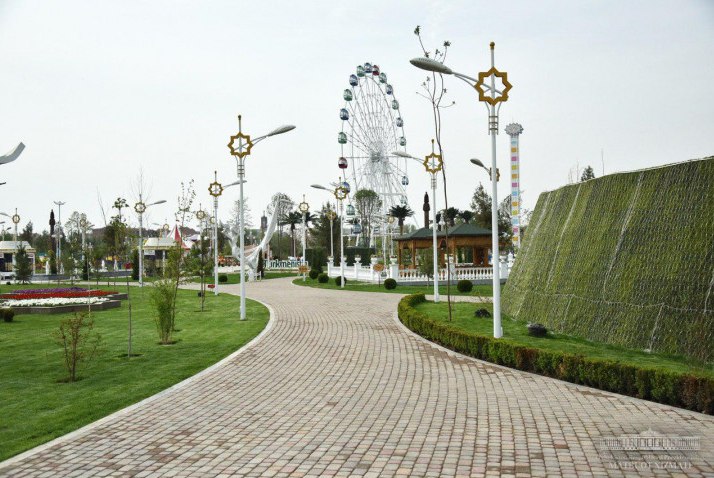
The director, deputy, and head of marketing of the Ashgabat Park in Tashkent have been arrested and detained for 15 days for violating the rules of mass events.  According to Gazeta.uz reports, the arrests were made after some  40,000 people had gathered in the park in the hope of receiving free toys. The throng had responded to an advertisement circulated on social media announcing the free distribution of 20,000 soft toys and ice cream at noon on 1 June. However, according to the Department of Internal Affairs, the park's management had been pre- warned and then instructed to cancel the event because of the risks posed by a mass gathering within the park's territory and the event's  non-compliance with traffic and citizen safety guidelines. By failing to comply, the park's administration created a danger to citizens and traffic jams at the park's entrance and exit, on some internal routes, and  roads leading to the park. The Yashnabad District Department of Internal Affairs drew up an administrative protocol against the park director, deputy director, and head of the advertising department, followed by a sentence of 15 days of administrative arrest imposed by  the District Court.  The Department of Internal Affairs  also published a reminder that according to the requirements of the Cabinet of Ministers resolution of July 29, 2014 (#205),  permission to hold mass events  must be submitted one month in advance.

Kazakhstani Movies No Longer Playing Just a Supporting Role

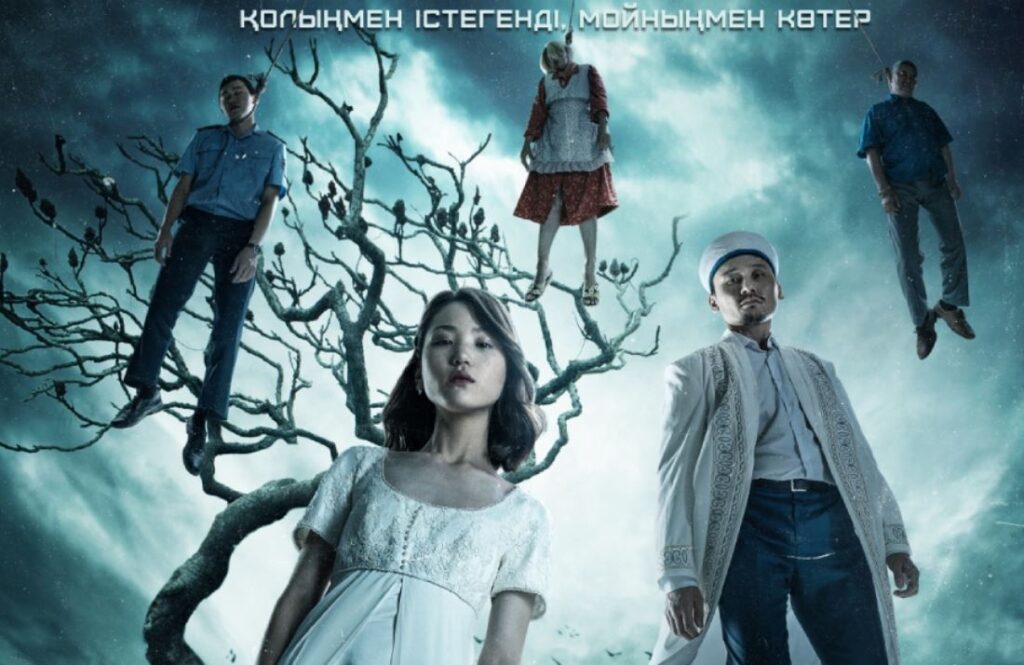
Until recently, the idea of Kazakhstani movies grossing a billion tenge ($2.5m) was a pipe dream. But in the last two years several films have earned this amount. The number of films being co-produced with world-leading studios is growing. However, domestic cinema still struggles to overcome funding and content quality problems. At the end of last year, the romantic comedy Taptym au seni (I Found You) earned more than a billion tenge in just 10 days of screenings. But the real shock came later, when the box office receipts of the suspense film Dastur (Tradition) exceeded a billion tenge after only a week of distribution. In one weekend alone it significantly outperformed Hollywood's Aquaman. In just the second half of last year, Kazakhstani films at the domestic box office earned over $14 million. One of the highest-grossing films was Kazakhstani Business in India, directed by Nurlan Koyanbayev. The film grossed over 1.25 billion tenge, and it was followed by Maghan Nazar Audar (Look at Me). The top ten includes Zhaidarman (Cordial), Zhynim Sol (My Gene) and Azhyrasam (Divorced). Domestic films now account for 30% of total box office receipts in Kazakhstan. Domestic analysts are confident that in the near future Kazakhstani cinema will overtake Uzbekistan to become the leader in Central Asia. In addition to the national Kazakhfilm studio and private studios, production is being driven forward by the State Center for Support of National Cinema. The Center allocates grants to industry figures on a competitive basis, and although there are heated discussions around the terms of the competition and the awardees, state support has a significant impact on the release of films. As for the subject matter, comedies are usually the leaders at the box office. They are often devoted to crime, drug trafficking, fraud, dishonest business, and corruption. Romance and historical figure movies remain popular as well. There is also a growing trend of condemning violence against women in the industry. Dastur, for example, tells the story of a rape victim who violently avenges not only the offender but also his neighbors, with whose tacit consent her life and dignity were devalued. Some sources are speculating that there will soon be a film adaptation of the story of the murder of Saltanat Nukenova by former minister Kuandyk Bishimbayev, which has attracted worldwide attention. A decline in the popularity of western and Russian films, which have led the box office in past decades, is also helping the growth of domestic movies. The share of international projects in the Kazakhstani film industry is growing. In March, the series Assassins Beginning, produced in Egypt, showed spectacular locations across Kazakhstan, including Charyn Canyon and Kolsai Lakes. In January Kazakhstan and Nigeria's 'Nollywood' joined forces for the first time to create a movie called Adam Bol. The film will be shown in both countries, with Nigeria steadily taking over movie markets in Africa and Asia. Joint production helps to not only create jobs in the film industry, but to support businesses as well....

Why Have Women’s Carriages Become So Popular in Kazakhstan?

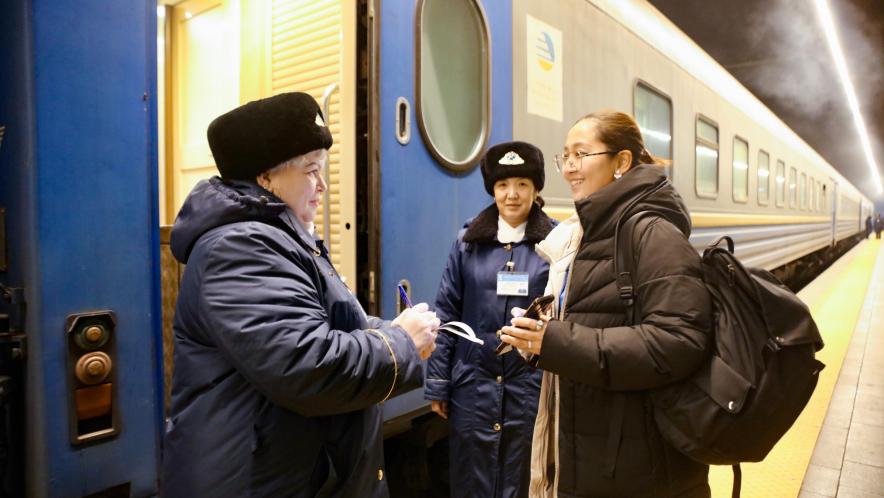
Kazakhstani women have already had time to appreciate women-only cars in trains - an innovation that seemed unthinkable in the secular country a few years ago. However, the special carriages did not appear as an indulgence to traditionalist views. Kazakhstani women now have a choice: they can ride in a regular carriage, or they can ride in a carriage that is practically closed to men - and demand for the latter service is increasing year by year. In May, the statistics of Kazakhstan Temir Zholy (KTZ), a railroad monopoly, were published, which revealed that women twice as often choose women's cars. Since 2021, more than 359,000 women have chosen this option, and since the beginning of 2024 alone, the service has been used by about 70,000 women, whereas in 2023, only 34,000 did so. Today, women's cars run in eight long-distance passenger trains, with only female conductors working in them. Male children up to seven-years-old are allowed, whilst men can go enter for a short period of time, but overnight stays are strictly prohibited. The need to ensure the safety of women in trains began to be discussed after the scandal that broke out in the fall of 2018, when two conductors raped a female passenger on the high-speed train "Talgo" on the Astana-Aktobe route. This crime resonated widely, and led to loud demands for the authorities to take action. Conductors Zhetes Umbetaliev and Kolkanat Kurmaniyazov were found guilty of rape in July 2019 and were sentenced to just 2.3 and 2.5 years, respectively, whilst Kanat Almagambetov, first deputy chairman of KTZ, apologized on behalf of the company. The first women-only cars were launched in October 2021. "This is being done primarily for the safety of women... If demand for the service increases, our company is ready to expand the geography of these routes. Apart from the female conductors, these carriages are no different from the others. They have the same pricing policy," KTZ explained at the time. The current routes were chosen because of their length, company representatives said. Kazakhstan is a large country and a trip from Almaty to Mangistau, for example, takes several days. Ainagul Kasenova, a resident of Mangistau Oblast, travels to see relatives in Almaty several times a year, and for her, women's cars have become a solution. "Now I try to buy tickets only in a separate car. You travel for a long time, so it's much more comfortable if there are only women and children around. I used to encounter men talking to me, paying me unnecessary attention; it was unpleasant. When the news about the rape of a female passenger by conductors broke, my parents didn't even want to let me go to Almaty. Now they let me go without any problem," Kasenova told TCA. According to her, both students and pensioners are comfortable in women's carriages, especially those who have to travel often, which increases the risk. "The women's carriage is always quiet, friendly atmosphere, without drinking and noise," she added....

The Power of Kindness: Psychologist Kamilla Turakhodjaeva Promotes the Value of Volunteering in Tashkent

In an ever-challenging world, volunteering is becoming a powerful tool to help and support people facing difficulties. In Tashkent, the capital of Uzbekistan, this activity has become increasingly important, uniting people who care about making the world a better place. Kamilla Turakhodjaeva, a psychologist at the first children's hospice in Uzbekistan and head of the volunteer initiative, Power of Kindness, shares her experience of the challenges faced by volunteers, the qualities required for such work, and how the state supports their noble efforts.   TCA: How long have you been volunteering in Tashkent, and what prompted you to engage in this activity? Working as a psychologist at the first children's oncology hospice in Tashkent since it opened in August 2022, I have long been attracted to the activities of various hospices elsewhere and realized that volunteers play a key role in the life of such institutions. These people give their time and energy to make the patients' stay more comfortable and enjoyable. They provide a variety of recreational and educational activities, help celebrate holidays, and provide support to both the patients and their families. Thanks to volunteers, a hospice provides not only medical care, but also mental support and a place where patients can safely voice their concerns. However, because many of us are intimidated by words such as hospice and cancer, it is not always clear how best to support and communicate with people facing such difficult situations. The importance of good practice at a time when people are afraid and in need of attention spurred the organization of ‘Training in Hospice and Hospital Care.’ To date, four streams of volunteers who participated in the course have either stayed with the hospice or are offering their help to cancer hospitals and societies for people with disabilities. The course covers important topics including skills in communicating with patients, the organization of workshops and how volunteers can take care of themselves to avoid ‘burning out.’ "The Power of Good" came about by chance, out of a desire to help improve our country’s treatment of those less fortunate than ourselves. All volunteers engaged in this initiative have completed a training course and are ready to offer their support in a way that will harm neither themselves nor others.   TCA: What areas or issues in the community have you chosen to volunteer in, and why are they important to you? Our first task was offering help to medical facilities, but over time, we realized that we have the resources to help in other areas as well. We hold various educational workshops at the Millennium Society for people with disabilities. Many of the adult members are unfortunately, unable to secure official employment and earn a decent living. All the Millennium children are very talented and hardworking, and our task is to channel their abilities in the right direction. The girls knit toys, make jewelry and handmade soap, which we sell at Teplomarket fairs. Volunteers have now developed a course especially for them, aimed...

Tajikistan Doubles Down on Fines for Wearing “Foreign Clothes”

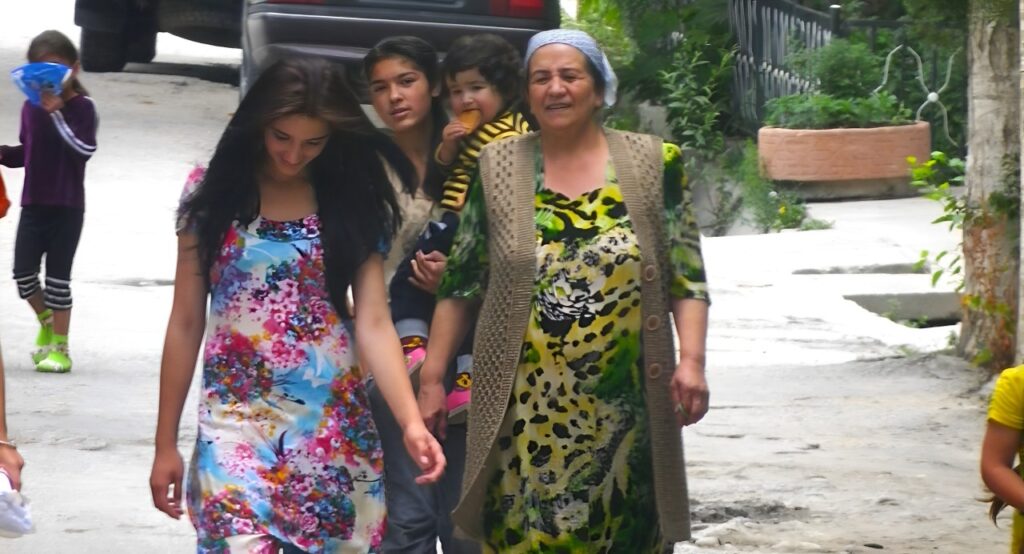
Residents of Tajikistan will face fines ranging from 8,000 to 65,000 somoni for "importing and selling clothes that do not correspond to the national culture" and for wearing such clothes in public places, as reported by Radio Ozodi. These regulations are outlined in Article 18 of the new version of the law "On Regulation of Traditions and Rites" and the Code of Administrative Offenses. The drafts were adopted by parliamentarians on May 8 this year. "In the draft law 'On the Regulation of Traditions and Rites,' a corresponding prohibiting norm is included in part two of Article 18. For its violation, amendments and additions to Article 481 of the Code of Administrative Offenses provide for administrative responsibility," explained Mavludakhon Mirzozoda, a deputy of the lower house of Tajikistan's parliament. Article 481 of the current Code of Administrative Offenses addresses not only Article 18, but also broader non-compliance with the norms of the Law on the Regulation of Traditions and Rites. According to this article: Individuals will be fined 7,920 somoni ($733). Officials will be fined 39,600 somoni ($3,665). Legal entities will be fined 57,600 somoni ($5,333). Individual entrepreneurs, scientists, and religious figures will be fined 54,000 somoni ($4,998). For repeated violations, fines will range from 46,000 to 86,000 somoni. The recent amendments have updated this article, although changes to the fine amounts are yet to be confirmed. The average wage in Tajikistan is approximately $172 a month. According to the current legislation, the amendments to the law come into force upon publication in the official press after approval by the Majlisi Milli (lower house) and the president's signature. However, citizens are already being compelled to comply with these new regulations. The current law does not specify which clothing is considered alien to Tajik national culture. Experts suggest that the law likely pertains to women's national dress, although the text itself does not differentiate between men's and women's clothing. Reactions within Tajik society have been mixed. Some residents of Dushanbe, during a street survey, expressed their opinion that people should have the freedom to choose their own attire without compulsion. Tajik authorities have long campaigned to encourage the wearing of national dress and to discourage the adoption of foreign styles. They prohibit women from wearing black clothing, black headscarves, and hijabs, considering them alien to Tajik culture and traditions. Although mini-skirts, sweaters, dresses with cleavage, tops, and transparent fabrics were also banned at one point, these restrictions were quickly "forgotten."

Higher Education in Central Asia: Leaders and Outsiders

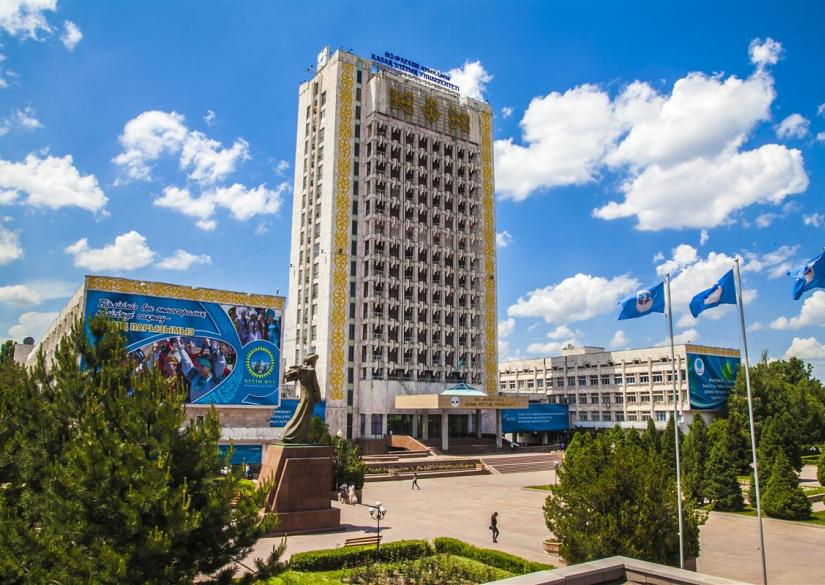
In June, it will be three years since the signing of a declaration at a forum held in the city of Turkestan between the heads of the Ministries of Education of Kazakhstan, Uzbekistan, Tajikistan, Turkmenistan, and Kyrgyzstan. According to the document, the Central Asian states agreed to expand cooperation and unite the scientific, intellectual, and creative potential of higher education institutions throughout the region. However, only Kazakhstan and Uzbekistan have made progress in terms of synergy during this time. The reason for this is the serious gaps between the Central Asian states in the level of provision of higher education for their citizens.   The pace of reform In the 1990s, the reform of education in Central Asia occurred at different rates. Although the Central Asian republics had similar problems at the time of the collapse of the Soviet Union, they began to address them depending on the degree of influence of global trends. For example, Kazakhstan signed the Bologna Declaration and joined the European Higher Education Area in 2010, while Turkmenistan switched to two-stage higher education under the "Bachelor's - Master's" system only in 2013. Some started organizing English-language curricula at their universities as soon as the early 1990s, such as Kazakhstan's KIMEP University or the University of Central Asia in Kyrgyzstan. Uzbekistan, on the other hand, only came around to the idea of the need for English-language education in the noughties. In the 2000s, universities established jointly with foreign partners, such as the Kyrgyz-Russian Slavic University and the Kazakh-British Technical University, began to open in the region. Uzbekistan was again somewhat late to the trend, first opening the International Westminster University (a branch of the University of London) and a branch of Turin Polytechnic University. In 2014, the first university established jointly with foreign partners from South Korea - Inha University, specializing in the training of IT specialists - appeared. Kazakhstan, Kyrgyzstan, and Uzbekistan are currently implementing reforms in the recognition of diplomas and attracting foreign employees and students, while Tajikistan and Turkmenistan are experiencing problems of a different nature related to low levels of enrollment in higher education.   Kazakhstan Kazakhstan has been the most successful nation in reforming higher education. Degrees have been reduced to four years, and the Unified National Testing (UNT) and credit system of education appeared, creating favorable conditions for accession to the Bologna Process in 2010. By 2016, almost every second Kazakhstani was studying at a higher education institution. Now, Kazakhstan has more than 120 universities. There are more than 600,000 students, and about 40% of Kazakhstanis are certified specialists. Kazakhstan's supremacy in this arena is confirmed by international rankings. For example, the international organization, Times Higher Education included four Kazakhstani universities in its rating for 2024: the Eurasian National University named after L.N. Gumilev; Satpayev University; the Kazakh National University named after Al-Farabi; Nazarbayev University (NU). Participating in these rankings for the first time, the latter was recognized as the best in Central Asia. NU is the first university of its...