• KGS/USD = 0.01144 0%
  • KZT/USD = 0.00216 0%
  • TJS/USD = 0.10659 0%
  • UZS/USD = 0.00008 0%
  • TMT/USD = 0.28530 0%
  • KGS/USD = 0.01144 0%
  • KZT/USD = 0.00216 0%
  • TJS/USD = 0.10659 0%
  • UZS/USD = 0.00008 0%
  • TMT/USD = 0.28530 0%
  • KGS/USD = 0.01144 0%
  • KZT/USD = 0.00216 0%
  • TJS/USD = 0.10659 0%
  • UZS/USD = 0.00008 0%
  • TMT/USD = 0.28530 0%
  • KGS/USD = 0.01144 0%
  • KZT/USD = 0.00216 0%
  • TJS/USD = 0.10659 0%
  • UZS/USD = 0.00008 0%
  • TMT/USD = 0.28530 0%
  • KGS/USD = 0.01144 0%
  • KZT/USD = 0.00216 0%
  • TJS/USD = 0.10659 0%
  • UZS/USD = 0.00008 0%
  • TMT/USD = 0.28530 0%
  • KGS/USD = 0.01144 0%
  • KZT/USD = 0.00216 0%
  • TJS/USD = 0.10659 0%
  • UZS/USD = 0.00008 0%
  • TMT/USD = 0.28530 0%
  • KGS/USD = 0.01144 0%
  • KZT/USD = 0.00216 0%
  • TJS/USD = 0.10659 0%
  • UZS/USD = 0.00008 0%
  • TMT/USD = 0.28530 0%
  • KGS/USD = 0.01144 0%
  • KZT/USD = 0.00216 0%
  • TJS/USD = 0.10659 0%
  • UZS/USD = 0.00008 0%
  • TMT/USD = 0.28530 0%

Viewing results 715 - 720 of 1678

New Project in Tashkent Offers Free Housing to Residents of Wooden Homes

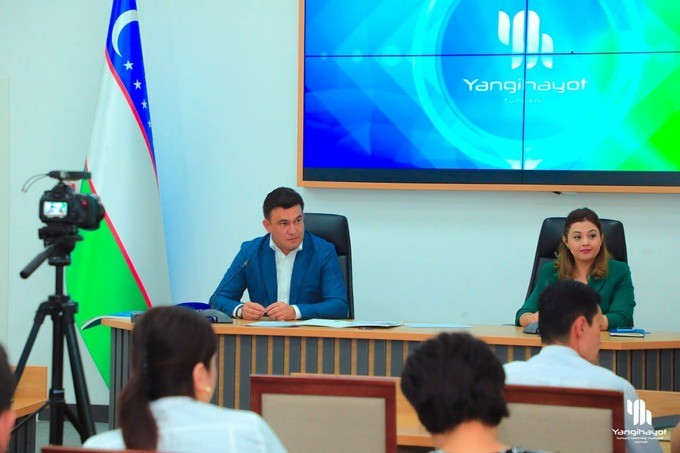
Residents of wooden houses in Yangikhayot will be relocated to new apartments, and an arboretum will be created in their place. Residents of wooden two-story houses in Tashkent's Yangikhayot district will be relocated to the Yangi Mahalla residential complex in two to three years, with families receiving free accommodation in the new complex. The project, the cost of which is estimated at 1.5 trillion-som ($117 million), will affect 409 wooden houses in the Yuldosh (Sputnik) massif, where more than 21,000 people reside. The resettlement will affect 4,341 families, who will be relocated to modern apartment buildings in Gulshanobod mahalla. The project includes the resettlement of residents and landscaping, Yangikhayot District Hokim (head of the local executive authority), Hayot Inogamov and Tashkent Invest Chairman, Bakhrom Shokirov told a November 28 news conference. An arboretum surrounded by perennial trees will replace the old wooden houses. Tashkent Invest developed the resettlement program with the support of the hokimiyat and district administration. The company itself will not participate in the construction of the new houses, but will act as an intermediary between the state and construction organizations, overseeing the fulfillment of the social obligations of investors, and ensuring resettlement of the families. This project will not only improve the living conditions of thousands of residents, but will be an important step towards improving the environmental situation in the neighborhood by creating a new park on the site of the outdated development.


Turkmen Scientists Acquire Over 100 Rare Manuscripts from the UK

Researchers from the Institute of Language, Literature, and National Manuscripts at the Academy of Sciences of Turkmenistan have returned from the United Kingdom with 107 electronic copies of valuable manuscripts. These acquisitions enrich the collection of historical materials documenting the cultural heritage of the Turkmen people. From November 2 to 23, researchers Amandurdy Nuraev and Guichmyrat Changliyev conducted studies at two of the UK’s most renowned repositories: the British Library in London and the John Rylands Research Institute and Library in Manchester. These archives house extensive collections of historical documents, including rare manuscripts with significant relevance to Turkmenistan’s history and culture. The expedition culminated in the transfer of electronic copies of key documents to Turkmenistan. Among the manuscripts are works by prominent authors such as Makhtumkuli Fraghi, Alisher Navoi, Fizuli, and Hussein Baygara, along with other renowned oriental poets and scholars. Special emphasis was placed on uncovering works previously unknown to the Turkmen academic community. In addition to literary compositions, the manuscripts provide unique insights into the history and traditions of the Turkmen people. These materials offer new opportunities for studying the heritage of Makhtumkuli Fraghi, a celebrated figure and symbol of Turkmenistan’s national culture. This significant achievement enhances the preservation and understanding of Turkmenistan’s rich literary and historical legacy, contributing to broader academic and cultural exploration.

Kazakhstan Sees 50% Surge in Chinese Tourism During Landmark Year of Collaboration

The Year of Kazakhstan Tourism in China concluded on November 27 with a closing ceremony in Almaty, attended by over 300 representatives from the tourism sectors of both countries. The initiative, officially launched in Beijing on March 28–29, aimed to foster greater connectivity between Kazakhstan and China while encouraging mutual cultural and economic exchange. It also facilitated stronger partnerships among tourism industry stakeholders from both nations. Deputy Minister of Tourism and Sports of Kazakhstan, Yerzhan Yerkinbayev, highlighted the year’s success: “This year was marked by a significant expansion of cooperation between Kazakhstan and China in the field of tourism. The tourist flow between our countries demonstrated significant growth, which once again emphasizes that we are united not only by good neighborliness but also by a common desire for mutual understanding and cultural exchange.” According to Kazakhstan’s Border Service, the number of trips by Kazakhs to China increased by 31% in 2024, while visits by Chinese tourists to Kazakhstan rose by 50%. Data from Kazakhstan’s National Bureau of Statistics reveals that 566,500 foreign tourists visited Kazakhstan between January and June 2024. Among these, Chinese tourists were the second-largest group, totaling 69,918. Visitors from Russia topped the list at 186,100, followed by tourists from India (53,695), Turkey (30,312), and the United States (19,597). The Year of Kazakhstan Tourism in China attracted substantial media attention. Chinese media corporations extensively covered Kazakhstan’s tourism potential, achieving an overall media indicator of 1.8 billion views. Posts about Kazakhstan on social media platforms reached 160 million users, significantly boosting the country’s visibility in China. Building on this momentum, the governments of Kazakhstan and China have designated 2025 as the Year of China Tourism in Kazakhstan. Additionally, an agreement on mutual visa-free travel came into effect in November 2023. Under the agreement, citizens of both countries can travel visa-free for up to 30 days per visit, with a maximum of 90 calendar days within a 180-day period. This arrangement applies to tourism, medical treatment, business trips, and transit travel.

The Impact of Korean Culture on Kazakhstan: Personal Stories and Impressions

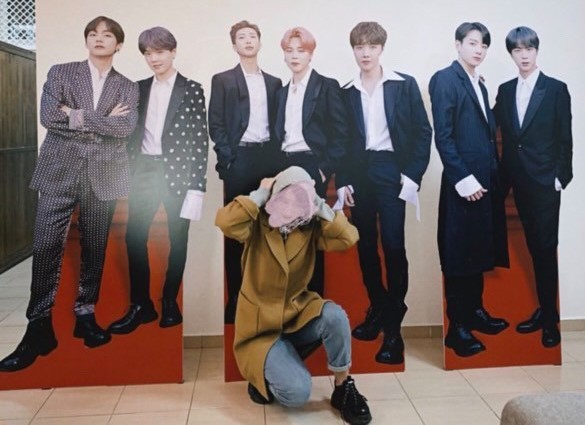
In recent years, Korean culture - including K-pop and doramas (dramas) - has gained incredible popularity in Kazakhstan. It has had a significant impact on young people, offering not only entertainment, but also support, motivation, and new opportunities to socialize and express themselves. To better understand how Korean culture is influencing life in Kazakhstan, TCA talked to young people about their stories and experiences. [caption id="attachment_26045" align="aligncenter" width="585"] Image: TCA[/caption] Alua, 22, computer club administrator For me, as an insecure teenager, K-pop and doramas have been a tremendous support and help in shaping my personality. Songs about self-love, with words of encouragement and motivation give many teens a foothold they often can't get from their environment. The doramas teach us and show us that nothing is impossible, that everything is in our hands. They also show young girls what healthy relationships should look like. That's what I love about Korean culture, the lack of gender boundaries and the promotion of healthy attitudes. I think this kind of influence has a great effect on the youth of Kazakhstan. Doramas are television series produced in South Korea and other Asian countries. They cover a wide range of genres: romance, drama, comedy, sci-fi, historical subjects, and more. Doramas are known for their high-quality productions, plot twists, and colorful characters. [caption id="attachment_26046" align="aligncenter" width="585"] Image by Nastya, from the official BTS film festival in Kino Park, Astana[/caption] Nurlan, 19, student at a pedagogical faculty I like Korean culture because of its unconventionality. For example, K-pop groups such as BTS have always fought against male stereotypes and I’m inspired by it. I think it's really great, because in Kazakhstan there are big problems with the perception of gender roles. In addition to male stereotypes, they are also breaking down female stereotypes through female groups like BLACKPINK, who present themselves as confident girls who are not afraid of getting their own way. Also in Kazakhstan, many convenience stores like the Korean 7/11 are opening up where you can eat noodles and tokpoki, and sit with friends, just like in the doramas. I really like it, and I’m happy that Korean trends that are reaching us in Kazakhstan. [caption id="attachment_26049" align="aligncenter" width="585"] Image: TCA[/caption] Sarah, 21, store administrator and student I started getting into Korean culture back in 2010, when my sister showed me the dorama Boys More Beautiful Than Flowers. After that, K-pop and doramas helped me not to get discouraged during difficult moments, offering an interactive culture that nurtured a sense of love and support. Even if it wasn't fashionable then and I was made fun of, K-pop kept me going. Now, however, it’s a worldwide phenomenon, and that’s nothing short of heartwarming. So many people around the world have discovered a whole new genre of music, movies, TV series and things in the Korean media space, such as albums and photocards, fan-sites, merch, and concerts. Doramas and shows like Running Man and Apartment 404 have become my favorite part of celebrity promotion in Korea....

Central Asia in the Crosshairs: Experts Warn of Intensifying Global Information Wars

The shift toward a multipolar world is unlikely to spark a nuclear conflict, but it is setting the stage for a global information war, according to Kazakh experts. They predict that Central Asia will soon become the focal point of this confrontation. At a roundtable in Astana titled "Humanitarian Aspects of Information Security and Soft Power as Factors of Sustainable Development and National Consolidation of Kazakhstan," participants discussed how Kazakhstan could address these challenges while leveraging "soft power" to its advantage. The Information Warfront Yerzhan Bagdatov, director of the information agency Toppress.kz, stated that Kazakhstan has long been a hotspot for hybrid warfare between Russia and the West. This is evident not only in sanctions threatening secondary effects on Kazakh enterprises, but also in external information campaigns targeting the country. “The methods of information warfare - sabotage, provocations - are already evident in Kazakhstan. A Third World Information War, though unlikely to involve nuclear weapons, could still result in casualties, economic losses, and damage to infrastructure,” said Bagdatov. Bagdatov noted that media, social networks, and mobile apps have become primary tools in this warfare. Across the globe, specialized information operation centers are deploying these tactics, including in Central Asia. Kazakhstan has experienced attempts to stoke inter-ethnic tensions, undermine trust in monetary policy, and spread misinformation about health policies, including vaccination. Bagdatov emphasized the urgent need to combat these tactics through better public awareness and “information hygiene.” He pointed to Russia’s example, where an institute under the Academy of Sciences counters information attacks. He suggested Kazakhstan could expand fact-checking efforts, such as those by stopfake.kz, into a regional network to address cross-border misinformation. Building Resilience Through Digital Hygiene Alexander Drogovoz, deputy director of the Alexei Kosygin Institute of International Education in Russia, advocated for a unified approach among Central Asian nations. This includes creating regional communication platforms to reduce reliance on Western platforms that frequently block or ban content from countries like Russia. Drogovoz also highlighted the need to combat online anonymity, citing Italy's law enforcement measures to identify anonymous users and prosecute illegal online activity. “Authorities must treat online crimes with the same seriousness as real-world offenses,” he stated. Galym Baituk, chairman of Manash Kozybaev North Kazakhstan University, underscored Kazakhstan’s unique position at the crossroads of civilizations, making it particularly vulnerable to misinformation and propaganda. He called for the development of national digital platforms to promote the Kazakhstani agenda and state-supported education programs to help citizens distinguish facts from manipulation. Turning Challenges Into Opportunities Despite the threats, Aidar Kurmashev of the Kazakhstan Institute for Strategic Studies (KISI) argued that the situation offers Kazakhstan new opportunities to assert itself as a regional leader in "soft power." Kurmashev emphasized the growing importance of middle powers, such as Kazakhstan, in a multipolar world. Drawing on the experiences of countries like South Korea and Turkey, he suggested that Kazakhstan could foster coalitions to address global challenges while strengthening its regional position. Another opportunity lies in engaging with the Kazakh diaspora. Kurmashev proposed studying the...

Ashgabat Hosts Vibrant Days of Korean Culture, Showcasing Music, Art, and Tradition

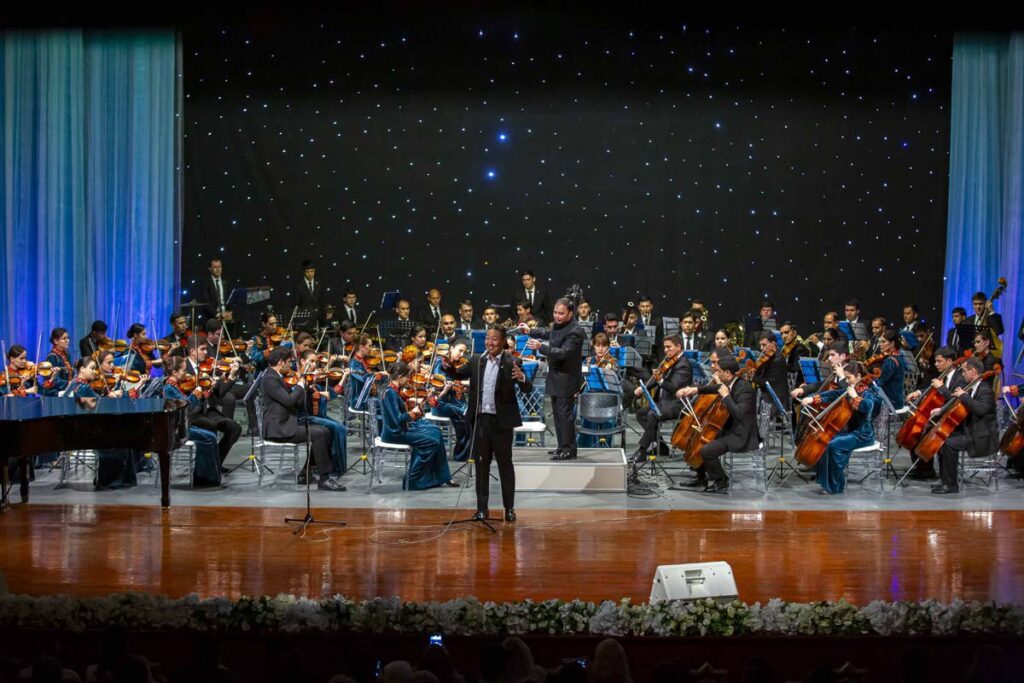
On November 22 and 23, Ashgabat, the capital of Turkmenistan, became a hub of cultural exchange during the Days of Korean Culture, an event organized by the Embassy of the Republic of Korea. The festivities kicked off on November 22 at the Arkach Shopping and Entertainment Center, where visitors were treated to a lively introduction to Korean culture. Colorful photo zones displayed scenic Korean landscapes, while interactive stations allowed attendees to craft souvenirs such as traditional-style trinkets and mirrors. Korean snack tastings and live music enhanced the festive atmosphere, making it a family-friendly event that drew many visitors of all ages. The celebrations culminated on November 23 with a concert at the Makhtumkuli Music and Drama Theater of Turkmenistan. Korean artists, accompanied by the State Symphony Orchestra of Turkmenistan under the direction of Rasul Klychev, delivered a memorable performance. The program featured a blend of Korean lyrical compositions inspired by love and nature, alongside timeless pieces of world classical music. A standout moment of the evening was the performance by acclaimed Korean singers, tenor Kwon Hwapyeong and mezzo-soprano Kwon Miji, which earned a standing ovation from the audience. Kwon Hwapyeong, a graduate of the Vienna University of Music and Korea National University of the Arts, is celebrated internationally for his exceptional artistry. Mezzo-soprano Kwon Miji, a distinguished alumna of Gyeonggi-do University with further studies abroad, has similarly garnered acclaim for her remarkable vocal range and stage presence. The concert was a fitting finale to Ashgabat's fall cultural season, blending the traditions of Korean musical artistry with the creativity of Turkmen performers.