• KGS/USD = 0.01143 0%
  • KZT/USD = 0.00212 0%
  • TJS/USD = 0.10718 -0.09%
  • UZS/USD = 0.00008 0%
  • TMT/USD = 0.28571 0%
  • KGS/USD = 0.01143 0%
  • KZT/USD = 0.00212 0%
  • TJS/USD = 0.10718 -0.09%
  • UZS/USD = 0.00008 0%
  • TMT/USD = 0.28571 0%
  • KGS/USD = 0.01143 0%
  • KZT/USD = 0.00212 0%
  • TJS/USD = 0.10718 -0.09%
  • UZS/USD = 0.00008 0%
  • TMT/USD = 0.28571 0%
  • KGS/USD = 0.01143 0%
  • KZT/USD = 0.00212 0%
  • TJS/USD = 0.10718 -0.09%
  • UZS/USD = 0.00008 0%
  • TMT/USD = 0.28571 0%
  • KGS/USD = 0.01143 0%
  • KZT/USD = 0.00212 0%
  • TJS/USD = 0.10718 -0.09%
  • UZS/USD = 0.00008 0%
  • TMT/USD = 0.28571 0%
  • KGS/USD = 0.01143 0%
  • KZT/USD = 0.00212 0%
  • TJS/USD = 0.10718 -0.09%
  • UZS/USD = 0.00008 0%
  • TMT/USD = 0.28571 0%
  • KGS/USD = 0.01143 0%
  • KZT/USD = 0.00212 0%
  • TJS/USD = 0.10718 -0.09%
  • UZS/USD = 0.00008 0%
  • TMT/USD = 0.28571 0%
  • KGS/USD = 0.01143 0%
  • KZT/USD = 0.00212 0%
  • TJS/USD = 0.10718 -0.09%
  • UZS/USD = 0.00008 0%
  • TMT/USD = 0.28571 0%

Viewing results 805 - 810 of 1735

Uzbekistan Leads Central Asia in World Happiness Report

The World Population Review has announced this year's list of the happiest countries in the world. Since 2002 the World Happiness Report has used statistical analysis to determine the probable wellbeing of countries. To determine the happiest country in the world, researchers analyzed Gallup poll data collected from 143 countries over the past three years. The index looks at six categories: gross domestic product per capita, social support, life expectancy, freedom to make life choices, generosity of the general population, and perceptions of internal and external corruption levels. The seven happiest countries in the world for 2024 are all in Europe, with six of them being in Northern Europe. Finland is in first place, followed by Denmark, Iceland, Sweden, Israel, the Netherlands, and Norway. Afghanistan ranked as the least happy country in 2024, placing 143rd. This is due to factors like low life expectancy, low GDP per capita, and the impact of the Taliban takeover. Uzbekistan takes 47th place in the ranking and is the happiest country in Central Asia. Kazakhstan is next, in 49th place overall, falling from 44th last year. Kazakhstan’s relatively slow population growth will allow the country to continue makihttps://timesca.com/uzbekistan-leads-central-asia-in-world-happiness-report/ng economic progress and reduce poverty in the coming decades. Tajikistan ranks 88th on the list. The World Happiness Report says: “Tajikistan’s population boom threatens its economy and resources. The government has implemented laws in the past to encourage contraception, and while this has helped bring down the birth rate, the country still has a long way to go.” The report doesn’t provide information about Kyrgyzstan and Turkmenistan this year. According to the most recent data for them, Turkmenistan was 78th in 2022, and Kyrgyzstan was 62nd in 2023.

Restoring Roars: The Historic Return of Amur Tigers to Kazakhstan’s Wilderness

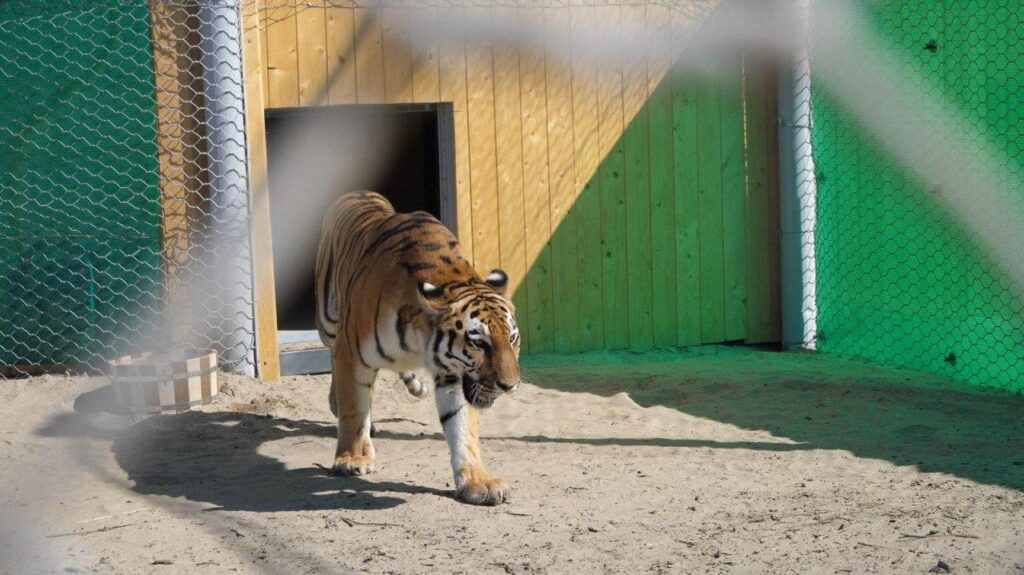
This past weekend, two Amur tigers were brought to the Ile-Balkhash State Nature Reserve in southern Kazakhstan from the Landgoed Hoenderdaell Zoo in the Netherlands. The tigers, one male and one female, will live in a specially-built enclosure in the reserve for breeding and the release of their offspring into the wild. Their offspring are expected to become the first wild tigers to reappear on Kazakhstan's territory in more than 70 years. In 2025, another three or four tigers are planned to arrive in Kazakhstan from Russia. In 2010, Kazakhstan's government announced plans to reintroduce Amur tigers to the country. Seven years later, a tiger reintroduction program was developed, and the southern shore of Lake Balkhash in the delta of the Ili River was chosen as the most suitable place to restore the population in Kazakhstan. The program is being implemented by the Ministry of Ecology and Natural Resources in Kazakhstan, with the support of the World Wildlife Fund (WWF) and the United Nations Development Programme (UNDP). According to the ministry, the Ile-Balkhash Reserve can accommodate a population of up to 100 tigers. The tigers that were once indigenous to Kazakhstan were known as Turan tigers. The Turan tiger was an extinct population once found in Central Asia, the Caucasus, and northern Iran. Biologists suggest that Turan tigers and Amur tigers, native to Russia's Far East, are not distinct subspecies but belong to the same group of big cats. The Ile-Balkhash Reserve was created to restore the ecosystem of the southern Balkhash region, and work is underway to restore the tiger's natural food base. Ile-Balkhash is a critical natural area of the Ile River Delta with the adjacent shore of Lake Balkhash. It is the only preserved river delta in Central Asia, while the others (the deltas of the Syr Darya, Amu Darya, and Chu Rivers) have degraded due to desertification. Improving the tiger's natural food supply and the reserve's remoteness will help avoid conflict between the tiger and humans in the area. Historically, the Turan tigers' habitats in Kazakhstan were reed beds and floodplain forests along the banks of the Ili and Syr Darya rivers. Based on historical records of tiger hunts and the frequency of human encounters with them, the population density of the Turan tiger was considerably higher than that of the Amur tiger, and more comparable to the density of tigers in India. In what is now Kazakhstan, the extermination of tigers, including through military shootings, began in 1891. The destruction of their habitat and primary food sources — such as Tugai red deer, goitered gazelles, saigas, kulans, roe deer, and wild boars — ultimately led to their extinction by 1948. This is not the first project to reintroduce endangered species to Kazakhstan. In June 2024, eight Przewalski’s horses were reintroduced to the Altyn Dala Nature Reserve in the Kostanay region of Kazakhstan. The horses were transported from Prague Zoo. The Kazakh Ministry of Ecology and Natural Resources have said that 40 wild horses will be...

Embracing Diversity: Love Blossoms Between International Couples in New Kazakhstan

Kazakhstan is a multi-ethnic country in which more than 130 ethnic groups coexist. According to the 2021 census, Kazakhs make up about 70% of the total population, while other ethnic groups make up the remaining 30%. This diversity of cultures and traditions creates a unique atmosphere for interethnic relations. The growing number of international couples in Kazakhstan can be attributed to this diversity. People of different nationalities are beginning to meet and start families, enriching their lives with new traditions and cultural aspects. One such couple is DJ, Ainura Tukubayeva, and Mehrdad Razavi, a fashion model, whose story together began in 2018. TCA spoke to Ainura to find out about their experience of living in Kazakhstan, and how the diversity of cultures has influenced their relationship.   TCA: Tell us about yourselves, where did you meet? Ainura: My husband and I are an international couple. I’m from Kazakhstan and he’s from Iran. We first met in 2018 in Kuala Lumpur, Malaysia, at a party organized by a mutual friend. That night marked the beginning of our incredible journey together.   TCA: How did your husband adapt to life in Kazakhstan? My husband's adaptation to life in Kazakhstan was remarkably smooth, largely because we were surrounded by family who showered us with love and support. This made a world of difference, helping him feel at home right from the start. The biggest challenge for him was definitely the weather. Coming from the tropics, the harsh Kazakh winter, with temperatures dropping to -30°C, was a real shock. I still remember the look on his face when he first stepped outside into the freezing cold; it was priceless! However, with time and plenty of warm clothing, he adjusted, and now he even jokes about how he's become a true Kazakh by enduring such extreme conditions.   TCA: What has impressed him most about Kazakh culture? What really captivated him about Kazakh culture was the strong sense of community and the deep bonds within families. He was touched by how families are incredibly close-knit and how this sense of unity extends to the larger community, as well. There's a genuine spirit of togetherness here that he finds both comforting and inspiring. He also noticed how much people here love to celebrate life. Whether it’s a small gathering or a big event, Kazakhs know how to have a good time, and this joy for life is something he truly admires. It’s a nation of happy, resilient people, and that’s left a lasting impression on him.   TCA: How did locals in Kazakhstan perceive you as an international couple? Our experience as an international couple in Kazakhstan has been overwhelmingly positive. We’ve been fortunate to be surrounded by incredibly supportive people who have gone out of their way to make us feel welcome and at home. Despite some stereotypes about international marriages, we’ve never faced anything that made us feel different or unwelcome. In fact, our friends and family have embraced us wholeheartedly, and this has...

USAID Extends Education Programs in Uzbekistan

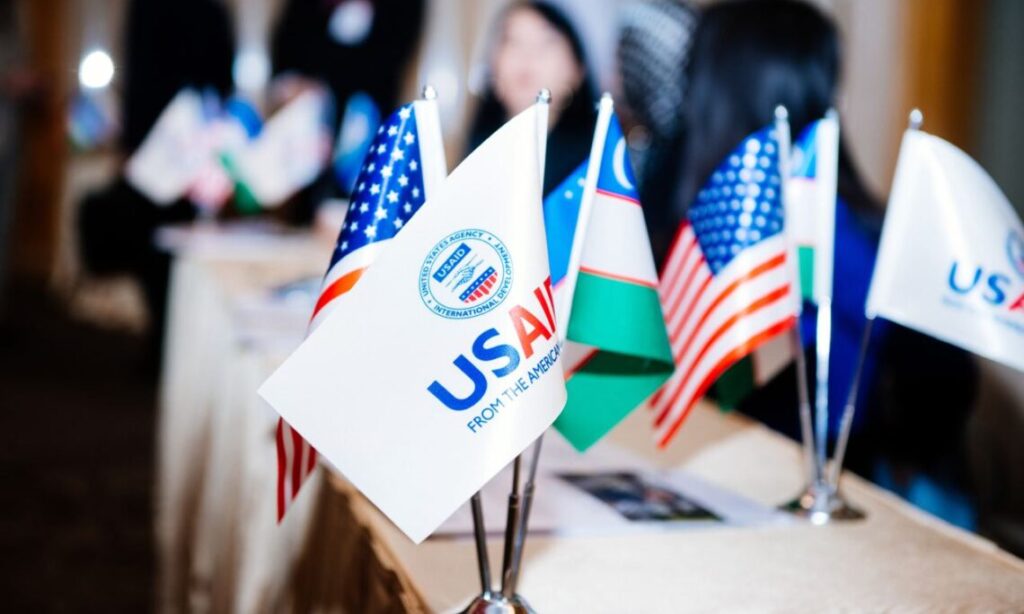
The United States Agency for International Development (USAID) has provided an additional $6.1 million in funding under an ongoing Development Goals Grant Agreement (DOAG) with the Department of Early Childhood Education. The total volume of investments in DOAG nw exceeds $47 million, the US Embassy in Tashkent has reported. The embassy added that the new funding strengthens programs that help develop basic skills in elementary school students, and gives students in grades 8-11 the entrepreneurial and economic skills they need to get jobs and participate in the economy of the future. “Investing in education is an investment in a brighter future for everyone. By providing quality education, we empower individuals with the skills and knowledge they need and pave the way for a more prosperous, equitable, and stable society,” explains David Hoffman, USAID Mission Director in Uzbekistan. “Every dollar spent on education is a step toward building a better tomorrow for all,” he added. The five-year DOAG contract was signed in 2019. USAID’s investments in Uzbekistan’s education sector aim to improve reading and math skills in primary grades, English fluency, information and communication technology development, and employability skills. Also, in March, USAID announced the investment of $17.7 million in a five-year project to support business in Uzbekistan. This investment will increase competitiveness in the fields of information and communication technologies (ICT), tourism, textiles, and green economy. Another USAID initiative is to support clean energy goals in Uzbekistan. As part of the initiative, the “Strategy for the Development of Renewable and Hydrogen Energy” of Uzbekistan plans to increase the production of renewable energy (solar, wind, and hydropower) by 25% by 2030 and achieve carbon neutrality by 2050.

The First-Ever Audio Recording of Kazakh Music

It was long believed that the world's first audio recording of Kazakh music was made in 1925 during the performance of singer, Amre Kashaubaev, at the Exposition Internationale des Arts Decoratifs et Industriels Modernes in France. However, the Berlin Museum of Visual Anthropology and Ethnology has recordings of Kazakh folk music, voices, and ritual chants, which were made in western Kazakhstan twenty years earlier. These recordings were made during the Acoustic Era, when sound waves were still recorded through analog methods. In 1857, Frenchman, Édouard-Léon Scott de Martinville invented the so-called phonautograph. Three years later, the world's first song was recorded. It was a French folk song, “By the Light of the Moon”. In 1877, Thomas Edison invented the phonograph. This invention could both record and playback audio and marked the start of the Acoustic Era. Later, in 1900, Carl Stumpf, a professor of psychology at the University of Berlin, established a phonogram archive in Berlin, where, at the same time, an orchestra from Thailand was touring. Stumpf recorded the Thai music, which was considered exotic to Europeans at that time. This recording became the first in the rich Ethnomusicology collection of the Ethnological Museum of Berlin. These recordings were originally discovered at the Institute of Russian Literature, also known as Pushkin House, which is part of the network that is affiliated with the Russian Academy of Sciences. Dr. Efim Rezvan, a well-known scholar of Turkology, showed the TCA team the wax rollers - cylindrical wax containers that can be played using Edison's phonograph. The first-ever audio recordings of Kazakh music were made using these devices. The German scientist Richard Karutz recorded them in the early 20th century when he organized an expedition to the steppes of Turkestan. As a result of his expedition, he wrote a book called Among the Kirghiz and Turkmens in Mangyshlak. During his expedition, Karutz took many photos and collected audio recordings of the local peoples' art. In addition to his scientific research, Karutz pursued other goals; for instance, he wrote about the health benefits of tea, which the locals consumed in large quantities. He claimed that drinking tea in large quantities when the air temperature was over 40 degrees Celsius helped them to bear the heat. Karutz wrote that, “It is necessary for our troops to weigh the importance of tea consumption during summer maneuvers and campaigns.” Richard Karutz was born into a mercantile family. In 1886, he went to study medicine at the University of Jena 1891. Completing his studies and receiving his doctorate in 1891, he then worked as a doctor aboard a ship. Whilst on working as a surgeon on a ship, Karutz traveled to South America and West Africa. After these trips, Karutz became interested in ethnography. In 1896, he was appointed head of the ethnographic collection of the Museum of Ethnology in Lübeck. Karutz enriched the museum's collection with artifacts from his travels, and encouraged other merchants and travelers to bring items from other countries for the collection. The...

A Bone of Contention: Kazakhstan and Kyrgyzstan at Loggerheads Following World Nomad Games Kokpar Final

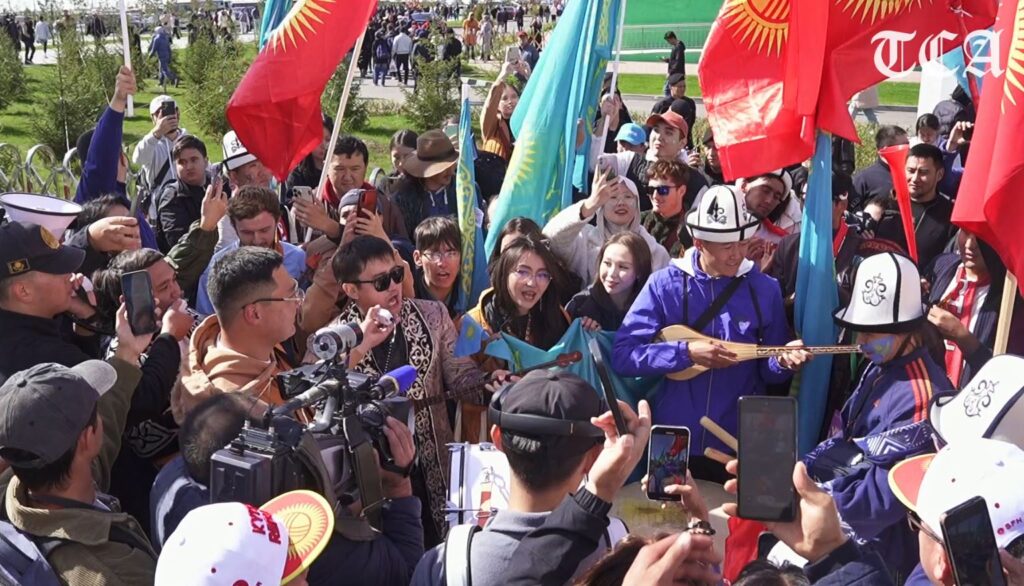
Astana largely managed to turn the 5th World Nomad Games into an exemplary international sporting event free of politics and disagreements. Overall, the Games stood in stark contrast to the Olympics in Paris earlier this year, when the International Olympic Committee’s decision to allow a handful of athletes from Russia and Belarus to compete under a neutral flag led to calls from some counties for a boycott. However, the culmination of the Nomad Games saw an unpleasant incident at the final of the most popular event, which resulted in a fallout between Kazakhstan and Kyrgyzstan. [video width="1920" height="1080" mp4="https://timesca.com/wp-content/uploads/2024/09/nomad-game-2.mp4"][/video]   A blow with a kamcha On September 12, an incident occurred during the Kokpar final, in which the national teams of Kazakhstan and Kyrgyzstan met, when a player from the Kazakh team, which was underperforming, struck a Kyrgyz rider with a kamcha (whip). At this point, the game was stopped, and a squad of law enforcement officers immediately surrounded the culprit. After the offender was suspended from proceedings and given a time penalty, the game continued, and Kazakhstan, having leveled the score, won the match in overtime. The Kokpar final at the previous Nomad Games, hosted by Turkey, also ended with a marginal Kazakh victory in the derby between the long-standing rivals. However, unlike in 2022, this time the Kyrgyz national team did not accept defeat in silence. At the awards ceremony, the Kyrgyz team ripped off their silver medals, raised their country's flag, and defiantly left the arena. “We knew it would be unfair, but not to this extent. The referees were swearing at us, and the police were beating our players," the Kyrgyz captain said. "A KNB (national security) officer came up to me, showed me his ID card, took my picture, and started to intimidate me, saying I was sowing discord between nations. The pressure was strong. After the scuffle, when the score was 3-1 in our favor, we were asked to leave the game. They said the refereeing would be fair... We didn't think the Kazakhstani side would allow such disorganization and injustice. If Kazakhstanis have pride, they won't celebrate such a victory.” The press service of Kazakhstan's National Security Committee promptly denied the allegations, saying their officers were not involved in providing security for the Games. Tastanbek Yesentaev, the Chief Judge of the World Nomad Games in Astana, threatened the Kyrgyz team with a 2-3 year suspension from the competition for showing disrespect. This statement only served to further inflame proceedings. At a briefing on September 16, four days after the final, Ramis Kudaibergenov, an expert on the Kyrgyz Kok-Boru Federation, stated that the Kazakh national team committed 14 gross violations of rules in the final of the Kokpar, and given a level playing field, the Kyrgyz team would have won 5-1. “Everyone blames the referee, but the whole system is culpable. We prepared the players based on previous games, but there were so many infractions we didn't take into account. We were able to...