• KGS/USD = 0.01143 0%
  • KZT/USD = 0.00212 0%
  • TJS/USD = 0.10718 -0.09%
  • UZS/USD = 0.00008 0%
  • TMT/USD = 0.28571 0%
  • KGS/USD = 0.01143 0%
  • KZT/USD = 0.00212 0%
  • TJS/USD = 0.10718 -0.09%
  • UZS/USD = 0.00008 0%
  • TMT/USD = 0.28571 0%
  • KGS/USD = 0.01143 0%
  • KZT/USD = 0.00212 0%
  • TJS/USD = 0.10718 -0.09%
  • UZS/USD = 0.00008 0%
  • TMT/USD = 0.28571 0%
  • KGS/USD = 0.01143 0%
  • KZT/USD = 0.00212 0%
  • TJS/USD = 0.10718 -0.09%
  • UZS/USD = 0.00008 0%
  • TMT/USD = 0.28571 0%
  • KGS/USD = 0.01143 0%
  • KZT/USD = 0.00212 0%
  • TJS/USD = 0.10718 -0.09%
  • UZS/USD = 0.00008 0%
  • TMT/USD = 0.28571 0%
  • KGS/USD = 0.01143 0%
  • KZT/USD = 0.00212 0%
  • TJS/USD = 0.10718 -0.09%
  • UZS/USD = 0.00008 0%
  • TMT/USD = 0.28571 0%
  • KGS/USD = 0.01143 0%
  • KZT/USD = 0.00212 0%
  • TJS/USD = 0.10718 -0.09%
  • UZS/USD = 0.00008 0%
  • TMT/USD = 0.28571 0%
  • KGS/USD = 0.01143 0%
  • KZT/USD = 0.00212 0%
  • TJS/USD = 0.10718 -0.09%
  • UZS/USD = 0.00008 0%
  • TMT/USD = 0.28571 0%

Viewing results 817 - 822 of 1735

A Yurt Full of Culture: Immersive Theater Meets Nomadic Traditions at the World Nomad Games

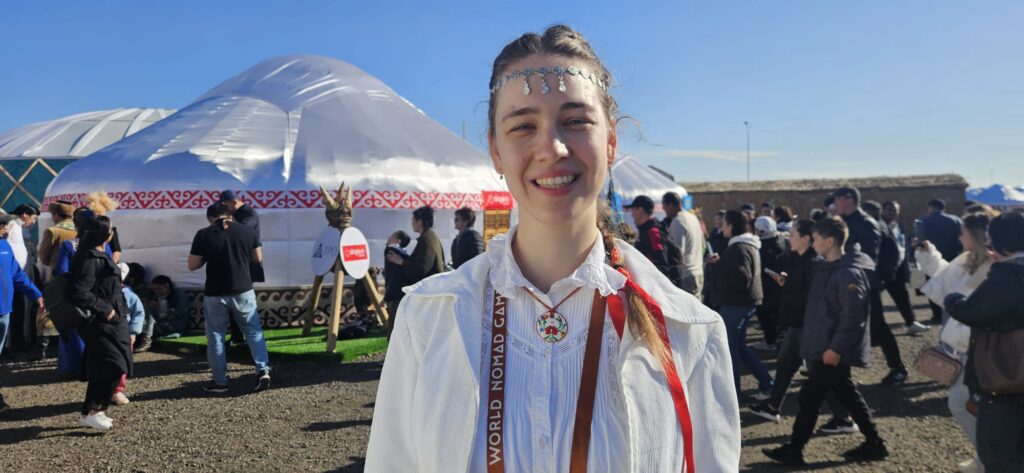
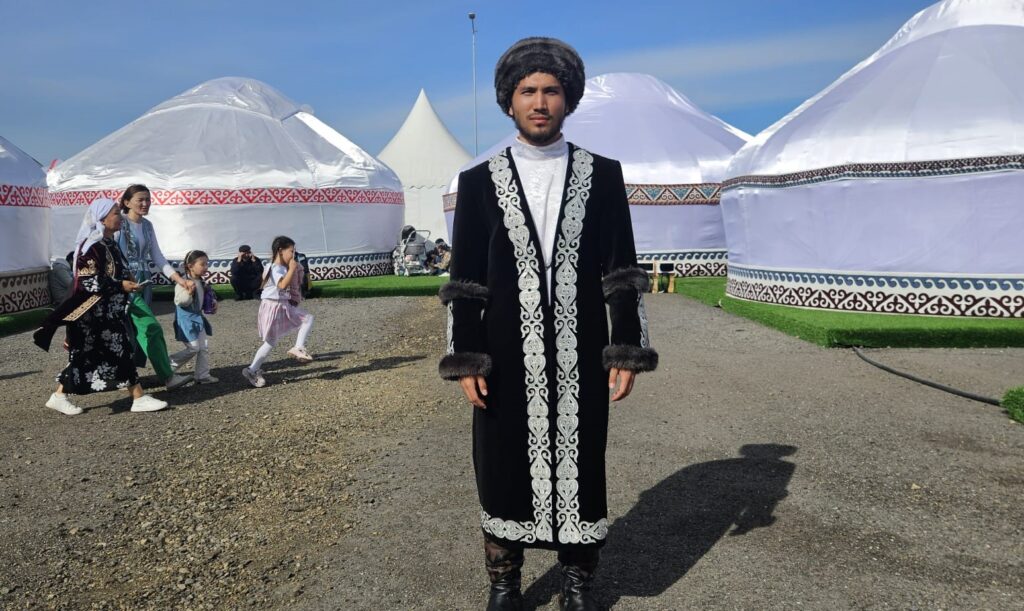
In and amongst the many yurts at the 2024 World Nomad Games Ethnoaul (Ethnic Village), the inhabitants of a specific yurt — not only delight and surprise passersby with boisterous renditions of Kazakh music, dance, and comical stage combat — but they energetically beckon people inside to experience the traditional familial rituals of a nomadic Kazakh marriage proposal. Guests are seated on the floor while segments of the ritual are played out and translated into English by the host, Ernur. The experience is immersive to the point where some of the observers from far-off regions were overheard congratulating the bride-to-be on her upcoming nuptials. Inside the yurt, Ernur set the scene by pointing out the players, among them, the fathers of the future bride and groom, the future bride, her future mother-in-law, and a strumming dombra player. After the union was established, the mother-in-law bestowed her daughter-to-be with gifts of jewelry. As the dombra rhythm accelerated, the fathers-in-law embraced, and the two families exchanged gifts of — in this instance — fur-collared cloaks. The wedding, Ernur explained, would occur in March, the month of the traditional Central Asian New Year (Nauryz). Upward-facing palms aided declarations of goodwill and thankfulness, followed by more music, merriment, and horse-related appetizers. A sense of genuine formality and inclusive pomp was fully realized in under ten minutes. [video width="848" height="478" mp4="https://timesca.com/wp-content/uploads/2024/09/WhatsApp-Video-2024-09-13-at-12.10.55.mp4"][/video] The Mukanov Theater, named after Kazakh Soviet writer and poet Sabit Mukanov, is based in Petropavl, approximately 300 miles north of Astana near the border with Russia. Ernur, the aforementioned host and cast member, has been acting with the twenty-one-year-old Mukanov Theater for a year. Back in Petropavl, the company, which has a 200-seat theater building, performs traditional Kazakh plays, modern plays, and Shakespeare, which Ernur described as “so difficult for us!” 2024 marks the first year that they have performed at the WNG with their debut marriage proposal ceremony. Additionally, the theater company has enacted different nomadic traditions in other yurts around Kazakhstan. Ernur, who said he’d enjoyed his time in Astana, added that the Mukanov Theater was “proud that the World Nomad Games are here [in Kazakhstan].” [caption id="attachment_23140" align="aligncenter" width="720"] Left to right: Brandon, Albert and Jan at the World Nomad Games; image: TCA, K. Krombie[/caption] Three Western traveling companions, who met each other only recently on the backpacker trail of Central Asia, were ushered into the Mukanov Theater yurt. They each provided reviews of the immersive theater experience, and also, their individual opinions regarding the wider connotations of the performance, proportionate to Kazakhstan’s post-Soviet cultural heritage. Brandon, an American from San Francisco, has been traveling the world for nine months and thought it would be “really funny” to come to the Stans for a couple of months. “I was in Turkey, and I was like, you know what, where's the weirdest place I can think of to go to that's not too far from where I am right now? Who's ever been to Uzbekistan, right? Kazakhstan is my last stop...
World Nomad Games 2024: A Golden Spectacle

September 13 sees the final day of the World Nomad Games in Astana, themed as the “Gathering of the Great Steppe.” An extravaganza of color and culture, the Games were about much more than sport, however. As described by Sultan Raev, General Secretary of the International Organization of Turkic Culture, even the sports themselves are “not about physical strength. They are about spiritual endurance.” [video width="848" height="480" mp4="https://timesca.com/wp-content/uploads/2024/09/WhatsApp-Video-2024-09-13-at-11.46.04.mp4"][/video] The Games have proven an unmitigated success for Kazakhstan, not only due to the nation’s huge medal haul, but in a diplomatic sense, as well, with important regional leaders in attendance. The Games brought together around 3,000 participants from 89 countries competing for 581 medals across 21 sports, with media outlets from 64 countries applying for accreditation. Meanwhile, the Ministry of Tourism and Sports has stated that over tens of thousands of foreign tourists will have attended the Games, which will “help showcase Kazakhstan's cultural and sports heritage to a global audience, significantly boosting interest in tourism to the country." On the last day proper of the Games, the finals of the kokpar and the kok boru were staged. Described by Ablai Kondybaev, Deputy Head of the Directorate responsible for preparing and organizing the 5th World Nomad Games in an interview with TCA as the “most famous” events, they are “traditional games akin to polo played with sheep or goat carcasses. Long popular among Turkic people, especially in Central Asia, these fast and furious competitions attract record numbers of spectators.” [video width="848" height="480" mp4="https://timesca.com/wp-content/uploads/2024/09/WhatsApp-Video-2024-09-13-at-11.46.041-1.mp4"][/video] Games popularized by Jenghiz Khan - though it is said his horde preferred to use a human torso for a ball – these days, at international events at least, the goat carcass has been replaced by a dummy, known as a serke. Still, with the stampeding horses producing a great wall of dust, the flag-waving partisan crowd were hugely engaged, and it is easy to see why. A scrum of whips and sweating horses snorting, occasionally a horseman would emerge, swinging the serke by a leg. Forecasts had pointed to the finals likely being between the favorites, Kazakhstan and Kyrgyzstan, and this proved to be the case, and in the kokpar, Kazakhstan were victorious. However, the hosts had to settle for silver in the kok boru, losing 10-4 to neighboring Kyrgyzstan after beating Turkey 15-1 in the semis in a surprise drubbing. Overall, however, the Games have been a golden event for the nation as a whole. Despite earlier reports indicating that the World Nomad Games would return to Kyrgyzstan in 2026, according to Kondybaev, “it is planned that it will be Uzbekistan” who will stage the next iteration, which would mean another new host nation for this dazzling demonstration of the resilience of nomadic culture and its dramatic resurgence in the era of globalization. As previously reported by TCA, in his keynote speech at the opening ceremony, President Tokayev pointed out that: “Even amid globalization, the nomadic lifestyle that existed for a thousand years is reviving and...

The Subtle Politics of the World Nomad Games

Attending the World Nomad Games in Kazakhstan, one might be tempted to look for a possible political dimension, or the seeming lack thereof. The 5th World Nomad Games have brought  together in Astana more than 3,000 participants from 89 countries competing for 581 medals across 21 sports, with a prize fund of 250 million tenge ($521,000). This dwarfs the 19 nations which participated in the first iteration of the event, hosted in Kyrgyzstan in 2014, where just ten sports were held. Of course, the Games have expanded exponentially since then, and interest from visitors and media alike has also skyrocketed. Kazakhstan's Ministry of Tourism and Sports has stated that over 100,000 foreign tourists will attend the Games, which will “help showcase Kazakhstan's cultural and sports heritage to a global audience, significantly boosting interest in tourism to the country." Also hugely significant is the level of media interest, with outlets from 64 countries applying for accreditation. With competitors, visitors and media from around the globe, clearly the appeal of the Games has expanded far beyond those nations from which the heirs to nomadic civilizations hail. As for its cultural significance, it speaks volumes that the World Nomad Games has been included in the UNESCO list of Intangible Cultural Heritage. The Games, however, are also acting as a semi-official summit, as evinced by the attendance of President Mirziyoyev of Uzbekistan, President Japarov of the Kyrgyz Republic, Gurbanguly Berdimuhamedov, the Chairman of the People’s Council of Turkmenistan, the Rais (Head) of Tatarstan, Rustam Minnikhanov, the Head of the Republic of Sakha (Yakutia), Aisen Nikolayev, the former president of Mongolia, Nambaryn Enkhbayar, the son of Turkey’s President, Bilal Erdogan, and more. Given all this, the World Nomad Games as more than just an event, sporting or otherwise, and have been utilized as part of Kazakhstan's strategic course in pursuit of a balanced and multi-vector foreign policy aimed at ensuring the best interests of the state, whilst positioning the nation as an increasingly important land-bridge between East and West, both in terms of trade and diplomacy. This dynamic neutrality has made the Nomad Games in Astana the first international sporting event since the beginning of Vladimir Putin’s war in Ukraine in which the Russian team has been able to participate under the national flag. Spokeswoman for the Russian Foreign Ministry, Maria Zakharova, stated that the “Russian national team, comprising 150 athletes, was welcomed with applause in Kazakhstan’s capital, accompanied by a rendition of “Katyusha.”  It’s a celebration of sport and friendship! Kazakhstan has reminded the world of what global sports should be: depoliticized, inclusive, and focused on promoting athleticism rather than being tainted by various perversions.” This, however, does not mean that Kazakhstan is cosying-up to Russia in the slightest. Despite disruptions in trade chains and logistical problems, Astana has followed Western sanctions to the letter, much to Putin’s chagrin. In this ever more open and outward looking nation, rallies against Russia’s invasion have been allowed to be staged. Even the death of Alexei Navalny...

Video Highlights: World Nomad Games Day Four

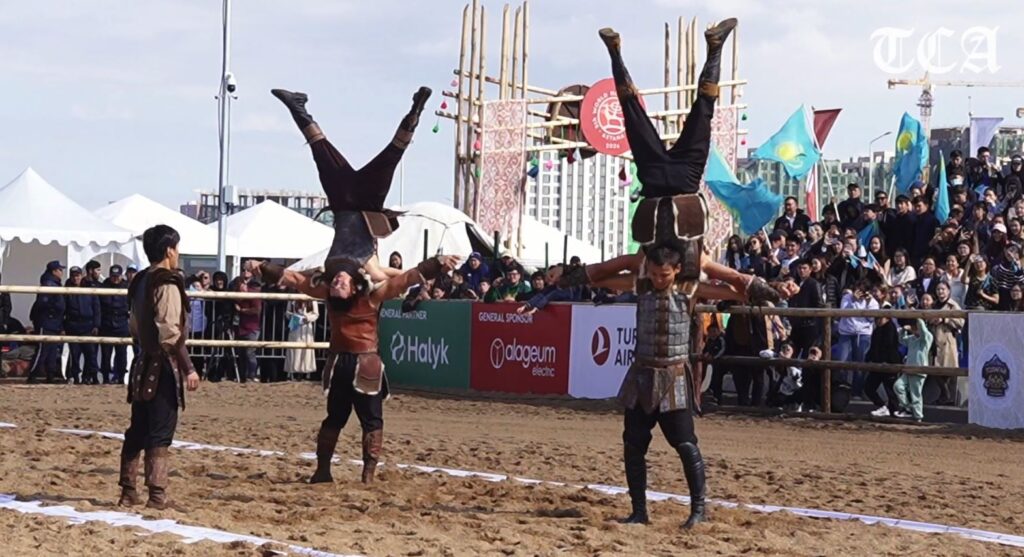
The fourth day of the World Nomad Games, themed as the “Gathering of the Great Steppe,” saw events taking place across Astana once more. TCA went to the Powerful Nomad competition, and took in national dances and some theatrical sabre combat: [video width="1920" height="1080" mp4="https://timesca.com/wp-content/uploads/2024/09/4.mp4"][/video]

Adoption of Latin-Based Common Turkic Alphabet

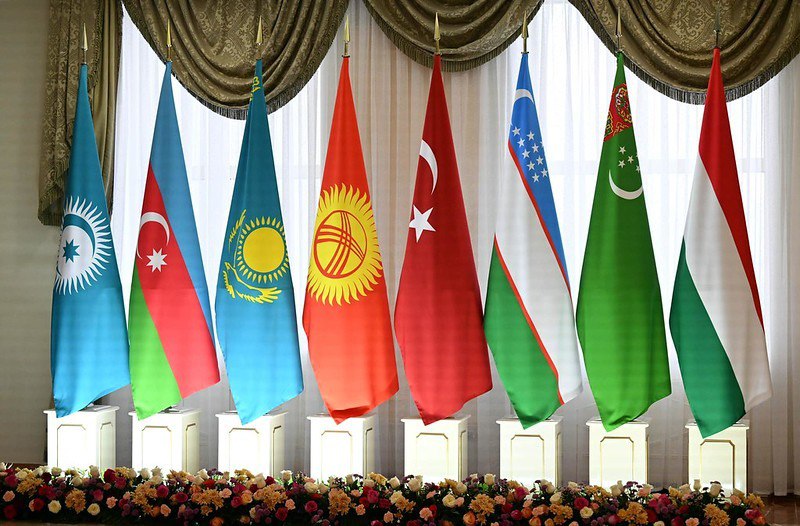
The Turkic Academy has announced that the Turkic World Common Alphabet Commission is to adopt a Latin-based Common Turkic Alphabet consisting of 34 letters. At a meeting in Baku (Azerbaijan) on September 9-11, the Commission finalized its two-year development of a proposed standard alphabet for Turkic languages in which each letter in represents different phonetic sounds in Turkic languages. Emphasizing its historic significance, the Turkic Academy stated that the development of the Common Turkic Alphabet, first proposed by scientists in 1991, promotes mutual understanding and cooperation among the Turkic peoples while preserving their linguistic heritage. Based in Astana, Kazakhstan, the Turkic Academy is an international organization established under the Organization of Turkic States. Founding member states include Azerbaijan, Kazakhstan, Kyrgyzstan, and Türkiye, with Hungary and Uzbekistan joining as observers in 2018 and 2022, respectively.  The Organization of Turkic States currently comprising Azerbaijan, Kazakhstan, Kyrgyzstan, Turkey, Uzbekistan and Turkmenistan, with Hungary and the Turkish Republic of Northern Cyprus as observers, was founded in 2009 to foster comprehensive cooperation among Turkic-speaking nations. The alphabet issue in post-Soviet Turkic-speaking countries dates back to 1929, when the Soviet government replaced traditional Arabic-based alphabets used by Muslim minorities in the Soviet Union with Latin-based national alphabets. In 1940, the Latin alphabet was replaced with Cyrillic, used for the Russian language. After the breakup of the Soviet Union in 1991, former Soviet republics of Azerbaijan and Turkmenistan switched to Latin-based alphabets, while Uzbekistan has used both Latin and Cyrillic alphabets since 1992. In 2017, Kazakhstan's then-President Nursultan Nazarbayev ordered the government to develop a Latin-based alphabet for the Kazakh language. The switch, initially planned for 2025, was then postponed till as late as 2031. Citing the complexity of a transition from the Cyrillic to a Latin-based alphabet, in June 2022, Nazarbayev's successor, President Kassym-Jomart Tokayev stated that linguistic reform should not be rushed. Kyrgyzstan is the only post-Soviet Turkic-speaking nation committed to the use of the Cyrillic alphabet. Talk about switching from Cyrillic to Latin in post-Soviet Central Asia has always irritated Moscow, which considered such moves by the former Soviet republics as a means of distancing themselves from Russian influence.

Celebrating Female Pioneers at the 2024 World Nomad Games

Like most dominating worldwide sports, the World Nomad Games are top-heavy with male athletes. Yet while women don’t participate in all the categories, in the 2024 WNG, a noteworthy number of them have become the center of attention. Among the packed crowds of the Hippodrome and Ethnoaul venues, one competitor and two ticket holders had a few things to say on the matter of WNG women. Timea Janurik, known as Timi, is a folk musician and a PhD student in folk teaching methods, from Budapest, Hungary. She is competing as a player of the citera, the national stringed instrument of Hungary, at the Ethnoaul. The Hungarian representation at the WNG includes three men and three women, but Timi, who specializes in Turkic folk songs, is the only musician among them. While rehearsing in Astana, Timi chanced upon a Kazakh girl singer and asked her, “Do you want to join me in the concert?” Hence, a female alliance and a makeshift band were formed because Timi only knew how to sing one song in the Kazakh language. According to Timi, her new partner “can sing beautifully.” In Timi’s native Hungary, folk musicianship is an art form split evenly among men and women, but citera playing is dominated by women (and violin playing by men). [video width="848" height="478" mp4="https://timesca.com/wp-content/uploads/2024/09/WhatsApp-Video-2024-09-12-at-00.21.19.mp4"][/video] Timi is also participating in the female Assyk games, a type of traditional Kazakh board game in which players use small animal bones — assyks — to knock out multiple lines of their opponent’s assyks. The game rules differ according to gender. The male version of the game “is more popular,” says Timi, “because it’s more visible and looks so fancy to play.” [caption id="attachment_23070" align="aligncenter" width="1577"] Image: TCA, K. Krombie[/caption] British visitors Naomi Ocean and Andy Myer (an archer), from Wales and Devon, respectively, came all the way from the UK to Astana to watch the horseback archery. Even though they are well-traveled in other regions of Central Asia, this is their first visit to Kazakhstan and the WNG. They remarked that they hadn’t noticed the UK team participating in anything they have witnessed thus far, but what they have seen has been “interesting and exciting.” Having just seen the Turkey team being “trashed in the kok boru,” they were happy to see Turkey’s subsequent victory in the Traditional Turkish Archery, in particular the female team member who performed victory laps before an exhilarated, mostly Kazakh crowd. “We were glad,” said Naomi, “and we loved seeing the female archers.” Naomi was equally, if not more impressed by the “mixed teams” in the horseback archery category. Having watched and enjoyed the 2016 Kazakh language documentary film, The Eagle Huntress, Naomi and Andy look forward to the Kusbegilik games. “We’re expecting to see women handling eagles, which should be good.” [caption id="attachment_23071" align="aligncenter" width="2000"] Image: TCA, K. Krombie[/caption] A Turkish team victor, competing in Traditional Turkish Archery (mixed gender team), and an Uzbek athlete in horseback archery (with no specific male and female categories)...