• KGS/USD = 0.01143 0%
  • KZT/USD = 0.00212 0%
  • TJS/USD = 0.10718 -0.09%
  • UZS/USD = 0.00008 0%
  • TMT/USD = 0.28571 0%
  • KGS/USD = 0.01143 0%
  • KZT/USD = 0.00212 0%
  • TJS/USD = 0.10718 -0.09%
  • UZS/USD = 0.00008 0%
  • TMT/USD = 0.28571 0%
  • KGS/USD = 0.01143 0%
  • KZT/USD = 0.00212 0%
  • TJS/USD = 0.10718 -0.09%
  • UZS/USD = 0.00008 0%
  • TMT/USD = 0.28571 0%
  • KGS/USD = 0.01143 0%
  • KZT/USD = 0.00212 0%
  • TJS/USD = 0.10718 -0.09%
  • UZS/USD = 0.00008 0%
  • TMT/USD = 0.28571 0%
  • KGS/USD = 0.01143 0%
  • KZT/USD = 0.00212 0%
  • TJS/USD = 0.10718 -0.09%
  • UZS/USD = 0.00008 0%
  • TMT/USD = 0.28571 0%
  • KGS/USD = 0.01143 0%
  • KZT/USD = 0.00212 0%
  • TJS/USD = 0.10718 -0.09%
  • UZS/USD = 0.00008 0%
  • TMT/USD = 0.28571 0%
  • KGS/USD = 0.01143 0%
  • KZT/USD = 0.00212 0%
  • TJS/USD = 0.10718 -0.09%
  • UZS/USD = 0.00008 0%
  • TMT/USD = 0.28571 0%
  • KGS/USD = 0.01143 0%
  • KZT/USD = 0.00212 0%
  • TJS/USD = 0.10718 -0.09%
  • UZS/USD = 0.00008 0%
  • TMT/USD = 0.28571 0%

Viewing results 823 - 828 of 1735

Day Four at the World Nomad Games: Mighty Deeds at a Global Gathering

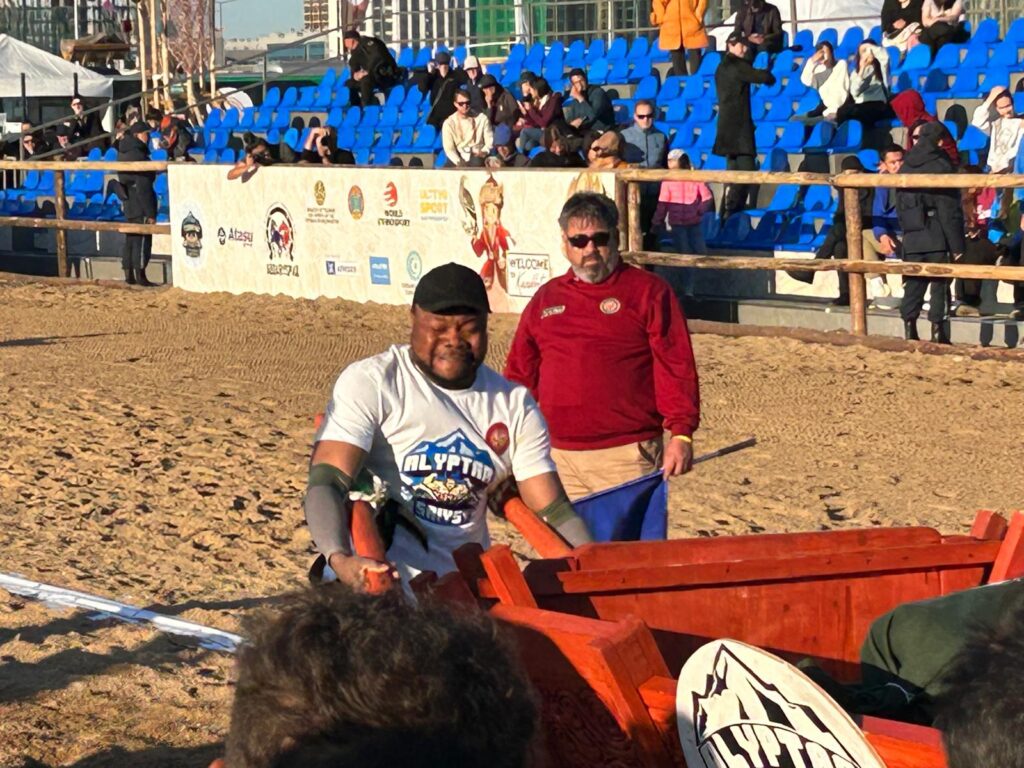
On day four of the World Nomad Games, themed as the “Gathering of the Great Steppe,” TCA attended the finals of the Powerful Nomad competition, and spoke to visitors from the West about what had drawn them to Kazakhstan and the Games. “I'm an American traveling around the world,” Andy from Houston, Texas, one of a group of friends who’d met on the road in Central Asia told TCA. “I’ve wanted to come to the World Nomad Games for quite a few years, now, but haven't got the chance. I'm traveling full-time this year and figured I’d swing by Kazakhstan and check it out.” “It’s so cool to be here and see all the sports and cultures together,” Liam from Vancouver, Canada, added. [caption id="attachment_23061" align="aligncenter" width="2560"] Image: TCA, Stephen M. Bland[/caption] “We knew about the World Nomad Games from having lived in Kyrgyzstan,” Allison from Miami told TCA. “So, when we found out about this one, we decided to come because it's been on the bucketlist. It's been a blast!” “We’re here because we’re doing the five Stans; When we arrived, we found out this event was going on, so we figured we had to come. We really want to see the hunting with birds. Everyone's been very welcoming, and the food has been good,” Lauren from San Diego said. “I’m traveling in Kazakhstan because I wanted to do horseback stuff,” said Hellie from the UK. “I’ve never been to Kazakhstan before. I was curious about the Games, and it’s amazing how much I’m learning here. The tents from the regions are really cool.” [video width="1920" height="1080" mp4="https://timesca.com/wp-content/uploads/2024/09/IMG_3959.mp4"][/video] Reflecting the cosmopolitan crowd, on the field for the final of the powerful nomad strongman competition were athletes from around the globe: Cyprus, Armenia, Uzbekistan, Tajikistan, Romania, China, Nigeria, Iran, Belarus, Spain, Kuwait, Russia, India, and Kazakhstan. Given the response from the raucous, flag-waving home crowd, you didn’t need to be able to hear the announcer to know which was the Kazakh competitor, but warm and hospitable as ever, all of the competitors were well supported, particularly the ebullient Jerry from Nigeria. [caption id="attachment_23063" align="aligncenter" width="2391"] Image: TCA, Stephen M. Bland[/caption] In the opening discipline of squats with a 100-kilogram bag – with four objects protruding which made it resemble a carcass - the hulking men strained every sinew, with some faring better than others, whilst one keeled over as if having suffered a hernia. It came as no surprise, as outside the arena a smaller, lighter weight set up to challenge spectators saw many fall afoul. Next up was pulling a trolley weighing 200 kilos, which resembled a horse carriage. “Bad luck; it was his first time trying,” the ever-comedic commentator chipped in after the participant from Kuwait managed three meters. Others fared far worse. The standout, however, was the tallest man in the competition, the entrant from Iran, who managed a staggering twenty-six meters. [video width="1920" height="1080" mp4="https://timesca.com/wp-content/uploads/2024/09/IMG_3968.mp4"][/video] “Wow!” the announcer chimed. “It will be very difficult to bring...
Kazakhstan Launches National Board Game Into Space

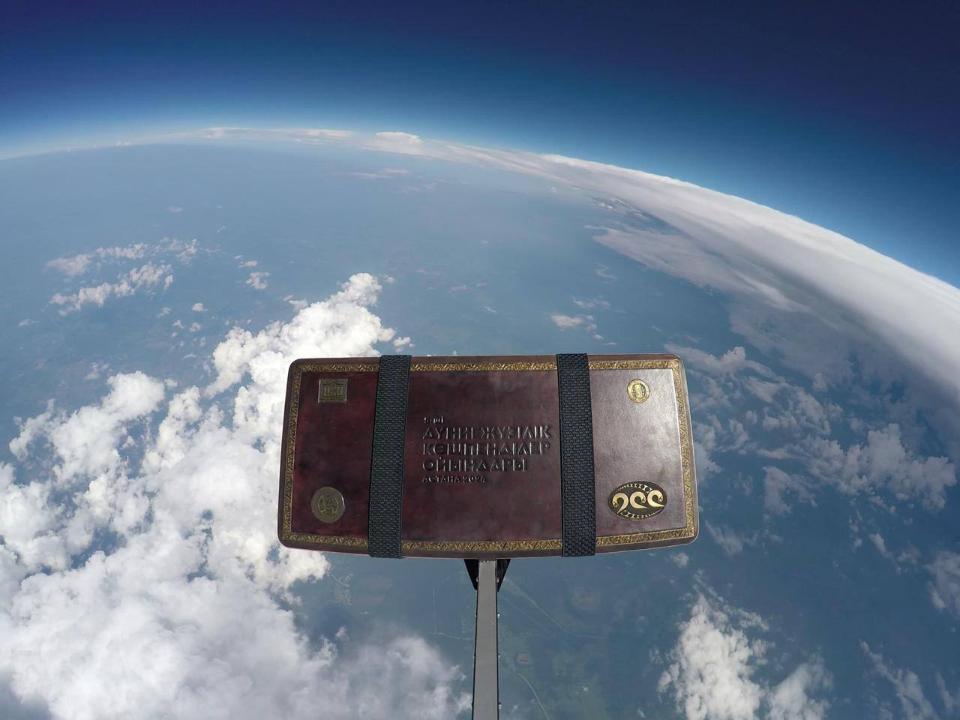
The Kazakh pastime "Togyzkumalak" has become the first board game to travel into space. Its launch was organized to promote the 2024 edition of the World Nomad Games, which are currently being held in Astana. Togyzkumalak is one of the oldest Kazakh board games, with a history dating back about 4,000 years. The game is played by two players, who start with 81 stones. Their goal is to "capture" their opponent's stones, and place them into a "cauldron". On September 9 Togyzkumalak was played for the first time at the Nomad Games. The Togyzkumalak tournament has 114 competitors from 41 countries, including Colombia, Bangladesh, the UK, France, Germany, the USA, China, and others. In 2020 Togyzkumalak was included in UNESCO's list of intangible cultural heritage, emphasizing its cultural significance for Kazakhstan and other Turkic peoples. After a successful launch, the board was eventually returned to Earth.

Kazakhstan’s Rich Cultural Heritage: Thirteen Elements in One Yurt

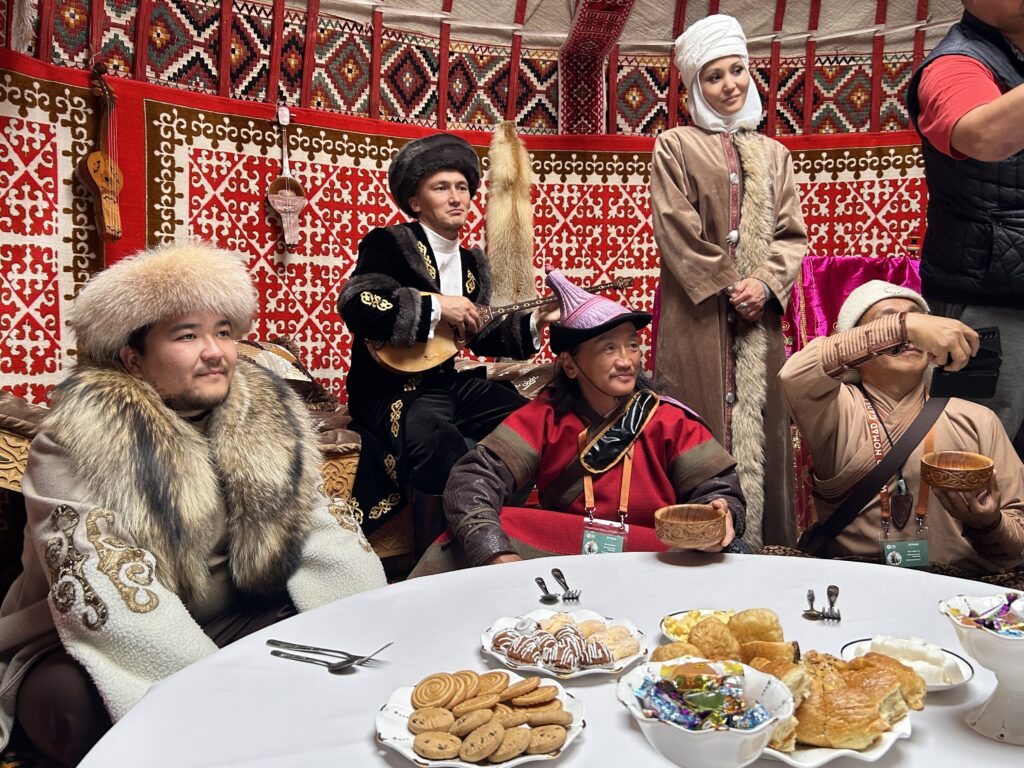
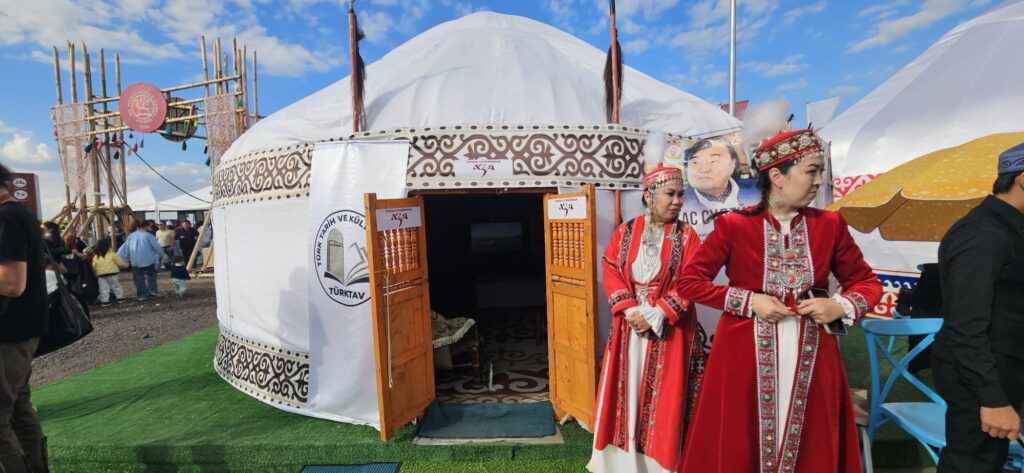
Nestled among the yurts of the 2024 World Nomad Games Ethnoaul (Ethnic Village), one yurt in particular provided a promotional VIP space for the distinguished Russophone poet, politician, UNESCO ambassador, International Democratic Party Chairman of the People’s Congress of Kazakhstan, and anti-nuclear activist Olzhas Suleimenov. A hushed silence spread inside the circumference of the AZ i YA (a Russian play on the word “Asia”) yurt, named in honor of Suleimenov’s 1975 book about the conceivable Turkic origin of the epic Old East Slavic poem The Tale of Igor's Campaign. Bystanders were ushered out when the Almaty-born Suleimenov arrived. The aforementioned book caused controversy when it was released in the Soviet era and was almost banned when Suleimenov was accused of “national chauvinism” and “glorifying feudal nomadic culture.” By contrast, the purpose of the AZ i YA yurt is to educate the unenlightened and celebrate the thirteen elements of “Kazakhstan's Rich Cultural Heritage.” Those thirteen elements, as explained by the yurt’s translator and self-proclaimed “young scientist” Dana Tursynova, include Aitysh, a spoken word poetry contest with dueling dombra (two-string instrument), or the Kyrgyz komuz (two or three strings), in which two protagonists improvise on the topics of opposing ideas, retorts, and general frustrations. Tursynova described it as “conveying political problems” and “the sound of a nation [aimed at] the government.” At a neighboring yurt, Aitysh—delivered with gravelly belligerence—was audibly comparable with a modern battle rap. Another element is Nasreddin Hodja, a 13th-century folklore storyteller who—similar to the Aitysh tradition—used humor to air political grievances and other types of narrative. [video width="848" height="478" mp4="https://timesca.com/wp-content/uploads/2024/09/WhatsApp-Video-2024-09-10-at-23.43.20.mp4"][/video] A further element is Korkyt-Ata (translated from Kazakh as “granddad”), a 9th-century philosopher, who, in his pursuit of immortality discovered that death was always waiting for him. As he gained enlightenment, he somehow had enough free time to craft the kobyz, an ancient Turkic stringed instrument. Thus, he is known as the founder of Kazakh string and bow instruments. The yurt, the round portable homes of the nomads, is an element, as is orteke, where the dombra musician surpasses the average one-man-band status by operating moving wooden puppets connected to his fingers via the strings to convey multi-task theater. The sports elements comprise kazakhsha kures, traditional Kazakh wrestling, which in recent times has traded the long-established grass turf for a mod con carpet, board-type games, such as Assyk, designed to sharpen the intellectual and physical development of children, and Kusbegilik, or hunting with birds of prey, a Kazakh cultural heritage as well as a major sport in the WNG. Edible elements combine katyrma flatbread, an important part of Kazakhstan’s communal relations in the interchange of goodwill (e.g. “have a good life”) when sharing the bread, and horse breeder festivities, where kumis, fermented horse milk, is the culinary highlight.   The main heading of the yurt’s pamphlet handout is the substantially worded International Centre for the Rapprochement of Cultures Under the Auspices of UNESCO. In one small yurt (on one Great Steppe), the cultural round-up of folklore, tradition, and...

The World Nomad Games Day Three: A Feat of Spiritual Endurance

Though the World Nomad Games are often defined as an “international sport competition dedicated to ethnic sports,” the event is so much more. As described by Sultan Raev, General Secretary of the International Organization of Turkic Culture, even the sports themselves are “not about physical strength. They are about spiritual endurance.” Today, TCA took in the wider cultural context behind the Games, exploring the celebration of identity which the event represents. [video width="1920" height="1080" mp4="https://timesca.com/wp-content/uploads/2024/09/IMG_3871-1.mp4"][/video] At the very heart of the Games, the Ethnoaul acts as a huge showcase for cultural heritage. Each day, the Dumandy dala (Joyful Steppe) concerts offer a platform for groups from all over the country: ethno-folklore ensembles, Kazakh national orchestras, soloists, dance troupes, and more. From dueling dombras - a traditional two-stringed instrument - to traditional Kazakh music vaguely akin to rap in which the protagonists air their grievances, nomadic culture is truly alive here, not just as a historical curiosity, but as a vibrant heart belonging to the people; a heart which is equally at home in the modern world. [video width="1920" height="1080" mp4="https://timesca.com/wp-content/uploads/2024/09/IMG_3867.mp4"][/video] Indeed, as stated by President Tokayev in his keynote speech at the opening ceremony: “the great nomadic life will never cease to exist. Even amid globalization, the nomadic lifestyle that existed for a thousand years is reviving and taking a new shape. Modern nomads are making efforts to reclaim a central place in history. We are moving and traveling easily all over the world in search of education and job opportunities.” Since Estonia became the first country to offer a “digital nomad visa” in 2020, sixty-five more nations have followed suit, with their number continuing to expand. Nomad culture, it seems, is alive and kicking. [caption id="attachment_22985" align="aligncenter" width="2560"] Reconstruction of the costume and weapons of an 11th century Sarmatian leader; image: TCA, Stephen M. Bland[/caption] The Ethnoaul hosts yurts from across the nation, where representatives of regions have gathered to display their distinct history and traditions, from a reconstruction of the costume and weapons of an 11th century Sarmatian leader whose remains were found in a burial mound in Atyrau in 1999, to the Shymkent region’s focus on the mercantile activities which made the Great Silk Road great. With a traditional purple-suited ensemble from Akmola playing as young girls in long green dresses and sequined headdresses pirouette, it certainly makes for a tremendous feast of colors, sights and sounds. [caption id="attachment_22986" align="aligncenter" width="2560"] Young dancer twirl; image: TCA, Stephen M. Bland[/caption] This sense of national pride in tradition is not lost on visitors from neighboring lands, as evinced by the preponderance of Kyrgyz men in traditional kalpaks - the tall, traditional felt hat designed to allow air to circulate whilst resembling a peak from the Tien Shan Mountains. [caption id="attachment_22987" align="aligncenter" width="2560"] A group from Akmola serenade the croed; image: TCA, Stephen M. Bland[/caption] The Games act as a showcase for these identities, and an opportunity to at once celebrate and reenforce them whilst sharing them with the wider...

Video Highlights: World Nomad Games Day Two

The second day of the World Nomad Games, themed as the “Gathering of the Great Steppe,” saw a host of events taking place across the Kazakh capital, and the excitement was palpable. TCA took in the scientific conference in the national museum, musical performances, kokpar, horse wrestling, archery, and more. Watch our video highlights from day two here: [video width="1920" height="1080" mp4="https://timesca.com/wp-content/uploads/2024/09/Nomad_2-day.mp4"][/video] Join us for day three.

Galloping Traditions: Kokpar and Kok Boru Unleash Cultural Pride at the World Nomad Games

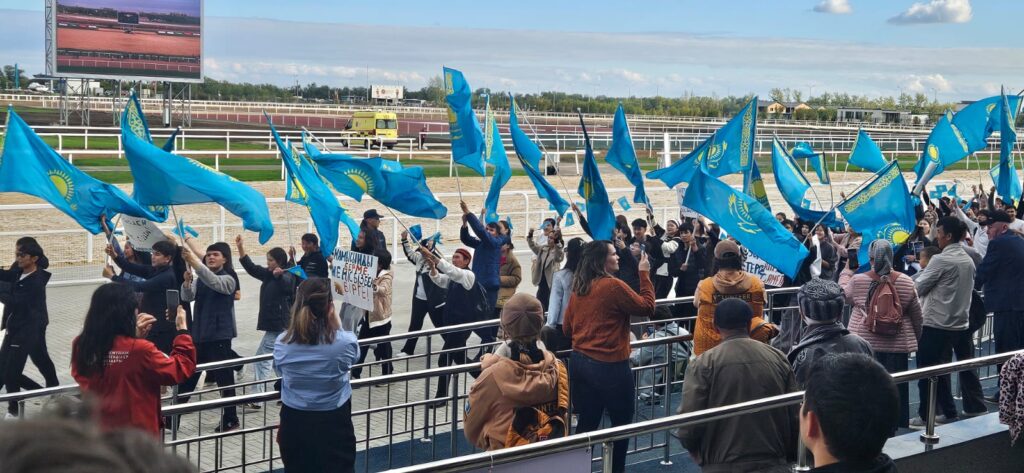
The Kazanat Hippodrome, with a track length of 1,800 meters, and the Astana Grand Mosque — the biggest mosque in Central Asia — dominating the background, hosted the preliminary kokpar and kok boru games, known for their respective pursuits of a headless goat carcass, on day two of the World Nomad Games. [caption id="attachment_22919" align="aligncenter" width="1600"] Image: TCA, K. Krombie[/caption] The layout of the Hippodrome track presents a great divide. The distance between the field and the spectators means that distinguishing the traditional headless goat carcass from the PC dummy version (serke) of the Games is an eye-squinting challenge if one doesn't engage with the obligatory big screen. The two games, which appear to be very similar if not identical, are separated by cultural nomadic origins. Kokpar is Kazakh, while kok boru is from Kyrgyzstan. The Kyrgyz origins of kok boru (gray wolf) are rooted in an ancient post-wolf hunting tradition, where the carcass of the animal would be passed around — as in taken — among the hunters as a sporting activity while riding back to their village. [video width="848" height="478" mp4="https://timesca.com/wp-content/uploads/2024/09/WhatsApp-Video-2024-09-09-at-22.33.14.mp4"][/video] To the unacquainted spectator, kok boru (and kokpar) is where various other sports — equestrianism, polo, hockey, and football — merge in a rugged horseback chase and scrum. The aim of the game is to steer the goat carcass into the donut-shaped tai kazan — or goal — of the opposing team. Each team has twelve horses and players, while four players from each team play for three 20-minute spurts with 10-minute breaks in between. In those 20-minute periods, not a single minute is wasted. [caption id="attachment_22921" align="aligncenter" width="1600"] Image: TCA, K. Krombie[/caption] In the kok boru games, following Turkey’s 1 - 0 win with Hungary, the mostly home crowd reserved their audible enthusiasm for Kazakhstan versus the United States in a literal East versus West match (U.S. team player and MMA fighter Nick Willert is also a competitor in horseback wrestling at the neighboring Ethnoaul). Much fanfare accompanied a parade of marching, flag-waving Kazakhs ahead of the game. From the off, the Kazakhs wiped the sandy floor with the American Cowboys. Almost every member of the Kazakh team scored points in quick succession, following taut human/horse throngs in the final stages of maneuvering the serke into the tai kazan. A general impression of the U.S. team was that they accepted their defeat with grace and humor, and were happy to be where they were. The same sentiment appeared to be shared by the Kazakh spectators, who are proud that these Central Asian games are gaining recognition on the international stage. [caption id="attachment_22922" align="aligncenter" width="739"] Image: TCA, K. Krombie[/caption] In the 2024 WNG, representation from the West is a growing trend for both the participants and the observers. American spectator Lisa Wagner, who was present at the kok boru games with friends and family specifically to support her fellow countrymen remarked that the Kyrgyzstan spectators in her midst were just as enthusiastic for the American team. Wagner...