• KGS/USD = 0.01144 0%
  • KZT/USD = 0.00208 0%
  • TJS/USD = 0.10440 -0.19%
  • UZS/USD = 0.00008 0%
  • TMT/USD = 0.28490 0%
  • KGS/USD = 0.01144 0%
  • KZT/USD = 0.00208 0%
  • TJS/USD = 0.10440 -0.19%
  • UZS/USD = 0.00008 0%
  • TMT/USD = 0.28490 0%
  • KGS/USD = 0.01144 0%
  • KZT/USD = 0.00208 0%
  • TJS/USD = 0.10440 -0.19%
  • UZS/USD = 0.00008 0%
  • TMT/USD = 0.28490 0%
  • KGS/USD = 0.01144 0%
  • KZT/USD = 0.00208 0%
  • TJS/USD = 0.10440 -0.19%
  • UZS/USD = 0.00008 0%
  • TMT/USD = 0.28490 0%
  • KGS/USD = 0.01144 0%
  • KZT/USD = 0.00208 0%
  • TJS/USD = 0.10440 -0.19%
  • UZS/USD = 0.00008 0%
  • TMT/USD = 0.28490 0%
  • KGS/USD = 0.01144 0%
  • KZT/USD = 0.00208 0%
  • TJS/USD = 0.10440 -0.19%
  • UZS/USD = 0.00008 0%
  • TMT/USD = 0.28490 0%
  • KGS/USD = 0.01144 0%
  • KZT/USD = 0.00208 0%
  • TJS/USD = 0.10440 -0.19%
  • UZS/USD = 0.00008 0%
  • TMT/USD = 0.28490 0%
  • KGS/USD = 0.01144 0%
  • KZT/USD = 0.00208 0%
  • TJS/USD = 0.10440 -0.19%
  • UZS/USD = 0.00008 0%
  • TMT/USD = 0.28490 0%

Viewing results 835 - 840 of 1462

“Photography in Kazakhstan is Characterized by Local Flavor”: Interview with Photographer Veronika Lerner

Veronika Lerner is a successful, self-taught Fine Art photographer from Kazakhstan whose work has received international recognition. Early in her career, an image of her grandmother sitting near-naked in her kitchen, was selected for inclusion in the portrait collection of the prestigious 5th Exposure Award exhibition at the Louvre, Paris. Deemed controversial when it appeared online, it embodied Lerner’s interest and talent in conceptual photography. Her portraits have been placed in the international  ‘Shoot The Face’ competition as well as ‘My Amazing Kazakhstan’, and in 2016 and 2022, her series "Strangers" was featured in exhibitions in St. Petersburg. One of Kazakhstan’s finest contemporary photographers, Veronika continues to make a significant contribution to the development of Kazakh photography.   TCA: What inspired you to take up photography? I turned to photography in 2007, when studying to be an artist-designer at college. I had no formal art school training and though keen to develop my own style in drawing, was disillusioned when criticized for my use of shading. Photography allowed me more freedom and with no one editing what I was doing, I was able to express myself fully. TCA: How has your career evolved and what changes have you noticed in the field along the way? After college, I continued taking photos and a post with a print publication led to a second job in which I was required to photograph just about everything. Parallel to my job, I worked independently on creative shoots and by developing my practice, my career in photography was soon in full swing. During that period, my style became much lighter and more cheerful. I moved away from black and white contrast shots towards color and my images became airier and more dynamic.   TCA: Where do you find inspiration for your work? Are there any photographers in particular whose work you admire? I find inspiration in everyday life, new experiences, and the beauty of the world around me.  Henri Cartier-Bresson (1908-2004), is a brilliant photographer. Working as a photo-journalist for Magnum, he pioneered street photography and was the first Western photographer to work ‘freely’ in the former Soviet Union. Capturing seemingly unimportant moments of ordinary life, there is something elusive and eternal about his work.  I greatly admire photographers whose work resonates with the contemporary culture.  Irina Dmitrovskaya was a journalist prior to attaining a degree from Docdocdoc, St Petersburg School of Modern Photography. Focusing on identity and societal constructs, and issues concerning the LGBT+ community, her work raises questions about the Kazakh perception of beauty and femininity and last year, was lauded in the exhibition ‘Bodily Autonomies’ at the Queer Festival, Heidelberg. https://queer-festival.de/bodily-autonomies/ I am also inspired by black and white images in which by Moscow-based Anisiya Kuznina, https://anisiakuzmina.com  explores the concept of individuality; by Evgeny Mokhorev https://heyboymag.com/evgeny-mokhorev-life-through-the-lens-of-emotion-controversy/ for his raw, black and white evocative studies of St Petersburg’s marginalized youth, and by Didar Kushamanov https://t.me/s/kushamanov for his use of camera obscura. In addition to work by other photographers, my approach to subject matter...
Kazakhstan: Preconceived Notions and Changed Minds

When I received the email stating that I had received a fellowship to move to Almaty, Kazakhstan, to teach English for a year, I nearly fell out of my office chair in Midtown Manhattan. I worked in a market research company fresh out of college but knew I needed to do something more exciting in my early 20s. I began studying Russian when I was 13 years old. I’m unsure what the exact catalyst for my language endeavor was. Still, coupled with my Ukrainian ancestry, Putin’s annexation of Crimea, and the Sochi Olympics, it seemed like a no-brainer to me. At this point in my life, I lived outside of Boston, Massachusetts, and began taking Russian classes on Saturdays in Brookline to satiate my desire to learn. After a year of classes, I enrolled in a Russian language immersion camp in Bemidji, Minnesota, for three summers. Following that, I received a grant from the US State Department to immerse myself in the culture for a summer in Narva, Estonia. I knew where and what I wanted to study after graduating high school. I started my studies at the Elliott School of International Affairs at George Washington University in Washington, DC, declared a major in international affairs with a minor in Russian language and literature, and never looked back. After graduation, my plans were in the air. I had been looking into opportunities to move to Russia or Ukraine, but this was now off the table due to the war. I worked in New York to get sorted, earn money, and start a new chapter of my life. At some point in April 2023, I received an email from a fellowship I had applied for in October 2022. I was initially placed on the waitlist, but I was notified that I had been accepted for the 2023-2024 cohort to relocate to Almaty, Kazakhstan. “Oh my god,” I said at my desk. My coworker asked me what had happened. I said, “I’m moving to Kazakhstan. “Kazakhstan, like Borat’s Kazakhstan?” she asked. [caption id="attachment_19278" align="aligncenter" width="370"] Horses graze along the way to Furmanov Peak – Almaty, KZ[/caption] Preconceived notions After the excitement had settled and my family and friends were informed of my plans, questions began to arise. “Why Kazakhstan?” “Is it safe there?” “Is that next to Serbia?” “Does the Taliban rule Kazakhstan?” It is shocking how little most Americans know about the 9th largest country on the planet. Spanning two continents with nearly 20 million people, most Americans only know Kazakhstan from Sasha Baron Cohen’s 2006 film, Borat, and nothing more. When they hear the word “Kazakhstan,” they picture a backward and socially undeveloped post-communist country in which people commute by donkey carts, are misogynistic, and are openly antisemitic. While the depiction of Kazakh culture is inherently incorrect, the message is stuck, and the film has become synonymous with Kazakhstan in the American mind. However, most Americans probably can’t find it on the map. I explained, “Kazakhstan is in Central Asia,...

Testing Limits: Marathoners Head For the Shrinking Aral Sea to Run in the Desert

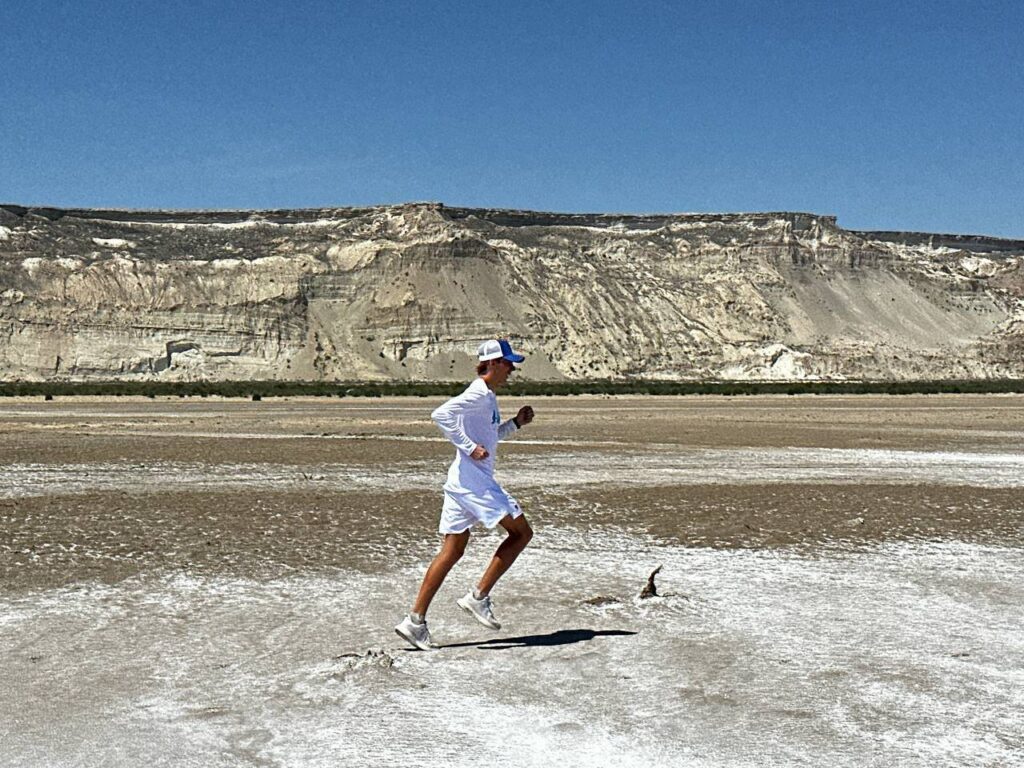
The dry bed of the Aral Sea, a symbol of ecological disaster in Central Asia, will host one of the world’s more extreme marathons on Sunday. Supported by aid stations and medical staff, a small band of athletes will run on sand, gravel and stones, inhaling salty air in scorching temperatures and bracing themselves against strong winds. The Aral Sea Eco Marathon is being held in Karakalpakstan, Uzbekistan and planners aim to draw attention to what was once the fourth biggest saltwater lake and is now about 10 percent of its original size. Race promoters also want to highlight the need for sustainable use of water. The marathon roughly coincides with the United Nations-designated day to combat desertification and drought, which falls on June 17.  Andrey Kulikov, founder of the ProRun running school in Uzbekistan, ran a marathon distance in the area last year with American ultramarathoner Dean Karnazes in 4:51:18. Kulikov planned this year’s event with the help of Aziz Abdukhakimov, Uzbekistan’s minister of ecology, environmental protection and climate change. A limit of 100 runners was set, though far fewer signed up. Still, Kulikov said participants are from countries including Japan, China, France, Pakistan, Kenya, Togo and the Philippines. He hopes to expand the event next year. Uzbek participant Denis Mambetov said in a text interview on Telegram that he is taking part because of “a passion for adventure, for something new and unusual, to test one’s strength, and, of course, to draw the attention of others to an environmental problem of global proportions.” The Aral Sea, which lies between northern Uzbekistan and southern Kazakhstan, began shrinking significantly in the 1960s when water from the rivers that fed it was rerouted for Soviet-led agricultural irrigation. The subsequent emergency of the Aralkum Desert and the sand and dust storms arising from the world’s newest desert have polluted the environment and severely affected health in local communities. There are regional and international efforts to restore the Aral Sea ecosystem, including seed-planting and the implementation of water-saving technologies. The five Central Asian countries - Uzbekistan, Kazakhstan, Kyrgyzstan, Tajikistan and Turkmenistan – formed a group three decades ago, soon after independence from Soviet rule, to address the problem. The gap between goals and results is wide, though the countries are recognizing the wider threat of water scarcity as the planet becomes hotter.  “Colleagues are well aware that the problem of water shortage in Central Asia has become acute and irreversible and will only worsen in the future,” Uzbek President Shavkat Mirziyoyev said at a regional meeting on the Aral Sea last year. “Experts believe that in some regions of Central Asia pressure on water resources will increase three times by 2040. Economic damage could eventually reach 11 percent of regional gross product.” Nurbek Khusanov, who will run the marathon on Sunday,  works at SQB, a top bank in Uzbekistan, and is a leader of its efforts to promote “green” policies that aid the environment. The marathon will “attract more people to the Aral...

Kazakhstan’s Parliament To Consider Ban on Religious Clothing

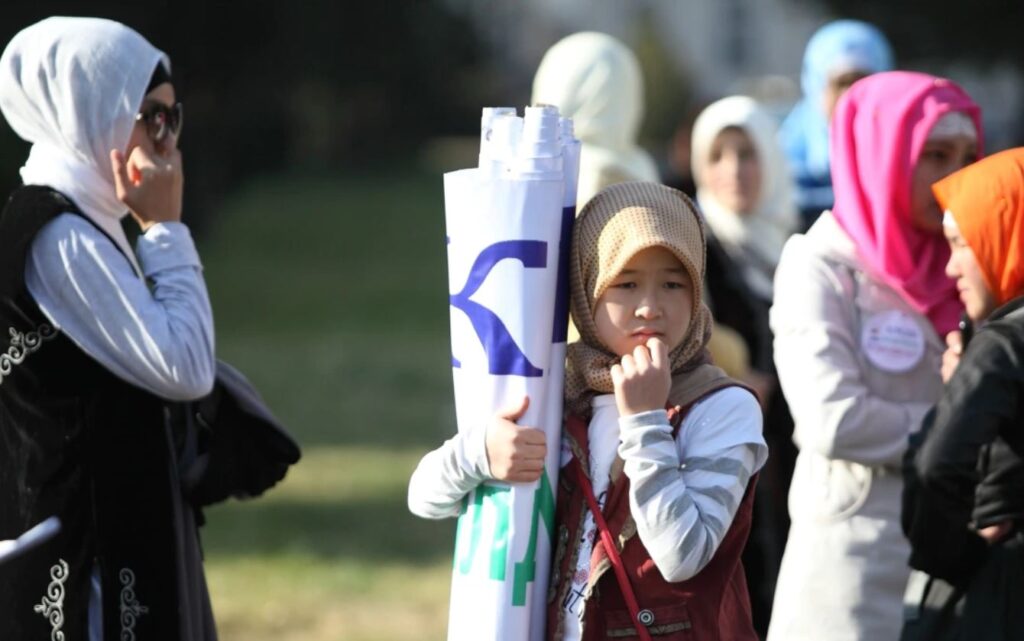
The Kazakh authorities are once again trying to restrict the wearing of religious clothing -- hijabs and niqabs -- in public places. There have been heated discussions on social media, and Muslim women have appealed to President Kassym-Jomart Tokayev himself. The hijab (headscarf) has long become an everyday accessory, and today, the secular part of society is trying to prevent its wearing in schools. However, women wearing niqabs -- a long, usually black cape that covers the face -- are increasingly common on the streets. Many Kazakhs consider the niqab categorically unacceptable. The issue of wearing religious clothing in public places may be considered in Kazakhstan's parliament, said Yermurat Bapi, a member of the Mazhilis (lower house of parliament). "Now, the most important issue for us is to preserve our country's national interests, traditions, and culture. And if we look at the current situation, more Kazakhs are dressed in black in society. This situation seriously harms our future national interests," Bapi said. "That is why we, a group of deputies, have prepared such a bill. It will be submitted to the Parliament at the fall session. I think that the issue of hijab, niqab, and other religious clothing in society will be solved after its adoption. Then we will be able to regulate the issues of religious dress in some way," he added. In May this year, President Tokayev spoke sharply about covered faces. "Dressing in all black contradicts the worldview of our people, is thoughtless copying of foreign norms, conditioned by religious fanaticism. We must not break away from our spiritual roots and erode our national identity," he said. Also, in October 2023, Minister of Culture and Information Aida Balayeva said that the new law on religion will prohibit wearing religious clothing in public places. Kazakhstan has been trying to solve the problem of wearing religious clothing in schools, universities, courts, and other organizations for years. In the past, the ban on wearing hijabs to school repeatedly caused clashes between school administrations, akimats (mayor's offices), and parents of female students. For example, in Atyrau region in 2023, more than 150 girls refused to attend classes without a hijab. As the Ministry of Education explained, the parents were spoken with, after which the children returned to classes. Experts believe the hijab and niqab have become fashion elements imposed by foreign influences alien to Kazakhstanis. However, local theologians are virtually unanimous: Kazakh women have never covered their faces. "After gaining independence, our youth began to study in foreign educational institutions and began to instill in our people certain clothes and dress codes, which were abroad: in Pakistan, Saudi Arabia, and other Muslim countries. These are their customs, especially about covering the face. Popularly it is called a burqa -- a headscarf with slits for the eyes -- but in Arabic it is called a niqab. The niqab, which completely covers the face, is generally unacceptable for our people, and our people do not use it. Today, in some regions of our...

Petition against ‘LGBT Propaganda’ in Kazakhstan: Opinions and Comments

A recent petition against so-called "LGBT propaganda", which gathered more than 50 thousand signatures, has resonated throughout Kazakhstan. According to legislation, the Ministry of Culture and Information is now obliged to consider this petition. The petition ‘We are Against Open and Concealed LGBT Propaganda’ authored by Kazakhstan’s Parents’ Union, followed the block in January, of a LGBT community website which the Ministry of Culture claimed to contain information “harmful to the health and development of children.” Reporting on the issue, TCA quoted the reactions of various public figures, including Khalida Azhigulova, a human rights activist and lawyer who pronouncing the petition illegal, claimed it transmitted “hatred and intolerance toward an entire social group.” She also asserted that “a ban on so-called LGBT propaganda would be a gross violation of Kazakhstan’s international human rights obligations.” Echoing her sentiment, feminist and activist Aigerim Kusayynkgzy, stated, “In terms of human rights, I hope such inhumane laws will not be passed.” Bagila Baltabaeva, head of the group leading the petition, reiterated its stance that through books, films, TV and social media, “same-sex love is being openly forced on our children,” promoting “unhealthy relationships.” She also warned that “those who work up the courage and speak out against LGBT propaganda are branded as retrogrades and conservatists.” Public reaction has been mixed and whilst many citizens have openly expressed their views, many have chosen to remain quiet for fear of repercussions and prejudice. TCA took to the streets to gauge current response. All contributors expressed a wish to remain anonymous. I was extremely concerned after reading this news. But at the same time, since I am sure that the president sees only democracy and approximation to European values as the way forward for our country’s development, I am not too worried about it. Kostanai advertiser  I think this is a bogus petition, accepted under the guise of a "hearing" state run by a  government that only purports to pay attention to the opinion of its citizens. I am sure that the majority voted on a voluntary-coercive basis, as is often the case. Many of those who voted, I believe, are civil servants, at whose expense such a large number – of signatures - was gained. This petition will be accepted because that's what the government wants. Other petitions which also garner 50 thousand votes, but not in the hands of the government, are for some reason never accepted. Taraz singer I have mixed feelings, but above all, am shocked by the level of response. How can it be that so many people are unhappy enough to willingly sign such a petition? Our country is riddled with problems in more urgent need of petitions. Almaty journalist In my opinion, there is no such thing as ‘LGBT propaganda’. One cannot become subsumed by the LGBT community through its exposure on TV or the Internet: a person is either born that way or not. Such a law will reduce the public presence of "non-traditional" relationships in society, but not...

Kazakhstan Mourns Murat Auezov – Intellectual, Diplomat, Activist and Patriot

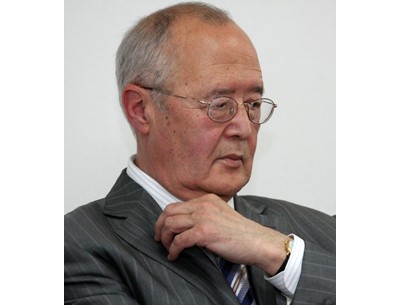
Murat Auezov was a champion of Kazakh identity and culture under Soviet rule and threw himself into Kazakhstan’s transformation after independence in 1991. He wore many hats over a long career: writer, the new country’s first ambassador to China, opposition figure, head of the national library, chief editor of the state Kazakhfilm studio. He expanded on the legacy of his father, Mukhtar Auezov, a playwright and novelist who translated literary classics into the Kazakh language and is celebrated today as an early contributor to an emerging national identity. His mother was Fatima Gabitova, a teacher with her own story of persecution during the Soviet era. Murat Auezov, 81, died on June 14 after an illness, prompting tributes from President Kassym-Jomart Tokayev and many others. In Almaty, family, friends, politicians and government officials were among hundreds of people who attended a funeral service at the National Drama Theater, which is named after Auezov’s father. Murat Auezov was “an orator, a philosopher, a historian, a culturologist, a literary scientist, an educator, and a diplomat,” said Bigeldy Gabdullin, president of the Kazakh PEN Club, a branch of the international group that promotes freedom of expression. Auezov, who was a PEN Club member, promoted Kazakh identity even as a student in Moscow during Soviet times and “awakened Kazakh writers,” Gabdullin said on Facebook. In the 1960s, Auezov was a member of the Zhas Tulpar movement, a loose-knit group of Kazakh youths who studied in Russian universities but whose devotion to Kazakh art, literature and culture often collided with Soviet ideology. “I hope his diaries will be published in English to reflect on the depth of Soviet colonialism and how it crushed people,” Diana Kudaibergen, a political sociologist whose books include Rewriting the Nation in Modern Kazakh Literature, said on the X platform. Auezov, who was pressured and monitored by Soviet authorities, was among the first Kazakh intellectuals to talk openly about collectivization, famine and the destruction of the intelligentsia in Kazakhstan in the first half of the 20th century. “In 1974, in his speech at the plenum of the Writers' Union, he stated: ‘Without covering the topic of hunger, we cannot say that we have national literature,’” read one tribute after his death. In the 1990s, Auezov was a leader of the Azamat opposition movement and sparred with the government of President Nursultan Nazarbayev, who cracked down on dissent. He then worked as head of the Kazakh branch of the foundation created by financier and philanthropist George Soros to promote democratic and social reforms around the world. As ambassador, Auezov promoted economic and cultural ties with China. Years later, though, he increasingly voiced alarm at Chinese economic inroads in Kazakhstan, which he viewed as a threat to the country’s sovereignty. In an interview, he said, “we should not forget our Turkish ancestry. No matter how difficult it is for the brotherly countries of Central Asia, it is better to achieve cooperation, even if it is necessary to make sacrifices. If we cannot achieve this, it is quite...