• KGS/USD = 0.01143 0%
  • KZT/USD = 0.00212 0%
  • TJS/USD = 0.10718 -0.09%
  • UZS/USD = 0.00008 0%
  • TMT/USD = 0.28571 0%
  • KGS/USD = 0.01143 0%
  • KZT/USD = 0.00212 0%
  • TJS/USD = 0.10718 -0.09%
  • UZS/USD = 0.00008 0%
  • TMT/USD = 0.28571 0%
  • KGS/USD = 0.01143 0%
  • KZT/USD = 0.00212 0%
  • TJS/USD = 0.10718 -0.09%
  • UZS/USD = 0.00008 0%
  • TMT/USD = 0.28571 0%
  • KGS/USD = 0.01143 0%
  • KZT/USD = 0.00212 0%
  • TJS/USD = 0.10718 -0.09%
  • UZS/USD = 0.00008 0%
  • TMT/USD = 0.28571 0%
  • KGS/USD = 0.01143 0%
  • KZT/USD = 0.00212 0%
  • TJS/USD = 0.10718 -0.09%
  • UZS/USD = 0.00008 0%
  • TMT/USD = 0.28571 0%
  • KGS/USD = 0.01143 0%
  • KZT/USD = 0.00212 0%
  • TJS/USD = 0.10718 -0.09%
  • UZS/USD = 0.00008 0%
  • TMT/USD = 0.28571 0%
  • KGS/USD = 0.01143 0%
  • KZT/USD = 0.00212 0%
  • TJS/USD = 0.10718 -0.09%
  • UZS/USD = 0.00008 0%
  • TMT/USD = 0.28571 0%
  • KGS/USD = 0.01143 0%
  • KZT/USD = 0.00212 0%
  • TJS/USD = 0.10718 -0.09%
  • UZS/USD = 0.00008 0%
  • TMT/USD = 0.28571 0%

Viewing results 829 - 834 of 1735

World Nomad Games Day Two: An Air of Celebration – An Interview With Team Australia

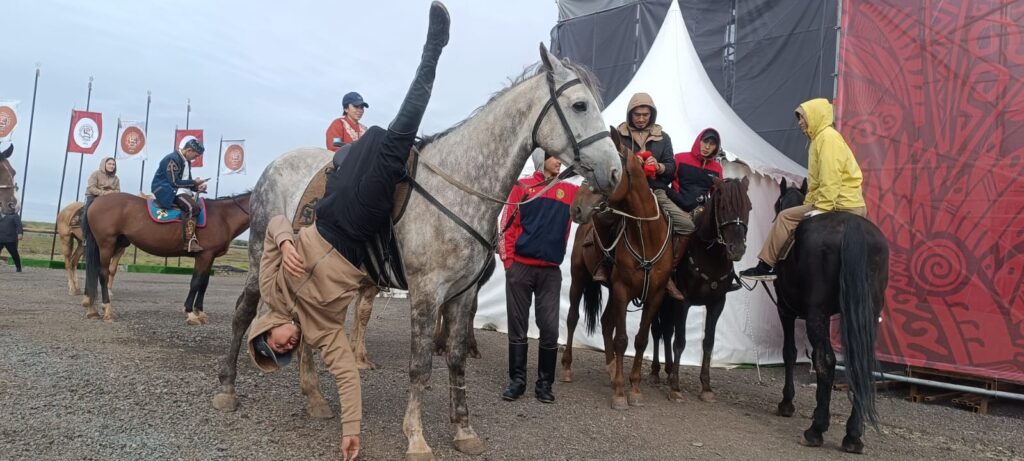
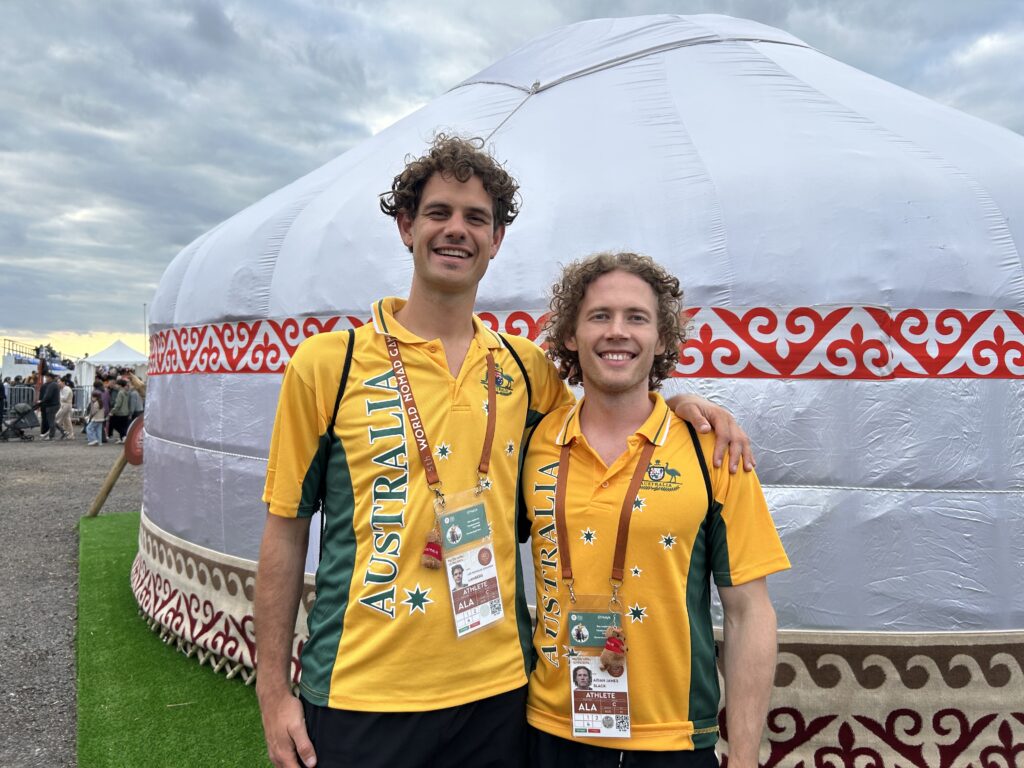
The second day of the World Nomad Games saw a plethora of events taking place across Astana. TCA visited the Hippodrome and the Ethnoaul – home to numerous exhibits and competitions - where the excitement was palpable. A mélange of colors and sights filled the Ethnoaul arena, from traditional music and costumes to camels, Tazy dogs, and eagles. A deep sense of national pride and hospitality permeated proceedings, with visitors and athletes alike warmly greeted. [caption id="attachment_22909" align="aligncenter" width="1600"] Image: TCA, Stephen M. Bland[/caption] At the horseback wrestling, where a flag-waving home crowd whipped up a frenzy as competitors emerged in their flowing capes, TCA caught up with Leo Lambers and Aiden Slack from Team Australia, a doctor and a consultant originally from Melbourne, respectively. [video width="1280" height="720" mp4="https://timesca.com/wp-content/uploads/2024/09/0b9ef8da-79d3-4053-9287-7b2673f8f80d.mp4"][/video] “There are twelve athletes from Australia in total,” Lambers told TCA; “ten are participating in the archery, they're all from Sydney, and there's just us two doing the mas-wrestling. My brother came to Kyrgyzstan about six years ago, and he met some locals and did mas-wrestling for fun. When he came back, he challenged us to do it, and we’ve really loved it since then. We only do it socially - there's no competitions we know of in Australia. So, we just do it with friends whenever we get the chance. We knew these Games were going to happen, so we thought we’d come. It's actually our first competition, so it’s a pretty big jump for us.” [caption id="attachment_22911" align="aligncenter" width="1600"] Image: TCA, Stephen M. Bland[/caption] “We’ve never been to Central Asia before, so it's a good opportunity for us to visit and experience more of the culture as well as completing,” Slack said. “We're going to fly down to Almaty afterwards for a week and do some trekking as well, which will make it even more enjoyable. I competed today against two opponents, one from Pakistan and one from Kyrgyzstan, and hats off to them; they were very strong athletes. So, I'm out of the competition for now, but Leo's competing tomorrow.” [video width="1280" height="720" mp4="https://timesca.com/wp-content/uploads/2024/09/398fb080-eae3-45fa-bd71-31023274eead.mp4"][/video] “There are different weight categories. I was hoping to lose a few more kilos than I have and get down below 90 kilos, but I'm in the highest weight category, 105 kilos, and the world champion is in my category,” Lambers told TCA. “It's down to the luck of the draw; there's some really, really big people in there, but it's amazing to even be here.” [caption id="attachment_22913" align="aligncenter" width="1200"] Image: TCA, Stephen M. Bland[/caption] TCA asked if Australia has any medal hopefuls.   “We have high hopes for the Australian archers,” Slack said; “they’re a pretty good bet to at least get a medal. Hopefully, they can pull through for us.”   “The Games are probably more established than I thought they would be, but also more chaotic,” said Lambers. “There's a lot of sports I'd never looked into it, there’s the scientific program, board games and intellectual games, as well as the...
Turkmenistan Tries to Eradicate Soviet Imagery

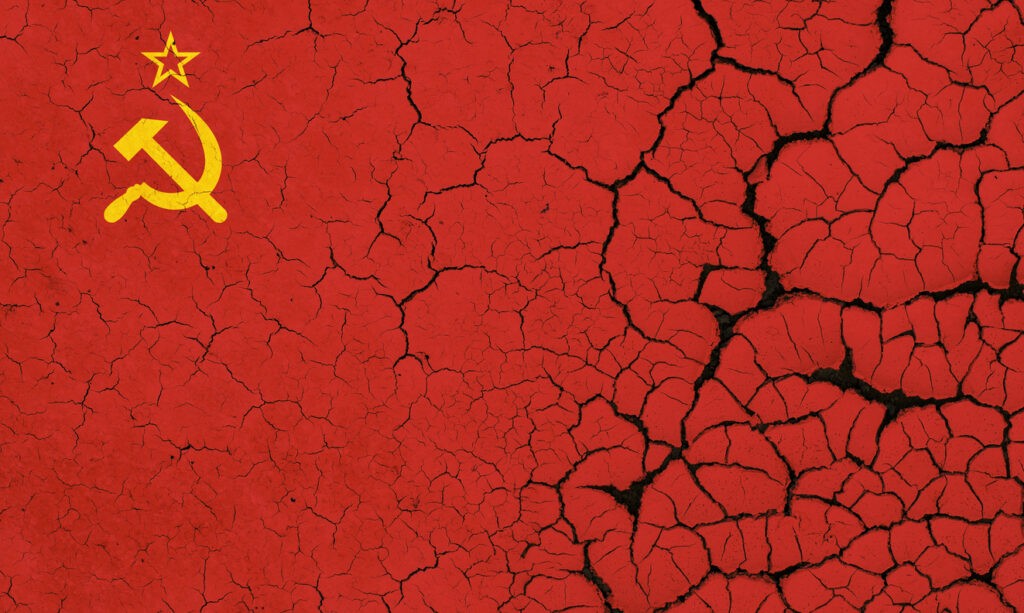
A campaign to fight symbols of the former Soviet Union, such as the hammer and sickle and the Soviet flag, has been launched in Turkmenistan's Balkan region. Authorities have involved national security and internal affairs officers, actively cracking down on clothing and accessories with Soviet symbols. According to residents, law enforcement agencies interrogate entrepreneurs selling such goods and even those wearing them. These operations take place in the markets and stores of Balkanabad and Turkmenbashi. “At Kenar market, I saw police seizing t-shirts, caps, notebooks, and other items with communist symbols while questioning sellers about the origin of these goods,” a resident of the region said. The active fight against Soviet symbols reportedly began in September, coinciding with preparations to celebrate the 33rd anniversary of Turkmenistan's independence. The country gained independence in 1991 after the collapse of the Soviet Union. Although Turkmenistan did not openly discuss the Soviet legacy for a long time, the process of decommunization did take place — many towns and villages named after Soviet figures were renamed. Turkmen authorities continue to create a national ideology, emphasizing the country's independence and identity within a new historical identity. The Balkan region added: “In western Turkmenistan, at various events and gatherings, people in their 50s have increasingly started to start conversations and praise the Soviet era. They say that during the Soviet times, one ruble could buy many things: a box of matches for 1 kopeck, 10 rubles could buy a 50-kilogram sack of flour, and now we can't buy meat or candy for months. There are more and more such people. They say that soon the USSR will be restored, and the communists will rule the world again.” The Times of Central Asia has written about a 74-year-old resident of Uzbekistan, Ergashkul Hasanov, who was convicted for spreading "propaganda" for the restoration of the USSR.

World Nomad Games Opening Ceremony: A Fusion of the Ancient and the Modern

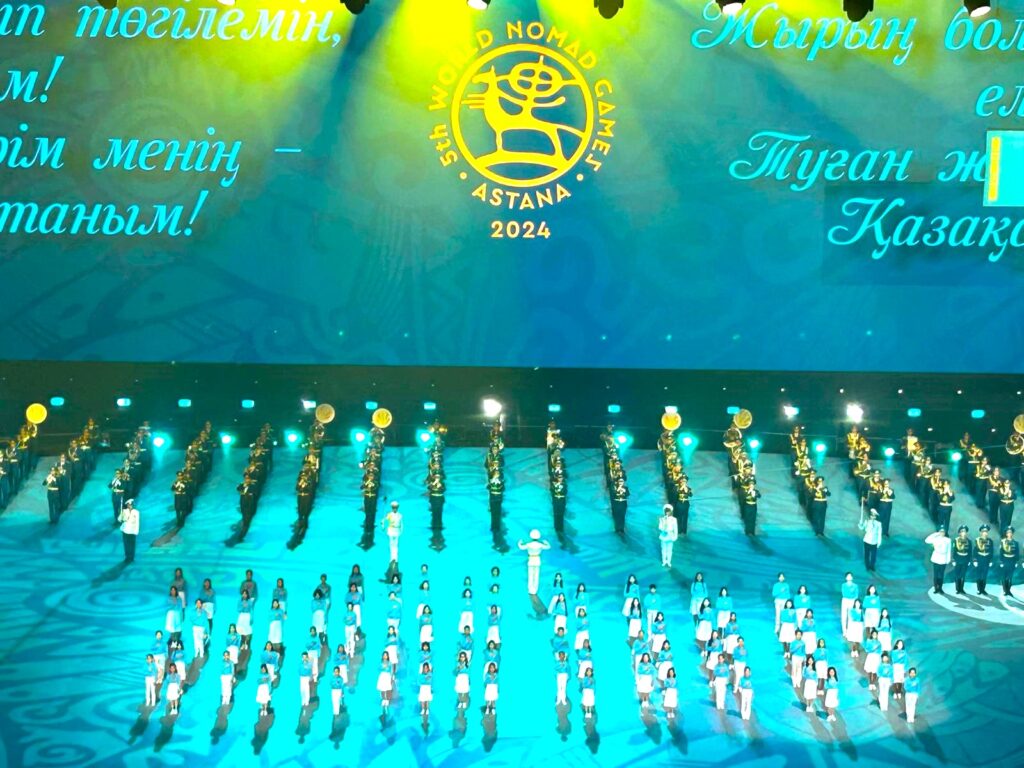
With much pageantry, September 8 saw Astana host the opening ceremony of the 5th World Nomad Games, themed as the "Gathering of the Great Steppe." A procession of singers and dancers in tall white telpek hats and flowing red and gold robes opened proceedings, marrying modern beats to traditional music. This fusion of the ancient and the present was a key theme running through the entire event. With the melodies building to crescendo, the flag-waving crowd lifted their torches aloft, chanting “Kazakhstan,” before the national anthem peeled out from the stage. With 89 countries participating in this edition, the parade of athletes followed, each nation led forth by a white steed and a woman in a traditional, sparkling costume. From the hundreds representing the Kyrgyz Republic – a perennial champion at the World Nomad Games – to far smaller contingents, such as the three representatives from Benin, each nation was afforded their moment in the spotlight. Last, but far from least, the athletes from Kazakhstan emerged to a huge roar of appreciation. Taking to the podium with the keynote address, President Tokayev told the crowd Kazakhstan is “known to everyone as a land of peace and coexistence. The games, he stated, are a “great event on a global scale… Nomadic civilization has left a deep mark on world history. The new technologies they developed provided the impetus for global progress. Five thousand years ago, nomads domesticated the horse and shaped a horseback riding culture that spread across the world… Serving as a bridge between East and West, nomads played a crucial role in the rapprochement of various cultures. “The great nomadic life will never cease to exist,” Tokayev concluded. “Even amid globalization, the nomadic lifestyle that existed for a thousand years is reviving and taking a new shape. Modern nomads are making efforts to reclaim a central place in history. We are moving and traveling easily all over the world in search of education and job opportunities.” First Deputy Prime Minister, Roman Sklyar took the opportunity to emphasize that in the wake of unprecedented floods, the nation had grasped this moment to show “resilience in our commitment to our traditions.” Respect and solidarity were at the core of his address, whilst without naming specific conflicts which continue to cast a long shadow over the region, Skylar stated that there can be “no peace without unity.” Specifically mentioning the conflict in Gaza, the son of Turkey’s President, Bilal Erdogan, President of the World Ethnosport Confederation echoed these sentiments, remarking that the games represent the “bonds of unity that the world needs today more than ever.” [video width="848" height="480" mp4="https://timesca.com/wp-content/uploads/2024/09/WhatsApp-Video-2024-09-08-at-23.10.59.mp4"][/video] Also in attendance at the event hosted by President Tokayev were the President Mirziyoyev of Uzbekistan, President Japarov of the Kyrgyz Republic, Gurbanguly Berdimuhamedov, the Chairman of the People's Council of Turkmenistan, the Rais (Head) of Tatarstan, Rustam Minnikhanov, the Head of the Republic of Sakha (Yakutia), Aisen Nikolayev, and the former president of Mongolia, Nambaryn Enkhbayar. Dazzling visuals marked the end...

Preparations for World Nomad Games in Full Swing

The excitement is palpable as the World Nomad Games draw near, with preparations reaching their peak. In the heart of Kazakhstan, the Ethnoaul village has transformed into a vibrant hub of cultural celebration, with 17 regions proudly showcasing their heritage through the erection of traditional yurts. These structures not only serve as a testament to Kazakhstan's rich nomadic history but also as a welcoming space for visitors to experience the warmth of Kazakh hospitality. [caption id="attachment_22839" align="aligncenter" width="1600"] Image: Ilyas Otan[/caption] The village is buzzing with activity as skilled craftsmen display their intricate handiwork, from ornate textiles to beautifully crafted jewelry, each piece telling a story of cultural legacies. Artists are bringing the village to life with vibrant performances and exhibitions, while chefs are preparing to tantalize the taste buds of attendees with traditional Kazakh cuisine, offering a culinary journey through the diverse flavors of the region. [caption id="attachment_22840" align="aligncenter" width="1600"] Image: Ilyas Otan[/caption] Athletes, musicians, and performers from all corners of the globe have descended upon the village, each bringing their unique flair to the games. Among them, TCA met enthusiastic archers from France and Poland, whose passion for the sport is matched only by their eagerness to engage with fellow competitors and share in the cultural exchange that the games foster. [caption id="attachment_22841" align="aligncenter" width="1600"] Image: Ilyas Otan[/caption] Nature has its own plans, however, with forecasts predicting rain, casting a shadow over the festivities. Yet, the spirit of the participants remains undampened, as they view the challenge as an opportunity to unite under a common cause, demonstrating their resilience and camaraderie. [caption id="attachment_22842" align="aligncenter" width="1600"] Image: Ilyas Otan[/caption]

Silk Road Treasures: Almaty’s Mountains

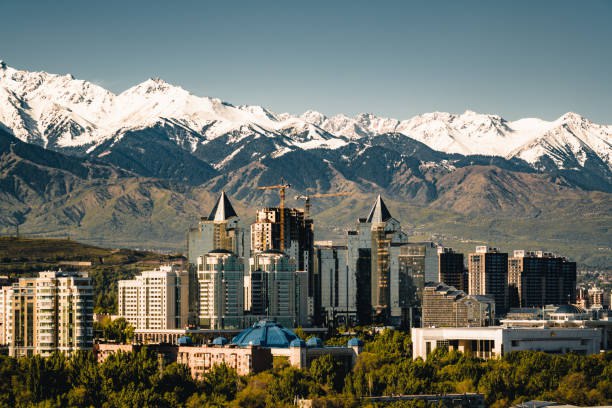
Under the banner of "Silk Road Treasures", TCA's people -journalists, editors, authors- share their personal experiences of Central Asia and her people, and by listing their favorite places, literature, films, architecture and archaeological sites, alongside encounters with customs and traditions, provide pointers for readers wishing to visit the region. Vagit Ismailov, Journalist The first thing a travelers notice when descending at Almaty International Airport are the towering snow-capped peaks of the Zailiyskiy Alatau mountains. However, alongside their majestic presence which make this city unique, the mountains harbour a constant threat which anyone who has experienced an earthquake whilst inside a high-rise building, will both well understand and fear. Almaty, capital of Kazakhstan until 1997, is one of those cities whose growth is independent of either metropolitan status or the presence of large enterprises. Now one of the most dynamic cities in the post-Soviet space and, perhaps, one of the most prosperous in Central Asia, the ever-evolving city absorbs money from other regions and boasts a wealth of amenities, high-end restaurants and cosy cafes to welcome customers day and night. Inevitably, the population continues to rise and as commented by one of Almaty's akims (mayors), every day, the number of people entering the city is equivalent to Latvia's population of over 1.5 million. As a result, the roads are constantly clogged with traffic, again showing the megacity's restless energy and the potential for further growth. Amidst the boom in development which has spurred the construction of modern residential and business complexes, the city center remains quintessentially Soviet in style, flanked by streets of  familiar communist apartment blocs from the sixties and seventies. Today's new builds reach for the sky but under the Soviet regime, high-rise construction was forbidden in Almaty. The only exception was the Kazakhstan Hotel, which standing 102 meters high, is now the city's third tallest building. Constructed in 1977, it was designed to withstand zone 9-point seismic activity, but nevertheless, its survival of several earthquakes is regarded as miraculous. [caption id="attachment_22785" align="aligncenter" width="600"] Hotel "Kazakhstan" Image: @iStock[/caption] The proximity of the mountains and unspoilt natural landscape, provide residents and tourists alike, a perfect place to relax and enjoy the great outdoors. The nearby resorts of Shymbulak and Medeo, home to  the world's largest ice rink which sits like a diamond in a box of green velvet, offer a range of winter sports facilities. Cable cars traversing deep gorges, operate all year round, aiding access to the high pastures, and panoramic views of the Tien Shan ranges, and numerous, graded hiking trails wind through passes to lakes and waterfalls. Scenery aside, visitors can experience more of what Kazakhstan has to offer by sampling local fayre in various venues and watching demonstrations of eagle hunting, and for lovers of antiquity, there are petroglyphs to be discovered, carved on red rock, and the famous Boroldai Saka Burial mounds, dating back to V-VIII BC. [caption id="attachment_22786" align="aligncenter" width="540"] Medeo. Image: @iStock[/caption] But the threat of the Zailiyskiy Alatau is ever-present. In 1887, ...

Uzbek Politician Calls for Ban on Soviet Symbols

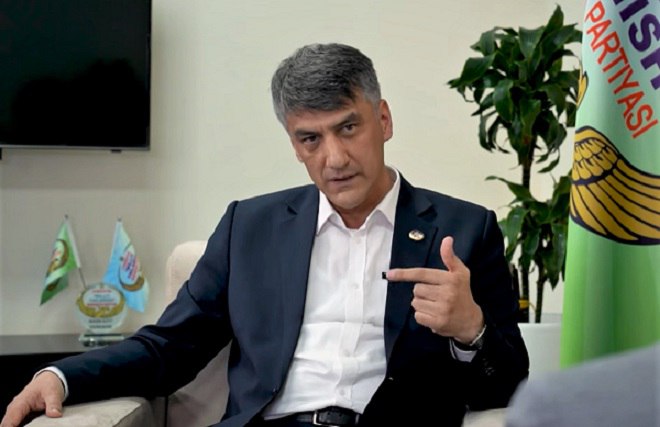
Alisher Qodirov, the deputy speaker of the legislative chamber of Uzbekistan's Parliament (Oliy Majlis) and leader of the Milliy Tiklanish (National Revival) Party, has proposed an initiative to ban the promotion of Soviet ideology and symbols in the country. The idea emerged after the high-profile case of a Samarkand pensioner who expressed a desire to restore the Soviet Union, for which he was sentenced to three years of restricted freedom under an article on encroachment on Uzbekistan's constitutional order. Qodirov supported the court's decision, noting that he considered Soviet ideology harmful and hostile to national values. In his statement, he emphasized that the Soviet regime had harmed not only Uzbekistan but the whole world, undermining the cultural and spiritual foundations of the people. He recalled the discrimination suffered by the Uzbek people during the Soviet period and emphasized the need to analyze this period. He stands firmly against its justification and promotion. “The Uzbek people were discriminated against and humiliated by the Soviet authorities and are still healing the wounds of the past. The Soviet ideology, which rejected nations, values, and faith, harmed not only our people but also the entire humanity, and these phenomena continue to be a misfortune,” Qodirov said. The politician also called the promotion of Soviet ideas a crime against the constitutional order and a betrayal of the people and ancestors who were victims of the regime. Qodirov has repeatedly spoken out against symbols relating to the USSR. In May 2021, he called the raising of the red flag at a concert in Tashkent a provocation and an insult to the people, explaining that the symbol of the Soviet occupier state was soaked in the blood of Uzbek intellectuals who had been repressed by the regime.