• KGS/USD = 0.01144 0%
  • KZT/USD = 0.00201 0%
  • TJS/USD = 0.10468 -0.1%
  • UZS/USD = 0.00008 0%
  • TMT/USD = 0.28571 0%
  • KGS/USD = 0.01144 0%
  • KZT/USD = 0.00201 0%
  • TJS/USD = 0.10468 -0.1%
  • UZS/USD = 0.00008 0%
  • TMT/USD = 0.28571 0%
  • KGS/USD = 0.01144 0%
  • KZT/USD = 0.00201 0%
  • TJS/USD = 0.10468 -0.1%
  • UZS/USD = 0.00008 0%
  • TMT/USD = 0.28571 0%
  • KGS/USD = 0.01144 0%
  • KZT/USD = 0.00201 0%
  • TJS/USD = 0.10468 -0.1%
  • UZS/USD = 0.00008 0%
  • TMT/USD = 0.28571 0%
  • KGS/USD = 0.01144 0%
  • KZT/USD = 0.00201 0%
  • TJS/USD = 0.10468 -0.1%
  • UZS/USD = 0.00008 0%
  • TMT/USD = 0.28571 0%
  • KGS/USD = 0.01144 0%
  • KZT/USD = 0.00201 0%
  • TJS/USD = 0.10468 -0.1%
  • UZS/USD = 0.00008 0%
  • TMT/USD = 0.28571 0%
  • KGS/USD = 0.01144 0%
  • KZT/USD = 0.00201 0%
  • TJS/USD = 0.10468 -0.1%
  • UZS/USD = 0.00008 0%
  • TMT/USD = 0.28571 0%
  • KGS/USD = 0.01144 0%
  • KZT/USD = 0.00201 0%
  • TJS/USD = 0.10468 -0.1%
  • UZS/USD = 0.00008 0%
  • TMT/USD = 0.28571 0%

Viewing results 457 - 462 of 1399

Two Participants Die During Half Marathon in Almaty

Two runners, one elderly and the other young, died during a half marathon in Almaty, Kazakhstan on Sunday, according to organizers. The participants were identified as 84-year-old Akkoyan Rsaliyev, who has regularly taken part in races since 2021, and 21-year-old Nurbol Ahmadi, who had participated in a 10-kilometer race and had registered for several long-distance events, including a marathon in Almaty. Rsaliyev suddenly felt bad in the first kilometer of the 21.1-kilometer run and responders in an ambulance that drove up to him found no pulse, the marathon organizers said in a statement. They quoted Dr. Alibek Khozhanazarov as saying an initial diagnosis was that the runner had a pulmonary embolism and had been suffering from chronic arterial hypertension. Then Ahmadi lost consciousness at the 16-kilometer mark and doctors arriving at the scene tried in vain to resuscitate him. The preliminary diagnosis was a pulmonary embolism and acute heart failure, according to Dr. Aigerim Yesdauletova. The Courage to Be the First corporate foundation, which supported the race, expressed its condolences to the families and friends of the runners who died. The organizers said they “acted according to the regulations: medical services, emergency services and the police worked quickly and in a timely manner. Despite the measures taken, it was not possible to save the lives of the participants.”  

NASA’s Oldest Active Astronaut, Two Russian Cosmonauts, Land in Kazakhstan

Accompanied by two Russian cosmonauts, NASA astronaut Donald Pettit marked his 70th birthday on Sunday with a parachute-supported landing on the steppes of Kazakhstan after a journey back to Earth from the International Space Station. A Soyuz MS-26 spacecraft carrying Pettit, as well as cosmonauts Alexey Ovchinin and Ivan Vagner, touched down at 6:20 a.m. local time southeast of Zhezkazgan, a city in Kazakhstan’s central Ulytau region. The three men had launched from the Russia-operated Baikonur Cosmodrome in Kazakhstan and docked at the station on Sept. 11 last year, spending a total of 220 days in space. “Rehabilitation and a meeting with loved ones lie ahead!” Roscosmos, the Russian space agency, said on Telegram. Photographs and video of the landing showed Pettit giving a thumbs-up as support team members carried him away from the spacecraft. Ovchinin and Vagner were shown wrapped in blankets and smiling broadly. Pettit, Ovchinin and Vagner orbited the Earth 3,520 times and traveled 93.3 million miles during their mission, according to NASA. It was Pettit’s fourth spaceflight and he has spent a total of 590 days in orbit. Ovchinin, also a four-time spaceflight traveler, has spent just five days longer than Pettit in space. Vagner has logged 416 days in space on his two trips. While American John Glenn became the oldest person to go to space in 1998 at age 77, Pettit is NASA’s oldest active astronaut. During his time on the space station, Pettit researched how to enhance in-orbit metal 3D printing capabilities, advance water sanitization technologies, explore plant growth under varying water conditions, and investigate fire behavior in microgravity, NASA said. His photography also attracted followers back on Earth. “Mother Earth, I am coming home,” Pettit posted on X on Saturday.

How Orthodox Christians Celebrate Easter in Central Asia and Around the World

In 2025, Orthodox Christians will celebrate Easter on April 20. This central event in the Orthodox liturgical calendar is marked with solemnity and joy across Orthodox-majority countries such as Russia, Belarus, Georgia, Bulgaria, Greece, Romania, and others. In Central Asia, Orthodox Christian communities also observe the holiday, maintaining centuries-old traditions despite being religious minorities. Kazakhstan On the night of April 20, Easter services will be held in all Orthodox churches across Kazakhstan. According to the Semirechensk Metropolitanate, the Holy Fire from Jerusalem will be brought to the Ascension Cathedral in Almaty, where Metropolitan Alexander will lead the liturgy and Easter procession. The service will begin at 23:30 and will be broadcast live on the Metropolitanate's official YouTube channel. A ceremonial arrival of the Holy Fire is scheduled for 17:00 on Easter Sunday at the cathedral. Uzbekistan In Uzbekistan, the focal point of Easter celebrations is the Holy Dormition Cathedral in Tashkent. Each year, Metropolitan Vikenty of Tashkent and Uzbekistan brings the Holy Fire from Jerusalem. In 2024, he celebrated Easter Matins with Bishop Savvatiy of Bishkek and Kyrgyzstan. Earlier that year, Vikenty made another pilgrimage to the Holy Land to receive the flame. Tajikistan In Dushanbe, Easter is traditionally celebrated at St. Nicholas Cathedral. In 2024, dozens of worshipers, including members of the Russian diplomatic mission and the ambassador, attended the festive liturgy. Following the service, a traditional procession took place, and parishioners received blessings along with kulich (traditional Easter bread) and other Easter treats. Turkmenistan Turkmenistan is home to approximately 485,000 Orthodox Christians, around 9% of the population. The Russian Orthodox Church operates through 12 churches organized under a Patriarchal benefice. While official celebrations are relatively modest, traditional Easter practices are still observed, particularly in urban centers. Russia In Russia, Easter remains the most significant church holiday. Services begin on Saturday evening with a midnight vigil, followed by festive Matins and the Divine Liturgy. The faithful greet one another with “Christ is risen!” and respond “Truly risen!” In the morning, families gather around tables adorned with kulichi, paskha (a cheese dessert), and colored eggs, which are traditionally used for “egg battles.” Easter Traditions Worldwide Because Orthodox churches use the Julian calendar and most Western churches follow the Gregorian calendar, Easter dates typically differ. However, in 2025, both calendars align, and Easter will be celebrated on the same day. Traditions vary widely around the world. In Poland, congregants bring willow branches and blessed food to churches, and festivities continue with "Wet Monday," a water-splashing custom. Bulgarians dye eggs and enjoy family feasts. In Greece, fireworks mark the midnight celebration, and tables are filled with magiritsa soup and roast lamb. In France and Germany, the Easter bunny and chocolate eggs dominate the holiday. Italians serve colomba cakes and lamb dishes, while the British favor hot cross buns and organize egg hunts. In Spain and Poland, dyed eggs are used for games and decoration. In Australia, Easter is celebrated with countryside festivals and egg hunts. Sweden observes a four-day holiday beginning on...

Restrained Optimism in Kazakhstan’s Book Market

Kazakhstan’s book market remains in a formative stage, according to optimistic voices in the publishing industry. However, the average Kazakhstani still spends far less on books annually than readers in the United States. Optimists Organize Exhibitions Astana will host the 8th Astana Eurasian Book Fair from April 23-27. Organizers promise one of Central Asia’s largest literary events, featuring 70 companies from Kazakhstan, Russia, Turkey, Iran, Uzbekistan, Spain, Portugal, and China, including publishing houses, booksellers, academic institutions, and printers. The Kazakhstani publishing house behind the event is especially upbeat. It plans to accelerate its domestic expansion and grow both sales and its catalog. In 2023, the publisher released 243 projects, approximately 90% of them in Kazakh, according to RegTV. Real Demand Remains Modest Despite this optimism, national statistics suggest a slow uptick in reading interest. In 2024, the volume of services provided by publishing companies increased by just 0.8% year-on-year, according to the Bureau of National Statistics. Much of that figure still reflects newspaper and periodical printing. Textbooks continue to dominate sales, KazTAG reports. Spending data further illustrates the challenge: the average Kazakhstani spends about $3 per year on books, while Russians spend five times as much, according to Spik.kz. Though a third of the population holds library cards, usage statistics are unclear. A 2023 survey by the AMANAT Institute of Public Policy found that only 26.5% of respondents had read at least one book in the previous year. More than half cited a lack of time (52%), while over one-fifth (21.4%) simply said they did not enjoy reading. Among those who did read, the national average was five books per year. Top reading regions include East Kazakhstan (10.6 books), North Kazakhstan (6.95), and Akmola (6.34), while Shymkent (3.8), Ulytau (3.7), and Zhetysu (3.59) ranked lowest, according to Azattyq Rýhy. More than 80% of published titles are textbooks or teaching aids. Markups at retail locations range from 60% to 100%. Comparatively, annual reading averages in France and Canada are 17 books, in the U.S. 12, and in South Korea 11. In the Shadow of the Russian Market Roughly 90% of books sold in Kazakhstan are printed abroad. In 2022 alone, imports from Russia totaled $14.7 million. This dependence hinders the domestic industry’s development, experts argue. Russian e-books cost just a few dollars, while Kazakhstani publications may sell for $20-$30. Writer Bakhytzhan Bukarbai has warned that Russian publishers, facing international sanctions over the war in Ukraine, are relocating to Kazakhstan and dominating the market. “The state must protect its own publishing industry. Protectionism should work to support Kazakhstani publishers,” he told Kursiv. A study by Orda.kz found that Kazakh-language e-books remain underrepresented and often overpriced, unless they are reprints of classics like those by the celebrated writer Abai. However, such titles are already widespread in most households, and readers are seeking new material. High production costs, exacerbated by reliance on imported paper and materials from Russia and China, contribute to the pricing issue. Kazakhstan also lacks robust self-publishing platforms and a developed...

Kyrgyz Clergy to Compete in Traffic Rules Knowledge Contest

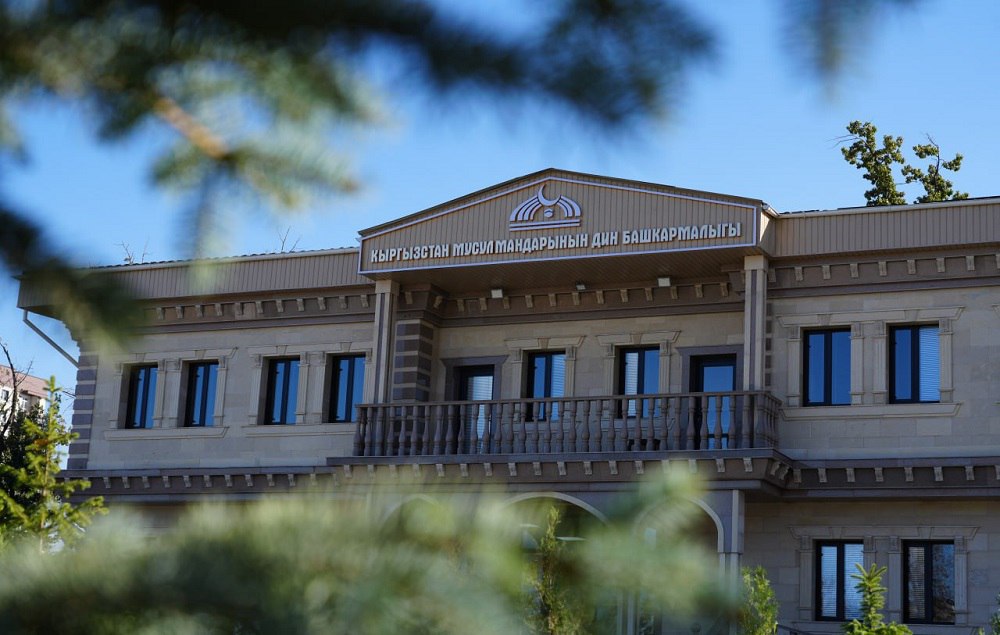
The Spiritual Administration of Muslims of Kyrgyzstan (DUMK) will hold a competition among its members to test their knowledge of traffic regulations. The participants will include mosque imams and staff from DUMK's central office, according to a statement on the Muftiate's official Facebook page. The initiative follows a recent meeting between DUMK representatives and officials from Kyrgyzstan’s Main Directorate of Road Traffic Safety (DGUOBDD). Traffic police emphasized the importance of promoting traffic rule compliance among the public, and particularly among the faithful, highlighting the clergy’s influential role in society. “To effectively promote road safety, religious leaders themselves must be well-versed in traffic laws,” said a DUMK spokesperson. “Shariah places great value on human life, which is why it mandates adherence to rules that protect it, including traffic regulations.” Addressing a Rising Crisis Traffic violations and accidents are a persistent issue in Kyrgyzstan. The DUMK noted that the National Statistical Committee records road accidents approximately every 90 minutes across the country. The situation is especially serious in rural areas. In response, the Muftiate has been conducting awareness campaigns in mosques nationwide for several years, including the ongoing “Human Life Above All” initiative aimed at reinforcing the religious imperative to safeguard life. Government Push for Compliance The clergy-led effort aligns with a broader push by the Kyrgyz government to enhance road safety. Starting in September 2025, drivers who commit traffic violations will be subject to on-the-spot knowledge tests, under a policy introduced by President Sadyr Japarov. This cooperation between religious and state institutions reflects a growing effort to integrate moral authority into public safety campaigns, particularly in a country where religious leaders remain influential community figures.

Air Astana to Serve Horse Meat and Baursaks to VIP Passengers

Kazakhstan’s flagship carrier, Air Astana, is introducing a new in-flight dining concept on international routes, offering business class passengers a taste of national cuisine reimagined through contemporary culinary techniques. The updated menu, available from June 2025, features dishes such as pumpkin-stuffed manty (dumplings), horsemeat tartare, and traditional desserts, part of a collaboration with the AUYL neo-nomadic cuisine restaurant and its chef, Ruslan Zakirov. Available from June, the menu also includes sweets infused with sesame, salted caramel, and balkaymak (a sweet made with camel's milk). “Our goal was to express Kazakhstan’s culture through flavor and a modern presentation,” said Zakirov, highlighting the project’s fusion of authenticity and innovation. The new offerings were tested on domestic flights during the Nauryz holiday and received overwhelmingly positive feedback, leading to their expansion to international routes. “We want passengers to feel at home, even at cruising altitude,” said Air Astana CEO Peter Foster. He added that the airline is committed to working with local producers and supporting small businesses, with plans to broaden the range of Kazakh-made products on board.  Vice President of Onboard Services Elena Obukhova noted that these initiatives enhance the airline’s cultural identity and create a unique travel experience for international guests. “It’s not just a menu, it’s Kazakhstan’s business card,” echoed Zakirov.  Beyond food, Air Astana has also updated its entertainment system. The airline now offers an expanded media library, including new movies, music, and audiobooks in Kazakh. With help from the National Library of Kazakhstan, passengers can listen to folk epics and modern interpretations of classic works. Long-haul business class passengers will also receive Moschino-branded travel kits containing cosmetics by the British brand TEMPLESPA. Cabin interiors now feature subtle elements reflecting Kazakh aesthetics. Air Astana’s efforts align with a broader shift in Kazakhstan’s tourism strategy. The Ministry of Tourism and Sports is now focusing on attracting high-spending travelers. “While growing numbers matter, quality should come first,” said Vice Minister Yerzhan Erkinbayev, who advocates for targeting tourists capable of spending $250 per day without overwhelming local infrastructure.  Kazakhstan, he added, is well-positioned to develop luxury tourism offerings, especially in its mountainous regions. Drawing on models from Barcelona, Milan, and the Alps, the country aims to build high-end infrastructure rather than pursue mass tourism. In this context, Air Astana’s gourmet in-flight service becomes more than just a culinary upgrade, it’s a strategic move to showcase Kazakhstan’s cultural sophistication and strengthen its appeal to discerning global travelers.