• KGS/USD = 0.01143 0%
  • KZT/USD = 0.00216 0%
  • TJS/USD = 0.10633 -0.28%
  • UZS/USD = 0.00008 0%
  • TMT/USD = 0.28571 0%
  • KGS/USD = 0.01143 0%
  • KZT/USD = 0.00216 0%
  • TJS/USD = 0.10633 -0.28%
  • UZS/USD = 0.00008 0%
  • TMT/USD = 0.28571 0%
  • KGS/USD = 0.01143 0%
  • KZT/USD = 0.00216 0%
  • TJS/USD = 0.10633 -0.28%
  • UZS/USD = 0.00008 0%
  • TMT/USD = 0.28571 0%
  • KGS/USD = 0.01143 0%
  • KZT/USD = 0.00216 0%
  • TJS/USD = 0.10633 -0.28%
  • UZS/USD = 0.00008 0%
  • TMT/USD = 0.28571 0%
  • KGS/USD = 0.01143 0%
  • KZT/USD = 0.00216 0%
  • TJS/USD = 0.10633 -0.28%
  • UZS/USD = 0.00008 0%
  • TMT/USD = 0.28571 0%
  • KGS/USD = 0.01143 0%
  • KZT/USD = 0.00216 0%
  • TJS/USD = 0.10633 -0.28%
  • UZS/USD = 0.00008 0%
  • TMT/USD = 0.28571 0%
  • KGS/USD = 0.01143 0%
  • KZT/USD = 0.00216 0%
  • TJS/USD = 0.10633 -0.28%
  • UZS/USD = 0.00008 0%
  • TMT/USD = 0.28571 0%
  • KGS/USD = 0.01143 0%
  • KZT/USD = 0.00216 0%
  • TJS/USD = 0.10633 -0.28%
  • UZS/USD = 0.00008 0%
  • TMT/USD = 0.28571 0%

Viewing results 463 - 468 of 1690

Unique Artifact from Kushan Era Unearthed in Tajikistan

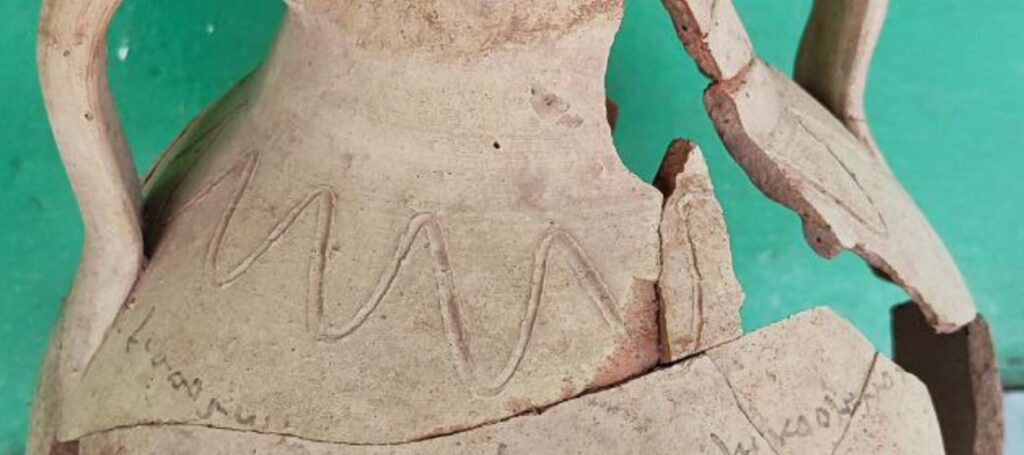
Archaeologists from the National Museum of Tajikistan have unearthed a rare and significant artifact, a clay vessel bearing a complete inscription in the Bactrian language, dating to the Kushan era. The discovery was made at the Khalkhajar archaeological site near the village of Sarband, according to the museum’s announcement. A Jug with a Story Excavations at Khalkhajar began on May 20 under the direction of Mirali Zamon Karimdodzoda, head of the museum’s archaeology and numismatics department. The team uncovered the remains of ancient architectural structures, including clay and brick walls with traces of whitewash and well-preserved sections of interior spaces. Most of the artifacts unearthed date back to the Kushan Empire’s peak between the 1st and 3rd centuries AD. Among the most notable finds is a two-handled clay jug, recovered in fragments and meticulously restored. What makes the vessel exceptional is its intact inscription in Bactrian, written in a distinct broken script, an exceedingly rare occurrence in Tajikistan. Deciphering the Inscription To analyze the text, the museum enlisted the expertise of internationally renowned scholars: Professor Nicholas Sims-Williams, a specialist in ancient Iranian languages, and numismatist Joe Cribb. Based on their interpretation, the inscription reads: “eiado gō(l)z[o ]sido finzo sagkino ol(o) mo(.)” Translation: “This water jug belongs to the woman Sagkina.” This simple phrase is of considerable linguistic and cultural significance. It offers a rare glimpse into everyday life and personal property practices in the Kushan period, shedding light on literacy, gender, and identity in ancient Central Asia. Cultural and Historical Significance The name “Sagkina” provides valuable material for onomastic studies and enriches understanding of female naming conventions in the region during the Kushan era. The presence of such inscriptions suggests a relatively advanced level of literacy and a societal norm of marking personal belongings, an important insight into domestic life and social organization at the time. Experts note that finds of this nature are vital for tracing the evolution of writing systems in Eastern Iran and for better understanding the intersection of language and material culture in ancient societies. Echoes of Empire The Kushan Empire was one of the most expansive and influential states in ancient Central Asia, encompassing areas of present-day Afghanistan, Pakistan, India, southern Uzbekistan, and parts of Tajikistan. The Bactrian language, written in a modified Greek script, served as a key medium for administration and trade, and today remains essential to reconstructing the region’s historical narrative. Archaeological efforts at Khalkhajar are ongoing. All discoveries are being catalogued for future public exhibition at the National Museum of Tajikistan, where the inscribed jug will take pride of place as a symbol of the region’s rich cultural heritage.

Road Deaths of Demining Team Are Remembered in Tajikistan

This week, a Swiss humanitarian group with a leading role in the disposal of unexploded ordnance in Tajikistan is commemorating the deaths of five of its Tajik workers in a 2016 vehicle accident in the Central Asian country. “On this day, we take a moment to honour their memory,” the Geneva-based FSD group said on X on Monday. The five members of FSD’s demining team in Tajikistan – deminers Abdurozik Kurbonov, Gulmurod Choriev and Ilkhomjon Safarov, as well as medic Mashraf Abdurahmonov and driver Ghafor Soliev - died on June 30, 2016 were killed in the accident while on their way to a minefield. The vehicle they were in plunged into the torrents of the River Panj, which forms part of the border between Tajikistan and Afghanistan. Two people in the vehicle survived. The acronym FSD stands for Fondation Suisse de Déminage, or Swiss Federation for Mine Clearance. It has worked to clear landmines and other unexploded ordnance in Tajikistan, where a civil war in the 1990s killed several tens of thousands of people, according to a number of estimates, and displaced many more from their homes. The demining group says much of the explosive material that must be cleared was left behind after the civil war, and that landmines laid by Russian forces along the Tajikistan-Afghanistan border as well as by Uzbek forces along the Tajikistan-Uzbekistan border in the early 2000s has posed concerns for the security of civilians. FSD, which first got involved in Tajikistan in the early 2000s, has also worked to rehabilitate areas affected by Soviet-era pesticides that have caused pollution and health problems. “While the Tajik government is aware of the risks of such substances on health, the environment and the economy, it lacks the legal, financial and institutional resources to solve the problem,” said FSD, which was founded in 1997. The group has received private and public funding. The humanitarian organization had 60 staff members in Tajikistan at the beginning of 2025. Its teams are working to working to clear the remaining 12.5 square kilometers of hazardous land in the country. In a step toward self-sufficiency in demining, 14 officers from Tajikistan’s Ministry of Defense and Border Troops agency completed a two-week training in explosive ordnance disposal in Gharm, Tajikistan in March this year. The training was conducted by Dushanbe-based officers from the Organization for Security and Co-operation in Europe and defense ministry specialists. Following that course, OSCE said expert instructors from Tajikistan led an OSCE-funded regional course in disposal of unexploded ordnance in April and May, “marking a significant step in enhancing Central Asia’s capabilities in mitigating explosive threats.”

Kyrgyzstan to Host First International Equestrian Rally Gallops

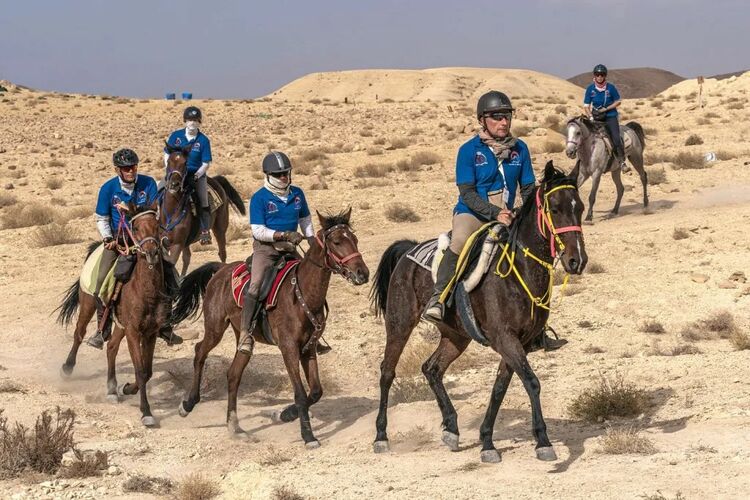
For the first time, the international equestrian adventure race known as The Gallops will be held in Central Asia, with the 2025 edition taking place around the scenic mountain lake of Son-Kul in Kyrgyzstan’s Naryn region. Scheduled for July 19-27, Gallops-2025 will begin in the village of Kyzart. Over five days, participants will cover more than 200 kilometers on horseback, navigating a route encircling Lake Son-Kul. This unique event, inspired by the spirit of the Paris-Dakar rally, combines elements of orienteering and endurance riding. While not a traditional competition, The Gallops tests participants’ stamina, solidarity, and self-discipline, making it a challenge of both physical and mental endurance. Organized in collaboration with local government authorities, Gallops-2025 is expected to attract around 100 riders, including professionals and VIPs from more than 15 countries. Participants will include public figures such as actors, athletes, members of royal families, and media personalities. According to the office of the Kyrgyz president’s plenipotentiary representative in the Naryn region, the event has already garnered significant attention from global media and social platforms, bolstering Kyrgyzstan’s profile as a destination for adventure tourism. Past editions of The Gallops were held in Oman (2014), Morocco (2018), India (2019), and Jordan (2021).

Emigration from Kazakhstan Drops to Lowest Level in a Decade

Kazakhstan is witnessing a significant decline in emigration, reaching its lowest level in more than ten years, according to a study by analysts at Ranking.kz. The analysis, based on data from the National Statistics Bureau (NSB) of the Agency for Strategic Planning and Reforms of the Republic of Kazakhstan (ASPiR RK), highlights shifting demographic and economic patterns within the country. Statistical Overview and Long-Term Trends In the first four months of 2025, just 1,700 individuals left Kazakhstan for permanent residence abroad, a figure 2.8 times lower than the same period in 2024, when 4,800 people emigrated. Immigration also declined slightly, with 8,100 people entering Kazakhstan between January and April 2025, compared to 9,900 the previous year. Despite this, the migration balance remains positive, with more people arriving than leaving. A longer-term view underscores a consistent downward trend. In 2000, some 155,700 people emigrated. By 2024, this figure had dropped to 12,700. Notable upticks occurred during periods of heightened outflow, specifically between 2006-2008 and 2013-2019. However, for the past two years, Kazakhstan has maintained a positive migration balance. In 2024, 23,900 people immigrated to the country, nearly double the number who left. Key Destinations for Emigrants Most emigrants originate from Kazakhstan's northern and eastern regions. In 2024, 47.9% of those who left came from the Kostanay, Pavlodar, Abai, North Kazakhstan, and East Kazakhstan regions. Russia continues to be the primary destination, receiving 69% of all Kazakhstani emigrants. However, that number is sharply down: from January to March 2025, only 644 citizens moved to Russia, a 75.5% decline compared to the same period in 2024. Germany is the second most popular destination. In 2024, approximately 2,000 Kazakhstani citizens relocated there, but this too marked a significant decrease of 67.9%. Emigration to nearly all traditional destinations has declined, with the exception of Kyrgyzstan. While still relatively minor in scale (about 300 people annually), migration to Kyrgyzstan is gradually increasing, particularly from Kazakhstan’s southern regions. Causes Behind the Decline The United Nations Population Fund had previously forecast a drop in emigration, attributing it to Kazakhstan’s economic development, increased labor demand, and the diminishing pool of ethnic migrants. Demographic shifts also play a role. Population growth in southern Central Asian republics is contributing to a new influx of migrants into Kazakhstan. A 2024 public opinion survey conducted by the Demoscope Express Monitoring Bureau supports these trends. Among the 1,100 respondents, 78.5% said they had no plans to emigrate within the next two to three years. Only 6.9% expressed intent to leave, and 5.6% said they would like to emigrate but were currently unable to do so. The most commonly cited reasons for emigration include the desire for higher income (24.5%), better employment opportunities (14%), and a perceived lack of prospects within Kazakhstan (23.9%). Other motivations include studying abroad (11.7%), family reunification (2.6%), and returning to ancestral homelands (0.6%).

Almaty to Issyk-Kul Flights Open Scenic Cross-Border Gateway

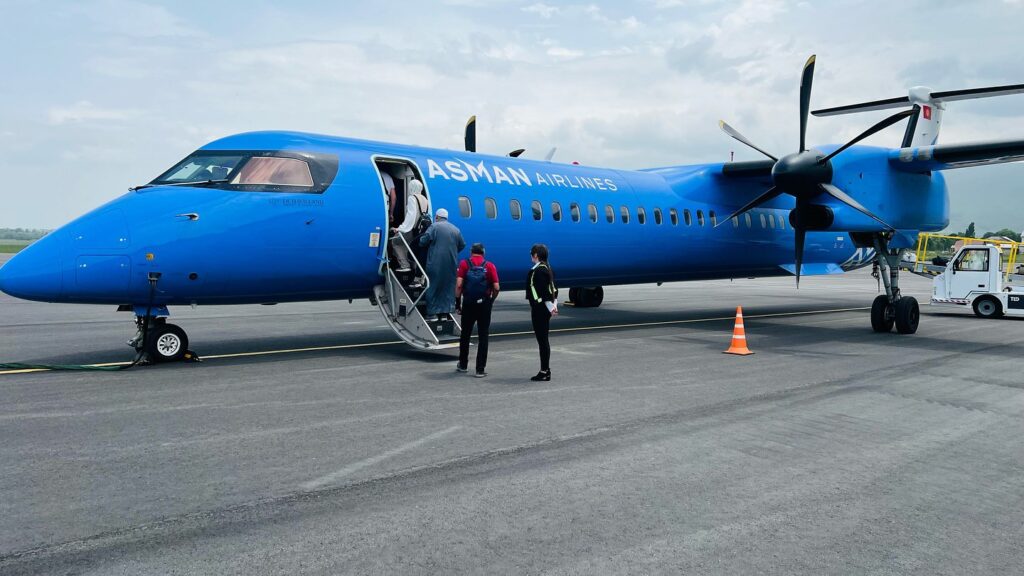
Regular passenger flights now link Almaty, Kazakhstan’s largest city, to Lake Issyk-Kul, Kyrgyzstan’s premier tourist destination. The new air service was launched by Kyrgyzstan’s Asman Airlines on June 27, according to Kazakhstan’s Ministry of Transport. The airline will operate two weekly flights, on Mondays and Fridays, between Almaty and Tamchy airport, located on the lake’s northern shore. Kazakhstan's low-cost carrier Fly Arystan is also set to launch direct flights between Almaty and Issyk-Kul, beginning July 3. These flights will run twice a week, on Thursdays and Sundays. Lake Issyk-Kul remains a favored summer destination for tourists across the region, particularly among Almaty residents seeking weekend getaways. The new air routes are expected to improve access for travelers from southern Kazakhstan, significantly reducing travel time and simplifying logistics during the peak tourist season. The Asman Airlines flight between Almaty and Issyk-Kul takes approximately one hour and 20 minutes. Previously, travelers had to drive over 460 kilometers via Bishkek, a journey that typically took about eight hours.  Efforts to shorten this overland route continue. The Times of Central Asia recently reported on the advancement of a long-discussed highway project aimed at directly linking Almaty to Issyk-Kul. Although the two locations are only 80 kilometers apart in a straight line, mountain ranges force travelers to detour through the Kyrgyz capital. The lake has also become more accessible to tourists from Uzbekistan. On June 22, Uzbek budget airline Fly Khiva launched regular flights from Tashkent to Tamchy. These flights will operate every Sunday through August 10, 2025.

Two Duishens: 60 Years of a Seminal Soviet Kyrgyz Film

Andrei Konchalovsky’s First Teacher, an adaptation of Chingiz Aitmatov’s famous work of the same name about an educator who undertakes the task of tutoring the kids in a remote Kyrgyz village, re-tailors the protagonist and the plot to convert a coming-of-age symphony into a triumph over tragedy while maintaining the book’s core values. In one of the earlier frames of First Teacher (Konchalovsky, 1965), the well-meaning beggar-turned-Komsomol member Duishen tears into a young student who suggests that the impermanence of life might also apply to, besides everyone else, Lenin. Duishen’s God-like reverence for the father of the Soviet experiment is also present in Chingiz Aitmatov’s novel of the same name. And yet, unlike the reserved and understanding protagonist of the book, who has the qualities if not qualifications of an educator and would’ve perhaps counselled the young one in the situation mentioned above, Konchalovsky’s teacher is an obstinate simpleton who is almost always on the edge and yearning for the village’s respect. Inna Merkoulova and Marina Merkoulova, in their brilliant essay ‘The first teacher: A case of intersemiotic translation. When Chingiz Aitmatov’s short story becomes Andrei Konchalovsky’s film’ discuss how the movie adaptation is a case of intersemiotic translation by the director, wherein the work transforms from Aitmatov’s drama into Konchalovsky’s tragedy through the usage of various film techniques. In fact, I believe that Duishen’s character undergoes a severe reinterpretation, from a Leninist disciple trying to do his bit for the Proletarian dictatorship by educating the kids in the book to a hot-headed agitator eager to force the Soviet will on the local populace in the film. In this work, we’ll analyse how the ‘two Duishens’ manage to achieve their objectives and meet at a similar end despite existing in vastly different frameworks. The ‘first Duishen’ from Chingiz Aitmatov’s book is sketched by an older Altynai, the Red Army soldier’s favourite disciple, who after achieving success as an academician in Moscow, looks back fondly at the bold Duishen of her childhood in the 1920s. A man who used the meagre resources at his disposal to become the village’s first educator. Someone who helped her achieve her potential. Duishen’s teachings have an importance that is much greater than the bookish knowledge that the soldier imparts. Duishen’s education is an act of courage, for they come from a man who is barely literate himself, his teachings restricted to basic numerals, letters and political wordings. But it assumes significance in the fact that Duishen shows the fortitude to overcome his circumstances, and becomes more than what fate had assigned him. Further, he indoctrinates the other illiterates, especially the weakest sections of a conservative society: women and children, to follow suit and take first steps towards their emancipation. Aitmatov’s hero is moulded as a Soviet ideal, and sits closer to the cinematic Duishen’s imagination of ‘hundreds and thousands’ steel-like party members who would keep the revolution alive after Lenin’s demise. He shows balanced wisdom in judgments, the heart of a soldier in peril, and...