• KGS/USD = 0.01144 0%
  • KZT/USD = 0.00208 0%
  • TJS/USD = 0.10456 0.19%
  • UZS/USD = 0.00008 0%
  • TMT/USD = 0.28571 0%
  • KGS/USD = 0.01144 0%
  • KZT/USD = 0.00208 0%
  • TJS/USD = 0.10456 0.19%
  • UZS/USD = 0.00008 0%
  • TMT/USD = 0.28571 0%
  • KGS/USD = 0.01144 0%
  • KZT/USD = 0.00208 0%
  • TJS/USD = 0.10456 0.19%
  • UZS/USD = 0.00008 0%
  • TMT/USD = 0.28571 0%
  • KGS/USD = 0.01144 0%
  • KZT/USD = 0.00208 0%
  • TJS/USD = 0.10456 0.19%
  • UZS/USD = 0.00008 0%
  • TMT/USD = 0.28571 0%
  • KGS/USD = 0.01144 0%
  • KZT/USD = 0.00208 0%
  • TJS/USD = 0.10456 0.19%
  • UZS/USD = 0.00008 0%
  • TMT/USD = 0.28571 0%
  • KGS/USD = 0.01144 0%
  • KZT/USD = 0.00208 0%
  • TJS/USD = 0.10456 0.19%
  • UZS/USD = 0.00008 0%
  • TMT/USD = 0.28571 0%
  • KGS/USD = 0.01144 0%
  • KZT/USD = 0.00208 0%
  • TJS/USD = 0.10456 0.19%
  • UZS/USD = 0.00008 0%
  • TMT/USD = 0.28571 0%
  • KGS/USD = 0.01144 0%
  • KZT/USD = 0.00208 0%
  • TJS/USD = 0.10456 0.19%
  • UZS/USD = 0.00008 0%
  • TMT/USD = 0.28571 0%

Viewing results 511 - 516 of 1498

Photograph of a Kazakh Female Harvester Preserved in a U.S. Library

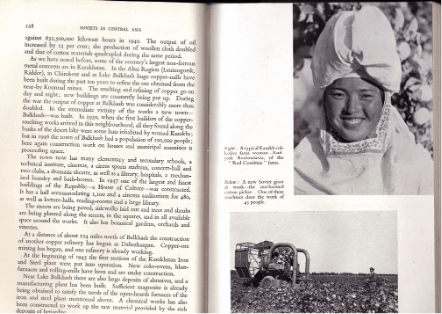
In the 1940s, British researchers William and Zelda Coates traveled to Kazakhstan and later published a book titled Soviets in Central Asia. The book included a previously unpublished photograph of a Kazakh female combine operator. The English caption identified her as "A typical Kazakh collective farm woman – Kudyash Avnimasova, of the 'Red Kombine' farm." The book also offers detailed insights into Kazakhstan’s agriculture and industry during the Soviet era. The authors highlight the significant progress made in food production over the previous decade, noting the establishment of numerous factories in southern Kazakhstan. They report that the country had five sugar factories, four distilleries, ten canneries, and three starch factories. Additionally, they emphasize the impact of large-scale industrialization, pointing out that Kazakhstan’s industrial workforce grew dramatically from just 20,000 in 1920 to nearly one million by early 1945. The Coates focus not only on economic and industrial developments but also on the aspirations, perspectives, and reform-driven mindset of smaller nations. The inclusion of the Kazakh female combine operator’s photograph is intentional; it complements the broader discussion on production and labor in the region. The authors present data showing that in 1938, Kazakhstan had 191 state farms, 363 machine and tractor stations, 25,646 tractors, and 9,522 combines. By 1947, those numbers had grown to 254 state farms and 670 collective farms, with 12,000 combines and tens of thousands of tractors operating in the fields. There is a common saying: 'History is a mirror.' Indeed, recorded history does not fade; rather, its significance deepens over time. The image of this female combine operator, preserved in the British scholars’ book housed in the Gelman Library at George Washington University, serves as a powerful representation of the resilience, determination, and vitality of Kazakh women in the 20th century.


Kazakh Villages Voluntarily Embrace Alcohol-Free Lifestyle

An increasing number of villages across Kazakhstan are voluntarily banning the sale of alcohol, reflecting a grassroots movement aimed at improving public health, safety, and the wellbeing of future generations. Prosecutor General Berik Asylov highlighted the trend on his official X (formerly Twitter) account, describing it as a conscious decision made by ordinary citizens, not a top-down directive. “When citizens take responsibility, reality itself changes,” he wrote, emphasizing that the initiative stems from the community level. Bottom-Up Initiative, Top-Level Support One notable example comes from a village in the Mangistau region, where residents released a video declaring their collective decision to stop selling alcohol. Similar efforts have emerged in Akmola, Zhambyl, Karaganda, Atyrau, and other regions. While still relatively isolated, these cases are increasing, Asylov noted, with the number of “dry” villages steadily growing. The movement is often driven by local community councils and elders, supported by the prosecutor’s office, police, and akimats (local government offices), which help implement preventive measures and maintain order. Entrepreneurs have also played a key role. Responding to requests from fellow villagers, many voluntarily removed alcohol from their shelves. Contrary to concerns, these businesses did not suffer losses, residents began purchasing more nutritious food and products for children instead. Visible Impact on Communities According to Asylov, the results are already apparent: crime rates are dropping, domestic violence is decreasing, and more young people are choosing sports and healthier lifestyles over alcohol. “This is a real-life demonstration of the principle of ‘Law and Order’, not enforced by fear, but built on trust; not through punishment, but through personal choice,” he said. Official Data Reflects the Trend Law enforcement statistics support this development. In the first quarter of 2025, the number of crimes committed under the influence of alcohol declined nationwide, a direct outcome of such community-led initiatives. In Aktobe region, 33 villages across nine of the region’s twelve districts have officially stopped selling alcohol, according to local media. In Turkestan region, 61 more villages have taken similar steps, according to Murat Kabdenov, head of the regional police department. Meanwhile, the village of Sunkar in Almaty region stands out for its complete elimination of alcohol from daily life, not just retail outlets. A Vision for the Future Prosecutor General Asylov reaffirmed that the General Prosecutor’s Office supports any community-driven initiative that promotes social harmony, respect for the law, and a shared vision for a better future. “People value trust, stability, and peace. They inspire each other through personal example,” he concluded.

Kazakhstan and Kyrgyzstan Plan Faster Routes from Almaty to Issyk-Kul

Kazakhstan and Kyrgyzstan have taken another step toward implementing a long-discussed infrastructure project: the construction of an alternative highway linking Almaty, Kazakhstan’s largest city, to Lake Issyk-Kul, Kyrgyzstan’s top tourist destination. On March 28, Almaty hosted the sixth meeting of the Kyrgyz-Kazakh Working Group on Transport and Infrastructure Development, held under the framework of the Almaty-Bishkek Economic Corridor Project, with support from the Asian Development Bank. Participants agreed on the key parameters for a feasibility study and committed to accelerating the implementation of the new road. [caption id="attachment_30342" align="aligncenter" width="740"] @AKIPress/The existing road from Almaty to Issyk-Kul and three possible alternative routes[/caption] Lake Issyk-Kul remains a major draw for tourists from across the region and is especially popular with residents of Almaty seeking weekend or summer getaways. Although the two locations are only 80 kilometers apart in a straight line, they are separated by mountain ranges. The existing route detours through Bishkek, extending the distance to more than 460 kilometers and turning what could be a short trip into an 8-hour drive to Cholpon-Ata, the largest resort town on the lake’s northern shore. Kazakhstan and Kyrgyzstan first signed a memorandum of understanding on the construction of an alternative route in 2007, but progress has since stalled. The proposed new highway would bypass Bishkek, passing through the town of Uzynagash, west of Almaty, and the town of Kemin, located approximately 100 kilometers east of Bishkek, before continuing to Cholpon-Ata. This revised route would reduce the total distance to around 260 kilometers, significantly shortening travel time.

Kazakhstan Launches Ambitious Project to Revive Legendary Aport Apple

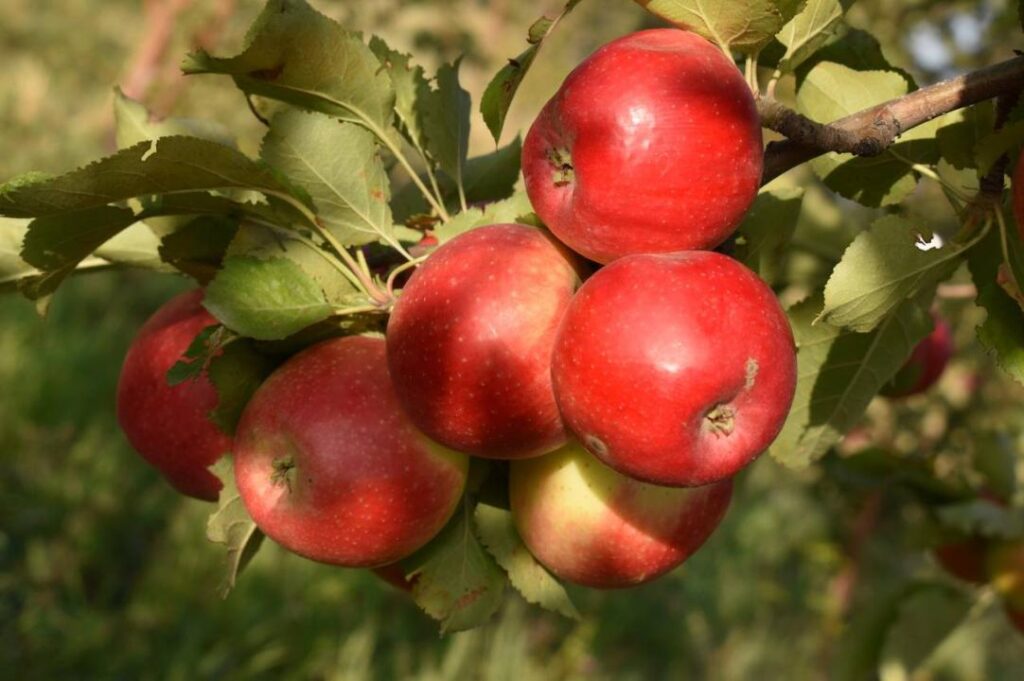
Kazakhstan has launched a major initiative to restore one of Almaty's most iconic symbols, the Aport apple variety. The Return of a National Symbol According to the National Agrarian Scientific and Educational Center (NANOC), new Aport orchards will be planted in the Almaty region starting in 2025, covering an area of 110 hectares. The project, set to run through 2028, plans to introduce approximately 25,000 seedlings. Funding has already been secured, and experts from KazNII Horticulture LLP have begun implementing the roadmap. “We are confident that the revival of this variety will be an important step in the development of domestic horticulture and will provide Kazakhstanis with high-quality and tasty fruits,” NANOC stated. The first harvest is expected in eight years. According to scientific forecasts, yields could reach up to 57.7 kilograms per tree in the early stages and up to 100 kilograms as the orchards mature. Aport apples are known not only for their distinctive aroma and taste but also for their durability: with proper storage, they remain fresh until March, and with modern preservation methods, even until June. A Fruit Steeped in History The Aport apple is more than just a fruit, it’s a cultural brand of Almaty. With its large size, vibrant color, and rich aroma, the Aport became a hallmark of the city. Historical records show that in 1865, a peasant named Yegor Redko brought Aport seedlings from Russia’s Voronezh Province to the town of Verny (modern-day Almaty). Within a decade, the variety flourished in the unique climate of the Zailiyskiy Alatau, revealing its full potential. By the early 20th century, Aport apples had gained international acclaim. At an exhibition in Germany in 1908, the variety won a prize. Since then, it has been recognized as a Kazakhstani brand. In 2023, the Aport was officially patented as a national product. Justice Minister Azamat Eskarayev has announced efforts to register the Aport as an international brand, including in European countries. Decline and Recovery Challenges The decline of the Aport apple began in the late 20th century, driven by rapid urbanization and the commercial development of former orchard lands. According to Saule Kazybayeva, Deputy Chair of the Board at the Kazakh Research Institute of Fruit and Vegetable Growing, the Aport was replaced by hardier and more commercially viable varieties like Golden Delicious. Moreover, the Aport requires specific care and environmental conditions, making it less appealing for mass production. Another setback has been the degradation of its genetic qualities. The traditional method of grafting Aport onto wild Sivers apple stock is often not properly followed, especially by private farms, resulting in a loss of the variety’s signature flavor. The Current Outlook According to the Ministry of Agriculture, Aport orchards now cover 2,500 hectares across Almaty and Zhetysu oblasts, with around 416,000 trees in total. Almaty itself has about 230 hectares of Aport orchards. However, local authorities acknowledge that both the orchard area and fruit quality are in decline, largely due to disease susceptibility. Despite these challenges, a revitalization program...

Tajikistan to Chronicle Soccer Legacy with New Museum and Landmark Book

A museum dedicated to the history of Tajik soccer will be inaugurated in a new stadium currently under construction in Dushanbe. The project was initiated by Rustami Emomali, Mayor of Dushanbe and President of the Tajikistan Football Federation​. A People's Archive of Soccer Heritage The Tajikistan Football Federation has called on fans, athletes, and sports veterans to contribute memorabilia related to the country's soccer history. Sought-after items include match jerseys, medals, trophies, certificates, books, and any other artifacts that reflect the evolution of soccer in Tajikistan. “The owners of valuable items and objects, as well as the authors of significant materials, will be recognized and encouraged,” the federation said in a public appeal. In parallel with the museum, the federation is preparing to publish The History of Tajik Soccer, the first comprehensive volume covering all major milestones in the sport’s national development. From the First Matches to the Soviet Leagues Soccer began to gain popularity in Tajikistan in the early 1920s. In 1936, the Tajikistan Football Federation was formally established, and a year later, the first championship of the Tajik SSR took place. Dinamo, a club from Stalinobod (now Dushanbe), emerged as the inaugural champion. In 1947, Dinamo debuted in the USSR championship, marking the beginning of Tajikistan’s participation in Soviet leagues. A defining moment came in 1989 when Dushanbe's Pamir club competed in the Supreme League of the Soviet Union, a peak achievement during the Soviet soccer era that remains a point of pride for the country. A New Era After Independence With the dissolution of the Soviet Union in 1991, Tajik soccer entered a new chapter. The Tajikistan Football Federation became a member of FIFA and the Asian Football Confederation in 1994, enabling the country to participate in global and regional competitions. Today, Tajikistan is investing in soccer infrastructure, focusing on youth training and international performance. The upcoming museum and book aim to celebrate the sport’s rich past while inspiring future generations of players and fans.

Scientists of Ancient Central Asia Still Relevant in the Modern World; The Idea of the Averaged Turkic Language

There is a debate on social media between Uzbek and Tajik communities about the medieval scholar Ibn Sina. The discussion revolves around the question of nationality — was Ibn Sina Tajik, Uzbek, or something else? Similar debates have emerged about other medieval scholars, including Al-Farabi. Ibn Sina (commonly known in the West as Avicenna) and Al-Farabi were two of the most influential scholars of the Islamic Golden Age. Ibn Sina, known for his contributions to medicine, philosophy, and science, wrote The Canon of Medicine, a foundational text in medical education for centuries. First published in 1025, his work stood as the standard medical textbook in Europe from its translation into Latin in the twelfth century through to the 1650s. Al-Farabi, often called the Second Greatest Teacher after Aristotle, made significant contributions to philosophy, logic, and political theory, shaping intellectual thought in the Islamic world and beyond. To explore this further, TCA spoke with two scholars — Fakhriddin Ibragimov, PhD, and Dr. Bakhtiyor Karimov — who have studied the lives and works of Ibn Sina and Al-Farabi extensively. [caption id="attachment_30258" align="aligncenter" width="1280"] Fakhriddin Ibragimov; image courtesy of the subject.[/caption] Fakhriddin Ibragimov, a researcher at the Abu Rayhan Biruni Institute of Oriental Studies, has spent nearly 15 years studying Ibn Sina. According to Ibragimov, historical sources provide no direct evidence of Ibn Sina’s nationality. “Ibn Sina (980 – 1037) was born in the village of Afshona, near Bukhara. Nowhere in his works or those written by his contemporaries is his nationality mentioned,” Ibragimov told TCA. “However, he is identified as a Muslim, like most people in Central Asia at the time. Also, many manuscript sources indicate that he was from Bukhara.” Ibragimov explains. Ibragimov also highlights that Ibn Sina himself wrote about his upbringing, describing how he was raised in an intellectual environment where philosophical and religious discussions were common: “We had a lot of scientific discussions, debates, and gatherings at home. Issues of faith were also raised there. My father and brother adhered to the Ismaili faith [one of the religious movements in Islam that was widespread in the Near and Middle East in the 10th and 11th centuries], but I did not join them,” Ibn Sina wrote. However, he did not mention any ethnic identity in his works or in those written by his contemporaries. [caption id="attachment_30260" align="aligncenter" width="575"] Avicenna at the sickbed, miniature by Walenty z Pilzna, Kraków (ca 1479–1480); image: jbc.bj.uj.edu.pl[/caption] The claim over Ibn Sina’s legacy is widespread. While Uzbeks and Tajiks both regard him as one of their own, Iranians also consider him Persian due to the language of his writings. In 2018, a bust of Abu Ali Ibn Sina was installed in front of the campus of the Autonomous University of Madrid as a gift from the Iranian embassy. The inscription on the bust reads, “Persian physician and philosopher.” Even Jewish scholars have cited him as part of their intellectual heritage. However, Ibragimov argues that Ibn Sina should be seen as a global figure rather...