• KGS/USD = 0.01144 0%
  • KZT/USD = 0.00194 0%
  • TJS/USD = 0.10841 -0.37%
  • UZS/USD = 0.00008 0%
  • TMT/USD = 0.28571 0.28%
  • KGS/USD = 0.01144 0%
  • KZT/USD = 0.00194 0%
  • TJS/USD = 0.10841 -0.37%
  • UZS/USD = 0.00008 0%
  • TMT/USD = 0.28571 0.28%
  • KGS/USD = 0.01144 0%
  • KZT/USD = 0.00194 0%
  • TJS/USD = 0.10841 -0.37%
  • UZS/USD = 0.00008 0%
  • TMT/USD = 0.28571 0.28%
  • KGS/USD = 0.01144 0%
  • KZT/USD = 0.00194 0%
  • TJS/USD = 0.10841 -0.37%
  • UZS/USD = 0.00008 0%
  • TMT/USD = 0.28571 0.28%
  • KGS/USD = 0.01144 0%
  • KZT/USD = 0.00194 0%
  • TJS/USD = 0.10841 -0.37%
  • UZS/USD = 0.00008 0%
  • TMT/USD = 0.28571 0.28%
  • KGS/USD = 0.01144 0%
  • KZT/USD = 0.00194 0%
  • TJS/USD = 0.10841 -0.37%
  • UZS/USD = 0.00008 0%
  • TMT/USD = 0.28571 0.28%
  • KGS/USD = 0.01144 0%
  • KZT/USD = 0.00194 0%
  • TJS/USD = 0.10841 -0.37%
  • UZS/USD = 0.00008 0%
  • TMT/USD = 0.28571 0.28%
  • KGS/USD = 0.01144 0%
  • KZT/USD = 0.00194 0%
  • TJS/USD = 0.10841 -0.37%
  • UZS/USD = 0.00008 0%
  • TMT/USD = 0.28571 0.28%
17 December 2025

Viewing results 667 - 672 of 1066

Live Long and Prosper: Kazakhstan’s Population Ageing

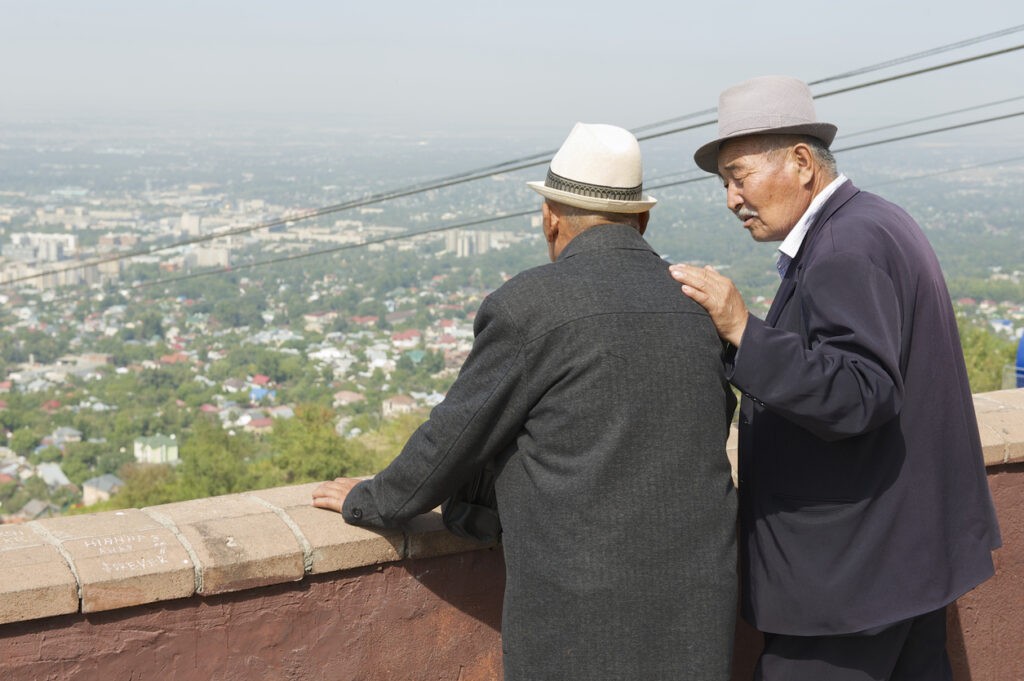
In 2023, life expectancy in Kazakhstan reached a record high of 75.09 years. As stated in a study from Ranking.kz, at the beginning of 2024, the number of adults over the age of 60 in the country exceeded 2.7 million, an increase of 4.2% year-on-year. Life expectancy in Kazakhstan has steadily increased for many years, except in 2020 and 2021, when it declined due to the COVID-19 pandemic. From 2022, this indicator began to rise again. The highest life expectancy was recorded in Almaty (78.28 years), Astana (78.09 years), Shymkent (76.32 years), and the Mangistau (75.84 years) and Atyrau (75.29 years) regions. By the beginning of 2024, the number of older people in the total population had reached 13.6%, up from 12% in 2020, and 9.8% in 2010. International and Kazakhstani experts predict that the population's demographic aging will intensify by 2050; the share of people over 60 will reach 16.7%, which means that every sixth resident of the country will be over 60 years old. Population aging has led to a decrease in the potential support ratio of the working-age population (25 to 64 years old) to the number of people over 65 years old. This ratio fell from 7.7 in 2012 to 5.49 in 2023. The ratio will drop to 4 by 2050, significantly increasing the working-age population's burden.

Cash, Horses, But No Meatballs — What Kazakhstan’s Olympic Medalists Receive For Their Success

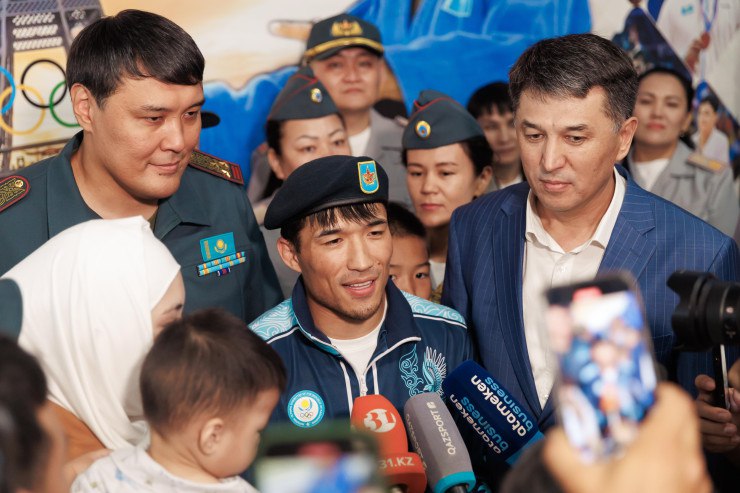
As Kazakhstani athletes begin returning home from the 2024 Olympic Games in Paris, the medalists are being greeted not only by new fans, but with payments and presents from the government. Yeldos Smetov, Kazakhstan's first-ever Olympic gold medalist in judo, received the keys to a Lexus LX 600 SUV worth at least 78 million KZT ($165,000). He was also given a 5-room apartment in his native Taraz, and a check for 2.6m KZT ($5,500). Smetov received a $250,000 government bonus, lifetime monthly payments of 369,000 KZT ($785), and was promised a herd of 100 thoroughbred horses. Meanwhile, Gusman Kyrgyzbayev, a bronze judo medalist at the Games, was also showered with gifts. A judoka who usually represents the Ministry of Defense's own sports club, Kyrgyzbayev was promoted from senior lieutenant to captain upon his return to Kazakhstan. Kyrgyzbayev was also given a Toyota Land Cruiser-250 SUV worth about 31 million KZT ($65,000), and received $75,000 as a state award. Kazakhstan's Ministry of Tourism and Sports has announced monetary incentives for anyone else who brings a medal home from Paris. Gold medalists will be paid $250,000; silver medalists will receive $150,000, and bronze medalists will receive $75,000. Bonuses of $30,000, $10,000, and $5,000 are also provided for 4th, 5th, and 6th places respectively. As generous as the Kazakh government has been, in East Asia the rewards are even more lavish. The government of Hong Kong is promising prize money of 6 million local dollars ($768,000) to any champions at the 2024 Olympics. In Malaysia, meanwhile, the recent gold medalists in badminton doubles, Apriyani Rahai and Gracie Poli, were each given five cows, a specialty meatball restaurant, and a new house.

Controversy and Confrontation Surround LGBT Issues in Kazakhstan

The situation surrounding the so-called “LGBT propaganda” conversation continues to heat up in Kazakhstan. Known for its controversial initiatives and stances, earlier this year the Parents' Union published a petition demanding a ban on demonstrations of non-traditional relationships in the country. The petition gained over 50,000 signatures, meaning Kazakhstan’s Ministry of Culture and Information must consider it under a law passed following Tokayev’s promise of a more engaged and aware “listening state.” However, UN experts have warned that Kazakhstan should not accept the petition for consideration, as it would seriously damage the republic's image in the international arena. The authors of the petition “We are against open and hidden propaganda of LGBT in Kazakhstan,” published on the official portal E-Petition.kz, is the Kazakhstan Union of Parents. The Ministry of Culture reported that according to Article 90-4 of the Administrative Procedural Code of the Republic of Kazakhstan, the petition should be considered. A working group, which includes representatives of interested parties, state bodies, and public associations, has been established, and hearings are underway. [caption id="attachment_21311" align="aligncenter" width="598"] Poster of Kazakh composer Kurmangazy Sagyrbaiuly and Russian poet Aleksandr Pushkin, Havas Worldwide, Facebook[/caption]   UN warning On July 31, UN experts said Kazakhstan should reject the petition calling for a law banning gay propaganda. The statement was attributed to Graham Reed, Independent Expert on the Protection against Violence and Discrimination on the Basis of Sexual Orientation and Gender, Irene Khan, UN Special Rapporteur on the right to freedom of opinion and expression, Mary Llor, Special Rapporteur on the situation of human rights defenders, Gina Romero Rodriguez, Special Rapporteur on the right to freedom of peaceful assembly, and Farida Shaheed, Special Rapporteur on the right to education. "The Government of Kazakhstan should reject the petition it is considering for legislation that violates freedom of expression, peaceful assembly, and association based on sexual orientation and gender identity. The petition itself is based on prejudice, and any legislation resulting from it inevitably and unlawfully tramples on human rights,” the UN experts stated. In their opinion, the call for a ban on propaganda of the LGBT movement contradicts the Administrative Procedure Code of Kazakhstan. According to it, the government is prohibited from considering petitions, the implementation of which may lead to the violations of human rights and freedoms. If the government responds to the petition and adopts a law banning the public expression of lesbian, gay, bisexual, and transgender (LGBT) identity, it would violate many rights, including freedom of expression and equality before the law, as guaranteed by the International Covenant on Civil and Political Rights, which Kazakhstan ratified in 2005. The UN has previously expressed concern about similar bills on so-called “LGBT propaganda” in Kazakhstan, Kyrgyzstan, and the Russian Federation. In Russia, laws against “LGBT propaganda” were introduced in 2013 and were tightened in 2022. A complete legal ban on LGBT propaganda (among people of all ages) was introduced, administrative cases were conducted, and internet resources were blocked. Kyrgyzstan passed a similar law in 2023, effectively...

Kazakhstan Completes Annual Anti-Locust Measures

This year’s locust control measures have been completed in all regions of Kazakhstan. As a result, farmers' crops have not been damaged by swarms of the grasshopper pests. Over 3.1 million hectares of land have been treated against locusts, 23% more than the planned 2.5 million hectares. Monitoring work will continue in some regions for another week. The amount of agricultural land affected by locusts has dramatically increased in recent years, from 514,000 hectares in 2020 to 1.6 million hectares in 2023. According to the UN’s Food and Agriculture Organization, locust outbreaks pose a severe threat to agriculture in the South Caucasus and Central Asia, with more than 25 million hectares and 20 million people in the region vulnerable to damage. Kazakhstan has cooperated closely with agricultural authorities of bordering countries, including Russia, to monitor the potential spread of locusts. Next year the government plans to purchase 100 drones to monitor the birthplaces of locust larvae and more drones to treat fields.

Tajikistan and Uzbekistan Discuss Using Lake Sarez For Drinking Water

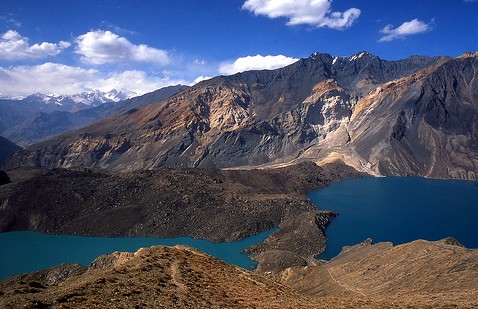
On August 3, a Tajik-Uzbek working group on the shared use of water from Central Asia's transboundary rivers met in Dushanbe. Participants discussed the potential for using the water from Lake Sarez, in the Tajik National Park in the east of the country, to provide Central Asian countries with clean drinking water. Other potential joint projects between Tajikistan and Uzbekistan in the field of water management were also considered. In 2018, the presidents of Tajikistan and Uzbekistan, Emomali Rahmon and Shavkat Mirziyoyev, first discussed using the Sarez freshwater as drinking water, during a visit by Rahmon to Uzbekistan. The nations subsequently commissioned a feasibility study from the Intergovernmental Joint Commission on Trade and Economic Cooperation. Rahmon has repeatedly emphasized that Tajikistan has ample freshwater resources, and has previously used speeches at political forums to suggest using the Sarez mountain lake to provide Central Asian countries with drinking water. The Tajik government has also offered to supply drinking water from Sarez to Iran, Jordan, and the United Arab Emirates. The Times of Central Asia has previously written that Central Asia will face severe water shortages in the coming years. More than 80% of the available water in Central Asia is used for irrigation, 40% of which is lost during delivery in the fields. With the commissioning of the Qosh Tepa canal in Afghanistan, the water shortage will become even more serious from 2028. The chairman of the Eurasian Development Bank, Nikolay Podguzov, has warned that the Qosh Tepa's construction could threaten Central Asia's water balance.

Uzbekistan Pushed to Clean Up Cities Amid Air Pollution Protests

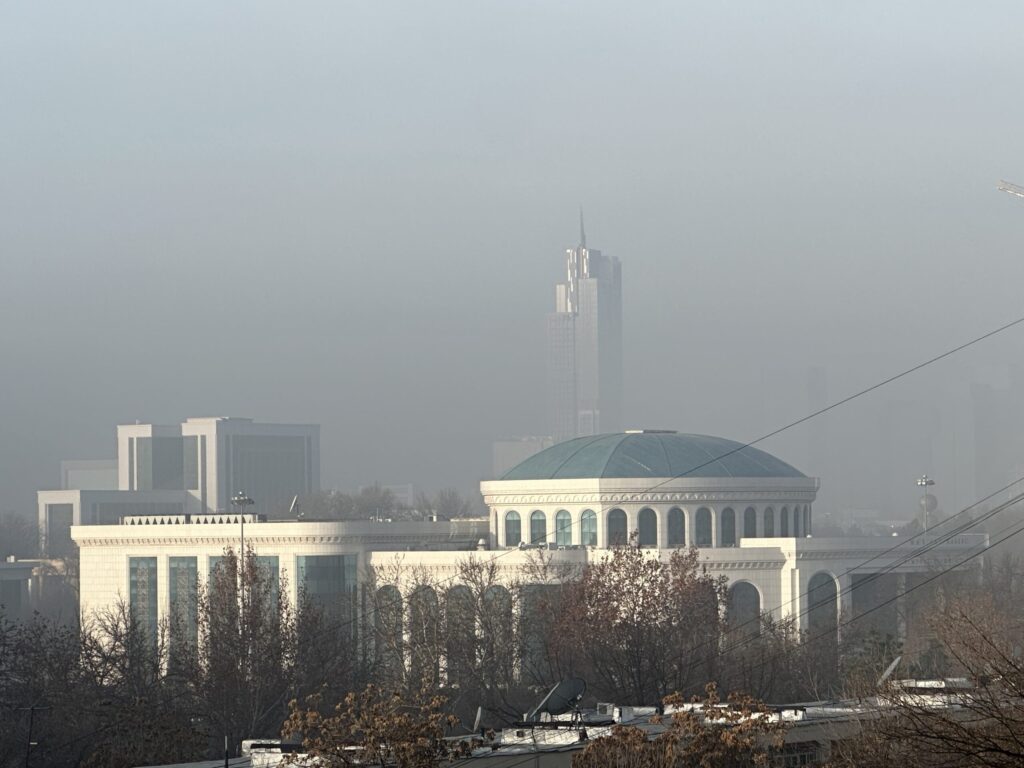
Uzbekistan's capital Tashkent continues to suffer from high levels of air pollution. According to the IQAir portal, on the morning of August 2 the concentration of PM 2.5 (fine particles in the air) in the city was 5.4 times higher than the WHO base indicator. Protest groups have been holding flash mobs in Tashkent this summer. One participant, Temurkhan Jahangir, believes that the main factor for the city's dangerous air is the government's poor urban planning policy. “The urban development strategy, implemented at the expense of urban densification, was a complete mistake from the start. It is foolish to sell land in the city center and build more buildings between multi-story buildings,” he said. According to the Ministry of Ecology, about 49,000 trees have been illegally cut down in the Tashkent region recently, which has also had a negative impact on air quality. At a meeting on January 29, the country's president Shavkat Mirziyoyev spoke about ecological problems. In particular he criticized the implementation of construction projects that don't consider environmental protection. He instructed the ministry to develop a “master plan” for each city and district of Uzbekistan, for local governors to improve the ecological situation by the end of the year. “On average, 730,000 motor vehicles move in Tashkent every day. In addition, 160,000 to 300,000 motor vehicles enter from the regions. Engines using A-80 gasoline, which does not meet international standards, emit harmful emissions into the atmosphere, exceeding the norm,” the Ministry of Ecology says. Mirziyoyev has also tasked the ministry with comprehensively abandoning A-80 gasoline from 2025 onwards, and developing sustainable public transport. He added that encouraging the population to switch to electric cars must be introduced to support green energy, prevent environmental problems, and reduce harmful emissions.