• KGS/USD = 0.01144 0%
  • KZT/USD = 0.00212 0%
  • TJS/USD = 0.10609 0.28%
  • UZS/USD = 0.00008 0%
  • TMT/USD = 0.28530 0%
  • KGS/USD = 0.01144 0%
  • KZT/USD = 0.00212 0%
  • TJS/USD = 0.10609 0.28%
  • UZS/USD = 0.00008 0%
  • TMT/USD = 0.28530 0%
  • KGS/USD = 0.01144 0%
  • KZT/USD = 0.00212 0%
  • TJS/USD = 0.10609 0.28%
  • UZS/USD = 0.00008 0%
  • TMT/USD = 0.28530 0%
  • KGS/USD = 0.01144 0%
  • KZT/USD = 0.00212 0%
  • TJS/USD = 0.10609 0.28%
  • UZS/USD = 0.00008 0%
  • TMT/USD = 0.28530 0%
  • KGS/USD = 0.01144 0%
  • KZT/USD = 0.00212 0%
  • TJS/USD = 0.10609 0.28%
  • UZS/USD = 0.00008 0%
  • TMT/USD = 0.28530 0%
  • KGS/USD = 0.01144 0%
  • KZT/USD = 0.00212 0%
  • TJS/USD = 0.10609 0.28%
  • UZS/USD = 0.00008 0%
  • TMT/USD = 0.28530 0%
  • KGS/USD = 0.01144 0%
  • KZT/USD = 0.00212 0%
  • TJS/USD = 0.10609 0.28%
  • UZS/USD = 0.00008 0%
  • TMT/USD = 0.28530 0%
  • KGS/USD = 0.01144 0%
  • KZT/USD = 0.00212 0%
  • TJS/USD = 0.10609 0.28%
  • UZS/USD = 0.00008 0%
  • TMT/USD = 0.28530 0%

Viewing results 673 - 678 of 1304

Kyrgyzstan Forecasts Five-Year Budget Surplus

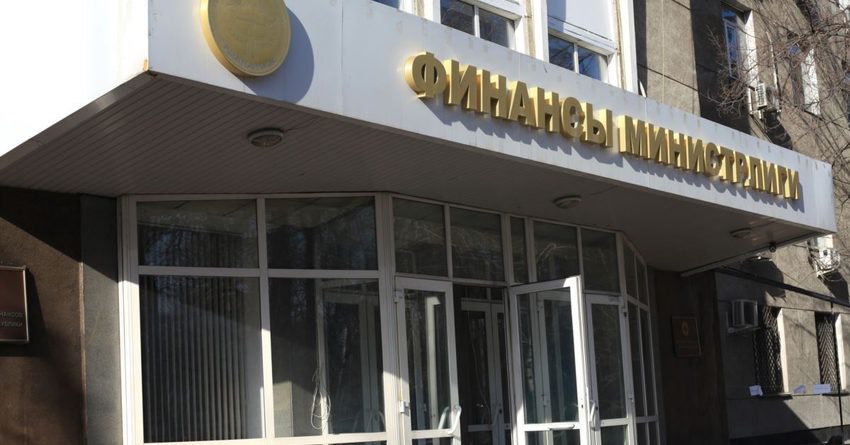
The Ministry of Finance of Kyrgyzstan has published a forecast of total revenue for the next five years, indicating that by 2029, the country's state budget revenue will grow to KGS 655 billion ($7.8 billion). At the end of 2024, Kyrgyzstan's state budget surplus will amount to KGS 11.2 billion ($131.7 million), while revenue this year amounted to KGS 414 billion ($4.8 billion). As  previously reported by TCA, the introduction of cash registers and the fight against crime have impacted on growth. Another contributing factor was mentioned by Head of the Cabinet of Ministers, Akylbek Japarov, who stated, “In fiscal policy, we are adopting technology that is fit for the times. Taxpayers are pleased with these changes. They no longer have to wait in queues; they can quickly file reports and receive the necessary documents online.” He also commended the promotion of domestic and foreign investments and the development of Kyrgyzstan's industrial sector which facilitate the growth of the republic's economy and, in turn, state budget revenue: “Since the beginning of 2024, 29 enterprises have been put into operation. Major projects are being implemented, such as constructing the Kambarata hydroelectric power plant and the China-Kyrgyzstan-Uzbekistan railroad. There are plans to develop the tourism sector." The Kyrgyz Finance Ministry said in a report that the annual growth in state budget revenue will provide a surplus which will be used to repay public debt.  The state budget is currently projected to receive KGS 414.5 billion ($4.8 billion) in 2024, KGS 465 billion ($5.4 billion) in 2025, KGS 505 billion ($5.9 billion) in 2026, and KGS 655 billion ($7.7 billion) in 2029. In a statement to TCA, the Finance Minister explained, “Large expenditures are projected for the medium term to pay down public debt. The projected budget surplus will be used for expenditures related to activities of economic orientation and covering the state's liabilities."

Turkmenistan Tries to Eradicate Soviet Imagery

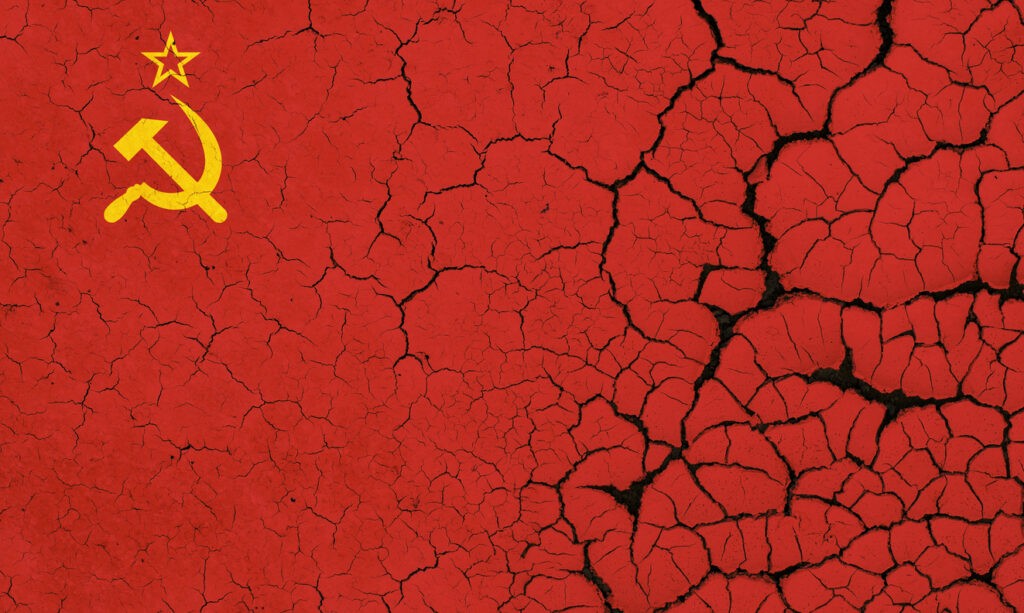
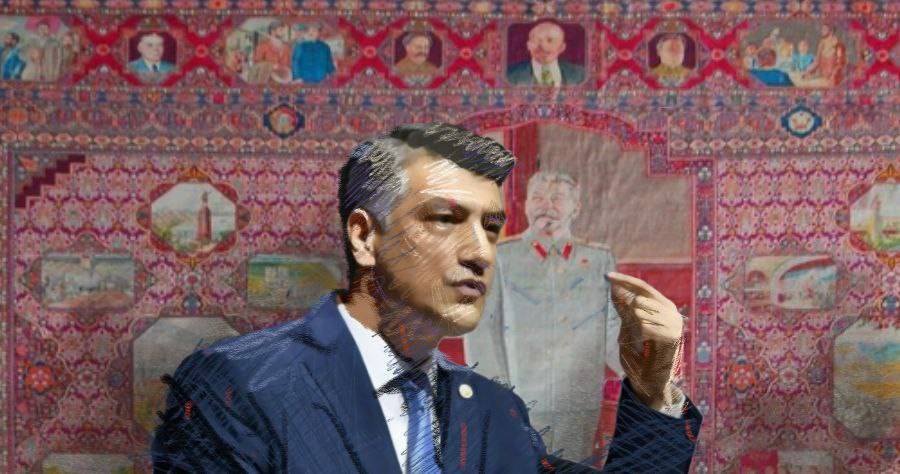
A campaign to fight symbols of the former Soviet Union, such as the hammer and sickle and the Soviet flag, has been launched in Turkmenistan's Balkan region. Authorities have involved national security and internal affairs officers, actively cracking down on clothing and accessories with Soviet symbols. According to residents, law enforcement agencies interrogate entrepreneurs selling such goods and even those wearing them. These operations take place in the markets and stores of Balkanabad and Turkmenbashi. “At Kenar market, I saw police seizing t-shirts, caps, notebooks, and other items with communist symbols while questioning sellers about the origin of these goods,” a resident of the region said. The active fight against Soviet symbols reportedly began in September, coinciding with preparations to celebrate the 33rd anniversary of Turkmenistan's independence. The country gained independence in 1991 after the collapse of the Soviet Union. Although Turkmenistan did not openly discuss the Soviet legacy for a long time, the process of decommunization did take place — many towns and villages named after Soviet figures were renamed. Turkmen authorities continue to create a national ideology, emphasizing the country's independence and identity within a new historical identity. The Balkan region added: “In western Turkmenistan, at various events and gatherings, people in their 50s have increasingly started to start conversations and praise the Soviet era. They say that during the Soviet times, one ruble could buy many things: a box of matches for 1 kopeck, 10 rubles could buy a 50-kilogram sack of flour, and now we can't buy meat or candy for months. There are more and more such people. They say that soon the USSR will be restored, and the communists will rule the world again.” The Times of Central Asia has written about a 74-year-old resident of Uzbekistan, Ergashkul Hasanov, who was convicted for spreading "propaganda" for the restoration of the USSR.

Uzbekistan’s Debt Reaches $37 billion

According to Kun.uz, based on data issued by the Ministry of Economy and Finance of Uzbekistan, as of July 1, 2024, the state debt of Uzbekistan -  $30.9 billion foreign and $6.1 billion domestic - exceeded $37 billion for the first time. For comparison, as of July 1, 2023, the state debt amounted to $31 billion 628 million, indicating an increase of $5.4 billion or 17% in just one year. As stated in the report, the growth rate of Uzbekistan’s foreign debt has increased sharply in recent years. In particular, at the end of 2017, the state debt amounted to $11.6 billion, and by the end of 2023,  reached $34.9 billion, a threefold increase. By the end of the first half of the year, 42% of the total state external debt ($13 billion) was allocated to budget support, 19% ($5.7 billion) to the fuel and energy sector, 9% ($2.7 billion) to transport and transport infrastructure, and 9 % to agriculture and water management ($2.7 billion.)

Restoration of Kyrgyzstan’s Largest Hydropower Plant Nears Completion

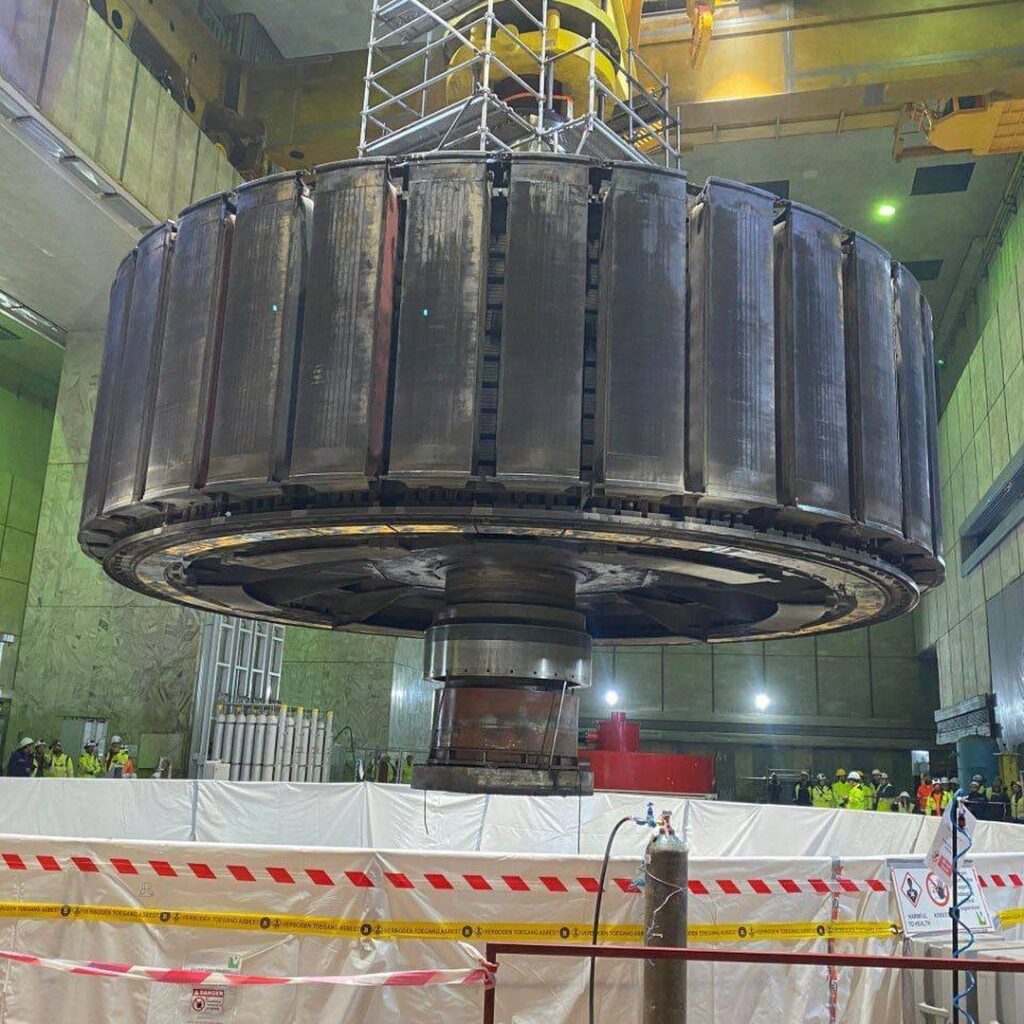
According to Kyrgyzstan's Ministry of Energy, the modernization of the country’s largest hydropower plant, Toktogul HPP, which began in March, is now 80% complete. Located on the Naryn River, the Toktogul HPP comprises four hydroelectric units and with a total generating capacity of 1320 MW, provides about 40% of the country’s electricity. The rotor at the hydro unit No. 1 has been assembled and installed and when fully modernized later in 2024, the service life of the Toktogul HPP will increase by 25-30 years, ensuring a reliable and uninterrupted power supply in autumn-winter and increase the power plant’s generating capacity by 60 MW to 1380 MW. In recent years, since Kyrgyzstan has been unable to produce enough electricity to meet the growing demand, electricity has been imported from neighboring countries. In 2023, the volume of imported electricity  amounted to 3.2 billion kWh. and  Kyrgyz Minister of Energy Taalaibek Ibrayev reported that in the first half of 2024, Kyrgyzstan imported 2.02 billion kWh of electricity, including 909.8 million kWh from Russia and Kazakhstan, 837.5 million kWh from Turkmenistan, and 275.3 million kWh from Uzbekistan. During the first half of this year, Kyrgyzstan produced 7.07 billion kWh of electricity, including 6.2 billion kWh generated by hydroelectric power plants and 870 million kWh by thermal (coal-fired) power plants. In addition to updating its current facilities, the Ministry of Energy has committed to the construction of the Kambarata-1 HPP which destined to become Central Asia's largest hydroelectric power plant, aims to end Kyrgyzstan’s power shortages. Confident in the success of such measures, Chairman of the Kyrgyz Cabinet of Ministers, Akylbek Japarov, has announced that Kyrgyzstan will become both energy-sufficient and in a position to begin exporting electricity by 2026.

Three Hydraulic Units at Tajikistan’s Kairakkum Hydropower Plant Launched After Modernization

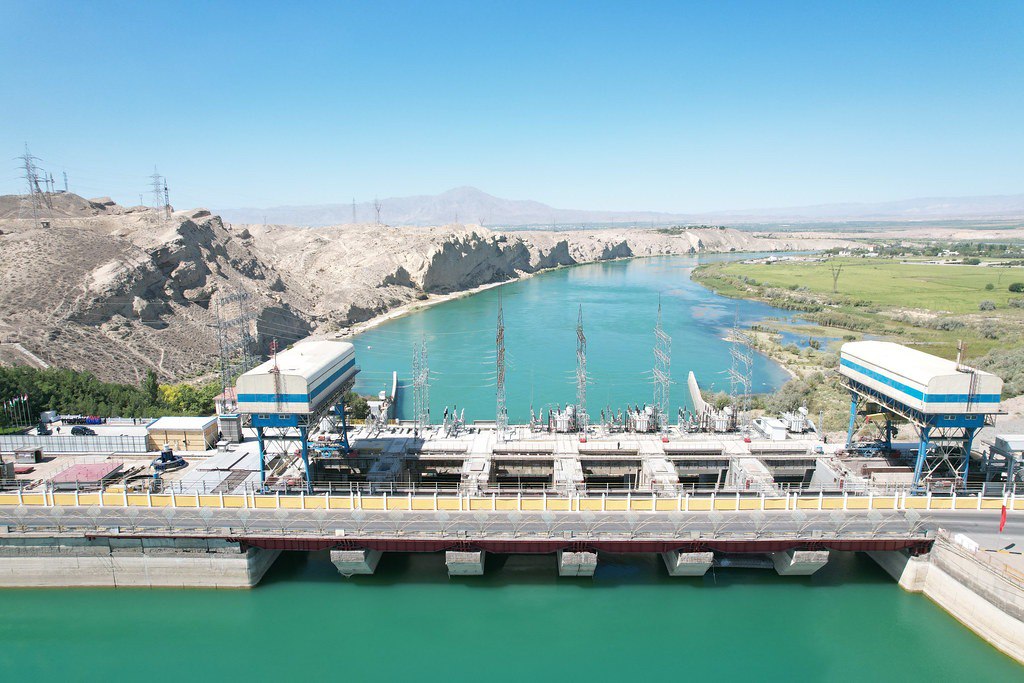
On September 7, three of the six power-generating units were put into operation after modernization at the Kairakkum hydropower plant (HPP) in the city of Guliston in Tajikistan’s northern Sughd region. Located on the Syr-Darya River, the Kairakkum HPP consists of six hydropower units, the last of which was commissioned in 1957 and has a design capacity of 21 MW. A project to modernize the aging plant was launched in August 2019. Over the past five years, hydro units Nos. 4, 5, and 6 have been completely renovated, and their capacity has increased from 19 to 29 MW. The power plant’s dam has been reinforced as part of the project. Currently, work is ongoing on rehabilitating hydro units No. 2 and 3. After the complete modernization planned for 2026, the average annual electricity production at the Kairakkum HPP will increase from 580 million kWh to 850 million kWh. It was earlier reported that the Kairakkum HPP rehabilitation project received $196 million in financing from the European Bank for Reconstruction and Development (EBRD), Green Climate Fund (GCF), Climate Investment Funds, and European Investment Bank (EIB). The financing comprised a $88 million EBRD loan, a $37 million EIB loan, a $50 million GCF loan and grant, and a $21 million Climate Investment Funds loan. In recent years, Tajikistan, which has abundant hydroenergy resources, has focused on hydropower generation projects — the largest of which is the construction of the giant Rogun dam — to solve the problem of chronic power shortages and begin electricity exports to neighbors in the region.

Silk Road Treasures: Almaty’s Mountains

Under the banner of "Silk Road Treasures", TCA's people -journalists, editors, authors- share their personal experiences of Central Asia and her people, and by listing their favorite places, literature, films, architecture and archaeological sites, alongside encounters with customs and traditions, provide pointers for readers wishing to visit the region. Vagit Ismailov, Journalist The first thing a travelers notice when descending at Almaty International Airport are the towering snow-capped peaks of the Zailiyskiy Alatau mountains. However, alongside their majestic presence which make this city unique, the mountains harbour a constant threat which anyone who has experienced an earthquake whilst inside a high-rise building, will both well understand and fear. Almaty, capital of Kazakhstan until 1997, is one of those cities whose growth is independent of either metropolitan status or the presence of large enterprises. Now one of the most dynamic cities in the post-Soviet space and, perhaps, one of the most prosperous in Central Asia, the ever-evolving city absorbs money from other regions and boasts a wealth of amenities, high-end restaurants and cosy cafes to welcome customers day and night. Inevitably, the population continues to rise and as commented by one of Almaty's akims (mayors), every day, the number of people entering the city is equivalent to Latvia's population of over 1.5 million. As a result, the roads are constantly clogged with traffic, again showing the megacity's restless energy and the potential for further growth. Amidst the boom in development which has spurred the construction of modern residential and business complexes, the city center remains quintessentially Soviet in style, flanked by streets of  familiar communist apartment blocs from the sixties and seventies. Today's new builds reach for the sky but under the Soviet regime, high-rise construction was forbidden in Almaty. The only exception was the Kazakhstan Hotel, which standing 102 meters high, is now the city's third tallest building. Constructed in 1977, it was designed to withstand zone 9-point seismic activity, but nevertheless, its survival of several earthquakes is regarded as miraculous. [caption id="attachment_22785" align="aligncenter" width="600"] Hotel "Kazakhstan" Image: @iStock[/caption] The proximity of the mountains and unspoilt natural landscape, provide residents and tourists alike, a perfect place to relax and enjoy the great outdoors. The nearby resorts of Shymbulak and Medeo, home to  the world's largest ice rink which sits like a diamond in a box of green velvet, offer a range of winter sports facilities. Cable cars traversing deep gorges, operate all year round, aiding access to the high pastures, and panoramic views of the Tien Shan ranges, and numerous, graded hiking trails wind through passes to lakes and waterfalls. Scenery aside, visitors can experience more of what Kazakhstan has to offer by sampling local fayre in various venues and watching demonstrations of eagle hunting, and for lovers of antiquity, there are petroglyphs to be discovered, carved on red rock, and the famous Boroldai Saka Burial mounds, dating back to V-VIII BC. [caption id="attachment_22786" align="aligncenter" width="540"] Medeo. Image: @iStock[/caption] But the threat of the Zailiyskiy Alatau is ever-present. In 1887, ...