• KGS/USD = 0.01144 0%
  • KZT/USD = 0.00211 0%
  • TJS/USD = 0.10460 0%
  • UZS/USD = 0.00008 0%
  • TMT/USD = 0.28571 0.28%
  • KGS/USD = 0.01144 0%
  • KZT/USD = 0.00211 0%
  • TJS/USD = 0.10460 0%
  • UZS/USD = 0.00008 0%
  • TMT/USD = 0.28571 0.28%
  • KGS/USD = 0.01144 0%
  • KZT/USD = 0.00211 0%
  • TJS/USD = 0.10460 0%
  • UZS/USD = 0.00008 0%
  • TMT/USD = 0.28571 0.28%
  • KGS/USD = 0.01144 0%
  • KZT/USD = 0.00211 0%
  • TJS/USD = 0.10460 0%
  • UZS/USD = 0.00008 0%
  • TMT/USD = 0.28571 0.28%
  • KGS/USD = 0.01144 0%
  • KZT/USD = 0.00211 0%
  • TJS/USD = 0.10460 0%
  • UZS/USD = 0.00008 0%
  • TMT/USD = 0.28571 0.28%
  • KGS/USD = 0.01144 0%
  • KZT/USD = 0.00211 0%
  • TJS/USD = 0.10460 0%
  • UZS/USD = 0.00008 0%
  • TMT/USD = 0.28571 0.28%
  • KGS/USD = 0.01144 0%
  • KZT/USD = 0.00211 0%
  • TJS/USD = 0.10460 0%
  • UZS/USD = 0.00008 0%
  • TMT/USD = 0.28571 0.28%
  • KGS/USD = 0.01144 0%
  • KZT/USD = 0.00211 0%
  • TJS/USD = 0.10460 0%
  • UZS/USD = 0.00008 0%
  • TMT/USD = 0.28571 0.28%

Viewing results 331 - 336 of 1289

Kazakhstan Will Not Impose Quarantine for Metapneumovirus

Aizhan Esmagambetova, head of Kazakhstan's National Center for Public Health, has announced that there is no need for restrictive measures in response to identified cases of human metapneumovirus (HMPV) in the country. Human metapneumovirus is a respiratory tract infection that can cause inflammation in the upper and lower lungs. Although the virus has been circulating among humans since the mid-20th century, it has not previously caused widespread epidemics. Concerns about the virus were raised after foreign media reported an outbreak in neighboring China in late December 2024. The Chinese Center for Disease Control and Prevention confirmed the spread of acute respiratory infections, including HMPV, but Chinese authorities did not impose border closures similar to those during the COVID-19 pandemic in 2020. In Kazakhstan, the Ministry of Health reported detecting 30 cases of metapneumovirus between October 1, 2024, and early January 2025. The Committee of Sanitary and Epidemiological Control conducted testing on 8,360 non-influenza virus samples during the epidemic season, with 1,866 (22%) returning positive. Of these, metapneumovirus accounted for only 1.6%. Other respiratory infections were more prevalent, including: Rhinovirus: 680 cases (36.4%) Respiratory syncytial (RS) virus: 433 cases (23.2%) Adenovirus: 226 cases (12.1%) Coronavirus: 206 cases (11.1%) Parainfluenza: 178 cases (9.5%) Bocavirus: 113 cases (6.1%) The Ministry of Health stated that HMPV is primarily transmitted via airborne droplets and, to a lesser extent, through household contact. Despite this, Esmagambetova emphasized there is no justification for a quarantine:"The epidemiological situation in the country is stable. While we are in the midst of the epidemic season, a comparison of this year and last year shows a 20% decrease in acute respiratory viral infections (ARVI) for the same period," she explained. "As is typical, morbidity rises in January and declines by mid-February, but there are no grounds for quarantine or other restrictive measures. We are monitoring the epidemic situation, including morbidity and virus circulation, almost daily." Esmagambetova also highlighted that approximately 70% of cases in Kazakhstan occur in children under 14. She advised parents to keep children with signs of respiratory infections at home and avoid sending them to schools or kindergartens. She further recommended that citizens avoid crowded places, wear masks, and ensure proper ventilation. Kazakhstan’s Minister of Education, Gani Beisembayev, stated during a government meeting that the country’s education system is prepared to switch to distance learning if necessary. However, any decision to transition will depend on the Ministry of Health. This update comes after The Times of Central Asia reported outbreaks of seasonal and non-seasonal diseases across Central Asia last year, including influenza, measles, and hepatitis​.

Kazakhstan Prepares for Flood Season by Releasing Water from Reservoirs

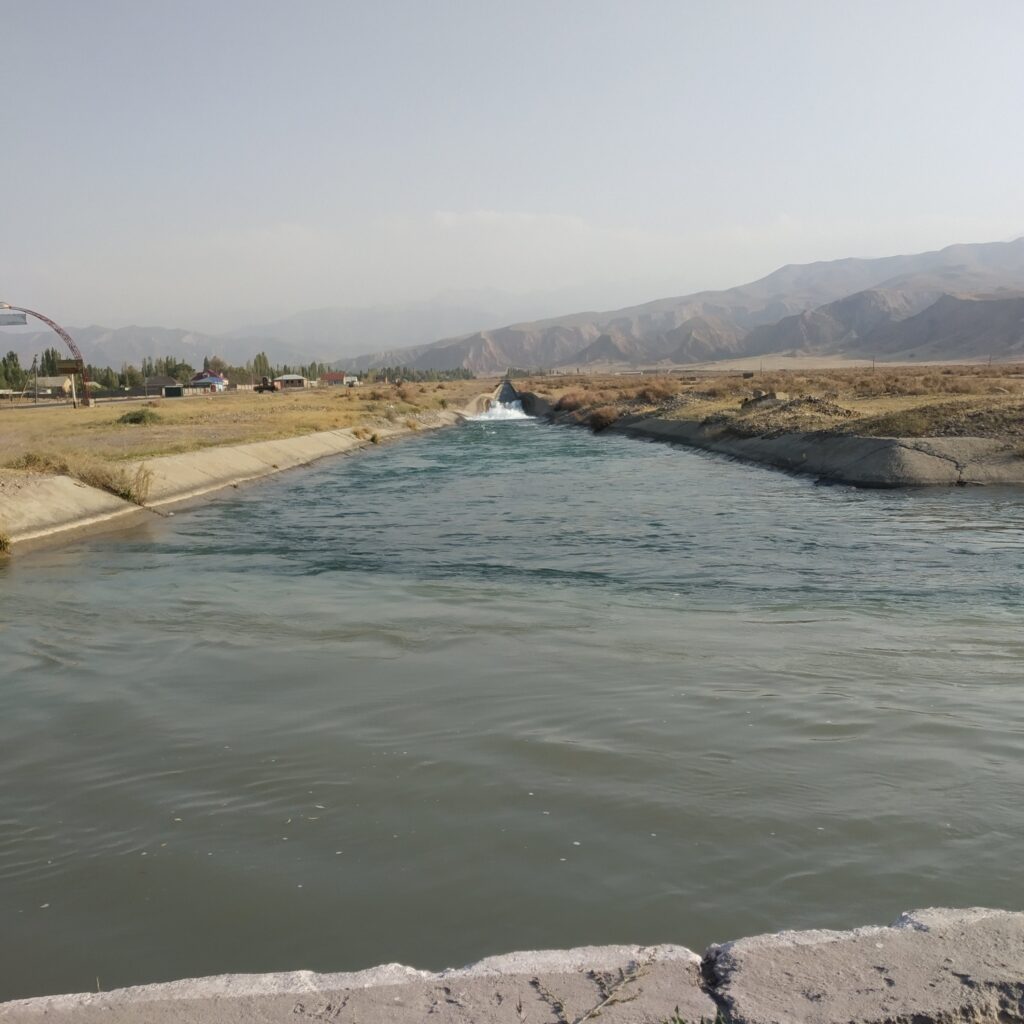
Kazakhstan's Ministry of Water Resources and Irrigation (MWRI) has begun releasing water from key reservoirs across the country to prepare for the influx of meltwater expected during the spring thaw. This proactive measure follows the devastating floods of spring 2024, the worst in 80 years, which affected multiple regions and displaced over 120,000 people. By pre-emptively releasing water from reservoirs, Kazakhstan hopes to mitigate the impact of the spring flood season. This preparation underscores the importance of coordinated water management to protect communities, agriculture, and infrastructure from the devastating effects of extreme weather events. In early January, the MWRI held a meeting to discuss water management strategies for the upcoming flood season. Authorities have initiated controlled releases in reservoirs located in the west, east, north, and center of the country - regions hit hardest by last year’s flooding. These releases are designed to reduce water levels in preparation for spring meltwater. Astana Reservoir: Between December 20, 2024, and January 3, 2025, 5.06 million cubic meters of water were released, lowering the reservoir to 83% of its total capacity. By April 1, its volume will be further reduced to 73% (300 million cubic meters). Aktobe Reservoir: Currently holding 51 million cubic meters, this will be lowered to 47.32 million cubic meters by April. Bitik Reservoir (West Kazakhstan): Discharging at 8.3 cubic meters per second, its volume has been reduced to 34.45 million cubic meters. Bukhtarma Reservoir (East Kazakhstan): Now at 79% capacity, this will be reduced by another 8% by spring. Yntymak Reservoir (Karaganda Region): Of its current 69 million cubic meters, only 39 million cubic meters will remain to accommodate floodwaters. Kengir Reservoir (Ulytau Region): Reduced to 86% of capacity, it will be lowered by an additional 11%. Upper Tobolsk Reservoir (Kostanay Region): Holding 585.4 million cubic meters, its volume will be reduced to 61% (499.37 million cubic meters) by April. MWRI head Nurzhan Nurzhigitov emphasized the importance of strategic water management throughout the year. “In spring, it is critical not only to collect floodwaters in reservoirs but also to distribute them to lake systems, natural pastures, and meadows,” he said. Nurzhigitov urged regional authorities to plan for efficient water allocation, noting that during the previous irrigation period, farms received approximately 11 billion cubic meters of water. Efforts to restore and preserve both large and small reservoirs were also highlighted. Last spring’s historic floods inundated regions in northern, western, eastern, and central Kazakhstan for nearly two months. Over 120,000 people were evacuated, with rescue efforts involving multiple government agencies, including the Ministries of Emergency Situations, Defense, and Internal Affairs, as well as local authorities and volunteers. Despite extensive state aid, many citizens raised concerns about the allocation of resources, as previously reported by The Times of Central Asia.

Kazakhstan to Build Religious Memorial on Site of Stalin-Era Executions

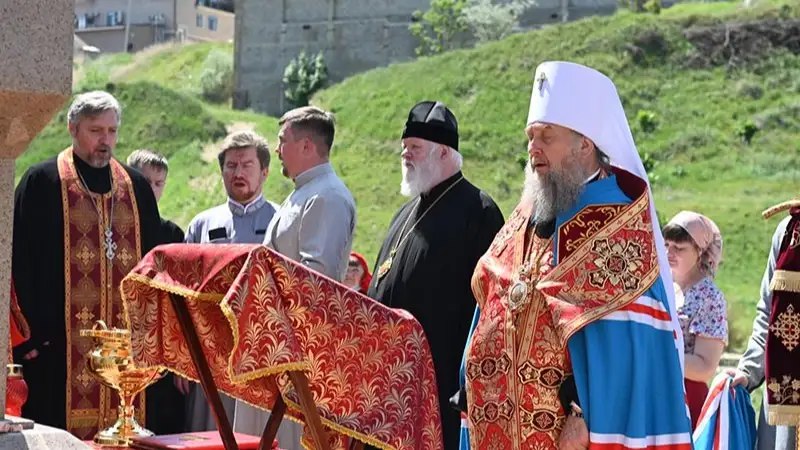
Kazakh President Kassym-Jomart Tokayev has approved the construction of a mosque and an Orthodox chapel at the historic Lisya Balka site in Shymkent, a location associated with mass executions during the years of political repression. Metropolitan Alexander, head of the Orthodox Church of Kazakhstan, announced at a press conference that the initiative was proposed by Patriarch Kirill of Moscow and All Russia. He highlighted that Lisya Balka is the final resting place for victims of repression, including representatives of Kazakhstan’s two major religious communities - Islam and Orthodoxy. “The initiative of His Holiness was considered and approved by President Kassym-Jomart Tokayev,” Metropolitan Alexander stated, adding that the chapel project has already received official approval. Lisya Balka was a site of mass shootings during 1937–1938, one of the darkest periods of Stalinist repression. Victims included individuals from various religious backgrounds, notably around 60 exiled Orthodox priests and ministers of the Russian Orthodox Church. After the Soviet Union’s collapse, the Kasiret (“Sorrow”) memorial complex was established at the site to honor those who perished. The Orthodox Church canonized several of those executed at Lisya Balka, referring to them as “innocent sufferers for Orthodoxy.” However, historians emphasize that the victims included adherents of diverse religions, such as Islam, Catholicism, Judaism, and Buddhism. The construction of the mosque and chapel seeks to preserve the memory of these tragic events while fostering interfaith harmony in Kazakhstan. By commemorating the innocent victims of various faiths, the project aligns with the country’s broader efforts to promote unity among its multi-religious population.

Kazakh Blogger, Jailed After Filming at Azerbaijan Airlines Crash Site, is Freed

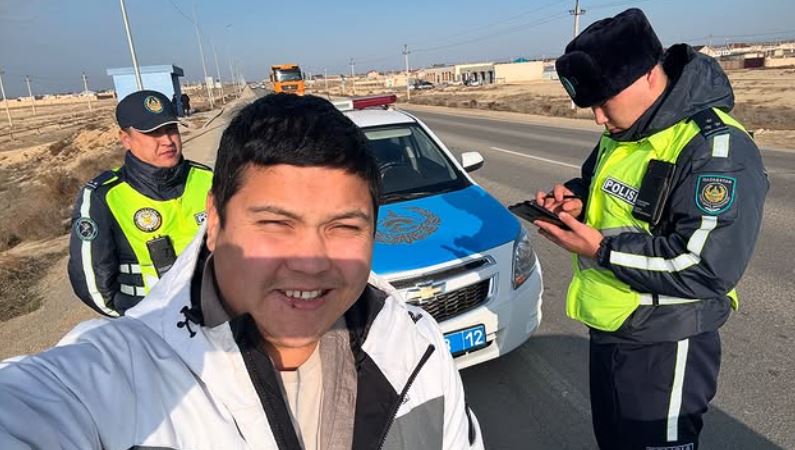
A Kazakh blogger, who was sentenced to 10 days in prison after using a drone to film wreckage, emergency responders and bodies covered with tarps at the site of the Azerbaijan Airlines passenger plane crash in Kazakhstan, has been released. Azamat Sarsenbayev was convicted of disobeying a police order not to film and photograph at the Dec. 25 crash in a quickly held, late-night trial in a court in Fort-Shevchenko, more than 100 kilometers from Aktau, the Caspian Sea city where the plane hit the ground and burst into flames, killing 38 of the 67 people on board. He had disputed the charge, arguing that there were procedural violations and that, by law, he should have received a fine instead of a prison sentence. [caption id="attachment_27275" align="aligncenter" width="766"] Footage from the crash site; Azamat Sarsenbayev[/caption] The prosecution of Sarsenbayev partly shows the tension between periodic government efforts to monitor and restrict information, not just in Kazakhstan but also in other Central Asian countries, and the efforts of some bloggers, journalists and others to widen the scope for reporting, often at risk of prosecution and jail time. Regional governments sometimes warn of the threat of provocateurs spreading disinformation, though Sarsenbayev’s actions on the day of the crash appeared to be more in line with reporting the facts of a major international disaster. Drones enhance the reporting ability of some journalists, though there can be accompanying ethical, legal and security concerns about their use. The Embraer 190 plane crash is particularly sensitive because it involves criminal investigators and a delicate international backdrop. Azerbaijan says Russian ground fire hit the plane as it was trying to land at its planned destination in Russia-controlled Chechnya. Russia has apologized without directly confirming the Azerbaijani account. Kazakhstan is leading the investigation and preliminary findings are expected to be released later in January. On social media posts this weekend, Sarsenbayev provided details about his testimony to the judge during his trial, saying he had received calls from international news organizations and other outlets asking for help in covering the crash. He said he reached the scene at around 11 a.m. and deployed his drone about one kilometer away, without having any contact with police, and then approached a cordoned-off area to interview a representative from the Ministry of Emergency Situations who was giving official comments. Sarsenbayev said he told the judge that the media organizations that had contacted him did so “for paid collaboration to capture authentic, exclusive materials for their platforms” and that he had not taken any “explicit” images of crash victims, since their bodies were covered. “If there had been even the slightest hint of a breach of ´ethics´ or ´moral norms´ in my photographs, platforms like Instagram would have automatically blocked my posts, let alone news outlets that published my images. In that case, should we hold everyone accountable for photographing or filming incidents like car accidents or other similar events?” Sarsenbayev said he told the judge. President Kassym-Jomart Tokayev has promised more...

Tokayev on Kazakhstan’s Future: Reforms, Diplomacy, and Global Leadership

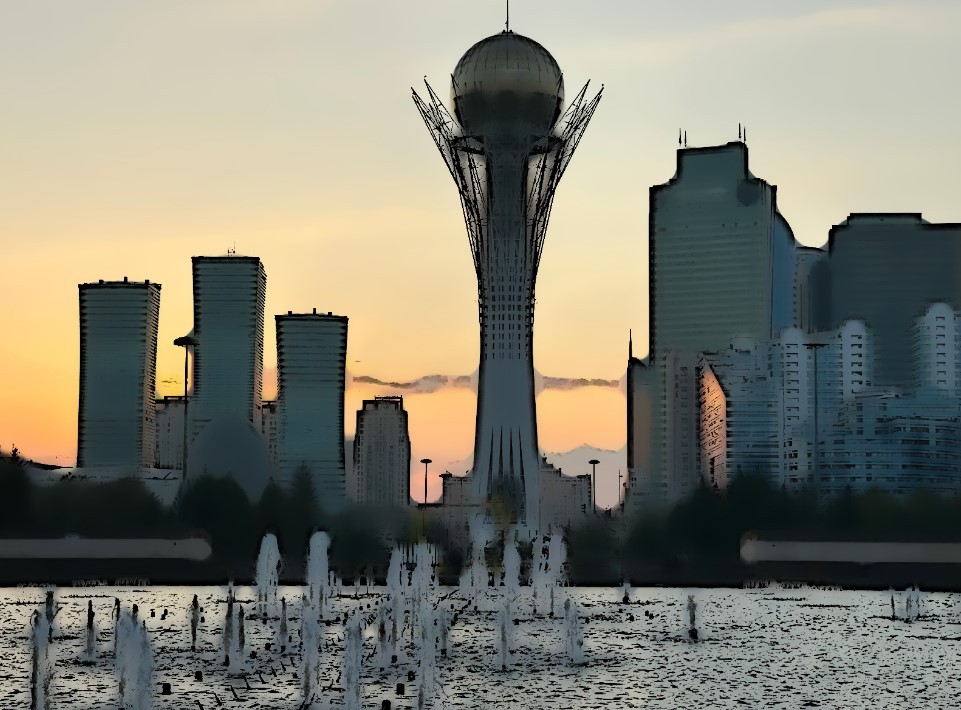
In an interview with the Kazakh newspaper Ana Tili, President Kassym-Jomart Tokayev discussed pressing domestic and international policy issues shaping Kazakhstan's development. Tokayev highlighted Kazakhstan’s role as a stabilizing force in the international arena during a time of heightened geopolitical tensions. “My main goal is to strengthen the economic potential, sovereignty, and international position of our state. From the very beginning of my presidency, I have taken full responsibility for the decisions I make and their consequences. I cannot and do not want to work any other way,” Tokayev stated. [caption id="attachment_27253" align="aligncenter" width="750"] Image: Akorda[/caption] Reflecting on Qantar - Building a Just Kazakhstan Tokayev addressed the January 2022 unrest - Qantar - describing the upheaval as a consequence of deep-rooted social injustice and political stagnation. “Three years after Qantar, most of our citizens understand that the unprecedented unrest was driven by social inequality, political stagnation, and the self-serving ambitions of the conspirators,” Tokayev said, warning against the spread of misinformation surrounding the events and emphasized that decisive action was necessary to preserve Kazakhstan’s sovereignty. Tokayev reiterated his commitment to creating a fairer Kazakhstan where all citizens are equal before the law. “Justice is not universal equalization. My course on the fair distribution of national wealth does not mean total expropriation or redistribution of property and assets. Such a policy would lead to degradation and chaos. Instead, we aim to eliminate illegal privileges and return unlawfully acquired assets to the state as part of our modernization strategy,” the president said. Relations with Nazarbayev While acknowledging the achievements of Nursultan Nazarbayev, Kazakhstan’s first president, Tokayev also critiqued certain aspects of his leadership. “After resigning but remaining chairman of the Security Council, he often held meetings with key officials, creating confusion and sparking rumors of dual power. This situation led some to claim that the Elbasy Institute should supersede presidential authority,” Tokayev noted. He further revealed that Nazarbayev had considered returning to power in 2021, citing his strong ties to Moscow. Advancing Political Reforms and International Relations Tokayev pointed to the successful implementation of key political reforms, emphasizing greater openness and the activation of public participation. “The concept of ‘Strong President, Influential Parliament, Accountable Government’ best suits Kazakhstan’s political system. However, achieving this fully requires sustained effort,” Tokayev explained, reaffirming his belief that a presidential system remains the optimal governance model for Kazakhstan. Tokayev also elaborated on relations with major powers, including Russia, China, and the United States, underscoring the importance of Kazakhstan’s partnership with Russia, highlighting their shared border and deep economic ties. “President Putin is an experienced statesman who values Kazakhstan’s strategic importance as Central Asia’s largest economy. Our constant communication fosters stability in Eurasia,” Tokayev said. He described Kazakhstan’s cooperation with China as dynamic and multifaceted, elevating their relationship to the level of an "eternal strategic partnership." Tokayev also mentioned his conversation with  U.S. President-elect Donald Trump, noting Trump’s positive view of Kazakhstan as a strategic partner. Nuclear Power Plans, Middle Powers and Global Stability On nuclear energy, Tokayev...

Uzbekistan’s Gas Shortage Forces Residents to Use Coal, Firewood, and Dung

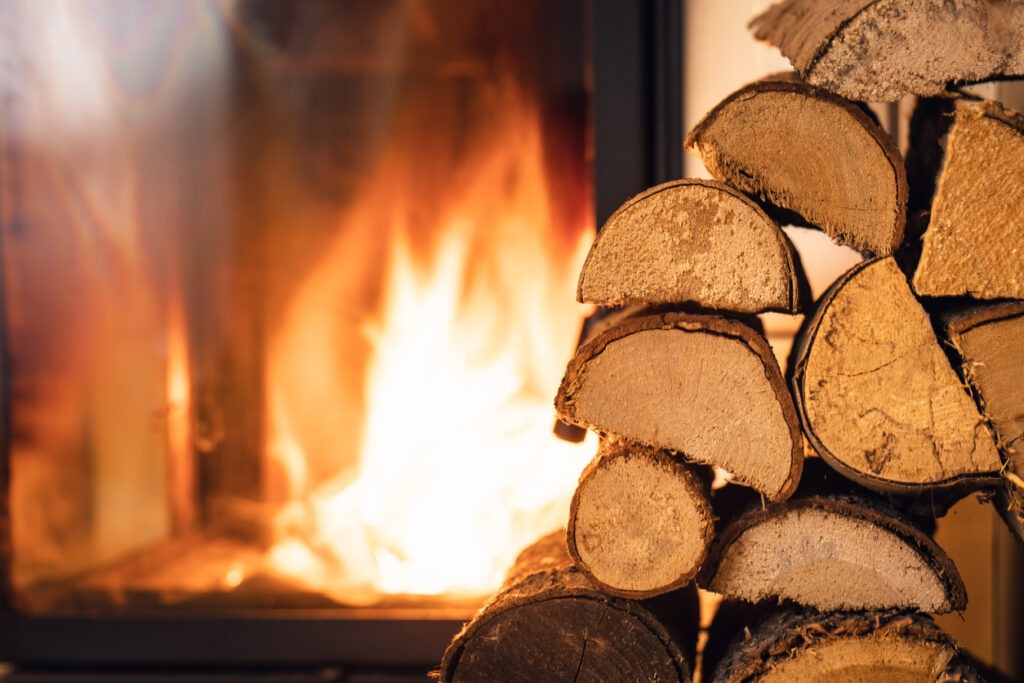
Despite Uzbekistan’s abundant natural gas reserves, many residents are turning to coal, firewood, and even dung for heating, leading to significant environmental problems, according to a report by Radio Azattyk. Experts warn of worsening air pollution and other ecological consequences, as highlighted by the International Energy Agency, while the government plans to expand coal use. Energy officials claim gas production exceeds domestic demand by threefold. However, production has been in decline for five consecutive years. Today, many households rely on coal and other alternatives for heating and cooking, while power plants that once operated on gas are transitioning to coal. According to the World Bank, in 2019, air pollution from fine particulate matter (PM2.5) led to 89 deaths per 100,000 people in Uzbekistan. Environmentalists argue that the increased reliance on coal accelerates climate change, while illegal tree cutting exacerbates ecological damage. Residents blame the government for failing to provide effective alternatives, a problem that worsens during the winter months. “In the city center, the gas pressure in the pipes is so low in winter that the stoves don’t warm. People are forced to burn coal, manure, and even fruit trees,” said Ferghana-based activist Abdusalom Ergashev. In response to widespread deforestation, the government has tightened regulations, with fines for illegal tree felling now reaching 17 million UZS (USD $1,300). Additionally, violators must plant 100 saplings for every tree cut down. In rural areas, families prepare for winter by collecting firewood, drying dung, and purchasing coal. The average household burns approximately 1.5 tons of coal per season, supplemented by cotton stalks, wood, and nut shells. Environmental consequences are becoming increasingly visible. In one video, popular blogger Akmal Isomiddinov highlighted the suffocating smog enveloping Ferghana, a phenomenon occurring across much of the country. Uzbekistan ranks among the leading nations in natural gas reserves, with an estimated 1.8 trillion cubic meters. However, its fields are depleting, and new developments require advanced technologies. Gas production in the first 10 months of 2024 totaled nearly 39 billion cubic meters, a 4.8% decline year-on-year. By comparison, production peaked at 61.6 billion cubic meters in 2018, dropping to 46.7 billion cubic meters in 2023. The government has set a goal to increase production by 33% and return to 2018 levels by 2030. Meanwhile, coal production continues to rise. From less than 4 million tons in 2016, output reached 6.5 million tons in 2023, with plans to increase production to 10 million tons by 2025. Thousands of schools, kindergartens, and hospitals were ordered to switch from gas to coal in 2023. Despite these challenges, the government asserts it is taking steps to combat climate change, including investing in green energy, providing subsidies for electric vehicles, and planting 200 million trees as part of a national campaign.