• KGS/USD = 0.01144 0%
  • KZT/USD = 0.00206 0%
  • TJS/USD = 0.10760 0%
  • UZS/USD = 0.00008 0%
  • TMT/USD = 0.28571 0%
  • KGS/USD = 0.01144 0%
  • KZT/USD = 0.00206 0%
  • TJS/USD = 0.10760 0%
  • UZS/USD = 0.00008 0%
  • TMT/USD = 0.28571 0%
  • KGS/USD = 0.01144 0%
  • KZT/USD = 0.00206 0%
  • TJS/USD = 0.10760 0%
  • UZS/USD = 0.00008 0%
  • TMT/USD = 0.28571 0%
  • KGS/USD = 0.01144 0%
  • KZT/USD = 0.00206 0%
  • TJS/USD = 0.10760 0%
  • UZS/USD = 0.00008 0%
  • TMT/USD = 0.28571 0%
  • KGS/USD = 0.01144 0%
  • KZT/USD = 0.00206 0%
  • TJS/USD = 0.10760 0%
  • UZS/USD = 0.00008 0%
  • TMT/USD = 0.28571 0%
  • KGS/USD = 0.01144 0%
  • KZT/USD = 0.00206 0%
  • TJS/USD = 0.10760 0%
  • UZS/USD = 0.00008 0%
  • TMT/USD = 0.28571 0%
  • KGS/USD = 0.01144 0%
  • KZT/USD = 0.00206 0%
  • TJS/USD = 0.10760 0%
  • UZS/USD = 0.00008 0%
  • TMT/USD = 0.28571 0%
  • KGS/USD = 0.01144 0%
  • KZT/USD = 0.00206 0%
  • TJS/USD = 0.10760 0%
  • UZS/USD = 0.00008 0%
  • TMT/USD = 0.28571 0%

Viewing results 1 - 6 of 27

Astana Ecological Summit Turns Regional Climate Pressure Into a Call for Joint Action

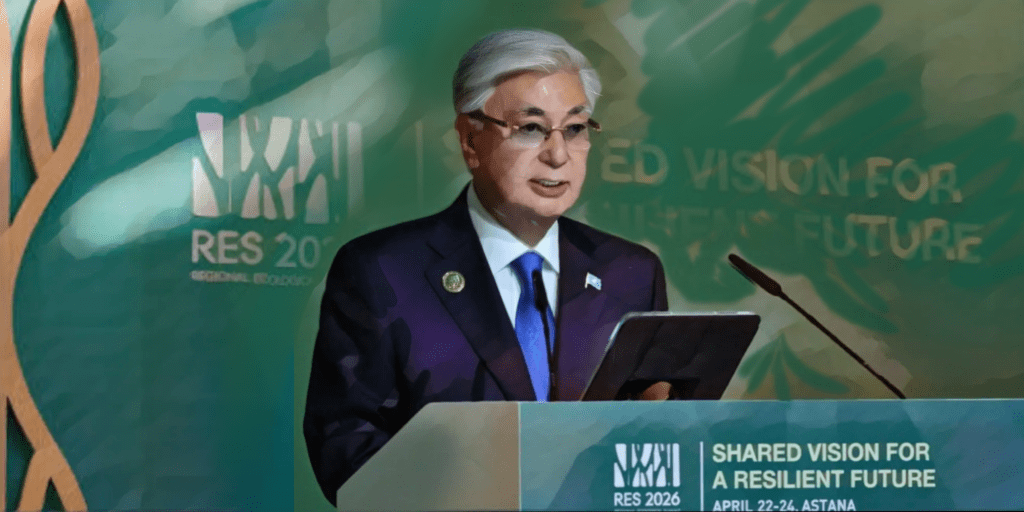
On April 22, 2026, leaders from Central Asia and neighboring states opened the Regional Ecological Summit 2026 in Astana on Earth Day with an urgent and practical message: the region’s environmental crisis is no longer a future risk, but a present constraint on water, food, energy, and economic security. The summit, held under the theme “A Shared Vision for a Sustainable Future,” was organized by Kazakhstan with the United Nations and international partners. Its stated purpose is to develop policy tools for protecting, restoring, and jointly using ecosystems, water and land resources, and conserving biodiversity in Central Asia. The program includes 58 events, consultations on a possible International Water Organization within the UN system, and expected documents, including a Central Asian declaration on environmental solidarity and a 2026–2030 regional action program. [caption id="attachment_47607" align="aligncenter" width="775"] President Tokayev gives his keynote address at the Regional Ecological Summit in Astana; Image: TCA[/caption] Opening the plenary, Kazakhstan’s President Kassym-Jomart Tokayev argued that environmental policy must not become another dividing line in global politics. He called for a fair and balanced green transition, especially for developing economies, and warned that Central Asia’s shared rivers, landscapes, and climate risks demand shared responsibility. Tokayev singled out water scarcity, desertification, glacier melt, air pollution and biodiversity loss as the region’s core challenges. He also highlighted Kazakhstan’s plans to expand renewable energy, protect the Caspian Sea, restore the Northern Aral, and start consultations on a proposed International Water Organization. [video width="720" height="1280" mp4="https://timesca.com/wp-content/uploads/2026/04/no-comments-Reels.mp4"][/video] The water question dominated the speeches. President Sadyr Japarov said that Kyrgyzstan bears a disproportionate burden despite its small contribution to global emissions. He pointed to a sharp increase in mudflows and floods, shrinking glaciers, and the fact that most water formed in Kyrgyzstan flows to neighboring states. His proposal was blunt: downstream users should help co-finance the water infrastructure and ecosystem services that upstream countries maintain. Uzbekistan's President Shavkat Mirziyoyev turned the summit into a platform for concrete regional initiatives. In his official speech, he said that Central Asia is warming twice as fast as the global average, has already lost nearly a third of its glaciers, and faces land degradation across 80 million hectares. He proposed a Clean Air consortium, a regional desertification and drought center, a green trade corridor, a unified climate-investment portfolio, an environmental atlas and a Central Asian Red Book. Tajikistan’s President Emomali Rahmon brought the glacier crisis into sharp relief. Tajikistan supplies much of Central Asia’s water, but its glaciers are retreating, threatening water balance and increasing disaster risks. Rahmon linked the environmental agenda to hydropower, green finance, biodiversity protection, and water diplomacy, and invited partners to continue the discussion at a high-level water conference in Dushanbe. Turkmenistan's President Serdar Berdimuhamedov backed a stronger institutional approach, proposing a UN-supported regional council on water use to align national policies and manage transboundary resources more transparently. He also announced a high-level Caspian Sea ecology meeting in Turkmenistan for October 2026. Heads of state from beyond Central Asia widened the frame. Armenia’s...
How Kazakhstan Is Preparing for Parliamentary Elections

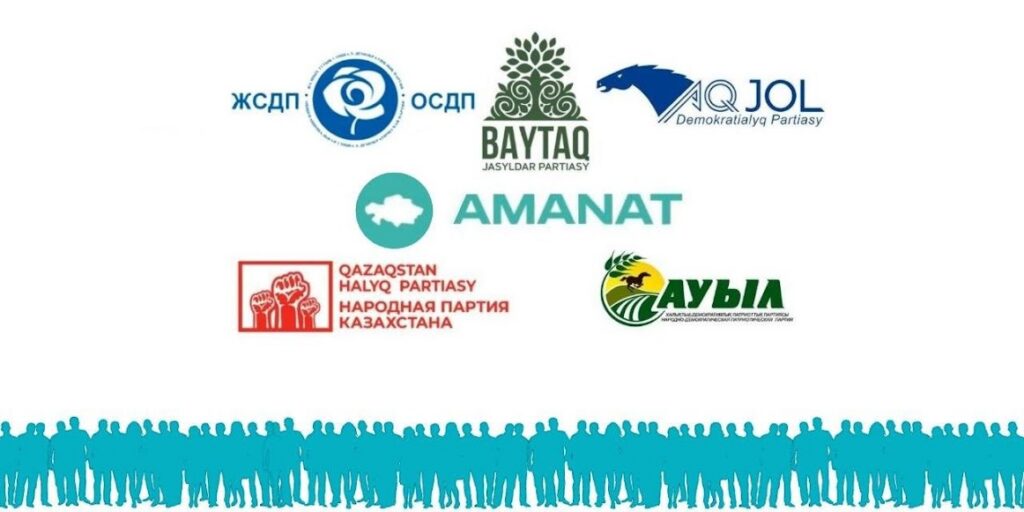
Kazakhstan is preparing for a major political reset centered on the introduction of a unicameral parliament, the Kurultai. Until now, legislative power in the country has been exercised by two chambers, the Mazhilis and the Senate. On April 10, President Kassym-Jomart Tokayev announced that elections would take place in August 2026. According to Tokayev, political parties will have a clear planning horizon and enough time to prepare for the campaign and voter outreach. A Stage Already Passed In 2023, Kazakhstan introduced significant changes to its political system. For the first time in 19 years, a mixed electoral model was used in elections to the lower chamber, the Mazhilis. Under this system, 69 deputies were elected via party lists, while 29 were chosen in single-member constituencies, allowing candidates to run independently of party affiliation. This option has now been removed, although the reasons remain unclear. These reforms were presented as part of a broader democratization effort. In the 2023 parliamentary elections, six parties passed the 5% threshold. Amanat, formerly Nur Otan, won 53.9% of the vote, followed by Auyl with 10.9%, Respublica with 8.59%, Aq Jol with 8.41%, the People’s Party of Kazakhstan with 6.8%, and the Nationwide Social Democratic Party (OSDP) with 5.2%. The Baytaq party received 2.3% and did not enter parliament. In practice, however, Amanat has remained the most active force in the Mazhilis. Some initiatives from Aq Jol, traditionally focused on business interests, have also stood out, while other parties have been less visible to voters. Amanat has advantages not available to other parties, including the presence of many senior officials in its ranks. The Auyl party was expected to represent agrarian and conservative interests, but its initiatives have not been clearly articulated. The OSDP, which has long positioned itself as an opposition party, previously claimed it was excluded from parliament. However, once represented in the Mazhilis, its initiatives have largely focused on narrow issues and have had limited impact on the broader political agenda. The People’s Party of Kazakhstan, once known for raising sharp issues, has been less active in the current parliament. Against this backdrop, Aq Jol has been comparatively stronger, showing a greater ability to shape the agenda and articulate clear positions. Baytaq has occupied an environmental niche, but despite the country’s significant ecological challenges, its voice has remained faint, making its prospects of entering the Kurultai uncertain. Respublica, a new party founded by young entrepreneurs, has also struggled to produce notable results. A potential eighth party, Adilet, may soon join the seven officially registered parties. The party has announced its launch and begun the registration process, though it has yet to name a formal leader. Some political analysts have described Adilet as a pro-government party. Political analyst Daniyar Ashimbayev noted that the concept of multiple pro-government parties is not new in Kazakhstan and suggested that some deputies could shift to Adilet by July. Systemic Criticism Political parties represented in parliament are regularly criticized by analysts for holding positions that closely align with Amanat...

From Medieval Persia to Modern Kazakhstan: Decolonizing History

Iranian President Masoud Pezeshkian’s recent visit to Kazakhstan might have appeared routine amid a series of diplomatic engagements by President Kassym-Jomart Tokayev in 2025. Yet one element of the visit stood out for Tokayev, a gift of 27 ancient Persian manuscripts, which were immediately put on public display in Astana’s National Museum. Together, the two presidents opened the exhibition titled The History of the Great Steppe in Iranian Sources, highlighting long-standing historical ties between Persian states and the Kazakh steppe. Speaking at a joint briefing, Tokayev emphasized the significance of the manuscripts, which he said contain historical accounts affirming the Kazakhs as a "brave people" and detailing diplomatic relations between the Kazakh khans and Iranian shahs. “Close relations were established between Tauke Khan and Shah Sultan Hussein,” Tokayev noted. “Records show embassies met in Moscow, and the Iranian ambassador visited the Kazakh steppe. Abul Khair Khan sent an envoy to Nadir Shah to foster diplomatic ties,” he said, underlining the depth of historical relations. Tokayev also referenced the cultural and linguistic connections between the two peoples. The taikazan (large ceremonial cauldron) in the mausoleum of Khoja Ahmed Yasawi in Turkestan, he noted, was crafted by the Iranian master Abdul-Aziz Sharafuddin Tebrizi. Persian has left a linguistic imprint on the Kazakh language, with estimates suggesting Persian-origin words comprise 4% of the vocabulary, including astana (capital), paida (benefit), oraza (fast), and dәri (medicine). Tokayev further cited the Persian epic Shahnameh by Ferdowsi as culturally significant to the peoples of Turan, adding that Kazakh poet Abai was familiar with Persian literature. According to Tokayev, the newly acquired manuscripts contain historical analyses of the socio-economic and political conditions of the 18th-century Kazakh Khanate, including interactions with neighboring powers, records on Turkestan, and reports on Russian imperial activities in the region. The documents also reference resource extraction, coal, iron, copper, lead, and turquoise, on Kazakh territory. [caption id="attachment_40893" align="aligncenter" width="750"] Image: Akorda[/caption] “This is a very valuable gift. We will present this exhibition to the Kazakh public and promote it widely in the media,” Tokayev told reporters. “The documents contain previously unknown historical material. I think this will be useful for our compatriots.” The Ministry of Culture and Information, which organized the exhibition, confirmed that the manuscripts substantiate centuries-old ties between Kazakhstan and Iran, including evidence of trade and diplomatic exchanges along the Silk Road and archival references to intergovernmental negotiations and ambassadorial visits. Tokayev’s enthusiasm for the manuscripts is closely linked to Kazakhstan’s broader effort to “decolonize” its national history. The country is currently preparing a new seven-volume historical account under the editorial leadership of State Advisor Yerlan Karin. This project aims to reposition Kazakhstan not simply as a site of ancient states, but as an independent cultural and political center that influenced the broader region. “Kazakhstan is presented as a hub for civilizational development,” Karin explained. “This is our methodological innovation.” Previously, Kazakhstan’s history was largely framed within the narrative of the Russian Empire and Soviet rule. The current academic effort seeks to...

Tokayev Proposes Linking Farm Subsidies to Advanced Technologies

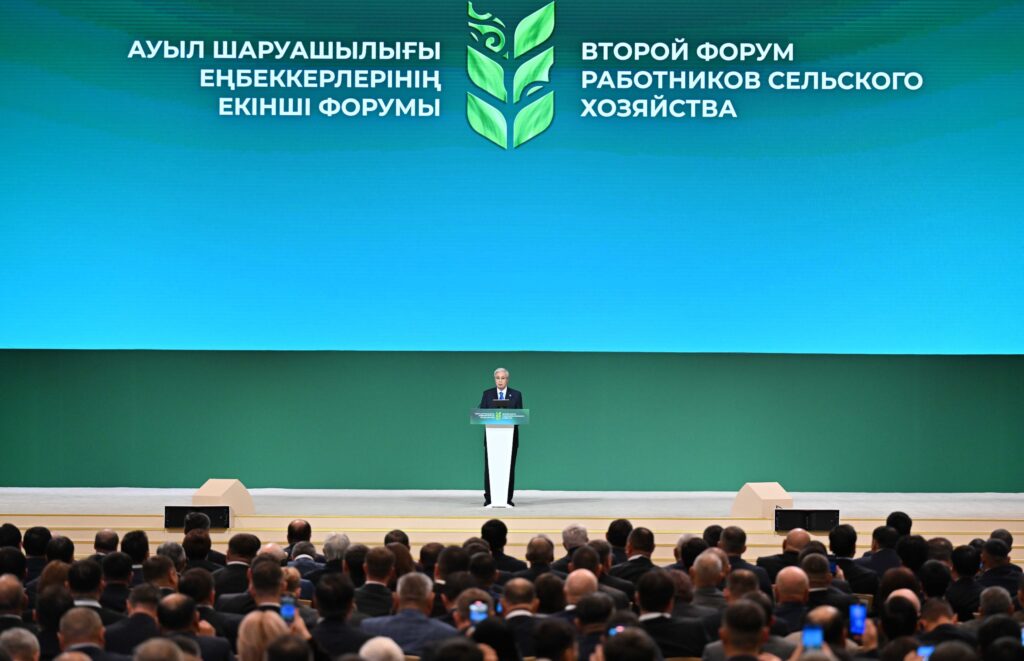
Kazakhstan’s President Kassym-Jomart Tokayev has proposed that state support for farmers be tied to their adoption of advanced technologies, including artificial intelligence (AI). The proposal was made during his speech at the country’s second Agricultural Workers Forum. Tokayev noted that while many farms are already using innovations such as smart farming systems, agricultural drones, satellite monitoring, and AI, technological development at the national level remains uneven. “We must move from isolated ‘smart’ solutions to full-scale digital agricultural production,” Tokayev stated. “Every farm should be incentivized to adopt digital technologies. State support should be directed toward those enterprises implementing innovations, including artificial intelligence.” Tokayev also reported that preferential lending to the agricultural sector has exceeded $1.9 billion in 2025, ten times more than five years ago. He stressed that the adoption of innovative technologies must extend beyond producers to include the regulatory authorities overseeing the agro-industrial sector. “It is necessary to develop an effective system for tracking and controlling state grain reserves using digital technologies and AI tools,” he said. “This requires modernizing existing grain elevators and constructing new, modern facilities. In state-backed financing programs for private elevators, having electronic systems for grain intake and dispatch should be a mandatory requirement.” Tokayev also highlighted persistent issues in agricultural data systems, which he described as fragmented and lacking integration. This, he said, results in policy decisions based on unreliable statistics. He called for comprehensive, objective data to be provided by the upcoming National Agricultural Census, which should serve as the foundation for updating digital infrastructure across the agro-industrial complex. Previously, The Times of Central Asia reported that Kazakhstan achieved a record harvest this year of grains, oilseeds, and legumes.

Pavel Durov’s Telegram Launches AI Laboratory at Alem.ai in Astana

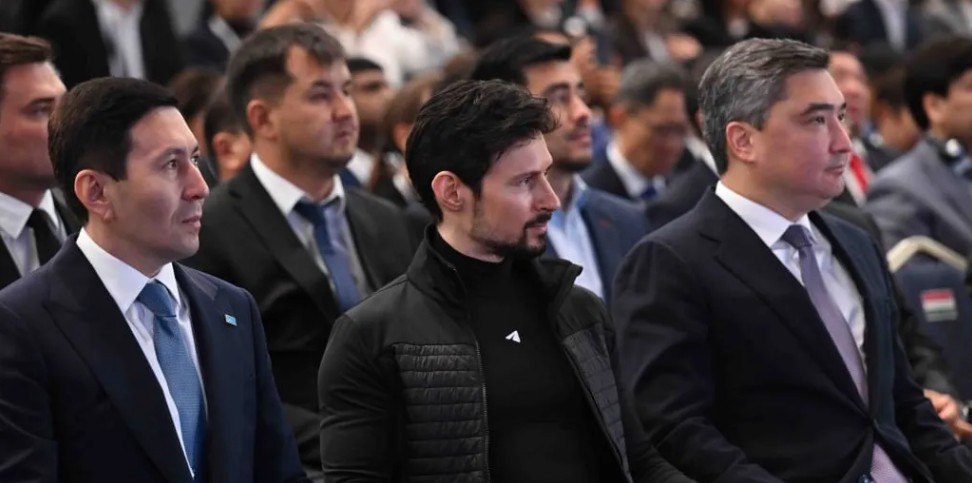
Telegram founder Pavel Durov has announced the launch of a dedicated artificial intelligence laboratory in Astana, housed within the newly inaugurated International Artificial Intelligence Center, Alem.ai. The Alem.ai center was officially opened on Thursday during the Digital Bridge 2025 forum in Kazakhstan’s capital. At the opening ceremony, President Kassym-Jomart Tokayev described the center as a future global hub for the effective and ethical application of artificial intelligence. The initiative will bring together both domestic and international developers, with Telegram among the first companies to establish operations at the site. “A year ago, we opened our first regional office in Kazakhstan, and today we are pleased to launch a specialized AI laboratory inside Alem.ai,” Durov said. “This is a joint project between Telegram and Kazakhstan’s national supercomputer cluster, established by the Ministry of Artificial Intelligence. The technology will allow more than one billion people to use AI functions privately, transparently, and efficiently. We hope that Kazakhstan’s supercomputer cluster will become the first major provider of computing power for this network.” As previously reported by The Times of Central Asia, Kazakhstan launched the region’s most powerful supercomputer earlier this year. At the Digital Bridge 2025 forum, President Tokayev announced plans for a second cluster. On the sidelines of the event, he also met with Pavel Durov to discuss cooperation in education, artificial intelligence, and cybersecurity, according to the presidential press service. “The President highly appreciated Telegram’s contribution to advancing Kazakhstan’s digital agenda: the company officially joined Astana Hub, opened an office in Kazakhstan, and launched AI laboratories at Alem.ai,” the statement said. “For his part, Pavel Durov briefed Tokayev on prospects for joint projects in artificial intelligence.” Tokayev also discussed venture investment opportunities and the development potential of Kazakhstani AI startups with Stanford University professor Ilya Strebulaev. In addition, Tokayev held meetings with Omar Al Olama, UAE Minister of State for Artificial Intelligence, Digital Economy, and Remote Work Applications, and Mansoor Ibrahim Al Mansoori, Chairman of Abu Dhabi’s Department of Health and former COO of G42. The talks focused on expanding Kazakh-Emirati cooperation in AI, including the ongoing Smart City project, which Tokayev called a milestone in bilateral relations. Tokayev also announced plans to establish an Artificial Intelligence University in Kazakhstan, with a strong focus on research and development. According to the presidential press service, he noted the importance of drawing on the UAE’s experience, where the world’s first IT-focused university is already in operation.

Time Zone Turmoil: Kazakhstan’s Shift Sparks Backlash and Political Action

Kazakhstan is preparing to put an end to a year-long debate over its transition to a single time zone (UTC+5). However, opposition to the change has evolved beyond public discontent. Critics, including well-known public figures, are now considering the creation of a political party with the goal of overturning what they argue is one of the most unpopular government decisions in the country’s history. Even a year later, many citizens remain unconvinced of the benefits of the time zone shift, while the government continues to defend it with unwavering determination. Origins of the Controversy Discussions about adopting a single time zone in Kazakhstan have surfaced multiple times over the years. In 2021, the proposal failed to gain widespread approval. However, in the fall of 2023, a clutch of parliamentary deputies once again pushed for unifying the country’s time zones, citing public requests and scientific studies. Supporters of the transition argued that a single time zone would eliminate time barriers between regions, improve transport coordination and business operations, and enhance government and emergency service interactions. Advocates also referred to the Barcelona Declaration on Time Policy (adopted in October 2022), which suggests that maintaining permanent time zones aligned with solar time is beneficial for health, the economy, and safety. Additionally, they pointed out that 175 countries operate within a single time zone, whereas only 22 nations use multiple zones. Despite earlier resistance, the government proceeded with the change. At midnight on March 1, 2024, Kazakhstan moved its clocks one hour back, effectively adopting UTC+5, barring a few regions. Public Backlash and the Petition Movement The reaction was swift. On April 22, 2024, an online petition titled "Return the Time Back" appeared, addressed to President Kassym-Jomart Tokayev and key ministers, including those responsible for energy, health, and labor. The petition was also directed to the head of KazNII Oncology and Radiology, though the reason for this remains unclear. Petition organizers listed several negative effects of the time change: Increased darkness during morning and evening hours, impacting public safety and economic activity. Disruptions to biological rhythms leading to fatigue, reduced productivity, and poorer sleep quality. Economic losses, as changes in daylight hours affected certain industries. The petition quickly gathered over 50,000 signatures, compelling the government and parliament to formally consider the issue. On June 21, 2024, an initial public hearing took place, where opponents of the time zone shift voiced their concerns. However, after three rounds of discussions, no changes were made, and Kazakhstan remained in UTC+5. Renewed Opposition in Parliament Despite the government's firm stance, opposition to the change resurfaced in September 2024 when deputies returning from summer recess reported that the time zone issue was the most frequently raised concern among voters. Prime Minister Olzhas Bektenov reaffirmed that the decision was final but instructed the Ministry of Health to conduct a three-year study on the impact of UTC+5 on public health. This announcement only fueled opposition claims that the transition was an unwarranted experiment affecting 15 million citizens, the number of people...