• KGS/USD = 0.01144 0%
  • KZT/USD = 0.00212 0%
  • TJS/USD = 0.10456 0.19%
  • UZS/USD = 0.00008 0%
  • TMT/USD = 0.28490 0%
  • KGS/USD = 0.01144 0%
  • KZT/USD = 0.00212 0%
  • TJS/USD = 0.10456 0.19%
  • UZS/USD = 0.00008 0%
  • TMT/USD = 0.28490 0%
  • KGS/USD = 0.01144 0%
  • KZT/USD = 0.00212 0%
  • TJS/USD = 0.10456 0.19%
  • UZS/USD = 0.00008 0%
  • TMT/USD = 0.28490 0%
  • KGS/USD = 0.01144 0%
  • KZT/USD = 0.00212 0%
  • TJS/USD = 0.10456 0.19%
  • UZS/USD = 0.00008 0%
  • TMT/USD = 0.28490 0%
  • KGS/USD = 0.01144 0%
  • KZT/USD = 0.00212 0%
  • TJS/USD = 0.10456 0.19%
  • UZS/USD = 0.00008 0%
  • TMT/USD = 0.28490 0%
  • KGS/USD = 0.01144 0%
  • KZT/USD = 0.00212 0%
  • TJS/USD = 0.10456 0.19%
  • UZS/USD = 0.00008 0%
  • TMT/USD = 0.28490 0%
  • KGS/USD = 0.01144 0%
  • KZT/USD = 0.00212 0%
  • TJS/USD = 0.10456 0.19%
  • UZS/USD = 0.00008 0%
  • TMT/USD = 0.28490 0%
  • KGS/USD = 0.01144 0%
  • KZT/USD = 0.00212 0%
  • TJS/USD = 0.10456 0.19%
  • UZS/USD = 0.00008 0%
  • TMT/USD = 0.28490 0%

Viewing results 373 - 378 of 1292

Kyrgyz Authorities Raid State Tax Service Offices

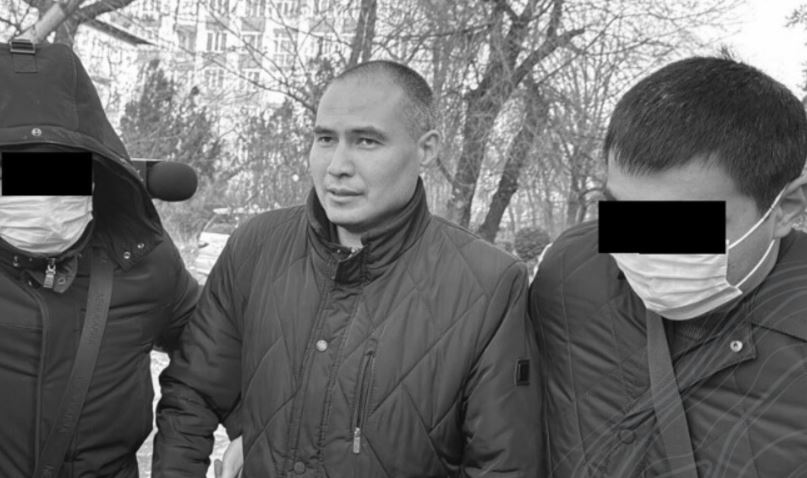
Kyrgyzstan’s State Committee for National Security (SCNS) conducted searches across four district offices of the State Tax Service (STS), detaining several high-ranking employees on allegations of abuse of office. According to the SCNS, 30 tax officials were apprehended, including three of the four heads of the State Tax Service in Bishkek. These officials were placed in the SCNS pre-trial detention center on charges related to fraudulent shipping invoices. “During the inspection, it was revealed that major manufacturers and importers of excisable goods - such as alcohol and tobacco products - recorded revocations and withdrawals of shipping documents in the relevant accounting databases, despite continuing to supply these products predominantly to southern regions of the country,” the SCNS stated. The investigation showed that in 2024 alone, tax officials failed to address numerous instances of revoked shipping invoices amounting to $3.7 million. This reportedly enabled large manufacturers and importers to evade taxes. A criminal case has been initiated under Article 337 of the Criminal Code, which pertains to the abuse of official position. Authorities are working to determine the total financial damage caused to the state. Meanwhile, charges are expected to be brought against the detained district heads of the Bishkek STS offices. A court will decide on appropriate legal remedies as the investigation continues.

UN Expresses Concern Over Arrest of Kyrgyz Lawyer Samat Matsakov

The UN Special Rapporteur on the rights of human rights defenders, Mary Lawlor, has voiced concern over the arrest of lawyer Samat Matsakov in Bishkek. In a statement published on social media platform X, Lawlor highlighted potential violations of procedural safeguards. “Received disturbing news about the arrest of human rights lawyer Samat Matsakov in Kyrgyzstan, which is a clear violation of procedural safeguards for arrest and fair trial standards. Lawyers must be protected from harassment and persecution,” she wrote. Detention and Charges Samat Matsakov was detained on November 29 on fraud charges. However, Matsakov claims he has not been provided with a clear explanation of the allegations against him. During a search of his apartment, an investigator from the State Committee for National Security (SCNS) confiscated a dictaphone and disks connected to a client’s case. The client, Imamidin Tashov, is the former director of the KG Group construction company. Matsakov has been placed in pre-trial detention until December 30. His arrest has sparked criticism from human rights activists and lawyers, who describe it as an unprecedented violation of the law. An appeal against the pre-trial detention order is currently being prepared. Professional Legacy Matsakov is well-known for defending journalists, the akyn (poet-singer) Askat Zhetigen, and various high-profile individuals, including company executives and public figures. His detention has drawn significant attention from human rights organizations and the international community. Critics argue that the arrest reflects broader challenges facing legal professionals in Kyrgyzstan, emphasizing the need for greater protections to ensure that lawyers can perform their duties without fear of harassment or persecution.

A Final Deal Along Central Asia’s Deadliest Border

It took some 33 years, but on December 4, Kyrgyz and Tajik officials reached a final agreement on delimitation of the last sections of their 972-kilometer border. It is a relief for the entire Central Asian region. In those 33 years the five Central Asian countries (including Kazakhstan, Turkmenistan, and Uzbekistan) have been independent, the only open conflicts between the armed forces of two Central Asian countries happened between Kyrgyzstan and Tajikistan. In the southern Kyrgyz city of Batken on December 4, Kyrgyz security chief Kamchybek Tashiyev and Tajik counterpart Saimumin Yatimov announced an agreement that Tajik state news agency Khovar said “fully completed the delimitation of the remaining sections of the Tajik-Kyrgyz state border.” Most of the Kyrgyz-Tajik border runs through the Pamir Mountains. The eastern part, approximately two-thirds of the common frontier, passes through remote and sparsely inhabited areas. Agreement on where the dividing line between the two countries was easy to reach in this section. The remaining one-third of the border in the west proved far more difficult to find compromises. [caption id="attachment_26293" align="aligncenter" width="2256"] Road near the Kyrgyz village of Ak-Sai. On one side of the road is Tajikistan, the other side, Kyrgyzstan; image: Bruce Pannier[/caption] Kyrgyz and Tajiks are two of the oldest peoples in Central Asia. Their ancestors lived in what is now the border area many hundreds of years before there were any borders. The Soviet Union changed that when it created the Kyrgyz and Tajik Soviet Socialist Republics, not only drawing lines on a map, which were redrawn more than once, but also including enclaves on either side of the border. Roads in the area zigzagged back and forth, one minute through Kyrgyzstan, and few minutes later through Tajikistan, over and over again. As border tensions began to appear toward the end of the 2000-2010 period, both countries started building roads to avoid crossing into the neighboring state, but the terrain is rugged, limiting possibilities for alternate routes. Also, new road construction is expensive and Kyrgyzstan and Tajikistan are both poor countries. [caption id="attachment_26294" align="aligncenter" width="2256"] The entrance to Tajikistan's Vorukh enclave; image: Bruce Pannier[/caption] The lone road leading from Batken to the Kyrgyz village of Ak-Sai and the Tajik enclave of Vorukh weaves through both countries several times and in some places, the road is the border. Visible from any village in this area are the snow-capped mountains, but down in the valleys, water has always been a problem. Like the roads, small rivers and canals meander across both sides of the border, and unsurprisingly, water use is a major source of tensions and has been a significant obstacle in deciding where the border should be. The first hints of trouble came after 2000 and involved petty vandalism, usually children throwing rocks at passing vehicles with license plates from the neighboring country. This escalated and after 2010, when incidents of physical altercations between members of border communities started, followed by vandalism targeting homes and businesses in border villages. Since much of...

EU-Funded Electronic Queue Management System Aims to End Border Delays in Kyrgyzstan

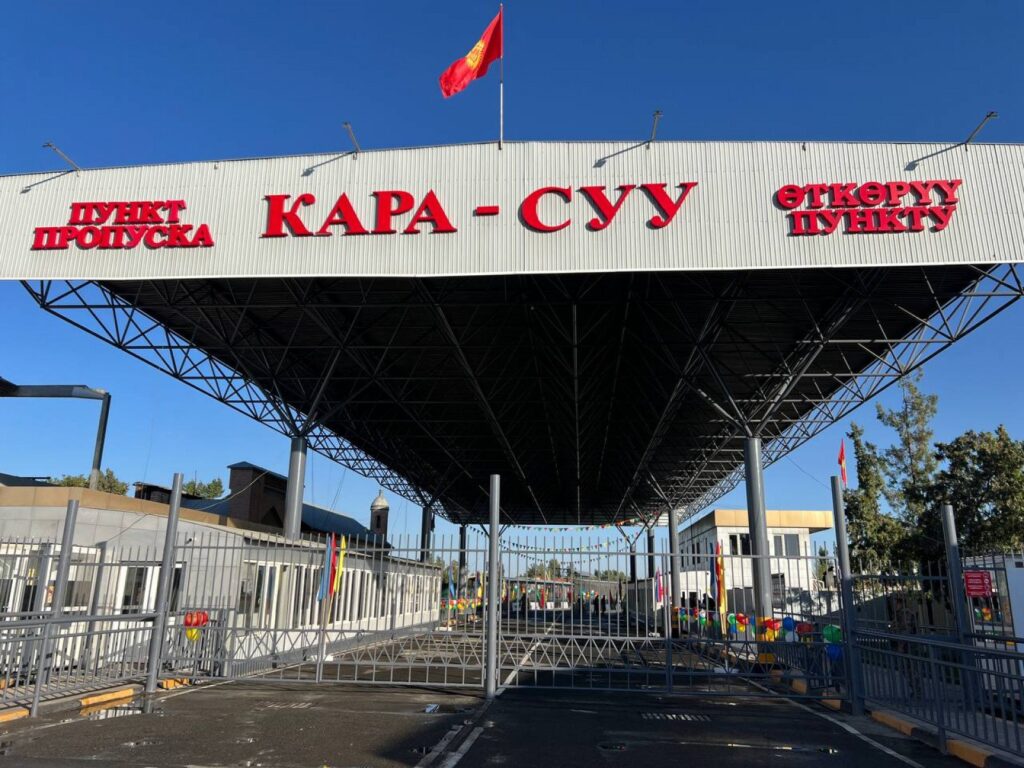
Kyrgyzstan’s State Customs Service has launched a pilot Electronic Queue Management System (eQMS) at the Kyzyl-Kiya road border crossing with Uzbekistan. The system is designed to simplify and expedite border-crossing procedures for truck drivers. Using the eQMS website, drivers can reserve time slots and access a designated waiting zone at their scheduled time, according to the Delegation of the European Union to the Kyrgyz Republic. European Union Support Funded by the European Union, the eQMS is part of Kyrgyzstan’s broader effort to enhance economic and regional trade integration. The initiative is implemented with technical support from the International Trade Centre (ITC), a United Nations agency, under the Ready4Trade Central Asia: Fostering Prosperity Through the Trans-Caspian Transport Corridor project. Marilyn Josefson, Ambassador of the European Union to the Kyrgyz Republic, emphasized the significance of the initiative: “The European Union is proud to support Kyrgyzstan's efforts to modernize its border management through the eQMS pilot initiative. Improving soft connectivity and facilitation of trade and border procedures is a crucial step in advancing the operational efficiency of the Trans-Caspian Transport Corridor and supporting the internationalization of Central Asian businesses, ultimately fostering sustainable economic development and stronger regional integration,” said Josefson. Advancing Border Efficiency Almaz Saliev, deputy chairman of the State Customs Service of Kyrgyzstan, highlighted the transformational nature of the project: “This system is not only an operational improvement but also a commitment to a modern, user-centered approach to border management.” The new system addresses longstanding issues faced by Kyrgyz exporters and freight forwarders, particularly delays at border crossings. While the pilot project focuses on the Uzbekistan border, border delays have also been a recurring problem for Kyrgyz trucks crossing into Kazakhstan. These delays have disrupted goods transit to Russia and other destinations, prompting periodic complaints from Kyrgyzstan about excessive queues. The eQMS pilot project marks a significant step toward more efficient, transparent, and reliable border management, paving the way for smoother trade flows and stronger regional connectivity.

Animal Protection Activists’ Voice Concern Over Dog Meat Dishes in Uzbek Cafes

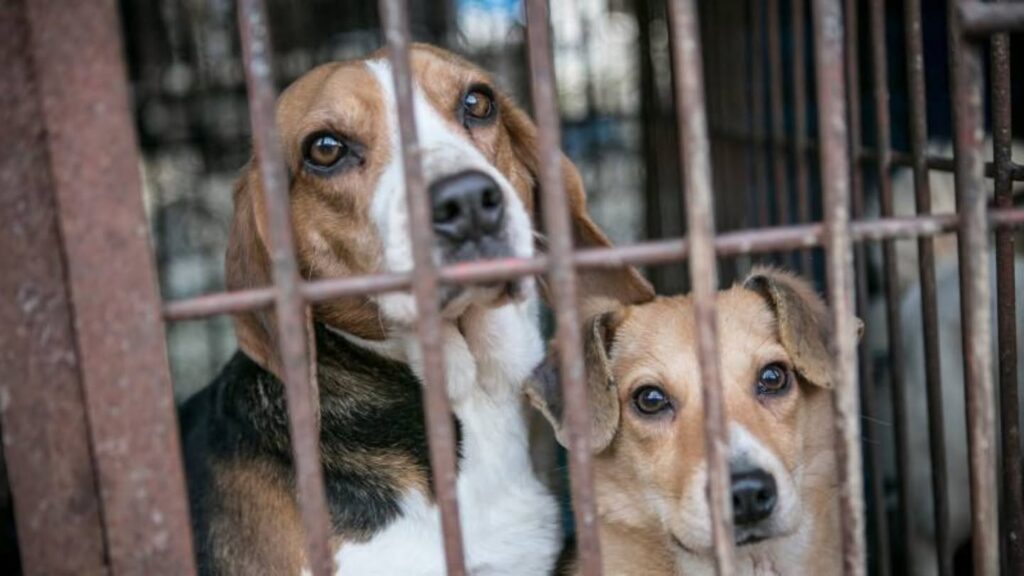
Uzbekistan’s animal protection society, Mehr va Oqibat, has raised concerns after receiving numerous complaints from locals and foreign visitors about cafes and restaurants in Uzbekistan offering dog meat dishes on their menus. Controversial Supply and Health Concerns According to Mehr va Oqibat, Uzbekistan lacks specialized farms for raising dogs for meat, unlike some other Asian countries. The organization suggests that state services responsible for capturing stray animals might be the primary suppliers of dog meat. Activists argue that the purported medicinal benefits of dog meat remain scientifically unproven. Additionally, they warn that dog meat can transmit viruses during preparation and consumption, posing potential health risks. Mehr va Oqibat has officially contacted Uzbekistan’s State Veterinary Committee and the Sanitary-Epidemiological Service to clarify whether dog meat consumption is permitted in Uzbekistan. The organization has also inquired as to whether cafes and restaurants have obtained official authorization to serve dog meat dishes. Cultural and Historical Context The consumption of dog meat in Uzbekistan, as well as in neighboring Kazakhstan and Kyrgyzstan, is primarily linked to the Korean minorities residing in these countries. This practice is not widespread and is generally followed by small groups of ethnic Koreans and others, including Russians, Uzbeks, Kazakhs, and Kyrgyz, who consider it an “exotic” culinary choice. Ethnic Koreans were forcibly deported to Central Asia from the Russian Far East in the late 1930s under Joseph Stalin’s regime. Uzbekistan is now home to the largest Korean minority in Central Asia. As of 2023, over 200,000 ethnic Koreans lived in the country, according to the Uzbek Embassy in South Korea, making it the fifth-largest Korean diaspora in the world after the United States, China, Japan, and Canada. A Shift in Perspective The issue of dog meat consumption has garnered increasing attention globally. In January 2024, South Korea’s National Assembly passed a law banning the production and sale of dog meat, with the ban set to take effect in 2027. While dog meat consumption remains a niche practice in Uzbekistan, activists hope that raising awareness about ethical and health implications will encourage the authorities to address the issue comprehensively.

Tajik Lawyer Jailed After Exposing Alleged Corruption in Prosecutor’s Office

In Tajikistan, 74-year-old lawyer Faizi Oli, also known as Faizali Yuldoshev, has been sentenced to 2.5 years in prison after raising allegations of corruption within the prosecutor’s office. The Sino District Court in Dushanbe delivered its verdict on November 29. Oli was found guilty of “knowingly making a false denunciation” against employees of the prosecutor's office. However, he asserts that he merely exercised his right to file complaints with anti-corruption bodies, the Security Council, and the presidential administration, detailing what he described as evidence of corruption. A Controversial Case According to Oli’s lawyer, his complaints should have prompted an investigation, not legal proceedings against him. The court considered his advanced age when issuing the sentence, which fell below the minimum term of five years prescribed under Article 346 of the Tajik Criminal Code. The prosecution had sought a six-year prison term. Oli was arrested immediately after the verdict. Over the course of the five-month trial, he consistently maintained that the charges were baseless, and that filing complaints with the authorities is a legal right. This is not the first time Oli has been involved in a high-profile case; he previously defended his colleague, Saidnuriddin Shamsiddinov, who was sentenced to 8.5 years in prison on similar charges of false denunciation. At that time, Oli stressed the right of citizens to address grievances directly to the president and the Prosecutor General’s Office, a principle he believes is now being criminalized. Broader Context International human rights organizations have frequently criticized Tajikistan for targeting lawyers and human rights defenders. Many prominent figures, including Buzurgmehr Yorov, are serving lengthy prison sentences under controversial circumstances. Oli, known for his outspoken social media presence and comments on government operations, believes his activism may have influenced the court’s decision. He has announced plans to appeal the verdict after receiving the court’s written decision. The Prosecutor General's Office declined to comment on the case.