• KGS/USD = 0.01144 0%
  • KZT/USD = 0.00212 0%
  • TJS/USD = 0.10454 -0.1%
  • UZS/USD = 0.00008 0%
  • TMT/USD = 0.28571 0.28%
  • KGS/USD = 0.01144 0%
  • KZT/USD = 0.00212 0%
  • TJS/USD = 0.10454 -0.1%
  • UZS/USD = 0.00008 0%
  • TMT/USD = 0.28571 0.28%
  • KGS/USD = 0.01144 0%
  • KZT/USD = 0.00212 0%
  • TJS/USD = 0.10454 -0.1%
  • UZS/USD = 0.00008 0%
  • TMT/USD = 0.28571 0.28%
  • KGS/USD = 0.01144 0%
  • KZT/USD = 0.00212 0%
  • TJS/USD = 0.10454 -0.1%
  • UZS/USD = 0.00008 0%
  • TMT/USD = 0.28571 0.28%
  • KGS/USD = 0.01144 0%
  • KZT/USD = 0.00212 0%
  • TJS/USD = 0.10454 -0.1%
  • UZS/USD = 0.00008 0%
  • TMT/USD = 0.28571 0.28%
  • KGS/USD = 0.01144 0%
  • KZT/USD = 0.00212 0%
  • TJS/USD = 0.10454 -0.1%
  • UZS/USD = 0.00008 0%
  • TMT/USD = 0.28571 0.28%
  • KGS/USD = 0.01144 0%
  • KZT/USD = 0.00212 0%
  • TJS/USD = 0.10454 -0.1%
  • UZS/USD = 0.00008 0%
  • TMT/USD = 0.28571 0.28%
  • KGS/USD = 0.01144 0%
  • KZT/USD = 0.00212 0%
  • TJS/USD = 0.10454 -0.1%
  • UZS/USD = 0.00008 0%
  • TMT/USD = 0.28571 0.28%

Viewing results 397 - 402 of 1289

Kazakhstan Explores Agro-Drones to Revolutionize Agriculture

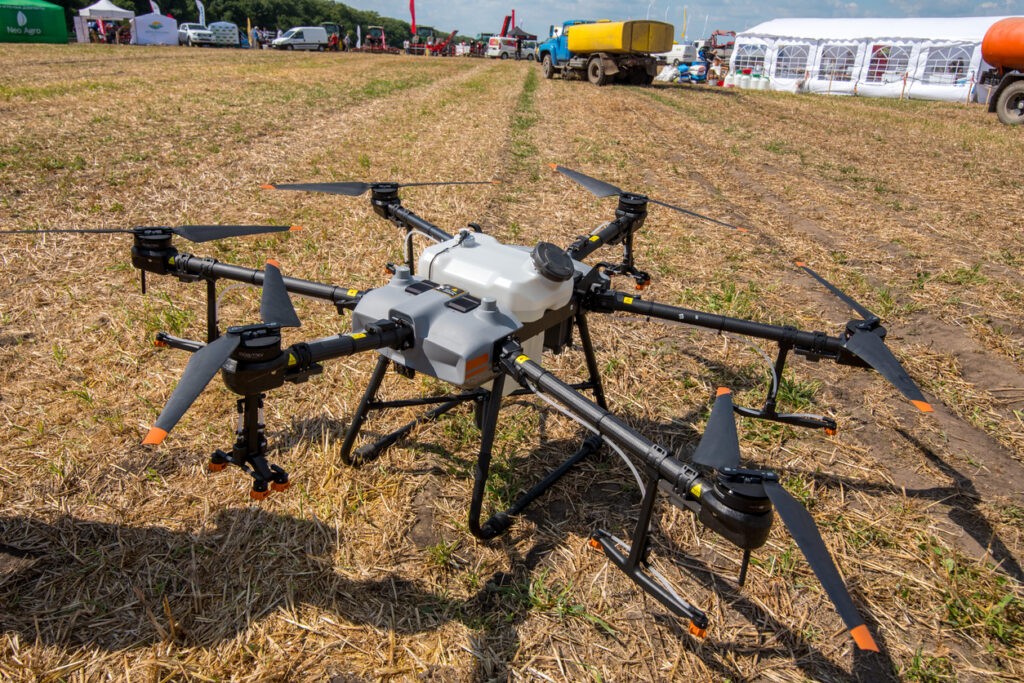
The potential of drones to transform agriculture in Kazakhstan was a key topic at a government meeting on November 26. Officials discussed the environmental and economic advantages of adopting agro-drones over traditional spraying equipment. International examples demonstrate that agro-drones can significantly reduce water usage, lower CO2 emissions, and access hard-to-reach areas more effectively. Sanzhar Nurgazinov, representing a company that operates agro-drones, highlighted their efficiency: while wheeled sprayers require 150 liters of water per hectare—amounting to 750,000 liters for 5,000 hectares—a drone uses just 50,000 liters for the same area, reducing water consumption more than 15-fold. Additionally, drones prevent the 6% crop loss caused by the tracks of wheeled sprayers, ensuring higher harvest yields. To advance drone adoption, Kazakhstan’s Ministry of Agriculture has partnered with the Chinese company Eavision to import 80 drones for pest and disease management. Furthermore, a joint venture, Sunkar Eavision International LLP, has been established to assemble drones locally in the Alatau Special Economic Zone near Almaty. The Ministry has been tasked with creating a roadmap by February 2025 for integrating agro-drones into the country’s agricultural practices. This plan includes establishing service centers, training specialists, and developing financial support programs to help farmers acquire this cutting-edge technology. By embracing agro-drones, Kazakhstan aims to modernize its agricultural sector, boosting efficiency and sustainability while addressing the challenges of water conservation and crop protection.
China Constructs Vital Fertilizer Plant to Boost Agriculture in Kyrgyzstan

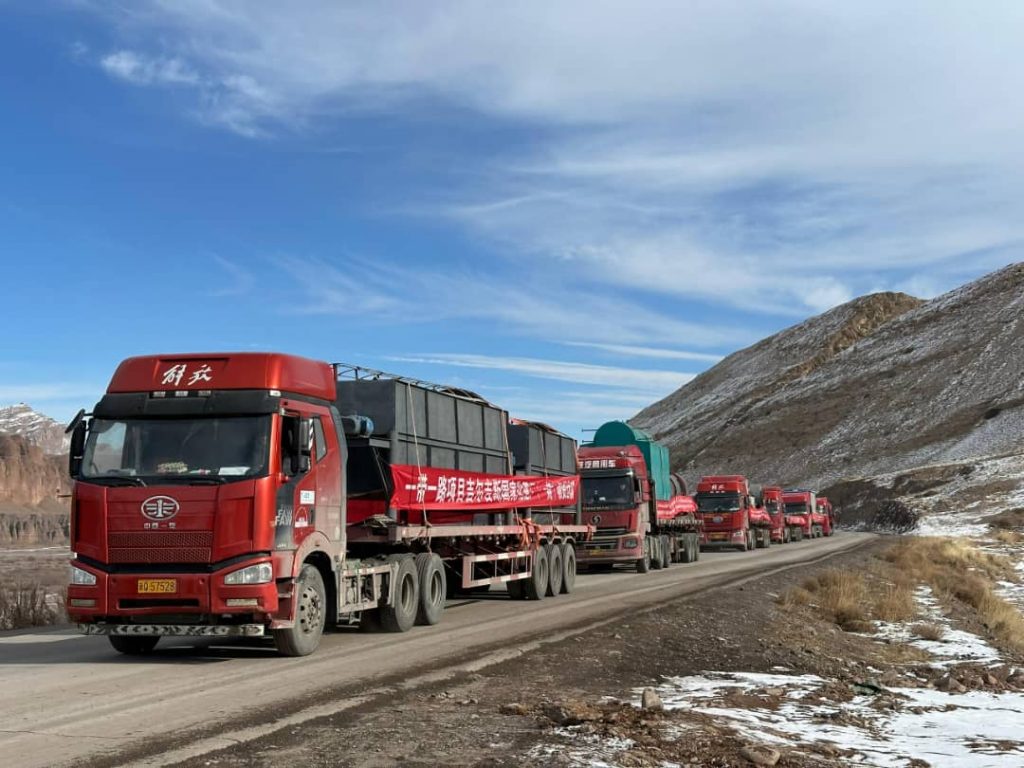
Construction has started on a Kyrgyz-Chinese mineral fertilizer plant in the Nookat district of southern Kyrgyzstan's Osh region. On November 25, equipment worth $15 million arrived from China to advance the project. The $260 million investment agreement for the plant was signed in May 2023 between Kyrgyzstan's Ministry of Agriculture and China’s Hebei Bai Dou Jia LLC during President Sadyr Japarov’s visit to China. The project will be executed in phases, with the first phase set for completion by 2025. This initial phase aims to produce 100,000 tons of fertilizer annually. Future phases include plans for an agricultural machinery assembly plant and expanding production capacity to 500,000 tons per year. Once fully operational, the facility is expected to generate around 2,000 jobs. The plant is a strategic move to reduce Kyrgyzstan’s dependency on imported mineral fertilizers. Currently, the country imports most of its 286,000-ton annual demand from Uzbekistan and Russia. The new facility is poised to meet and exceed domestic needs, boosting agricultural productivity and supporting the country’s economy.

Prosecutor General’s Office Issues Statement on Allamjonov Assassination Attempt

A month ago, reports emerged of an assassination attempt on Komil Allamjonov, the former head of the Presidential Department in Uzbekistan. Some media outlets speculated that Chechen leader Ramzan Kadyrov might be connected to the case. In response, the Prosecutor General’s Office has released an official statement addressing the incident. According to the statement, material evidence linked to the case was discovered during the inspection of the crime scene, searches of vehicles used by the suspects, and investigations at their residences. These findings have been crucial in advancing the case. So far, investigative efforts have identified seven individuals involved in the crime. Five of them have been placed under preventive detention, while two remain wanted by authorities. One suspect, identified as K.S., was located in Kazakhstan, where investigative procedures were carried out. Another suspect, Javlon Yunusov, was arrested in South Korea and subsequently deported to Uzbekistan. The investigation is still ongoing, and further details are expected as the case develops.

Uzbekistan Boosts Car Production and Expands Exports

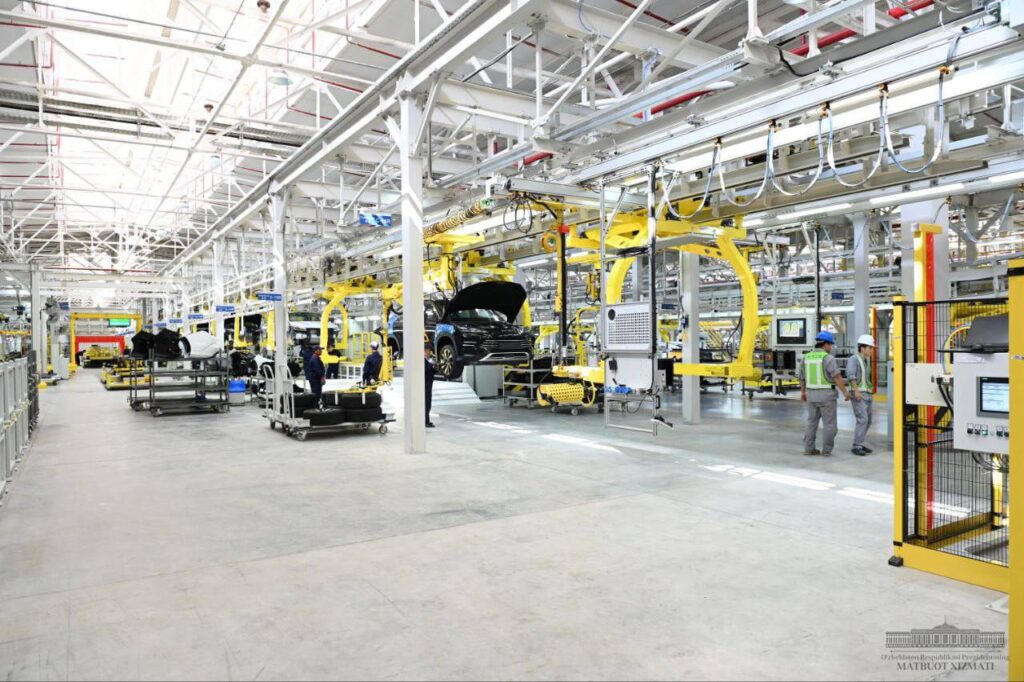
Between January and October 2024, Uzbekistan produced 338,000 vehicles, generating $455 million in car exports, according to figures revealed during a government meeting chaired by President Shavkat Mirziyoyev on November 25. Next year, the country aims to manufacture 450,000 vehicles in 2025 and boost export revenues to $700 million. The automotive sector has become a cornerstone of Uzbekistan's industrial growth, accounting for 10 percent of the country’s total industrial output. Currently, the industry produces 1,400 types of automotive components and has achieved a 4 percent reduction in production costs. To strengthen domestic manufacturing further, the government plans to launch 63 projects worth $325 million, facilitating the production of an additional 700 types of automotive parts. Uzbekistan’s vehicle assembly incorporates major global brands, including Chevrolet (USA), as well as South Korean and Chinese manufacturers. The country’s commitment to innovation and green energy was underscored by the June opening of a BYD electric vehicle plant in Jizzakh, which marked a significant milestone for the industry. The new Jizzakh plant currently produces 50,000 electric vehicles annually during its first phase. Planned expansions include: Second phase: A $300 million investment to scale production to 200,000 electric vehicles per year. Third phase: A $500 million investment to increase capacity to 500,000 vehicles annually. These developments highlight Uzbekistan’s commitment to becoming a regional leader in electric vehicle production and innovation. The country’s automotive industry has demonstrated remarkable growth, fueled by strategic investments in local manufacturing and a focus on sustainable technologies. By prioritizing electric vehicles and expanding exports, Uzbekistan is positioning itself as a competitive player in the global automotive market.

On the Threshold of Cold Weather, Kyrgyz People Stockpile Coal

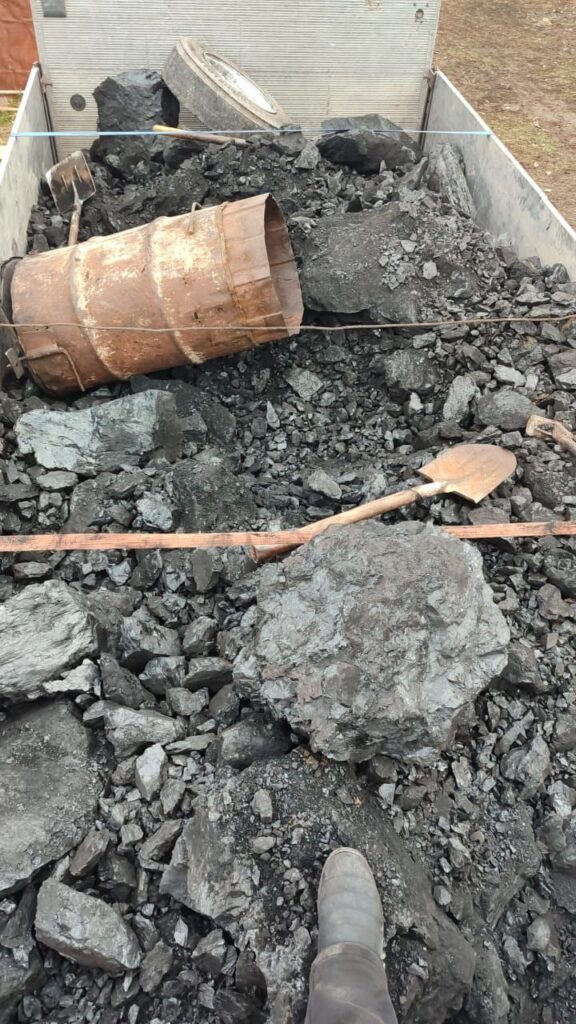
Kyrgyz authorities have extended a temporary ban on coal exports outside the Eurasian Economic Union (EAEU) customs territory. The decree, signed by the head of the Cabinet of Ministers, Akylbek Japarov, aims to prevent a sharp rise in coal prices amid growing demand and to mitigate potential public unrest caused by fuel shortages. The ban, which will remain in effect for six months, excludes coal exported by the state enterprise Kyrgyzkomur. This coal is sold to neighboring Uzbekistan. The Kyrgyz Ministry of Economy and Commerce has been tasked with notifying the World Trade Organization of this decision. As temperatures drop, coal outlets across Kyrgyzstan are experiencing a rush of purchases by residents anxious to prepare for the cold weather. This surge in demand has caused coal prices to rise. To address the issue, the Antimonopoly Service has begun conducting regular inspections of retail outlets to identify sellers inflating prices. “We visit trading outlets undercover and identify sellers who artificially increase prices. Citizens also report violations via our hotline. According to the law, individuals can be fined 3,000 KGS (around $35), and companies can face fines of up to 13,000 KGS (approximately $150),” explained Taalaibek Kenzheshev, a leading specialist in the Antimonopoly Regulation Service's department, during an interview with The Times of Central Asia. In response to rising prices, the government has opened state-run coal outlets to sell fuel directly to consumers without intermediaries, ensuring more affordable pricing. “At private markets, sellers often cheat by selling coal in bags with insufficient weight. State-run outlets sell coal by weight, making it more reliable and cost-effective,” shared Sanzhar Orozbekov, a resident of Chui Oblast, with The Times of Central Asia. The Antimonopoly Regulation Service has set maximum coal prices in each region, depending on logistics complexity and the distance from coal mines. The highest coal prices are in Karakol, located east of the Issyk-Kul region, while the cheapest coal is found in southern Kyrgyzstan. However, even in the south, prices are influenced by coal exports to Uzbekistan. Imported Kazakh coal remains popular among Kyrgyz residents despite its higher cost. Known for burning more efficiently and producing greater heat, it is a preferred choice for some. However, the government intends to phase out the use of Kazakh coal at the Bishkek combined heat and Power Plant (CHPP), planning instead to rely entirely on domestic coal sources. According to the Kyrgyz Ministry of Energy, the country will need 2.6 million tons of coal for the upcoming autumn-winter season, half of which is required by households. The Ministry has assessed preparations for winter as adequate and has assured citizens that there will be no power outages this year.

Kazakhstan Needs a Fourth Oil Refinery to Meet Its Growing Demand for Motor Fuel

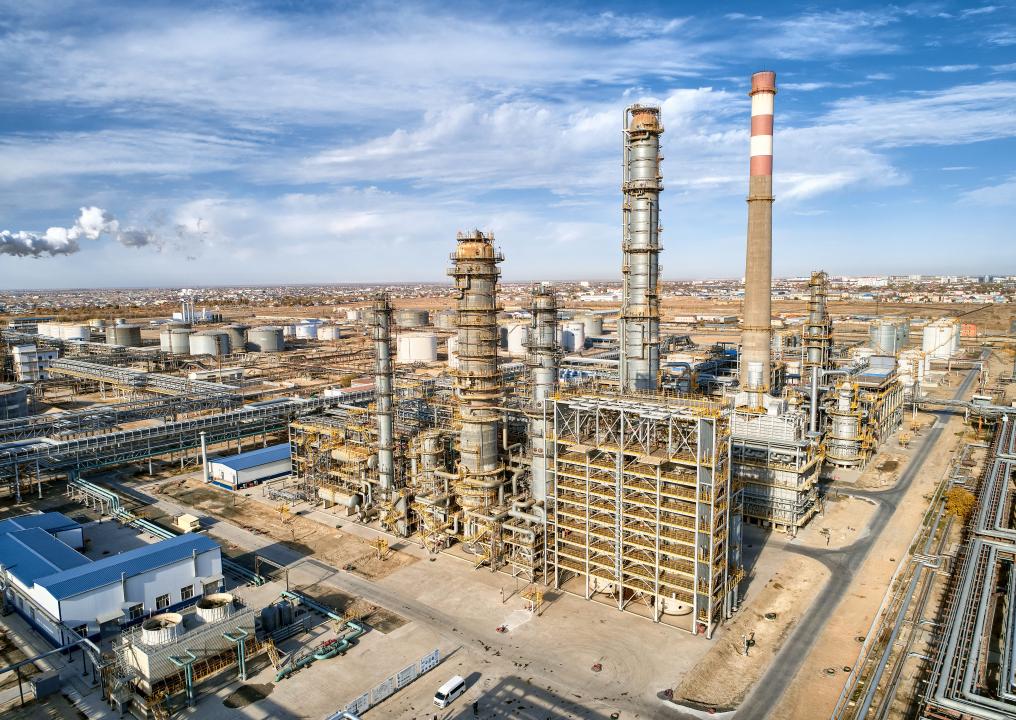
Speaking in parliament on November 25, Kazakhstan’s Energy Minister Almasadam Satkaliyev announced that the country anticipates a shortage of motor fuel by 2036. To address this, he emphasized the need to design a new oil refinery with a capacity of 10 million tons per year by 2030, with construction slated to begin in 2032. According to Satkaliyev, the proposed refinery will ensure Kazakhstan’s fuel demands are met from 2040 to 2050 while also enabling exports to rapidly developing markets in Central, South, and Southwest Asia. Currently, Kazakhstan operates three oil refineries - located in Shymkent, Pavlodar, and Atyrau - which are sufficient to meet domestic demand for gasoline and diesel fuel. However, during seasonal shortages, Kazakhstan imports additional fuel from Russia. Satkaliyev provided details on the country’s fuel production and import figures for 2024. Kazakhstan plans to produce 10.9 million tons of fuel this year, including 5.1 million tons of gasoline, 0.6 million tons of aviation fuel, and 5.2 million tons of diesel. In addition, approximately 1 million tons of fuel will be imported from Russia, comprising 0.285 million tons of gasoline, 0.3 million tons of aviation fuel, and 0.45 million tons of diesel. By 2032, Kazakhstan’s annual fuel production is expected to reach 19 million tons, including 8.2 million tons of gasoline, 1.5 million tons of aviation fuel, and 9.3 million tons of diesel. This increase will not only eliminate the need for imports but also enable the country to export surplus fuel. Satkaliyev also addressed the domestic supply of liquefied petroleum gas (LPG), which is the most affordable and widely used automobile fuel in Kazakhstan. From January to October 2024, Kazakhstan produced 2.5 million tons of LPG, compared to 2.4 million tons in 2023. The Energy Ministry has set the planned production volume for 2024 at 2.9 million tons. To stabilize the LPG market, the ministry has banned its exports since November 2023. The domestic market requires 164,000 tons of LPG monthly, while the ministry distributes 130,000-140,000 tons. Looking ahead, the government aims to meet rising LPG consumption by introducing new production capacities, with plans to increase annual LPG production to 4.2 million tons by 2032.