• KGS/USD = 0.01144 0%
  • KZT/USD = 0.00210 0%
  • TJS/USD = 0.10528 0.19%
  • UZS/USD = 0.00008 0%
  • TMT/USD = 0.28490 0%
  • KGS/USD = 0.01144 0%
  • KZT/USD = 0.00210 0%
  • TJS/USD = 0.10528 0.19%
  • UZS/USD = 0.00008 0%
  • TMT/USD = 0.28490 0%
  • KGS/USD = 0.01144 0%
  • KZT/USD = 0.00210 0%
  • TJS/USD = 0.10528 0.19%
  • UZS/USD = 0.00008 0%
  • TMT/USD = 0.28490 0%
  • KGS/USD = 0.01144 0%
  • KZT/USD = 0.00210 0%
  • TJS/USD = 0.10528 0.19%
  • UZS/USD = 0.00008 0%
  • TMT/USD = 0.28490 0%
  • KGS/USD = 0.01144 0%
  • KZT/USD = 0.00210 0%
  • TJS/USD = 0.10528 0.19%
  • UZS/USD = 0.00008 0%
  • TMT/USD = 0.28490 0%
  • KGS/USD = 0.01144 0%
  • KZT/USD = 0.00210 0%
  • TJS/USD = 0.10528 0.19%
  • UZS/USD = 0.00008 0%
  • TMT/USD = 0.28490 0%
  • KGS/USD = 0.01144 0%
  • KZT/USD = 0.00210 0%
  • TJS/USD = 0.10528 0.19%
  • UZS/USD = 0.00008 0%
  • TMT/USD = 0.28490 0%
  • KGS/USD = 0.01144 0%
  • KZT/USD = 0.00210 0%
  • TJS/USD = 0.10528 0.19%
  • UZS/USD = 0.00008 0%
  • TMT/USD = 0.28490 0%

Viewing results 451 - 456 of 1295

Kyrgyzstan Opens New Village for People Resettled from Barak Exclave

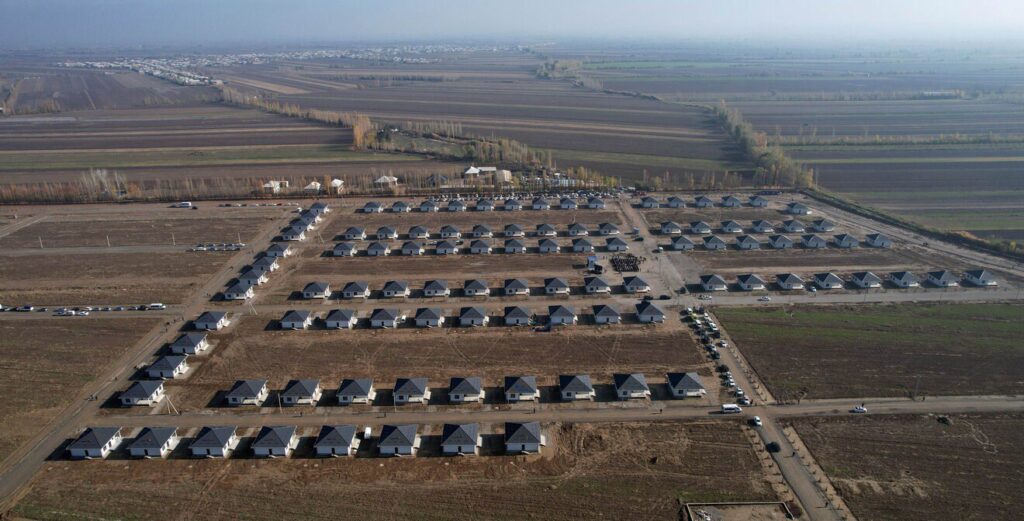
On November 15, Kyrgyzstan President Sadyr Japarov attended the opening of a new village, Jany-Barak, in the country’s southern Osh region. The village was constructed for Kyrgyz citizens resettled from the Barak exclave, previously Kyrgyzstan’s largest exclave, located in Uzbekistan’s Andijan region. For many years, the residents of the exclave experienced severe difficulties due to their partial isolation and the difficulty of traveling between the exclave and the Kyrgyz mainland. After signing a border delimitation agreement with Kyrgyzstan, Uzbekistan ceded a portion of its land to Kyrgyzstan in exchange for control of the Barak exclave. Construction of Jany-Barak (New Barak) was launched in May 2024 and is now complete. Speaking at the opening ceremony, Japarov emphasized that the construction of the new village marked a significant milestone. He highlighted that residents, who had relocated from the exclave, can now live and work in Kyrgyzstan, on their native land, in new homes, with renewed confidence in their future. Japarov highlighted the extensive work completed to establish infrastructure in the new village: 101 residential houses have been built, roads have been laid, electricity has been connected, and wells for clean drinking water have been drilled. The new village will have social amenities, including a school, a kindergarten, a park, a mosque, and a football (soccer) field. Plots have been allocated to residents for agricultural use.

Human Rights Activists Urge Belgian Authorities to Halt Deportation of Tajik Citizens with Children

The human rights organization Freedom for Eurasia has called on Belgian authorities to halt the deportation of Sitoramo Ibrohimova and her four children to Tajikistan. Human rights activists argue that the 37-year-old, currently being held in a Belgian migration detention center, risks facing persecution in Tajikistan, where she is accused of ISIS affiliation and participation in the war in Syria. Her name is reportedly included on a list of individuals linked to extremism by the National Bank of Tajikistan. Ibrohimova is married to Murodali Halimov, who was sentenced to 23 years in prison in Tajikistan on terrorism and mercenary charges. Leyla Nazgul Seyitbek, head of Freedom for Eurasia, informed Radio Ozodi that while Belgium has not agreed to extradite Ibrohimova, they have decided on deportation. “She is depressed, and her 12-year-old son has stopped speaking due to stress,” Seyitbek said. In addition to her children, Ibrohimova cares for the two daughters of her sister, Nigora Saidova, who was deported from Poland and sentenced to seven years in Tajikistan for allegedly “supporting terrorism.” According to The Insider, Tajikistan has requested Ibrohimova's extradition, though activists insist the terrorism charges are fabricated. Since 2015, when the Islamic Renaissance Party of Tajikistan (IRPT) was banned, many IRPT supporters and other opposition members have fled, seeking asylum in Europe. However, reports from European media, including The Insider and Polityka, indicate that EU authorities frequently deport Tajik refugees without full consideration of their cases, despite concerns over their safety if returned to Tajikistan. The Times of Central Asia is covering the detention of Tajik opposition figure Dilmurod Ergashev, who was deported from Germany. In recent years, several political refugees have faced deportation from the EU and were subsequently sentenced to long prison terms in Tajikistan. Examples include Abdullo Shamsiddin, son of IRPT activist Shamsiddin Saidov, who received a seven-year sentence, and Bilol Kurbonaliev from Group 24, sentenced to ten years. Farrukh Ikromov, deported from Poland, received a 23-year sentence, and Hizbullo Shovalizoda, an IRPT member deported from Austria in 2020, was sentenced to 20 years in prison in Tajikistan.

Kazakhstan Sports Anticipates Influx of Russian and Belarusian Athletes

Kazakhstan's lower house of parliament, the Mazhilis, has approved in its first reading a bill on physical culture and sports that would ban the funding of foreign athletes (legionnaires) from the state budget and national companies with government stakes. However, even if this bill is enacted, Kazakh sports teams will retain a legal avenue to invite athletes from Eurasian Economic Union (EAEU) countries using public funds. For the first time, Kazakhstan’s national legislature is proposing a provision prohibiting the use of state funds to finance athletes who are not citizens of Kazakhstan, with the goal of prioritizing Kazakh athletes in terms of both sports representation and financial support. Minister of Tourism and Sports Yerbol Myrzabasynov has also suggested setting a cap on state funding for professional sports clubs, which would vary by sport according to national priorities. “The freed funds will be redirected towards children’s and youth sports, including boarding schools, youth sports schools, sports reserves, and facility upgrades,” Myrzabasynov explained. The bill was approved in the first reading. Currently, government funding for sports clubs in Kazakhstan comes from two main sources. Teams competing internationally, such as the Barys hockey team in the Continental Hockey League, the Astana basketball team in the VTB United League, and the Astana cycling team in the World Tour, receive support from the Samruk-Kazyna fund. Other teams in soccer, hockey, basketball, and volleyball competing in Kazakhstan’s national championships are funded by local budgets, with Astana’s soccer team - which also receives sponsorship from the Samruk-Kazyna fund - being the sole exception. Should the bill pass, these teams will need to rely on Kazakh athletes — or athletes from EAEU countries such as Russia, Belarus, Armenia, and Kyrgyzstan. The Treaty on the Eurasian Economic Union, enacted in January 2015, promotes the free movement of services, goods, capital, and labor across member states, ensuring equal labor rights and remuneration for citizens of EAEU countries. This treaty means that Kazakh clubs cannot restrict funding for athletes from EAEU nations without breaching international commitments. In Kazakh soccer, for instance, EAEU athletes are not counted as foreign players in the Premier League, a policy instituted after the Kazakhstan Football Federation set a limit on foreign players several years ago, capping each team’s roster at eight foreign players per season. Athletes from Russia, Belarus, Armenia, and Kyrgyzstan, however, are treated as domestic players due to Kazakhstan’s international obligations. This arrangement stems from Kazakhstan’s Law on Legal Acts, which stipulates that ratified international treaties take precedence over national laws. Therefore, if the bill banning foreign athletes' funding from the state budget is fully enacted, EAEU athletes will remain exempt from this ban. The bill must still pass through a second reading in the Mazhilis, two readings in the Senate, and obtain presidential approval before it becomes law. Questions remains as to whether Kazakh sports clubs will use this provision to hire athletes from EAEU countries, given potential legal challenges. Local administrations (akimats) who would be affected by any restrictions on funding for...

Kyrgyz Politician Irina Karamushkina Detained on Suspicion of Offering Cash for Votes

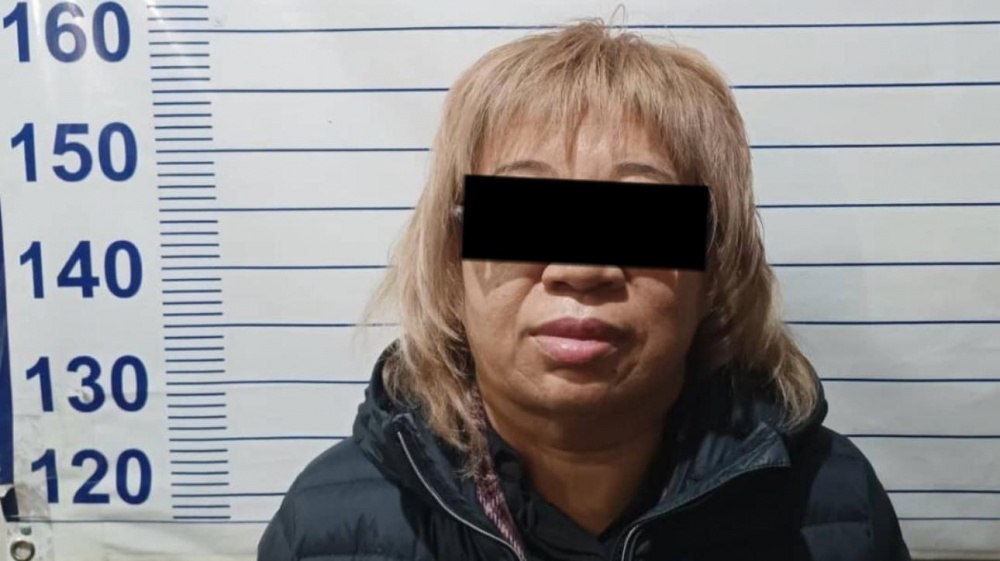
Irina Karamushkina, a senior member of the Social Democrats party and a former deputy of Kyrgyzstan's Parliament, the Jogorku Kenesh, has been detained in Bishkek on suspicion of buying votes ahead of local elections on November 17. The Social Democrats are one of about 20 parties whose candidates are registered in the elections. According to the press service of the city's police department, on November 13 an audio recording surfaced on social media in Kyrgyzstan, in which the chief of staff of the Social Democrats party, identified as "I.K.", allegedly discussed vote buying with a person named "D.C." ahead of Sunday's elections. In response, Bishkek police investigators launched a criminal case under Article 196 of the Kyrgyz Criminal Code, addressing election bribery. Later, the police distributed an audio recording allegedly capturing a conversation between Karamushkina and Daniyar Cholponbaev -- the party's candidate for deputy -- where they appear to discuss offering bribes for votes. The investigation found that "T.R.", a trustee of the Social Democrats, and "I.K." were involved in voter bribery, offering 1,000 Kyrgyz som ($12) per vote. During a search of the party headquarters, authorities seized lists indicating payments of 15,000 to 30,000 som ($175 to $350) to over 40 individuals, along with 28,300 som ($330) in cash, believed to be intended for offering bribes to voters. "T.R." and "I.K." were detained as suspects and are being held in a temporary detention facility. The investigation is ongoing. On November 13, police and special forces raided the Social Democrats’ headquarters, evacuating everyone from the premises. Party leader Temirlan Sultanbekov was taken in for questioning, and Karamushkina’s residence was also searched as part of the investigation.

Government Reports Steady Economic Growth in Kyrgyzstan

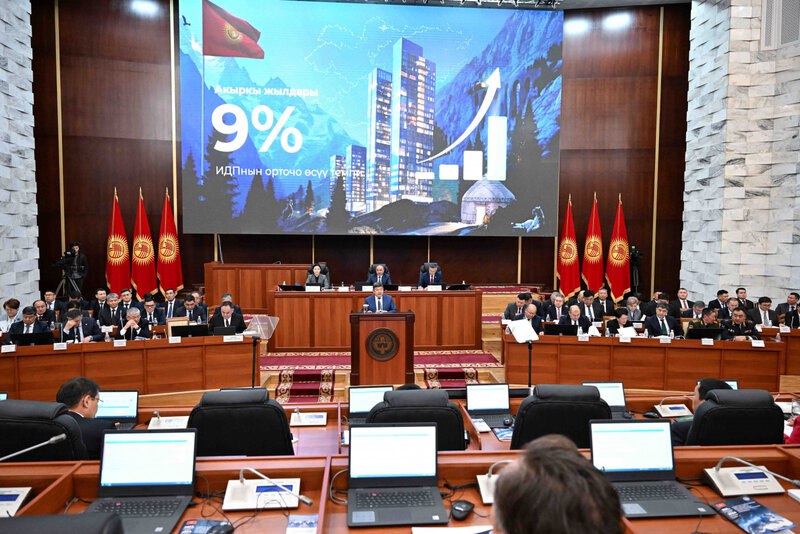
Chairman of the Cabinet of Ministers Akylbek Japarov announced in parliament on November 14 that Kyrgyzstan's GDP exceeded a historical high of 1.3 trillion KGS in 2023 and is projected to reach 1.5 trillion KGS ($17.35 billion) by the end of the year. Presenting the state budget execution for 2023 and the draft budget for 2025, Japarov reported a 9% real GDP growth rate for 2023, consistent with the growth rate in 2022. For context, Kyrgyzstan’s GDP growth was 7% in 2021. Japarov offered a conservative forecast for 2024, predicting 9.2% GDP growth. “If we divide GDP per capita, then in 2020, this figure was $1,200, and in 2024, it will exceed $2,500,” he noted. The average monthly wage in Kyrgyzstan has risen steadily from $239 (20,249 KGS) in 2021 to $316 (26,620 KGS) in 2022 and $376 in 2023. By the end of 2024, it is expected to reach $415 (35,791 KGS). From January to September 2024, Kyrgyzstan’s foreign trade volume was $12.1 billion, an 8.4% increase. Exports grew by 28.2%, totaling $2.8 billion, while imports rose by 3.7%, amounting to $9.3 billion. Inflation has significantly decreased, dropping from 14.7% in 2022 to 7.3% in 2023, and reaching 4.2% from January to October 2024. Japarov also highlighted the growth of Kyrgyzstan’s industrial sector, attributing it to investments and government support. By the end of 2024, more than 150 new enterprises are expected to open, with total investment projected at $2.2 billion and an estimated 19,000 jobs created. Further, for the first time since independence, Kyrgyzstan has started producing cars, standard gold bars, and new types of medicines. In the energy sector, Japarov reported that small hydroelectric power plants with a combined capacity of 48.3 MW were brought online in 2024. Additionally, solar and wind power projects are underway, alongside the reconstruction of the Toktogul hydroelectric power plant, the country’s largest.

Kyrgyzstan Secures Pavilion in Uzbek-Afghan Border Trade Center

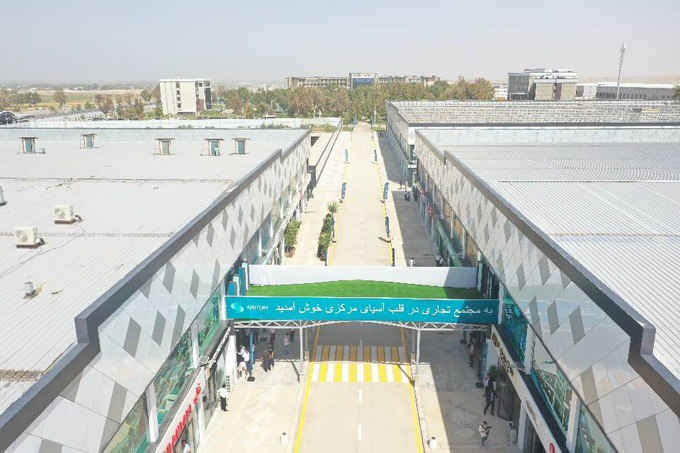
The Ministry of Economy and Commerce of Kyrgyzstan has acquired a trade pavilion at the Termez International Trade Center in the town of Termez, Uzbekistan, near the Afghan border. This purchase agreement was signed on November 11 between the ministry and LLC Termez International Trade Centre, the center's management company. This pavilion offers Kyrgyzstan a strategic foothold to expand its presence in the markets of Uzbekistan and Afghanistan, promoting the export of Kyrgyz agricultural and industrial goods while enabling direct interaction with Afghan business partners. The Kyrgyz government has expressed an ongoing interest in strengthening economic relations with Afghanistan. From January to August 2024, trade between the two countries reached $14 million, with Afghan exports to Kyrgyzstan accounting for $6 million of this total, as noted in a recent report. The Termez International Trade Center serves as a vital hub at the intersection of Central Asian trade routes, facilitating substantial trade flows between Uzbekistan and Afghanistan. Opened on August 29 by Uzbek Prime Minister Abdulla Aripov and the acting Afghan Deputy Prime Minister Abdul Ghani Baradar, the center features retail spaces, hotels, a medical center, and other amenities. It also supports transactions in multiple currencies, including U.S. dollars, euros, rubles, and yuan. Notably, Afghan citizens are allowed to visit and conduct trade at the Termez center for up to 15 days without requiring an Uzbek visa, enhancing accessibility for Afghan traders.