• KGS/USD = 0.01144 0%
  • KZT/USD = 0.00215 0%
  • TJS/USD = 0.10456 0%
  • UZS/USD = 0.00008 0%
  • TMT/USD = 0.28490 0%
  • KGS/USD = 0.01144 0%
  • KZT/USD = 0.00215 0%
  • TJS/USD = 0.10456 0%
  • UZS/USD = 0.00008 0%
  • TMT/USD = 0.28490 0%
  • KGS/USD = 0.01144 0%
  • KZT/USD = 0.00215 0%
  • TJS/USD = 0.10456 0%
  • UZS/USD = 0.00008 0%
  • TMT/USD = 0.28490 0%
  • KGS/USD = 0.01144 0%
  • KZT/USD = 0.00215 0%
  • TJS/USD = 0.10456 0%
  • UZS/USD = 0.00008 0%
  • TMT/USD = 0.28490 0%
  • KGS/USD = 0.01144 0%
  • KZT/USD = 0.00215 0%
  • TJS/USD = 0.10456 0%
  • UZS/USD = 0.00008 0%
  • TMT/USD = 0.28490 0%
  • KGS/USD = 0.01144 0%
  • KZT/USD = 0.00215 0%
  • TJS/USD = 0.10456 0%
  • UZS/USD = 0.00008 0%
  • TMT/USD = 0.28490 0%
  • KGS/USD = 0.01144 0%
  • KZT/USD = 0.00215 0%
  • TJS/USD = 0.10456 0%
  • UZS/USD = 0.00008 0%
  • TMT/USD = 0.28490 0%
  • KGS/USD = 0.01144 0%
  • KZT/USD = 0.00215 0%
  • TJS/USD = 0.10456 0%
  • UZS/USD = 0.00008 0%
  • TMT/USD = 0.28490 0%

Viewing results 901 - 906 of 5761

Kyrgyzstan and Britain Sign Landmark Agreement on Critical Minerals Cooperation

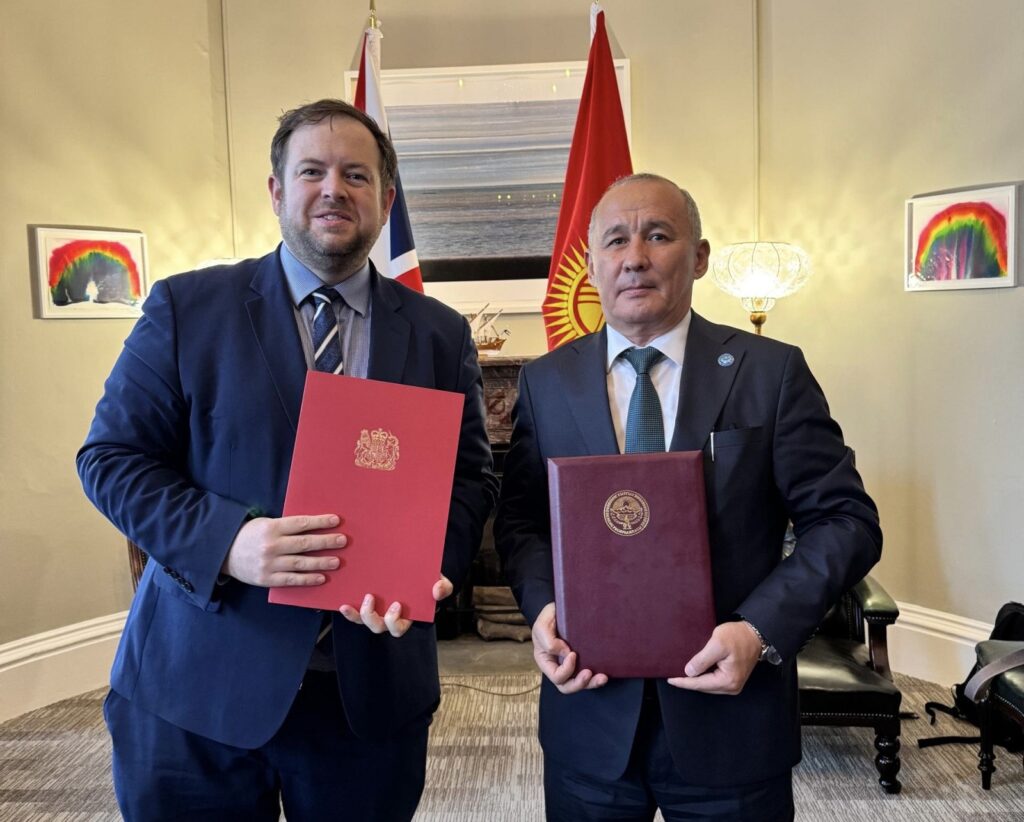
Kyrgyzstan and the United Kingdom have taken a significant step toward strengthening their partnership in the global critical minerals market, signing a landmark memorandum of understanding (MoU) in London. The agreement was formalized by Stephen Doughty, UK Minister of State for Europe, North America and UK Overseas Territories, and Meder Mashiev, Kyrgyz Minister of Natural Resources, Ecology and Technical Supervision. The document outlines cooperation in geological exploration, the implementation of high environmental, social and governance (ESG) standards, development of business ties, and the exchange of expertise. For Bishkek, the MoU establishes a new platform for deeper economic engagement with the UK, one of the world’s leading financial and technological hubs, while facilitating foreign investment and joint projects in the critical minerals sector. Mashiev arrived in London as part of the Kyrgyz government delegation attending London Mining Week, which runs from December 1 to 6. Speaking at the MINEX Eurasia conference on December 1, he presented the country’s long-term strategy for developing its critical minerals sector. According to him, Kyrgyzstan’s deposits of antimony, beryllium, molybdenum, bismuth, zinc, silver, and other critical minerals represent significant commercial and strategic value for global industries, particularly in energy, electronics, and advanced manufacturing. State-owned companies, including Kyrgyzgeology, are leading exploration and development efforts, supported by government incentives and an open-door policy toward international collaboration. Strategic sites are being actively promoted for joint ventures and direct foreign investment. Mashiev emphasized that Kyrgyzstan’s strategy places a strong focus on high ESG standards, aiming to ensure environmentally responsible development, social transparency, and meaningful benefits for local communities. The government’s objective is to position the country as a competitive and responsible supplier of critical minerals essential to global green transition technologies. Kyrgyzstan’s ambitions are backed by substantial geological potential. Speaking at the International Forum on Critical Minerals 2025 in Seoul in May, Deputy Minister Marat Jusupbekov noted that the country is home to 11 deposits of rare earth elements, positioning it as an increasingly attractive destination for global investors. One of Kyrgyzstan's most valuable assets is the Kutessay II deposit, which contains more than 63,300 tons of rare earth metals, along with molybdenum, silver, bismuth, lead, and zinc. The government is promoting joint development of this deposit in tandem with the nearby Kalesai beryllium site, which holds an estimated 11,700 tons of beryllium. Both sites are licensed to Kyrgyzgeology, which is actively seeking foreign investment partners. Jusupbekov also highlighted the potential of the Kyzyl-Ompol uranium-thorium group, including the Tash-Bulak area, where titanium-magnetite reserves are estimated at 5.5 million tons. This project is licensed to Kyrgyzaltyn, the country’s largest gold mining enterprise. With global demand for critical minerals rising due to the renewable energy transition and growth in advanced manufacturing, Kyrgyzstan’s latest agreements and strategic initiatives aim to position the country as an emerging player in this fast-evolving, high-value market.

La Tregua: A Bridge Across Wars and Worlds – An Interview with Director Miguel Ángel Vivas

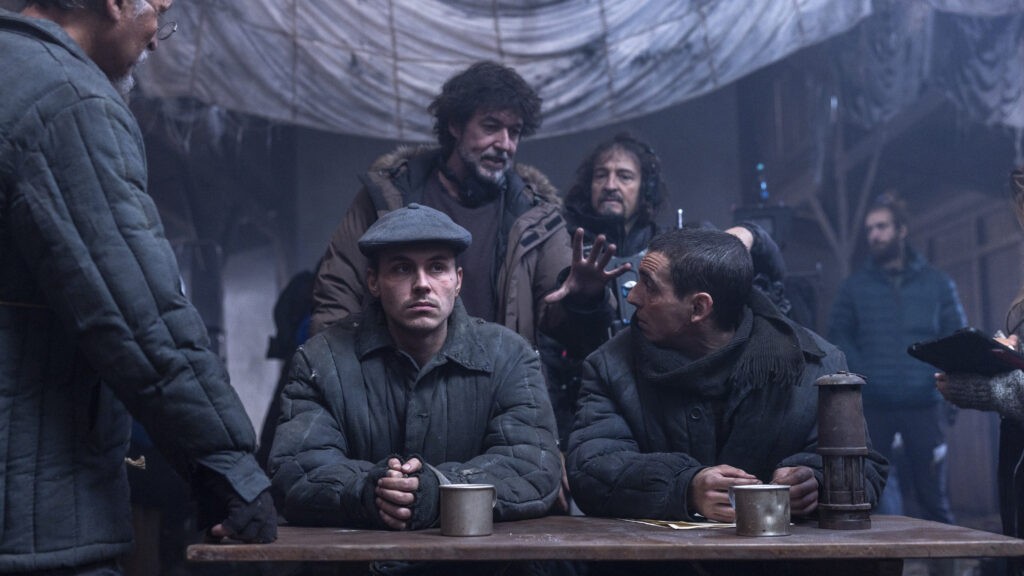
In the misty green heart of Bizkaia, where mountains rise like ancient sentinels and the air carries the scent of rain and earth, a remarkable filmmaking journey unfurled. This is where director Miguel Ángel Vivas Moreno, known for Money Heist (La Casa de Papel), Cicatriz, Desaparecidos, and Secuestrados, reconstructed one of the most haunting landscapes of the twentieth century: a Soviet gulag on the distant Kazakh steppe. His new film, La Tregua (The Truce), invites viewers into a story based on actual events that unfolded far from Spain, but holds deep ties to its history. It traces the ordeal of Spanish prisoners during World War II who fell into Soviet hands and were compelled to endure the harsh, frozen conditions of a labor camp. Their struggle becomes a bridge between past and present, between countries and cultures, and between two men who must learn to recognize each other beyond the uniforms that once made them enemies. [caption id="attachment_40358" align="aligncenter" width="2560"] All images courtesy of the production[/caption] The project is an unprecedented Spanish-Kazakh co-production from Spassk 99, AIE, Amanat Capital, LTD, and Umaifilm, LLP. This partnership gives the film a reach that feels genuinely cross-continental. It is a motion picture passport that opens a window onto a forgotten corner of global history. At the center of the story are Miguel Herrán and Arón Piper, who step into the roles of Reyes and Salgado. The characters appear as ideological enemies; having fought on opposing sides during the Spanish Civil War, both carry heavy psychological baggage. Inside the camp, their former certainties fall away. What begins as uneasy coexistence becomes an inward journey shaped by hunger, fear, and the starkness of their new reality. Executive producer César Benítez recalls searching for two actors capable of expressing both the physical exhaustion of imprisonment and the spark of hope that keeps a person standing. He says that the moment he saw Miguel and Arón together, he recognized that rare blend of fragility and fire. Miguel Ángel Vivas talked to TCA to break down the challenges and highlights behind the production. [caption id="attachment_40356" align="aligncenter" width="2560"] All images courtesy of the production[/caption] TCA: The story is fictional, but it is based on real events in Kazakhstan. Can you explain the historical context and how it inspired La Tregua? Miguel: The story begins with a documentary about Spaniards in the Soviet gulags. That’s where we discovered that republicans and fascists shared the same prison two years after the Spanish Civil War ended. It struck us as a fascinating starting point for a human story about the relationships that formed between them. [caption id="attachment_40357" align="aligncenter" width="2560"] All images courtesy of the production[/caption] TCA: The premise is intriguing: how two fighters on opposite sides of the Spanish Civil War end up in a gulag in Kazakhstan. In an increasingly polarized world, is there a lesson in the film to help heal the wounds that divide Spain, or even the world in general? Miguel: That was the idea! In such a...

How Vaccine Refusals Are Affecting Public Health in Kazakhstan

New data from analysts at Ranking.kz highlights a concerning trend: rising anti-vaccination sentiment in Kazakhstan is contributing to the resurgence of infectious diseases that could have been prevented through routine immunization. A Sharp Rise in Preventable Infections According to the National Statistics Bureau, the incidence of several vaccine-preventable diseases has spiked over the past five years. When comparing cases per 100,000 people between 2019 and 2024, whooping cough increased 19-fold, scarlet fever 5.4-fold, viral hepatitis 3.1-fold, and measles nearly doubled. These increases are also reflected in absolute numbers. The resurgence of measles is particularly striking. After a decline following the 2018-19 outbreak, the disease surged again in 2023, with cases jumping from just 4 to 29,700. Health officials described it as the largest outbreak in a decade, attributing the spike to imported infections and their spread among unvaccinated communities. While the situation showed little improvement by the end of 2024, 2025 brought some relief. According to Kazakhstan's chief sanitary doctor, Sarkhat Beisenova, 2,800 cases were recorded in the first ten months of the year. Notably, 80% of those infected were unvaccinated children, mostly due to parental refusal. Why Vaccine Refusals Are Increasing The number of vaccination refusals has been rising steadily in Kazakhstan. According to the Ministry of Health, there were 5,300 recorded refusals in 2017. By 2024, that figure had jumped to 20,700 and approached 20,000 again in 2025. A 2024 UNICEF study revealed that in 60% of cases, parents offered no specific reason for refusing vaccinations, citing only personal beliefs. Religious objections accounted for 12%, distrust of vaccines for another 12%, and 6% admitted they were influenced by negative rumors. Social media continues to fuel fear around “severe vaccine reactions,” “risks of complications,” and widely debunked myths, such as a link between vaccines and autism. In response, Kazakhstan’s National Center for Public Health has launched an informational portal to provide evidence-based explanations of vaccine safety and to refute common misinformation. Herd Immunity: A Collective Responsibility To effectively stop the spread of contagious diseases, a high level of immunization is critical. For measles, 95-97% of the population must be vaccinated; for polio, around 80%. According to the Committee for Sanitary and Epidemiological Control, Kazakhstan’s overall vaccine coverage stood at 95.3% in February 2025. International data supports Kazakhstan’s strong vaccination rates among infants. In 2024, more than 98% of children under one were vaccinated against polio, hepatitis B, whooping cough, diphtheria, and tetanus. Measles and rubella vaccinations reached 93%, and pneumococcus 90%, rates higher than the global, Asian, and European averages. Still, even a small unvaccinated population segment can trigger disease outbreaks. The World Health Organization classifies vaccine hesitancy as one of the top threats to global health. A landmark study by Australian epidemiologist Andrew Shattock, published in The Lancet, modeled a world without vaccines. Over the past 50 years, vaccines have prevented 154 million deaths, 146 million of them children under five. “In 2024, the probability that a child under 10 will live to see their next birthday is...

The Future of Kyrgyz Tech – Scaling Global Companies, Attracting Foreign Capital

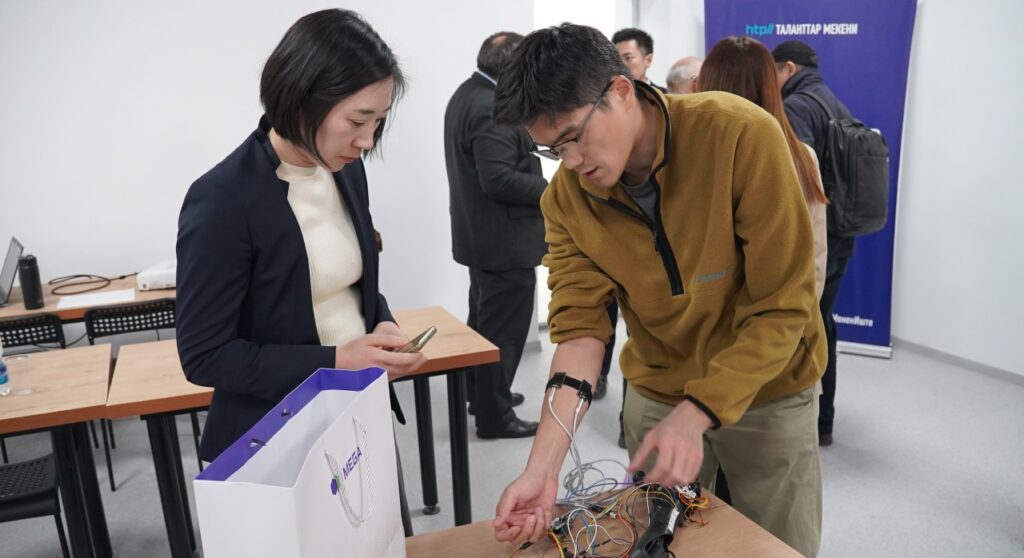
In the second installment of our exclusive two-part interview, The Times of Central Asia continues its deep dive into Kyrgyzstan’s evolving tech landscape with Elena Nechaeva, Head of Communications at the High Technology Park of the Kyrgyz Republic (HTP). Last week, we explored the startups and entrepreneurs who are currently building and scaling global businesses. If you missed it, you can read the first part of the interview here. This week, we focus on policy reform, cross-border cooperation, investor outreach, and the path ahead for Kyrgyz entrepreneurs in an increasingly globally competitive market. [caption id="attachment_40428" align="aligncenter" width="1280"] Image: The High Technology Park, Kyrgyz Republic[/caption] TCA: In terms of regulation and policy, what improvements or reforms would you like to see to better support innovation? Elena Nechaeva: There are several policy improvements that could really accelerate innovation in Kyrgyzstan, and many tech leaders have been very open about them. One of the biggest needs is a clearer national strategy for startups. Now, it’s not fully defined who exactly drives startup development and what the government’s long-term role should be. A coordinated approach with clear ownership would help the ecosystem grow much faster. Another important area is venture legislation and a stronger legal framework. Founders and investors often mention the need for a proper venture law, elements of English common law, and better protection of intellectual property. These changes would make it far easier to attract long-term capital and for investors to feel confident working with local companies. There’s also a lot of focus on the importance of modernizing higher education and expanding international partnerships. Strong engineering programs and links between academia and industry are essential for deep-tech development. And finally, Kyrgyzstan needs policies that help retain and attract talent. The digital nomad visa is already showing positive results, but it can be expanded. TCA: How does the Kyrgyz Republic's tech ecosystem compare to others in Central Asia or the wider region? Nechaeva: If you look at the region by population size, Kyrgyzstan is much smaller - about 7 million people, compared to nearly 20 million in Kazakhstan and over 36 million in Uzbekistan. And yet, with a far smaller talent pool and fewer resources, the country already exports more than $130 million in IT services, almost entirely to global markets. Whilst Kyrgyzstan’s tech ecosystem is smaller than some of our neighbors, it is one of the fastest-growing. What makes it different is that it is being developed from the bottom up - driven by founders, engineers, and communities rather than large state programs. That’s why the ecosystem is very agile, open, with a real-world focus on exports. Another difference is the mindset: Kyrgyz startups grow with a “global from day one” approach. They don’t build for a domestic market - they build for the U.S., Europe, and the wider world from day one. That creates a very different culture and pushes teams to compete internationally right from the start. So, while our ecosystem is smaller in size, it’s fast, flexible, and...

Gennady Golovkin Becomes First Kazakhstani Inducted into Boxing Hall of Fame

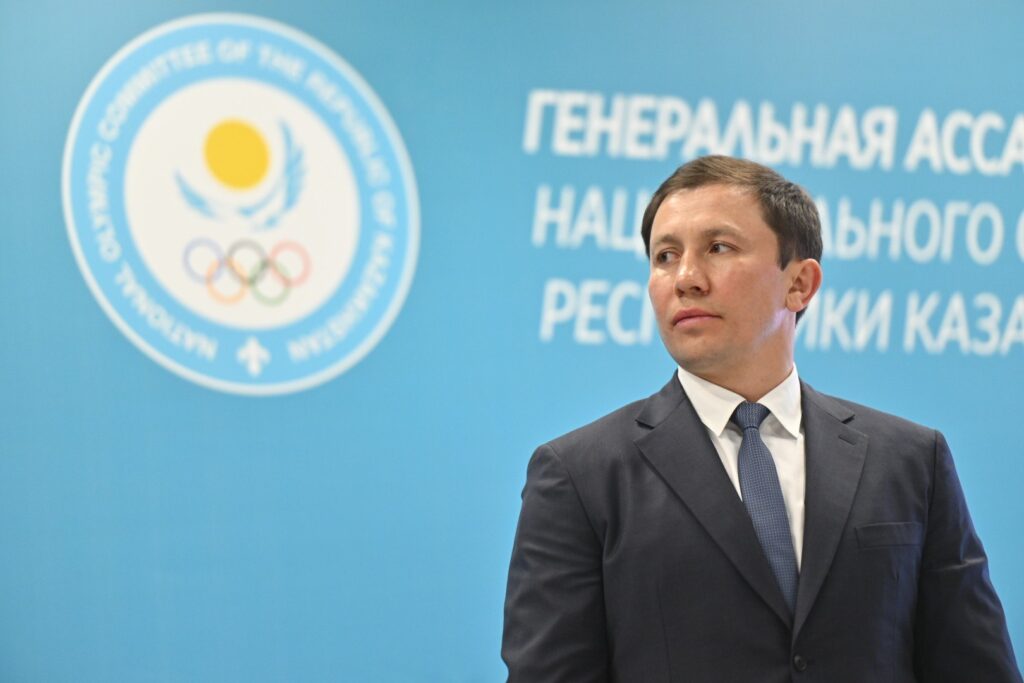
Former middleweight world champion Gennady Golovkin has become the first representative of Kazakhstan to be officially inducted into the International Boxing Hall of Fame (IBHOF). This milestone cements “GGG’s” legacy not only as one of the most dominant fighters of his era, but also as a Kazakhstani athlete who has left a lasting imprint on the history of global boxing. Established in 1990, the IBHOF honors boxers, trainers, and promoters who have made significant contributions to the sport. It is located in Canastota, New York, with induction ceremonies traditionally held in summer. Athletes become eligible for induction three years after their last professional bout (previously five years until 2018). Golovkin was nominated this year based on his final official fight in 2022. Although he has not formally announced his retirement, his absence from the ring made him eligible. Hall of Fame inductees are selected by a panel of boxing journalists and historians from the U.S., Japan, the U.K., Canada, Argentina, Australia, the Netherlands, Germany, and Mexico. Ballots including Golovkin’s name were distributed on October 1. In the 2025 vote, Golovkin was nominated for the first time and successfully selected alongside American Vernon Forrest and Irishman Steve Collins. Former world champions Antonio Tarver (first nominated in 2024) and Nigel Benn (first nominated in 2017) will also be inducted. The official ceremony will be held June 11-14, 2026, in Canastota. With this honor, Golovkin will join a prestigious group that includes Sugar Ray Robinson, Rocky Marciano, Joe Frazier, Muhammad Ali, George Foreman, Lennox Lewis, Mike Tyson, Julio César Chávez, Evander Holyfield, Bernard Hopkins, Floyd Mayweather, Manny Pacquiao, and more. The Hall of Fame now features more than 300 inductees. Golovkin’s dominance in the middleweight division was exceptional. From 2014 onward, he held the WBA, WBC, IBF, and IBO titles at 72.6 kg across various years. He set a division record with 23 consecutive knockouts over nine years, the longest knockout streak in middleweight history. Over 90% of his professional wins came by knockout, earning recognition from the Guinness Book of Records as one of the highest KO ratios among champions. He also holds the middleweight record for most successful title defenses, with 22 victories over challengers. Golovkin's amateur record is equally remarkable. Before turning professional, he fought 350 bouts, winning 345, and served as the long-time captain of Kazakhstan’s national team. Since retiring from active competition, Golovkin has taken on a prominent role in sports administration. In February 2024, he became head of Kazakhstan’s National Olympic Committee. In November 2025, he was elected president of the World Boxing Federation, becoming the first Kazakhstani to lead a global sports organization. He also introduced a reform platform focused on transparency and modern management in amateur boxing. Golovkin’s induction into the Hall of Fame marks the natural culmination of a career that helped shape modern boxing and inspire a generation of fans and athletes. For Kazakhstan, it is more than a personal milestone; it is a moment of national pride. Golovkin has become a sporting...

Information Sovereignty? Central Asia Tightens Control Over Its Information Space

Across the post-Soviet space, governments are adopting new measures that affect the scope of free expression. Similar trends are visible in Central Asia, the Caucasus, and parts of Eastern Europe, reflecting wider global shifts in how states manage their information environments. In Central Asia, where journalism has long faced political constraints, recent policies indicate a renewed emphasis on controlling the flow of information. From Georgia to Kazakhstan: Pushback Against Foreign Narratives Recent events in Georgia highlight these changes. The adoption of a controversial “foreign agents” law, widely described as a Russian-style or “pro-Russian” measure, reflected the ruling party’s growing hostility to foreign-funded media and NGOs, many backed by European donors, and triggered mass pro-EU protests in Tbilisi. Similar dynamics are emerging in Central Asia, where officials increasingly view foreign narratives as interference in domestic affairs. In Kazakhstan, legislative restrictions on so-called "LGBT propaganda" have sparked both domestic protests and criticism from international partners. At the same time, well-known media figure Gulnar Bazhkenova, editor-in-chief of Orda.kz, has been placed under house arrest, an episode that underscores the tightening environment for journalists. The Bazhkenova Case: A Turning Point for Kazakh Media Bazhkenova, a prominent editor known for critical coverage of Kazakhstan’s political elite and security services, came under scrutiny after Orda.kz falsely reported the arrest of Foreign Minister Murat Nurtleu, an unverified claim that was quickly debunked. Although Nurtleu remained in his position immediately afterward, he was dismissed later in September, prompting speculation that the incident had political consequences. Soon after his departure, law enforcement launched an investigation into Bazhkenova. On December 1, Almaty police searched her residence and the offices of Orda.kz. Authorities stated that a 2024 article had disseminated false information regarding a law enforcement officer allegedly caught accepting a bribe, an incident that officials assert never occurred. Another article reportedly misrepresented details in a property dispute, allegedly damaging the business reputation of the involved party. The Almaty police have since opened additional investigations into past publications from Orda.kz that may contain misleading content. Media organizations have largely responded with condemnation, urging the authorities to decriminalize the dissemination of false information and instead treat such cases under civil law. However, the Union of Journalists of Kazakhstan issued a pointed statement calling on media professionals to “treat the preparation and dissemination of information responsibly. Individual cases for the dissemination of inaccurate information cast a shadow on the entire journalistic community of our country,” the organization said.  An implicit acknowledgment, perhaps, that Bazhkenova’s actions may have crossed legal or ethical boundaries. Parallel Cases and Regional Patterns While suppression of the media in Tajikistan and Turkmenistan has long been widespread, Kyrgyzstan - long considered the most politically open country in Central Asia - has also moved to tighten control over its information space. In early 2024, authorities introduced a controversial “foreign representatives” law requiring NGOs and media outlets receiving international funding to register under a special status, echoing legislation seen in Russia and Georgia. Independent outlets such as Kloop, Temirov Live, and Azattyk...