• KGS/USD = 0.01144 0%
  • KZT/USD = 0.00207 0%
  • TJS/USD = 0.10407 -0.29%
  • UZS/USD = 0.00008 0%
  • TMT/USD = 0.28571 0%
  • KGS/USD = 0.01144 0%
  • KZT/USD = 0.00207 0%
  • TJS/USD = 0.10407 -0.29%
  • UZS/USD = 0.00008 0%
  • TMT/USD = 0.28571 0%
  • KGS/USD = 0.01144 0%
  • KZT/USD = 0.00207 0%
  • TJS/USD = 0.10407 -0.29%
  • UZS/USD = 0.00008 0%
  • TMT/USD = 0.28571 0%
  • KGS/USD = 0.01144 0%
  • KZT/USD = 0.00207 0%
  • TJS/USD = 0.10407 -0.29%
  • UZS/USD = 0.00008 0%
  • TMT/USD = 0.28571 0%
  • KGS/USD = 0.01144 0%
  • KZT/USD = 0.00207 0%
  • TJS/USD = 0.10407 -0.29%
  • UZS/USD = 0.00008 0%
  • TMT/USD = 0.28571 0%
  • KGS/USD = 0.01144 0%
  • KZT/USD = 0.00207 0%
  • TJS/USD = 0.10407 -0.29%
  • UZS/USD = 0.00008 0%
  • TMT/USD = 0.28571 0%
  • KGS/USD = 0.01144 0%
  • KZT/USD = 0.00207 0%
  • TJS/USD = 0.10407 -0.29%
  • UZS/USD = 0.00008 0%
  • TMT/USD = 0.28571 0%
  • KGS/USD = 0.01144 0%
  • KZT/USD = 0.00207 0%
  • TJS/USD = 0.10407 -0.29%
  • UZS/USD = 0.00008 0%
  • TMT/USD = 0.28571 0%

Viewing results 1 - 6 of 20

Kazakhstan Plans to Introduce Social Media Monitoring

Kazakhstan plans to introduce a system for monitoring the information space in order to identify illegal online content. This was reported by the country’s Financial Monitoring Agency (FMA). The agency has drafted rules on monitoring the information space aimed at detecting unlawful content, including on the internet, and enabling subsequent measures to restrict access to it. The draft document has been published on the Open Regulatory Acts portal. According to the proposal, monitoring would cover information published in open sources, including websites, social networks, messaging platforms, mass media outlets, and other information and communication channels. The Financial Monitoring Agency would be responsible for carrying out the monitoring. If unlawful content is identified, the agency would be able to initiate further response measures. “If the posting of illegal content is established, the authorized financial monitoring body, within the limits of its competence and in the presence of signs of a criminal offense, shall take the measures provided for by the country’s criminal procedure legislation,” the document states. If no signs of a criminal offense are found, the materials would be forwarded to other authorized bodies in order to hold the authors administratively liable. In both cases, if criminal or administrative violations are identified and the materials fall under restrictions established by Kazakhstan’s legislation or by court decisions that have entered into force, the agency would notify the authorized body responsible for mass media regulation. Following such notification, a decision could be made to block the relevant content. These notifications would be transmitted through the state information system. The draft rules were prepared on the basis of subparagraph 15 of Article 16 of the Law “On the Prevention of Offenses,” adopted on December 30, 2025. The new regulations are expected to take effect once the relevant normative legal act enters into force. According to the Financial Monitoring Agency, the introduction of the monitoring system is intended to improve the effectiveness of crime prevention in the digital environment. The rules are also expected to establish a clearer mechanism for interagency cooperation in identifying and restricting illegal online content. The Times of Central Asia previously reported that Kazakhstan outperformed several post-Soviet countries in the 2026 global internet freedom ranking published by the research agency Cloudwards, although within Central Asia it ranked behind Tajikistan and Kyrgyzstan.

Kazakhstan Opens Criminal Probe Over Calls to Attack CPC Oil Pipeline

Kazakhstan has opened a criminal investigation into public statements that authorities say encouraged attacks on the Caspian Pipeline Consortium (CPC), the main export route for the country’s crude oil, after months of disruption at the system’s Black Sea terminal turned a foreign security risk into a domestic legal and political issue. Prosecutor General Berik Asylov confirmed the case in a written reply to a parliamentary inquiry on January 6. "On December 17, 2025, the Astana City Police Department launched a pre-trial investigation under Part 1 of Article 174 of the Criminal Code of the Republic of Kazakhstan (incitement of social, national, tribal, racial, class, or religious discord) into negative public comments regarding damage to the Caspian Pipeline Consortium," the Prosecutor General stated. The authorities have yet to name suspects, publish the posts under review, or announce any arrests. The file remains at the evidence-gathering stage, and prosecutors have left open whether any charges will ultimately be filed under Article 174, or reclassified under other provisions once investigators assess the intent and impact. The probe follows a request by Mazhilis deputy, Aidos Sarym, who said that some social media commentary crossed from opinion into encouragement of harm to strategic infrastructure, endorsed attacks on the CPC, and urged further strikes on critical sites. The political sensitivity is rooted in the 1,500-kilometer pipeline’s central role in Kazakhstan’s economy. CPC carries crude from western Kazakhstan to a marine terminal near Russia’s Black Sea port of Novorossiysk, where the oil is loaded onto tankers for delivery to global markets. The pipeline is owned by a consortium that includes Kazakhstan, Russia, and several international energy companies. The system dominates Kazakhstan’s oil export economy. More than 80% of the country’s crude oil exports move through the CPC route, which also carries more than 1% of global oil supplies, making it a pressure point for both markets and state revenue when operations are disrupted. The investigation follows a period of repeated disruption at the Novorossiysk terminal in late 2025, after a naval drone strike damaged one of the offshore loading points used to transfer oil from the pipeline to tankers. The damage forced operators to suspend loadings and move vessels away while inspections and repairs were carried out, sharply reducing export capacity. The CPC relies on single-point moorings positioned at sea to load crude onto tankers, a critical constraint on the entire system; when one goes offline, capacity drops quickly. The pipeline cannot store large volumes, forcing upstream producers to cut or slow output. By late December, the impact was visible in Kazakhstan’s production figures. Oil output fell by about 6% during the month after the late November strike constrained exports. Production at the Tengiz oilfield, the country’s largest, dropped by roughly 10%. Exports of CPC Blend crude fell to about 1.08 million barrels per day in December, the lowest level in more than a year, as the terminal operated with only one functioning mooring while others remained offline due to damage and maintenance. Operational pressures continued as...

Information Sovereignty? Central Asia Tightens Control Over Its Information Space

Across the post-Soviet space, governments are adopting new measures that affect the scope of free expression. Similar trends are visible in Central Asia, the Caucasus, and parts of Eastern Europe, reflecting wider global shifts in how states manage their information environments. In Central Asia, where journalism has long faced political constraints, recent policies indicate a renewed emphasis on controlling the flow of information. From Georgia to Kazakhstan: Pushback Against Foreign Narratives Recent events in Georgia highlight these changes. The adoption of a controversial “foreign agents” law, widely described as a Russian-style or “pro-Russian” measure, reflected the ruling party’s growing hostility to foreign-funded media and NGOs, many backed by European donors, and triggered mass pro-EU protests in Tbilisi. Similar dynamics are emerging in Central Asia, where officials increasingly view foreign narratives as interference in domestic affairs. In Kazakhstan, legislative restrictions on so-called "LGBT propaganda" have sparked both domestic protests and criticism from international partners. At the same time, well-known media figure Gulnar Bazhkenova, editor-in-chief of Orda.kz, has been placed under house arrest, an episode that underscores the tightening environment for journalists. The Bazhkenova Case: A Turning Point for Kazakh Media Bazhkenova, a prominent editor known for critical coverage of Kazakhstan’s political elite and security services, came under scrutiny after Orda.kz falsely reported the arrest of Foreign Minister Murat Nurtleu, an unverified claim that was quickly debunked. Although Nurtleu remained in his position immediately afterward, he was dismissed later in September, prompting speculation that the incident had political consequences. Soon after his departure, law enforcement launched an investigation into Bazhkenova. On December 1, Almaty police searched her residence and the offices of Orda.kz. Authorities stated that a 2024 article had disseminated false information regarding a law enforcement officer allegedly caught accepting a bribe, an incident that officials assert never occurred. Another article reportedly misrepresented details in a property dispute, allegedly damaging the business reputation of the involved party. The Almaty police have since opened additional investigations into past publications from Orda.kz that may contain misleading content. Media organizations have largely responded with condemnation, urging the authorities to decriminalize the dissemination of false information and instead treat such cases under civil law. However, the Union of Journalists of Kazakhstan issued a pointed statement calling on media professionals to “treat the preparation and dissemination of information responsibly. Individual cases for the dissemination of inaccurate information cast a shadow on the entire journalistic community of our country,” the organization said.  An implicit acknowledgment, perhaps, that Bazhkenova’s actions may have crossed legal or ethical boundaries. Parallel Cases and Regional Patterns While suppression of the media in Tajikistan and Turkmenistan has long been widespread, Kyrgyzstan - long considered the most politically open country in Central Asia - has also moved to tighten control over its information space. In early 2024, authorities introduced a controversial “foreign representatives” law requiring NGOs and media outlets receiving international funding to register under a special status, echoing legislation seen in Russia and Georgia. Independent outlets such as Kloop, Temirov Live, and Azattyk...

Kazakhstan to Introduce Fines for Illegal Online Content

Kazakhstan is set to introduce administrative liability for disseminating illegal content on the internet, Deputy Minister of Internal Affairs Igor Lepekha announced during a recent session of the Mazhilis, the lower house of parliament. Although Kazakhstan formally banned the publication of unlawful material online in 2023, as stipulated in national legislation, the law did not include penalties for violations. Lepekha confirmed that this gap will now be addressed through new administrative measures. Kazakhstan has already established a system to detect illegal and false online content. “The Ministry of Culture sends us reports whenever false information is identified. We forward these materials for linguistic analysis, which is conducted by independent experts. If the content is found to constitute an offense, either administrative or criminal, a case is opened,” Lepekha explained. He added that all cases must be approved by the Prosecutor’s Office, with the courts ultimately determining culpability. The upcoming penalties mirror efforts in neighboring Kyrgyzstan, where the Ministry of Culture recently proposed similar fines for spreading disinformation online. Kazakhstan’s Ministry of Culture and Information (MKI) has reported a sharp rise in the volume of illegal content circulating online. In 2024, authorities identified 116,354 instances of unlawful material, nearly double the figure recorded in 2023. According to Minister Aida Balaeva, the most prevalent offenses include the promotion of terrorism, religious extremism, and drug use, as well as advertisements for online gambling and pyramid schemes. Earlier this year, activists in Almaty and Kostanay were fined for holding solo protests in support of detained satirist Temirlan Ensebek. The incident has drawn criticism from civil society groups concerned about shrinking space for dissent. Kazakhstan’s move to tighten internet regulations reflects growing regional and global trends aimed at combating harmful digital content. However, human rights organizations have warned that such measures must strike a careful balance to avoid infringing on freedom of expression.

Global Human Rights Body Condemns Inaction of Turkmenistan’s Ombudsman

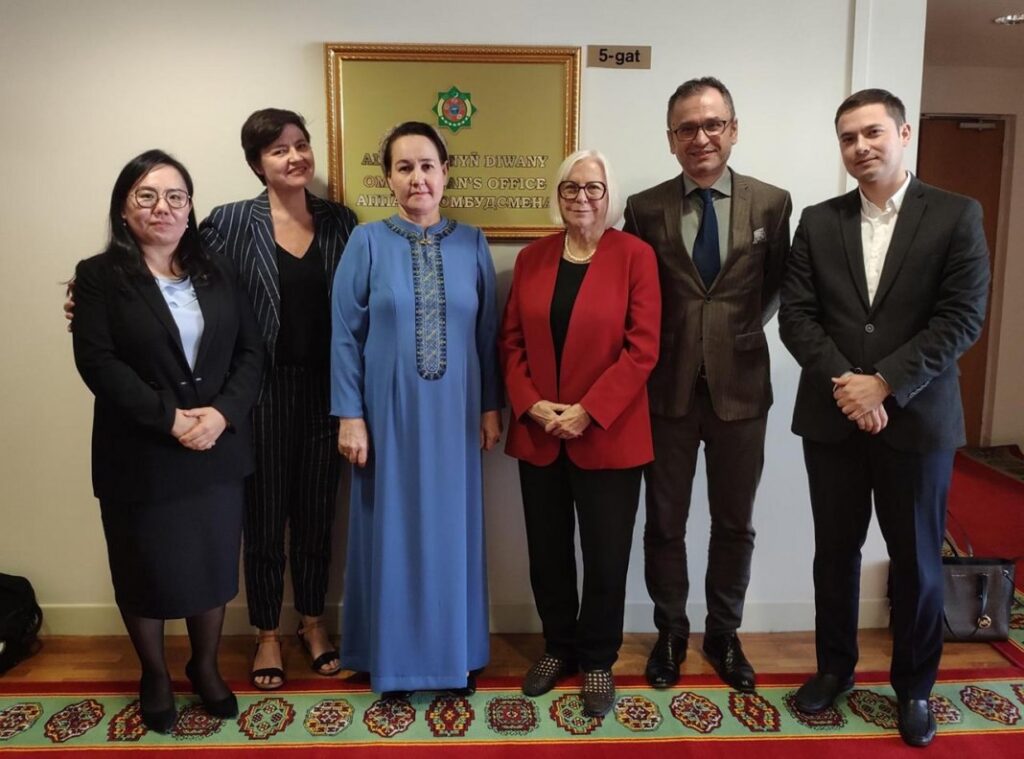
The Global Alliance of National Human Rights Institutions (OHCHR-SCA) has issued sharp criticism of Turkmenistan’s Ombudsman Office. According to the Sub-Committee on Accreditation (SCA), the institution has failed to actively protect human rights despite credible reports of serious violations by state entities. One major concern highlighted by the SCA is the Ombudsman’s lack of responsiveness to appeals from human rights organizations. This raises doubts about its ability to engage in meaningful dialogue and cooperation with key stakeholders. The SCA also expressed alarm over the absence of transparency in how civil society is involved in ensuring the independence and impartiality of the Ombudsman’s operations. Furthermore, limited access for applicants and a poorly maintained website—last updated in February—underscore deficiencies in the institution’s functionality. The controversy surrounding Human Rights Ombudsman Yazdursun Gurbannazarova further fuels criticism. Last year, Gurbannazarova reportedly pressured journalist Soltan Achilova to cancel a planned trip to Geneva, a move widely condemned by observers. These actions reinforce the SCA’s assessment that the Ombudsman’s Office is not fulfilling its mandate. Turkmenistan has long faced scrutiny from human rights organizations for systematic violations. Amnesty International has reported widespread use of torture, denial of medical care to political prisoners, and persecution of opposition figures within and outside the country. Human Rights Watch has documented cases of intimidation, including threats against the families of dissidents living abroad. The SCA’s findings shed light on Turkmenistan’s ongoing challenges in addressing human rights concerns and underscore the need for reforms in its Ombudsman Office to meet international standards.

Tajik Journalist Rukhshona Khakimova Faces Treason Charges Amid Controversy

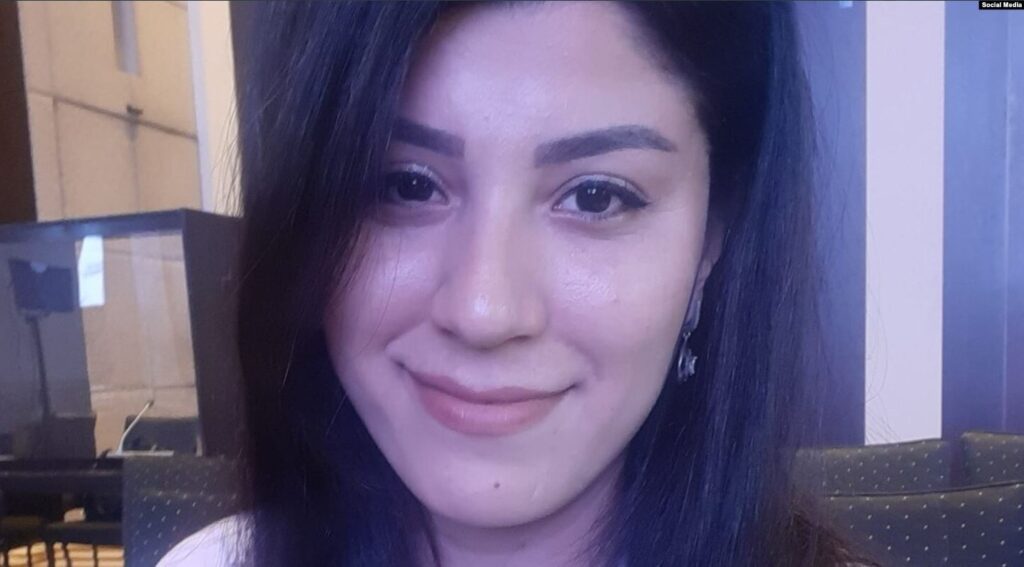
Tajik authorities have charged journalist Rukhshona Khakimova, the niece of Shokirjon Khakimov, first deputy chairman of the Social Democratic Party of Tajikistan, with high treason under Article 305 of the Criminal Code. The charges are part of a larger investigation into an alleged coup attempt, according to sources cited by Radio Ozodi. The case, initiated in July, took a significant turn on November 22 when the indictment against Rukhshona and Shokirjon Khakimov was formally presented in court. The trial, held behind closed doors, has limited access to details, leaving the public and media in the dark. The Allegations Sources suggest that Rukhshona Khakimova’s charges stem from her involvement in conducting a politically sensitive poll about China’s influence in Tajikistan. The survey reportedly included interviews with Saidjafar Usmonzoda, a political figure stripped of parliamentary immunity and later arrested, and her uncle, Shokirjon Khakimov, who is also implicated in the case. It remains unclear how this survey forms the basis of a high treason charge. The secrecy surrounding the trial further obscures the connection. Background on Khakimova Rukhshona Khakimova, 31, is a graduate of the National University of Tajikistan with a career that spans investigative journalism for prominent outlets, including Youth of Tajikistan and several international publications. She is also a mother of two young children, the youngest being just five months old. Due to her family situation, Khakimova is under house arrest. Both her domestic and foreign passports have been confiscated, restricting her movements. She and her lawyer have declined to comment on the case, adhering to its classified nature. A Broader Context The trial, which began on November 14, involves multiple defendants, including well-known politicians and public figures accused of conspiring against the government. Held in a detention facility in Dushanbe, the closed proceedings exclude the participation of family members and the press, fueling speculation and concern among observers. As the case unfolds, it raises critical questions about press freedom, political dissent, and judicial transparency in Tajikistan.