• KGS/USD = 0.01144 0%
  • KZT/USD = 0.00212 0%
  • TJS/USD = 0.10456 0.19%
  • UZS/USD = 0.00008 0%
  • TMT/USD = 0.28490 0%
  • KGS/USD = 0.01144 0%
  • KZT/USD = 0.00212 0%
  • TJS/USD = 0.10456 0.19%
  • UZS/USD = 0.00008 0%
  • TMT/USD = 0.28490 0%
  • KGS/USD = 0.01144 0%
  • KZT/USD = 0.00212 0%
  • TJS/USD = 0.10456 0.19%
  • UZS/USD = 0.00008 0%
  • TMT/USD = 0.28490 0%
  • KGS/USD = 0.01144 0%
  • KZT/USD = 0.00212 0%
  • TJS/USD = 0.10456 0.19%
  • UZS/USD = 0.00008 0%
  • TMT/USD = 0.28490 0%
  • KGS/USD = 0.01144 0%
  • KZT/USD = 0.00212 0%
  • TJS/USD = 0.10456 0.19%
  • UZS/USD = 0.00008 0%
  • TMT/USD = 0.28490 0%
  • KGS/USD = 0.01144 0%
  • KZT/USD = 0.00212 0%
  • TJS/USD = 0.10456 0.19%
  • UZS/USD = 0.00008 0%
  • TMT/USD = 0.28490 0%
  • KGS/USD = 0.01144 0%
  • KZT/USD = 0.00212 0%
  • TJS/USD = 0.10456 0.19%
  • UZS/USD = 0.00008 0%
  • TMT/USD = 0.28490 0%
  • KGS/USD = 0.01144 0%
  • KZT/USD = 0.00212 0%
  • TJS/USD = 0.10456 0.19%
  • UZS/USD = 0.00008 0%
  • TMT/USD = 0.28490 0%

Viewing results 4171 - 4176 of 5755

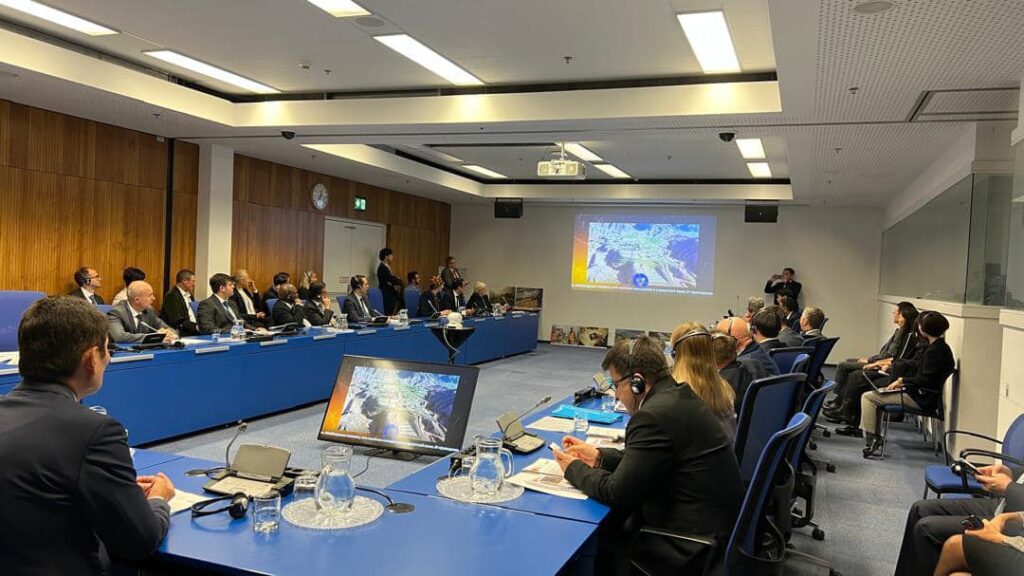
Kyrgyzstan Asks IAEA for $45 Million for Nuclear Waste Remediation

Kyrgyzstan's Deputy Minister of Emergency Situations, Azamat Mambetov, has asked for support from Central Asian countries at the International Atomic Energy Agency's General Session in Vienna, Austria. The 68th session of the IAEA General Conference is taking place from September 16 to 20, 2024. An official from the Kyrgyz Republic Ministry of Emergency Situations made a speech that called for attention to be paid to the importance of ensuring environmental safety in the region. “In his speech, Azamat Mambetov emphasized the importance of the problem of radiation safety in Central Asia and called for the intensification of international efforts to reclaim uranium tailings in the region,” the Ministry of Emergency Situations stated. The IAEA adopted a resolution on “The Role of the International Community in Preventing Radiation Threats in Central Asia.” A strategic master plan was developed to reclaim uranium sites in the region and create a special account for environmental remediation in Kyrgyzstan, Uzbekistan, and Tajikistan. The Deputy Minister of Emergency Situations of Kyrgyzstan informed IAEA members about the process of completing the reclamation of two nuclear waste sites in the country's south. This has allowed about 80,000 people in that area to live safely. The Kyrgyz Ministry of Emergency Situations stressed that it is grateful to all countries and international organizations that have made a significant contribution to the environmental rehabilitation of the tailing dumps left over from Soviet-era uranium mining in Central Asia. However, approximately another $45 million is needed to implement the Strategic Master Plan fully. According to the Kyrgyz Ministry of Emergency Situations, there are currently 92 toxic and radioactive waste dumps in the country. Of these, 23 tailings contain uranium elements, while the rest contain radioactive rock residues, heavy metals, and cyanide.
Azerbaijan Is Bringing Uzbekistan into the Middle Corridor

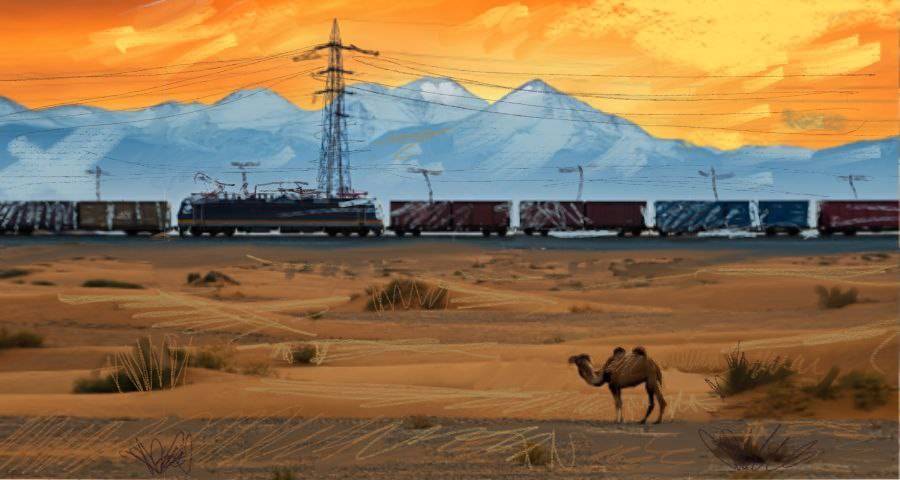
The Treaty on Allied Relations between Azerbaijan and Uzbekistan, signed last month, formalizes their growing strategic partnership and signals a new phase in their deepening ties. Their relationship has gained momentum particularly as Azerbaijan has been prioritizing the expansion of its networks in the region since 2020. Uzbekistan now plays a significant role in Azerbaijan’s efforts to strengthen the Trans-Caspian International Trade Route (TITR, also known as the Middle Corridor), the key trade and infrastructure link among Central Asia, the South Caucasus, and Turkey.   Uzbekistan and the Middle Corridor Within the last year and a half, many international financial institutions have published comprehensive studies on the implementation of the TITR project. One of the most influential was organized by the European Bank for Reconstruction and Development (EBRD) in June 2023, in collaboration with the European Commission. It was an in-depth examination of existing and potential infrastructure and logistical networks across the region. The goal of the report was to determine the “most sustainable option” for efficient transport connections between Central Asia and Europe. This report identified a route that it called the Central Trans-Caspian Network (CTCN), running principally through southern Kazakhstan. This route leverages the already well-established infrastructure and logistical systems there, making it the most viable option for trade and transport in the region. In a separate and complementary report, published in November 2023, the World Bank noted that Uzbekistan’s rail connections with Kazakhstan might be improved, but it did not identify any potential projects. Nevertheless, the Darbaza–Maktaaral project in Kazakhstan, projected for completion in 2025, could be extended first to Kazakhstan’s Syrdarya station, whence a further branch line could run to Zhetysai on the border with Uzbekistan. That project would reduce congestion at the existing Saryagash border crossing, which connects to Keles in Uzbekistan, in the north of the Tashkent conurbation. It could increase transport capacity by as much as 10 million tons per year. Still, the project focuses only on increasing the level of bilateral trade, largely in foodstuffs and agricultural goods, and does not target Uzbekistan’s integration into the Middle Corridor. On the other hand, Azerbaijan has been working actively with Uzbekistan to integrate it into the Middle Corridor, without relying on routes through southern Kazakhstan. Their cooperation includes significant efforts to enhance infrastructure and logistics. Examples include joint ventures in logistics centers and, notably, inter-modal transport links between Samarkand and Baku. Such efforts are designed to offer Uzbekistan direct access to the Caspian Sea and European markets via Azerbaijan, largely bypassing Kazakhstan and building a stronger trade partnership within the trans-Caspian framework.   Uzbekistan’s Relations with Turkey Set the Context While this all started only a few years ago, a look back to 2016 when Uzbekistan’s President Islam Karimov died provides a more complete picture. After Shavkat Mirziyoyev succeeded Karimov, Uzbekistan began to open up from its diplomatic isolation. One of the first interested parties was Turkey. Both nations signaled interest in improving ties, and Turkish President Recep Tayyip Erdoğan began to take steps...

Agreement by Kazakhstan and Turkey on Air Transit

The Government of Kazakhstan has signed an agreement with Turkey on the transit of military equipment and personnel through the airspace of both countries. The resolution, adopted on September 11, establishes a procedure for using air corridors regulated and authorized by the Ministry of Defense, responsible for the transit of military equipment and personnel; the Ministry of Foreign Affairs, responsible for issuing annual and one-time diplomatic permits (DCNs); and the Turkish Ministry of National Defense. Each party has committed to submitting a formal request through diplomatic channels by December 1 of a given year to obtain an annual diplomatic authorization number (DCN) which will be valid for transit operations  from January 1 to December 31 of the following year. Enabling the transit of official delegations, military equipment and personnel, humanitarian aid, and diplomatic cargo, the decree comes into force from the day of its signing. The draft agreement between the governments of Kazakhstan and Turkey on the transit of military property and personnel through the airspace of both countries was published on the portal “Open NPA” on August 13 and was under discussion until August 27.  The move which illustrates the strengthening relationship between the two countries, follows Kazakhstan's president's attendance  at Recep Tayyip Erdogan's inauguration as president in Ankara in June 2023,  Erdogans visit to Astana in November of the same year, and his return in July 2024, for the SCO Summit.

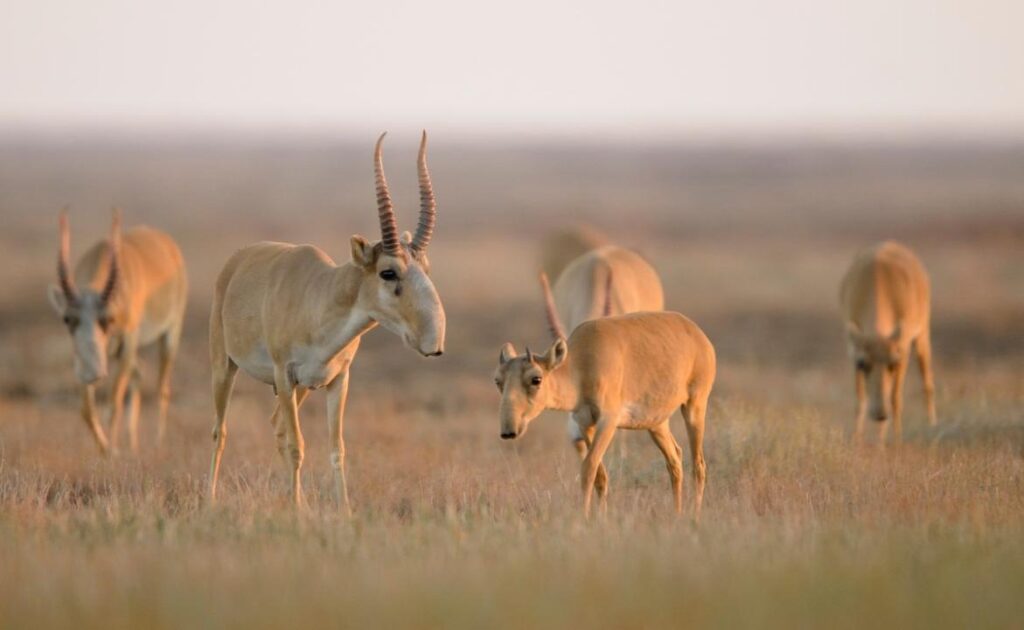
Kazakhstan Now Home to 99% of the World’s Saiga Population

The Minister of Ecology and Natural Resources of Kazakhstan, Yerlan Nysanbayev, has announced that the number of saigas in Kazakhstan has risen to around four million, equivalent to 99% of the global population. Just over half of the population - 2.8 million- resides in West Kazakhstan Oblast and the overall figure takes into account those born during May's birthing season. The presence of such large numbers of this type of antelope has not however, always been welcomed. As referenced by Nyanbayev, to lessen their damage to agriculture, Kazakhstan had previously taken measures to regulate the population. As recently as 2023, 42,000 saigas were seized, with their meat sold through processing plants in four regions. Under instruction of the Head of State, the practice has been stopped and commending the move, Nysanbayev reported, “No other state today has such a population. This is thanks to the efforts that the state: Money was spent, specialized enterprises were organized, and many legislative measures were taken." Saigas are one of the oldest breeds on the planet, dating back 250,000 years. Capable of reaching speeds of up to 80 kilometers per hour, and with unique nasal filters to help clean the air of dust and keep cool in the heat, the saiga migrate great distances, traveling up to 1,000 kilometers in search of food. A ban on shooting and hunting saigas in Kazakhstan was introduced in 1999. This decision was part of a conservation effort to protect the animals, whose population had been significantly reduced by poachers intent on seizing their horns, highly valued in traditional medicine. In December 2023, the International Union for Conservation of Nature (IUCN) updated the status of the Saiga from Critically Endangered to Near Threatened, but estimated the global population at 1.9 million, up from a low of 39,000 as recently as 2005. An April 2024 survey conducted by the Altyn Dala Conservation Initiative, however, recorded a population of 2,833,600 in Kazakhstan prior to the birthing season. The figure 4.1 million, therefore, falls within the range of the recent average increase in numbers of 48%. Saiga Antelopes – which migrate in excess of 1,000 kilometers between their summer and winter ranges because of “extreme variations” in climate - remain acutely susceptible to sudden mass deaths from pasteurellosis, an acute bacterial disease which killed up to 200,000 of the species in a three-week period in Kazakhstan in 2015.

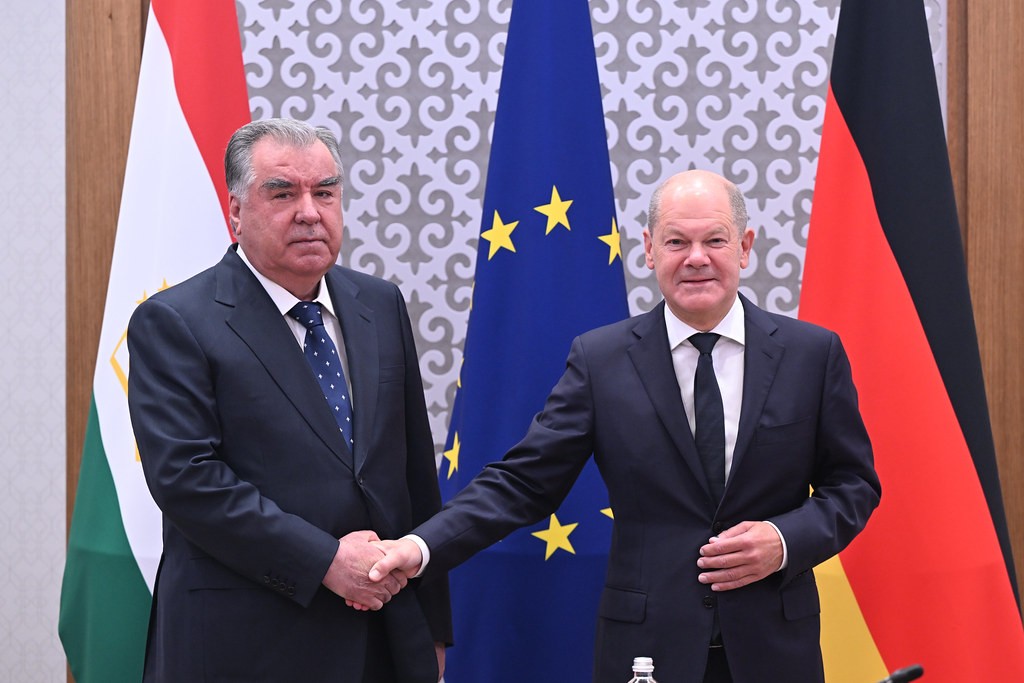
Rahmon Invites German Chancellor to Cooperate on Rogun HPP

During the summit of Central Asian countries and Germany on September 17 in Astana, Tajik President Emomali Rahmon spoke with German Chancellor Olaf Scholz on expanding Tajikistan’s cooperation with Germany and furthering Germany's business interests in the country. The president noted the significant contribution made by the German Society for International Cooperation and the German Development Bank to Tajikistan's implementation of its national strategies. With regard to future projects, the parties discussed developing effective cooperation in economy and trade, industry, hydropower, solar and wind energy, transport, and agriculture. The two leasers also exchanged views on mining and processing minerals and scarce earth metals, the expansion of bilateral cooperation in industry and agriculture, and the prospects of exporting products from Tajikistan to Germany. Talks also covered global problems related to drinking water, melting glaciers, climate change, and food security. Olaf Scholz confirmed Germany's interest in cooperating with Tajikistan in energy fields, including hydropower and other green energy sources, mining, environmental protection, and security, and emphasized,   “we encourage cooperation with Tajikistan to global German companies." According to the president's press service, Emomali Rahmon recalled Germany’s contribution to the construction of the Tajikistan and Sebzor power plants in Badakhshan and the modernization of the Nurek hydroelectric power plant. Looking ahead, the president expressed confidence that such cooperation could continue on the Rogun power plant. The estimated  cost of completing the construction of the Rogun HPP is $6.4 billion, and when fully operational, about 70% of the electricity produced will be exported to other Central Asian countries. The meeting closed with Rahmon inviting Scholz to come to Tajikistan on an official visit.

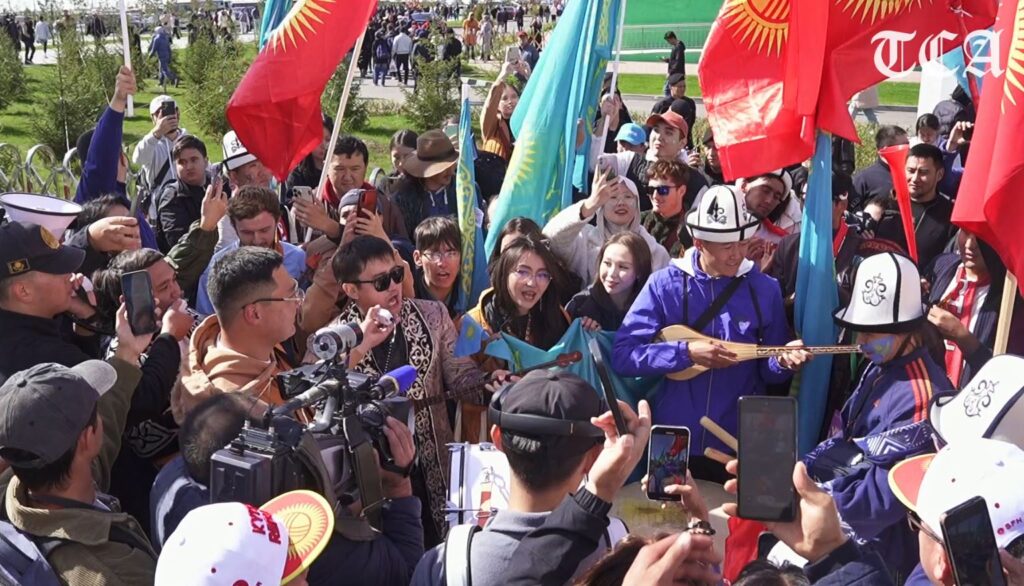
A Bone of Contention: Kazakhstan and Kyrgyzstan at Loggerheads Following World Nomad Games Kokpar Final

Astana largely managed to turn the 5th World Nomad Games into an exemplary international sporting event free of politics and disagreements. Overall, the Games stood in stark contrast to the Olympics in Paris earlier this year, when the International Olympic Committee’s decision to allow a handful of athletes from Russia and Belarus to compete under a neutral flag led to calls from some counties for a boycott. However, the culmination of the Nomad Games saw an unpleasant incident at the final of the most popular event, which resulted in a fallout between Kazakhstan and Kyrgyzstan. [video width="1920" height="1080" mp4="https://timesca.com/wp-content/uploads/2024/09/nomad-game-2.mp4"][/video]   A blow with a kamcha On September 12, an incident occurred during the Kokpar final, in which the national teams of Kazakhstan and Kyrgyzstan met, when a player from the Kazakh team, which was underperforming, struck a Kyrgyz rider with a kamcha (whip). At this point, the game was stopped, and a squad of law enforcement officers immediately surrounded the culprit. After the offender was suspended from proceedings and given a time penalty, the game continued, and Kazakhstan, having leveled the score, won the match in overtime. The Kokpar final at the previous Nomad Games, hosted by Turkey, also ended with a marginal Kazakh victory in the derby between the long-standing rivals. However, unlike in 2022, this time the Kyrgyz national team did not accept defeat in silence. At the awards ceremony, the Kyrgyz team ripped off their silver medals, raised their country's flag, and defiantly left the arena. “We knew it would be unfair, but not to this extent. The referees were swearing at us, and the police were beating our players," the Kyrgyz captain said. "A KNB (national security) officer came up to me, showed me his ID card, took my picture, and started to intimidate me, saying I was sowing discord between nations. The pressure was strong. After the scuffle, when the score was 3-1 in our favor, we were asked to leave the game. They said the refereeing would be fair... We didn't think the Kazakhstani side would allow such disorganization and injustice. If Kazakhstanis have pride, they won't celebrate such a victory.” The press service of Kazakhstan's National Security Committee promptly denied the allegations, saying their officers were not involved in providing security for the Games. Tastanbek Yesentaev, the Chief Judge of the World Nomad Games in Astana, threatened the Kyrgyz team with a 2-3 year suspension from the competition for showing disrespect. This statement only served to further inflame proceedings. At a briefing on September 16, four days after the final, Ramis Kudaibergenov, an expert on the Kyrgyz Kok-Boru Federation, stated that the Kazakh national team committed 14 gross violations of rules in the final of the Kokpar, and given a level playing field, the Kyrgyz team would have won 5-1. “Everyone blames the referee, but the whole system is culpable. We prepared the players based on previous games, but there were so many infractions we didn't take into account. We were able to...