• KZT/USD = 0.00221
  • TJS/USD = 0.10850
  • UZS/USD = 0.00008
  • TMT/USD = 0.29760
  • KZT/USD = 0.00221
  • TJS/USD = 0.10850
  • UZS/USD = 0.00008
  • TMT/USD = 0.29760
  • KZT/USD = 0.00221
  • TJS/USD = 0.10850
  • UZS/USD = 0.00008
  • TMT/USD = 0.29760
  • KZT/USD = 0.00221
  • TJS/USD = 0.10850
  • UZS/USD = 0.00008
  • TMT/USD = 0.29760
  • KZT/USD = 0.00221
  • TJS/USD = 0.10850
  • UZS/USD = 0.00008
  • TMT/USD = 0.29760
  • KZT/USD = 0.00221
  • TJS/USD = 0.10850
  • UZS/USD = 0.00008
  • TMT/USD = 0.29760
  • KZT/USD = 0.00221
  • TJS/USD = 0.10850
  • UZS/USD = 0.00008
  • TMT/USD = 0.29760
  • KZT/USD = 0.00221
  • TJS/USD = 0.10850
  • UZS/USD = 0.00008
  • TMT/USD = 0.29760
24 October 2026

Viewing results 37 - 42 of 4206

1856 Sketches Lead to Rediscovery of Petroglyphs in Kazakhstan

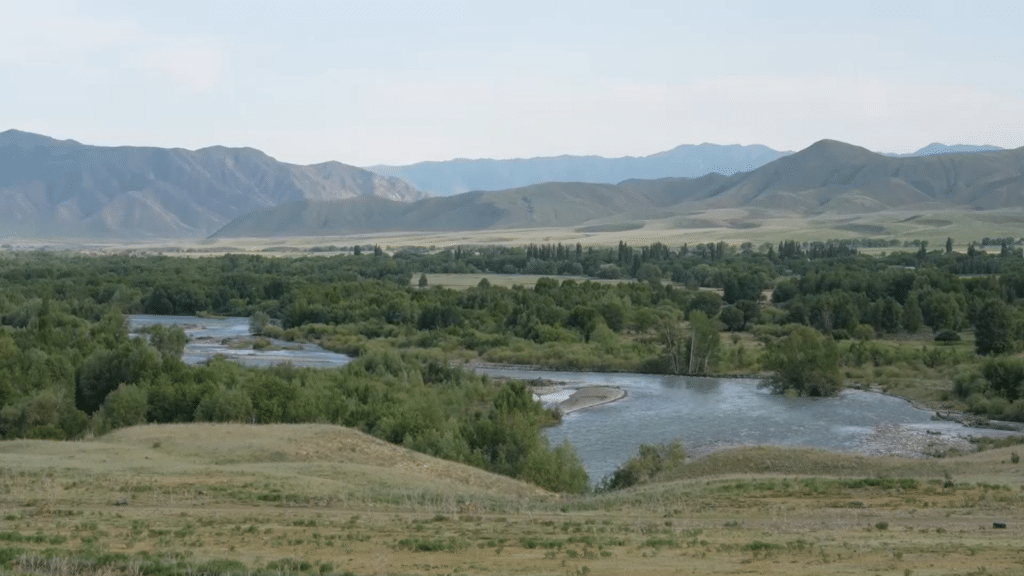
An explorer’s sketches of deer and wild goats have led archaeologists back to ancient rock carvings, or petroglyphs, in Kazakhstan, 170 years after he recorded them. A team from Kazakhstan and Russia identified the carvings in the valley of the Koksu River on October 13, according to an expedition account published on October 20 by the Institute of Archaeology of the Russian Academy of Sciences. Russian geographer and statistician Pyotr Semyonov-Tyan-Shansky recorded the carvings during his 1856 journey toward the Tian Shan mountains of Central Asia. After hearing about a rock bearing figures or inscriptions, he left his carriage and rode downstream along the Koksu River to investigate. His memoir’s August 26 entry describes deer and wild goats. At the site, archaeologists found his sketches and landscape descriptions remarkably accurate. They attribute the animal figures to the early Iron Age and the medieval period, identifying the largest deer, with its branching antlers, as an example of early Saka art. The Saka lived in what is now Kazakhstan during the first millennium BC. Gold ornaments recovered from their burial mounds include deer designs used to decorate clothing and horse equipment. The researchers compare the Koksu deer with animal designs in early Saka jewelry. The expedition is part of a Russian Geographical Society program retracing Semyonov-Tyan-Shansky’s journeys through present-day Kazakhstan and Kyrgyzstan in 1856 and 1857. Researchers are returning to the places he studied ahead of the 200th anniversary of his birth in 2027. His route led to Lake Issyk-Kul, in what is now Kyrgyzstan, where he investigated the course of the Chu River. European geographers had believed it flowed out of the lake, but he established that it turned away through a mountain gorge. In 1906, 50 years after his first journey, Emperor Nicholas II recognized his exploration of the Tian Shan by authorizing him to add Tyan-Shansky to his surname. Underwater excavations at Issyk-Kul’s submerged medieval settlement of Toru-Aygyr form another part of the anniversary program. Recent finds there include medieval coins dating to the 10th and 11th centuries. Archaeologists are investigating why the settlement ended up beneath the lake. The team that located the Koksu carvings mapped sites along the Kazakhstan route and took aerial photographs. Researchers now plan to create three-dimensional models of the monuments and an interactive map of Semyonov-Tyan-Shansky’s route through southeastern Kazakhstan, to be published on the society’s website.
Uzbek-Tajik Film About Jami and Navoi Wins Prize

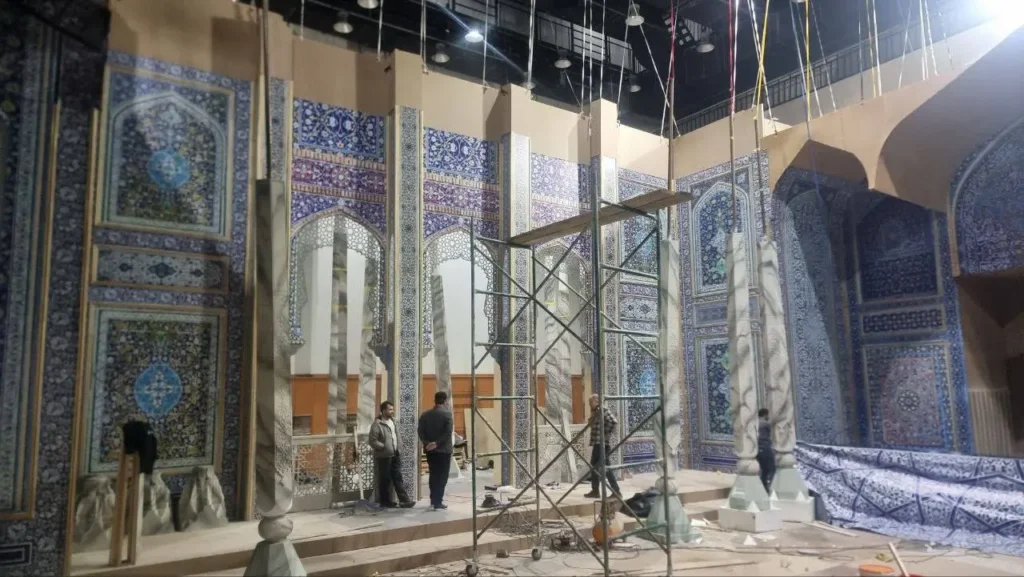
A movie about the friendship between two Central Asian literary figures that was made by a team from Uzbekistan and Tajikistan has won a top prize at a national film awards event in Dushanbe. Shining Stars: Jami and Navoi tells the story of the 15th-century friendship and collaboration between the Persian poet Abd al-Rahman Jami, a cultural icon in modern Tajikistan, and Alisher Navoi, a poet and statesman of the Timurid era who is officially revered in Uzbekistan today. As such, both figures are closely associated with the national identities of their respective countries. The joint project, which had the backing of the Tajik and Uzbek governments and sought to highlight cultural connections between the two countries, was awarded the Grand Prix at the third edition of the Toji Somon National Film Awards. It also won awards for best production design and best costume design. The five-day event ended this week in Tajikistan’s capital after featuring dozens of films from several countries, including Iran and Russia. The two men who inspired the making of Shining Stars: Jami and Navoi were discussed at a forum hosted in Tashkent last year by the International Institute for Central Asia, which is affiliated with the Uzbek state. Abdujabbor Aziz Rahmonzoda, then Tajikistan’s ambassador to Uzbekistan, told the audience that Navoi always referred to Jami as his mentor and they maintained close ties through letters, more than 430 of which have been preserved, and poetry. “The Ambassador also noted the unique nature of their literary exchange: Navoi wrote to Jami in Turkic, and Jami replied in Persian, symbolizing the unity and linguistic diversity of the region’s culture,” the institute said in a report on the symposium. Asia-Plus, a Tajik news outlet, reported last year that there were two directors: Tajik Fayzullo Fayzov and Uzbek Dilmurod Masaidov. Some 70% of the planned filming was in Uzbekistan and the rest in Tajikistan, while 60% of the cast were Uzbek and 40% from Tajikistan, it said. The total budget was about $10 million, according to Asia-Plus. Planning for the film was underway by late 2021, according to the state-supported Tajikfilm studio. The Oxford Centre for Islamic Studies describes Jami as a noted Sufi and social critic, calling him “a culminating figure in Perso-Islamic culture, whose reputation and influence have remained undiminished throughout the eastern Islamic world – the Ottoman empire and Central Asia, Iran, India, China, and the Malay world.” Navoi is regarded in Uzbekistan as the father of the Uzbek language because of his writing in the Turkic language Chagatai, or classical Uzbek, at a time when Persian was dominant in literary circles.

Kazakhstan’s Education Chief Turns to Sci-Fi to Explain His AI Vision

As Kazakhstan’s 2026 academic year began, The Times of Central Asia spoke with Sayasat Nurbek, Minister of Science and Higher Education, in Astana. Drawing on science fiction films and novels, Nurbek discussed how universities can embrace AI while protecting students’ independent thinking. He also reflected on human agency and the limits of technology. TCA: A new academic year brings new challenges for you and your team in this age of AI. On your website, you write: “It does not matter how long you spend on the earth, how much money you have gathered or how much attention you have received. It is the amount of positive vibration you have radiated in life that matters….” With this in mind, what are your priorities as Kazakhstan’s Minister of Science and Higher Education as AI reshapes the field? Nurbek: My priority is students who are fully alive, not just fully efficient. AI can handle the routine, so Kazakhstan’s universities must protect what machines can’t: curiosity, imagination, judgment, critical thinking, and character. Technology should serve growth in these areas, never replace them. Success isn’t output; it’s lives that radiate something positive. AI is a tool, and tools cut both ways. We’re welcoming  AI  into higher education with open eyes and high standards. I want students who think for themselves, use AI wisely, and own their personal sovereignty, if you will. I do not want self-absorbed people who forget about others, society, and the nation. AI is powerful and easy to abuse, so Kazakhstan nurtures critical thinking, curiosity, and creativity in the AI age. I will use Sci-fi movies and novels to help me explain why. TCA: Certainly. What do you mean by students need to “own their sovereignty”? Nurbek: Education in Kazakhstan is about building minds and virtue, not just collecting answers and performing tasks. If AI does the writing, problem-solving, and summarizing, our students may get an answer without learning how to find solutions. Real understanding comes from the effort to learn. It comes from struggle, doubt, revision, failure, sharing, steadfastness, patience, starting again, and, yes, celebrating success. That’s why it’s key for Kazakhstan’s universities to set clear boundaries and teach students when and how to use AI. AI can undermine learning if it replaces their own thinking. AI should support thought, not substitute for it. TCA: What are your thoughts about the impact of AI on learning? Nurbek: Used ethically, AI is a huge opportunity for Kazakhstan. The world is racing to adopt it, so our universities can’t ignore it, but they mustn’t swallow the hype or miss the dangers. A PISA 2025 study found that students who use AI to summarize or draft score noticeably lower in science, by roughly a year of schooling. That is a correlation, though, not proof of causation. Other studies find AI users shine in practice, then stumble horribly on exams. TCA: So, it seems you have mixed feelings about the introduction of AI? Nurbek: The PISA data tells us more. Students who regularly use AI...

FINNEXT Asia Forum in Tashkent to Discuss Central Asia’s Financial Markets

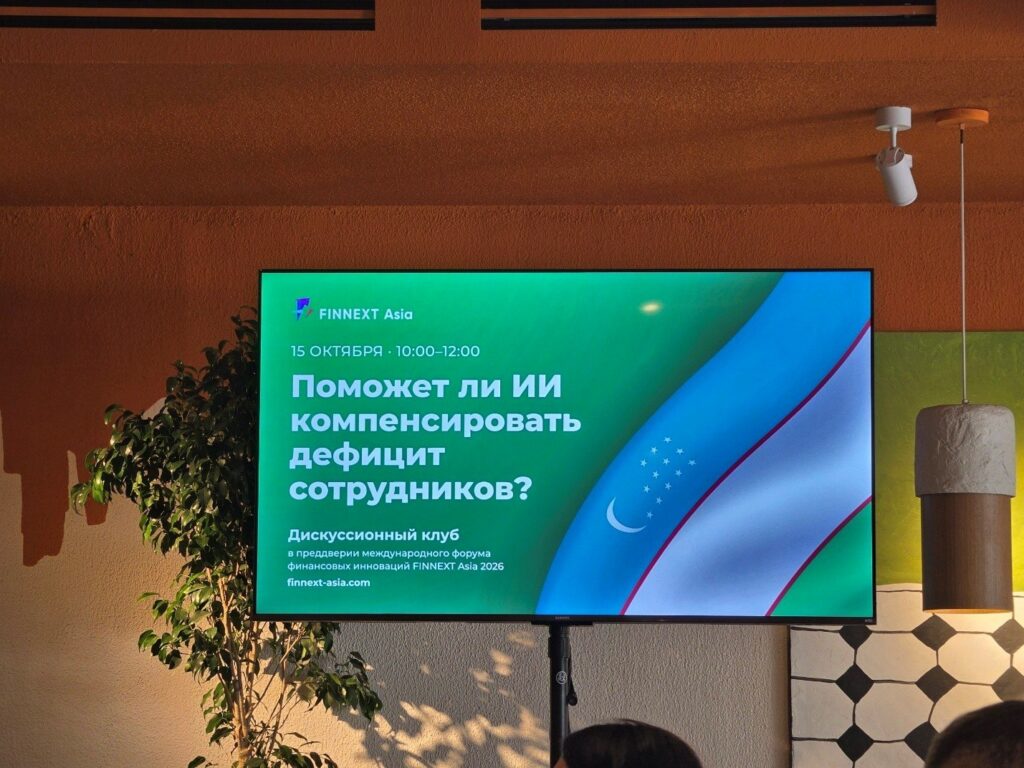
The third international FINNEXT Asia 2026 forum will take place in Tashkent on November 19. Organizers expect more than 600 representatives of the banking and financial technology industries to discuss AI adoption and changes in financial regulation across the region. The forum will be held at the Hyatt Regency Tashkent, with executives from financial institutions and technology companies in Uzbekistan, Russia, other Central Asian countries, and Europe expected to attend. The agenda includes open banking and digital assets. Yevgeniya Yakunina, chair of the FINNEXT Asia organizing committee, told The Times of Central Asia that organizers hope the event will lead to business agreements and joint projects. [caption id="attachment_58791" align="aligncenter" width="1024"] Image: TCA[/caption] “In 2025, we received 954 registrations from representatives of 520 companies. Banks accounted for 41% of participants,” Yakunina said. According to Yakunina, this year’s priorities include closer cooperation between banks and technology companies, with startups helping address banking challenges and regulatory changes. For the first time, the forum will host the Startup Center: New Wave competition. Teams from Central Asia will present fintech innovations, including projects concerning the digital soum. The judging panel will include representatives of banks and venture capital funds from Central Asia and Russia. Organizers hope the competition will help startups find partners for pilot projects and attract investment. A separate discussion will focus on the economic returns from artificial intelligence, including its use in credit assessments and fraud detection. Yakunina believes financial companies still face difficulties measuring the practical results of AI adoption. “Many companies launch isolated projects without understanding how to measure their impact. Data and specialists are necessary conditions, but they are not the ultimate goal,” she told TCA. The program also includes discussions on digital identity verification and open-banking interfaces for consent-based sharing of customer data. Participants will examine digital assets and regulatory experiments in Uzbekistan. The investment agenda will cover venture capital financing and opportunities for regional companies to access international stock markets. A dedicated insurance track, INSUR Asia, will explore automation in the industry. The forum will conclude with a discussion of prospects for Central Asia’s financial markets in 2027. Announced participants include representatives of Uzbek banks and IT Park Uzbekistan, alongside Gazprombank and Russia’s state development corporation VEB.RF. Insurance companies from Uzbekistan, Tajikistan, and Russia are also expected to attend.

Tashkent Faces Kindergarten Shortage as Authorities Propose Sales

Uzbekistan has earmarked kindergartens for possible sale, including some still in use, even as Tashkent faces a shortage of 65,000 preschool places. Officials say the properties must continue to be used as kindergartens, but have not said how much their new owners could charge parents. Gazeta.uz reported plans to sell around ten kindergartens following an October 8 press conference held by Sohibjon Murodov, director of the State Assets Management Agency. The published privatization list includes state kindergarten No. 58 in Tashkent’s Yakkasaroy district, which has a capacity of 120 children. Murodov said the building is very old and claimed that it does not even have a foundation. The children are to be transferred to a new state kindergarten with 720 places, currently under construction in the same neighborhood. The vacated 0.56-hectare plot is expected to be sold on the condition that a private kindergarten is established there. Murodov said the Yakkasaroy property had not yet been put up for auction and that inclusion on the privatization list does not necessarily mean a property will be sold. If residents' objections are found to be justified, individual properties could be removed from the program in coordination with the Presidential Administration. In Kashkadarya Region, another kindergarten on the list belongs to a state-owned oil and gas company but is already leased to a private operator. Selling it would therefore transfer ownership of a facility that is already privately run. The proposed sales have also exposed differences between national and city authorities. Tashkent Mayor Shavkat Umurzakov opposes transferring land belonging to state schools and kindergartens to private education projects, including through public-private partnerships. He argues that such sites should be reserved for state institutions. The State Assets Management Agency, by contrast, allows kindergarten properties to be sold provided they retain their educational purpose. The potential cost to parents is a particular concern. According to an estimate based on crowdsourced data cited by Anhor.uz, the average monthly fee for a private kindergarten in Tashkent was around 3.8 million soums (approximately $315) in May 2026. Fees at state kindergartens are regulated by the government and increased by approximately 6.8% in September 2026. Even after the increase, a standard nine-hour place in Tashkent costs around 290,500 soums ($24) a month, less than one-tenth of the estimated private-sector average. Tashkent authorities plan to create 40,000 additional places by 2030 and increase preschool enrollment to 92%. In October, plans for 28 new institutions with a combined capacity of 16,000 places were presented to the president. Even so, the proposed 40,000 new places would be 25,000 fewer than the city's estimated current shortage, although demand may change by 2030. According to city administration figures reported by Gazeta.uz, preschool enrollment rates in 11 of the capital's 12 districts are projected to be lower in 2026 than in 2023. The largest declines are projected in Sergeli, Yakkasaroy, and Bektemir districts. Authorities have not explained the reasons. Across Uzbekistan, however, preschool enrollment rose from 27% in 2017 to approximately 75% in 2025, according...

Japanese Firms Test Middle Corridor Freight Route as Tokyo Funds Aktau Port Upgrade

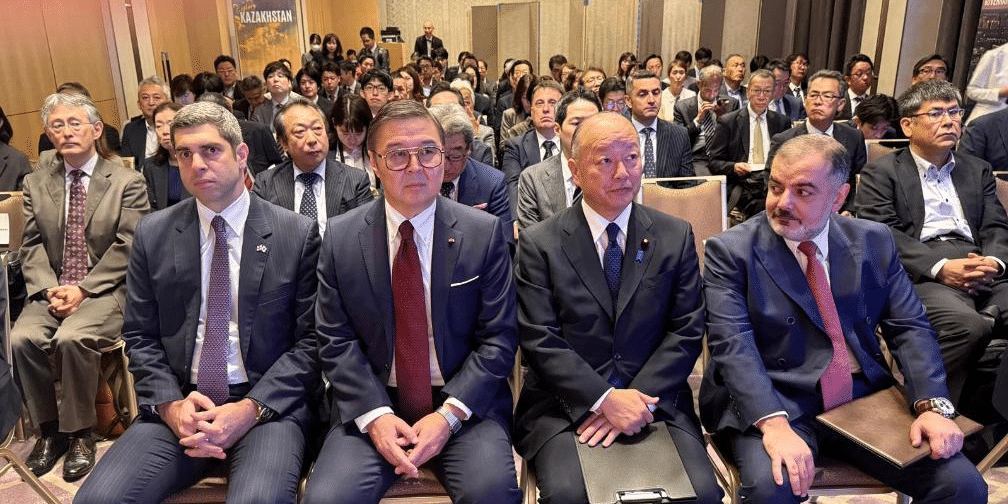
Japan is assessing greater use of the Middle Corridor following trial shipments by Japanese companies, as Tokyo funds customs upgrades at Kazakhstan’s port of Aktau worth up to $4.5 million. The results of the trials were presented at an October 19 conference in Tokyo, which focused on Japan’s transport links with Central Asia and the Caucasus. The trials assessed delivery times and costs, alongside customs procedures and logistics services. Japan’s funding provides for the installation of a stationary X-ray inspection system for large cargo at Aktau, where containers are shipped across the Caspian Sea to Azerbaijan. The grant, agreed in January, is valued at up to 719 million yen (approximately $4.5 million). The equipment is expected to reduce inspection times by two-thirds. Kei Takagi, Japan’s State Minister of Economy, Trade and Industry, linked Tokyo’s interest in the Middle Corridor to efforts to diversify international transport routes and strengthen trade with Central Asia and the Caucasus. For Japanese exporters, the Middle Corridor could provide an alternative way to reach markets across Central Asia and onward to Europe. Japanese cargo must first reach the corridor by sea, through China or another point connecting to the overland transport network. The route’s attractiveness therefore depends on transshipment costs and reliable connections, including efficient customs clearance. In 2025, the Middle Corridor handled 4.12 million metric tons of freight, down from 4.48 million tons in 2024 but approximately five times the volume recorded seven years earlier. According to Kazakhstan’s Ministry of Transport, transit times along the corridor have fallen from 28–32 days to 13–17 days. The ministry’s estimate is for the corridor, rather than a quoted delivery time from Japan. Beyond freight transport, conference participants discussed digital infrastructure across the Caspian Sea. The Kazakh side highlighted the October 15 inauguration of a 380-kilometer fiber-optic cable linking Kazakhstan and Azerbaijan. The cable across the Caspian seabed is intended to carry international internet traffic between Central Asia and the South Caucasus, with adjustments to the line continuing through the end of 2026. Direct air connections were also discussed. Air Astana plans to launch scheduled flights between Almaty and Tokyo’s Narita Airport in December 2026.