• KGS/USD = 0.01144 0%
  • KZT/USD = 0.00216 0%
  • TJS/USD = 0.10663 0%
  • UZS/USD = 0.00008 0%
  • TMT/USD = 0.28530 0%
  • KGS/USD = 0.01144 0%
  • KZT/USD = 0.00216 0%
  • TJS/USD = 0.10663 0%
  • UZS/USD = 0.00008 0%
  • TMT/USD = 0.28530 0%
  • KGS/USD = 0.01144 0%
  • KZT/USD = 0.00216 0%
  • TJS/USD = 0.10663 0%
  • UZS/USD = 0.00008 0%
  • TMT/USD = 0.28530 0%
  • KGS/USD = 0.01144 0%
  • KZT/USD = 0.00216 0%
  • TJS/USD = 0.10663 0%
  • UZS/USD = 0.00008 0%
  • TMT/USD = 0.28530 0%
  • KGS/USD = 0.01144 0%
  • KZT/USD = 0.00216 0%
  • TJS/USD = 0.10663 0%
  • UZS/USD = 0.00008 0%
  • TMT/USD = 0.28530 0%
  • KGS/USD = 0.01144 0%
  • KZT/USD = 0.00216 0%
  • TJS/USD = 0.10663 0%
  • UZS/USD = 0.00008 0%
  • TMT/USD = 0.28530 0%
  • KGS/USD = 0.01144 0%
  • KZT/USD = 0.00216 0%
  • TJS/USD = 0.10663 0%
  • UZS/USD = 0.00008 0%
  • TMT/USD = 0.28530 0%
  • KGS/USD = 0.01144 0%
  • KZT/USD = 0.00216 0%
  • TJS/USD = 0.10663 0%
  • UZS/USD = 0.00008 0%
  • TMT/USD = 0.28530 0%

Viewing results 4363 - 4368 of 6306

Kazakhstan and China to Build Container Hub in the Port of Aktau

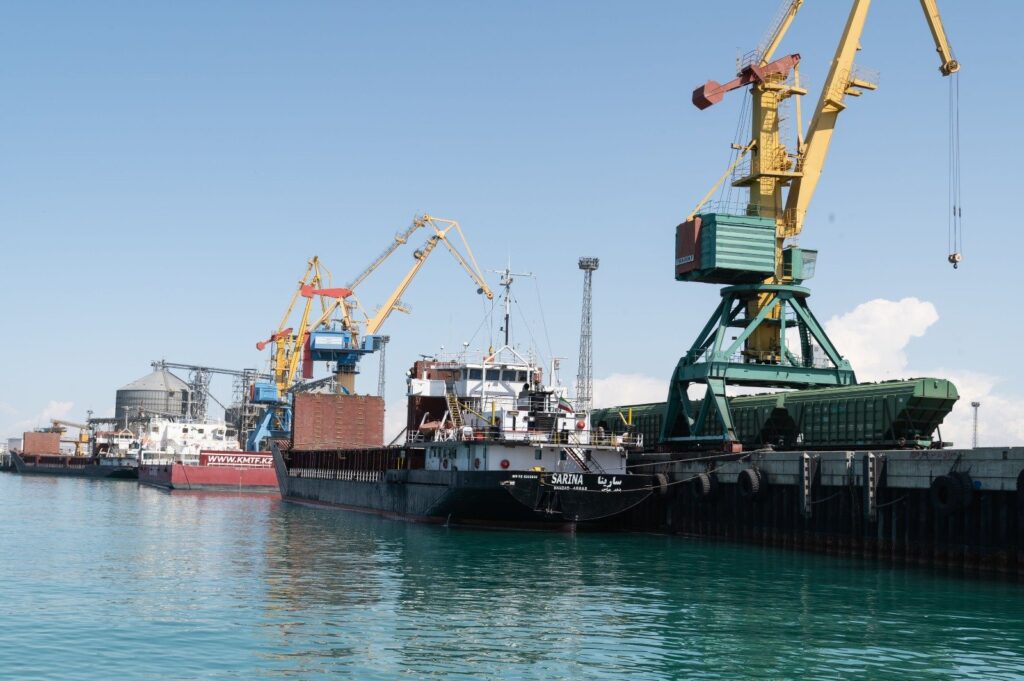
Kazakhstan’s national railways company, Kazakhstan Temir Zholy (KTZ), has announced that KTZ Express (a subsidiary of KTZ), China’s Lianyungang Port, and Kazakhstan’s Aktau Sea Trade Port have signed the founding documents of a joint venture to construct a container hub in the port of Aktau. The documents were signed on September 20 in the Chinese city of Xi'an. The project has received support from the governments of Kazakhstan and China as part of China’s Belt and Road initiative. The project will strengthen Kazakhstan's position in the international logistics system. The planned container hub's location on the Trans-Caspian International Transport Route (TITR), or the Middle Corridor, will further increase the route's attractiveness and the volume of transit traffic. The Lianyungang Port is a longstanding partner of KTZ Express. Over the past ten years, they have implemented two joint projects: the Kazakh-Chinese terminal in the Port of Lianyungang and Khorgos Gateway, the largest dry port in Central Asia located on the Kazakh-Chinese border. Also on September 20, a container train departed along the TITR from Xi'an on the route Altynkol—Aktau (Kazakhstan)—Baku (Azerbaijan)—Poti (Georgia)—Burgas (Bulgaria)—Belgrade (Serbia)—Hamburg/Duisburg/Budapest. The heads of the railway administrations of China, Kazakhstan, Azerbaijan, and Georgia attended the departure ceremony. The train, consisting of 55 40-foot containers, was assembled at the Kazakh-Chinese Xi'an terminal. It will travel about 7,000 km to Baku in 8-11 days and then reach its final destination in Budapest in 25 days. The reduced delivery time was made possible by the cooperation of the railway and port administrations of the TITR member countries. The Kazakh-Chinese terminal in the dry port of Xi'an was opened in early 2024. Today, 30% of all container trains from China to Europe via Kazakhstan are formed in the dry port. According to KTZ, thanks to the terminal in Xi'an, cargo transit along the TITR increased 20-fold in the first eight months of this year compared to last year. The delivery time to Azerbaijan has been reduced to 11 days and to Georgia to 14 days.
From Test Sites to Power Plants: Kazakhstan’s Nuclear Journey

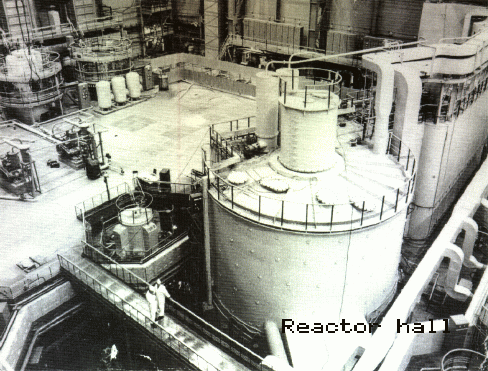
The history of nuclear power in Kazakhstan has many chapters: the arms race, the suffering of people due to test sites, the highest achievements in the name of science, and the service of the nuclear industry for the benefit of society are closely intertwined here. On the eve of the referendum on Kazakhstan's first atomic power plant, it is necessary to revisit these pages in history.   A dark past Construction of the Semipalatinsk nuclear test site began in the Kazakh Soviet Socialist Republic in 1947. The test site is located on the border of the Semipalatinsk (now Abay), Pavlodar, and Karaganda regions, 130 kilometers northwest of Semipalatinsk (now Semey), on the left bank of the Irtysh River. On its territory is the previously closed city of Kurchatov, renamed as such in honor of Soviet-era physicist, Igor Kurchatov. The first nuclear weapons test held in the Soviet Union was conducted at this site on August 29, 1949. The power of the bomb totaled 22 kilotons. From 1949 to 1989, at least 456 nuclear tests were conducted at the Semipalatinsk nuclear test site. The long-term operation of this site and its negative impact on residents' health and the surrounding environment help to explain the fear of nuclear energy in Kazakhstan. Two million people were affected across 300 square kilometers; with all agriculture banned, a vast swathe of land still remains off-limits. Pregnancies are still screened for possible termination, with 6% of babies born “polygon” (the name for the "closed zone".) [caption id="attachment_23475" align="aligncenter" width="1200"] Polygon baby, National Museum of Kazakhstan, Astana; image: TCA, Stephen M. Bland[/caption]   Shutdowns and shortages On August 29, 1991, Kazakhstan's first president, Nursultan Nazarbayev, closed the Semipalatinsk test site. Prior to this, citizens had held rallies protesting against nuclear testing and its development. By 1994, Kazakhstan had voluntarily relinquished its part of the USSR's nuclear arsenal. On May 15, 1992, the National Nuclear Center in the city of Kurchatov was established based on the complex of the former Semipalatinsk test site. The Center deals with eliminating the consequences of nuclear tests and also conducts active and multidisciplinary scientific activities on the remaining research reactors in Kurchatov. Scientific research occurs internationally and touches upon safety technologies, the space program, and more. In 1957, the Institute of Nuclear Physics of the Kazakh SSR Academy of Sciences was founded near Almaty (then Alma-Ata), where the VVR-K reactor, which is still operating today, was launched in 1967. The reactor was shut down in the late 1980s after the Chernobyl disaster and the earthquake in Spitak (Armenia); it was restarted in 1997, and the complex underwent safety and seismic reinforcement modernization. The Institute owns eight experimental facilities: the VVR-K research reactor, a "Критический стенд" lit. "critical stand," and six charged particle gas pedal complexes. In 1972, a unique fast neutron reactor BN-350 was launched in Aktau (then Shevchenko) at the Mangistau Atomic Energy Combine (MAEC). The reactor provided the Mangistau Peninsula with electricity and heat, and supported the operation of desalination plants...

ADB To Provide Uzbekistan With $300 Million To Support Microfinance

The Asian Development Bank (ADB) will provide the government of Uzbekistan with $300 million to support unbanked or underbanked micro-enterprises. The funds will aim to improve access to finance for micro and small businesses, primarily focusing on supporting women entrepreneurs, which ADB Director General for Central and West Asia, Eugene Zhukov, says will be an essential step towards the country's economic development and job creation. Kanokpan Lao-Araya, Director of ADB's Resident Mission in Uzbekistan, said the loan will help improve the quality of life of entrepreneurs and provide them with new financial opportunities. State-owned commercial banks primarily control Uzbekistan's financial sector, and microfinance organizations occupy only 0.5% of the system. According to Global Findex data for 2021, only 44% of Uzbekistan's adult population has accounts with formal financial institutions, well below the Central Asian average of 58%. The lack of commercial microfinance has led to a severe credit gap, especially among small businesses. Support from the ADB aims to close this gap and develop an inclusive financial system to contribute to the country's sustainable economic growth. The Asian Development Bank was founded in 1966 and has 68 member countries. Uzbekistan joined the ADB in 1995, since which time the bank has provided the country with loans, grants, and technical assistance worth $12.5 billion.

Pakistan Joins Transport Corridor Between Indian Ocean and Eastern Europe

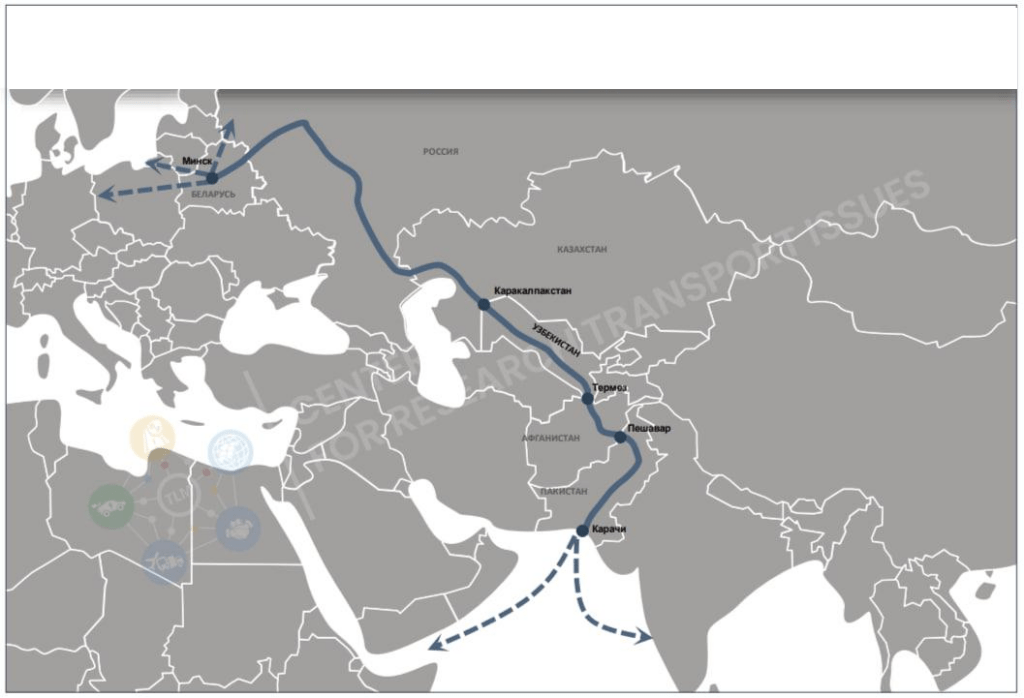
Uzbekistan’s Ministry of Transport has announced that Pakistan has officially joined the memorandum of understanding on establishing and developing the international transport corridor "Belarus–Russia–Kazakhstan–Uzbekistan–Afghanistan–Pakistan–Indian Ocean." The Pakistani Ministry of Communications signed this memorandum on September 18. The process of creating this multimodal transport corridor began in August 2022, at a meeting between the Uzbek government and the Eurasian Economic Commission – the governing body of the Russian-led Eurasian Economic Union that also includes Armenia, Belarus, Kazakhstan, and Kyrgyzstan. In November 2023, the transport ministries of Russia, Kazakhstan, and Uzbekistan signed a memorandum of understanding, launching the project's active phase of work. The group's first meeting on developing the proposed multimodal transport corridor was held in April 2024 in Termez, Uzbekistan. During that meeting, Belarus joined the memorandum, while Afghanistan and Pakistan announced the beginning of internal procedures for joining the project. At that meeting, a roadmap was signed, including specific plans for the development of cargo transportation, analysis of cargo flows, introduction of electronic digital documents, and optimization of customs procedures. The participating countries expect that the new corridor will become an important link in Eurasia's transport system, providing convenient and efficient routes for the transit of goods and strengthening economic cooperation.

The First-Ever Audio Recording of Kazakh Music

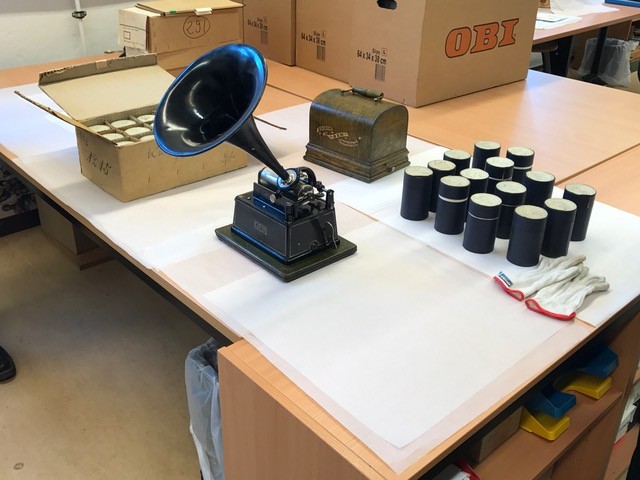
It was long believed that the world's first audio recording of Kazakh music was made in 1925 during the performance of singer, Amre Kashaubaev, at the Exposition Internationale des Arts Decoratifs et Industriels Modernes in France. However, the Berlin Museum of Visual Anthropology and Ethnology has recordings of Kazakh folk music, voices, and ritual chants, which were made in western Kazakhstan twenty years earlier. These recordings were made during the Acoustic Era, when sound waves were still recorded through analog methods. In 1857, Frenchman, Édouard-Léon Scott de Martinville invented the so-called phonautograph. Three years later, the world's first song was recorded. It was a French folk song, “By the Light of the Moon”. In 1877, Thomas Edison invented the phonograph. This invention could both record and playback audio and marked the start of the Acoustic Era. Later, in 1900, Carl Stumpf, a professor of psychology at the University of Berlin, established a phonogram archive in Berlin, where, at the same time, an orchestra from Thailand was touring. Stumpf recorded the Thai music, which was considered exotic to Europeans at that time. This recording became the first in the rich Ethnomusicology collection of the Ethnological Museum of Berlin. These recordings were originally discovered at the Institute of Russian Literature, also known as Pushkin House, which is part of the network that is affiliated with the Russian Academy of Sciences. Dr. Efim Rezvan, a well-known scholar of Turkology, showed the TCA team the wax rollers - cylindrical wax containers that can be played using Edison's phonograph. The first-ever audio recordings of Kazakh music were made using these devices. The German scientist Richard Karutz recorded them in the early 20th century when he organized an expedition to the steppes of Turkestan. As a result of his expedition, he wrote a book called Among the Kirghiz and Turkmens in Mangyshlak. During his expedition, Karutz took many photos and collected audio recordings of the local peoples' art. In addition to his scientific research, Karutz pursued other goals; for instance, he wrote about the health benefits of tea, which the locals consumed in large quantities. He claimed that drinking tea in large quantities when the air temperature was over 40 degrees Celsius helped them to bear the heat. Karutz wrote that, “It is necessary for our troops to weigh the importance of tea consumption during summer maneuvers and campaigns.” Richard Karutz was born into a mercantile family. In 1886, he went to study medicine at the University of Jena 1891. Completing his studies and receiving his doctorate in 1891, he then worked as a doctor aboard a ship. Whilst on working as a surgeon on a ship, Karutz traveled to South America and West Africa. After these trips, Karutz became interested in ethnography. In 1896, he was appointed head of the ethnographic collection of the Museum of Ethnology in Lübeck. Karutz enriched the museum's collection with artifacts from his travels, and encouraged other merchants and travelers to bring items from other countries for the collection. The...

Saudi Fund Contributes $100 Million Towards Rogun Hydropower Plant in Tajikistan

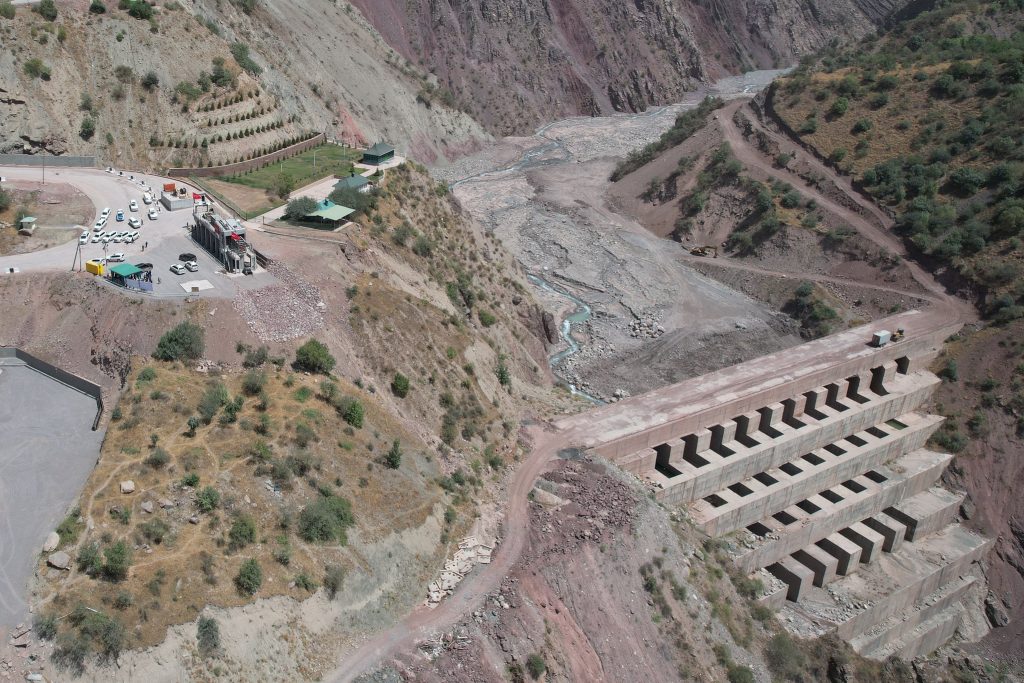
The Saudi Development Fund has allocated $100 million to finance the completion of the Rogun hydropower plant in Tajikistan. This was announced by the Ambassador Extraordinary and Plenipotentiary of the Kingdom of Saudi Arabia to the Republic of Tajikistan, Walid bin Abdulrahman Al-Rashidan, at a press conference dedicated to the 94th anniversary of the Kingdom of Saudi Arabia's founding. “This project is strategically important for the country, as it will ensure energy security and sustainable economic growth. The Rogun HPP is a key element of Tajikistan's energy infrastructure; it will significantly increase electricity production and strengthen its position regionally,” Al-Rashidan said. Saudi Arabia’s financial support strengthens bilateral cooperation in energy and economic relations. The estimated cost of completing the construction of the Rogun HPP is $6.4 billion. Once it reaches full capacity, about 70% of the electricity generated will be exported to other Central Asian countries. According to a report by the Eurasian Fund for Stabilization and Development (EFSD), the financing of the Rogun HPP is one of the main risks for Tajikistan’s budget and debt sustainability. A possible increase in the cost of hydropower construction could reduce funding for other essential infrastructure projects and social spending. Analysts emphasize that “in the face of uncertainty regarding funding sources, starting in 2025, the government of Tajikistan may have additional needs for budgetary support from international financial organizations.”