• KGS/USD = 0.01144 0%
  • KZT/USD = 0.00212 0%
  • TJS/USD = 0.10456 0.19%
  • UZS/USD = 0.00008 0%
  • TMT/USD = 0.28490 0%
  • KGS/USD = 0.01144 0%
  • KZT/USD = 0.00212 0%
  • TJS/USD = 0.10456 0.19%
  • UZS/USD = 0.00008 0%
  • TMT/USD = 0.28490 0%
  • KGS/USD = 0.01144 0%
  • KZT/USD = 0.00212 0%
  • TJS/USD = 0.10456 0.19%
  • UZS/USD = 0.00008 0%
  • TMT/USD = 0.28490 0%
  • KGS/USD = 0.01144 0%
  • KZT/USD = 0.00212 0%
  • TJS/USD = 0.10456 0.19%
  • UZS/USD = 0.00008 0%
  • TMT/USD = 0.28490 0%
  • KGS/USD = 0.01144 0%
  • KZT/USD = 0.00212 0%
  • TJS/USD = 0.10456 0.19%
  • UZS/USD = 0.00008 0%
  • TMT/USD = 0.28490 0%
  • KGS/USD = 0.01144 0%
  • KZT/USD = 0.00212 0%
  • TJS/USD = 0.10456 0.19%
  • UZS/USD = 0.00008 0%
  • TMT/USD = 0.28490 0%
  • KGS/USD = 0.01144 0%
  • KZT/USD = 0.00212 0%
  • TJS/USD = 0.10456 0.19%
  • UZS/USD = 0.00008 0%
  • TMT/USD = 0.28490 0%
  • KGS/USD = 0.01144 0%
  • KZT/USD = 0.00212 0%
  • TJS/USD = 0.10456 0.19%
  • UZS/USD = 0.00008 0%
  • TMT/USD = 0.28490 0%

Viewing results 4669 - 4674 of 5755

Kyrgyz Council Deputy Arrested for Calling for Riots

An unnamed member of the city council in Kyrgyzstan's Jalal-Abad region has been detained for calling for the organization of mass riots and a violent seizure of power, 24.kg reports. Kyrgyzstan's State Committee for National Security (SCNS) announced in a statement: "[An] investigation has established that [a] deputy of Kerben city council from the 'Ata-Jurt Kyrgyzstan' political party systematically published provocative materials and calls for the organization of mass disorder and violent seizure of power on Facebook." The suspect was taken to the security committee's detention center. The investigation is ongoing. According to the security committee, the attempt was scheduled for August 31, which is Kyrgyzstan's Independence Day. "The suspects, under the influence of certain destructive political forces, hatched plans for a violent seizure of power by destabilizing the socio-political situation in the country and organizing mass riots in Bishkek, including the death of citizens. They planned to organize a sporting event near Bishkek on Independence Day to gather young people from all around the country," the SCNS said. On the eve of Independence Day, special services detained five Kyrgyz men who were planning an armed seizure of power. A search of their homes revealed a large cache of weapons, explosives, and police uniforms. A total of 50 weapons (20 pistols and 255,238 rounds of ammunition), 200 sets of law enforcement uniforms, 150 pieces of police and 100 pieces of military headgear, 38 sets of body armor, two drones, radios, homemade explosives, and extremist literature were seized from them. It has also been established that the detainees are involved in organizing rallies against foreign citizens.
OECD Representative Office May Open in Kazakhstan

An initiative to open a representative office for the Organization for Economic Cooperation and Development (OECD) in Kazakhstan has been announced by Deputy Prime Minister Nurlan Baibazarov and William Thompson, Head of the OECD Eurasia Division, who met earlier this week. To date, OECD regional offices operate in China, Indonesia, Ukraine, and Greece, according to the website of the Government of Kazakhstan. During the meeting, the parties discussed implementing OECD recommendations, implementing the Joint Action Plan of the Government of the Republic of Kazakhstan and the OECD Secretariat until 2025, and cooperation within the framework of the OECD Eurasian Competitiveness Program. William Thompson noted the positive experience of OECD interactions with Kazakhstan. Following recommendations from the OECD, several political and economic reforms have been carried out in the country. In particular, institution of investment ombudsman was introduced, parliamentary control over the use of budgetary funds was strengthened, the Low Carbon Development Strategy of the country until 2060 was developed, and the National Contact Center for Responsible Business Conduct and the Supreme Audit Chamber were established. Direct elections of akims (heads) of districts and cities of regional significance has also been introduced. "Our country has been a stable partner of the OECD for more than 15 years and a Central Asian leader in implementing its recommendations. In 2025, Kazakhstan intends to apply to join this authoritative international organization as a full member. We are confident that further cooperation will have a qualitative impact on the socioeconomic and legal aspects of the development of our state," Nurlan Baybazarov stated.

Foreign Political Parties Banned in Uzbekistan

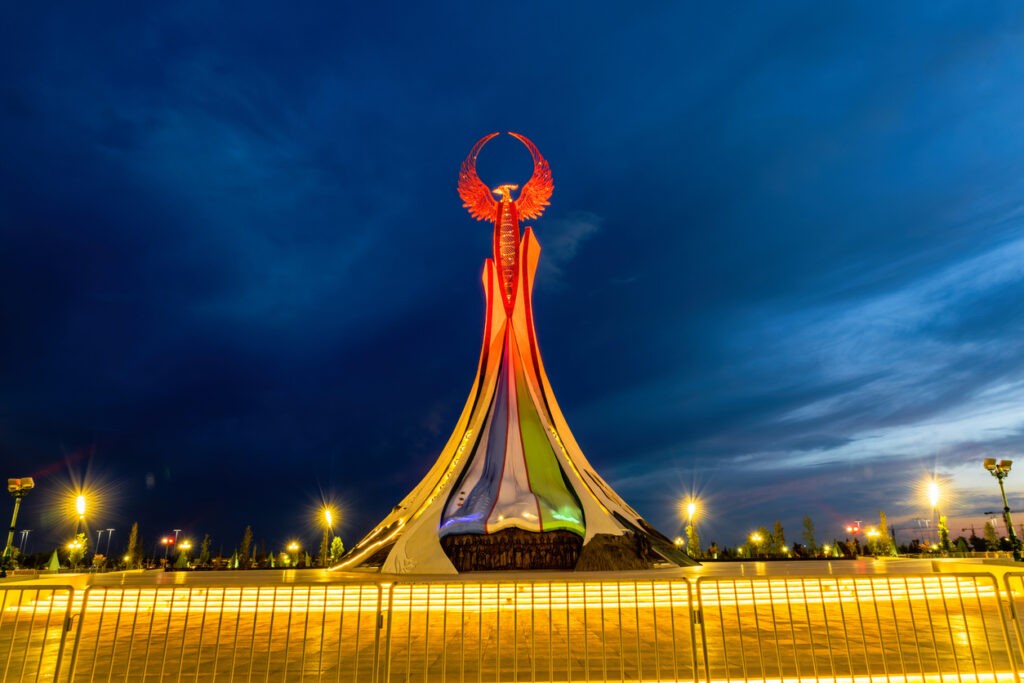
Uzbekistan has added to the law "On Political Parties," prohibiting the establishment and operation of foreign political parties and their subdivisions in Uzbekistan. The corresponding amendments were signed by President Shavkat Mirziyoyev, Kun.uz reports. Furthermore, the amendments broadened the conditions under which the powers of a deputy of the lower house and a senator could be terminated early. Elected representatives are prohibited from engaging in other paid activities (except for scientific, creative, and pedagogical work) and holding their positions if they have a permanent residence permit abroad. Additionally, parliamentarians will lose their mandate if they fail to participate for 30 days without a valid reason in the activities of their respective chamber, political party faction, committee, or commission. Similar measures are envisaged for deputies of regional, district, and city councils of people's deputies (local parliament). Five political parties are registered in Uzbekistan: the Liberal Democratic Party, the Milliy Tiklanish (National Revival) Democratic Party, the Adolat (Justice) Social Democratic Party, the People's Democratic Party, and the Ecological Party.

Nuclear Race: Will Central Asia Build a Nuclear Power Plant?

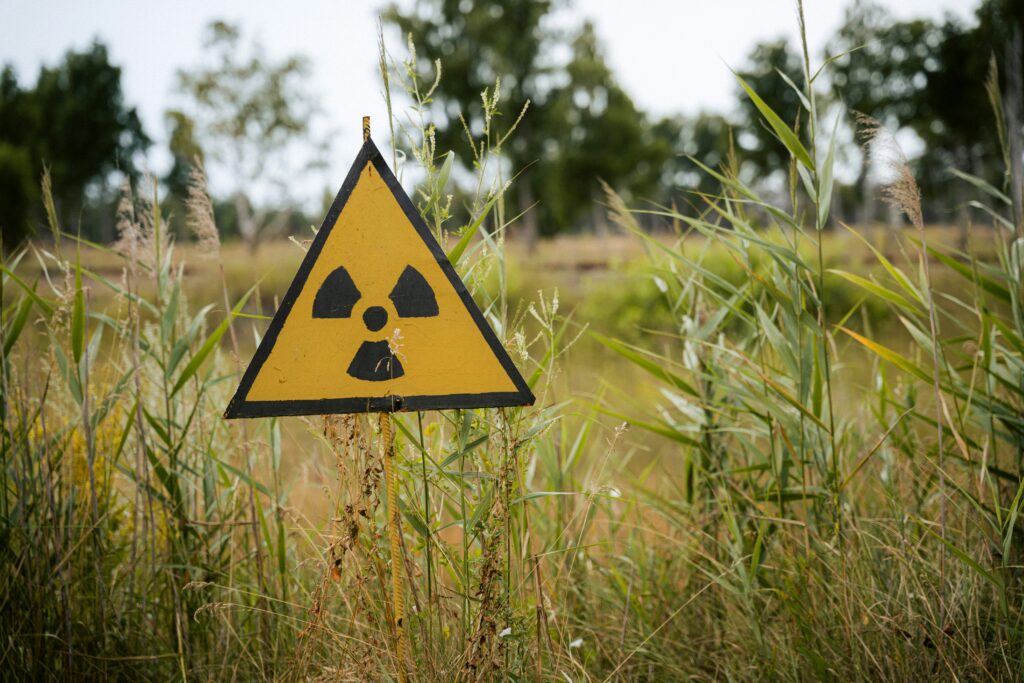
The answer to the question posed in the title remains uncertain. While Uzbekistan has plans to construct a nuclear power plant and Kazakhstan is set to hold a referendum this fall to gauge public opinion on building one, progress is sluggish. Tashkent has postponed the start of construction, and the issue sparks heated debate in Kazakhstan. The First Nuclear Power Plant in Central Asia Historically, Central Asia did host a nuclear facility. Located on the shore of the Caspian Sea in Kazakhstan, this was not a conventional nuclear power plant but a fast neutron reactor known as BN-350. The reactor was the core of the Mangistau Nuclear Power Plant, designed to transform the Mangyshlak Peninsula by providing energy to the city of Aktau (formerly Shevchenko) and powering large-scale desalination plants that supplied drinking water to the arid region. [caption id="attachment_20031" align="aligncenter" width="366"] BN-350[/caption] Operational from 1973 until its shutdown in 1999, the BN-350 reactor was decommissioned due to the allocation of U.S. funds for new desalination and heating equipment and the disposal of its remaining fuel. The extensive maintenance and decommissioning work on the BN-350 have given Kazakhstani nuclear physicists significant experience with such complex and hazardous technology. However, younger generations in Kazakhstan are largely unaware of the BN-350 reactor’s existence. Their knowledge of nuclear physics is often limited to the harrowing stories passed down about nuclear warhead tests at the Semipalatinsk test site and their devastating effects. Fear and Nuclear Power: Kazakhstan's Dilemma The societal fear surrounding nuclear energy in Kazakhstan is deeply intertwined with political concerns. For a long time, the leadership in Kazakhstan has hesitated to move beyond merely discussing the need for a nuclear power plant (NPP) to actually initiating the project. President Kassym-Jomart Tokayev recently announced that a referendum would take place in the fall of 2024. However, Ministry of Energy's officials avoided mentioning the word "referendum" until the last moment, previously asserting it was unnecessary. Public hearings were held last year in the village of Ulken, Zhambyl district, Almaty region, a proposed site for the nuclear plant. The Ministry of Energy’s press release stated that the local populace supported developing nuclear power, highlighting its significance for regional socio-economic growth. However, media reports revealed that the hearings were contentious, with opposing viewpoints almost disrupting the speech of Nurlan Ertas, the head (akim) of the Zhambyl district. Activists even displayed banners and posters against the plant's construction. Certain groups have exploited the population's fear of another disaster like Chernobyl. Additionally, the government has struggled to convince the public that nuclear technologies are becoming safer. In contrast, Europe now includes nuclear power plants in its list of green energy sources, similar to other renewable energy sources (RES). In Kazakhstan, renewable energy accounts for only 5% of the total energy produced. The introduction of NPPs could significantly enhance the country’s position in reducing carbon emissions. The government faces a growing electricity shortage that can be addressed either harmfully or fearfully. The harmful options are coal-fired thermal power plants...

Turkmen Sewing: From Ancient Traditions to Modern Art

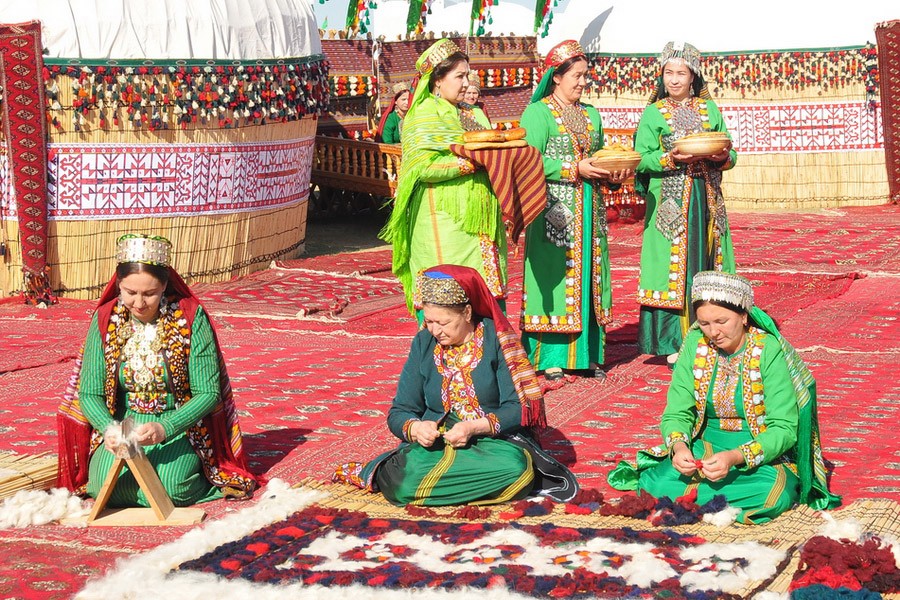
Turkmen sewing is not just a craft but a real art; its roots go deep into the past, to the Paleolithic era. In the Paleolithic era, people used fur and animal skins for sewing, needles made of bone, and threads made of tendons. Over the centuries, Turkmen's sewing has preserved its uniqueness. It is closely connected with national clothing and is an integral part of the people's cultural heritage. The national costume of Turkmenistan, especially women's, has always been and remains an integral part of everyday clothes for girls and women of all ages. The tradition has always been uninterrupted, and today, Turkmen women continue to wear outfits and jewelry similar to those worn by their ancestors in the 18th and 19th centuries. Women's everyday clothes consisted of dresses, robes, and scarves made of plain cotton fabrics. Festive outfits were made of bright silk fabrics with rich embroidery, and wedding dresses and robes combined exquisite embroidery with silver jewelry. The traditional costume of a Turkmen woman was a bright ensemble: a high headdress draped with silk or woolen shawl, a long red dress with a robe over it, shoes on the feet, a narrow strip of embroidered pants, and a lot of silver jewelry. [caption id="attachment_20018" align="alignnone" width="300"] @advantour.comTurkmen women in traditional clothes with a national carpet[/caption] The modern style of Turkmen clothing preserves the best national features, offering many variants of sleeve shapes and decorative trimming. Each dress is necessarily decorated with ornamental hand embroidery or artistic machine stitching. Even today, Turkmen women prefer traditional outfits, such as a long velvet dress decorated with modern embroidery and jewelry. Even the wealthiest European-style costume cannot compete with the beauty and traditionality of the Turkmen national dress. [caption id="attachment_20023" align="alignnone" width="300"] @iStockA group of dancers before the performance at the Kurban-Bairam Festival.[/caption] In addition, the ornaments used in Turkmen embroidery have a deep symbolic meaning, tying together passed-down knowledge and traditions. Each pattern's history is connected with nature, the cosmos, and mythology. Turkmen embroidery is famous for its skill and precision. It is done by hand, using thin needles and silk or cotton threads. Traditionally, Turkmen women begin sewing in childhood, mastering the embroidery technique from their mothers and grandmothers. Modern Turkmen sewing is actively developing, combining traditional techniques with contemporary trends. Masters use new materials and experiment with colors and ornaments, creating unique works and patterns. [caption id="attachment_20025" align="alignnone" width="200"] @tourstoturkmenistan.comTurkmen national carpets[/caption] Despite the development of technologies, Turkmen sewing remains a valuable type of hand labor passed from generation to generation. It is a bright symbol of Turkmenistan's national wealth and cultural heritage. In 2022, Turkmen embroidery was included in the Representative List of Intangible Cultural Heritage of Humanity.

EBRD Plans to Double Investments in Kazakhstan in 2024

Kazakhstan's Deputy Prime Minister, Nurlan Baibazarov, met with Hussein Ozkhan, the Acting Managing Director of the European Bank for Reconstruction and Development (EBRD) for Central Asia and Mongolia, it has been reported. The meeting discussed the status of current projects and EBRD's plans to finance new initiatives. Special attention was paid to attracting investments for Kazakhstan's sustainable socio-economic development. Ozkhan said the bank plans to double its investments in Kazakhstan's economy this year. In particular, the EBRD is developing a significant project with Kazakhstan's power grid management company, KEGOC, which aims to improve the reliability of electricity supply in the country’s western regions. The largest territorial project, the construction of new sewage treatment facilities in Aktobe, was signed earlier. Funds have also been allocated for constructing new production facilities for Araltuz JSC, a leading producer of table salt, and support for women's and youth entrepreneurship. In June 2024, ahead of schedule, the new passenger terminal of Almaty Airport opened, also financed by the EBRD. The bank also participated in the IPO of the national air carrier Air Astana. Baibazarov emphasized that Kazakhstan intends to expand cooperation with the EBRD at national and regional levels, supporting the bank's desire to invest in the private sector. "Our country is ready for mutually beneficial work with the EBRD to attract investment for the implementation of projects in energy, transport and logistics, the development of renewable energy and private business," the Deputy Prime Minister said. Since the beginning of cooperation with Kazakhstan, the EBRD has invested €10.2 billion in the country's economy through 324 projects. The bank's project portfolio in Kazakhstan currently includes 121 projects worth more than €2.9 billion.