• KGS/USD = 0.01144 0%
  • KZT/USD = 0.00215 0%
  • TJS/USD = 0.10691 0.09%
  • UZS/USD = 0.00008 0%
  • TMT/USD = 0.28530 0%
  • KGS/USD = 0.01144 0%
  • KZT/USD = 0.00215 0%
  • TJS/USD = 0.10691 0.09%
  • UZS/USD = 0.00008 0%
  • TMT/USD = 0.28530 0%
  • KGS/USD = 0.01144 0%
  • KZT/USD = 0.00215 0%
  • TJS/USD = 0.10691 0.09%
  • UZS/USD = 0.00008 0%
  • TMT/USD = 0.28530 0%
  • KGS/USD = 0.01144 0%
  • KZT/USD = 0.00215 0%
  • TJS/USD = 0.10691 0.09%
  • UZS/USD = 0.00008 0%
  • TMT/USD = 0.28530 0%
  • KGS/USD = 0.01144 0%
  • KZT/USD = 0.00215 0%
  • TJS/USD = 0.10691 0.09%
  • UZS/USD = 0.00008 0%
  • TMT/USD = 0.28530 0%
  • KGS/USD = 0.01144 0%
  • KZT/USD = 0.00215 0%
  • TJS/USD = 0.10691 0.09%
  • UZS/USD = 0.00008 0%
  • TMT/USD = 0.28530 0%
  • KGS/USD = 0.01144 0%
  • KZT/USD = 0.00215 0%
  • TJS/USD = 0.10691 0.09%
  • UZS/USD = 0.00008 0%
  • TMT/USD = 0.28530 0%
  • KGS/USD = 0.01144 0%
  • KZT/USD = 0.00215 0%
  • TJS/USD = 0.10691 0.09%
  • UZS/USD = 0.00008 0%
  • TMT/USD = 0.28530 0%

Viewing results 1015 - 1020 of 2525

Daewoo To Invest $730 Million in Turkmenistan

South Korean company Daewoo Engineering & Construction has won a tender to build a fertilizer plant in Turkmenistan. The project is estimated to cost a trillion won (about $730 million). According to the company, the new plant will be located in Turkmenabat, 450 km east of Ashgabat. It will have an annual capacity of 350,000 tons of phosphate fertilizer and 100,000 tons of ammonium sulfate, and will include additional auxiliary facilities. After the completion of the main contract, final data on the contract's value and implementation terms will be published. The company has stated that implementing the project will allow Daewoo E&C to strengthen its presence in Central Asia and expand its activities in the petrochemical and agricultural sectors, infrastructure, and urban projects. In the future, the company intends to offer environmentally friendly technological solutions to further cooperate with Turkmenistan. Daewoo E&C noted that winning the tender was possible thanks to the support of the South Korean government, including during the official visit of President Yun Seok Yeol to Turkmenistan in June. The company's Chairman, Jeong Won-ju, also met with the Chairman of the People's Council of Turkmenistan, Gurbanguly Berdimuhamedov, in November 2022 during his visit to South Korea. The two sides signed a memorandum of understanding, cementing an agreement on close cooperation. Jeong Won-ju has visited Turkmenistan three times since then, which helped strengthen ties and successfully conclude negotiations. Daewoo E&C is aiming to become a leader in the global EPC (engineering, procurement, and construction) market. “We strive to participate in projects that contribute to a sustainable future,” a company representative stated. Turkmenistan is implementing several major projects with the participation of South Korean companies. Hyundai Engineering has agreed with state-owned Turkmengas to expand the Galkynysh gas field. This project includes the construction of a fourth gas desulfurization facility, making it the largest in the country's history. Korean companies have also been actively constructing and developing an oil refinery in Kiyanly. Projects to create “smart cities” are also being discussed.
EDB Releases Finance for Kazakhstan’s Digital Investment Platform

Following an agreement signed by the EDB and  the Investment Committee of Kazakhstan’s Ministry of Foreign Affairs and National Information Technology JSC, in July, the Eurasian Development Bank’s Fund for Digital Initiatives has allocated the first tranche for a project to establish a National Digital Investment Platform in Kazakhstan. The platform aims to provide comprehensive support to investors and investment projects by streamlining interactions between government authorities and the quasi-government sector to promote investments in Kazakhstan’s economy, and will coordinate and optimize the selection and registration of investment projects, the conclusion of investment agreements, and their monitoring. In addition, the project is expected to serve as a digital transformation model for attracting and supporting investment which can be  implemented in other EDB member states: Armenia, Belarus, Kyrgyzstan, Russia, and Tajikistan. The platform which already has 755 registered investment projects, will  become fully operational by 31 July 2025. Back in March, The Times of Central Asia reported Kazakhstan’s Prime Minister Olzhas Bektenov's announcement that to achieve the target of increasing the Kazakh economy to $450 billion by 2029, at least $150 billion of foreign investment was required during the interim period.

Kazakhstan and Afghanistan Seek to Increase Trade to $3 Billion

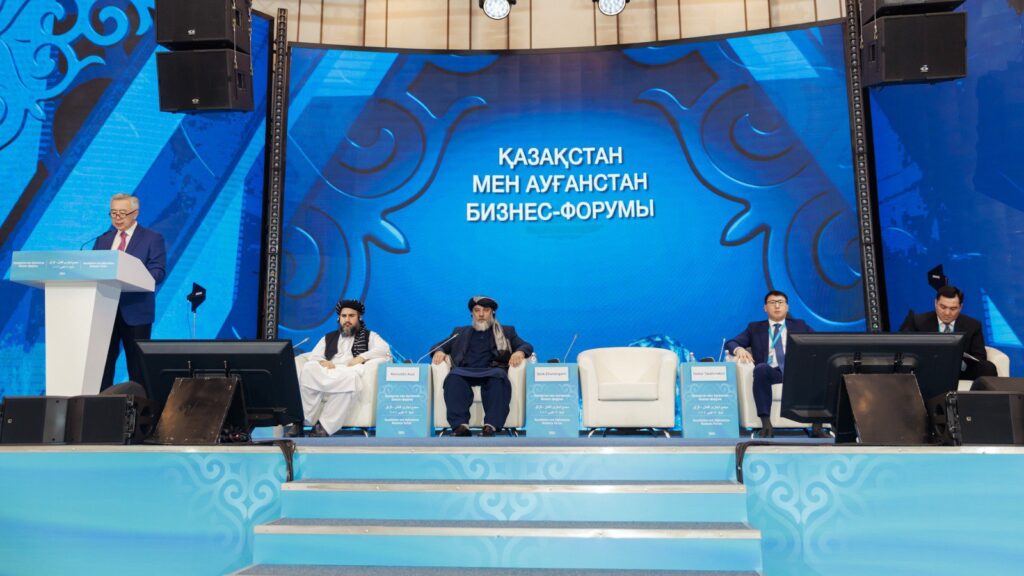
On October 22, Kazakhstan’s Deputy Prime Minister Serik Zhumangarin and Afghanistan’s Minister of Industry and Commerce, Nuriddin Azizi, signed a roadmap to increase Kazakh-Afghan trade turnover to $3 billion at a business forum in Almaty. This follows Kazakhstan’s removal of the Taliban from its list of terrorist organizations in June as part of an effort to develop trade and economic ties with Afghanistan. The roadmap includes Kazakhstan’s participation in constructing two railway lines in Afghanistan: Turgundi—Herat—Kandahar—Spin Boldak and Mazar-i-Sharif—Harlachi. It also aims to expand the range of goods in bilateral trade, develop cooperation in the chemical industry, and increase the export of Kazakh ammophos materials to Afghanistan. Additionally, the roadmap includes plans to export both new and used cars manufactured in Kazakhstan, set up service centers in Afghanistan, and build schools in the region. According to Kazakh officials, there is significant potential to increase grain and flour exports to Afghanistan while importing Afghan fruits, vegetables, dried fruits, and other food products. Kazakhstan is also interested in supporting Afghanistan’s economic development and integration into international transport corridors. In the first half of 2024, the volume of road transit from Afghanistan through Kazakhstan increased by 8%, exceeding 5,000 tons, compared to 10,000 tons last year. Deputy Prime Minister Zhumangarin noted at the forum that a railway corridor connects Kazakhstan and Afghanistan through Turkmenistan and Uzbekistan. Kazakhstan is also interested in using the Trans-Afghan corridor, which runs through the Karachi and Gwadar seaports in Pakistan, to facilitate the transit of Kazakh export cargo to markets in the Middle East and Southeast Asia. The Afghan delegation was offered access to the dry port of Khorgos on the Kazakh-Chinese border to ensure the smooth transit of Afghan goods to China via Kazakhstan. The business forum in Almaty coincided with Kazakh-Afghan negotiations on the logistics of transporting goods from China to Afghanistan and back through Kazakhstan. The event also featured an exhibition of Afghan food and industrial products.

Kazakhstan and Uzbekistan Prioritize Cooperation Between Regions

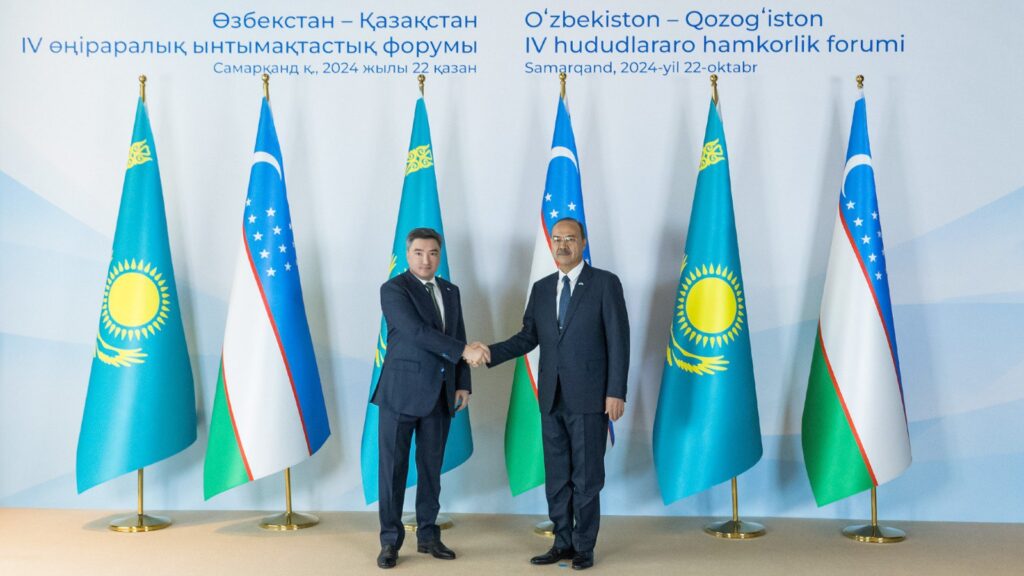
On October 22, the 4th Interregional Forum, “Uzbekistan-Kazakhstan,” was held in Samarkand, Uzbekistan. The forum addressed issues such as increasing bilateral trade turnover, developing industrial cooperation, and enhancing collaboration in the water, energy, transit, and transport sectors. Speaking at the forum, Uzbekistan’s Prime Minister, Abdulla Aripov, emphasized that developing cooperation between the regions of Uzbekistan and Kazakhstan is a priority in relations between the two countries. Aripov stated that “Over the past seven years, trade turnover between Uzbekistan and Kazakhstan has grown almost 2.5-fold, reaching $4.4 billion last year. Today, more than 1,000 enterprises with Kazakh capital operate in Uzbekistan. Border regions have established direct and close ties with each other — the Republic of Karakalpakstan [in Uzbekistan] with the Mangistau region [in Kazakhstan], the Tashkent region with the Turkestan region, and the Navoi region with the Kyzylorda region. At the same time, this great potential has yet to be realized.” Kazakhstan’s Prime Minister, Olzhas Bektenov, meanwhile, announced at the forum that Kazakhstan is ready to increase exports to Uzbekistan by over $550 million, offering 40 types of high-value-added Kazakh products. Uzbekistan is Kazakhstan’s main trading partner in Central Asia. From January-August 2024, bilateral trade amounted to $2.5 billion, with more than 50% of Uzbekistan’s trade passing through Kazakhstan in transit. The forum paid special attention to the development of industrial cooperation, including 74 joint projects with a total investment volume of $3.4 billion and the creation of 14,600 jobs. Of these, 65 enterprises will be established in Kazakhstan, creating 13,600 new jobs. Examples of Kazakh-Uzbek industrial cooperation include the manufacture of Chevrolet Onix cars in Kostanay (Kazakhstan), a plant for the production of household appliances in Saran (Kazakhstan), sewing, spinning, and weaving factories in the Shymkent and Turkestan regions (Kazakhstan), and the production of autoclaved aerated concrete in Angren (Uzbekistan). Kazakhstan and Uzbekistan are also working on establishing the International Center for Industrial Cooperation “Central Asia,” which will offer “one-stop shop” for services and tax and customs for entrepreneurs from both countries.

Turkmenistan and Iraq Sign Gas Deal for Seasonal Supply via Iran

On October 19, representatives from Turkmenistan and Iraq signed a significant gas agreement in Baghdad. Under the deal, Iraq will import up to 20 million cubic meters of gas daily, with deliveries routed through Iran via a swap arrangement. The Iraqi government has expressed its intention to begin implementing the contract soon. The contract shows that Turkmenistan delivers 10 million cubic meters of fuel to Iraq in winter and 20 million cubic meters in summer. Iraqi Electricity Minister Ali Fadel noted that the contract compensates for the same amount of gas in the event of supply problems. Iraq faces severe energy shortages and unstable supplies from Iran. Problems include its debt and difficulties making payments to Iran, which is under US sanctions. Supply from Turkmenistan is expected to moderate this dynamic. In parallel, Iraq plans to sign contracts with other suppliers and invest in its gas projects. Turkmenistan is also China's gas supplier and was the largest supplier to China in the first half of 2024, exporting gas worth $5.67 billion. During a recent visit to Iran, Gurbanguly Berdimuhamedov, the former president of Turkmenistan and current chairman of the People’s Council (Halk Maslahaty), announced plans to increase gas supplies to Iran to 40 billion cubic meters annually, further solidifying Turkmenistan’s role as a major energy provider in the region.

Kazakhstan’s Strategic Stand: Navigating BRICS Amidst Geopolitical Tensions

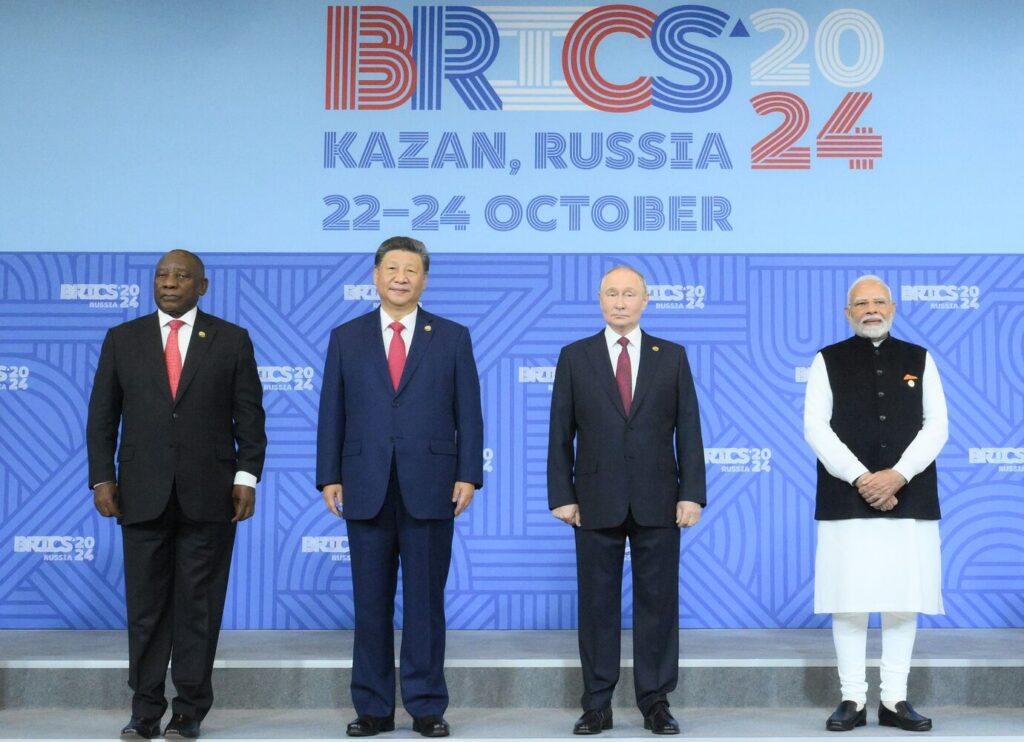
In recent days, BRICS - an intergovernmental organization comprising Brazil, Russia, India, China, South Africa, Iran, Egypt, Ethiopia, and the UAE - has become one of the most critical topics on the Eurasian region's information agenda. Russian propaganda has presented the BRICS summit, which is taking place in Kazan, as a global event. However, the press secretary of Kazakhstan's president, Kassym-Jomart Tokayev, has stated that the republic has no plans to apply for BRICS membership in the foreseeable future, which has caused an adverse reaction in the Russian media, and led to a seemingly retaliatory Russian ban on Kazakhstan's agro-products. The Kazakhstani side, represented by the expert community, has tried to explain that its reasoning is based not only on Astana's national interest, but also on its obligations to its partners in Central Asia. Perhaps the most convincing argument is that the C5+1 mechanism is effective as a format for the region's interactions with the outside world. Therefore, it is not worth breaking this mechanism. No Central Asian country besides Kazakhstan has been invited to join BRICS, but Astana cannot afford to damage the established alliance by creating the conditions for distrust from its neighbors; Central Asia has already gone through a period of distrust. At the same time, rejecting the idea of joining BRICS, where India, Russia, Brazil and China are the founding members, does not unduly affect Kazakhstan's interactions with these powers. Kazakhstan works with China and Russia within the framework of the SCO (Shanghai Cooperation Organisation) and EAEU (Eurasian Economic Union), and has signed multiple partnership and alliance agreements with Beijing and Moscow. In other words, the information hysteria that Kazakhstan will exit Russia's sphere tomorrow and join the "Global West" (a term used in the Russian media) has no basis in reality. At the same time, however, it is evident that most Central Asian countries are trying to distance themselves from Russia as much as possible, maintaining cooperation only along certain economic lines. Even banks in Kyrgyzstan, a republic maximally dependent on Moscow on several essential issues, have stopped working with Russian banks. The Kazakhstan Stock Exchange, meanwhile, recently announced the end of cooperation with the sanctioned Moscow Stock Exchange. Moreover, Rosselkhoznadzor's ban on imports of a wide range of agro-industrial products from Kazakhstan, if not a response to the refusal to join the BRICS, clearly hints that behind the scenes, economic relations between Astana and Moscow are not all that smooth. Another argument against joining BRICS was voiced not just within Kazakhstan, but also by Russian experts. Despite the organization's purportedly representative nature, which includes countries with a combined population of 3.5 billion people (45% of the Earth's population), the association has no structure. Russian analysts opposed to the Kremlin believe that BRICS is a club where one can come, sabre-rattle at the West, conclude bilateral agreements, and forget about everything until the next summit. No coordinating center monitors the implementation of any agreements reached. BRICS was conceived as an intercontinental organization, uniting similar economies in volume and GDP. Thus, it initially included Brazil, representing...