• KGS/USD = 0.01144 0%
  • KZT/USD = 0.00212 0%
  • TJS/USD = 0.10432 -0.29%
  • UZS/USD = 0.00008 0%
  • TMT/USD = 0.28490 0%
  • KGS/USD = 0.01144 0%
  • KZT/USD = 0.00212 0%
  • TJS/USD = 0.10432 -0.29%
  • UZS/USD = 0.00008 0%
  • TMT/USD = 0.28490 0%
  • KGS/USD = 0.01144 0%
  • KZT/USD = 0.00212 0%
  • TJS/USD = 0.10432 -0.29%
  • UZS/USD = 0.00008 0%
  • TMT/USD = 0.28490 0%
  • KGS/USD = 0.01144 0%
  • KZT/USD = 0.00212 0%
  • TJS/USD = 0.10432 -0.29%
  • UZS/USD = 0.00008 0%
  • TMT/USD = 0.28490 0%
  • KGS/USD = 0.01144 0%
  • KZT/USD = 0.00212 0%
  • TJS/USD = 0.10432 -0.29%
  • UZS/USD = 0.00008 0%
  • TMT/USD = 0.28490 0%
  • KGS/USD = 0.01144 0%
  • KZT/USD = 0.00212 0%
  • TJS/USD = 0.10432 -0.29%
  • UZS/USD = 0.00008 0%
  • TMT/USD = 0.28490 0%
  • KGS/USD = 0.01144 0%
  • KZT/USD = 0.00212 0%
  • TJS/USD = 0.10432 -0.29%
  • UZS/USD = 0.00008 0%
  • TMT/USD = 0.28490 0%
  • KGS/USD = 0.01144 0%
  • KZT/USD = 0.00212 0%
  • TJS/USD = 0.10432 -0.29%
  • UZS/USD = 0.00008 0%
  • TMT/USD = 0.28490 0%

Viewing results 601 - 606 of 1904

Kazakhstan Introduces Tax Incentives to Encourage Business Lending

Kazakhstan's draft Tax Code, set to take effect in 2026, proposes a differentiated corporate income tax (CIT) rate for banks, aiming to encourage business lending by making it more financially attractive than consumer lending or government securities investments. The proposed changes were announced by Akylzhan Baimagambetov, Deputy Chairman of the National Bank of Kazakhstan, during a recent briefing. He explained that Kazakhstani banks currently derive income from three main sources: Government securities, whose earnings are currently tax-exempt. Consumer lending, taxed at 20% CIT. Business lending is also taxed at 20% CIT. As banks tend to prioritize consumer lending over business loans, monetary authorities are now restructuring tax incentives to alter this trend. “The proposed approach is as follows: investments in government securities will now be subject to corporate income tax while lending to businesses will be taxed at a lower rate - 20% CIT. Meanwhile, all other income, including government securities and consumer lending, will be taxed at 25% CIT,” said Baimagambetov. Possible VAT Increase to 20% Another major tax reform under discussion is an increase in value-added tax (VAT) from the current 12% to as high as 20%. “We have not yet finalized the VAT rate, but the proposed range is 16% to 20%. Our calculations show that a higher VAT rate would increase the average burden on businesses by just 4%, but the end consumer will certainly feel the price hike. Inflation may rise by up to 4.5%, and we need to mitigate this impact,” said Deputy Prime Minister Serik Zhumangarin. To counterbalance the inflationary effect, the government plans to expand targeted social assistance, adjust salaries in state institutions, and increase pensions. In addition, if VAT is raised to 20%, the government intends to reduce payroll taxes by 10% by eliminating the social tax and mandatory employer pension contributions. “If we are not permitted to reduce these expenses, we will not increase VAT significantly - it’s a matter of checks and balances. We plan to submit our VAT proposal to parliament in the second half of February,” Zhumangarin added. Lower VAT Registration Threshold and Expected Revenue Boost Another key tax reform under discussion is a reduction in the VAT registration threshold from 78.6 million tenge to 15 million tenge. The government expects this change to increase tax revenues by 5-7 trillion tenge. In 2024, Kazakhstan’s national budget collected 12.3 trillion tenge in taxes. As The Times of Central Asia previously reported, the new Tax Code will also introduce a luxury tax on high-value goods such as yachts and cigars.

Tokayev Outlines Economic Reforms and Calls for Revised Energy Contracts

On January 28, Kazakhstan's capital Astana hosted an expanded government meeting led by President Kassym-Jomart Tokayev. The event focused on the country's socio-economic development in 2024, but this year’s discussion carried broader implications, addressing both domestic and international concerns. Addressing Budget Constraints From the outset, Tokayev made it clear that a key issue for his government is the state budget’s financial shortfall. Analyst Gaziz Abishev noted on his Telegram channel that the problem is not just a lack of funds but a long-standing habit - dating back to 2003 - of addressing challenges by simply increasing spending. “There is no longer an oil windfall to revitalize the dry economy as there was 20 years ago,” Abishev wrote. Adding to the uncertainty, Kazakhstan’s oil revenues face potential disruption from Donald Trump’s stated intention to drive down global hydrocarbon prices. Tokayev outlined a range of measures to fill budget gaps, urging his government to take bold, unconventional steps. He called on officials to act in the country’s best interests without fear of pressure from the Anti-Corruption Service or public opinion. He also stressed the importance of depoliticizing economic partnerships, particularly with Russia and China, cautioning against allowing Russophobic or Sinophobic rhetoric to interfere with business deals. “Money must be attracted from abroad, and this is more important than ever. Without investment, we cannot sustain ourselves. Money doesn’t smell, but it disappears. We need to attract investment from all sides - within the law - without falling into populism. The future of the national economy, and to some extent the country as a whole, is at stake,” Abishev commented. Public Reaction to Tax Reforms Although tax reform was only the sixth of eight key points in Tokayev’s speech, it quickly became the most widely discussed issue among the public. Kazakhstan’s value-added tax (VAT) is currently 12%, with a sufficiency threshold of 78 million tenge ($150,937). The government is considering raising the VAT rate to 20% and lowering the sufficiency threshold to 15 million tenge ($29,026). If implemented, nearly all small businesses would become VAT payers, while the increased tax rate is expected to drive inflation. The government maintains that inflation will not exceed 4.5%, but Tokayev’s mention of “belt-tightening” has already led many to expect rising retail prices. To offset the burden on businesses, the government proposes eliminating mandatory employer pension contributions and reducing the social tax. However, Tokayev himself expressed reservations about cutting the social tax, emphasizing that regional governors (akims) need financial incentives. “Think again. I believe it would be wrong to deprive akims of incentives, especially financial ones. After all, the regions are the country. Find a solution. We will meet again to discuss these issues,” he told the government. The tax reforms will also be debated in Parliament, where the lower house is currently reviewing the draft of the new Tax Code. The government will have to negotiate with members of the Majilis and Senate over the VAT rate, sufficiency threshold, and other sensitive issues. Messages to Foreign Partners...

Central Asian Countries and World Bank Discuss Progress on Kambarata-1 Hydropower Project

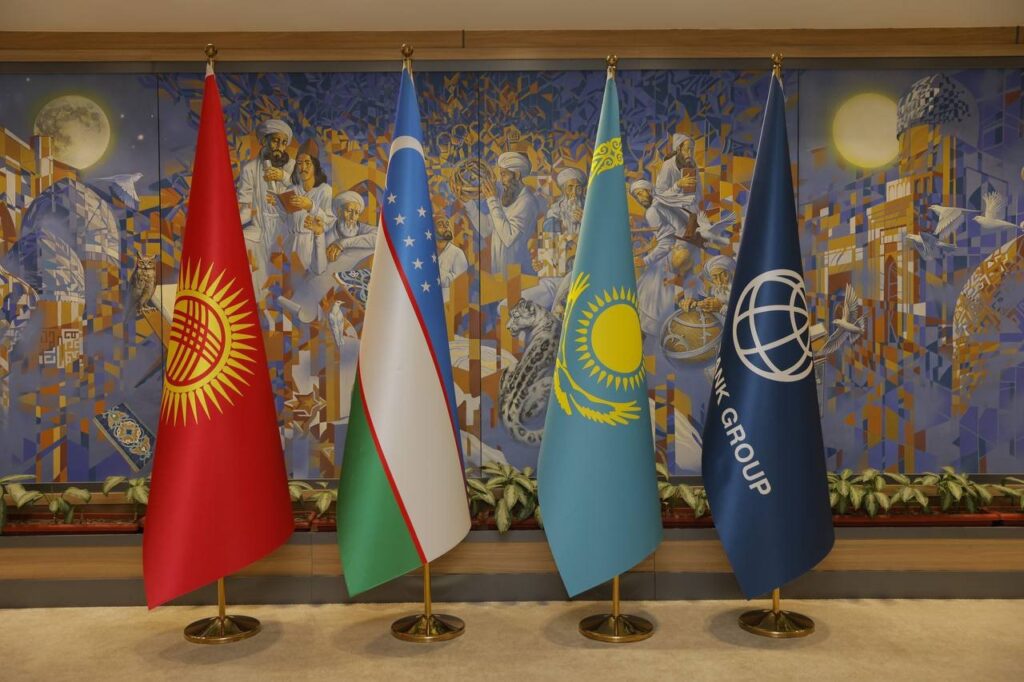
On January 27, Tashkent hosted a roundtable discussion on advancing the construction of the Kambarata-1 Hydropower Plant (HPP), an ambitious regional initiative being jointly undertaken by Kyrgyzstan, Kazakhstan, and Uzbekistan. The project aims to enhance regional cooperation in Central Asia regarding water and energy resource management. The meeting was attended by Kyrgyzstan’s Minister of Energy Taalaibek Ibrayev, Uzbekistan’s Minister of Energy Jurabek Mirzamakhmudov, Kazakhstan’s Deputy Minister of Energy Sungat Yesimkhanov, and the World Bank Regional Director for Central Asia Tatiana Proskuryakova. The Kambarata-1 HPP, with a projected capacity of 1,860 megawatts and an average annual electricity generation of 5.6 billion kilowatt-hours, will be constructed at an estimated cost exceeding $4 billion. It is planned to be located in the upper reaches of the Naryn River in Kyrgyzstan. Upon completion, it will become the largest hydropower plant in Kyrgyzstan and is expected to address the country's chronic electricity shortages. At the meeting, ministers from the three participating countries requested the World Bank’s assistance in preparing and financing the Kambarata-1 HPP construction. Kyrgyzstan's Ibrayev described the project as "the project of the century" for Kyrgyzstan, emphasizing its potential to strengthen regional cooperation and foster long-term development across Central Asia. “Today's roundtable in Tashkent continues a series of meetings that took place in Vienna, Brussels, and Washington in 2024. These events help coordinate and accelerate the project’s implementation, as well as attract the necessary international support,” Ibrayev stated. From Kazakhstan’s side, Yesimkhanov highlighted the meeting as another step forward in strengthening regional cooperation in the water and energy sectors. He expressed confidence that the project would bolster good relations among Central Asian nations. Uzbek representative Mirzamakhmudov reiterated his country’s commitment to the project, underscoring its strategic importance for the region. "The project will bring significant benefits to all Central Asian countries by strengthening regional energy security, accelerating the transition to a green economy, and improving the use of water resources," he said. Currently, Kyrgyzstan, with the World Bank’s technical support, is revising the project’s feasibility study. This includes assessing the technical, economic, financial, environmental, and social dimensions of the Kambarata-1 HPP. World Bank Regional Director Proskuryakova reaffirmed the institution’s readiness to support the three governments in their efforts to ensure a stable energy future for the region. “We will continue to provide technical assistance in the implementation of the Kambarata-1 HPP construction project. Together with other international development partners, we are working to attract the financing necessary to implement the project,” she said. Ibrayev has previously stated that all preparatory stages of the project are scheduled for completion by May 2025. In September 2024, Kyrgyzstan’s Cabinet of Ministers and the World Bank organized a roundtable to discuss dam selection for the Kambarata-1 HPP. The Swiss engineering firm AFRY proposed several options, and Kyrgyzstan’s Ministry of Energy has confirmed that the feasibility study will be finalized based on the chosen dam design by May 2025.

Kazakhstan Restricts Poultry Imports from U.S. and Germany Due to Avian Flu

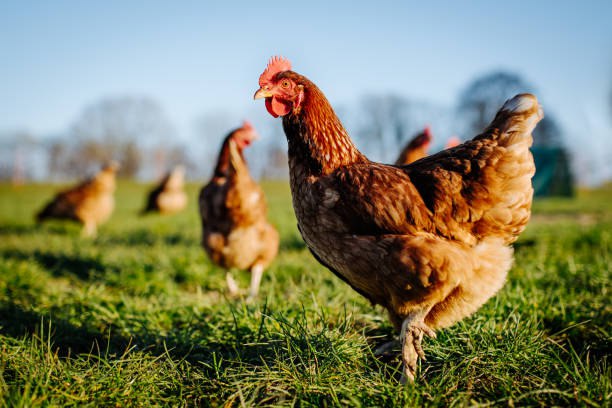
Kazakhstan has temporarily suspended the import of poultry products from Delaware and South Carolina in the United States, as well as from the German state of Baden-Württemberg, due to outbreaks of avian flu in these regions. The decision was announced by Kazakhstan's authorities and is based on data from the World Organization for Animal Health. The ban covers a broad range of items, including live poultry, hatching eggs, down and feathers, poultry meat, and any poultry products that have not been heat-treated at a minimum temperature of 70°C. Additionally, the restrictions apply to feed and feed additives (excluding those derived from plants or produced through chemical or microbiological synthesis), hunting trophies from game birds that have not undergone taxidermy treatment, and used equipment for poultry farming, slaughter, and processing. The measures concerning Baden-Württemberg took effect on January 20. These steps follow earlier restrictions imposed on January 14, when Kazakhstan banned livestock imports from Germany due to an outbreak of foot-and-mouth disease in the Brandenburg region. Kazakhstan’s veterinary authorities continue to monitor the global epizootic situation closely in order to respond swiftly to any threats posed by the spread of dangerous animal diseases.

Kazakhstan Ships First Batch of Kashagan Oil to Baku

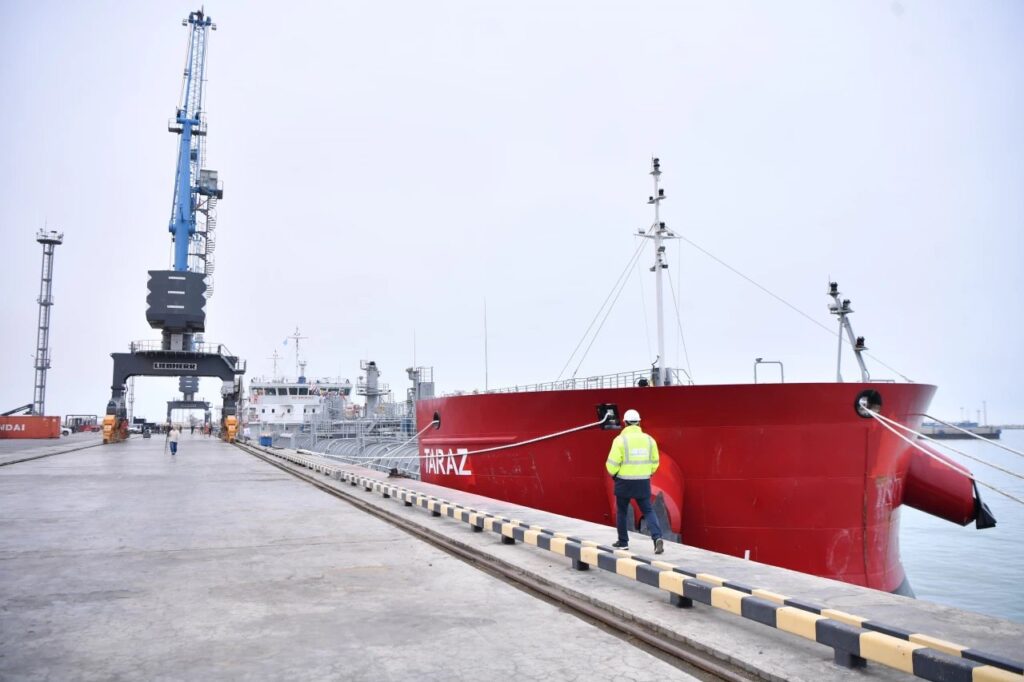
Kazakhstan has shipped its first batch of oil from the Kashagan field to the Azerbaijani port of Baku, marking a significant step in the country’s efforts to diversify its export routes. The shipment was confirmed by the national oil company KazMunayGas (KMG). The tanker Taraz, carrying Kashagan oil, departed from the port of Aktau and is en route to Azerbaijan. Upon arrival in Baku, the oil will be transported via the Baku-Tbilisi-Ceyhan (BTC) pipeline system to the Mediterranean Sea. The export operation is being carried out by KMG Kashagan B.V., a subsidiary of JSC NC KazMunayGas, which manages Kazakhstan’s share in the North Caspian Production Sharing Agreement (PSA). This initiative aligns with Kazakh President Kassym-Jomart Tokayev’s directive for KazMunayGas to develop alternative hydrocarbon export routes. The shipment also advances the development of the Trans-Caspian International Transportation Route, a vital corridor for Kazakhstan’s oil exports. In 2022, KazMunayGas and Azerbaijan’s state oil company SOCAR signed a general agreement to enable the transit of Kazakh oil. In March 2024, the two parties finalized plans for a phased increase in deliveries through Azerbaijan. Under the agreement, annual transit volumes are expected to reach 2.2 million tons. KMG Kashagan B.V., which holds a 16.88% stake in the North Caspian PSA, represents Kazakhstan’s interests in the North Caspian Project (NCP). The company is responsible for the exploration and production of hydrocarbons in the Caspian Sea, as well as the independent transportation and sale of its production share under the PSA’s terms. Energy analysts highlight that diversifying export routes will help Kazakhstan reduce its reliance on traditional oil supply corridors, thereby increasing flexibility and resilience in the face of global market volatility.

Potato Hunt: Astana Restricts Potato Sales Amid Price Surge

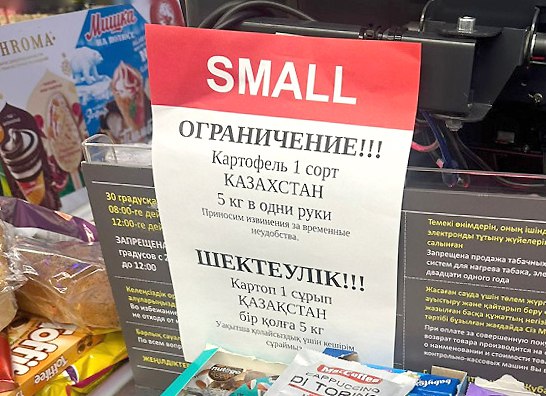
Supermarkets in Astana, including the Small and EuroSpar chains, have introduced a restriction on the sale of potatoes, limiting purchases to no more than 5 kilograms per customer. The Astana Akimat's Department of Investment and Entrepreneurship Development announced that the measure aims to prevent speculation. However, officials have not provided a timeline for when the restrictions might be lifted. A Sharp Spike in Prices The price of potatoes has surged sharply in Kazakhstan. According to the Bureau of National Statistics, this spike occurred within a single week, from January 14 to 21. The annualized price increase averaged 57.8% across the country, with some regions experiencing even steeper hikes. In Astana, the price of potatoes doubled - rising by 100% - with a kilogram costing between 400 and 500 KZT ($0.96). The Ministry of Agriculture (MOA) attributes the price surge to speculation by unscrupulous middlemen. Deputy Minister Yerbol Taszhurekov clarified that the situation cannot be classified as “price collusion” but acknowledged significant price disparities between agricultural producers and retail outlets. “This is the result of speculative activity. After the New Year, many vegetable storages and warehouses remained closed, leading to a reduced supply in the market. Resellers and speculators exploited this temporary shortage to raise prices,” Taszhurekov explained. Tackling the Reseller Problem In response, local governments (akimats) began releasing potatoes from government stabilization funds at significantly reduced prices—between 115 and 130 KZT ($0.25) per kilogram. These measures were implemented to counter speculative practices and stabilize prices until the new harvest. The MOA reported that Kazakhstan currently has more than 62,000 tons of potatoes in reserve, excluding stocks in trade networks. These supplies are deemed sufficient to meet domestic demand until the next harvest. In Astana, this intervention helped bring down prices in retail chains like Small and EuroSpar to 280 KZT ($0.54) per kilogram. However, a new issue arose: small retailers began purchasing potatoes in bulk from these supermarkets to resell them at higher prices. To address this, supermarkets imposed a restriction on potato sales, limiting purchases to 5 kilograms per customer. “All necessary measures have been taken to ensure stable potato prices in Astana. There is no shortage in the city, and products are sufficiently stocked on retail shelves and in markets. Supplies are being replenished in a timely manner. However, to prevent bulk purchases by resellers for resale in small neighborhood stores, supermarkets in the Small and EuroSpar chains have implemented temporary purchase limits,” stated the Department of Investment and Entrepreneurship Development of Astana. Collaboration Between Retail Chains and Farmers The Ministry of Trade and Integration (MTI) also took steps to address the situation. Following discussions with representatives from major supermarket chains such as Magnum, Small, Anvar, and Dina, an agreement was reached for these retailers to directly purchase 1,500 tons of potatoes from farmers. The supermarkets will independently manage the transportation of these goods to ensure steady supply. “Akimats in the regions must present their specific needs, including the required volumes, so that retail chains can promptly meet...