• KGS/USD = 0.01144 0%
  • KZT/USD = 0.00208 0%
  • TJS/USD = 0.10482 0.48%
  • UZS/USD = 0.00008 0%
  • TMT/USD = 0.28490 0%
  • KGS/USD = 0.01144 0%
  • KZT/USD = 0.00208 0%
  • TJS/USD = 0.10482 0.48%
  • UZS/USD = 0.00008 0%
  • TMT/USD = 0.28490 0%
  • KGS/USD = 0.01144 0%
  • KZT/USD = 0.00208 0%
  • TJS/USD = 0.10482 0.48%
  • UZS/USD = 0.00008 0%
  • TMT/USD = 0.28490 0%
  • KGS/USD = 0.01144 0%
  • KZT/USD = 0.00208 0%
  • TJS/USD = 0.10482 0.48%
  • UZS/USD = 0.00008 0%
  • TMT/USD = 0.28490 0%
  • KGS/USD = 0.01144 0%
  • KZT/USD = 0.00208 0%
  • TJS/USD = 0.10482 0.48%
  • UZS/USD = 0.00008 0%
  • TMT/USD = 0.28490 0%
  • KGS/USD = 0.01144 0%
  • KZT/USD = 0.00208 0%
  • TJS/USD = 0.10482 0.48%
  • UZS/USD = 0.00008 0%
  • TMT/USD = 0.28490 0%
  • KGS/USD = 0.01144 0%
  • KZT/USD = 0.00208 0%
  • TJS/USD = 0.10482 0.48%
  • UZS/USD = 0.00008 0%
  • TMT/USD = 0.28490 0%
  • KGS/USD = 0.01144 0%
  • KZT/USD = 0.00208 0%
  • TJS/USD = 0.10482 0.48%
  • UZS/USD = 0.00008 0%
  • TMT/USD = 0.28490 0%

Viewing results 187 - 192 of 384

New Neural Network for Kazakh Study of Snow Leopards

Kazakhstan has launched an innovative project to study and protect snow leopards supported by a new neural navigation network, Yandex Qazaqstan. The network, developed with Kazakh-British Technical University students, scientists from the Institute of Zoology of the Republic of Kazakhstan, and the Snow Leopard Foundation, will significantly accelerate and simplify data analysis from camera traps and other sources, enabling a more effective means of tracking these rare animals' behavior and migration routes. The snow leopard, a symbol of Kazakhstan's mountain ecosystems, is found in regions such as Altai, Zhetysu Alatau, Saur, and Tien Shan. Although  Kazakhstan's leopard population has doubled over the past 30 years, to between 141-183, their existence remains under threat from human activities and climate change, making conservation projects essential. Yandex Qazaqstan will help optimize the monitoring of snow leopards by automatically analyzing images from camera traps and quickly identifying the presence of the animals. As a result, scientists will be able to more accurately and quickly track changes in these rare predators' populations and migration routes. This collaboration between scientists, students, and IT specialists demonstrates Kazakhstan's commitment to protecting its nature and sustainable development and moreover, provide a template for the application of similar technologies in other conservation projects.

Countries of Central Asia Team up as Threat of Natural Disasters Grows

Central Asia is vulnerable to a panoply of natural hazards: Floods, landslides, droughts, sandstorms, avalanches and earthquakes. Countries in the region increasingly seek to collaborate on early warning systems and other emergency precautions, especially since disasters can spill across borders and because the effects of climate change are intensifying. To that end, the heads of the national emergency departments of Kyrgyzstan, Kazakhstan, Tajikistan and Uzbekistan met last week in Cholpon-Ata, a lakeside resort town in northern Kyrgyzstan whose attractions include ancient petroglyphs showing deer, leopards and hunting scenes. Turkmenistan´s flag – green expanse, red stripe with designs and white crescent and stars - was on display in the conference hall, though official announcements did not mention the presence of any delegation from the reclusive Turkmen government. The goal was to share information and experience, and deepen cooperation among the emergency agencies of those Central Asian countries, said Maj. Gen. Boobek Azhikeev, Kyrgyzstan’s minister of emergency situations. The five nations, which have a total of approximately 75 million people and encompass four million square kilometers, face growing risks from natural disasters, and the region has been warming faster than the global average according to a report released in May by the U.N. agency for the coordination of disaster risk reduction and the U.N. Development Programme. The two U.N. bodies, which helped to support the Central Asia meeting on the shores of Kyrgyzstan’s Lake Issyk-Kul on Aug. 15, also mentioned human-made hazards, such as industrial accidents, chemical waste facilities in densely populated areas, and severe air pollution in major cities in all the countries. “Many disaster risk management systems are still reactive, not proactive. Early warning processes are often fragmented, and poorly integrated into countries' development strategies and policies for risk-informed decision-making,” the U.N. agencies said. “There is a lack of anticipation of new and emerging risks, insufficient monitoring and forecasting, and limited financial and technological support. Early warning communication and dissemination are often unclear, especially for the most vulnerable.” The private sector and media can also get more involved in ways of reducing the risk from disasters, they said. The U.N. agencies also noted progress, saying Tajikistan had taken the lead in Central Asia in rolling out an early warning system focused on monitoring, forecasting, communication and other measures. Earlier this month TCA reported that the head of Tajikistan’s committee for emergency situations and civil defense, Rustam Nazarzada, stated that the economic damage caused by natural disasters in the country has amounted to over $12 million in this year alone. Additionally, Uzbekistan is updating an early warning system in the populous, economically important Ferghana valley that will promptly disseminate weather forecasts. Central Asian countries have sought to coordinate on environmental issues in the past, sometimes with mixed results. But the sense of urgency is growing. Earlier this year, Kyrgyzstan was among countries that sent aid to Kazakhstan after floods there that the Kazakh president described as the worst natural disaster in 80 years. Kazakhstan, in turn, sent tons of humanitarian aid to Kyrgyzstan after...

Kazakhstan and China in Talks on Feeding Lake Balkhash

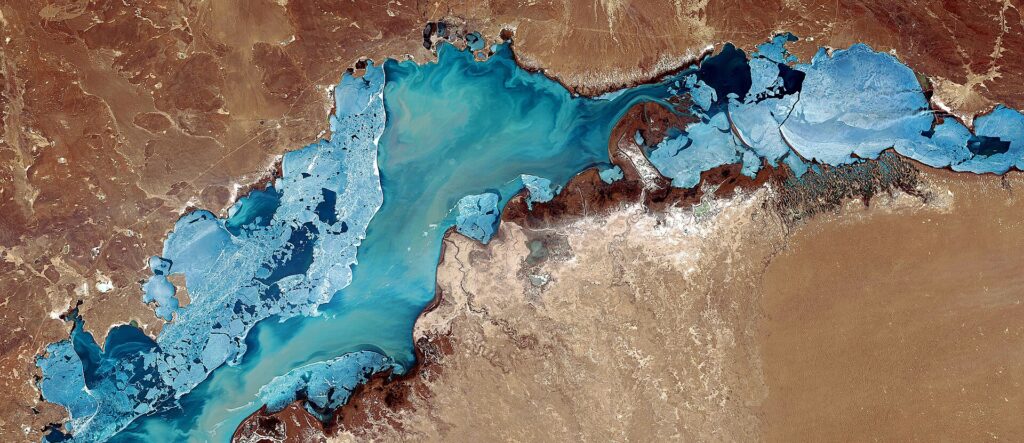
The Kazakh Ministry of Water Resources and Irrigation announced on August 19 that Kazakhstan and China are drafting an agreement on dividing trans-boundary river waters between the two countries. The main objective of the agreement is to ensure that the water in Kazakhstan’s Lake Balkhash remains at an optimal level. Located 280km northwest of the country’s largest city, Almaty, Lake Balkhash is the fifteenth largest lake in the world. It is fed by several trans-boundary rivers flowing from China, the largest of which is the Ili River, which provides about 80% of the lake's water. [caption id="attachment_21931" align="aligncenter" width="1056"] Image: Wikimapia[/caption] Environmentalists in Kazakhstan have been concerned about Lake Balkhash's shallowing. Balkhash has been gradually drying up in recent years, including due to the decline in water volumes in the Ili River. Upstream China has extensively diverted the river over the past half century to produce hydroelectric power and agricultural crops on irrigated land. According to research, as of 2021 China was blocking 40% of the river’s inflow. Moldir Abdualieva, a spokesperson of the Kazakh Ministry of Water Resources and Irrigation, said that the ministry has been paying great attention to providing Lake Balkhash with the necessary volume of water. “Since the beginning of this year, more than 12 billion cubic meters of water have been sent to the lake," she said. In May, it was reported that the water level in Balkhash had risen by 23cm since the beginning of the year due to increased rainfall and floods caused by snow melt this past spring.

Greek Reports: Captain of Boat Carrying Kazakhs Says Hydra Fire Was His Fault

The captain of a luxury boat that was carrying Kazakh tourists when it was linked to a forest fire on the Greek tourist island of Hydra in June has taken responsibility for the blaze, according to Greek media. While some circumstances surrounding the fire remain unclear, the statement by the captain undercuts suspicion that initially fell on the group of tourists including Daniyar Abulgazin, who has shares in multiple Kazakh companies and is one of Kazakhstan’s wealthiest business executives. Abulgazin, who rented the boat, had denied wrongdoing in connection with the fire and said he had left Greece as previously scheduled on June 22 after speaking with “representatives of the Greek authorities.” The captain, who is in detention and faces arson charges, said he launched fireworks, one of which landed in the forest and started the wildfire, protothema.gr reported last week. The acknowledgement reversed his earlier account that no fireworks were set off from the vessel. The Greek media outlet did not identify the captain. A dozen other crewmembers were arrested after the fire. Most were released on bail. Prosecutors also filed charges of complicity in arson against the Kazakh passengers, Greek media have said. But the captain’s new testimony, delivered early this month, exonerates “the other crew members and the foreign multimillionaire charterers of the yacht,” ekathimerini.com reported. Abulgazin had referred to “incorrect and misleading” media reports, expressing regret about the fire and promising to cooperate with the Greek investigation.

Is Kazakhstan Preparing to Take on the Oil Consortium “Whales”?

The filed lawsuits and environmental claims totaling $159.6 billion against the consortiums operating the Kashagan and Karachaganak fields reflect the Kazakhstani government’s intention to revise the largest oil & gas contracts.   Kazakhstan, due to drought in Central Asia and a drop in oil production after the expiration of major oil & gas contracts by 2040, will likely look like Arrakis, the fictional desert planet from Dune: Part Two over whose valuable commodity the Great Houses struggle. Meanwhile, the Dune sandworms, which produce the spice needed by all the planets, resemble the consortiums developing the Tengiz, Karachaganak, and Kashagan fields – just as huge and just as rare, with almost no such production sharing agreements (PSAs) with 40-year stabilization contracts left in the world. In Kazakhstan, the three operators are known as the “three whales.”   What’s going on At the beginning of April 2024, Bloomberg published an article about the claims exceeding $16.5 billion brought forward by Kazakhstan, through PSA LLP, against the consortiums North Caspian Operating Company (NCOC), which is developing the offshore Kashagan field, and Karachaganak Petroleum Operating (KPO). The environmental regulator for the Atyrau region has additionally filed a claim for $5.1 billion against NCOC, while another lawsuit for $138 billion of lost revenue has been launched. Consortium Amount of PSA claim Environmental fine Total NCOC $13 billion + $138 billion $5.1 billion $156.1 billion KPO $3.5 billion $3.5 billion   The total amount is possibly the largest in the world for the oil & gas sector. Since 2016, PSA LLP has been the authorized state institution in the production sharing agreements for NCOC, KPO, and the Dunga project (previously owned by Total E&P Dunga GmbH; in November 2023, the state-owned KazMunayGas bought the TotalEnergies stake for an estimated $300 million). Kazakhstan’s Ministry of Energy is currently entrusted to run PSA LLP, while the stakes in Karachaganak and Kashagan are held by KazMunayGas (KMG) and the sovereign wealth fund Samruk-Kazyna (SK). The international arbitration claims followed inspections in 2013-20 that revealed costs not agreed upon with the Kazakhstani government (costs are reimbursed from oil revenues), along with failure to hit planned oil production targets and violations during tenders, etc. The initial amount of the lawsuit against NCOC was raised from $13 billion to $15 billion. The new claim for $138 billion relates to lost revenue “reflecting the calculation of the value of oil production that was promised to the government but not delivered by the field developers,” Bloomberg reported, citing sources familiar with the matter. The $5.1 billion fine levied by regional environmental regulators against NCOC has to do with the storage of excessive amounts of sulfur on site (more than a million tons more than permitted), as well as 10 other Administrative Code violations. Later, however, a court partially satisfied the consortium’s appeal. Deputy General Director of PSA LLP Nurlan Serik has made clear that Kazakhstan intends to challenge the consortium’s costs and failure to fulfil plans only through courts. According to various estimates, about $60...

Kazakhstan Completes Annual Anti-Locust Measures

This year’s locust control measures have been completed in all regions of Kazakhstan. As a result, farmers' crops have not been damaged by swarms of the grasshopper pests. Over 3.1 million hectares of land have been treated against locusts, 23% more than the planned 2.5 million hectares. Monitoring work will continue in some regions for another week. The amount of agricultural land affected by locusts has dramatically increased in recent years, from 514,000 hectares in 2020 to 1.6 million hectares in 2023. According to the UN’s Food and Agriculture Organization, locust outbreaks pose a severe threat to agriculture in the South Caucasus and Central Asia, with more than 25 million hectares and 20 million people in the region vulnerable to damage. Kazakhstan has cooperated closely with agricultural authorities of bordering countries, including Russia, to monitor the potential spread of locusts. Next year the government plans to purchase 100 drones to monitor the birthplaces of locust larvae and more drones to treat fields.