• KGS/USD = 0.01144 0%
  • KZT/USD = 0.00216 0%
  • TJS/USD = 0.10659 0%
  • UZS/USD = 0.00008 0%
  • TMT/USD = 0.28530 0%
  • KGS/USD = 0.01144 0%
  • KZT/USD = 0.00216 0%
  • TJS/USD = 0.10659 0%
  • UZS/USD = 0.00008 0%
  • TMT/USD = 0.28530 0%
  • KGS/USD = 0.01144 0%
  • KZT/USD = 0.00216 0%
  • TJS/USD = 0.10659 0%
  • UZS/USD = 0.00008 0%
  • TMT/USD = 0.28530 0%
  • KGS/USD = 0.01144 0%
  • KZT/USD = 0.00216 0%
  • TJS/USD = 0.10659 0%
  • UZS/USD = 0.00008 0%
  • TMT/USD = 0.28530 0%
  • KGS/USD = 0.01144 0%
  • KZT/USD = 0.00216 0%
  • TJS/USD = 0.10659 0%
  • UZS/USD = 0.00008 0%
  • TMT/USD = 0.28530 0%
  • KGS/USD = 0.01144 0%
  • KZT/USD = 0.00216 0%
  • TJS/USD = 0.10659 0%
  • UZS/USD = 0.00008 0%
  • TMT/USD = 0.28530 0%
  • KGS/USD = 0.01144 0%
  • KZT/USD = 0.00216 0%
  • TJS/USD = 0.10659 0%
  • UZS/USD = 0.00008 0%
  • TMT/USD = 0.28530 0%
  • KGS/USD = 0.01144 0%
  • KZT/USD = 0.00216 0%
  • TJS/USD = 0.10659 0%
  • UZS/USD = 0.00008 0%
  • TMT/USD = 0.28530 0%

Viewing results 37 - 42 of 437

South Kazakhstan Braces for Irrigation Water Shortages in 2026

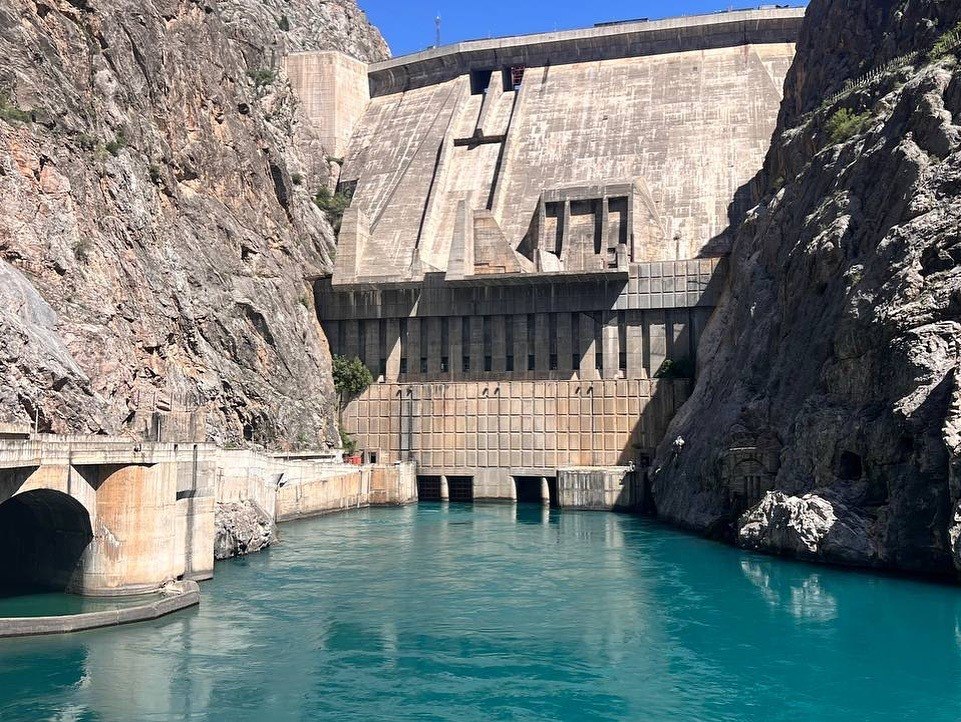
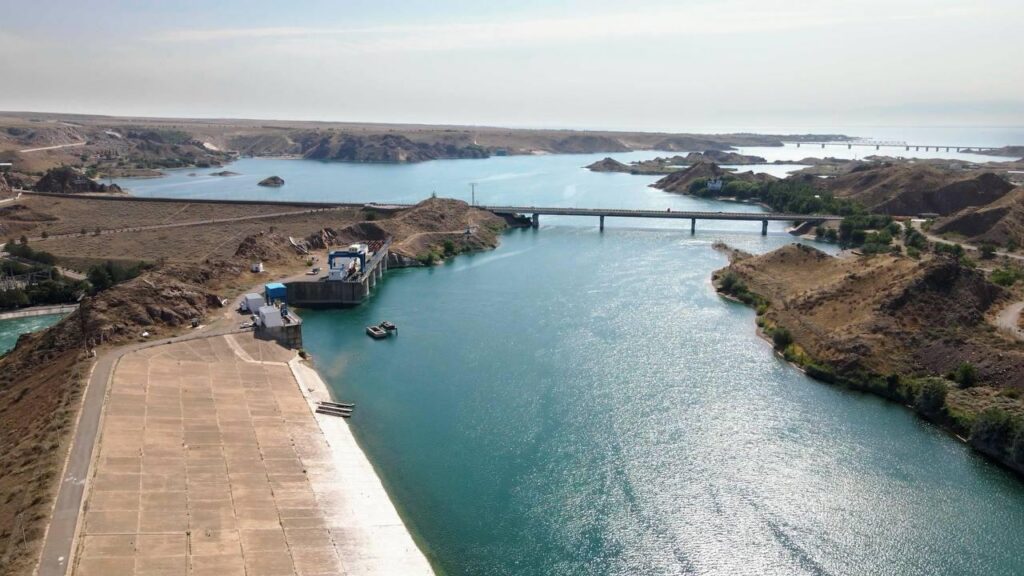
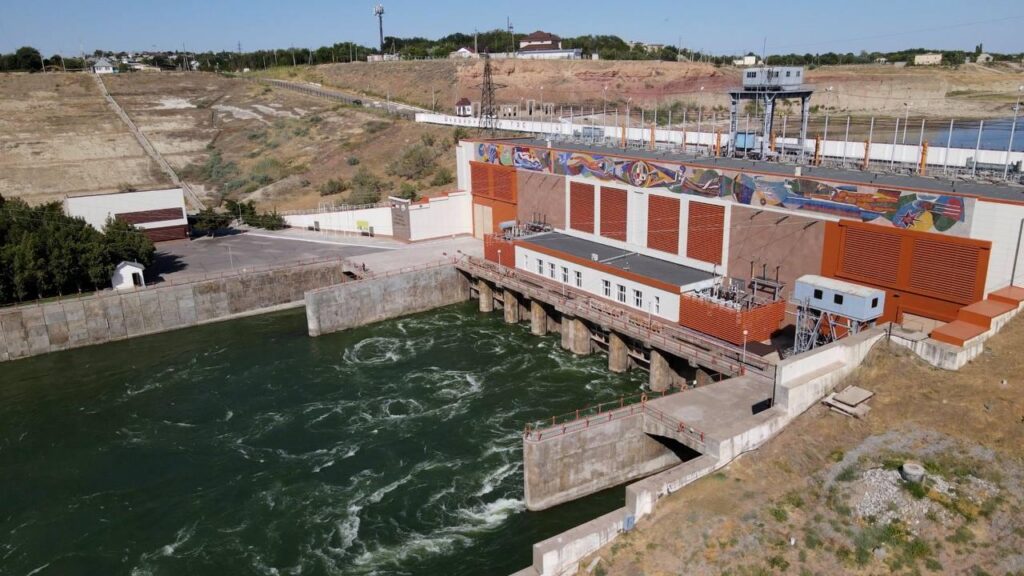
On December 4–5, Kazakhstan’s Deputy Prime Minister Kanat Bozumbayev, accompanied by Minister of Water Resources and Irrigation Nurzhan Nurzhigitov and Minister of Agriculture Aidarbek Saparov, visited the southern regions of Turkistan, Kyzylorda, and Zhambyl. The delegation met with local farmers to address the growing risks posed by declining transboundary water inflows and to discuss measures to ensure efficient water use during the 2026 irrigation season. Agriculture in these arid regions depends heavily on water from the Syr Darya River, which originates in Kyrgyzstan. According to the Ministry of Water Resources and Irrigation, Kazakhstan’s agricultural sector consumed 11.01 billion cubic meters of water during the 2025 irrigation season, with 98% used in the south. The Zhambyl region irrigated 79,000 hectares using 1 billion m³ of water and remains largely reliant on upstream supplies from Kyrgyzstan. This past season, Kyrgyzstan committed to providing more than 600 million m³ of water to Kazakhstan via the transboundary Chu and Talas rivers. The Kyzylorda and Turkistan regions were the largest consumers of irrigation water, drawing 3.5 billion m³ and 3.4 billion m³, respectively, to irrigate 125,000 and 400,000 hectares. Officials presented water inflow forecasts for 2026 and outlined measures to improve efficiency amid declining water availability. The Syr Darya basin continues to experience low-flow conditions, with reduced inflows into the Naryn-Syr Darya system threatening irrigation supplies for the upcoming growing season. Farmers were urged to adopt water-saving technologies, limit the cultivation of water-intensive crops, diversify planting, and transition to drought-resistant varieties. Bozumbayev noted that during the recent session of the Interstate Water Coordination Commission in Ashgabat, participating countries projected a further decline in water inflows for 2026. He warned that the Toktogul Reservoir in Kyrgyzstan, located on the Naryn River, a key tributary of the Syr Darya, may reach record-low levels, putting irrigation supplies at serious risk. “Given the continued decline in available water resources, there is a real risk of shortages during the next growing season. This is a natural challenge faced by all Central Asian countries. To minimize the impact, we must accelerate crop diversification and the introduction of water-saving irrigation technologies. The state has created all the necessary conditions for this. This is not simply about conserving water; the country’s water and food security depend on it,” Bozumbayev said. To support adoption of efficient irrigation systems such as drip and sprinkler technologies, the government has increased reimbursement for farmers' costs from 50% to 80%, on drilling wells and installing irrigation equipment. A differentiated irrigation tariff has also been introduced: for farmers using water-saving technologies, the subsidy on irrigation water has been raised from 60% to 85%. These measures have helped expand the area under modern irrigation systems from 312,200 hectares in 2023 to 580,000 hectares in 2025, representing 30% of all irrigated farmland. The government aims to increase this figure to 1.3 million hectares, or 70% of total irrigated land, by 2030. In Kyzylorda, the country’s main rice-producing region, the Ministry of Agriculture has announced that rice cultivation in 2026 must not...

Russia Revives Plan to Redirect Siberian Rivers as Central Asia Faces Worsening Water Crisis

The long-contested idea of diverting Siberian rivers to Central Asia has re-emerged after the Russian Academy of Sciences announced on November 14 that it is studying a new version of the project. The updated proposal revives elements of a Soviet-era plan from the 1970s and 1980s that aimed to channel water from the Ob River basin to arid regions of Central Asia. This time, however, the focus is on a closed pipeline system, rather than open canals, to transport large volumes of water to countries facing acute shortages, particularly Uzbekistan, according to Fergana News. Discussions within the Russian Academy had reportedly already begun prior to the announcement. Researchers are now calling on Russia’s Ministry of Science and Higher Education to include a full study of the project in its state research plan. They argue that Central Asia is entering a critical phase of water scarcity that demands long-term strategic solutions. The renewed interest comes amid escalating water stress across the region. Rapid population growth, retreating glaciers, and intensifying irrigation demands have pushed existing water systems to their limits. While some view the proposed pipeline as a potential lifeline for stabilizing regional water supplies, environmental concerns remain central to the debate, echoing the very reasons the original project was shelved. A Long History of Controversy The idea of redirecting northern rivers is not new. It was first proposed in the 19th century by Ukrainian-born engineer Yakov Demchenko, who envisioned transferring water from the Ob and Irtysh rivers to replenish the shrinking Aral Sea. In the Soviet period, the concept gained political traction. By the late 1960s, it had entered official planning discussions, prompting detailed studies by the Academy of Sciences, the State Planning Committee, and the Ministry of Water Resources. In 1970, the project was formally designated a state priority, with plans for transferring up to 25 cubic kilometers of water annually. Extensive technical documentation was produced, and construction began on supporting infrastructure, including the Irtysh-Karaganda canal. Designs for the main channel envisioned a span of more than 2,500 kilometers and a capacity exceeding 1,000 cubic meters per second. However, by 1986, the project was halted due to mounting economic pressures, scientific opposition, and growing awareness of potential environmental risks. Experts warned of large-scale flooding, disruptions to groundwater, damage to fish stocks, displacement of Indigenous communities, and unpredictable impacts on permafrost and regional climate systems. Renewed Debate in a Region Under Stress Though shelved in the late Soviet era, the project has resurfaced multiple times since the collapse of the USSR. Former Moscow mayor Yuri Luzhkov advocated for its revival in 2002, and Russian and Kazakh presidents discussed it publicly in 2010. Yet concerns about environmental and geopolitical ramifications have consistently stalled progress. Meanwhile, the water crisis in Central Asia has only deepened. Glaciers in the Tien Shan and Pamir mountains which feed the Amu Darya and Syr Darya rivers have shrunk by more than 25% in recent decades. The region’s population has grown to approximately 80 million, nearly 50% higher...

Kazakhstan’s Ecology Ministry Says Saiga Population May Surpass Five Million in 2026

Kazakhstan's saiga antelope population, a key indicator of steppe ecosystem health and a globally vulnerable species, has reached unprecedented levels. According to the Ministry of Ecology and Natural Resources, the population now numbers approximately four million. Following the 2026 calving season, that figure could rise to nearly five million, cementing Kazakhstan’s role as the primary global habitat for the species. At a recent meeting on sustainable saiga population management, Minister of Ecology Yerlan Nyssanbayev highlighted the dramatic recovery of the species. In 2005, the population had dwindled to fewer than 40,000. Thanks to a nationwide hunting ban, increased protection measures, and targeted monitoring programs, Kazakhstan has achieved one of the most notable wildlife conservation success stories in recent history. However, the rapid rebound has brought new challenges. Ecologists warn that rising saiga densities are increasing competition with agricultural activities and contributing to pasture degradation. In response, the government has begun implementing controlled population management strategies. Between July 1 and November 30, 2025, around 196,000 saigas were culled, with carcasses processed by domestic enterprises. “The work was carried out in strict accordance with scientific recommendations,” Nyssanbayev stated. A separate concern is the trade in saiga derivatives, particularly male horns, which are in high demand in traditional Eastern medicine. According to the ministry, all horns are marked and securely stored by the Okhotzooprom State Enterprise. A digital traceability system, developed in partnership with Kazakhtelecom JSC, is currently being piloted to ensure full transparency in horn origin tracking. This technology, supported at the CITES International Conference, is under consideration as a mechanism for potentially easing current restrictions on derivative exports. First Deputy Prime Minister Roman Sklyar has instructed the Ministry of Ecology and other relevant agencies to finalize regulatory frameworks for labeling and circulation of saiga products, and to develop comprehensive measures for managing the growing population in 2026. The dramatic saiga recovery has also drawn international attention. As previously reported by The Times of Central Asia, Kazakhstan has agreed to transfer 1,500 saiga antelopes to China in 2026 to support efforts to reintroduce the species beyond its historical range in Central Asia.

UN Meeting on Wildlife Trade Rules on Saiga, Striped Hyena

Delegates to a United Nations meeting on global wildlife commerce have approved a proposal by Kazakhstan to loosen trade restrictions on the saiga antelope, while rejecting a move by Tajikistan to tighten protections for the striped hyena. The decisions came in Samarkand, Uzbekistan, where several thousand representatives from around the world have gathered for a meeting of the Convention on International Trade in Endangered Species of Wild Fauna and Flora, or CITES. The conference, which runs from November 24 to December 5, was last held in Panama in 2022. The decision to relax trade in saigas, whose horns are used in traditional medicine, is a response to the spectacular recovery of the species after it was close to extinction. Kazakhstan presided over this conservation success story, and the CITES decision amends a “zero export quota” to exclude saigas only from populations Kazakhstan. A CITES committee adopted the proposal by a vote of 111 in favor, 7 against, and 14 abstentions, reported the Earth Negotiations Bulletin, which covers U.N. environment and development negotiations. A proposal needs a two-thirds majority vote to be approved. More saiga safeguards were added in an amendment backed by Britain, the European Union and the United States, and the situation will be reviewed at the next CITES meeting in a few years. Mongolia, which has a smaller, more vulnerable population of saigas, had opposed Kazakhstan’s initiative. Some groups, including the New York-based Wildlife Conservation Society, said the reopening of commercial trade in Kazakhstan’s saigas could increase consumer demand, promote poaching and put pressure on enforcement mechanisms. In the case of the striped hyena, Tajikistan unsuccessfully sought to persuade delegates to the wildlife trade meeting to place the species on Appendix I, a CITES designation that would effectively bar trade aside from with a few exemptions. The species, labeled “near threatened” by the global IUCN Red List of Threatened Species, is currently on the much less restrictive Appendix III. Algeria, Iran and Kazakhstan were among countries that backed Tajikistan’s proposal, while Britain, the European Union, Zambia and Tanzania said the proposal doesn’t meet Appendix I criteria, according to the Earth Negotiations Bulletin. A CITES committee rejected Tajikistan’s proposal in “a secret ballot of 75 for, 47 against and 13 abstentions,” the bulletin said, indicating that proponents did not pass the two-thirds threshold. The striped hyena has a vast range that includes Africa, the Middle East, and Central Asia, but there is difficulty in obtaining data on the solitary, noctural species. Additionally, while habitat degradation and human-wildlife conflict are factors in the population’s decline, uncertainty over how much the illegal trade in the striped hyena is affecting its numbers may have raised questions about whether Tajikistan’s proposal was justified.  

Kazakhstan Trades Electricity for Water in Bid to Mitigate Summer Drought Risks

Central Asia is entering a new phase in the management of its water-energy nexus, moving from declarations to practical coordination. A trilateral protocol signed in Almaty by Kazakhstan, Kyrgyzstan, and Uzbekistan marked a significant step toward stabilizing the region’s water regime amid escalating climate risks. Brokered under Kazakhstan’s chairmanship, the agreement aims to balance the load on the Toktogul Reservoir, the main regulating structure of the Syr Darya basin. Kyrgyzstan typically increases winter water discharges to generate electricity, which reduces irrigation water availability downstream during summer. Under the new deal, Kazakhstan and Uzbekistan will supply Kyrgyzstan with electricity during winter, in return for Kyrgyzstan's commitment to store water and ensure its release during the 2026 growing season. The Almaty Protocol complements the existing plan for filling the Shardara Reservoir, which aims to accumulate 11 cubic kilometers of water by April 1, 2026. Achieving this target hinges on Toktogul’s operations. Without external support, Kyrgyzstan’s energy infrastructure would struggle to meet the requirement. Supplemental electricity from Astana and Tashkent thus forms the economic backbone of this arrangement. Longstanding disparities in regional water and energy needs remain a source of instability. Kyrgyzstan requires water in winter for hydropower, while Kazakhstan, especially its Turkestan and Kyzylorda regions, relies on it in summer for irrigation. Recent water shortages have pushed the countries toward more pragmatic coordination. Uzbekistan has committed to managing the technical conditions for transit and balancing inter-system flows. Despite facing its own energy shortfall and aging infrastructure, Kazakhstan is participating in regional stabilization to avert socio-economic risks in its southern provinces. External factors are adding urgency to regional cooperation. Afghanistan’s construction of the Qosh-Tepa Canal is expected to reduce the Amu Darya’s water balance by 20-25%. Although Uzbekistan is most directly affected, the resulting pressure on water systems could also impact the Syr Darya, on which southern Kazakhstan heavily depends. Internally, Kazakhstan faces persistent challenges. Water loss during transport reaches up to 40-50% due to outdated canal infrastructure. Rice cultivation continues in the water-intensive Kyzylorda region, while water-saving technologies are used on only about 30% of irrigated land. These new agreements suggest that Central Asian countries can rapidly implement collective mechanisms in response to shared threats. In effect, elements of a regional Water and Energy Consortium are already operating in a de facto, ad hoc manner. Water, energy, and food security are increasingly seen as interconnected resources requiring coordinated governance. For Kazakhstan, the priority now is to institutionalize these provisional agreements. If the “electricity-for-water” model can be formalized into a durable framework, it could stand as one of the most significant accomplishments of the country’s regional diplomacy.

Planting Trees to Heal Old Wounds: Can a Desert Forest Save the Aral’s Last Residents?

In the Aralkum Desert, afforestation campaigns have multiplied since the early 2000s. They are meant to slow the sandstorms, temper a rapidly warming climate, and protect the health of those still living in the shadow of the Aral Sea. But the promised results have not appeared yet. The road from Aralsk to Aiteke Bi cuts through a palette of ochre and dust. Trucks drift forward in pale clouds, dragging the desert behind them like a long train. In these villages scattered along the former shoreline of the Aral Sea, the wind never leaves. It is abrasive, restless, and a witness to a vanished water body that once cooled the hottest corner of Kazakhstan. Respiratory diseases now run through family histories, and doctors say they can recognize lungs shaped by ecological collapse. At the polyclinic in Aiteke Bi, patients describe the same symptoms with weary precision: breath shortening too quickly, coughs that never fully recede, a fatigue that never seems to lift. Nuralay, 52, says the storms “get into the house, into the throat, into everything.” She admits she cannot remember a season without irritation in her chest. For Dr. Kuanyshqar Assilov, who has watched the pattern deepen for years, the cause is unmistakable: decades of airborne salts, pesticide residues, and industrial chemicals lifted from the dried seabed of the Aral Sea. [caption id="attachment_39897" align="aligncenter" width="1378"] In Aralsk, sand covers everything[/caption] Marat Narbaev, executive director of the International Fund to Save the Aral Sea (IFAS), recounts the disaster’s origins with a mixture of resignation and habit. He traces it back to the 1960s, when Soviet planners diverted the Amu Darya and Syr Darya to feed cotton monocultures. “The cotton was used to make clothing for soldiers and ammunition,” he says. Today, he argues, the basin faces two pressures: “climate change and demographic growth. Fifty million inhabitants… soon seventy.” In this landscape, the promise of restoring the region through afforestation has acquired symbolic weight. Saxaul trees - hardy, grey-green, capable of surviving in brackish soils - are planted by the millions on the exposed seabed. Officially, they are meant to stabilize sand, calm storms, and cool the surface. Unofficially, they carry the hope that life here might once be breathable again. Survivalist tree? On paper, the saxaul is a biological survivalist: roots plunging more than 30 feet deep, the ability to stabilize dunes, lower surface salinity, and grow dense enough within a few years to slow the wind. In Aralkum, a village east of Aralsk, residents praise the planting that lines a dozen houses. “It really worked, the storms became more bearable,” a man says. Then he shrugs: more trees should have been planted. “We asked for the other side of the village, but there’s no funding left.” Nowadays, half of the trees have died, and the rest lie buried beneath the dunes. [caption id="attachment_39896" align="aligncenter" width="1378"] In Aralkum village, half of the surviving trees barely emerge from the sand[/caption] Sometimes, past plantations have almost zero trees left. According to a 2021...