• KGS/USD = 0.01144 0%
  • KZT/USD = 0.00216 0%
  • TJS/USD = 0.10659 0%
  • UZS/USD = 0.00008 0%
  • TMT/USD = 0.28530 0%
  • KGS/USD = 0.01144 0%
  • KZT/USD = 0.00216 0%
  • TJS/USD = 0.10659 0%
  • UZS/USD = 0.00008 0%
  • TMT/USD = 0.28530 0%
  • KGS/USD = 0.01144 0%
  • KZT/USD = 0.00216 0%
  • TJS/USD = 0.10659 0%
  • UZS/USD = 0.00008 0%
  • TMT/USD = 0.28530 0%
  • KGS/USD = 0.01144 0%
  • KZT/USD = 0.00216 0%
  • TJS/USD = 0.10659 0%
  • UZS/USD = 0.00008 0%
  • TMT/USD = 0.28530 0%
  • KGS/USD = 0.01144 0%
  • KZT/USD = 0.00216 0%
  • TJS/USD = 0.10659 0%
  • UZS/USD = 0.00008 0%
  • TMT/USD = 0.28530 0%
  • KGS/USD = 0.01144 0%
  • KZT/USD = 0.00216 0%
  • TJS/USD = 0.10659 0%
  • UZS/USD = 0.00008 0%
  • TMT/USD = 0.28530 0%
  • KGS/USD = 0.01144 0%
  • KZT/USD = 0.00216 0%
  • TJS/USD = 0.10659 0%
  • UZS/USD = 0.00008 0%
  • TMT/USD = 0.28530 0%
  • KGS/USD = 0.01144 0%
  • KZT/USD = 0.00216 0%
  • TJS/USD = 0.10659 0%
  • UZS/USD = 0.00008 0%
  • TMT/USD = 0.28530 0%

Viewing results 43 - 48 of 437

From Glaciers to Green Goals: Central Asia at COP30

The UN Climate Change Conference (COP30) in Belém, Brazil, concluded with a hard-fought global deal that boosts climate finance for developing countries but avoids any promise to phase out fossil fuels. Amid this uneasy compromise, the Central Asian nations worked to get their priorities heard. Their delegations pressed for more climate funding, recognition of their unique vulnerabilities, and support for regional initiatives, with mixed results. A United Regional Voice on Climate Home to over 80 million people, Central Asia entered COP30 with a goal outlined as “five countries, one voice,” after a regional dialogue in Dushanbe ahead of the summit forged a common stance on shared threats such as melting glaciers and water stress. The region has already warmed about 2.2 °C – faster than the global average – and glaciers are shrinking by roughly 0.5% each year, Uzbekistan’s environment minister Aziz Abdukhakimov warned in Belém. He noted worsening land degradation and vanishing water resources, underscoring Central Asia’s acute climate vulnerability. In response, Uzbekistan unveiled a new pledge to cut its greenhouse gas emissions by 50% by 2035 (from 2010 levels) by expanding renewable energy and forests. Such actions align with COP30’s call for developed nations to triple adaptation finance by 2035 to help vulnerable countries cope. “COP30 showed that climate cooperation is alive and kicking, keeping humanity in the fight for a livable planet,” UN climate chief Simon Stiell said in his closing speech, praising delegates for persisting despite global divisions. National Commitments and Initiatives Kazakhstan, Central Asia’s largest economy and emitter, took on a visible role at COP30. Its delegation was led by Minister of Ecology and Natural Resources Yerlan Nyssanbayev, who addressed the summit’s opening session. Nyssanbayev reaffirmed Kazakhstan’s commitment to the Paris Agreement goals, noting the country has adopted a “Revised Nationally Determined Contribution (NDC) and a National Adaptation Plan” with more ambitious targets to cut emissions and bolster resilience. “It is crucial for us to consistently work toward achieving our climate goals,” he stated. Nyssanbayev emphasized the importance of climate finance for developing countries, highlighting the new “Baku–Belém Roadmap” to mobilize $1.3 trillion annually by 2035 and urging support for a significantly increased funding mechanism.  Kazakhstan also became one of only seven nations – and the sole Central Asian country – to sign a joint declaration pledging “near zero” methane emissions from its fossil fuel sector. In a sign of ongoing regional leadership, Nyssanbayev invited all delegates to attend a Central Asia Regional Environmental Summit that Kazakhstan will host in 2026, aiming to sustain climate cooperation beyond COP30. Kyrgyzstan, given its geography, used the summit to champion the mountain agenda and the plight of high-altitude communities on the frontlines of climate change. The Kyrgyz Republic chairs the UNFCCC’s Mountain Group and sent a delegation led by Deputy Chairman of the Cabinet of Ministers, Edil Baisalov, and Dinara Kemelova, the President’s Special Representative for the Mountain Agenda. In the first week of COP30, Kemelova delivered keynote remarks at multiple high-level sessions, calling for strengthened international support and...

COP30 Delegate from Kazakhstan Says International Cooperation Is Hard, But Worth It

One of Kazakhstan’s representatives at the United Nations climate talks (COP30) in Belém, Brazil, this month was Almira Azhibekova, a Master of Environmental Management student at Yale University in the United States. As a member of the team from Kazakhstan’s Ministry of Ecology and Natural Resources, Azhibekova analyzed negotiations, helped prepare final reports, and performed other tasks. She shared this account, lightly edited by The Times of Central Asia. Views are her own. Attending COP30 as part of Kazakhstan’s delegation was an amazing chance to connect theoretical knowledge that I acquired at Yale with real-world climate diplomacy. I learned how countries like Kazakhstan access climate finance and technology support through fair partnerships and witnessed how, despite obstacles and challenges, international cooperation is the best way to turn ambitious goals into action. It is something I hope to bring back to Yale and my future work at home. What struck me most about COP30 was how global cooperation works in practice. It is inspiring, but also incredibly challenging. Seeing negotiations happen in real time was eye-opening. There is urgency, there is complexity, and there is a very human side to everything. Reaching consensus is not easy. Every country has its own priorities and concerns, and negotiators must ensure that everyone is heard and respected. Often, a single paragraph will go through informal consultations, smaller working groups, and then formal sessions before it can be agreed upon. Even one sentence in a final text can be discussed for hours, and some issues remain open for years. Diplomacy takes patience. Sometimes, a small difference in language becomes the focus of intense discussion because specific terminology can carry distinct legal and operational consequences. In international climate law, each term has a defined meaning, and a slight change in wording can alter how a mechanism will be implemented. I realized just how much weight language holds in shaping global climate action. Another insight, one I had known in theory but witnessed in practice, is that climate change affects every aspect of economies and societies and is a defining issue in international relations. Decisions made in negotiation rooms can influence economic development, security, and international cooperation, far beyond the environmental sphere. There were also practical challenges that made cooperation more difficult. Differences in languages, levels of technical expertise, national experiences, and even delegation sizes. Some countries can’t send enough people to be present in every negotiation. Equity in the process is as important as equity in the results. [caption id="attachment_39763" align="aligncenter" width="1327"] Photo provided by Almira Azhibekova[/caption] Another important factor is the quality of technical logistics and working conditions, which directly affect the effectiveness and accessibility of an already complex negotiation process. In addition to these observations, I was incredibly fortunate to speak to Dr. Katia Simeonova, a key architect and co-founder of the transparency framework under the Paris Agreement. She explained the peculiarities of negotiation: how every word in the text works in practice, how specific terms shape legal outcomes, and things that delegations must...

Kazakhstan Wants to Lift Ban on Saiga Horn Trade; Some Conservationists Object

The extraordinary recovery of the saiga antelope population after being close to extinction has opened a debate about whether it is time to allow the international commercial trade of the species’ horns from Kazakhstan, home to the vast majority of saigas.  Kazakhstan’s government says yes. It has submitted a pro-trade proposal that will be discussed at a conference in Samarkand, Uzbekistan of the Convention on International Trade in Endangered Species of Wild Fauna and Flora, or CITES. The United Nations meeting, which regulates trade in tens of thousands of species of animals and plants, is being held in Central Asia for the first time and runs from November 24 to December 5. It was last held in Panama in 2022. While applauding Kazakhstan’s conservation successes, some groups advise against trade in saiga horns, which are used in traditional medicine in parts of Asia. The New York-based Wildlife Conservation Society, warned on Tuesday that the population gains are fragile, saying “the saiga has a long history of boom and bust population cycles, and a precautionary approach is imperative.” Backed by international conservation groups and donors, Kazakhstan has guided the remarkable comeback of a species whose numbers were estimated at 20,000 in 2003 and then, after some growth, suffered another big population crash because of disease in 2015. A reduction in poaching and the expansion of land earmarked for conservation helped the saigas.  But some farmers say rising saiga numbers threaten their crops and the government has considered mass kills and other ways to manage the population. Kazakhstan’s saiga population is estimated to be several million and the status of the species on the IUCN Red List was moved from critically endangered to near threatened in 2023.  There are much smaller saiga populations elsewhere in the region, including Russia, Mongolia and Uzbekistan. Saiga populations in Kazakhstan “exceed historical levels, which has led to conflicts with local farmers over forage resources in certain regions,” according to Kazakhstan’s CITES proposal. It says that removing the current “zero quota” in the international commercial trade in saiga “derivatives” from Kazakhstan would help meet demand for horns and reduce poaching. The zero quota was introduced at the CITES meeting in Geneva in 2019.  “The revival of sustainable commercial trade could not only restore the species' economic value but also regulate market pricing policies to make illegal trade unprofitable, as the price of saiga horns would no longer justify the risks and costs for poachers,” Kazakhstan’s proposal says.  However, the Wildlife Conservation Society, which runs programs in more than 50 countries, said the ban should stay in place for now because horn exports from Kazakhstan would increase demand, complicate efforts to distinguish between legal and illegal horns and put pressure on saigas other countries where they are more vulnerable.  “Mongolia’s saiga population has grown thanks to years of collaborative effort, but Mongolia’s subspecies remains endangered,” Justine Shanti Alexander, the group’s country director in Mongolia, said in a statement. “ Any move that increases international demand for saiga horn -...

Former Soviet Nuclear Test Site in Semipalatinsk to House Kazakhstan’s Nuclear Waste

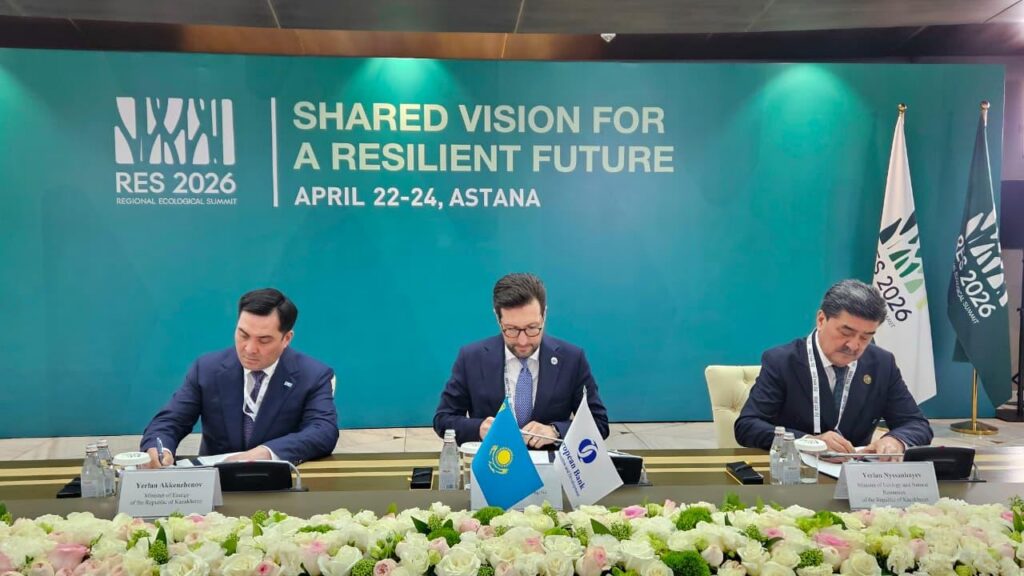
Kazakhstan plans to establish disposal sites for radioactive waste from its nuclear power plants at the former Semipalatinsk nuclear test site in the eastern part of the country, Deputy Chairman of the Atomic Energy Agency Gumar Sergazin announced during a briefing in Astana. Sergazin stated that the operation of two 1,200 MW reactors, similar to those under construction at the country’s first nuclear power plant in the Almaty region, will produce approximately 50 cubic meters of radioactive waste annually. Burial in the Semipalatinsk Zone A new bill on radioactive waste management, presented to parliament this week, outlines plans to develop burial sites within the Semipalatinsk nuclear safety zone. “This is already a contaminated area: the total area of the site is 18,000 square kilometers, of which about 8,300 are zones of elevated radiation,” Sergazin said. The National Nuclear Center is scheduled to begin site preparation in 2026. The depth of burial will depend on groundwater levels, with international norms typically placing high-level waste at depths of up to 400 meters. “Sanitary requirements will determine technical standards, including the type of cement and sealing techniques to prevent radiation leakage. Liquid radioactive waste will not be buried,” he clarified. Sergazin emphasized that the Semipalatinsk site will serve as a centralized repository for waste from all future nuclear power plants in Kazakhstan. He also noted that radioactive waste is already present in the country, even in the absence of operational nuclear power stations. Scale and Sources of Radioactive Waste Kazakhstan has accumulated approximately 293 million cubic meters of radioactive waste to date, of which 290 million cubic meters are low-level waste, Sergazin said. “The majority, about 237 million cubic meters, is located at the Semipalatinsk test site,” he noted. The remaining waste, consisting of medium and high-level material, originates from industrial and scientific operations. Key contributors include the National Nuclear Center, the Institute of Nuclear Physics, the Ulba Metallurgical Plant in East Kazakhstan region, and facilities in Western Kazakhstan such as Koshkar-Ata and the Chemical and Hydrometallurgical Plant. The agency estimates that safe disposal of liquid radioactive waste alone will require around $40 million. Funding and International Participation Given the scale and cost of the project, Kazakhstan intends to secure international grant funding. Sergazin confirmed that negotiations have begun with the European Bank for Reconstruction and Development. A draft agreement and roadmap have already been prepared as part of the Central Asia Environmental Safety Program. “Participating countries are expected to provide grant-based funding. Adoption of the new legislation will establish the legal foundation necessary to attract external resources, avoiding the need for increased domestic budget spending,” he said. Previously, The Times of Central Asia reported that Kazakhstan’s first nuclear power plant is slated for construction by the Russian state corporation Rosatom by 2035, while the second and third plants are expected to be built with the involvement of China National Nuclear Corporation (CNNC).

Kazakhstan and Israel Strengthen Cooperation on Water Resource Management

On November 11, Kazakhstan’s Minister of Water Resources and Irrigation Nurzhan Nurzhigitov and Israel’s Minister of Regional Cooperation David Amsalem signed a memorandum of cooperation to deepen bilateral ties in the field of water resource management. The agreement outlines joint efforts in modernizing Kazakhstan’s water management infrastructure, improving water use efficiency, implementing water-saving and reuse technologies, and exchanging expertise in innovation and technology, particularly in the collection, management, and processing of remote sensing data. The memorandum also covers cooperation in the digitalization of water resource monitoring, flood and drought risk management, scientific and technical collaboration, and specialist training programs. As part of the visit, the ministers held talks with representatives of leading Israeli companies to explore partnerships on introducing water-saving technologies in Kazakh agriculture and training Kazakh specialists at Israeli enterprises. “Israel has extensive experience in water resource management under challenging climatic conditions and offers advanced technologies,” said Minister Nurzhigitov. “We are interested in long-term, mutually beneficial cooperation to modernize Kazakhstan’s water sector across the board, including the digitalization of water metering and distribution, deployment of cutting-edge water-saving systems, use of modern data collection methods, and professional development of our specialists.” Israeli firms have previously expressed interest in participating in the construction and reconstruction of reservoirs in Kazakhstan, and in supplying the country with modern flood forecasting and protection systems. Kazakhstan’s Ministry of Water Resources and Irrigation plans to build 20 new reservoirs by 2030, with a combined capacity of 2.5 billion cubic meters. The project is expected to reduce the country’s reliance on upstream water sources from Kyrgyzstan and China by 25%, mitigate drought in southern regions, and lower flood risks for 70 rural settlements with a combined population of nearly 140,000. Additionally, irrigation will be expanded to cover another 250,000 hectares of farmland. The ministry also plans to reconstruct 15 existing reservoirs, adding another 1.9 billion cubic meters in water storage capacity.

Kazakhstan to Use Innovative Drone Technology for Aral Seabed Reforestation

On October 29, a new initiative titled “Improving the Ecosystem of the Aral Seabed” was launched by Korkyt Ata Kyzylorda University, the University of California, Berkeley, the Kazakh Directorate of the International Fund for Saving the Aral Sea (IFAS), and the Bulat Utemuratov Foundation.  The project seeks to rehabilitate the dried Aral Sea bed using innovative E-seed technology developed by scientists at UC Berkeley. The method involves aerial seeding with drones that distribute self-burying seeds encased in biodegradable material, an approach designed to accelerate greening, increase plant survival rates, and reduce labor costs. Once the world’s fourth-largest inland sea, the Aral Sea covered 68,000 square kilometers across Kazakhstan and Uzbekistan. Beginning in the 1960s, large-scale irrigation projects diverted water from the Amu Darya and Syr Darya rivers to support cotton farming. By 2007, the sea had shrunk to just 10% of its original size. Today, the Aral Sea is a symbol of one of the world's most severe environmental disasters. Salt-laden dust from the exposed seabed, estimated in the tens of billions of tons, is carried by wind as far as the Arctic and the Himalayas. This toxic dust, infused with pesticides and heavy metals, contaminates soil, water, and air, threatening regional public health and food security. “The Aral Sea is a wound on the planet that cannot be ignored. We are launching a project that will create a barrier against salt and toxic dust, improve human health, and contribute to the future of the entire Earth,” said Ainur Karbozova, Director of the Bulat Utemuratov Foundation. “The uniqueness of this technology is that it can be applied worldwide from restoring burned-out forests to transforming deserts into green oases.” A test planting on a one-hectare site is planned for March-April 2026. In 2027, the second phase will expand the pilot to 50 hectares. “The use of the innovative E-seed technology will strengthen the soil structure, reduce dust and salt emissions, and ultimately increase the region's biodiversity,” said Rakhat Kurmanbayev, Associate Professor at Korkyt Ata Kyzylorda University. “By 2040, we plan to stabilize the ecosystem over at least 50 square kilometers. The project will reduce air temperatures by 1-2°C and improve the microclimate.” The initiative aligns with broader environmental goals outlined under Kazakhstan’s 2024-2026 chairmanship of IFAS, during which large-scale afforestation efforts aim to green more than 1 million hectares of the Aral seabed. The Times of Central Asia previously reported the construction of a saxaul nursery in the Kyzylorda region. Located directly on the former seabed, the facility is expected to produce 1.5 million drought-resistant saxaul saplings per year. According to the Ministry of Ecology and Natural Resources, Kazakhstan plans to afforest 1.1 million hectares of the dried seabed with saxaul. Between 2021 and 2024, 475,000 hectares were afforested, including 127,000 in 2024 alone. An additional 428,000 hectares are scheduled for planting in 2025. By the end of 2025, Kazakhstan expects saxaul to cover approximately 40% of its portion of the dried Aral seabed.