• KGS/USD = 0.01144 0%
  • KZT/USD = 0.00204 0%
  • TJS/USD = 0.10429 0.29%
  • UZS/USD = 0.00008 0%
  • TMT/USD = 0.28490 0%
  • KGS/USD = 0.01144 0%
  • KZT/USD = 0.00204 0%
  • TJS/USD = 0.10429 0.29%
  • UZS/USD = 0.00008 0%
  • TMT/USD = 0.28490 0%
  • KGS/USD = 0.01144 0%
  • KZT/USD = 0.00204 0%
  • TJS/USD = 0.10429 0.29%
  • UZS/USD = 0.00008 0%
  • TMT/USD = 0.28490 0%
  • KGS/USD = 0.01144 0%
  • KZT/USD = 0.00204 0%
  • TJS/USD = 0.10429 0.29%
  • UZS/USD = 0.00008 0%
  • TMT/USD = 0.28490 0%
  • KGS/USD = 0.01144 0%
  • KZT/USD = 0.00204 0%
  • TJS/USD = 0.10429 0.29%
  • UZS/USD = 0.00008 0%
  • TMT/USD = 0.28490 0%
  • KGS/USD = 0.01144 0%
  • KZT/USD = 0.00204 0%
  • TJS/USD = 0.10429 0.29%
  • UZS/USD = 0.00008 0%
  • TMT/USD = 0.28490 0%
  • KGS/USD = 0.01144 0%
  • KZT/USD = 0.00204 0%
  • TJS/USD = 0.10429 0.29%
  • UZS/USD = 0.00008 0%
  • TMT/USD = 0.28490 0%
  • KGS/USD = 0.01144 0%
  • KZT/USD = 0.00204 0%
  • TJS/USD = 0.10429 0.29%
  • UZS/USD = 0.00008 0%
  • TMT/USD = 0.28490 0%

Viewing results 841 - 846 of 1908

Transforming Kazakhstan’s Railways: Strategic Infrastructure for Regional and Global Connectivity

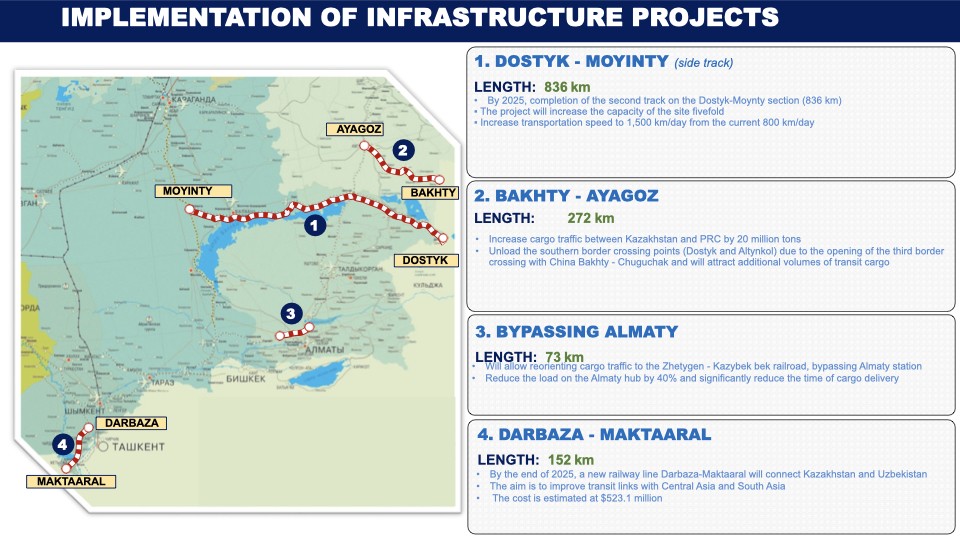
Kazakhstan’s rail network is a strategic national asset, vital for a country of its vast size and landlocked geography. Without direct access to the world’s oceans, railways serve as critical arteries for trade and transit. Under new geopolitical and logistical conditions, the importance of modernizing and expanding this network has become increasingly urgent. Spanning 21,000 kilometers, Kazakhstan’s railroads form the backbone of its transportation infrastructure. By 2030, the country plans to modernize 11,000 kilometers of highways and construct over 5,000 kilometers of new railways. Among these ambitious projects are the construction of second tracks on the Dostyk-Moyinty railway section, a bypass railway line around Almaty, and two new lines: Darbaza-Maktaaral and Bakhty-Ayagoz. Expanding Trade with China: Increased Cargo Traffic The Dostyk border station has become a key hub for exports to China and a vital transit point for East-West trade. In recent years, growing cargo volumes and limited capacity have placed immense pressure on its infrastructure. The Dostyk-Alashankou junction point, with a current capacity of 20 million tons annually, handled 15.2 million tons in the first 10 months of this year alone - a 15% increase compared to the same period last year. To address these challenges, construction of second railroad tracks on the Dostyk-Moyinty section began in November 2022. Part of the National Project: Strong Regions - Driver of the Country's Development, this project aims to increase the section’s capacity fivefold, from 12 to 60 train pairs per day. Transportation speeds between China and Europe are also set to improve significantly, from the current 800 kilometers per day to 1,500 kilometers per day. Official data indicates that 635 kilometers of the planned 836 kilometers have already been completed. The project involves 62 bridges, 242 pipelines, and a workforce of 24 construction companies and over 440 units of equipment. Completion is expected by late 2025. Private Investments Driving New Railway Lines Kazakhstan’s second major rail crossing with China, Altynkol station, has also reached its maximum capacity. Together with Dostyk, the two stations handle 28 million tons annually. This makes the development of the new 272-kilometer Bakhty-Ayagoz railway line essential. Connecting the border to the Semey-Aktogay section and the China-Europe corridor, the new line is expected to boost goods transportation to and from China by an additional 20 million tons. This project, realized under a public-private partnership model, will feature the construction of 11 stations, 47 bridges, 23 railroad overpasses, and eight highway overpasses. It will also include five pedestrian bridges and 16 observation structures, utilizing over 500,000 locally manufactured sleepers and 36,000 rails. Approximately 1,700 jobs will be created during the construction phase, with priority given to local residents. Alleviating Traffic in Almaty: A New Bypass Line The 73-kilometer bypass railway line around Almaty is set to increase cargo capacity by 17 million tons annually. By redirecting traffic to the Zhetygen-Kazybek Bey line, this project will reduce congestion at the Almaty junction by 40%. Faster delivery times for goods and passengers - up to 24 hours shorter - are among...
Kyrgyz Entrepreneurs Urged to Legalize Income

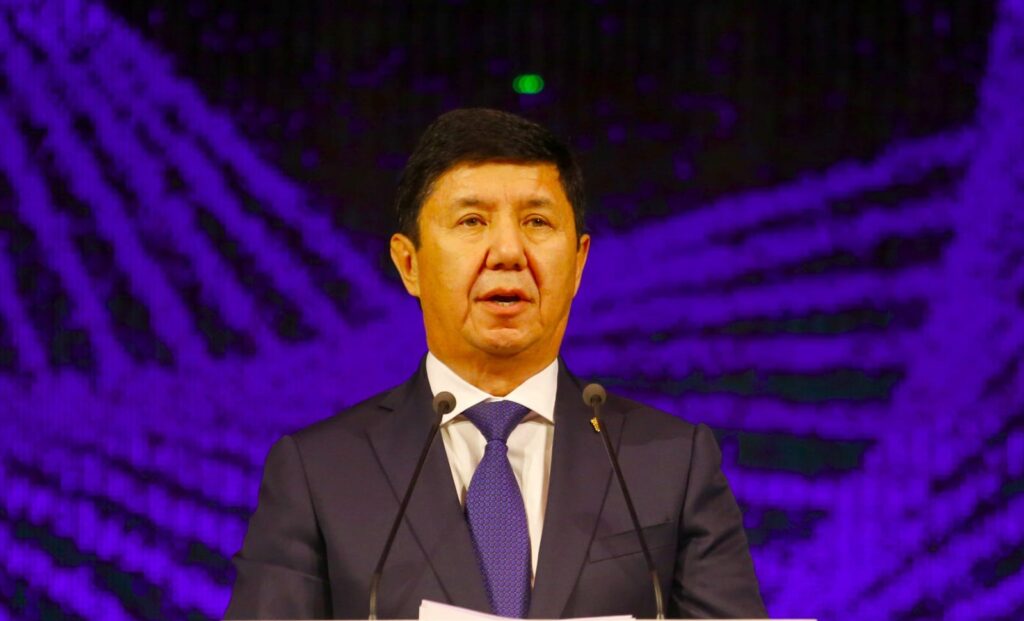
Kyrgyz entrepreneurs have been reminded to legalize their assets as the period for voluntary declaration of income and property nears its end on December 31, 2024. From January 2025, authorities are set to launch extensive inspections of businesses, prompting Temir Sariev, head of the Chamber of Commerce and Industry (CCI) of Kyrgyzstan, to call on business owners to act promptly. The law on voluntary legalization and amnesty of assets, introduced in 2023, offers citizens a chance to declare their assets with state guarantees of protection against criminal prosecution. By participating in the program, individuals and businesses can secure the preservation of their declared assets. As previously reported by The Times of Central Asia, in an effort to accelerate this process, President Sadyr Japarov set a public example in early 2024 by legalizing a multi-story building in Bishkek valued at $20 million. Temir Sariev emphasized that legalizing assets will improve economic transparency, protect citizens’ social and economic rights, and enhance Kyrgyzstan’s attractiveness to investors. “An obvious benefit of asset legalization is the reduction of the shadow economy,” Sariev noted. According to the Ministry of Economy and Commerce, the shadow economy accounted for approximately 20% of GDP in 2023, although unofficial estimates suggest it could be twice as high. International examples indicate that asset and income legalization reduces the size of the informal sector, increases transparency, fosters competition, and attracts new investments. While the potential advantages include increased tax revenues and improved public infrastructure, Sariev acknowledged the challenges for businesses transitioning out of the shadow economy. Small and medium-sized enterprises (SMEs) accustomed to operating informally may face difficulties adjusting to legal frameworks and potentially higher tax burdens. To address these challenges, Sariev highlighted the need for new accounting systems, staff training, and significant government investment in modernizing tax administration. This summer, the Kyrgyz government introduced changes to the taxation system, replacing voluntary patents - used by hundreds of thousands of businesses and individuals - with a mandatory payment system based on cash register accounting. The shift aims to increase transparency and accountability in the private sector. The Chamber of Commerce and Industry continues to encourage businesses to take advantage of the current voluntary declaration period to ensure smoother compliance with the evolving economic landscape.

UAE Embracing the Silk Road Narrative: Central Asia at Art Abu Dhabi 2024

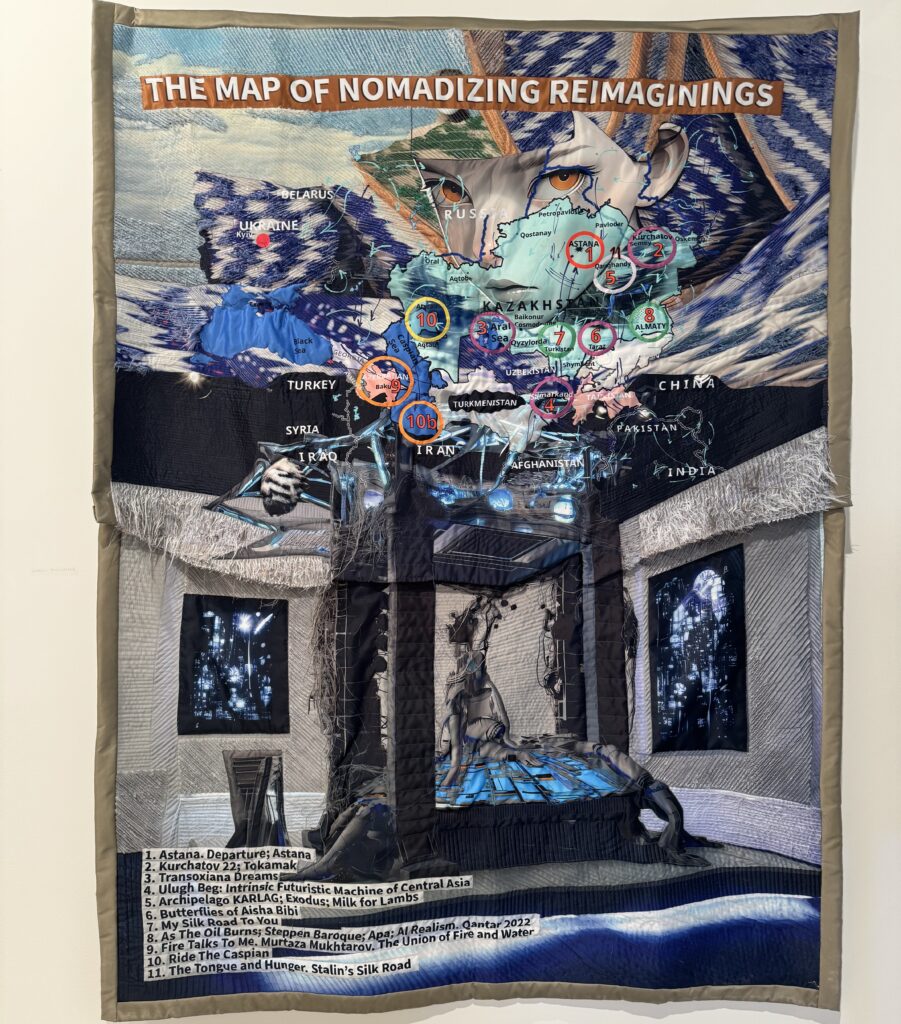
More than at any other time in recent history, the entire art world is this year tackling geopolitical identity issues. And while we usually delegate Biennales and non-commercial art events to take the pulse of our contemporary reality, this time an art fair took up this task: Art Abu Dhabi. This year the fair was bigger than ever and had a hugely relevant Central Asian and Caucasus section, curated by Elvira Eevr Djaltchinova-Malec, which was aptly called “Drifting identities.” Founder of the Warsaw Institute for Modern and Contemporary Asian Art (WIMCAA) Foundation - based on the spreading of Asian and global art – Djaltchinova-Malec was invited by the fair's artistic director, Dyala Nusseibeh, to curate a section that presented different aspects of the rich cultural tapestry of the region without shying away from the political concerns and instability which often characterize this part of the world. [caption id="attachment_26543" align="aligncenter" width="928"] From left to right, Abdelmonem Alserkal - prominent art patron based in Dubai, founder of the Alserkal Avenue, Alserkal Foundation, Elvira Eevr Djaltchinova-Malec, Almagul Menlibayeva, and Danagul Tolepbay image: Elvira Eevr Djaltchinova-Malec[/caption] Djaltchinova-Malec has been working on this concept of the Silk Road in different shows – namely Silk Road 2.0 - Artists re-loaded conference in Warsaw, Silk Road 2.0 - New Opportunities panel for art for 021 Art fair in Shanghai - adapting it to the changing geopolitical landscape of the region. "Our foundation was established in 2016, and already, eight years ago, we started to explore the topic of the Silk Road,” Djaltchinova-Malec told TCA. “We wanted to understand the desire of China and countries who joined Chinese projects for the New Silk Road, and we invited artists and art professionals from Vietnam, the United Kingdom, Central Asia, Kazakhstan, Germany, Tibet, France, and Ukraine for the foundation’s first conference.” The Belt and Road Initiative, sometimes referred to as the New Silk Road, is a global infrastructure development strategy adopted by the Chinese government in 2013 to invest in more than 150 countries and international organizations. [caption id="attachment_26545" align="aligncenter" width="2560"] Tapestry by Almagul Menlibayeva; image: Elvira Eevr Djaltchinova-Malec[/caption] It’s the first time that the curator is presenting these artistic geographies in the context of the Gulf. On one hand, this is opening up Central Asian narratives to an Arab public that might be curious to learn more about art in this region. On the other hand, it is helping to open markets and create access to a different pool of new collectors. Thanks to an individual outreach which started well before the fair, the experiment proved successful. "Fortunately, many collectors from the Gulf already know artists from Central Asia, as there are a few art galleries in the UAE which represent them, as well as institutions like the Sharjah Foundation,” Djaltchinova-Malec stated. In addition, many collectors and artists from Russia who are knowledgeable about Central Asian narratives and sensitive to colonization issues, are now based in the UAE. “We tried to involve as many collectors from other circles as...

Tinker, Tailor, Kazakh Ties: UK Spy Trial Reveals Moscow’s Long Shadow in Kazakh Politics

London's Central Criminal Court, known as the Old Bailey, is currently hearing the trial of several Bulgarian nationals accused by the British authorities of spying for Russia’s intelligence services. The case is likely being scrutinized not only in Moscow but also in Astana, as at least two of the six alleged operations relate to Kazakhstan. A Favor for Nazarbayev The defendants, five Bulgarian citizens, are accused of planning six espionage operations, one of which centers around Bergey Ryskaliyev, a former senior Kazakh official during the presidency of Nursultan Nazarbayev.The accused filmed Ryskaliyev in his London home and plotted to alternately dress up as DHL or Deliveroo drivers, or use a fake ambulance as a cover to access his premises. Ryskaliyev served as akim of the oil-rich Atyrau region from 2006 to 2012, before leaving Kazakhstan amid serious corruption allegations. Both he and his brother Amanzhan - an ex-deputy of the Mazhilis - have been wanted in their homeland for over a decade, facing charges of large-scale corruption, organized crime, false entrepreneurship, and money laundering. Public opinion in Kazakhstan attributes the Ryskaliyev brothers’ prosecution to their alleged involvement in the December 2011 Zhanaozen uprising. According to reports, the uprising was intended to culminate in Nazarbayev’s resignation through a symbolic “march to Astana.” By the summer of 2012, Nazarbayev seemed wary of Ryskaliyev, publicly thanking him for his service during a visit to Atyrau. Shortly after, Ryskaliyev resigned for "health reasons,” while Amanzhan stepped down as a Mazhilis deputy. The brothers remained in hiding for years, with their lawyers claiming in a 2019 trial that their whereabouts were unknown. However, reports later surfaced that Ryskaliyev had filmed and leaked a video of Nazarbayev in London’s Hyde Park, allegedly using it to blackmail the former president. Ryskaliyev denied this, characterizing his actions as a “small rally” outside Nazarbayev’s residence. Despite these allegations, Kazakhstan’s Supreme Court ruled in 2020 to return some of Ryskaliyev’s confiscated assets, including land, money, and shares in various companies, and to reverse property seizures which had affected their spouses. Prosecutors in the London trial allege that Ryskaliyev’s case was part of an operation to foster stronger ties between Moscow and Astana, with Russia suggesting that Kazakhstan might benefit from pursuing him. If accurate, this initiative likely predated January 2022, when Nazarbayev retained significant influence despite stepping down as president. Targeting Tokayev? The second alleged operation appears to have been directed at Kazakhstan’s current president, Kassym-Jomart Tokayev. Prosecutors claim the defendants planned a staged protest outside Kazakhstan’s embassy in London in September 2022, intending to pass information about the “organizers” to the Kazakh authorities. This, they argue, was another effort to bolster Russian-Kazakh relations. However, details reported by Germany’s Der Spiegel suggest a more specific objective. According to the report, the FSB instructed the operatives to stage a protest and send a letter to European Commission President Ursula von der Leyen, ostensibly from a fabricated group critical of Tokayev. Plans also included splashing fake blood or pig’s blood on the...

U.S. Ambassador to Kazakhstan Daniel Rosenblum Resigns

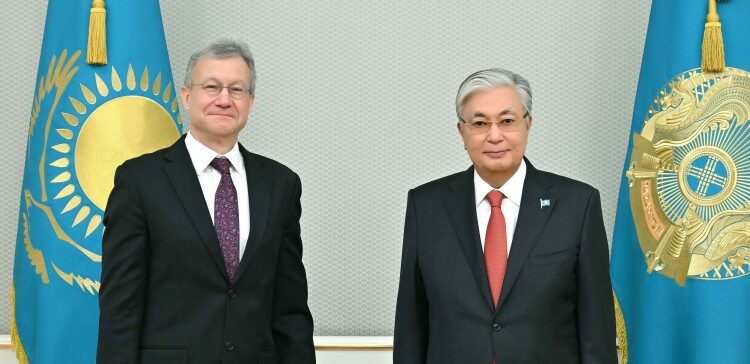
U.S. Ambassador to Kazakhstan Daniel Rosenblum has announced his resignation, effective January 20, 2025. His departure coincides with similar resignations by U.S. Ambassadors Philip Goldberg in South Korea and Mark Libby in Azerbaijan, all stepping down from diplomatic service. The timing of these resignations has sparked speculation, as it aligns with the start of a new presidential term for Donald Trump. End of a Distinguished Career Rosenblum informed the Kazakh government of his decision on November 26, concluding a nearly 28-year career with the U.S. State Department. He has served as Chief of Mission in Kazakhstan since November 2022, representing the United States through five presidential administrations and eight secretaries of state. “It has been a tremendous honor to serve as U.S. Ambassador to Kazakhstan. I have developed a deep respect for the country’s culture, traditions, and people,” Rosenblum said. Under his tenure, bilateral relations flourished, with progress in trade, investment, cultural exchange, university partnerships, and security cooperation. Rosenblum also emphasized his admiration for Kazakhstan’s family-oriented values and expressed optimism about its future: “Kazakhstan’s future is bright, and its opportunities are virtually limitless because the country is built on strong family traditions,” he remarked. While Rosenblum plans to retire from the State Department, he expressed a desire to return to Central Asia, possibly as a tourist or in another capacity. Transition at the U.S. Embassy Deputy Chief of Mission Deborah Robinson will serve as Chargé d’Affaires until a new ambassador is appointed and confirmed. The U.S. Consul General in Almaty, Michelle Erkin, will also continue her work. Rosenblum’s predecessor, William Moser, ended his term in September 2021, preceding Rosenblum’s appointment in late 2022. Resignations in South Korea and Azerbaijan Rosenblum’s resignation coincides with similar announcements by Philip Goldberg, U.S. Ambassador to South Korea, and Mark Libby, U.S. Ambassador to Azerbaijan. Goldberg, who has served in diplomatic roles for nearly 35 years, plans to step down in January 2025. His tenure in South Korea began in July 2022, during the administration of President Yoon Suk-Yeol, and was marked by efforts to strengthen the U.S.-Korea alliance and enhance trilateral cooperation with Japan. Mark Libby’s resignation reflects similar timing, with discussions focusing on the alignment of these departures with the return of Donald Trump to the U.S. presidency. A Broader Diplomatic Crisis? These resignations occur against the backdrop of challenges in the U.S. diplomatic service, highlighted in a report by the Senate Foreign Relations Committee. The report detailed staffing issues during Trump’s first term, with several key State Department positions either unfilled or held by interim appointees. The conclusion of Rosenblum’s distinguished career marks the end of a productive chapter in U.S.-Kazakh relations, leaving his successor with the task of continuing to foster this important bilateral partnership.

Central Asia Braces for Return of Radical Islamists Amid Syrian Turmoil

According to experts, the recent collapse of President Bashar al-Assad's regime in Syria raises concerns about potential destabilization in Central Asia. This development may force regional governments to repatriate citizens who were lured by Islamist propaganda, while the future of the Astana format negotiations on Syria remains uncertain. The swift coup d'état in Syria saw opposition forces capture Damascus and much of the country within days. Bashar al-Assad fled to Moscow, leaving a chaotic landscape dominated by the Islamist group Hayat Tahrir al-Sham, often described as a successor to ISIS and Al-Qaeda. The situation has plunged Syria into further instability. The Impact of Operation Zhusan Kazakhstan has firsthand experience dealing with the repercussions of Syria's instability. Between 2013 and 2017, hundreds of Kazakh citizens succumbed to Islamist propaganda, crossing borders illegally to join the conflict, often with their families. In response to the humanitarian crisis, Kazakhstan launched Operation Zhusan ("Wormwood") in January 2019 to repatriate citizens trapped in Syria. The operation, conducted in five stages and completed by February 2021, repatriated 607 citizens, 37 men, 157 women and 413 children (34 of whom were orphans). The government set up a rehabilitation center near Aktau on the Caspian Sea to provide treatment, restore documents, and offer vocational training for adults and education for children. All 37 repatriated men were detained and later convicted of terrorism-related activities, receiving sentences ranging between 6 and 14 years, whilst 18 women faced prosecution. Despite the operation’s success, many in Kazakhstan fear the returnees and their children might spread radical ideologies within the country. Lessons from the Region Other Central Asian countries have also grappled with the challenge of repatriating citizens from Syria. Bakhtiyor Babadjanov, an expert from the Institute for Strategic and Regional Studies under Uzbekistan’s president, detailed the experiences of Uzbek women lured to conflict zones. These women often found themselves deceived and abandoned in dire conditions, as described in an interview. "The 'happy caliphate' turned out to be a myth," Babadjanov explained, recounting stories of women and children abandoned without food or shelter during battles in Mosul. Survivors reported forced marriages, child abuse, and exploitation under the guise of religious duty. The Uncertain Future of the Astana Process Another significant connection between Central Asia and Syria has been the Astana process, a series of negotiations aimed at resolving the Syrian conflict. Since 2017, Kazakhstan has hosted 22 rounds of talks, including discussions on hostages, missing persons, and settlement efforts. However, the recent escalation in Syria casts doubt on the process. In late November and early December, armed opposition groups launched a large-scale offensive, capturing key cities, including Aleppo and Damascus. Despite this upheaval, Russian presidential spokesman Dmitry Peskov insisted the Astana process remains relevant as a platform for dialogue and consultation, notwithstanding the fact that Assad is now in Moscow. Heightened Risks of Destabilization Experts in Kazakhstan and Central Asia have warned that the fall of Assad's regime could lead to prolonged anarchy, ethnic and religious conflicts, and a refugee crisis. Political scientist,...