• KGS/USD = 0.01144 0%
  • KZT/USD = 0.00209 0%
  • TJS/USD = 0.10528 0.19%
  • UZS/USD = 0.00008 0%
  • TMT/USD = 0.28490 0%
  • KGS/USD = 0.01144 0%
  • KZT/USD = 0.00209 0%
  • TJS/USD = 0.10528 0.19%
  • UZS/USD = 0.00008 0%
  • TMT/USD = 0.28490 0%
  • KGS/USD = 0.01144 0%
  • KZT/USD = 0.00209 0%
  • TJS/USD = 0.10528 0.19%
  • UZS/USD = 0.00008 0%
  • TMT/USD = 0.28490 0%
  • KGS/USD = 0.01144 0%
  • KZT/USD = 0.00209 0%
  • TJS/USD = 0.10528 0.19%
  • UZS/USD = 0.00008 0%
  • TMT/USD = 0.28490 0%
  • KGS/USD = 0.01144 0%
  • KZT/USD = 0.00209 0%
  • TJS/USD = 0.10528 0.19%
  • UZS/USD = 0.00008 0%
  • TMT/USD = 0.28490 0%
  • KGS/USD = 0.01144 0%
  • KZT/USD = 0.00209 0%
  • TJS/USD = 0.10528 0.19%
  • UZS/USD = 0.00008 0%
  • TMT/USD = 0.28490 0%
  • KGS/USD = 0.01144 0%
  • KZT/USD = 0.00209 0%
  • TJS/USD = 0.10528 0.19%
  • UZS/USD = 0.00008 0%
  • TMT/USD = 0.28490 0%
  • KGS/USD = 0.01144 0%
  • KZT/USD = 0.00209 0%
  • TJS/USD = 0.10528 0.19%
  • UZS/USD = 0.00008 0%
  • TMT/USD = 0.28490 0%

Viewing results 967 - 972 of 2031

Middle East Conflict Disrupts Flights with Central Asia

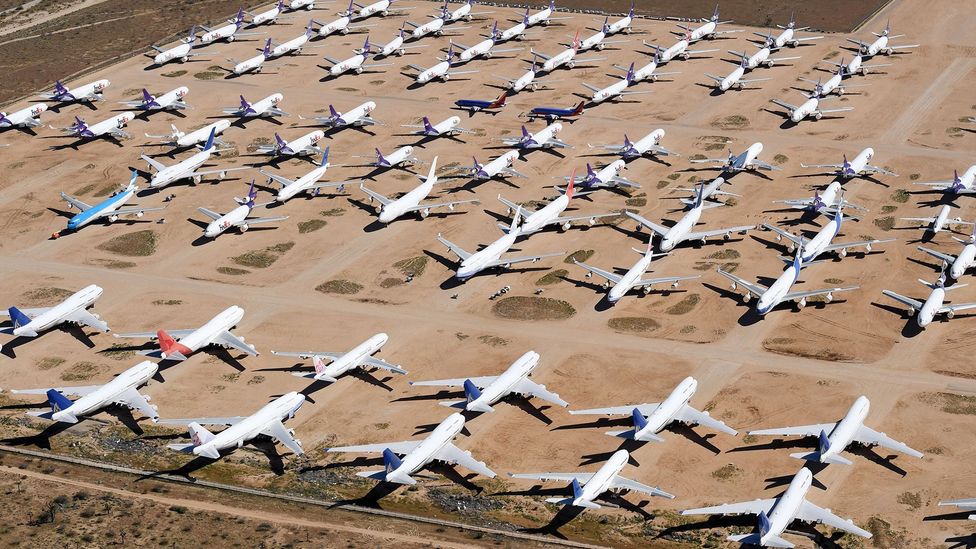
The growing conflict between Israel and Iran has disrupted international air travel in the Middle East, and Central Asia is grappling with cancellations and rerouted flights to and from the region. Flynas, a low-cost Saudi airline, and Qeshm Air, an Iranian carrier, have temporarily canceled flights to Uzbekistan “due to the escalation of tensions in the Middle East and the closure of part of the airspace,” the state-run Uzbekistan Airports company said on Telegram on Wednesday. The cancellations were a Flynas flight on the Jeddah-Tashkent-Jeddah route; another roundtrip Flynas flight from Jeddah to the Uzbek city of Namangan and back; and a Qeshm Air flight from Tehran to Tashkent and back to the Iranian capital, according to the Uzbek company. It advised travelers to check departure information with airline representatives. Air Astana, Kazakhstan’s national carrier, said it had decided to bypass Iran’s airspace on its flights to Dubai after analyzing the situation in the Middle East and following guidance from the national aviation authorities. “As a result, the flight routes from Astana and Almaty to Dubai will be altered, and flight time will be extended,” Air Astana said on Telegram. “Flights to Jeddah will remain unchanged but may be reconsidered if military activity in the region escalates. If necessary, the airline will implement additional changes to ensure flight safety.” Aviation authorities of Kazakhstan’s Ministry of Transport have advised domestic airlines to avoid Iranian airspace, according to Kazinform, a state-run news agency. The flight disruptions came after Iran launched hundreds of missiles at Israel on Tuesday, and Israel warned that it will respond forcefully to the attack. The confrontation threatens a broader conflict in the region as Israel is already conducting military operations against two Iran-backed groups, Hamas in Gaza and Hezbollah in Lebanon.


Kazakhstan’s Youth Suicide Crisis: Unraveling the Complex Web of Societal Challenges

A wave of suicides among teenagers and young adults has swept across Kazakhstan. Parents and the Children's Ombudsman have said children were provoked to do dangerous things by the internet, and deputies have demanded that social networks should be blocked. The media, meanwhile, has been accused of creating a “Werther effect,” fixating on the rash of suicides and thus encouraging teenagers to repeat these acts of self-harm. However, experts believe the cause is much more nuanced and cannot be eliminated by blocking harmful content alone. Chronicle of a Fateful September On September 13, a teenager fell from an eighth-story window in Astana. The boy died of his injuries. The very next day, a schoolgirl plummeted from a fifth-floor window in Shchuchinsk. The 12-year-old girl is in hospital, and the causes of both incidents are still under investigation. On September 16 in Almaty, two seventh-grade students from school No. 25 named after the writer I.Esenberlin, left class and climbed to the attic of a neighbor's apartment complex. The girls both fell to their death from the roof. “I came, and I saw two girls lying there. They had jumped from the roof," an eyewitness stated. "The girls were about 13 years old; seventh graders. One had a backpack next to her, and the other had no shoes and was wearing black tights. She had taken her shoes off and placed them neatly. One fell on a car, and her body rolled away. The second was immediately killed on the asphalt.” Later, it became known that one of the girls was the daughter of a famous Almaty ecologist and artist. Deputy Interior Minister Igor Lepekha said that what happened "is a suicide; the case was opened based on it being suicide." On September 21, another schoolgirl fell from a high-rise in Almaty. Allegedly, the girl left the house to perform a routine task, but climbed to the 13th floor, from where she plunged. The Almaty Police Department confirmed the girl's death and has opened a criminal case. By this time, in schools, online, and on social networks, parents had started to spread panicked rumors about the impact on children of a particular computer game, similar to the semi-mythical game “Blue Whale.” In the past, Blue Whale has been decried as a malicious game which encourages teenagers to commit suicide and acts of violence, but no convincing evidence has ever been presented. The Almaty police stated that gossip regarding the involvement of dangerous internet games in the girls' deaths is not valid and reminded the public about their responsibility vis-à-vis spreading false information. On September 22, in the yard of a multi-story residential building in Almaty, the body of a 3rd-year cadet from the Border Academy of the National Security Committee (NSC) who was on regular leave was found. “The cause of death was a fall from a height,” the NSC press service reported. On September 23, also in Almaty, multiple sources reported that a young man had tumbled from a high-rise building. Police...

Observers From 30 Countries Will Follow the Referendum on NPP in Kazakhstan

The secretary of the Central Referendum Commission, Mukhtar Erman, has announced that 177 international observers will monitor the referendum on constructing a nuclear power plant (NPP) in Kazakhstan. Erman specified that observers represent 30 countries and four international organizations. Major international organizations invited by Kazakhstan include the OSCE, SCO, CIS, and Organization of Turkic States; however, the OSCE will not participate due to its high workload. Deputy Foreign Minister Roman Vassilenko added that 200 foreign journalists from 37 countries, including international media representatives, will work on the day of the referendum. According to Vassilenko, this will ensure transparency and objectivity. The idea of holding the referendum, which will be held on October 6, 2024, emerged against the backdrop of regular problems with energy supply and the need to modernize infrastructure. An active debate has characterized the build-up to the referendum, a project supported by the authorities as a solution to combat energy shortages and carbon dioxide emissions, whilst some quarters of the population remain concerned about environmental risks and Kazakhstan's historical connection to nuclear testing.

China Officially Joins the Middle Corridor

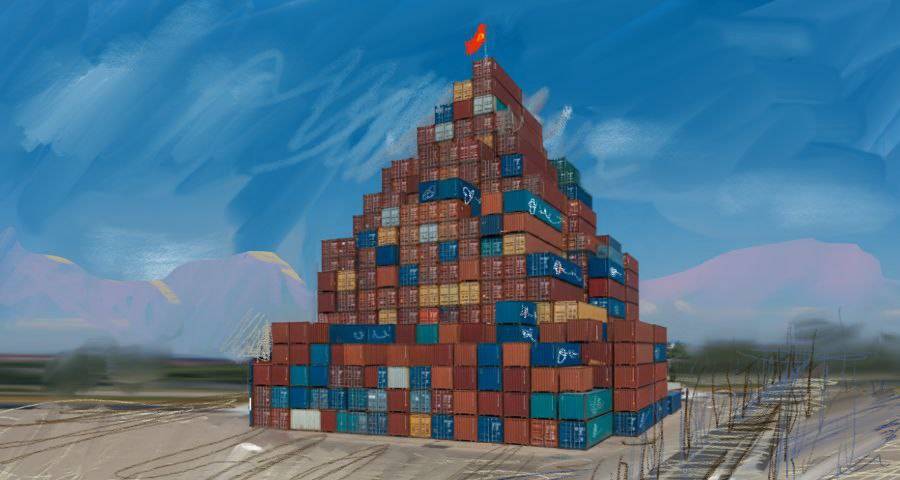
It was announced during the 8th International Silk Road Expo in Xi’an in September 2024 that China will formally join the Middle Corridor under the guise of participation by the China Railway Container Transport Corporation (CRTC). This move signals a growing reliance on Central Asia’s trade-route infrastructure potential. China's shift to overland routes is part of a broader strategy to diversify away from traditional maritime routes through chokepoints like the Strait of Malacca, which carry geopolitical risk. Kazakhstan's strategic geographic location naturally makes it indispensable to China’s trade, and infrastructure projects currently underway represent a key component of the Middle Corridor’s potential. In July 2024, Kazakh President Kassym-Jomart Tokayev ratified agreements with China aimed at further developing the Middle Corridor, enhancing both road and rail infrastructure. The country has already been upgrading its rail infrastructure, modernizing dry ports like Khorgos on the Chinese border, and expanding transit facilities at the Caspian Sea port of Aktau. The increased flow of goods through Kazakhstan is evident: over 212 container block trains have passed through the country by September 2024, with the number projected to exceed 300 by the year’s end. These build-outs, and particularly Kazakhstan’s modernization of its railways, go hand-in-hand with the recently finished improvements along the Baku-Tbilisi-Kars (BTK) line, which connects Azerbaijan to Turkey via Georgia. The expansion of the BTK line's capacity from 1 million to 5 million tons per year has now been completed. As a result of all these efforts, the travel time for goods from China to the Black Sea has been reduced to just 10–12 days, highlighting the efficiency of the corridor. Azerbaijan also plays a crucial role in this economic ecosystem. Baku’s port of Alat serves as a critical transit point for cargo crossing between Central Asia and the South Caucasus. Azerbaijan’s collaboration with Kazakhstan, Georgia, and Turkey has led to significant investments in expanding port facilities and upgrading railway systems beyond the crucial BTK link mentioned above. The result is a smoother, more reliable flow of goods from China to Europe. Azerbaijan is winning its bet to become a regional logistics hub. In addition, a Chinese consortium recently secured the contract for the construction of the Anaklia deep-sea port in Georgia, a strategically important site on the eastern edge of the Black Sea. The project was initially awarded to a Georgian-American consortium, but was cancelled in 2020 due to political and legal disputes. Following a new tender process this year, the Chinese consortium emerged as the sole bidder. If supporting infrastructure is adequately developed and the Black Sea’s cargo transit capacity can be significantly enhanced, then the Anaklia port could become a critical node in the Middle Corridor, enhancing its role in Eurasian trade and bolstering regional connectivity. China’s increased reliance on Central Asian, trans-Caspian, and South Caucasus routes is not just about efficiency. It is also a strategic diversification to mitigate the risks posed by geopolitical instability in other regions. Traditional sea routes through maritime choke-points as well as overland routes like...

Lukashenko Turns Up Charm After Kazakhstan Kerfuffle

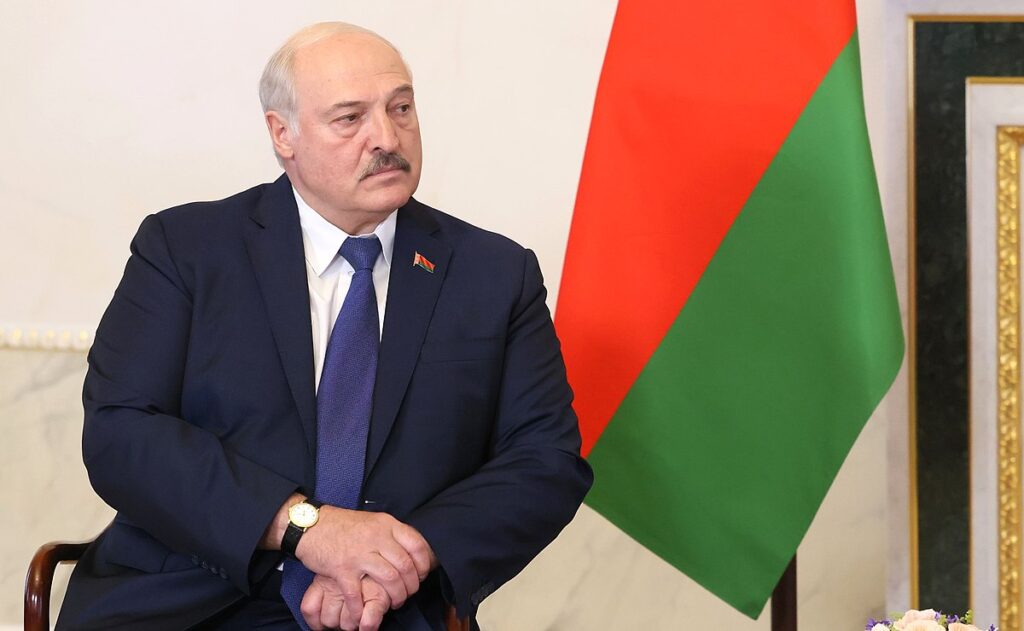
In August, Belarusian leader Aleksandr Lukashenko drew a Kazakh rebuke after he criticized Kazakhstan for what he described as its tepid support for Russia. Lukashenko was a model of diplomatic etiquette on Tuesday, effusively praising Kazakhstan as a close ally during a ceremony at which he received credentials of foreign ambassadors. “Today there are practically no areas where we do not have common interests. Annual $1 billion trade turnover and successful projects in industrial interaction testify to the high dynamics of bilateral cooperation,” the longtime Belarusian ruler said of Kazakhstan. Lukashenko´s comments were reported by Belarus Today, a state-run media group. The Belarusian president also thanked Kazakh President Kassym-Jomart Tokayev for supporting Belarus when it became a member of the Shanghai Cooperation Organization, a regional security group, earlier this year, according to Belarus Today. Kazakhstan was chair of the organization at the time. Things weren’t as convivial in August when Lukashenko, a backer of Russian President Vladimir Putin, suggested in an interview with Russian state television that Kazakhstan was exploiting Russia, now in a third year of war since its full-scale invasion of Ukraine in February 2022. “We are not starting to cheat like some post-Soviet states. They want to take something from Russia, but give nothing in return,” Lukashenko said at the time. The longtime leader of Belarus, who has crushed opposition over 30 years in power, referred to the dispatch of troops from regional countries to Kazakhstan in a show of support after protests and riots erupted there in January 2022, killing more than 200 people. Most of the troops were Russian; a small contingent came from Belarus. Kazakhstan’s Ministry of Foreign Affairs summoned the Belarusian ambassador after Lukashenko’s remarks and said, in an apparently oblique reference to the Ukraine war, that “all disagreements between states should be resolved by political and diplomatic means.” Kazakhstan’s new ambassador in Belarus is Yerlan Baizhanov, formerly the country’s top diplomat in Vietnam, Cambodia and Laos.

The Geopolitical Battle for Kazakhstan’s First Nuclear Power Plant

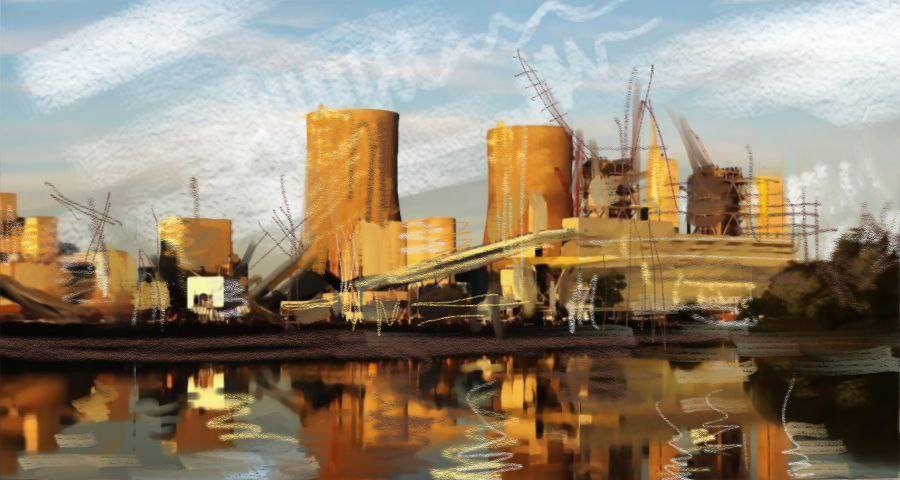
Nuclear power plants currently operate in only 32 countries in the world. Kazakhstan seems poised to join their ranks in the near future; but what does this shift mean for the energy-rich Central Asian nation? Following the collapse of the Soviet Union in 1991, Kazakhstan has been a strong advocate for nuclear non-proliferation and disarmament. Astana not only eliminated its nuclear arsenal, which was one of the largest in the world at the time, but also closed the Semipalatinsk nuclear test site, where the Soviet Union conducted more than 450 nuclear tests over 40 years. Thousands of people in Kazakhstan experienced birth defects and cancer linked to nuclear testing. This history makes the construction of a nuclear power plant in the former Soviet republic a particularly sensitive issue. Nevertheless, a majority of the population in Kazakhstan is expected to support building a nuclear facility in the national referendum scheduled for October 6. But what comes after the vote? If the citizens of Kazakhstan approve the government’s plans to go nuclear, the country might get its first nuclear power plant no earlier than 2035. In the meantime, Astana will have to find a strategic partner to participate in the development of the facility. Building and operation a nuclear power plant requires advanced technology, engineering expertise, and rigorous safety standards – areas where Kazakhstan currently lacks experience. “As a result, the country will likely need to rely on international partners to design, build, and possibly even operate its first nuclear power plant,” said James Walker, CEO and Head of Reactor Development at NANO Nuclear Energy, in an interview with The Times of Central Asia. Although most policymakers in Kazakhstan would like Western companies to build a nuclear power plant in Ulken, on the western shore of Lake Balkhash, at this point the Russian State Nuclear Energy Corporation Rosatom seems to have the best chance of playing a key role in the project. In Walker’s view, Russia has a long history of cooperation with Kazakhstan in the nuclear sector and could be a logical partner, especially given its extensive experience in building and operating nuclear power plants in other countries. “Rosatom has been actively involved in Kazakhstan’s nuclear sector for years, including uranium mining and nuclear fuel cycle activities. This established presence, coupled with Russia’s geopolitical influence in Central Asia, makes Rosatom a strong contender,” stressed the CEO of NANO Nuclear Energy, pointing out that Chinese corporations are also very interested in the potential construction of the first Kazakh nuclear power plant. Indeed, according to reports, the China National Nuclear Corporation offered to build a 1.2 GW nuclear power plant unit in Kazakhstan for $2.8 billion, with the construction taking five years. Another candidate for the project is South Korea’s Korea Electric Power Corporation. The largest electric utility in the East Asian nation reportedly proposed building a water-cooled power reactor –using water as a coolant to transfer heat away from the core. Walker, however, argues that while South Korea has a competitive edge...