• KGS/USD = 0.01144 0%
  • KZT/USD = 0.00200 0%
  • TJS/USD = 0.10468 -0.1%
  • UZS/USD = 0.00008 0%
  • TMT/USD = 0.28571 0%
  • KGS/USD = 0.01144 0%
  • KZT/USD = 0.00200 0%
  • TJS/USD = 0.10468 -0.1%
  • UZS/USD = 0.00008 0%
  • TMT/USD = 0.28571 0%
  • KGS/USD = 0.01144 0%
  • KZT/USD = 0.00200 0%
  • TJS/USD = 0.10468 -0.1%
  • UZS/USD = 0.00008 0%
  • TMT/USD = 0.28571 0%
  • KGS/USD = 0.01144 0%
  • KZT/USD = 0.00200 0%
  • TJS/USD = 0.10468 -0.1%
  • UZS/USD = 0.00008 0%
  • TMT/USD = 0.28571 0%
  • KGS/USD = 0.01144 0%
  • KZT/USD = 0.00200 0%
  • TJS/USD = 0.10468 -0.1%
  • UZS/USD = 0.00008 0%
  • TMT/USD = 0.28571 0%
  • KGS/USD = 0.01144 0%
  • KZT/USD = 0.00200 0%
  • TJS/USD = 0.10468 -0.1%
  • UZS/USD = 0.00008 0%
  • TMT/USD = 0.28571 0%
  • KGS/USD = 0.01144 0%
  • KZT/USD = 0.00200 0%
  • TJS/USD = 0.10468 -0.1%
  • UZS/USD = 0.00008 0%
  • TMT/USD = 0.28571 0%
  • KGS/USD = 0.01144 0%
  • KZT/USD = 0.00200 0%
  • TJS/USD = 0.10468 -0.1%
  • UZS/USD = 0.00008 0%
  • TMT/USD = 0.28571 0%

Viewing results 1057 - 1062 of 1842

“I Hope Saltanat’s Family Can Find Peace” – Women of Kazakhstan Speak Out on Bishimbayev’s Sentence

On November 9, 2023, former Kazakh Minister of the National Economy, Kuandyk Bishimbayev was caught on surveillance cameras arguing with and then brutally beating his common-law wife, 31-year-old Saltanat Nukenova, for around eight hours outside a restaurant he owned in Astana. A forensic examination showed that she had been strangled, but the cause of death was recorded as traumatic injury to the brain. The high-profile case which was live-streamed garnered international attention. Despite pleading not guilty to premeditated murder, Bishimbayev was sentenced to 24 years’ imprisonment for torturing and murdering Nukenova, and his cousin Bakytzhan Baizhanov to four years for his part in covering up the crime. Prosecutor Aizhan Aimaganova, who became widely-known during the trial, said in an interview with Tengrinews.kz that she believes the verdict will change the country forever. "Family and domestic violence is a pressing problem... I hope that after this trial, women will realize that going to law enforcement is not useless. It is necessary to talk about problems. I think now any domestic tyrant will think twice before raising his hand," she said. [caption id="attachment_18029" align="aligncenter" width="872"] Prosecutor Aizhan Aimaganova; image: Press service of the Astana Court[/caption] While the length of the sentence is a victory for advocates against gender-based violence, both within Kazakhstan and in the many parts of Europe where the trial was also followed closely, many Kazakhs feel it is still too early to say that justice has been done. In an open discussion that is rare in Central Asia, many citizens are posting their concerns on social media that the Nazarbayev-era official will find a way to get out of prison early: there is already speculation that Bishimbayev, a former member of the country’s elite, will leverage his political connections to secure an early release – or be recognized as terminally ill. Following the verdict, TCA took to the streets of Kazakhstan to ask women their opinion. "I finally feel relieved,” Sara, an SMM manager from Astana told TCA. “Twenty-four years is a justified sentence in my opinion. Although tragic, this case drew public attention to a great many issues, such as the need for both a new law against domestic abuse and charities to support victims of domestic violence, which is very prominent in Kazakhstan. The whole country watched the case unfold, and that attention was put to good use since many other domestic violence cases got the attention they deserved. I hope that our justice system will make sure that Bishimbayev doesn't get a chance to get out early and serve his full sentence. The same applies to Baizhanov." "Considering various aspects, including the status of his family and the presence of his children, this sentence is probably objective, especially given the jury's involvement,” 21-year-old journalist, Kamila told TCA. “The main issue now is to prevent his release on parole once the unrest subsides, though I know this is only possible if the victim’s family give their consent.” "From an objective point of view, 24-years for a brutal...


Liberalizing Kazakhstan’s Economy Must Not Become Uncontrolled Privatization, Expert Warns

Last week, President Kassym-Jomart Tokayev signed a decree on reducing the state’s participation in the economy, aiming to help develop competition and private business. This could be a significant boost to the economy, financial analyst Rassul Rysmambetov, an Almaty-based expert in distressed assets and Director of the Financial Freedom Public Foundation, told The Times of Central Asia, though everything will depend on how the decree is implemented. Firstly, the decree envisages creating a National Office for Privatization under the Agency for the Protection and Promotion of Competition. This office is to develop criteria for state assets subject to privatization and create a list of them. In addition, measures are provided to increase the autonomy, quality, and independence of corporate governance at Samruk-Kazyna, the National Welfare Fund, and its subsidiaries. “The government must establish a specific list of large entities that will offer major stakes in the next two years in IPOs,” President Tokayev explained. According to Tokayev, the quasi-public sector – bloated and often ridden with debt – needs serious reform. “We need to put an end to the question of where state participation should continue and where competition can be developed. The largest share of the state in the economy is represented by the group of companies held by the Samruk-Kazyna fund, so that is where this work must start. New, systemic measures are required to fundamentally rehabilitate the fund,” the president stated. A separate section of the decree presents measures aimed at protecting the rights and legitimate interests of business, including decriminalizing offenses related to economic activity and coordinating with prosecutors on prohibitive and restrictive measures initiated by government agencies. This is not the first time Kazakhstan has tried to liberalize its economy – it has even privatized social institutions, such as hospitals, schools, and creative centers for children before – but previous attempts yielded no tangible successes. “We need to continue to work to improve the quality of services, consistently reduce state participation and eliminate excessive regulation and restrictions. This applies to all sectors of the economy,” Tokayev stressed. “Uncontrolled monopolies, unequal access to resources and unfair trade practices must be eliminated at the root. A pillar of economic liberalization will be effective privatization. There have been so many privatization plans, but every time we make the same mistakes.” Rysmambetov believes that professionals should take the lead. “Liberalizing the economy is a process. By no means can it be limited to a single decree – it is a strategic course. I see here dozens, if not hundreds of by-laws, industry reference documents and possibly new laws and codes. I'm afraid that parliament will prove unable to keep up with the pace at which these reforms should be carried out,” he stated. According to Rysmambetov, Samruk-Kazyna could be dissolved tomorrow, but the holding has taken on a lot of debt for its subsidiaries, meaning that in the near term its assets can only be partially privatized. In general, each Samruk-Kazyna company has a related supervising ministry, so, to...

Large-Scale Cyberattacks on Kazakhstan Continue

Leaks of millions of citizens data, attacks by hackers, hourly calls from fraudsters - these are just some of the threats which have faced Kazakhstan over the past few months. Following the resignation – or dismissal depending on which source one believes - of the head of the Ministry of Digital Development, Innovation and the Aerospace Industry, Bagdat Mussin, many wonder whether the authorities will be able to secure Kazakhstan's internet. The Times of Central Asia investigates. On May 9, AlmaTV, Kazakhstan’s largest internet and cable TV provider, suffered an attack by hackers which caused disruption to its’ services. “According to data received… the cause of the disruption was a large-scale and multi-level cyberattack," AlmaTV stated. The outage solely affected internet broadcasting, whilst analog, digital and satellite TV services were working normally. According to numerous sources, the broadcast of the Victory Day military parade in Moscow was interrupted by footage of an anti-Russian nature, alleged torture, and other explicit content. Officials in Kazakhstan have yet to commented. This is not the first scandal in the sphere of cybersecurity. In March of this year, the State Technical Service JSC discovered that personal data pertaining to over two million clients of the microfinance organization, zaimer.kz (MFO Robocash.kz LLP), had been compromised. Warnings about the leak were also received by people who had never used the company’s services. In the opinion of many analysts, the reaction of the Ministry of Digital Development, Innovations and the Aerospace Industry was extremely late in coming, extremely vague, and in no way reassured Kazakhstanis about the safety of their private information. Mussin was accused of making excuses, poor-quality communication, failing to answer questions, and “babble talk.” In addition, back in February, foreign media, in particular CyberNews, reported that in leaked Chinese Government documents, data belonging to residents of Kazakhstan was found. The documents were related to spyware developed by the Chinese information security company, iSoon, and targeted social media platforms, telecommunications companies, and other such organizations. Allegedly, unknown assailants have posted a huge number of PRC government documents on GitHub. The information circulated also revealed sensitive data pertaining to several telecom operators in Kazakhstan. Also in February, a shocking statement by the Center for Analysis and Investigation of Cyberattacks (TSARKA) appeared, according to which a Chinese hacker group controlled the critical facets within Kazakhstan's IT infrastructure for almost two years. “On February 16, 2024, unknown persons published on the GitHub resource a leak of secret data from the Chinese company iSoon (aka Anxun), one of the contractors of the Chinese Ministry of Public Security (MPS). It is reported to be associated with Chengdu 404, a structure controlled by Chinese cyber intelligence known as APT41,” TSARKA said. “The attackers’ goal was both general information, such as databases, and targeted information of specific individuals: control of correspondence, calls and movement. Data analysis showed that the volume of stolen information is measured in terabytes.” The hackers managed to gain control over the event logs, call durations, IMEIs of devices, and...

Kuandyk Bishimbayev Given 24 Years in Prison — But Kazakhs Ask How Long He Will Really Serve

On May 13, Kazakhstan’s former Minister of National Economy Kuandyk Bishimbayev was sentenced to 24 years in prison for the torture and murder of his common-law wife Saltanat Nukenova in November 2023. While the length of the sentence is a victory for advocates against gender-based violence, both within Kazakhstan and in the many parts of Europe where the trial was also followed closely, many Kazakhs feel that it is still too early to say that justice has been done. In an open discussion that is rare in Central Asia, many citizens are posting their concerns on social media that the Nazarbayev-era official will find a way to get out of prison early: there is already speculation that Bishimbayev, a former member of the country’s elite, will leverage his political connections to secure an early release – or be recognized as terminally ill. Attempting to quell these fears, state prosecutor Aizhan Aimaganova has said that under Kazakhstani law, Bishimbayev will be able to apply for parole only after serving 16 years, two-thirds of his sentence – and only then with the consent of Saltanat Nukenova’s family, guided by her brother, Aitbek Amangeldy. Saltanat Nukenova's murder has shown that civil society is very much alive in President Kassym-Jomart Tokayev’s Kazakhstan. As previously reported, shortly after her death in November last year, a public movement called Zhana Adamdar organized an authorized rally in Almaty to raise awareness about violence against women and children. Yesterday, on the day of the sentencing, supporters of another Kazakh feminist movement, Feminita, protested in Almaty, Kazakhstan's biggest city. The group is demanding life imprisonment for Saltanat Nukenova’s murderer. "We do not agree with this sentence; [Bishimbayev] should sit in prison for life. He will come out sooner anyway – we urge you never to be silent: if you have the desire and will for it, resist," Vlast.kz quoted Feminita co-founder Zhanar Sekerbaeva as saying. The spokesperson for the Astana court where Bishimbayev was sentenced, Alma Yesymova, has commented that he has received the maximum possible sentence for the crimes he was found guilty of: murder and torture. "The punishment was imposed for committing a particularly grave crime – murder. The sanction for this is a maximum of 20 years of imprisonment. And by partial addition of terms [Bishimbayev] was given four more years for torture. Under the law the very maximum sentence is 25 years, while he was given 24 years," Yesymova said at a press conference after the trial. The trial itself drew criticism from Kazakhstan’s legal professionals. Lawyers and human rights activists are unsatisfied with how both the prosecution and the defense were conducted. Following Nukenova's death, President Tokayev signed a Decree in December 2023 to improve human rights and the rule of law, including by promoting gender equality, combating any form of domestic violence and enhancing the performance of the criminal justice system (which, among other things, involved increasing penalties for perpetrators of domestic violence). The human rights components of the President’s reform agenda was...

Kuandyk Bishimbayev Sentenced to 24 Years for the Murder of Saltanat Nukenova

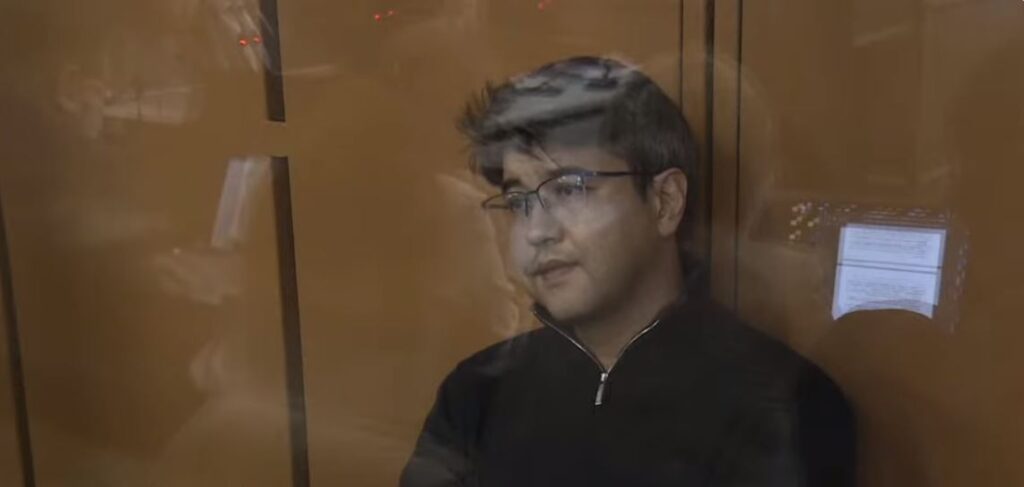
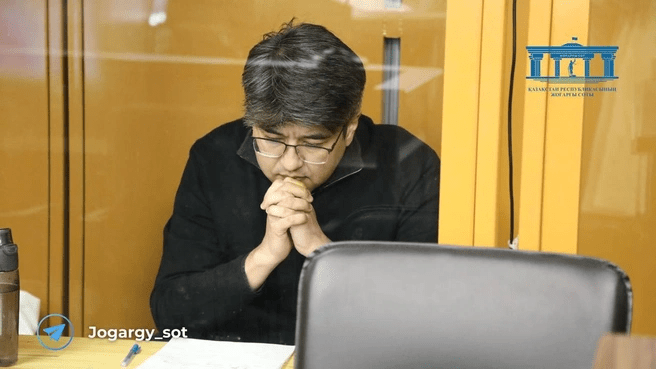
Kuandyk Bishimbayev, a former Minister of National Economy of Kazakhstan under then-President Nursultan Nazarbayev, was sentenced on Monday to 24 years in prison in the specialized inter-district investigative court of Astana for torturing and murdering his common-law wife, Saltanat Nukenova, at the Gastrocenter Restaurant on November 9, 2023. The verdict and sentence in an Astana courtroom followed a live-streamed trial that galvanized discussion about domestic violence in Kazakhstan and tested the ability of the criminal justice system to hold the powerful and influential to account. Rallies in support of Nukenova spread outside of Kazakhstan, and were staged in Czechia, Georgia, Italy, Spain, and numerous other countries. [caption id="attachment_17886" align="alignnone" width="2048"] A rally in Prague in support of Saltanat Nukenova. Image Source: Asel Kamiyeva [/caption] Judge Aizhan Kulbaeva read out the ruling after a jury trial as Bishimbayev stood in the glass-paneled dock, his head bowed at one point. He had acknowledged beating Nukenova and said his actions, which were captured on CCTV video, led to her death. But he claimed he did not intend to kill her. "Bishimbayev Kuandyk Alikhanovich has been found guilty of committing criminal offenses under p. 1. 2 part 2 of article 110 ("Torture") and point 5 part 2 of article 99 ("Murder"). 2 part 2 of article 99 ("Murder") of the Criminal Code," stated the judge. He was sentenced to 7 years on the first count, and 20 years on the second, which after a partial addition of terms amounted to 24 years in prison. [caption id="attachment_17896" align="alignnone" width="1200"] Image from the Astana court session[/caption] In addition, the director of Gastrocenter, Bakhytzhan Baizhanov was found guilty of harboring a particularly serious crime in advance and sentenced to four years in prison in a medium security penal institution, with time already served being taken into account. During the trial, as public outrage over Nukenova’s killing simmered in Kazakhstan, President Kassym-Jomart Tokayev signed a new law in April in line with OECD standards which tightens the penalties for domestic violence and provides more help for survivors. The legislation became widely-dubbed, "Saltanat's Law." The response to Saltanat Nukenova's harrowing attack signals a positive trend for women’s rights in the region. The case quickly advanced to a jury trial, given full transparency via a live broadcast, with a female prosecutor at the helm — a clear stance on gender violence in Kazakhstan. Human Rights Watch commended the law as a step forward, but say it should have designated domestic violence as “stand-alone offense,” which would allow other types of violence within the family, such as psychological or sexual, to be thoroughly investigated and prosecuted. The UNDP, meanwhile, commended “legislative initiatives protecting women’s [and] children’s rights,” calling them a “crucial step towards equality, justice [and] safety for all citizens” that “lay a foundation for a stable, prosperous society.” This is not be the first time that Bishimbayev has been sentenced. In 2018 he received a ten-year sentence for accepting bribes, but after less than a year later he was pardoned...

Cleaning up the Samruk-Kazyna National Welfare Fund

In his efforts to transition Kazakhstan from previous president Nazarbayev’s era, President Kassym-Jomart Tokayev has centered his policy agenda on strengthening justice and eradicating kleptocracy in Kazakhstan. His presidential platform, known as “Just and Fair Kazakhstan,” remains a focal point in his addresses, which often emphasize dismantling systems that have facilitated kleptocracy in the country. Tokayev's anti-corruption efforts aim to enhance transparency and combat corruption through retrieving stolen assets, implementing digital monitoring of public expenditures, mandating financial disclosures from officials, and reallocating confiscated funds to infrastructure projects. In its 2023 consultations, the IMF recognized these positive steps. These initiatives, combined with a notable increase in the public’s trust in the anti-corruption agency from 30% in 2022 to 43% in 2023, reflect tangible progress in Kazakhstan's fight against corruption. A 2024 report by Transparency International asserts that “President Tokayev has initiated a series of anti-corruption reforms, and Kazakhstan is currently in the process of implementing recommendations made by the Council of Europe’s Group of States against Corruption (GRECO) in its 2022 evaluation report.” Critics claim, however, that the country’s administration has not gone far enough in combatting corruption and that the government still lacks transparency when it comes to the management of state assets. Recently, Eurasianet commented that “Kazakhstan shows improvement on graft, but [is] still struggling.” Radio Free Europe has further reported that high-profile Kazakhs were escaping prosecution. Tokayev has been visibly distraught with the government’s progress to date on tackling corruption and has even made major leadership changes, including in the office of the General Prosecutor in 2023. Also in 2023, the former Minister of Justice came under investigation for corruption. In February 2024, the Cabinet resigned to make way for a new government under Olzhas Bektenov, a former head of an anti-corruption watchdog. This move was widely recognized as the latest effort to clean out a bureaucracy compromised by its ties to business elites, particularly those linked with the “Old Kazakhstan” under former president Nazarbayev, who have undermined the state’s capacity to ensure a fair business environment, as well as to effectively investigate and prosecute corruption charges.   New steps to combat corruption and kleptocracy In a presidential decree signed last week “On measures to liberalize the economy” that introduced several initiatives aimed at “ensuring freedom of entrepreneurship by developing competition, reducing state participation in the economy, and reducing business costs”, the President took aim at Samruk-Kazyna National Welfare Fund, i.e., the country’s Sovereign Wealth Fund, which has almost $70 billion under its’ management. The fund has been highly scrutinized for being an instrument of kleptocracy. It has provided unreasonable support to banks, written-off major loans, given exorbitantly favorable loan terms, and in one case, caused a bank to fail and be taken over by a rival months later. As in other post-Soviet republics, banks have been vehicles for oligarchs ascendancy by way of using government funds to build massive business empires. Tokayev has publicly stated that the government needed to “immediately stop this orgy of leaking state...