• KGS/USD = 0.01144 0%
  • KZT/USD = 0.00216 0%
  • TJS/USD = 0.10663 0%
  • UZS/USD = 0.00008 0%
  • TMT/USD = 0.28530 0%
  • KGS/USD = 0.01144 0%
  • KZT/USD = 0.00216 0%
  • TJS/USD = 0.10663 0%
  • UZS/USD = 0.00008 0%
  • TMT/USD = 0.28530 0%
  • KGS/USD = 0.01144 0%
  • KZT/USD = 0.00216 0%
  • TJS/USD = 0.10663 0%
  • UZS/USD = 0.00008 0%
  • TMT/USD = 0.28530 0%
  • KGS/USD = 0.01144 0%
  • KZT/USD = 0.00216 0%
  • TJS/USD = 0.10663 0%
  • UZS/USD = 0.00008 0%
  • TMT/USD = 0.28530 0%
  • KGS/USD = 0.01144 0%
  • KZT/USD = 0.00216 0%
  • TJS/USD = 0.10663 0%
  • UZS/USD = 0.00008 0%
  • TMT/USD = 0.28530 0%
  • KGS/USD = 0.01144 0%
  • KZT/USD = 0.00216 0%
  • TJS/USD = 0.10663 0%
  • UZS/USD = 0.00008 0%
  • TMT/USD = 0.28530 0%
  • KGS/USD = 0.01144 0%
  • KZT/USD = 0.00216 0%
  • TJS/USD = 0.10663 0%
  • UZS/USD = 0.00008 0%
  • TMT/USD = 0.28530 0%
  • KGS/USD = 0.01144 0%
  • KZT/USD = 0.00216 0%
  • TJS/USD = 0.10663 0%
  • UZS/USD = 0.00008 0%
  • TMT/USD = 0.28530 0%

Viewing results 1177 - 1182 of 2176

Kazakhstan Offers to Host Platform for Russia-Ukraine Negotiations

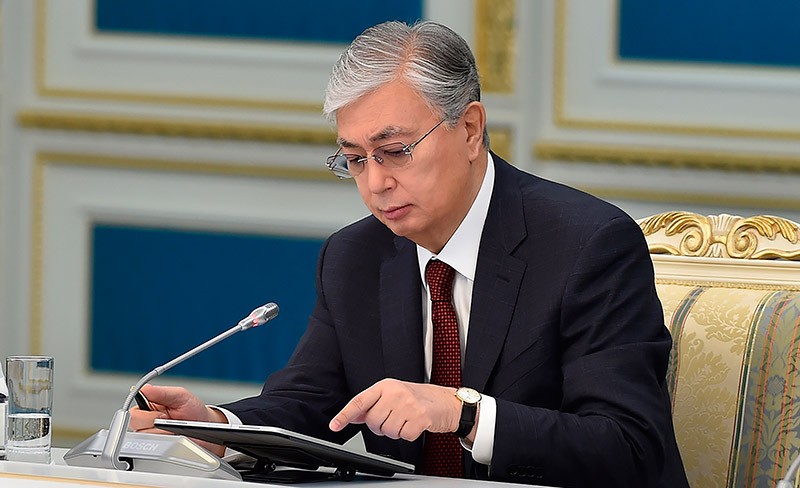
Kazakhstan is prepared to host negotiations to settle the war in Ukraine, according to comments made by Kazakhstan's ambassador to Russia, Dauren Abayev, in an interview with the Russian state news outlet TASS. "Certainly, Kazakhstan is always ready to help on all processes that concern the world. This is not only Russia and Ukraine, but also Armenia and Azerbaijan, on the Syrian issue, on the Iranian issue. It is probably [an overstatement] to say to be mediators, but to provide a platform, to create some conditions, we are certainly ready," Abayev said. He added: "There are many different initiatives now, and there is a clear understanding that without Russia's participation, these processes are impossible. Of course, Russia's opinion should always be taken into account in these processes. Of course, we are ready to be, as I say, not mediators, but to provide a platform, to create some conditions," he added. As previously reported in the media, Kazakhstan's president Kassym-Jomart Tokayev, during his recent visits to Azerbaijan and Armenia, underscored Kazakhstan's readiness to provide platforms for negotiations between Baku and Yerevan. The Armenian foreign ministry said that a direct meeting of the sides will be held as early as May 10. Previously, Kazakhstan provided a platform for negotiations on the war in Syria. Negotiations concerning the Iranian nuclear program have also been held in Kazakhstan.
Ex-Minister Bishimbayev Delivers Last Words in Court Amid Murder Case

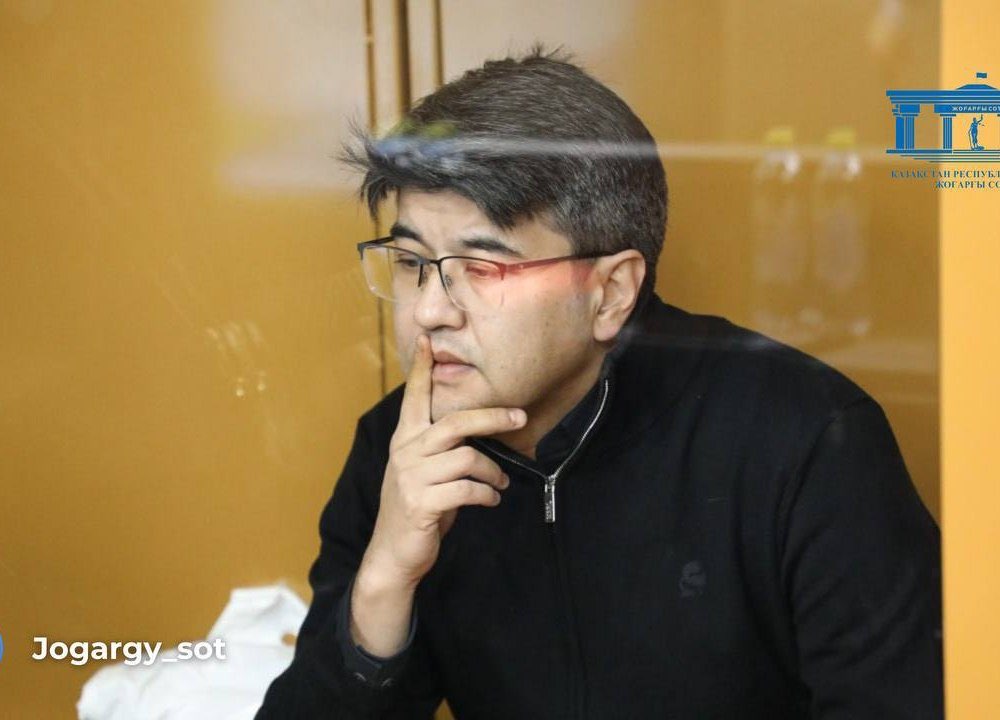
In a pivotal moment that gripped the nation, ex-minister Kuandyk Bishimbayev, alongside his relative Bakhytzhan Baizhanov, stood before a court in Astana on May 6, 2024, to deliver their final statements in a high-profile murder case that has captivated public attention. The courtroom, charged with anticipation, listened intently as Bishimbayev and Baizhanov articulated their last words before the verdict. Bishimbayev, facing charges of murder with particular cruelty and torture of Saltanat Nukenova, expressed profound remorse and a plea for forgiveness. His voice steady, yet laden with emotion, Bishimbayev recounted the events leading to Nukenova's demise, emphasizing the unintentional nature of her death. "I never wished Saltanat to die," he stated, addressing the court and jurors, "I am not guilty of premeditated murder." The forensic evidence cited by Bishimbayev highlighted a hematoma as the cause of Nukenova's death, further distancing the defendant from allegations of intentional harm. Despite the social and media pressure surrounding the case, Bishimbayev remained steadfast in his acknowledgment of guilt, albeit not for premeditated murder. His repentance extended to the public, his family, and friends, underscoring the personal and societal repercussions of his actions. Baizhanov, on the other hand, faced accusations of concealing the crime. In his statement, Baizhanov vehemently denied any prior knowledge of Bishimbayev's actions, asserting that his involvement was without the intention of hiding a crime. "If I had known, I would not have committed these acts," Baizhanov declared, pressing his claim of innocence in the charge of concealing the crime. The case, stemming from the discovery of Nukenova's body on November 9, 2023, at the BAU restaurant owned by Bishimbayev's family, has shed light on darker undercurrents of power and tragedy. Bishimbayev's admission of negligent homicide served to add layers to a case already heavy with implications and public scrutiny. As the trial, which commenced on March 27, draws to a close, hundreds of thousands across Kazakhstan and beyond await the final judgment. The proceedings have not only underscored the legal complexities inherent in such a case, but also reflected broader societal concerns over justice, accountability, and the human capacity for regret and redemption. The coming verdict will not only determine the fate of Bishimbayev and Baizhanov, but also serve as a significant moment in Kazakhstan's judicial history, symbolizing the law's stance on crimes of such a grave nature and the pursuit of truth and justice. Against the backdrop of this high-profile case, human rights groups had called on the authorities in Kazakhstan to toughen penalties for domestic violence. Parliament approved the relevant draft, which the public dubbed "Saltanat’s law", and the document was signed into law by the president on April 15.

Celebrating Russian Orthodox Easter in Central Asia: A Fusion of Traditions and Cultures

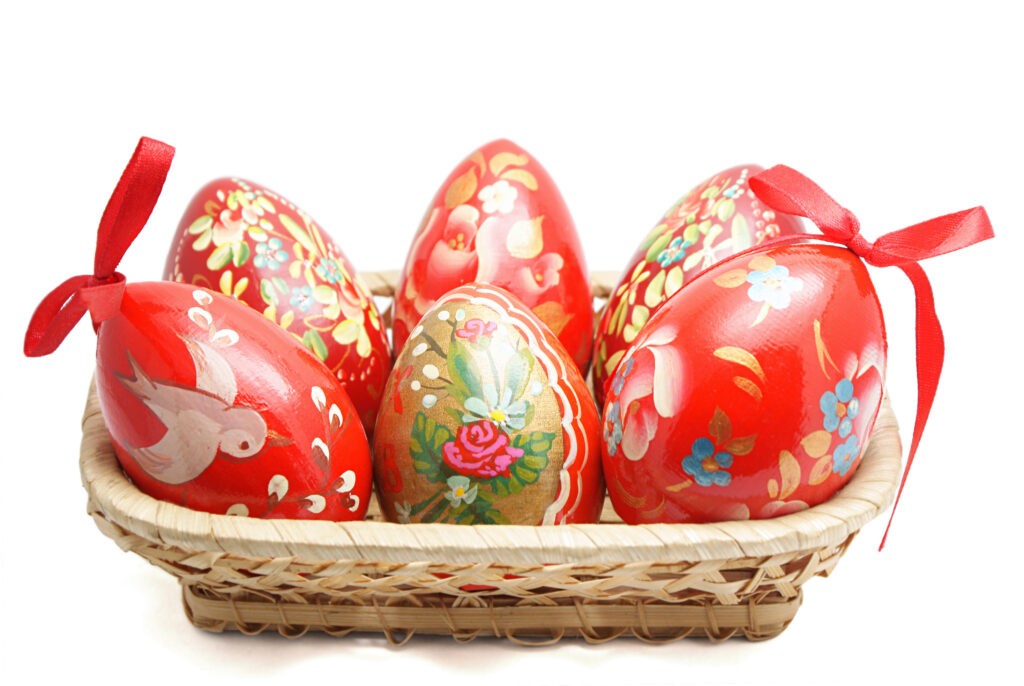
Russian Orthodox Easter, known as Pascha, is one of the most significant and joyously celebrated holidays among Russian communities worldwide, including those residing in the diverse tapestry of Central Asia. This celebration, deeply rooted in religious traditions, brings a unique blend of spiritual solemnity and communal festivities that stand out amidst the landscapes of Kazakhstan, Kyrgyzstan, Tajikistan, Turkmenistan, and Uzbekistan. The Heart of Russian Orthodox Easter The essence of Russian Orthodox Easter lies in its adherence to the Julian calendar, which often sets the celebration on a different date from Easter observed by Western Christian churches following the Gregorian calendar. The focal point of this celebration is the resurrection of Jesus Christ, a moment of immense spiritual rejoicing and the culmination of the Holy Week, preceded by the Great Lent, a period of fasting and penitence. Easter Traditions Transcending Borders In Central Asia, Russian Orthodox communities maintain their rich cultural heritage through distinctive Easter traditions. The ritual foods - Kulich, a tall, sweet yeast bread, and Paskha, a cheese dessert shaped into a pyramid to symbolize the Tomb of Christ, are central to the celebration. Eggs, painted in vibrant colors with a predominance of red, symbolize new life and hope, serving as both decorative items and gifts exchanged among friends and family. Easter Eve is marked by a solemn service that extends into the early hours of Sunday. The service begins in pitch darkness, symbolizing the tomb's interior. At midnight, churches and homes alike are filled with light and joyous exclamations of "Christ is Risen!" to which the response is "Indeed He is Risen!" This exchange, sometimes accompanied by threefold kisses, underscores the communal and inclusive spirit of Easter celebrations. A Celebration Amidst Diversity Despite the predominantly Muslim backdrop of Central Asia, the observance of Russian Orthodox Easter across the region is a testament to the religious freedoms and interfaith harmony that prevails. Local authorities and communities accommodate and respect these celebrations, making way for processions, services, and the public sharing of Easter foods and greetings. The open expression of such traditions fosters a sense of unity and mutual respect among the region's mosaic of cultures and religions. Cultural Fusion and Community Russian Orthodox communities in Central Asia not only preserve their traditions but also open avenues for cultural exchange. Easter festivities often see a blend of local and Russian customs, creating a rich, multicultural celebration. From the blessing of Easter baskets in churches to community gatherings and charitable acts, the essence of Easter - renewal and hope - resonates across diverse landscapes. Conclusion Russian Orthodox Easter in Central Asia is a testament to the enduring spirit of faith and community beyond geographical and cultural boundaries. It exemplifies how deeply-held religious traditions can coexist and flourish amidst diversity, bringing people together in celebration of shared values of rebirth, joy, and eternal hope. In the heart of Central Asia, Easter remains a vibrant and unifying force, showcasing the beauty of cultural convergence and the universal message of peace and renewal inherent...

Divisive Forces Prompt Tokayev’s “National Unity” Message

At the 32nd session of the Assembly of the People of Kazakhstan, President Kassym-Jomart Tokayev promoted peace and harmony as the state ideology and impressed on “national unity” by referring to all citizens of his country as Kazakhs regardless of their ethnic, linguistic or religious affiliation. “Society should not be divided on these grounds”, Tokayev said. Kazakhstan, a predominantly Muslim nation where Christians make up nearly 25% of the population, constitutes a genuine melting pot housing 131 different ethnicities. Such diversity can positively fuel innovation by merging different perspectives and create complex problem-solving methods. But it can also turn into a vulnerability when differences are manipulated to divide communities to gain political advantage. The Assembly of the People of Kazakhstan was established in 1995 to mitigate such risks and foster social harmony in the country.   Forces of division The President's latest statements draw attention to what the country perceives as threats to its national unity, which also reverberate elsewhere in the world, including corruption, malign foreign influence, and disinformation. It is difficult to ascertain whether foreign-backed political activities are genuinely aimed at enhancing the human condition in a country or are instead trying to undermine the state's stability to advance the agendas of other states or individuals. Worryingly for Kazakhstan, a survey of whom many of the well-known political activists are affiliated with shows that they have not grown organically from the country’s civil society ecosystem. Instead, they are often funded by foreign states, NGOs and/or oligarchs. This represents a complex scenario that should alarm true defenders of democracy and human rights. Firstly, the entrenched oligarchy formed under former President Nazarbayev’s thirty-year reign presents a challenge to the current leadership’s efforts to tackle corruption, kleptocracy and disinformation. These powerful business elites, who largely control the economy and media, resist any efforts to curtail their reach and influence. The government’s anti-corruption initiatives and asset recovery efforts are seen as direct threats to their wealth and dominance. Secondly, foreign actors see Kazakhstan’s strategic value in the renewed Cold War between Russia and the West. While Kazakhstan’s official and clear position has been one of neutrality, foreign-backed grassroots movements and misinformation campaigns have aimed to move society to take one side or another in this somewhat bipolar battle. The convergence of these domestic and international pressures forms a formidable challenge that threatens to compromise Kazakhstan's sovereignty and the welfare of its citizens. The oligarchs, mainly fearing repatriation of their assets hidden abroad through the recovery efforts of the country’s new leadership, could be inclined to support state-led polarization efforts to weaken the government, thus further intensifying the threat to Kazakhstan's peace and stability.   The evolution of the Kazakh ideology The development of Kazakhstan's national identity has been in the works since its independence from the Soviet Union in 1991, and has intensified as the country became a focal point for foreign powers seeking influence in 2022. This broader statehood identity celebrates Kazakhstan's history and diversity. President Tokayev appears to be leading...

Military in Kazakhstan Head Back to Bases After Working to Contain Floods

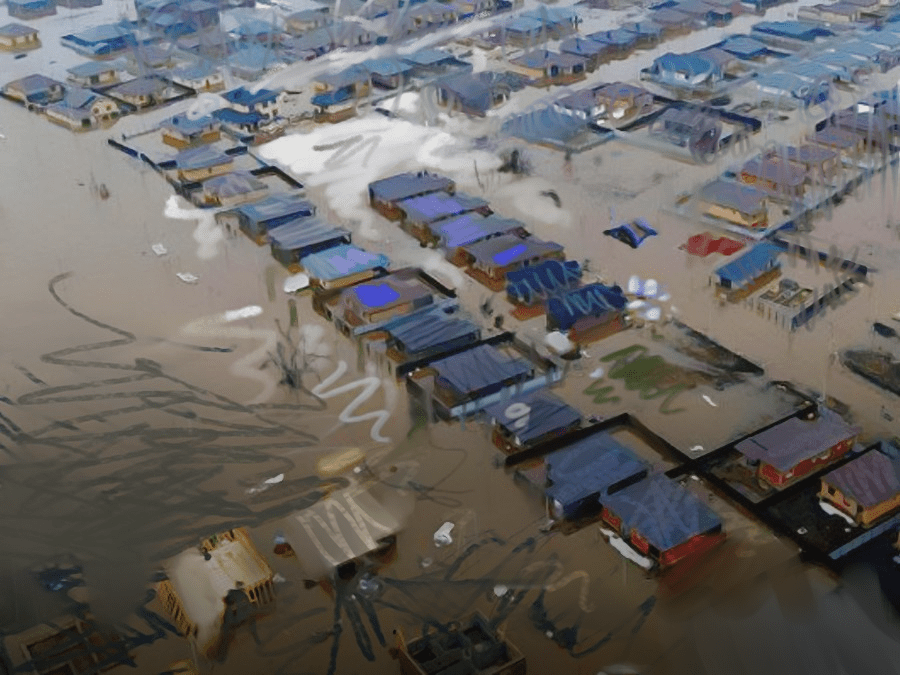
Kazakh military units that deployed to help with flood control measures in the past weeks are returning to their barracks as the crisis that hit large parts of the country winds down. “Due to the stabilization of the situation and the drop in water levels, some of the personnel and military equipment of the armed forces are returning to their permanent deployment points from the West Kazakhstan, North Kazakhstan and Akmola regions,” Ruslan Zhangulin, spokesman for the Defense Ministry, said on Monday. About 2,200 military personnel and 16 pieces of military equipment were involved in flood control as of Saturday, according to Zhangulin. The military was involved in evacuations and building barriers to prevent water flows during the flooding, which began in March and forced the evacuation of more than 100,000 people as winter snow melted with the arrival of warmer temperatures. Nearly 40,000 have since returned to their homes. President Kassym-Jomart Tokayev described the floods as Kazakhstan’s worst natural disaster in 80 years.

A View from the Rally in Prague in Support of Saltanat Nukenova

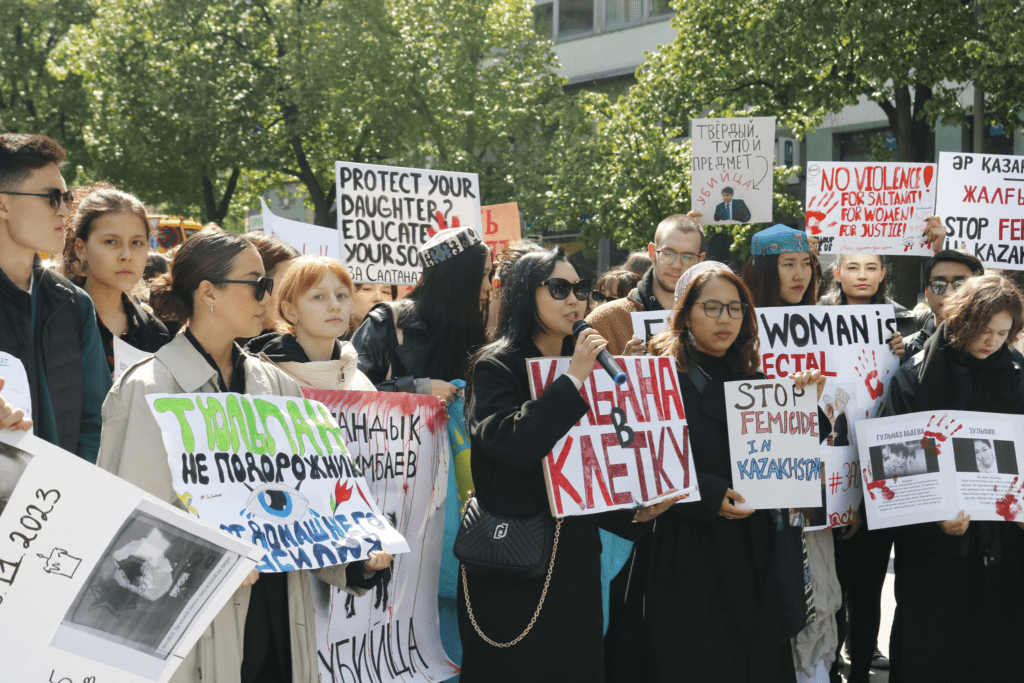
On Sunday, 21 April in the center of Prague on Wenceslas Square, some 200 people attended a rally in memory of Saltanat Nukenova and in protest against violence against women. The event took place against the backdrop of the trial of former Kazakh minister, Kuandyk Bishimbayev, who is accused of torturing and murdering Saltanat Nukenova, with whom he was bound in a common-law marriage. In an interview with The Times of Central Asia, Aruzhan, one of the organizers, described the various problems encountered by the team, beginning with the hostile criticism expressed by many young hecklers with little or no knowledge of the situation. “We were bombarded with comments like, ‘Kazakhstan has enough problems;’ ‘Why didn't you come out for the floods?’, ‘Only one person died,’ and so on. It was both frustrating and unpleasant to see that side of our young people but I think, and hope, that the rally woke some of them up and changed their minds.There were also those in Saltanat Ushin's group who twice expressed their ‘valuable opinion’ and provoked quarrels between the participants." Image: Asel Kamiyeva   Despite a statement issued by the Foreign Ministry of Kazakhstan that it was happy for its youth to speak out, there was a marked absence of support from the embassy. Aruzhan said it was disappointing, but nowhere near as bad as what happened in Tbilisi, where during a similar rally the Kazakh embassy had openly threatened and called in the organizers. Aruzhan explained that officials had accused the organizers of acting in defiance of the embassy, and, whilst logging their details, told them they should be ashamed and focus instead on other problems. She said that they been repeatedly told, "the law's already been passed, so calm down.” “In every city where a rally was held, the embassy behaved in this way, even after the Ministry of Foreign Affairs issued a statement claiming they supported our action and were happy for us to express our position." Aruzhan described an incident which illustrated that a close eye was being kept on proceedings: "Before the rally, a large car arrived on site. Intimidating-looking men leapt out, made a quick assessment of the number of people gathered, and drove off. They spoke in Russian and Kazakh." Image: Asel Kamiyeva   Another challenge facing the organizers, was the lack of media support. "The groups to which I made initial announcements about the rally deleted my posts, explaining that they had 'cultural content that does not concern politics'. It was funny and sad to read this; funny that we are perceived not to touch politics, and sad that they are so shaken by it. In Istanbul, the embassy scared people so much that they gave up the idea of going to the rally. At our rally, we shot reportage that came out more like a social video. Not a single media outlet picked it up. I think that says a lot about how censorship works. So we turned to bloggers, Russian-speaking media...