• KGS/USD = 0.01144 0%
  • KZT/USD = 0.00208 0%
  • TJS/USD = 0.10442 0.19%
  • UZS/USD = 0.00008 0%
  • TMT/USD = 0.28530 0%
  • KGS/USD = 0.01144 0%
  • KZT/USD = 0.00208 0%
  • TJS/USD = 0.10442 0.19%
  • UZS/USD = 0.00008 0%
  • TMT/USD = 0.28530 0%
  • KGS/USD = 0.01144 0%
  • KZT/USD = 0.00208 0%
  • TJS/USD = 0.10442 0.19%
  • UZS/USD = 0.00008 0%
  • TMT/USD = 0.28530 0%
  • KGS/USD = 0.01144 0%
  • KZT/USD = 0.00208 0%
  • TJS/USD = 0.10442 0.19%
  • UZS/USD = 0.00008 0%
  • TMT/USD = 0.28530 0%
  • KGS/USD = 0.01144 0%
  • KZT/USD = 0.00208 0%
  • TJS/USD = 0.10442 0.19%
  • UZS/USD = 0.00008 0%
  • TMT/USD = 0.28530 0%
  • KGS/USD = 0.01144 0%
  • KZT/USD = 0.00208 0%
  • TJS/USD = 0.10442 0.19%
  • UZS/USD = 0.00008 0%
  • TMT/USD = 0.28530 0%
  • KGS/USD = 0.01144 0%
  • KZT/USD = 0.00208 0%
  • TJS/USD = 0.10442 0.19%
  • UZS/USD = 0.00008 0%
  • TMT/USD = 0.28530 0%
  • KGS/USD = 0.01144 0%
  • KZT/USD = 0.00208 0%
  • TJS/USD = 0.10442 0.19%
  • UZS/USD = 0.00008 0%
  • TMT/USD = 0.28530 0%

Viewing results 607 - 612 of 1364

PepsiCo to Build Snack Production Plant in Kazakhstan

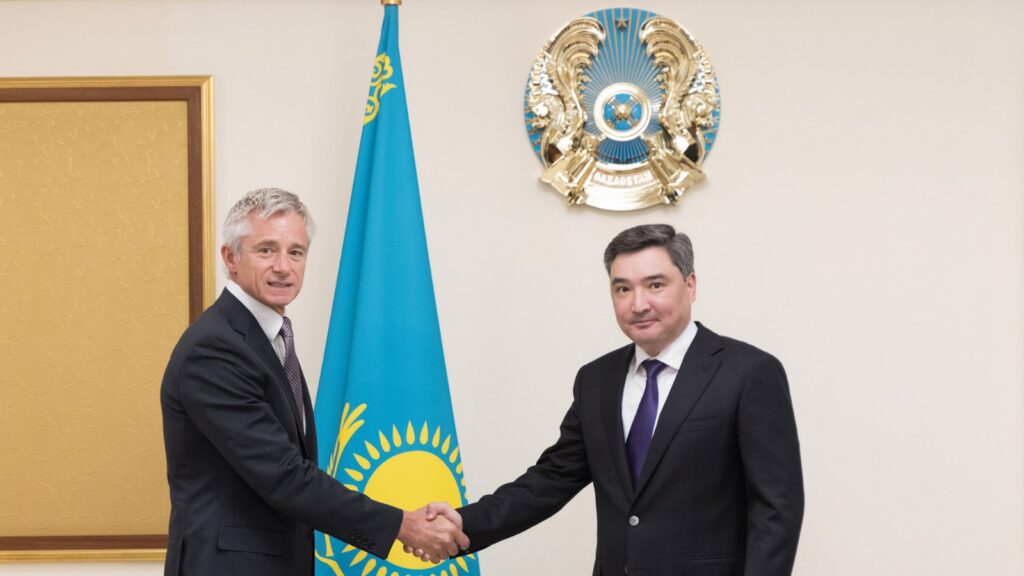
PepsiCo has announced plans to build a full-scale new plant to produce salty snacks, including Lays crisps, in Kazakhstan’s Almaty region. Implementation of the project was discussed at a meeting between Kazakhstan Prime Minister Olzhas Bektenov and David Manzini, President of PepsiCo in Central Asia, Russia, Belarus, and Caucasus. According to the Kazakh prime minister’s press service, the project has already received $160 million in foreign investment. The plant, anticipated as the largest of its kind in Central Asia, is scheduled to open in 2026. Its original capacity of up to 16,000 tons of finished products per year, will increase to 21,000 tons from 2027, for distribution to both the Central Asian market and abroad. Up to a thousand people will be employed during the plant’s construction, with 350 skilled jobs created when it opens. David Manzini stated PepsiCo’s intention to use locally sourced raw materials. The conclusion of contracts with Kazakh farmers on the delivery of test batches of potatoes is ongoing but all going to plan, the company will purchase up to 50-66 thousand tons of potatoes in 2026-2030, and increase the volume in later years. Prime Minister Bektenov emphasized the importance of the project for the development of agriculture, increasing Kazakh farmers’ income and strengthening the economy. He mentioned that besides its positive impact the food industry and agribusiness, the plant will have a multiplier effect on related industries including transport, logistics, packaging, and processing of agricultural products.  

Kazakhstan President Pinpoints Flaws in Tourism Development

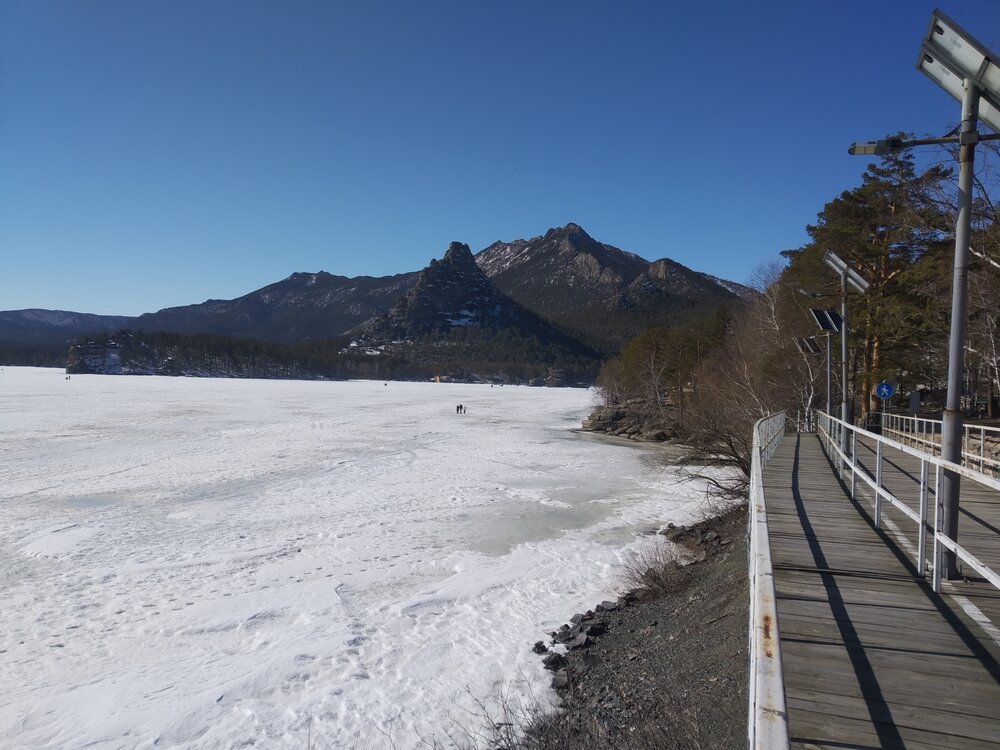
On June 13, Kazakhstan President Kassym-Jomart Tokayev chaired a government meeting on the development of the country’s tourism industry. He opened by noting that despite its favorable geographical location, the diversity of its nature, and its rich historical and cultural heritage, Kazakhstan’s wide-spanning tourism potential remains largely unexploited. “Tourism as an important sector of the economy is not yet effective, which is a big omission of the government. Over the past four years, the share of tourism in the economic structure has decreased from 3.7% to 3.2%, almost threefold lower than the world average. According to this indicator, Kazakhstan falls below neighboring countries with similar climates and culture. It is obvious that a qualitative breakthrough in the development of the tourism industry requires urgent systemic measures,” said the president. Tokayev then outlined areas in need of urgent improvement, beginning with problems posed by the country’s weak transport infrastructure for domestic tourism: “The quality of railway transportation in the country is beyond criticism. Most of the rail carriages are worn out, and some do not even have air conditioning. The government needs to renew the fleet of rail carriages in the next five years. In addition, it is important to improve railway stations. Their appearance and infrastructure must meet international standards. In summer, the flow of railway passengers increases sharply. It is therefore necessary to increase the number of trains with comfortable carriages to the most popular destinations. The quality of our roads also leaves much to be desired, making it very difficult to reach remote recreation areas by car. There are practically no fully serviceable highways. The reconstruction of the Astana-Almaty highway, connecting the south and center of Kazakhstan, has been ongoing since 2021. There are many similar unfinished roads across the country and it is imperative that the government completes these road projects this year.” The President emphasized that the poor logistics connectivity of holiday destinations affects not only domestic tourism, but also the influx of guests from abroad. “Almost 90% of foreign tourists come to Kazakhstan from neighboring CIS [former Soviet] countries. There are still few tourists from non-CIS countries. International studies show that over 70% of travelers prefer to visit vacation destinations within a 4-hour flight, making Kazakhstan  very attractive to tourists from China, India, East Asia, and the Middle East. It is also necessary to consider, specific issues related to the national mentality of foreign tourists, their interests, and requests. Within 5 years we can double and even triple the number of foreign tourists but to do so, we need to develop air transport, firstly by expanding the presence of low-cost airlines on popular air routes. Their current share in passenger air transportation in Kazakhstan is only 21%.” The head of state criticized the Government's plans to simultaneously develop 20 tourist zones across the country, claiming the approach ineffective regarding the dispersion of the state's limited resources. Instead, he recommended that efforts focused on the development of the most promising locations, in the shortest possible time,...

Turkey Lifts Restrictions on Import of Livestock and Poultry Products from Kazakhstan

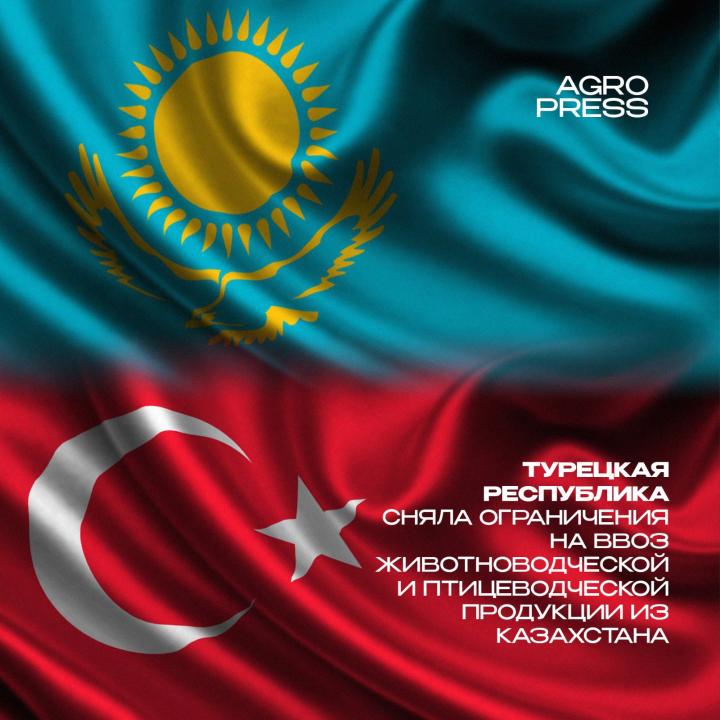
Kazakhstan’s Ministry of Agriculture has announced that from June 7, 2024, restrictions on the supply of Kazakh livestock and poultry products to the Turkish market have been lifted. The restrictions were originally made to prevent the spread of avian influenza, in 2005, foot-and-mouth disease, in 2016, and lumpy skin disease, in 2022. In March 2024, the Minister of Agriculture of Kazakhstan, Aidarbek Saparov, raised the issue of export barriers during the meeting of ministers of agriculture of the Organization of Turkic States in Taraz, Kazakhstan. At the time, Saparov explained that Kazakhstan was ready to supply high-quality meat products to Turkey as well as Turkmenistan and Hungary, but complained that the Turkish market was all but closed to Kazakh meat exporters due to veterinary concerns. Pleading his case, he continued, “This year, similar restrictions on Kazakhstan have been lifted by China and Russia. So, we believe it is now possible to revisit this issue with the Turkish side.” With the restrictions now lifted, the next step towards exporting Kazakhstan’s livestock products will involve the coordination of veterinary requirements with Turkish authorities. The issue will be addressed during Minister Saparov’s next visit to Turkey in August.  

Price of Liquefied Petroleum Gas to Rise Again in Kazakhstan

The Ministry of Energy of Kazakhstan has published for public discussion, a draft by the Minister of Energy to increase the price of liquefied petroleum gas (LPG) from July 1. The maximum wholesale price of one ton of LPG will be increased from the current 40,320 tenge to 45,158 tenge, and the maximum retail price will increase slightly — by 5-8 tenge per liter, depending on the region. Cheaper than gasoline, LPG is the most popular fuel for vehicle owners in Kazakhstan. A sharp hike in the price of LPG was met with nationwide objection in January, triggering mass protests in Zhanaozen which spread nationwide and turned violent in Almaty and Astana. The ministry issued several reasons for what will be an unpopular move. First, the price of liquefied petroleum gas is much lower than the cost of its production. The production cost of LPG varies from 60 thousand to 70 thousand tenge per ton, whereas the current maximum wholesale price is 40,320 tenge per ton. Second, LPG consumption in Kazakhstan increases year on year. In 2023, it increased by 400 thousand tons, or 28%, compared to 2022. Last year, LPG consumption volumes amounted to 2.2 million tons compared to 1.8 million tons in 2022. Increasing consumption and the unprofitability of LPG production due to low prices have led to a decrease in the production of the fuel and its shortage in the regions. Today the deficit of LPG stands at 20-25%. Third, due to unprofitability, manufacturers are increasingly losing interest in LPG production and switching instead, to more profitable products. For the same reason, investors are also reluctant to invest in its production. Fourth, the price of LPG in Kazakhstan, between 54-86 tenge per litre depending on the region, is the lowest among former Soviet states. For comparison, the price per litre in Russia is equivalent to 132 tenge; in Kyrgyzstan, 159 tenge; in Azerbaijan, 171 tenge; and in Tajikistan, 273 tenge. According to analysts, in 2024, LPG consumption in Kazakhstan will increase by another 200 thousand tons and reach 2.4 million tons, leading to a potential shortage of 30-40%

Kazakhstan’s Unexploited Potential of Deep Processing of Coal

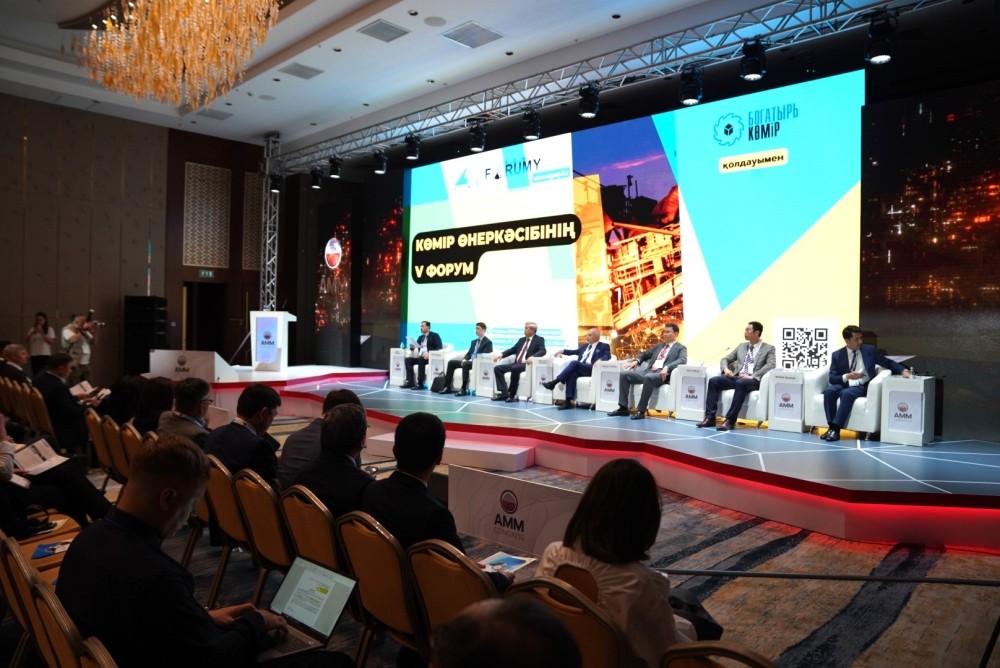
During the 5th Coal Industry Forum at the 14th International Mining and Metallurgical Congress on 6-7 June in Astana, Yerzhan Yelekeyev, Chairman of the Management Board of Kazakh Invest, presented new investment opportunities to produce high-tech goods from Kazakh coal. Substantiating his claim that the coal chemistry industry has the means to help grow Kazakhstan’s chemical industry and developments in manufacturing, Yelekeyev stated: "Having an extensive resource base and an advantageous geographical location, we must realize the potential of the coal chemical industry. In total, more than 400 different products can be obtained by processing coal, the cost of which is 20-25 times higher than the cost of coal itself. With the deep processing of coal, it is possible to obtain products that cost 25-30 times more than raw materials. Currently, the share of coal products in Kazakhstan is 3%; an indicator of the low level of development of coal chemistry. The price of coal is lower and more stable than that of gas and oil. According to preliminary calculations, the unused potential is  worth $25 billion.” In his presentation on "Partnership of Kazakhstan and the European Union in the field of critical minerals,” Timur Izbasarov, Deputy Director of the Strategy Department at Kazakh Invest, added that according to the World Bank, Kazakhstan has over 5,000 undiscovered deposits valued at over 46 trillion US dollars, and hence, significant opportunities for investment and cooperation in the field waiting to be untapped.  

Protecting Women and Children Helps Preserve, Not Contradict, Traditional Family Values in Kazakhstan

In today's rapidly evolving world, traditional values can sometimes clash with progressive movements advocating for inclusivity and modern perspectives in many areas of life. While these values are often seen as barriers, they can instead serve as a source of stability and continuity when thoughtfully upheld. President Kassym-Jomart Tokayev is aligning legislative reforms with Kazakhstan's family values while integrating them with the society's progressive aspirations. At a recent meeting with young scientists in Almaty, President Tokayev took aim at domestic violence calling it “a manifestation of backwardness and moral degradation.”  He added that “only a society that values ​​and respects women can be considered truly civilized and cultured.”  Regulatory actions In his speech, Tokayev placed “strengthening of the institution of the family” at the center of modernizing Kazakhstani society. “After all, comprehensive protection of the rights of women and children does not at all contradict the preservation of traditional family values ​​and, on the contrary, contributes to their further strengthening”, he said. “From the first days of my presidency, I have been paying great attention to protecting the rights of women and children. We are consistently taking legislative and institutional measures in this direction,” he noted.  This is not a new issue for the President, who in his September 2022 address, had already ordered stricter penalties for domestic violence. His agenda to strengthen protective measures sped up following the high-profile murder of Saltanat Nukenova in November 2023 by her husband, an influential former minister.  The events following this tragedy helped bring about new laws, inspired a culture of zero tolerance for any form of violence, and perhaps even opened the way for further reforms. On April 15, 2024, Tokayev signed a landmark law criminalizing violence against women and children, reversing a 2017 decriminalization. In two weeks, these amendments will be put into effect. The government’s response to the death of Nukenova and to the events following it, including the public reaction, has garnered international praise.  Promoting a values-based society Tokayev in his Almaty speech expressed that “not all problems can be solved by passing or tightening the law,” and adding that “everyone must start with themselves changing for the better”. “Family values ​​should be established in every home”, he said, highlighting the key role of women in raising the new generation.  Tokayev also prescribed enforcing good values in educational institutions while acknowledging that the country’s education system still had shortcomings. This is another example of how the leadership’s rhetoric matters in advancing a society. Tokayev continues to set the tone for his country on women’s rights. As the Washington Post wrote on May 13, 2024, “Kazakhstan’s President Kassym-Jomart Tokayev has repeatedly spoken about strengthening protections for women.”  Tokayev’s messaging of values has indeed been consistent – with a focus on rule of law as a basis for the protection of rights of all citizens.  The future The President’s actions have already begun inculcating a culture of no tolerance for aggression against women. “Today, the problem of domestic violence is widely...