• KGS/USD = 0.01144 0%
  • KZT/USD = 0.00216 0%
  • TJS/USD = 0.10456 0%
  • UZS/USD = 0.00008 0%
  • TMT/USD = 0.28571 0%
  • KGS/USD = 0.01144 0%
  • KZT/USD = 0.00216 0%
  • TJS/USD = 0.10456 0%
  • UZS/USD = 0.00008 0%
  • TMT/USD = 0.28571 0%
  • KGS/USD = 0.01144 0%
  • KZT/USD = 0.00216 0%
  • TJS/USD = 0.10456 0%
  • UZS/USD = 0.00008 0%
  • TMT/USD = 0.28571 0%
  • KGS/USD = 0.01144 0%
  • KZT/USD = 0.00216 0%
  • TJS/USD = 0.10456 0%
  • UZS/USD = 0.00008 0%
  • TMT/USD = 0.28571 0%
  • KGS/USD = 0.01144 0%
  • KZT/USD = 0.00216 0%
  • TJS/USD = 0.10456 0%
  • UZS/USD = 0.00008 0%
  • TMT/USD = 0.28571 0%
  • KGS/USD = 0.01144 0%
  • KZT/USD = 0.00216 0%
  • TJS/USD = 0.10456 0%
  • UZS/USD = 0.00008 0%
  • TMT/USD = 0.28571 0%
  • KGS/USD = 0.01144 0%
  • KZT/USD = 0.00216 0%
  • TJS/USD = 0.10456 0%
  • UZS/USD = 0.00008 0%
  • TMT/USD = 0.28571 0%
  • KGS/USD = 0.01144 0%
  • KZT/USD = 0.00216 0%
  • TJS/USD = 0.10456 0%
  • UZS/USD = 0.00008 0%
  • TMT/USD = 0.28571 0%

Viewing results 175 - 180 of 1472

Kazakhstan Considers Lowering Retirement Age for Shepherds and Herders

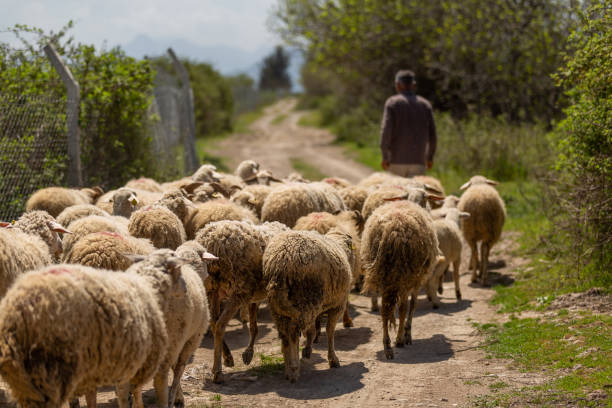
Kazakhstan is developing a package of social measures aimed at attracting and retaining personnel in the livestock industry, including a proposal to lower the retirement age for shepherds and herders. The initiative was discussed during a meeting of the Public Council under the Ministry of Agriculture, which reviewed the draft Comprehensive Plan for the Development of Agribusiness in the Livestock Sector for 2026-2030. The plan is designed to increase production, improve productivity, and enhance the sector’s export potential. A key focus of the draft is addressing staffing shortages in rural livestock farming, which the ministry has identified as a systemic challenge. According to the Ministry of Agriculture, the proposed support measures include reducing the retirement age for shepherds and herders, providing deferrals from military service, and prioritizing educational grants for their children. Specific retirement age parameters have not yet been disclosed. Currently, men in Kazakhstan retire at 63 and women at 61, with a gradual equalization planned from 2031. At present, certain groups, including mothers of large families, workers in hazardous occupations, military personnel, law enforcement officers, and victims of nuclear testing, are eligible for early retirement. Deputy Minister of Agriculture Amangali Berdalin also announced plans to launch long-term preferential loans at 6% per annum for the purchase of breeding stock for all types of farm animals. Additionally, 5% interest loans are planned to support working capital without sector-specific limitations. These funds can be used for purchasing feed, fuel and lubricants, veterinary drugs, and covering other ongoing production expenses. To reactivate underused pastures, a unified loan product at 6% is being developed to support transhumance livestock farming. All loan programs will be backed by state guarantees. The expansion of social and financial support for livestock farming comes amid rising export performance in the industry. As previously reported by The Times of Central Asia, Kazakh meat producers exported more products in the first ten months of 2025 than in all of 2024.

Kazakhstan’s Renewable Energy Share Reaches 7% in National Energy Mix

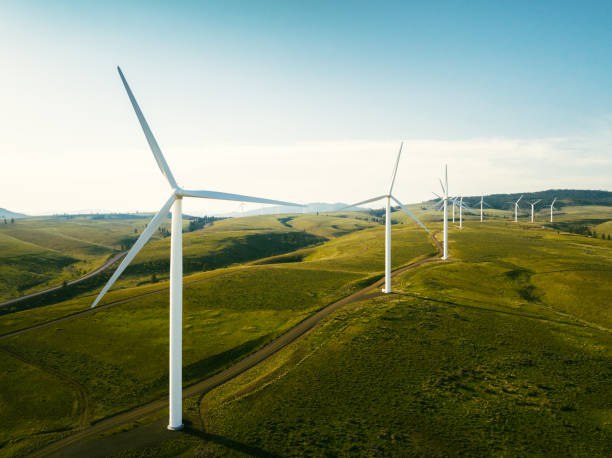
By the end of 2025, renewable energy sources (RES) accounted for 7% of Kazakhstan’s electricity generation, up from 6.43% the previous year. This modest but steady increase was driven by the commissioning of nine new RES facilities with a combined capacity of 503 MW, including wind, solar, and hydroelectric power plants. While Kazakhstan still lags behind global leaders in the energy transition, it is considered one of Central Asia’s most institutionally structured and balanced markets for green energy development. The country currently operates 162 renewable energy facilities with a total installed capacity of approximately 3.5 GW. The sector remains diversified: 67 wind farms, 49 solar power plants, 43 hydropower facilities, and three biogas stations contribute to the overall mix. A key driver of Kazakhstan’s renewable energy expansion is its auction-based model for project selection, which enhances transparency and attracts private investment. Under the 2024-2027 plan, the government aims to deploy 6.7 GW of new renewable capacity, of which around 4 GW had already been allocated by December 2025. The participation of international players, including Total Eren, Masdar, China Power International Holding, and China Energy, has bolstered the sector’s technological and financial resilience. In comparison, Uzbekistan has emerged as the region’s most dynamic renewable energy market, focusing on large-scale solar and wind projects led by foreign investors. Although the share of renewables in Uzbekistan’s energy mix remains below 10%, its annual capacity additions have outpaced Kazakhstan’s in absolute terms. Unlike Kazakhstan’s market-based approach, Uzbekistan’s model relies more heavily on large, state-structured contracts, which speeds up implementation but limits competition and diversification. Total investment in Uzbekistan’s renewable sector is estimated at roughly $6 billion, with key backing from the European Bank for Reconstruction and Development (EBRD), the World Bank, and the International Finance Corporation (IFC). Kyrgyzstan and Tajikistan formally lead the region in renewable energy share due to their reliance on hydropower, which accounts for 80-90% of their electricity generation. However, this heavy dependence makes their energy systems highly vulnerable to seasonal and climatic fluctuations. Turkmenistan remains the regional outlier, with a power sector almost entirely reliant on natural gas despite significant solar potential. Renewable projects there are limited and largely experimental. In this context, Kazakhstan occupies an intermediate position, between the hydropower-heavy economies of Kyrgyzstan and Tajikistan and the fast-growing but centralized market of Uzbekistan. Its relatively low starting share in renewables is offset by a stable institutional framework, competitive project selection, and strong international participation. Kazakhstan’s targets, to raise renewable energy’s share to 15% by 2030 and to 50% by 2050, are ambitious but feasible, provided green energy development remains aligned with investments in base-load generation.

The Dental Mafia in Kazakhstan: How Pension Funds Were Siphoned Off

Kazakhstan’s Financial Monitoring Agency (FMA) is continuing its investigation into one of the country’s most high-profile financial crimes in recent years: the large-scale embezzlement of pension savings through fictitious dental services. Authorities allege that millions of dollars were siphoned from the Unified Accumulative Pension Fund (UAPF) via a sprawling criminal scheme involving dozens of dental clinics. According to the FMA, the investigation is ongoing and centers on clinic managers and their accomplices. The alleged scheme involved the withdrawal of pension savings from the UAPF through formal contracts for dental procedures, backed by forged medical documents. “For such ‘assistance,’ the organizers of the scheme received illegal remuneration amounting to 10% to 20% of the withdrawn funds,” the agency said. In total, 42 dental clinics are implicated. Investigators estimate that more than $390 million was illicitly funneled through these entities. The funds were reportedly used to acquire luxury real estate and other high-value assets, as well as to open new dental clinics registered under front persons to obscure the identities of the real beneficiaries. Some of the fabricated diagnoses were blatantly implausible. In one instance, a 21-year-old was diagnosed with “complete edentulism” (total tooth loss) and simultaneously prescribed both teeth cleaning and braces. In response to the violations uncovered, Kazakhstan suspended the use of pension savings to pay for dental services as of September 15, 2025. The measure, though temporary, signals a tightening of regulatory oversight amid public outcry. The program allowing partial use of pension savings for medical services was first introduced in 2021. It enabled citizens to access funds exceeding the so-called “sufficiency threshold” to pay for treatments, including expensive dental procedures such as prosthetics and implants.

Nestlé Recalls Batches of Infant Formula in Uzbekistan and Kazakhstan

Nestlé has initiated a voluntary recall of limited batches of infant formula in Uzbekistan due to a potential contamination risk involving one of the product’s ingredients supplied by an external vendor. The decision, described as precautionary, was announced by Nestlé Food LLC, the company’s local subsidiary. The recall affects select batches of dry instant milk and fermented milk-based formulas, as well as certain amino acid-based products intended for infants on specialized medical diets. The affected items include NAN 1 OPTIPRO, NAN 2 OPTIPRO, NAN Kislomolochniy (for infants up to 12 months), NAN Supreme (same age group), and ALFARÉ Amino. Nestlé Food LLC clarified that the recall applies only to the specified batches and does not impact other infant nutrition products sold in Uzbekistan. The company said the action follows a global recall initiated after a potential contamination with cereulide toxin was identified in arachidonic acid sourced from an external supplier. Although the quantity of this ingredient is minimal and Uzbekistan does not impose regulatory limits for cereulide in food products, Nestlé opted for a voluntary recall to mitigate any possible risk. The recall process began in Uzbekistan on January 5, 2026. Nestlé Food LLC confirmed it has informed local regulators and is prepared to provide comprehensive information to authorities, consumers, and retail partners. Consumers who purchased products from the affected batches can return them according to company-issued procedures. Customer support services are available to assist with the process. Similar precautionary measures have been announced in Kazakhstan. There, Nestlé is also recalling a limited number of infant food products, including dry and sour-milk formulas, as well as amino acid-based dietary items. The company explained that cereulide is a toxin produced by the bacterium Bacillus cereus. It is particularly hazardous because it cannot be destroyed by boiling or reheating. Exposure to cereulide can cause acute food poisoning, with symptoms including nausea, vomiting, and abdominal pain. The issue is not confined to Central Asia. Reuters reported that Nestlé has also recalled certain batches of its SMA, BEBA, and NAN infant formulas across parts of Europe due to the same contamination risk. Nestlé emphasized that consumer health and safety remain its highest priority. The company stated that the recall is a precautionary step aligned with its global quality and safety standards, and that no confirmed cases of harm have been reported to date.

Kazakh Government Rules Out AI Deputy Ministers

AI will not be occupying senior government posts in Kazakhstan anytime soon. While AI-based tools may serve as advisors and consultants to top officials, there are currently no plans to appoint virtual or digital deputy ministers. This was confirmed by Rostislav Konyashkin, First Deputy Minister of Artificial Intelligence and Digital Development. The question arose during a press conference following a cabinet meeting, when journalists referenced Albania’s 2025 decision to appoint a virtual minister for public procurement, the first of its kind globally. They asked whether Kazakhstan was considering a similar initiative. According to Konyashkin, AI systems have not yet reached the level of reliability required for managing official functions. “As political officials, we are responsible for the decisions we make, so the emergence of digital deputy ministers is not expected at this time. When AI provides correct answers in 95-97% of cases, then perhaps we can begin discussing the transfer of some powers to algorithms. For now, we are only talking about AI assisting in analysis and decision-making,” he stated. Konyashkin expressed hope that in the future, personal AI assistants could be developed to the level of full-fledged consultants and advisors, significantly easing the workload of civil servants. Only after practical trials of such systems, he noted, could discussions about formal AI appointments begin. He also pointed to an existing example: the SKAI (Samruk-Kazyna Artificial Intelligence) neural network, which was added to the board of directors at the state holding company Samruk-Kazyna. However, its role remains consultative and does not involve decision-making authority. Konyashkin additionally outlined plans to establish a secure digital environment enabling Kazakh civil servants to work remotely. This includes secure access to work systems via tablets and trusted laptops, particularly during field operations conducted by ministries and akimats. To support this, a unified authorization system is in development, with optional biometric identification for accessing sensitive personal data. There are also plans to integrate various digital tools, video conferencing, messaging platforms, and email, into a single work interface. According to Konyashkin, this will streamline administrative processes and enhance the efficiency of Kazakhstan’s digital infrastructure.

2024 Kazakhstan Plane Crash Still Stirs Tension between Russia and Azerbaijan

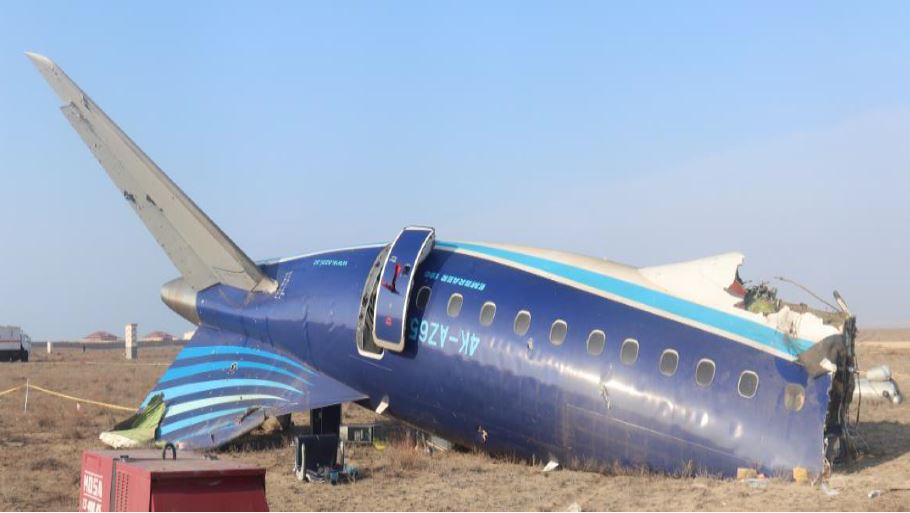
Conflicting statements from Russia about the December 25, 2024 crash of an Azerbaijan Airlines plane that was hit by Russian missile fire have drawn fresh criticism from Azerbaijan, which marked the first anniversary of the disaster with flowers and other tributes.  Amid growing Azerbaijani accusations that Russia was trying to avoid responsibility, Russian President Vladimir Putin acknowledged in October – nearly a year after the crash - that Russian fire had damaged an Azerbaijani airliner that diverted from its destination in Russia-controlled Chechnya and went down near the city of Aktau in Kazakhstan. Putin indicated that the shooting was accidental, saying Russian forces were trying to fend off a Ukrainian drone attack at the time. The crash killed 38 of 67 people on board.  However, Alexander Bastrykin, chairman of Russia’s Investigative Committee, sent a letter to Azerbaijan’s prosecutor general last month in which he said Russia’s “criminal case has been terminated” but also refers to the “resumed criminal case” – without making any reference to Russian missile fire. Instead, Bastrykin said the plane was unable to land at the Grozny, Chechnya airport because of cloudy weather and later crashed during the approach to the Aktau airport.  The Azeri Times, which along with other media outlets published the text of Bastrykin’s letter, described the Russian statement as “a clear cover-up!”  Farhad Mammadov, director of the South Caucasus Studies Center in Baku, noted what he said were inconsistencies in the Russian letter, including whether Russia’s criminal case had been terminated or resumed. On Telegram, he described Russia’s cloudy weather claim as: “Complete nonsense!!!”  Mammadov said the latest Russian statement appeared to be an attempt to delay a final resolution with Azerbaijan, which demanded compensation and punishment of those responsible. Putin had said in October that compensation would be paid.   “All these clumsy, contradictory and unprofessional gestures do not change the position of Azerbaijan,” Mammadov wrote. “Baku is waiting, as the impulse from the recognition of President Putin has not lost its significance... However, after Bastrykin's letter, Baku may begin to doubt that Russia will take adequate actions...”  “Azerbaijan has its own criminal case and the opportunity to appeal to international courts in its arsenal,” he said.  Kazakhstan is also conducting its own politically sensitive investigation into the crash, with the participation of representatives from Russia, Azerbaijan and Brazil, where the Embraer 190 aircraft was made. Interim findings released in December did not assign responsibility for the crash.  Putin’s acknowledgement in October that Russian missile fire hit the Azerbaijani airliner came during a meeting in Dushanbe with President Ilham Aliyev, appearing to signal a thaw in ties after months of tension over the crash. However, Aliyev did not attend a December meeting in St. Petersburg, Russia of the Commonwealth of Independent States, a group of former Soviet republics that includes Azerbaijan as a member. Azerbaijan “is still signaling that Baku is unsatisfied with the ramifications and statements from Moscow,” despite Putin’s efforts to ease tensions with Azerbaijan over the plane crash, analyst Fuad Shabazov...