• KGS/USD = 0.01144 0%
  • KZT/USD = 0.00210 0%
  • TJS/USD = 0.10553 0.19%
  • UZS/USD = 0.00008 0%
  • TMT/USD = 0.28530 0%
  • KGS/USD = 0.01144 0%
  • KZT/USD = 0.00210 0%
  • TJS/USD = 0.10553 0.19%
  • UZS/USD = 0.00008 0%
  • TMT/USD = 0.28530 0%
  • KGS/USD = 0.01144 0%
  • KZT/USD = 0.00210 0%
  • TJS/USD = 0.10553 0.19%
  • UZS/USD = 0.00008 0%
  • TMT/USD = 0.28530 0%
  • KGS/USD = 0.01144 0%
  • KZT/USD = 0.00210 0%
  • TJS/USD = 0.10553 0.19%
  • UZS/USD = 0.00008 0%
  • TMT/USD = 0.28530 0%
  • KGS/USD = 0.01144 0%
  • KZT/USD = 0.00210 0%
  • TJS/USD = 0.10553 0.19%
  • UZS/USD = 0.00008 0%
  • TMT/USD = 0.28530 0%
  • KGS/USD = 0.01144 0%
  • KZT/USD = 0.00210 0%
  • TJS/USD = 0.10553 0.19%
  • UZS/USD = 0.00008 0%
  • TMT/USD = 0.28530 0%
  • KGS/USD = 0.01144 0%
  • KZT/USD = 0.00210 0%
  • TJS/USD = 0.10553 0.19%
  • UZS/USD = 0.00008 0%
  • TMT/USD = 0.28530 0%
  • KGS/USD = 0.01144 0%
  • KZT/USD = 0.00210 0%
  • TJS/USD = 0.10553 0.19%
  • UZS/USD = 0.00008 0%
  • TMT/USD = 0.28530 0%

Viewing results 181 - 186 of 1477

2024 Kazakhstan Plane Crash Still Stirs Tension between Russia and Azerbaijan

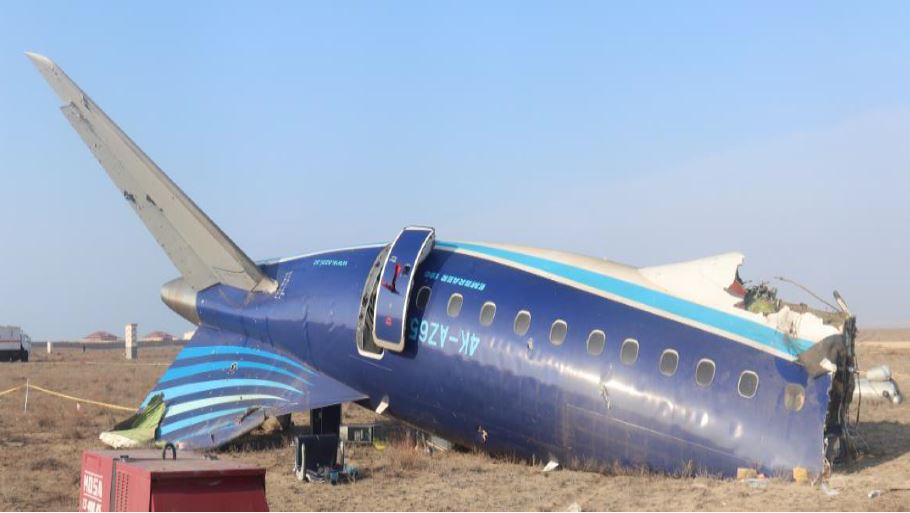
Conflicting statements from Russia about the December 25, 2024 crash of an Azerbaijan Airlines plane that was hit by Russian missile fire have drawn fresh criticism from Azerbaijan, which marked the first anniversary of the disaster with flowers and other tributes.  Amid growing Azerbaijani accusations that Russia was trying to avoid responsibility, Russian President Vladimir Putin acknowledged in October – nearly a year after the crash - that Russian fire had damaged an Azerbaijani airliner that diverted from its destination in Russia-controlled Chechnya and went down near the city of Aktau in Kazakhstan. Putin indicated that the shooting was accidental, saying Russian forces were trying to fend off a Ukrainian drone attack at the time. The crash killed 38 of 67 people on board.  However, Alexander Bastrykin, chairman of Russia’s Investigative Committee, sent a letter to Azerbaijan’s prosecutor general last month in which he said Russia’s “criminal case has been terminated” but also refers to the “resumed criminal case” – without making any reference to Russian missile fire. Instead, Bastrykin said the plane was unable to land at the Grozny, Chechnya airport because of cloudy weather and later crashed during the approach to the Aktau airport.  The Azeri Times, which along with other media outlets published the text of Bastrykin’s letter, described the Russian statement as “a clear cover-up!”  Farhad Mammadov, director of the South Caucasus Studies Center in Baku, noted what he said were inconsistencies in the Russian letter, including whether Russia’s criminal case had been terminated or resumed. On Telegram, he described Russia’s cloudy weather claim as: “Complete nonsense!!!”  Mammadov said the latest Russian statement appeared to be an attempt to delay a final resolution with Azerbaijan, which demanded compensation and punishment of those responsible. Putin had said in October that compensation would be paid.   “All these clumsy, contradictory and unprofessional gestures do not change the position of Azerbaijan,” Mammadov wrote. “Baku is waiting, as the impulse from the recognition of President Putin has not lost its significance... However, after Bastrykin's letter, Baku may begin to doubt that Russia will take adequate actions...”  “Azerbaijan has its own criminal case and the opportunity to appeal to international courts in its arsenal,” he said.  Kazakhstan is also conducting its own politically sensitive investigation into the crash, with the participation of representatives from Russia, Azerbaijan and Brazil, where the Embraer 190 aircraft was made. Interim findings released in December did not assign responsibility for the crash.  Putin’s acknowledgement in October that Russian missile fire hit the Azerbaijani airliner came during a meeting in Dushanbe with President Ilham Aliyev, appearing to signal a thaw in ties after months of tension over the crash. However, Aliyev did not attend a December meeting in St. Petersburg, Russia of the Commonwealth of Independent States, a group of former Soviet republics that includes Azerbaijan as a member. Azerbaijan “is still signaling that Baku is unsatisfied with the ramifications and statements from Moscow,” despite Putin’s efforts to ease tensions with Azerbaijan over the plane crash, analyst Fuad Shabazov...


AI Could Boost Productivity of Kazakhstan’s Workforce, Study Finds

AI is poised to significantly enhance workforce productivity in Kazakhstan without triggering mass job losses, according to the initial findings of a joint study by the Ministry of Science and Higher Education and the international analytical agency Quacquarelli Symonds (QS). The results were presented at a government meeting on January 6. Minister of Science and Higher Education Sayasat Nurbek emphasized that AI should be seen not as a threat to employment but as a tool to augment human labor and improve efficiency. “About 70% of Kazakhstan’s workforce has medium or high potential for productivity growth through the use of artificial intelligence. In 53% of occupations, automation of specific job functions is possible. In most cases, this doesn’t mean job elimination but rather changes in job content and evolving skill requirements,” Nurbek said. In response to the findings, the ministry is developing a phased action plan to modernize Kazakhstan’s higher education system. Starting in 2025, AI-related skills are being integrated into all educational programs. Currently, 95 universities across the country have already introduced AI disciplines into their curricula. Nurbek also announced the forthcoming establishment of an Artificial Intelligence University, in line with a directive from President Kassym-Jomart Tokayev. The new institution will focus on training specialists in interdisciplinary fields aligned with industry demand and will conduct applied research. It will operate as part of the Alem.ai ecosystem and collaborate with leading global universities and tech companies. Tokayev has declared the transformation of Kazakhstan into a digital nation within three years as a national goal. In his New Year’s address, he designated 2026 as the Year of Digitalization and Artificial Intelligence Development. Speaking to Turkistan newspaper on January 5, he underscored Kazakhstan’s strategic commitment to the widespread adoption of AI across the economy and public life. According to Tokayev, Kazakhstan has a strong foundation, built on progress in digital public services, fintech, and several key economic sectors. Two national supercomputers, Alem.Cloud and Al-Farabium, have already been launched. In 2025, Kazakhstan’s IT service exports reached approximately $1 billion. “The advent of artificial intelligence has created a dividing line between countries that will make it into the future and those that will be left behind. That is why I have declared digital technologies and artificial intelligence a priority for Kazakhstan’s development,” Tokayev said.

Kazakhstan’s New Subsoil Law Opens Underexplored Territories to Investors

Kazakhstan has introduced a new subsoil use law aimed at unlocking the potential of underexplored areas and attracting increased investment in the energy sector. According to the Ministry of Energy, the legislation establishes a special contract type for exploration and production in previously underexplored territories, offering significantly enhanced terms for investors. Under the new framework, companies that independently finance geological exploration will be granted priority rights for subsequent subsurface use. The Ministry expects this provision to dramatically boost geological activity and accelerate the discovery and development of new hydrocarbon reserves. The legislative amendments also streamline operational procedures. Subsoil users are now permitted to conduct additional exploration at depths beyond 5,000 meters under existing production contracts, without altering the surface boundaries. This change enables faster exploration of deep reserves while reducing bureaucratic delays. Officials say the updated legal framework is designed to improve Kazakhstan’s investment climate and provide new incentives for capital inflow into the extractive industries. According to The Times of Central Asia, investment in geological exploration exceeded $150 million in the first nine months of 2025, following $285 million in 2023 and $304 million in 2024. As of now, Kazakhstan has 324 active hydrocarbon subsoil use contracts, including 15 for exploration, 170 for combined exploration and production, 131 for production, and 8 production sharing agreements (PSAs), according to the Ministry of Energy.

Kazakh University Joins EU’s TiBeRIUM Project in Landmark Research Partnership

D. Serikbayev East Kazakhstan Technical University has been selected to participate in the TiBeRIUM (Titanium and Beryllium for European Resilience and Innovative Utilization of Minerals) project, part of the European Union’s Horizon Europe research and innovation program for 2021-2027, which has a total budget exceeding €90 billion. TiBeRIUM seeks to develop sustainable supply chains for critical raw materials (CRMs) and implement advanced, environmentally friendly processing technologies. The project consortium includes 25 partners from Germany, Greece, Cyprus, the United Kingdom, Norway, Spain, Poland, Belgium, Bulgaria, Finland, Kazakhstan, and Uzbekistan. The project is coordinated by Freiberg University of Mining and Technology (Germany). Kazakhstani participants include D. Serikbayev East Kazakhstan Technical University, Tenir Group, and the Ulba Metallurgical Plant. The project will carry out a comprehensive study of titanium and beryllium resources in Kazakhstan and Uzbekistan both of which are designated as CRMs by the EU due to their strategic role in European defense, green technology, industrial sustainability, and technological sovereignty. Kazakhstan is not participating solely as a raw material supplier but as a full partner in scientific research, technology development, and environmentally efficient processing. The initiative represents a shift from an "extraction-export" model to one focused on "science, technology, and added value." Participation in TiBeRIUM offers Kazakhstan access to cutting-edge international technologies, enhances applied science and engineering capacities, supports the training of a new generation of researchers and engineers, and strengthens the country’s role in global critical mineral supply chains. The project aligns with the goals of the European Critical Raw Materials Act, which seeks to reinforce the EU’s capacity and resilience in securing strategic mineral supply. The act emphasizes the importance of building mutually beneficial partnerships with third countries to diversify and stabilize critical raw material imports.

Kazakhstan to Export Earth Observation Satellites, Expand Digital Infrastructure

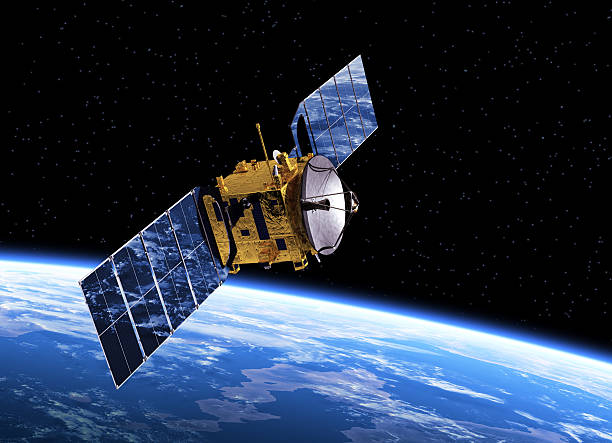
Kazakhstan plans to manufacture at least five to six remote sensing satellites in the coming years, with some slated for export, Deputy Prime Minister and Minister of Artificial Intelligence and Digital Development Zhaslan Madiev announced at a recent government meeting. Satellite production is managed by Kazkosmos JSC (National Space Center) and Ghalam LLP, while the Republican Space Communications Center JSC oversees satellite operations in orbit. According to Madiev, the ministry supervises these entities, and their production capacities are currently being fully utilized. “In the coming years, it is planned to launch at least five or six Earth remote sensing satellites at this complex, and part of the production will be focused on export. The expected volume of exports will be about $75 million. The implementation of the project will be the first such experience in the history of Kazakhstan and will allow the formation of high-tech exports,” Madiev said. He also announced that, starting in 2026, satellite internet will be available on trains operated by Kazakhstan Temir Zholy and aboard Air Astana flights. Currently, three satellite internet providers operate in the country, and two foreign companies are expected to enter the market soon. Pilot tests for train and aircraft connectivity are scheduled for this year. In parallel, local authorities are mandated to provide satellite internet access in tourist areas and hard-to-reach regions, funding the efforts independently. Simultaneously, a nationwide initiative is underway to deliver mobile coverage to 40,000 kilometers of national and regional highways, with completion expected within two years. The government is also expanding 5G infrastructure, with networks already active in 20 cities and plans to reach up to 75% of urban areas. More than half of the country’s rural settlements are set to gain high-speed internet access via fiber-optic lines over the next two years. As part of the “Last Mile” project, fiber optics will be extended to hundreds of thousands of households. Additionally, a major international project is underway: the construction of a fiber-optic communication line along the seabed of the Caspian Sea, connecting Kazakhstan to Azerbaijan. “The project will strengthen Kazakhstan’s position as a digital bridge between East and West and increase the stability of international data transmission channels,” Madiev said. This initiative is set for completion by year’s end. As previously reported by The Times of Central Asia, Azerbaijan and Kazakhstan are jointly investing over $50 million into the project.

Central Asia Can Depend on Azerbaijan for Path to West, Aliyev Says

Azerbaijan is the only “reliable country” that can geographically link Central Asia to the West because alternative routes face geopolitical turbulence, according to Azerbaijani President Ilham Aliyev. Aliyev spoke about Azerbaijan’s prospects as a key conduit for commerce across borders as well as its deepening relationship with Central Asia during a wide-ranging interview with local television channels in Baku on Monday. He acknowledged that there is still work to be done before Azerbaijan can approach its full potential as what he called a “living bridge” for international trade. The remarks followed a summit in Uzbekistan in November in which Central Asian leaders supported Azerbaijan’s accession to the region’s Consultative Meeting format as a full participant, even though Azerbaijan is in the South Caucasus. The Consultative Meeting format is a vehicle for high-level collaboration on trade, security, and other issues among Central Asian countries, which have taken steps to resolve border disputes and other sources of tension over the years. “So many projects have been implemented in recent years that these countries have unanimously elected us as a full member. We can also consider this a great political and diplomatic success,” Aliyev said during the interview. His remarks were published by the state Azerbaijani Press Agency, or APA. Referring to international connectivity, transport, and logistics, the president said, “Azerbaijan is the only reliable country that can geographically connect Central Asia with the West today,” and, without going into specifics, he alluded to the difficulties that some other trade channels face. Paths through Russia and Iran to the West, for example, are affected by sanctions and long-running political tensions. “Of course, from a geographical point of view, other routes can also be used. However, taking into account the current geopolitical situation, we can say with complete certainty that alternative routes for the West cannot be considered acceptable,” Aliyev said. He mentioned developing projects such as a November 2024 agreement involving Azerbaijan, Kazakhstan, and Uzbekistan to lay a fiber-optic cable along the Caspian seabed, as well as China’s large-scale funding for the construction of another railway to the Caspian Sea via Kyrgyzstan and Uzbekistan. “Freight traffic to the Caspian Sea, and therefore to Azerbaijan, will increase,” the Azerbaijani president said. “Along with Central Asian countries, additional freight from China will naturally increase the demand for the East–West route, the Middle Corridor.” A September analysis by the Washington-based Jamestown research group suggested that prospects are bright for Azerbaijan, which has actively positioned itself as a trade hub since Russia’s full-scale invasion of Ukraine in February 2022. “Amid disruptions in both the northern and southern corridors, Azerbaijan has emerged as a critical logistics hub, offering a sanction-free, resilient, and stable environment to facilitate overland trade between the PRC (China) and Europe through the Middle Corridor,” analyst Yunis Sharifli wrote. In addition, Azerbaijan expects cargo from China and Central Asia to travel along a proposed route that would link the main part of Azerbaijan to the separate Azerbaijani area of Nakhchivan, passing through Armenia and then...