• KGS/USD = 0.01144 0%
  • KZT/USD = 0.00217 0%
  • TJS/USD = 0.10456 0%
  • UZS/USD = 0.00008 0%
  • TMT/USD = 0.28571 0%
  • KGS/USD = 0.01144 0%
  • KZT/USD = 0.00217 0%
  • TJS/USD = 0.10456 0%
  • UZS/USD = 0.00008 0%
  • TMT/USD = 0.28571 0%
  • KGS/USD = 0.01144 0%
  • KZT/USD = 0.00217 0%
  • TJS/USD = 0.10456 0%
  • UZS/USD = 0.00008 0%
  • TMT/USD = 0.28571 0%
  • KGS/USD = 0.01144 0%
  • KZT/USD = 0.00217 0%
  • TJS/USD = 0.10456 0%
  • UZS/USD = 0.00008 0%
  • TMT/USD = 0.28571 0%
  • KGS/USD = 0.01144 0%
  • KZT/USD = 0.00217 0%
  • TJS/USD = 0.10456 0%
  • UZS/USD = 0.00008 0%
  • TMT/USD = 0.28571 0%
  • KGS/USD = 0.01144 0%
  • KZT/USD = 0.00217 0%
  • TJS/USD = 0.10456 0%
  • UZS/USD = 0.00008 0%
  • TMT/USD = 0.28571 0%
  • KGS/USD = 0.01144 0%
  • KZT/USD = 0.00217 0%
  • TJS/USD = 0.10456 0%
  • UZS/USD = 0.00008 0%
  • TMT/USD = 0.28571 0%
  • KGS/USD = 0.01144 0%
  • KZT/USD = 0.00217 0%
  • TJS/USD = 0.10456 0%
  • UZS/USD = 0.00008 0%
  • TMT/USD = 0.28571 0%

Viewing results 415 - 420 of 1472

The Income Gap Between Rich and Poor Kazakhs Is Widening

Analysts at Ranking.kz note that the income gap in Kazakhstan has remained consistently high in recent years. According to the National Statistics Bureau (NSB), from 2019 to 2023, the incomes of the poorest 10% and the wealthiest 10% of Kazakhstani citizens differed by an average factor of 5.9 to 6. In 2024, the gap reached a record high of 6.2 times. Who Are the Poor and Who Are the Rich? The NSB divides the population into ten equal income groups, or deciles. Formally, not only the bottom 10% can be classified as poor, but also the four adjacent deciles. Their average per capita income does not even reach the minimum monthly wage of 85,000 KZT ($157). Collectively, this bottom half of the population receives only 30.2% of the country’s total income. At the other end of the spectrum, the wealthiest 10% account for 24.1% of total income. This group includes individuals with monthly incomes ranging from 181,300 KZT ($336) to 1.6 million KZT ($2,963). However, this wide income range also includes many middle-class earners. Only a small fraction are truly wealthy. Salaried Employees: Who Earns What Among salaried employees (excluding the self-employed and those working in small businesses), income disparities remain stark. In 2024: 3.3% of employees (112,100 people) earned over 1 million KZT ($1,852) per month. 6.1% (210,600 people) earned less than 100,000 KZT ($185). The largest share of employees fell into the following income brackets: 100,000-200,000 KZT ($185-370) - 23.9% 200,000-300,000 KZT ($370-555) - 23.2% High salaries are more prevalent in sectors with higher nominal wages: Finance and insurance - 13.9% of employees earned over 1 million KZT Information and communications - 12.6% Professional, scientific, and technical fields - 10.1% Among civil servants, only 0.7% earn this amount. Meanwhile, low-wage earners (earning under 100,000 KZT) are most concentrated in: Administrative and support services - 18.4% Agriculture - 12.2% Across most industries, the most common salary level is between 200,000 and 400,000 KZT ($370-740). Regional Disparities Unsurprisingly, the highest concentration of “salary millionaires” is found in Kazakhstan’s oil-producing regions: Mangistau - 14.5% Atyrau - 11.5% In major cities, the numbers are more modest: Almaty - 6% Astana - 4.8% The regions with the lowest share of low-paid workers (earning under 100,000 KZT) are: Turkestan - 11.1% North Kazakhstan - 10.3% Zhambyl - 10% However, the Turkestan region remains one of the most economically vulnerable: in the first quarter of 2025, 8.1% of its population lived below the subsistence level, compared to the national average of 4.5%. More than 175,000 families survive on an income of just 52,500 KZT ($97) per person. Spending Patterns: Common Ground and Divergence Income inequality is also reflected in spending patterns. Despite the income gap, both poor and relatively affluent citizens spend a disproportionate share of their budgets on food. The lowest-income group spends 60.6% on food, while the wealthiest decile still spends 51.7%. For comparison, in developed European countries, the average is just 8-12%. However, differences become clearer in other spending categories. Wealthier citizens...
Kazakhstan’s Rare Earth Reserves Surpass Projections Following New Geological Surveys

Geological exploration at Kazakhstan’s largest rare earth metal deposit, Kuirektykol, in the Karaganda region, has revealed significantly higher reserves than previously estimated. The latest data suggests that the site holds 28.2 million tons of commercially viable rare earth elements, up from an initial estimate of 20 million tons. Exploration work began in 2022, and by November 2024, geologists had already confirmed significant concentrations of cerium and other lanthanides across four key zones at depths of up to 300 meters. Regional Potential Expands Alibek Aldeney, Deputy Akim of the Karaganda region, said that the surveys also revealed new prospective sites for gold, copper, and tungsten. “Foreign companies are already conducting surveys. This will allow us to expand our mineral resource base and create new production facilities for processing rare earth and precious metals,” Aldeney said. Industry experts have long maintained that Kazakhstan holds the potential to ensure stable supplies of critical minerals amid rising global demand. Strategic Priorities and Government Support In August, Prime Minister Olzhas Bektenov convened a meeting to discuss the development of Kazakhstan’s rare earth sector. He emphasized the need to modernize production, adopt advanced technologies, and increase scientific research. According to the Ministry of Industry, rare and rare earth metals currently account for 2.4% of the country's metallurgical sector. Since 2018, the government has invested KZT 67 billion (approximately $124 million) in the industry. Kazakhstan is currently exploring 25 promising rare earth sites across a combined area of 100,000 square kilometers. In 2024 alone, 38 new deposits of solid minerals were identified. Production of beryllium, tantalum, niobium, scandium, titanium, rhenium, and osmium is already underway, along with the extraction of associated elements such as bismuth, antimony, selenium, and tellurium. Future Outlook and Strategic Concerns There are emerging industrial opportunities include the production and recycling of battery materials, heat-resistant alloys, semiconductors, and permanent magnets. However, as The Times of Central Asia previously reported, with the sector’s strategic value increasing, members of parliament have called for tighter regulation of rare earth exports to safeguard national interests.

Cardiff University Opens Campus in Astana

On September 3, Cardiff University in Wales officially inaugurated Cardiff University Kazakhstan in Astana, its first overseas branch campus and the only campus of a Russell Group research university in Central Asia. The event marked a milestone in the growing educational partnership between Kazakhstan and the United Kingdom. At the opening ceremony, Kazakh Minister of Science and Higher Education Sayasat Nurbek emphasized the country’s ambitions: “Kazakhstan is developing as a regional academic hub. This year, more than 31,000 foreign students came to our country. At the initiative of the head of state, a large-scale strategy is being implemented in higher education and science. One of its areas is the opening of branches of leading foreign research universities in our country. Over the past three and a half years, about 40 foreign universities have come to Kazakhstan, five of them have decided to open their campuses.” Cardiff University’s Vice-Chancellor, Professor Wendy Larner, described the launch as a pivotal step in the institution’s global ambitions: “I was delighted to officially open our branch campus in Astana our first international branch campus of Cardiff University. We look forward to welcoming our first cohort of academically excellent students later this month. We are the UK’s first Russell Group university to open a campus in Kazakhstan, marking an important step in our future global ambition.” Beginning in late September, the campus will enroll students in four-year undergraduate programs in computer science, business management, civil engineering, and exploration geology. Courses will be taught in English by faculty from both Cardiff University and its Astana campus, with the branch operating under Cardiff’s direct academic governance to ensure international standards are upheld. The newly appointed British Ambassador to Kazakhstan, Sally Axworthy, also attended the ceremony and welcomed the development: “It is a great honour to be participating in the grand opening of Cardiff University here in Astana as one of my first engagements as British Ambassador to Kazakhstan. The opening marks a new chapter in UK-Kazakhstan educational collaboration, bringing more world-class British academic excellence to Kazakh students and further strengthening the ties between our countries.” The arrival of Cardiff University reflects a broader national initiative to attract world-class institutions. As previously reported by The Times of Central Asia, several other prominent universities are also expanding into Kazakhstan. Russia’s prestigious Moscow State Institute of International Relations (MGIMO) is planning to open a branch in Astana in September 2025. South Korea’s Woosong University is preparing to launch its campus in the Turkestan region this year. Meanwhile, Germany’s Anhalt University of Applied Sciences has already opened a branch in Almaty, and Italy’s Marche Polytechnic University of Ancona has inaugurated its campus at Zhetysu University in Taldykorgan. Looking ahead, France’s Grenoble INP - Phelma, UGA, an elite engineering school, plans to open a branch in Almaty in 2026. In the same year, the United States' Colorado School of Mines is scheduled to launch its first international campus in Zhezkazgan, a key center for Kazakhstan’s geological industry.

QazTrade Opens Office in Tianjin to Strengthen Kazakhstan-China Trade Ties

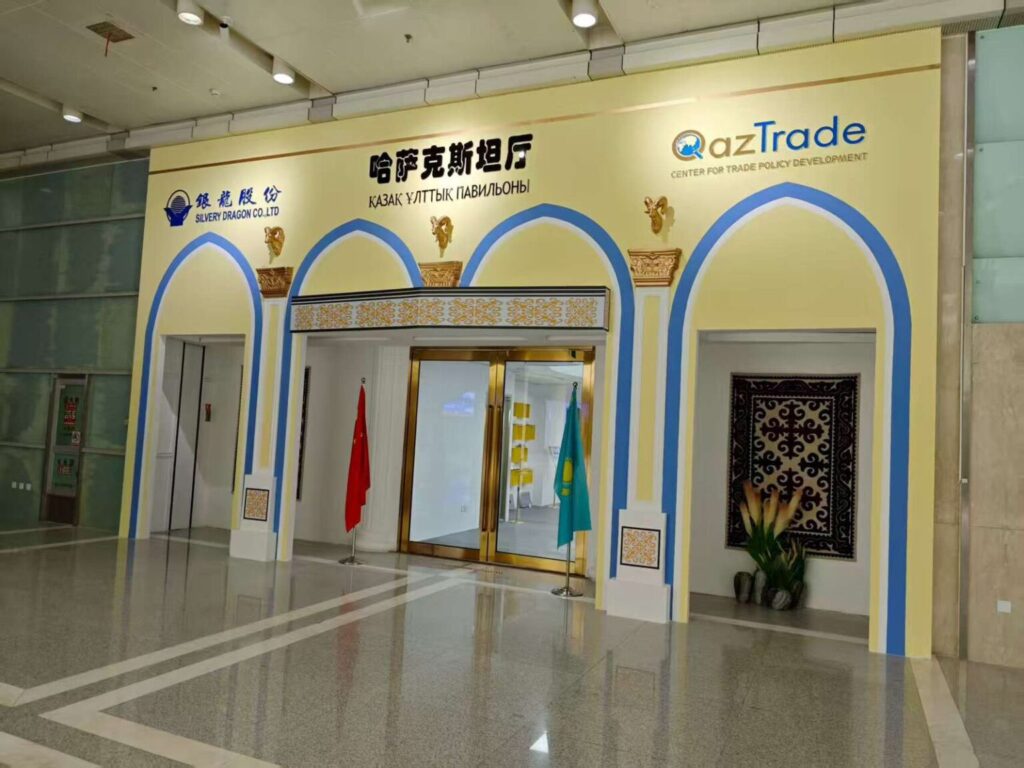
Kazakhstan’s QazTrade Center for Trade Policy Development has opened a new office, Kazakhstan Hall, at the International Trade and Shipping Service Center in Tianjin, one of northern China’s leading industrial and port cities. Spanning 100 square meters, the office is designed primarily to showcase Kazakhstani food products and facilitate trade promotion in the Chinese market. It is currently operating in pilot mode, with an expanding exhibition area and ongoing preparations to formally register QazTrade’s representative office. The official opening ceremony is expected later this autumn. According to QazTrade, trade turnover between Kazakhstan and Tianjin reached $347.9 million in 2023 and rose to $474 million in 2024, a sign of steady growth in bilateral commerce. Tianjin serves as a key logistics and trade hub for Shanghai Cooperation Organization (SCO) member states. It offers Kazakhstan access to a “green-light corridor” for SCO countries, multimodal transport links between Asia and Europe, and a variety of investment and financial services. “The opening of the QazTrade office in Tianjin is an important step for us,” said QazTrade Director General Aitmukhammed Aldazharov. “Through the Tianjin port, we will be able to deliver Kazakhstani goods to any country in the world faster and more efficiently.” Growing Bilateral Trade Kazakhstan-China trade continues to gain momentum. During a meeting with Kazakh Minister of Trade and Integration Arman Shakkaliyev on August 20 in Beijing, Chinese Minister of Commerce Wang Wentao stated that bilateral trade reached $43.8 billion in 2024, a 9.2% increase compared to the previous year. In the first half of 2025 alone, trade turnover totaled $21.8 billion. Kazakhstan and China have set a joint target to double bilateral trade by 2030, with expanded cooperation in logistics, agriculture, energy, and manufacturing forming the core of future initiatives.

Kazakhstan’s Rollout of Aitu Messenger Sparks Fears Over Internet Freedom

Kazakhstan is mandating the use of the national messenger Aitu among officials and state-owned enterprises, raising concerns that this move could signal future restrictions on internet freedom. The rollout of Aitu coincides with Russia's introduction of its own national messaging app, Max, which has been accompanied by efforts to block international platforms like WhatsApp and Telegram. The parallels are fueling fears that Kazakhstan may follow a similar path. Why Is Aitu Being Introduced? By September 15, employees of all government agencies and quasi-public sector organizations in Kazakhstan are required to switch to Aitu. The directive comes from the Digital Headquarters under the leadership of Prime Minister Olzhas Bektenov. On August 11, President Kassym-Jomart Tokayev instructed the government to strengthen protections around citizens’ personal data. “A significant part of business and official communication, including the transfer of citizens’ personal data, now takes place through international messengers,” he noted. Tokayev cited examples of sensitive data, such as individual identification numbers and medical information, being transmitted via foreign platforms. He linked this to repeated data breaches, stating that Kazakhstan experienced over 40 major leaks in 2025 alone, including a major incident in June that exposed data on millions of citizens. He argued that Aitu is a necessary step to prevent further leaks. Security Concerns Remain Unanswered Originally launched in 2018, Aitu was used on a limited scale during the COVID-19 pandemic and in educational initiatives. Despite its recent promotion, serious questions about its security remain unanswered. On August 29, Deputy Minister of Digital Development Dmitry Mun confirmed that Aitu is owned by Kazakhtelecom JSC, a national monopoly, and BTS. The app's infrastructure is reportedly hosted entirely within Kazakhstan. However, Yevgeny Pitolin, co-chair of the QazTech Alliance's Information Security Committee, criticized the lack of transparency: “There is almost no information about security. In official responses, the administration avoids these questions, claiming it is a matter of national security.” So far, six million people have registered with Aitu, according to the Ministry of Digital Development. Although this represents nearly one-third of Kazakhstan’s population of 20 million, the ministry has not disclosed how frequently the app is used. A Step Toward a Sovereign Internet? A major point of concern among Kazakhstanis is whether Aitu could pave the way for a sovereign internet model similar to those in Russia or China both of which tightly control domestic digital ecosystems. Russia’s Max messenger, modeled after China’s WeChat, integrates payments, government services, banking, and social networking. Though introduced by VK Corporation, the Russian government has embedded itself in its development. In July, the State Duma passed legislation mandating all official communication between citizens and government agencies to occur via Max. It now comes pre-installed on smartphones, and schools and hospitals are transitioning to it. Crucially, Max works only with SIM cards registered in Russia or Belarus, making cross-border communication difficult. Users have reported frequent disruptions in WhatsApp and Telegram access. Critics argue that the Russian state may be moving toward outright bans on foreign messengers. Kazakhstan Denies Similar Plans...

Russia Says It Has Paid Compensation for Kazakhstan Plane Crash

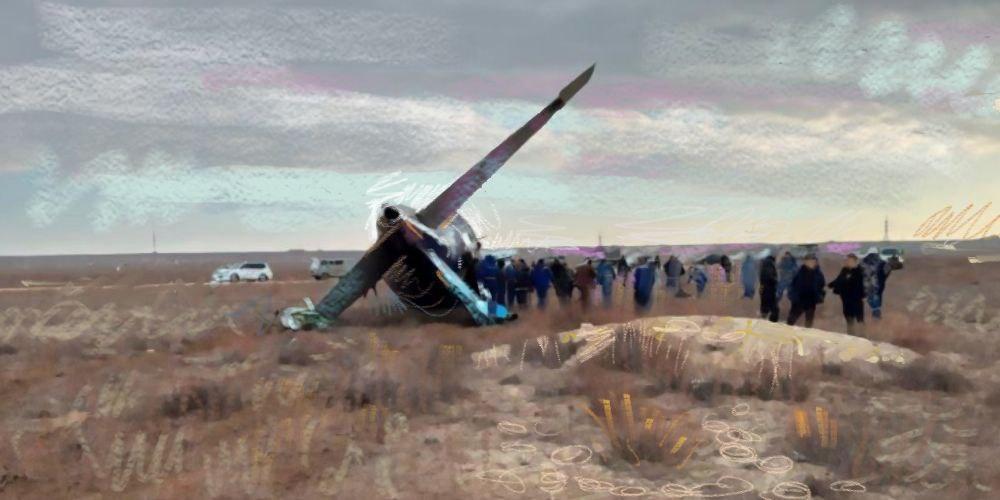
Russia says insurance payments have been made for the crash of an Azerbaijan Airlines plane near the Kazakhstani city of Aktau in December 2024, potentially meeting a demand of Azerbaijani officials who assert the plane was hit by Russian ground fire before diverting and crashing. While Azerbaijan’s government had said Russia should pay compensation for the disaster that killed 38 of the 67 people on board, it has yet to secure other demands, including full acknowledgement of responsibility for the crash and punishment of those believed to have fired on the aircraft as it tried to land in Grozny, Russia. The Russian Foreign Ministry said on Thursday that Russian insurance company AlfaStrakhovanie JSC has been making insurance payments since February in connection with the crash, which had taken off from Baku. AlfaStrakhovanie is one of the largest insurance companies in Russia and has been under Western sanctions because of the war in Ukraine.  “The Azerbaijani airline was paid insurance compensation for the plane in the amount of the full insured value - 1.003 billion rubles,” the equivalent of $12.3 million, the Russian ministry said.  “Claims in connection with the injuries and deaths of 46 of the 62 passengers on the flight have been fully settled, including full payments for 7 of the 15 Russian citizens, 35 of the 38 Azerbaijani citizens, all 3 Kyrgyz citizens, and 1 of the 6 Kazakh citizens,” the ministry said. “To date, insurance payments have been made to the injured passengers of the plane and relatives of the deceased for a total of 358.4 million rubles.” The payment to injured passengers and relatives of the deceased is the equivalent of $4.4 million. The Russian ministry said work was continuing with those groups for the purposes of a “full settlement.” There was no specific mention of the five Azerbaijani crew members in the Russian statement. Two pilots and one flight attendant died.  Russian President Vladimir Putin has offered a general apology for the crash without providing details about what happened at a time when, according to Russia, the area around Grozny was under attack from Ukrainian drones. Azerbaijan has said it will seek redress in international courts, indicating it has doubts about the outcome of a crash investigation being led by Kazakhstan.  Putin and Azerbaijani President Ilham Aliyev, who has sharply criticized Russia because of its alleged evasiveness over the crash, were seen shaking hands in a brief encounter at a summit of the Shanghai Cooperation Organization in Tianjin, China earlier in the week. But they didn’t hold a meeting on the sidelines of the event, possibly indicating that there is still significant tension in the relationship between the two countries.