• KGS/USD = 0.01144 0%
  • KZT/USD = 0.00213 0%
  • TJS/USD = 0.10607 0.57%
  • UZS/USD = 0.00008 0%
  • TMT/USD = 0.28530 0%
  • KGS/USD = 0.01144 0%
  • KZT/USD = 0.00213 0%
  • TJS/USD = 0.10607 0.57%
  • UZS/USD = 0.00008 0%
  • TMT/USD = 0.28530 0%
  • KGS/USD = 0.01144 0%
  • KZT/USD = 0.00213 0%
  • TJS/USD = 0.10607 0.57%
  • UZS/USD = 0.00008 0%
  • TMT/USD = 0.28530 0%
  • KGS/USD = 0.01144 0%
  • KZT/USD = 0.00213 0%
  • TJS/USD = 0.10607 0.57%
  • UZS/USD = 0.00008 0%
  • TMT/USD = 0.28530 0%
  • KGS/USD = 0.01144 0%
  • KZT/USD = 0.00213 0%
  • TJS/USD = 0.10607 0.57%
  • UZS/USD = 0.00008 0%
  • TMT/USD = 0.28530 0%
  • KGS/USD = 0.01144 0%
  • KZT/USD = 0.00213 0%
  • TJS/USD = 0.10607 0.57%
  • UZS/USD = 0.00008 0%
  • TMT/USD = 0.28530 0%
  • KGS/USD = 0.01144 0%
  • KZT/USD = 0.00213 0%
  • TJS/USD = 0.10607 0.57%
  • UZS/USD = 0.00008 0%
  • TMT/USD = 0.28530 0%
  • KGS/USD = 0.01144 0%
  • KZT/USD = 0.00213 0%
  • TJS/USD = 0.10607 0.57%
  • UZS/USD = 0.00008 0%
  • TMT/USD = 0.28530 0%

Viewing results 673 - 678 of 1491

Moldova To Open Embassy in Kazakhstan

The government of Moldova has approved plans to open its first embassy in Kazakhstan's capital of Astana. The opening of the embassy is intended to expand Moldova's diplomatic presence in Central Asia, and strengthen economic and cultural ties with Kazakhstan. Kazakhstan is an important regional economic player, with rich energy resources and a significant Moldovan diaspora. According to the Moldovan Foreign Ministry, about 20,000 Moldovan citizens living in Kazakhstan currently have to seek consular assistance from the Moldovan diplomatic mission in Russia. The ministry said that Kazakhstan is a promising market and an essential partner for attracting investments and developing bilateral trade. The opening of the embassy is expected to contribute to a more active political dialog, and create new opportunities for economic cooperation between the countries. The decision also aligns with Moldova's National Development Plan 2025-2027, which aims to expand its diplomatic and consular network worldwide. The country seeks to diversify its trade portfolio, particularly in the European Union or the EU's immediate neighborhood.

Kazakhstan and Tajikistan to Cooperate Over Rare-Earth Metals

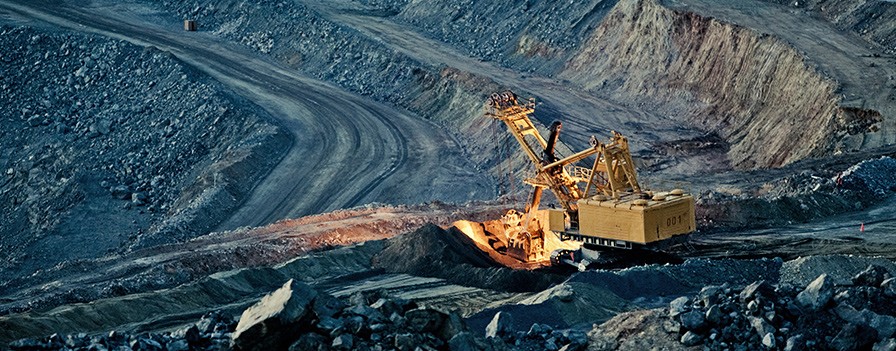
Kazakhstan’s national atomic company, Kazatomprom, the world's largest producer of uranium, has announced a new strategic partnership with Tajikistan’s TajRedMet (Tajik Rare Metals) in the mining and processing of uranium and rare and rare-earth metals. According to the parties' agreement, the companies will collaborate in exploring, mining, and processing uranium and other rare and rare-earth metals, conducting research and development work, introducing innovative technologies, and training personnel. Meirzhan Yussupov, CEO of Kazatomprom, commented: “This step is of great importance for strengthening the partnership between our companies. Although it is too early to talk about specific results, we are focused on promising joint projects in the uranium industry and rare and rare-earth metals, which can significantly benefit Kazakhstan and Tajikistan.” As part of the agreement, TajRedMet representatives will soon visit Kazakhstan to inspect Kazatomprom's production facilities and assess the potential for further cooperation in more detail. According to an IAEA research paper, Tajikistan has significant mineral resources awaiting development, including rare metals, earth elements, and uranium. Several countries have expressed interest in the development of Tajikistan’s uranium resources. Russia was considering assisting Tajikistan in developing its uranium resources, as well as assisting in geological prospecting, with the aim of involvement in the subsequent extraction and possible processing of uranium. China’s Guangdong Corporation has also expressed an interest in participating in projects to develop Tajik uranium deposits. The Tajik government has also agreed to allow Indian companies to explore for uranium mineralization. In his address to parliament in December 2023, Tajik President Emomali Rahmon ordered the government to focus on mining lithium, tungsten, nickel, and antimony, and develop a program for processing these metals domestically into finished products.

Skyward Ambitions: Navigating the Growth and Challenges of Kazakhstan’s Aviation Industry

According to the Concept for the Development of the Transport and Logistics Potential of the Republic of Kazakhstan by 2030, the development of the country's civil aviation industry should be conducted in three key areas: flight safety, route network development, and infrastructure modernization. So, how do things stand today in regard to fulfilling these tasks? As previously reported by TCA, Uzbekistan has far surpassed Kazakhstan in direct air routes to key countries; from Tashkent, one can even fly to New York, which remains an elusive dream for Kazakhstanis. In 2011, Air Astana approached Boeing regarding the purchase of three 787 Dreamliner aircraft. However, when approached by TCA in August 2024, Air Astana stated that "since 2011, there have been several macroeconomic, global changes, which affected the market situation, and the timing of aircraft deliveries has been revised, including delays on the part of the manufacturer."   Safety In July of this year, a landmark event for the aviation industry occurred when President Kassym-Jomart Tokayev vowed to open the Permanent Mission of Kazakhstan to the International Civil Aviation Organization (ICAO). This was another step towards introducing advanced standards in the aviation industry, and a decision which is in line with the trend of removing all restrictions for domestic carriers on flights to the European Union from Kazakhstan. The issue was discussed at a meeting of the EU Flight Safety Committee, with the participation of representatives of the aviation authorities of 27 countries. Unfortunately, however, cases of safety violations in civil aviation in Kazakhstan are not decreasing. According to the Bureau of National Statistics, in 2023 there were 58 accidents in air transportation, compared to 47 in the previous year. In the last month alone, three incidents involving damage to planes occurred at Astana Airport alone. The causes were weather conditions, as well as the actions of the air harbor operator. Fortunately, there were no casualties. One of the most hotly debated problems in the aviation industry for many years has been the issue of construction in areas surrounding airports. Law enforcement are now taking measures to bring these areas into compliance. According to data from the Aviation Administration of Kazakhstan, in 2023, during an inspection by the General Prosecutor's Office, it was revealed that within the boundaries of airport safety zones, local executive bodies had allocated approximately 1,200 plots for the construction of residential, commercial and other facilities, on which more than 900 buildings have been erected. Over 100,000 different structures have been built within the territory of airfields without the approval of airport commissions (residential, commercial, industrial, etc.). The cities of Almaty, Shymkent, Atyrau, and Aktobe have seen the most serious cases of illegal construction. In order to establish clear requirements for the use of airfield territories, legislative amendments have since been introduced regarding the procedure for granting rights to plots located on such land.   Air geography The air transportation market in Kazakhstan is growing: 8.3 million passengers traveled by air between January-July 2024. This constitutes a 14% growth when...

Tajikistan Sending Higher Volumes of Irrigation Water to Kazakhstan

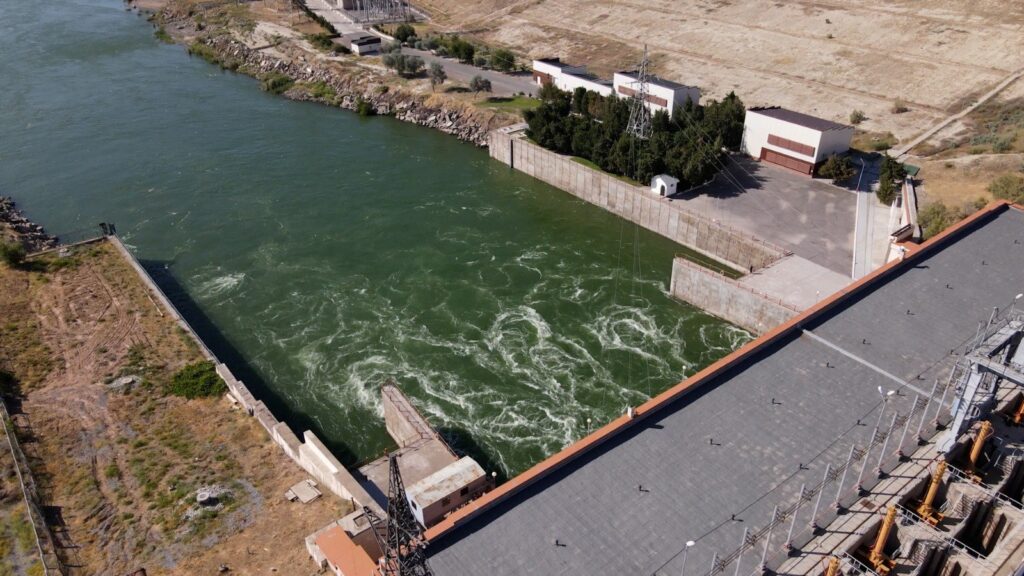
Since June 1, Tajikistan has sent 488.6 million cubic meters of water to Kazakhstan via the transboundary Dostyk canal. This is 40 million cubic meters more than in the entirety of last year, and is already 45 million cubic meters more than the volume planned for this year, the Kazakh Ministry of Water Resources and Irrigation announced on August 27. During his state visit to Tajikistan on August 22, Kazakhstan's President Kassym-Jomart Tokayev emphasized the importance of cooperation with Tajikistan in the water sector and the rational use of resources of transboundary rivers of Central Asia. Kazakhstan’s agriculture, especially in the dry southern regions, depends on irrigation water supplies from upstream Tajikistan, Kyrgyzstan, and Uzbekistan. According to the Ministry of Water Resources, since April 1, Uzbekistan has sent over 4 billion cubic meters of water to Kazakhstan via the Syr Darya River. Kyrgyzstan has committed to supply Kazakhstan with 180 million cubic meters of water via the transboundary Shu River, and 380 million cubic meters via the Talas River.

Kazakhstan Officially Backs Nuclear Power Referendum

The government of Kazakhstan has approved a draft resolution to hold a national referendum on constructing a nuclear power plant (NPP). The meeting, chaired by Prime Minister Olzhas Bektenov, discussed the prospects for developing nuclear energy in the country. Energy Minister. Almasadam Satkaliyev noted that the referendum will allow Kazakhstanis to make an important decision about the future of the country's energy security. Bektenov emphasized that Kazakhstan has mastered almost the entire cycle of nuclear fuel production and has experience with small reactors. However, the current shortage of energy capacity requires new solutions to avoid purchasing electricity from abroad. With the global abandonment of coal-fired power plants and the limited potential of renewable energy sources, the development of nuclear power is the most promising direction. According to the International Atomic Energy Agency, 415 nuclear power units operate worldwide, and 61 new units are under construction in 15 countries, including China and the UK. With its significant uranium resource base, Kazakhstan can ensure stable electricity tariffs and independence from raw material price fluctuations. Modern NPPs have a multi-level safety system that meets IAEA international standards. According to Bektenov, nuclear power should become the basis for Kazakhstan's energy-intensive economy, stimulating innovation and industry development. The draft resolution was supported unanimously. The Ministry of Energy and the Government Office were instructed to submit a draft decree to the Presidential Administration. Talks on constructing a nuclear power plant in Kazakhstan have been ongoing for many years; the idea of the need for a nuclear power plant first appeared after the closure of the Soviet reactor in Aktau in 1999. Since then, the country has repeatedly raised questions about the development of nuclear power, especially in the context of improving energy security and climate change resilience. However, public opinion remains divided; many people in the country remember the consequences of nuclear tests at the Semipalatinsk test site and fear environmental risks. In 2021, discussions about constructing a nuclear power plant intensified when a possible site for Kazakhstan's first atomic power plant began to be considered in Almaty Oblast, near the village of Ulken. These plans sparked lively public debate and protests among residents and environmentalists. President Kassandra-Jomart Tokayev proposed a national referendum to give citizens a say on this critical issue.

China to Build a Trade and Industrial Park in Astana

Last week, Xinjiang Hengyuan Investment Management Co., Ltd., based in the Chinese city of Baiyang, and Kazakh Invest signed a memorandum to implement the construction of a trade and industrial park, spanning 50 hectares, in Astana. As reported by Kazakh Invest, the project is expected to positively impact the development of critical sectors of Kazakhstan's economy, including logistics, warehousing, processing, trade, and real estate management. The project will also attract Chinese trade and manufacturing companies to operate in Kazakhstan. Yan Wang, Deputy Mayor of Baiyang, commented: "We are entering this project with great enthusiasm, seeing the enormous potential of Kazakhstan as a key logistics hub in the region. Creating the Kazakhstan-China Trade and Industrial Park in Astana will significantly expand the country's logistics capabilities and strengthen its role as an important transit corridor between East and West. We believe this project will catalyze attracting new trade flows and manufacturing." Yerzhan Yelekeyev, Chairman of the Board of Kazakh Invest, added: "This project opens up new horizons for cooperation between Kazakhstan and China. The creation of the Kazakhstan-China Trade and Industrial Park in Astana will not only accelerate the development of key sectors of our economy -but-also create numerous new jobs.”