• KGS/USD = 0.01144 0%
  • KZT/USD = 0.00204 0%
  • TJS/USD = 0.10394 -0.38%
  • UZS/USD = 0.00008 0%
  • TMT/USD = 0.28490 -0.28%
  • KGS/USD = 0.01144 0%
  • KZT/USD = 0.00204 0%
  • TJS/USD = 0.10394 -0.38%
  • UZS/USD = 0.00008 0%
  • TMT/USD = 0.28490 -0.28%
  • KGS/USD = 0.01144 0%
  • KZT/USD = 0.00204 0%
  • TJS/USD = 0.10394 -0.38%
  • UZS/USD = 0.00008 0%
  • TMT/USD = 0.28490 -0.28%
  • KGS/USD = 0.01144 0%
  • KZT/USD = 0.00204 0%
  • TJS/USD = 0.10394 -0.38%
  • UZS/USD = 0.00008 0%
  • TMT/USD = 0.28490 -0.28%
  • KGS/USD = 0.01144 0%
  • KZT/USD = 0.00204 0%
  • TJS/USD = 0.10394 -0.38%
  • UZS/USD = 0.00008 0%
  • TMT/USD = 0.28490 -0.28%
  • KGS/USD = 0.01144 0%
  • KZT/USD = 0.00204 0%
  • TJS/USD = 0.10394 -0.38%
  • UZS/USD = 0.00008 0%
  • TMT/USD = 0.28490 -0.28%
  • KGS/USD = 0.01144 0%
  • KZT/USD = 0.00204 0%
  • TJS/USD = 0.10394 -0.38%
  • UZS/USD = 0.00008 0%
  • TMT/USD = 0.28490 -0.28%
  • KGS/USD = 0.01144 0%
  • KZT/USD = 0.00204 0%
  • TJS/USD = 0.10394 -0.38%
  • UZS/USD = 0.00008 0%
  • TMT/USD = 0.28490 -0.28%

Viewing results 955 - 960 of 1395

China Replaces Russia as Kazakhstan’s Biggest Trade Partner

In 2023, China became Kazakhstan's top trading partner, relegating Russia to second place. This is according to data from the Ministry of Trade and Integration of Kazakhstan, which summarized last year's foreign trade data. The main importers of Kazakhstani products were China, Russia and Italy. The Russian Federation held the top spot in 2022. The total trade volume grew in 2023 to $139.8bn. Trade with China amounted to $31.5bn, with Russia -- $26bn, with Italy -- $16.1bn, and South Korea and Turkey -- $6bn apiece. Last year Kazakhstan's export markets totaled 135, and the number of traded commodity items was almost 4,000. Crude oil and petroleum products were the top exports ($43.4bn), followed by industrial goods ($9.8bn), non-precious metals ($9.6bn), agro-industrial goods ($5.4bn), ores ($4.9bn), uranium ($3.4bn), and natural gas ($2.1bn). At the same time, Kazakhstan imported equipment and electrical machinery more than anything else ($15.5bn), followed by motor vehicles and auto parts ($7.8bn), non-precious metals ($5.6bn), and food and textiles ($4.8bn each). In 2023 Kazakhstan increased non-resource exports to its East Asian trade partners: to Vietnam by 64%, to Hong Kong by 34%, to South Korea by 30%, and to China by 10%.
Germany and Kazakhstan Expand Their Partnership

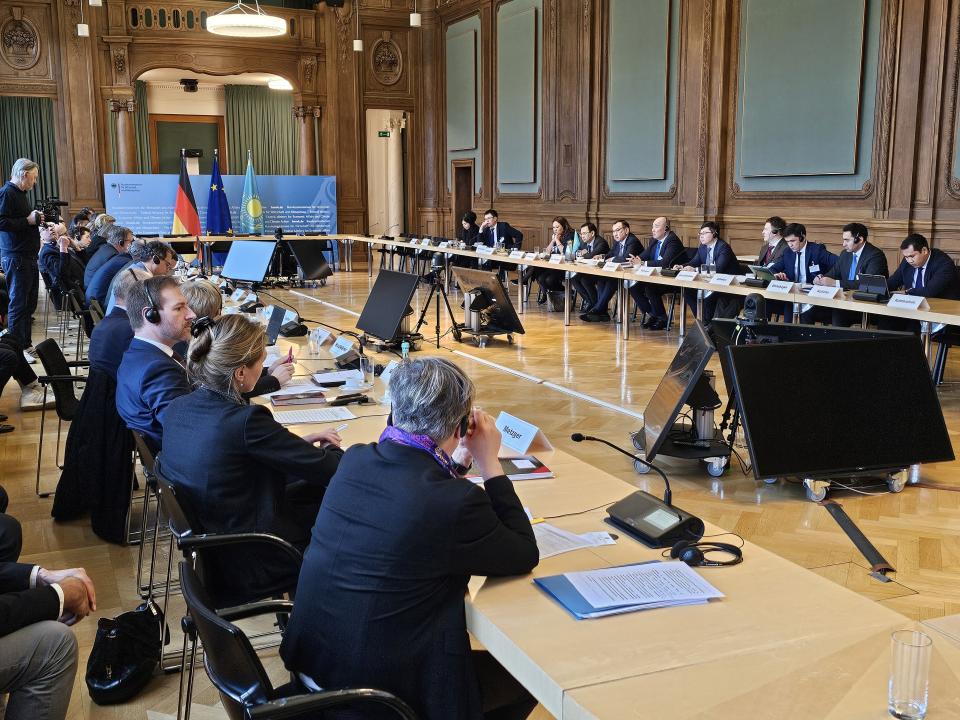
A meeting of the Kazakh-German Intergovernmental Working Group on Trade and Economic Cooperation was held in Berlin on February 16th. It was co-chaired by Kanat Sharlapaev, Kazakhstan’s minister for industry and construction, and Dominik Schnichels, the director for foreign trade policy of Germany’s Federal Ministry of Economic Affairs and Climate Protection.  The meeting discussed bilateral trade and economic relations, cooperation in energy, environment, agriculture and water management, transport, logistics and infrastructure, as well as cooperation in raw materials, industrial and technological spheres, the Kazakh Embassy in Germany reported.  Mr Schnichels commented: "To confirm once again the level of Strategic Partnership between Kazakhstan and Germany, constructive and fruitful talks were held at today's meeting of the Intergovernmental Working Group, which made it possible to identify specific projects in priority areas.”  “The agreements reached today demonstrate that this bilateral platform contributes to improving the framework conditions for further rapprochement of government and business circles, as well as practical promotion of mutual trade and investment. Kazakhstan is a resource-rich country with unique opportunities. Germany is interested in further deepening trade and economic cooperation in the way of the ongoing economic and social reforms in the country.”  In his speech, Mr Sharlapaev stressed that the strategic synergy between Kazakhstan and Germany, together with a convenient geographical location at the crossroads of intercontinental transport routes, including energy supply routes, strengthens Kazakhstan’s position as a regional investment hub and one of the key players in the global energy arena. "The development of the Trans-Caspian International Transport Route (Middle Corridor) is of great importance for Kazakhstan as a reliable supplier of energy resources and strategic goods to Europe,” he said. “Strengthening Kazakhstan's industrial potential is also among the strategic areas of cooperation with Germany." 

Kazakhstan and Uzbekistan To Build ‘Central Asia’ Industrial Center

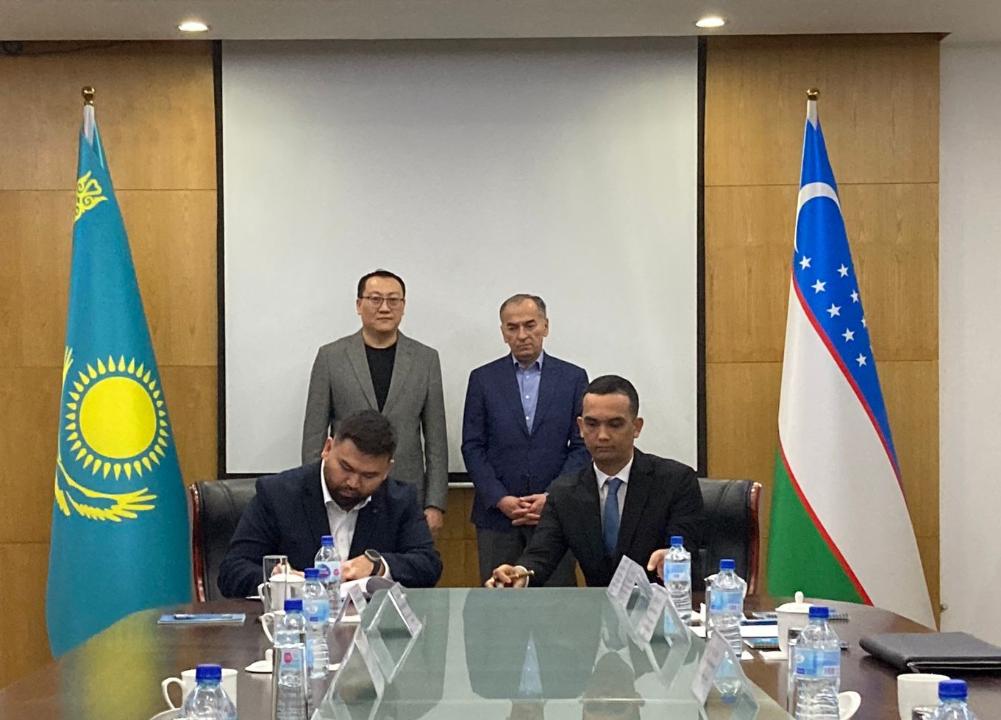
Kazakhstan and Uzbekistan are working to accelerate the creation of an international center for industrial cooperation, called ‘Central Asia’. It will be constructed at the border of the two countries, near the Gulistan checkpoint on the Uzbek side and the Atameken checkpoint on the Kazakh side, the Kazakh Ministry of Trade and Integration has reported.  The Kazakh investor in the project, TCL Group, together with the administration of Kazakhstan’s Turkestan region, plans to begin construction of the Central Asia Center this year. TCL Group has also signed a memorandum of cooperation with the Uzbek company Global Textile on the center’s first investment project, which will produce finished textile products. Kazakhstan’s deputy minister for trade and integration, Kairat Torebaev, has commented that the Central Asia Center is expected to start its operations in the fourth quarter of 2026, and the official opening is planned for the first half of 2027. Mr Torebaev believes the center will help intensify business ties between manufacturers from Kazakhstan and Uzbekistan, and stimulate the growth of trade turnover between the two countries.  Trade turnover between Kazakhstan and Uzbekistan has grown to over $4.6bn in 2023. The sides aim to bring bilateral trade to $10bn in the coming years.

Doha Hosts Kazakhstan–Qatar Investment Roundtable

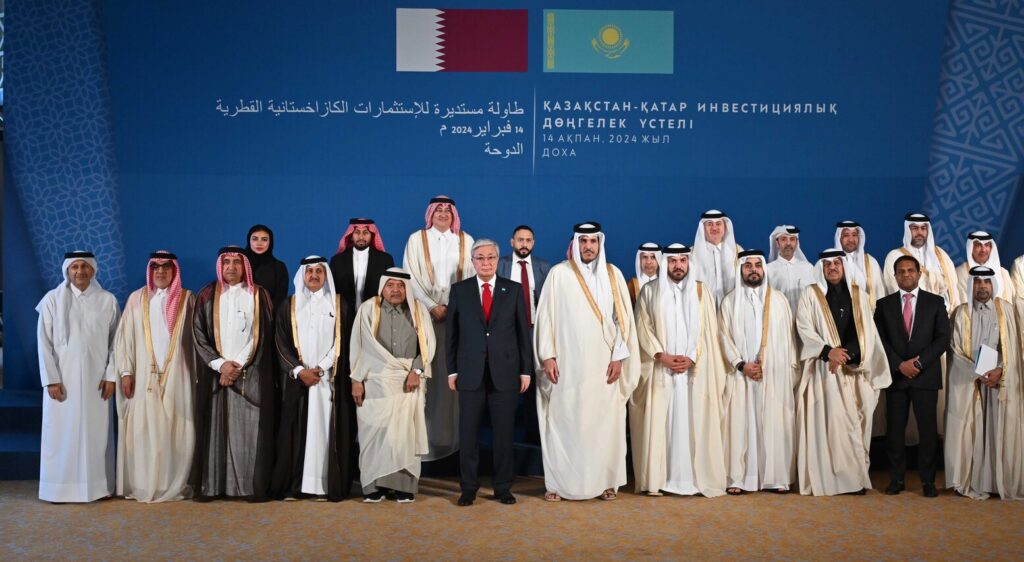
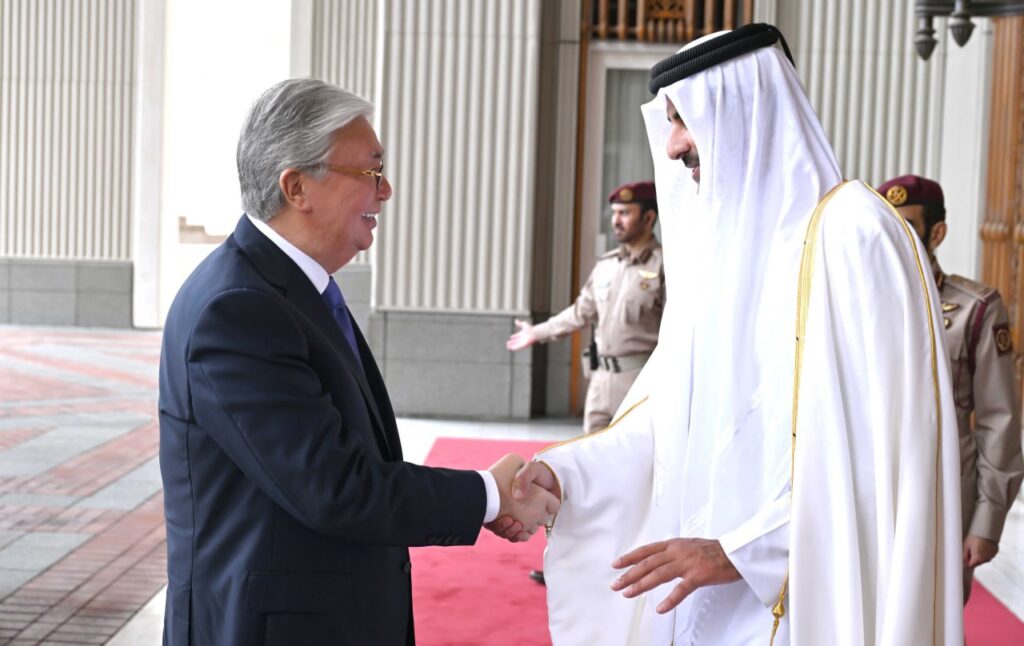
During his visit to Qatar on February 14th, Kazakhstan’s president Kassym-Jomart Tokayev took part in the Kazakhstan–Qatar Investment Roundtable in Doha.  Mr Tokayev invited Qatari companies to invest in the Kazakh economy and explore new business opportunities, mentioning that his government is ready to provide tax and customs preferences, project co-financing, partial guarantees and export support mechanisms, the president’s press office reported. Mr Tokayev also suggested expanding the work of the Kazakhstan-Qatar Joint High-Level Commission and Business Council. The Kazakh president said that during his meeting with the Amir of Qatar, Sheikh Tamim bin Hamad Al Thani, earlier in the day, he proposed to increase bilateral trade up to $500m as a first step. “We can offer the Qatari market high-quality goods such as machinery, iron, steel, and agricultural products. Our market also offers access to the Eurasian Economic Union market with a total GDP of $2.6tn. We have a common border with China as well, which gives good opportunities to make trade with this juggernaut using the Belt and Road project,” Tokayev said.  Today Kazakhstan and Qatar are more closely connected than ever before, due to a visa-free regime and several direct flights per week.  Mr Tokayev invited Qatari energy companies to cooperate with their Kazakh counterparts in geological exploration, petrochemicals, transportation, and oil and gas processing projects.  He emphasized that Kazakhstan's renewable energy potential, estimated at one trillion kilowatt-hours, has attracted the attention of global players who have committed to projects with a capacity of 43 gigawatts. “We welcome Nebras Power’s intentions to implement a 350 megawatt hydroelectric power plant and Pearl Overseas’ plans to construct a 1.1 gigawatt combined-cycle plant in Kazakhstan,” he said.  The Kazakh president also encouraged Qatari companies to participate in the extraction and processing of critical raw materials such as cobalt and lithium.  In the agricultural sector, Kazakhstan can supply halal and organic agricultural products to the Qatari market, Tokayev said, adding that Kazakhstan is also interested in developing the production of meat, fruit, vegetable, grain, flour and other products with further direct supply to Qatar.

Kazakhstan’s President Among First Foreign Leaders to Address Quorum of Qatar’s Parliament

The President of Kazakhstan Kassym-Jomart Tokayev paid a working visit to Qatar on February 13-14, during which he delivered a speech to the members of the Consultative Assembly (Majlis al-Shura) in Doha. About a dozen documents were signed after negotiations between the Kazakh side and the Emir of Qatar, Tamim bin Hamad Al-Thani. The main agreement focuses on cooperation in the construction of gas processing plants at Kazakhstan's Kashagan field between the state company, JSC QazaqGaz, and Qatar's UCC Holding - as well as projects in the field of energy and gas between JSC Samruk-Kazyna, the Kazakh Ministry of Energy, and Qatar's Power International Holding. According to the Ambassador Extraordinary and Plenipotentiary of Kazakhstan to Qatar, Arman Isagaliyev, President Tokayev's speech contained comments and observations about the upcoming reforms in Kazakhstan, as well as an assessment of events in the Middle East and the world in general. Qatar appears keenly interested in the structure and operations of state institutions given that the first parliamentary elections in the country were held just three years ago. Tokayev proposed after state-level talks that the countries could enter a fully-fledged strategic partnership. Furthermore, Tokayev noted that it's necessary to develop an inter-modal transport network connecting the Persian Gulf and Central Asia, and to expand cooperation in agriculture and organize cultural exhibitions from Kazakhstan and Qatar in each other's capitals in 2025. During the talks, Tokayev said he is ready to increase exports to Qatar on 60 non-resource-based commodity items by $250 million, and proposed bilateral trade be increased to $500 million.

China Lifts Restrictions On Importing Livestock From Kazakhstan

China has lifted restrictions on the import of poultry from Kazakhstan, as well as removing import restrictions related to foot-and-mouth disease in cattle, the Kazakh Ministry of Agriculture has announced.  China’s ban on Kazakh poultry has been in place since 2005, and restrictions on the import of Kazakh meat due to foot-and-mouth disease concerns were introduced in 2022. The lifting of the restrictions allows exports of frozen beef and pork from the southeastern regions of Kazakhstan to resume, as well as of a wide range of poultry products. The decision to lift the ban comes as a result of president Kassym-Jomart Tokayev’s visit to China last year, during which he raised this issue in talks with his Chinese counterpart, Xi Jinping. During 2023 China conducted a risk assessment for avian flu and foot-and-mouth disease in Kazakhstan. In December, specialists from the Chinese customs service and Ministry of Agriculture visited Kazakhstan to assess the country’s veterinary service, to make sure that it provides sufficient control over foot-and-mouth disease. According to the Kazakh Ministry of Agriculture, between January and October 2023 agricultural trade between Kazakhstan and China increased by 70% and exceeded $1bn, with Kazakh exports amounting to $811.1m.