• KGS/USD = 0.01143 0%
  • KZT/USD = 0.00216 0%
  • TJS/USD = 0.10684 -0.28%
  • UZS/USD = 0.00008 0%
  • TMT/USD = 0.28571 0%
  • KGS/USD = 0.01143 0%
  • KZT/USD = 0.00216 0%
  • TJS/USD = 0.10684 -0.28%
  • UZS/USD = 0.00008 0%
  • TMT/USD = 0.28571 0%
  • KGS/USD = 0.01143 0%
  • KZT/USD = 0.00216 0%
  • TJS/USD = 0.10684 -0.28%
  • UZS/USD = 0.00008 0%
  • TMT/USD = 0.28571 0%
  • KGS/USD = 0.01143 0%
  • KZT/USD = 0.00216 0%
  • TJS/USD = 0.10684 -0.28%
  • UZS/USD = 0.00008 0%
  • TMT/USD = 0.28571 0%
  • KGS/USD = 0.01143 0%
  • KZT/USD = 0.00216 0%
  • TJS/USD = 0.10684 -0.28%
  • UZS/USD = 0.00008 0%
  • TMT/USD = 0.28571 0%
  • KGS/USD = 0.01143 0%
  • KZT/USD = 0.00216 0%
  • TJS/USD = 0.10684 -0.28%
  • UZS/USD = 0.00008 0%
  • TMT/USD = 0.28571 0%
  • KGS/USD = 0.01143 0%
  • KZT/USD = 0.00216 0%
  • TJS/USD = 0.10684 -0.28%
  • UZS/USD = 0.00008 0%
  • TMT/USD = 0.28571 0%
  • KGS/USD = 0.01143 0%
  • KZT/USD = 0.00216 0%
  • TJS/USD = 0.10684 -0.28%
  • UZS/USD = 0.00008 0%
  • TMT/USD = 0.28571 0%

Viewing results 955 - 960 of 1565

Kazakh-Owned Rompetrol, On Brink Of Collapse, Appeals To Tokayev

According to Romanian news portal gandul.ro, Rompetrol, which operates in oil refining, petrochemicals, and distribution in parts of Eastern Europe, is close to collapse. The stated reason is that Rompetrol top management -- which includes representatives of Kazakhstan's state energy company KazMunayGas (KMG), the majority owner of Rompetrol -- prioritize personal interests over the economic good of the company. The allegations are serious. KMG International, a group owned by Kazakhstan's national oil and gas company KazMunayGas, acquired the Rompetrol brand in 2007, strengthening its position as a key player in the Black Sea and Mediterranean region. It currently owns 55% of Rompetrol, with Romania's Ministry of Energy controlling just under 45%. The Kazakhstani company is accused of assisting Russia, which itself is trying to avoid sanctions imposed by the European Union (EU). Gandul.ro claims that it's possible to bring oil from Russia to be refined in Romania despite the embargo on Russian crude. Rompetrol CEO Ilyas Kuldzhanov has Russian citizenship, although he also registered Kazakh citizenship in Romania's National Trade Register to avoid possible EU sanctions. Gandul.ro published an open letter penned by some of the company's employees, which they sent to the Kazakh Government. The letter contains the following passages: "Dear Sirs, we are writing to you regarding current issues related to Rompetrol. At the beginning of this message, we apologize for using Google Translate to translate from Romanian to Russian and for remaining anonymous. We decided to remain anonymous because we fear reprisals from KMG management. We want to draw attention to the growing problems inside Rompetrol, because no one is interested in the future of the company. The company needs a radical change of management and new people with different perspectives at all levels, from the board of directors to the top management, with a vision in line with the goals. In terms of management, first of all we should mention Ilyas Kuldzhanov, an extremely incompetent person with no experience in managing large companies, Baurzhan Nurgaliyev (Operations Director), who until recently ran a company selling elevators in Astana, Saken Shoshanov, Baurzhan Nugumanov and other members of management. Appointments to management positions are made on the basis of the ethnic origin of the clan. Most of the new managers in Romania and Kazakhstan have been hired without any competition or selection, and have no experience or knowledge of how the corporation should operate. Note the price of oil and how diesel fuel was purchased in 2023 due to an emergency equipment shutdown at the Petromidia refinery. Why is this equipment not repairable? Why do accidents and explosions continue to occur? Because Rompetrol management is looking for contractors willing to pay commissions. We would like to inform you that similar messages will be sent to the Romanian authorities because the situation is critical." Rompetrol employees also create a disastrous picture of the company's behavior. In the letter they ask Tokayev to check how components and electricity are purchased for the plant -- questions that refer to expenditures of tens of millions...
Russia Reportedly Asks Kazakhstan for Extra Gasoline Amid Shortage From Drone Strikes

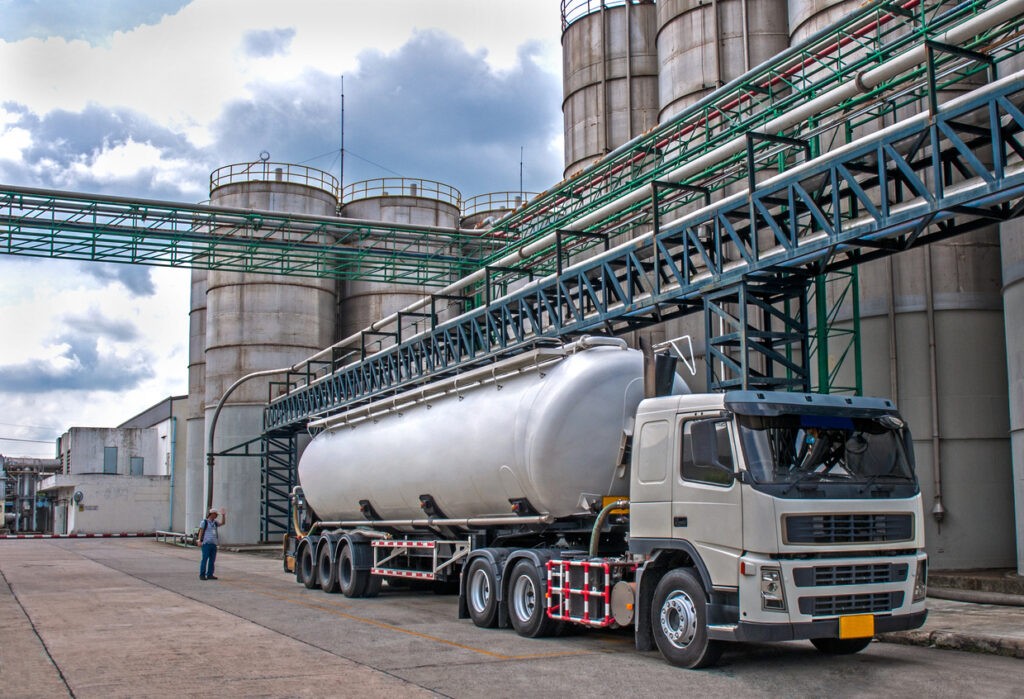
According to Reuters, Russia has asked Kazakhstan for 100,000 tons of gasoline, as Russian gasoline wholesalers hedge against possible fuel shortages due to Ukrainian drone attacks on Russian oil refineries. Reuters cited three people familiar with the matter. "Sources say Moscow has asked Kazakhstan to stockpile an emergency reserve of 100,000 tonnes of petrol for deliveries to Russia. Arrangements have already been made to provide Kazakh petrol to Russia. Belarus is also ready to help the neighbouring country with fuel," it reports. However, Kazakhstan's Ministry of Energy, through energy minister Shyngys Ilyasov, has not confirmed this information. Due to Ukrainian drone attacks on Russian refineries in early 2024, output of oil products in Russia fell by almost 14%. The drone strikes hit notable refineries such as Rosneft's Ryazan and Novokuibyshevsk complexes and Tatneft's Taneko refinery. The authorities claim that there is no fuel shortage on the Russian domestic market and that there is enough gasoline in stock. Nevertheless, Russia has introduced a temporary restriction on the export of fuel outside the country -- except to countries of the Eurasian Economic Union (EAEU). According to Reuters estimates, as of April 5, Russia's AI-92 gasoline reserves amount to 307,700 tons, AI-95 reserves were 58,000 tons, and diesel reserves were 435,300 tons. Meanwhile, since the beginning of this year, in Kazakhstan has stopped 171 cases of illegal export of oil products, as reported by the State Revenue Committee. Thousands of liters of Kazakhstan's subsidized gasoline were intended to be exported outside the country. Most of the shadow-economy exports were found at the Kazakh-Russian border. Currently, Kazakhstan has a ban on the export of certain types of petroleum products.

Tourism Doubles in Kazakhstan

In 2023, Kazakhstan hosted more than 9 million foreign tourists, double that of the previous year. According to the Bureau of National Statistics, guests mainly hailed from from Germany, Great Britain, China and South Korea and the key factors cited for the growth were a post-pandemic rebound in global tourism coupled with Kazakhstan's cancellation of tourist fees. However, experts have warned that for the industry to continue to develop and thrive, Kazakh authorities must strive to improve both the infrastructure and promotion of tourism. As illustrated by statistical data, over the course of 2023, hotels and hostels in Kazakhstan accommodated some 8 million people. Of the million visitors from abroad, half came to Kazakhstan for business, and half for leisure. Among them, the majority were citizens of Russia, India, the U.S., Germany, South Korea and the UK. The country received over 16,000 visitors from the UAE, and from Italy, almost 15,000. Notably, the introduction in November 2023, of a visa-free regime with China resulted in a two-fold increase in Chinese tourists.   In a related report, Tatiana Vernitskaya, executive director of the Centre for Urban Tourism Development, stated, "The geopolitical situation around Kazakhstan is shaping up in favour of our tourism. There are now a lot of [migrants] from other countries in Kazakhstan, businesses have moved, - and European tourism has changed direction. Such changes are highly positive for Kazakhstan." She continued by saying, "There are states that (survive) on tourism. We have a huge potential (for expansion). Subsidies have only been available since 2022 (but access must be facilitated) to make them work. We (also) need advertisements at trade shows (complemented) by point-to-point workshops." Records show that the most popular destinations for foreign visitors were the country's two major cities. Last year Almaty hosted more than 2 million people, and Astana, 1.3 million, providing owners of hotels, hostels and guest houses with revenue of almost $515.5 million. By way of comparison, the number of tourists visiting Kazakhstan throughout 2023, is equal to that hosted by Thailand in the first 3 months of 2024, where local businesses earned almost $12.5 billion, equivalent to roughly one percent of Thailand's annual gross domestic product.

Kazakhstan’s President Addresses Regional Threats

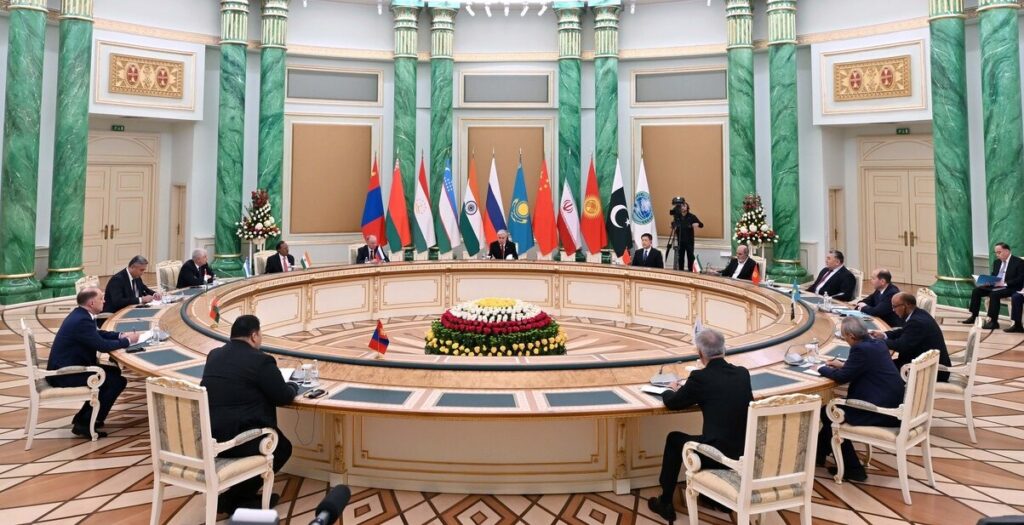
In preparation for the Shanghai Cooperation Organization (SCO) summit in Astana later this year, Kazakh President Kassym-Jomart Tokayev met with security council secretaries of SCO member states: China, Russia, India, Kyrgyzstan, Tajikistan, Pakistan, Iran, Uzbekistan, and Kazakhstan. In his speech on April 3rd, the president began by reiterating the fact that the Shanghai Cooperation Organization had been created to ensure stability and security in the region by curbing the ‘three forces of evil’: terrorism, separatism, and extremism: “These threats - are being transformed, acquiring new severity. We, in turn, need more systematic and decisive responses. We must not allow manifestations of terrorism, extremism, and separatism to be used to undermine internal stability in our states. Countering the ‘three forces of evil,’ as well as transnational organized crime, drug trafficking and cybersecurity challenges, is one of the priorities of Kazakhstan’s chairmanship in the SCO.” He continued by stating the need for an SCO Cooperation Program to counter terrorism, separatism, and extremism for 2025-2027, and the adoption of the SCO Anti-Drug Strategy for 2024-2029. Turning to the situation in Afghanistan, the Kazakh president advised that SCO members paid due attention to developments to prevent the use of its territory by international terrorist groups. He also stressed the importance of continued efforts to alleviate the country’s humanitarian crisis and create conditions for its long-term stabilization. Emphasis was also placed on conflict in the Middle East which remains a serious factor in undermining security: “Its tragic consequences were felt by civilians. Irreparable damage has been caused to regional stability. High-level diplomacy is needed to prevent further escalation. I firmly believe that our organization, representing half the world’s population, can offer a formula for a safe and just world.”

South Korea Stops Importing Kazakh Oil Over Red Sea Ship Attacks

South Korea has suspended crude oil imports from Kazakhstan via the Caspian Pipeline Consortium (CPC), which yields the CPC Blend of crude oil made with Kazakh oil. No deliveries were made in February due to the Houthi attacks on ships in the Red Sea, according to a report by Standard & Poors (S&P). Against this backdrop, South Korea decided instead to increase purchases of West Texas Intermediate (WTI) crude from the U.S. "Local refiners consider the logistics of buying light, low-sulfur crude from Kazakhstan too costly and inefficient amid ongoing security concerns in the Red Sea," analysts from S&P wrote. A crude manager at one South Korea's two largest refineries commented: "Logistics to deliver CPC Blend have become very difficult because there are fewer ships in the Red Sea area, and delivery costs are still trending upward due to rising insurance premiums." South Korea is one of the main importers of Kazakhstan's CPC Blend crude as local refiners have favored light, low-sulfur crude with high middle-distillate yields and consumption averaging about 3-5 million barrels per month over the past decade. According to Korea's National Oil Corporation, zero oil shipments from Kazakhstan were recorded for the first time since October 2020. CPC Blend crude is first delivered from the refineries to the Russian Black Sea port of Novorossiysk via the Tengiz-Black Sea pipeline -- and then shipped via the Suez Canal to South Korean ports. However, according to refineries, since 2023 CPC Blend oil for South Korea has been delivered bypassing the Suez Canal, via a longer route around South Africa's Cape of Good Hope. According to analysts from the Korean Petroleum Association in Seoul, refineries in South Korea will significantly reduce their future purchases of Kazakh CPC Blend.

Will Europe Learn Lessons From Central Asian Gas Failures to Secure Oil Imports Bypassing Russia?

Despite loud statements and reports, alternative routes for transporting oil from Kazakhstan and Central Asia to Europe remain only intentions. The desire of the EU to diversify its hydrocarbon suppliers is running into internal bureaucracy and a lack of understanding of how things work in Central Asia, which is in fact seeking to ship its energy in different directions.   Lost gas To start, it is worth recalling the Turkmenistan-Russia gas dispute of 2009. Before that, Gazprom bought gas from Central Asian countries at the border, swapping some volumes of domestic supplies with Kazakhstan, Turkmenistan and Uzbekistan, and buying gas at prices lower than EU export rates. Gazprom explained this practice rather simply: there is no economic sense in transporting the gas through Russian territory, so at the border the price cannot be European (minus transportation) – this gas was consumed in Russia or supplied at preferential prices to Ukraine, while Russian gas was sent to Europe. In 2008, Turkmenistan produced 70.5 billion cubic meters (bcm) of gas, exporting 47 bcm, with an increase in production and exports planned for 2009. According to the Energy Institute, gas consumption by European countries in 2022 amounted to 498.8 bcm, meaning Turkmenistan alone, assuming export volumes stabilized at 50 bcm per year, could cover 10% of Europe’s needs. That amount, 50 bcm of gas, is the annual consumption of Switzerland, Sweden, the Czech Republic, Greece, Portugal, Slovakia, Slovenia, Bulgaria, Croatia, Denmark, Estonia, Finland, Ireland, Latvia, Lithuania, Luxembourg, Norway and North Macedonia combined. However, Turkmen gas would never reach Europe. When an agreement on the volumes and prices of gas purchases by Gazprom failed to be reached, 15 years ago, on April 9, 2009, there was an explosion and fire on the eastern branch of the Central Asia-Center (CAC) gas pipeline, at CAC-4. Subsequent negotiations to resume the transport of Turkmen gas between Russian President Dmitri Medvedev and Turkmen leader Gurbanguly Berdimuhamedov, which took place in September 2009 in Moscow, could not resolve the dispute. All these years, the media and European leaders have been talking about building the so-called Nabucco gas pipeline, which was to go from Central Asia, along the bottom of the Caspian Sea, through Azerbaijan and on to Germany and Austria. Its design began back in 2002. Note that by 2009, had the project been energetically implemented, Nabucco could have been built and the first deliveries would have begun. In 2022, gas consumption in Germany and Austria amounted to 77.3 bcm and 7.9 bcm, respectively, meaning supplies from Central Asia could cover at least half of their needs. This seemed like the perfect opportunity for a large-scale gas pipeline. The Central Asian countries wanted to supply gas to Europe via alternative routes, receiving European prices for their commodities, and Europe could have significantly diversified its gas imports. Another player, however, was closely watching Europe’s red tape and indecision – China.   Hidden dragon China understands how to work with Central Asia, and in 2007 construction of the first line of...