• KGS/USD = 0.01144 0%
  • KZT/USD = 0.00215 0%
  • TJS/USD = 0.10641 0%
  • UZS/USD = 0.00008 0%
  • TMT/USD = 0.28530 0%
  • KGS/USD = 0.01144 0%
  • KZT/USD = 0.00215 0%
  • TJS/USD = 0.10641 0%
  • UZS/USD = 0.00008 0%
  • TMT/USD = 0.28530 0%
  • KGS/USD = 0.01144 0%
  • KZT/USD = 0.00215 0%
  • TJS/USD = 0.10641 0%
  • UZS/USD = 0.00008 0%
  • TMT/USD = 0.28530 0%
  • KGS/USD = 0.01144 0%
  • KZT/USD = 0.00215 0%
  • TJS/USD = 0.10641 0%
  • UZS/USD = 0.00008 0%
  • TMT/USD = 0.28530 0%
  • KGS/USD = 0.01144 0%
  • KZT/USD = 0.00215 0%
  • TJS/USD = 0.10641 0%
  • UZS/USD = 0.00008 0%
  • TMT/USD = 0.28530 0%
  • KGS/USD = 0.01144 0%
  • KZT/USD = 0.00215 0%
  • TJS/USD = 0.10641 0%
  • UZS/USD = 0.00008 0%
  • TMT/USD = 0.28530 0%
  • KGS/USD = 0.01144 0%
  • KZT/USD = 0.00215 0%
  • TJS/USD = 0.10641 0%
  • UZS/USD = 0.00008 0%
  • TMT/USD = 0.28530 0%
  • KGS/USD = 0.01144 0%
  • KZT/USD = 0.00215 0%
  • TJS/USD = 0.10641 0%
  • UZS/USD = 0.00008 0%
  • TMT/USD = 0.28530 0%

Viewing results 979 - 984 of 1517

US Policymakers and Central Asian Business Leaders Gather in Almaty for the CIPE B5+1 Forum

Cooperation and trade with Central Asia still holds much unrealized potential. The region is developing fast and offers opportunities for companies and agencies, both international and local. As the global geopolitical landscape changes and supply chains are disrupted, the importance of Central Asia as a business and transit hub, through initiatives such as the Trans-Caspian Corridor, is growing.  There are therefore great incentives for the five countries of the region – Kazakhstan, Uzbekistan, Kyrgyzstan, Tajikistan and Turkmenistan – to find ways to function as a single integrated market, in order to capitalize on opportunities for foreign and local companies, and attract more international investment and business.  For this reason the Center for International Private Enterprise (CIPE) is inviting policymakers from Central Asia, the United States and other countries to its B5+1 Forum this week. On 14 and 15 March in Kazakhstan’s business capital of Almaty, leading minds from the public sector will discuss Central Asia’s economic integration, international trade and investment, alongside dozens of high-profile private companies.  An event on 14 March entitled “Looking within Central Asia” will introduce the objectives and expected outcomes of the B5+1 format. Presentations by representatives of Kazakhstan’s Ministry of National Economy, the Caspian Policy Center, the US Department of State and Kyrgyzstan’s Ministry of Economy and Commerce will give business-focused perspectives on improving economic integration and the investment climate.  The discussion on 15 March will center on the theme of “Central Asia’s place in the world economy”. Talks from representatives of the US-Kazakhstan Business Council, the American-Uzbekistan Chamber of Commerce and the European Bank for Reconstruction and Development (EBRD) will give an international perspective on promoting trade and investment flows in Central Asia. The B5+1 Forum forms part of CIPE’s program “Improving the Business Environment in Central Asia” (IBECA). CIPE themselves are affiliated to the US Chamber of Commerce – the catalyst behind the B7 and B20 platforms – and receive funding from the US Department of State.  The establishment of B5+1 is closely aligned with commitments outlined in a document called the New York Declaration to strengthen the republics' economic relations, and improve the business environment for regional economic integration and investments. The upcoming Forum aims to deliver on two key commitments in the declaration.   The Times of Central Asia will be in attendance at the B5+1 Forum on 14-15 March, and will be publishing insight and analysis from the event.
Kazakh-European Proposal for CRM and Green Hydrogen Strategy

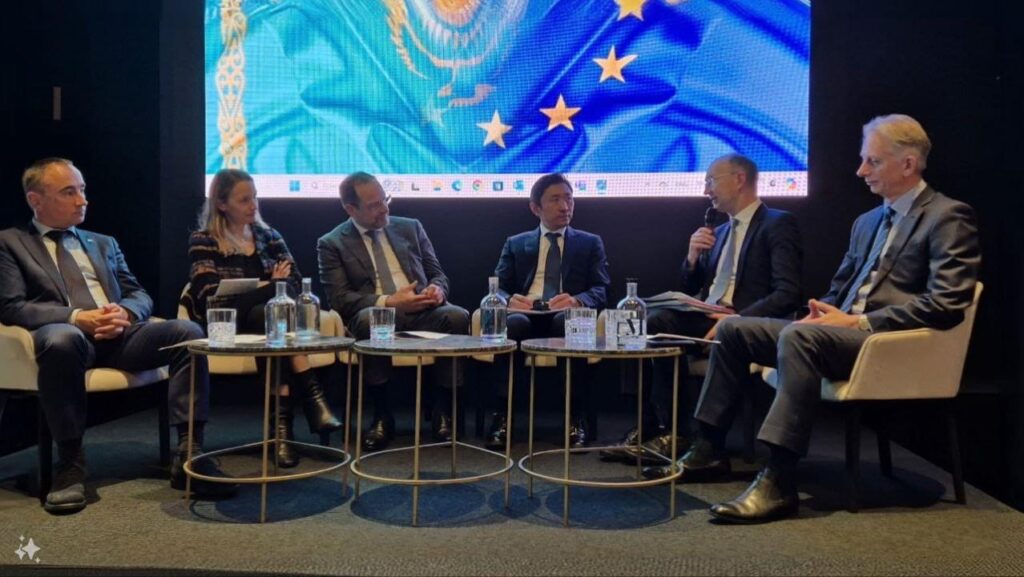
Some 60 high-ranking officials from the European Union and representatives of the EU business community attended a meeting on March 5th organized by the Kazakh Embassy in Belgium. A high-level event, its key focus was Kazakh-European cooperation on critical raw materials (CRM), green hydrogen and batteries. In November 2022, Kazakhstan and the European Union signed a Memorandum of Understanding on sustainable raw materials, batteries, and renewable hydrogen value chains, and adopted a Roadmap for its implementation in 2023. At the meeting on March 5th, Bolat Akchulakov, energy advisor to the president of Kazakhstan, emphasized the importance of the Kazakhstan-EU Memorandum of Understanding for strategic partnership in achieving common objectives of green transition. Luc Devigne, deputy managing director for Eastern Europe and Central Asia of the European External Action Service (EEAS), praised the development of the Kazakhstan-EU relationship as a “success story of cooperation.” Referencing the EU’s readiness to further strengthen this partnership, he stated that it would ensure both the sustainability of supply chains and the achievement of common goals regarding climate change. As part of the event, Kazakhstan’s national company Kazakh Invest presented a report on CRM at its Brussels office. Kazakhstan produces 19 of the 34 critical raw materials listed by the European Union. Kazakh manufacturers currently supply the EU with beryllium, tantalum, and titanium but have the potential to further exploit the country's cache of other raw materials. By establishing plants to process reserves of nickel, cobalt, manganese, and lithium, Kazakh enterprises will be able to produce batteries, essential for electric vehicles.

Germany Asks Kazakhstan to Double Oil Supplies Via Pipeline

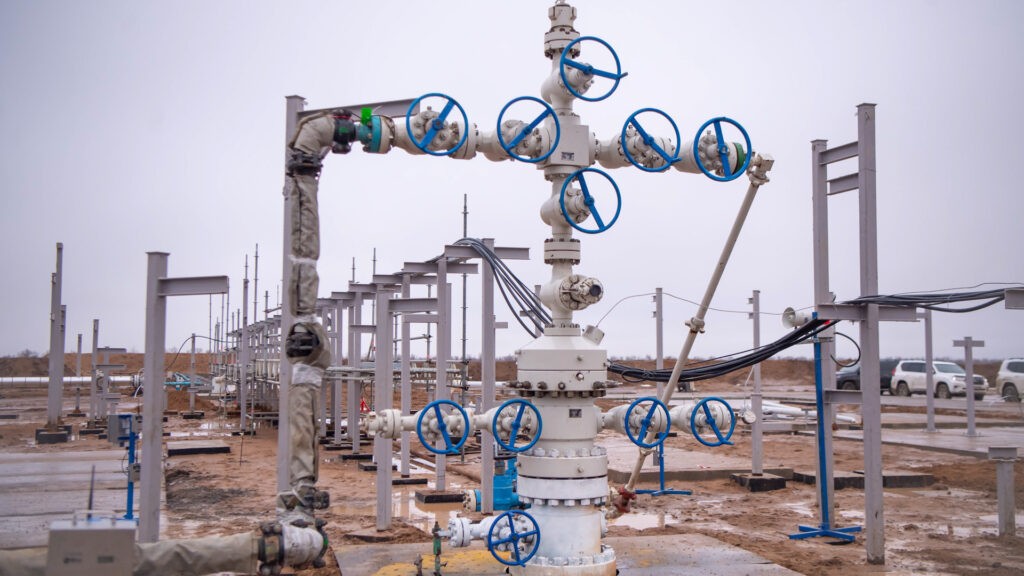
German companies want to receive more oil from Kazakhstan through the Druzhba (Friendship) pipeline. The discussion focuses on increasing supplies almost twofold, according to Kazakhstan's Minister of Energy Almasadam Satkaliyev. According to him, Kazakhstan has already received a request from the German side to increase supplies to two million tons per year. "We have already started preliminary consultations with our colleagues on the implementation of this transit this year," said Satkaliyev. Earlier, state pipeline operator KazTransOil reported that, according to last year's results, 993,000 tons of crude were delivered through the Druzhba pipeline. This year, flow volumes are planned to increase to 1.2 million. At the same time, Germany is still asking for an increase in oil-product export volumes. Until recently, the majority of oil exported from Kazakhstan to Germany was delivered by sea. Vessels were loaded with fuel at the Caspian Pipeline Consortium (CPC) terminal near Novorossiysk. The tankers were then sent to Trieste, Italy, where there is a terminal for receiving crude oil into the Transalpine (TAL) pipeline, from where the black gold is shipped to Germany. Every day, about 1.3-1.4 million barrels of oil per day flow through the CPC. DE International Kasachstan reports that Kazakhstan supplied Germany with 10% more oil in 2022 year-on-year, supplying it with 8.3 million tons of crude. The European Union (EU) has not imposed restrictions on the supply of Russian oil through the Druzhba pipeline, but the German side itself refused to import fuel from Russia early last year. Currently, Russian oil received through the Druzhba pipeline is delivered only in the southern direction to Hungary, Slovakia, and the Czech Republic. As the Times of Central Asia reported earlier this week, Kazakhstan has extended its voluntary reduction in overall oil production by 82,000 barrels per day until the end of June 2024.

Kazakhstan Seeks to Increase Oil Transit Through Azerbaijan

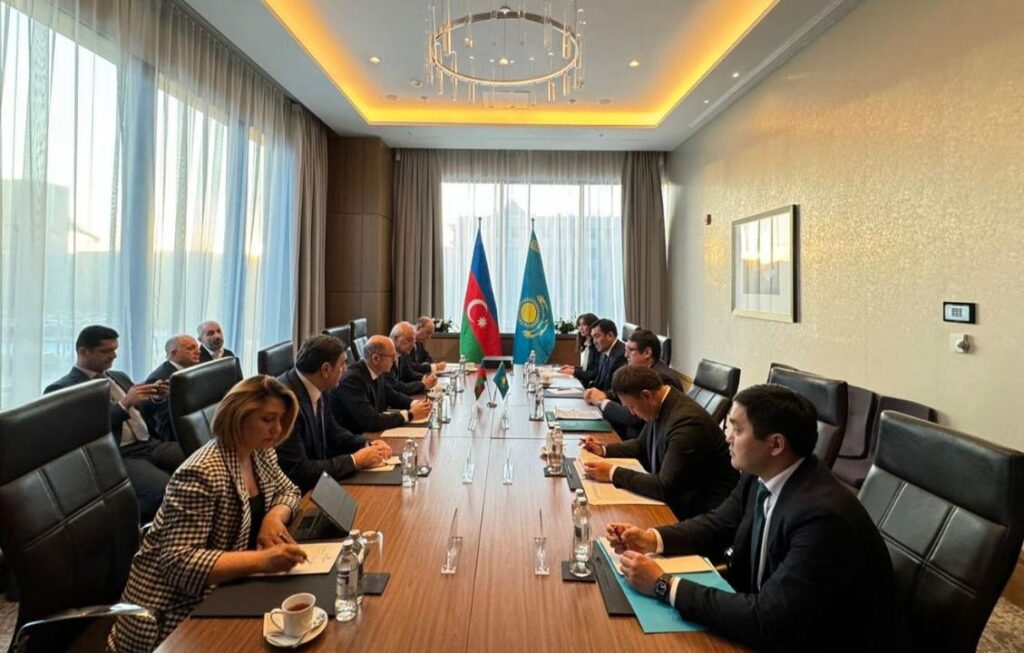
With the production of crude oil set to rise in Kazakhstan, the country plans to increase shipments across the Caspian Sea and through Azerbaijan. On March 6th, Kazakhstan’s Minister of Energy Almasadam Satkaliev met his Azerbaijan counterpart, Parviz Shahbazov, to discuss cooperation between their countries regarding the transit of Kazakh oil and the implementation of large-scale renewable energy projects. Back in 2022, Kazakhstan’s President Kassym-Jomart Tokayev ordered an increase in the volume of oil transported across the Caspian Sea. In response, Kazakhstan’s national oil and gas company KazMunayGas and the state oil company of Azerbaijan, SOCAR, entered into an agreement to transport up to 1.5 million tons of oil per year from Kazakhstan’s Aktau port through the Baku-Tbilisi-Ceyhan oil pipeline. In 2023 Kazakhstan’s shipment of crude oil from the Caspian port of Aktau grew to almost 1.4 million tons and this year, is expected to rise to 1.5 million tons. Major expansion projects are currently underway at Kazakhstan’s Tengiz, Karachaganak, and Kashagan oil fields to increase the future output of crude oil. Today, most of the country’s oil is exported via the pipeline managed by the Caspian Pipeline Consortium (CPC) which runs to the Russian Black Sea port of Novorossiysk. The throughput capacity of the Kazakh section of the Caspian Pipeline Consortium (CPC) pipeline has increased from 54 million to 72.5 million tons per year. The Kazakh and Azeri energy ministers also discussed a forthcoming project to connect the Caucasus region and Central Asia’s energy systems through the installation of a deep-sea cable in the Caspian Sea.

Kazakhstan Opens Al-Farabi Innovation Hub in Riyadh

A joint project between Kazakhstan and Saudi Arabia, the Al-Farabi Innovation Hub has newly opened in Riyadh. As reported on March 5th by the Kazakh Ministry of Digital Development, Innovation and Aerospace Industry, the role of the Hub is to attract talented entrepreneurs and innovative start-ups from Kazakhstan to Saudi Arabia and support their relocation and growth in the region by providing seed investment from the Tumar Venture Fund as well as incubation and acceleration programs. “Kazakhstan already has experience in growing start-ups,” explained Kazakh minister Bagdat Musin. “Five years ago, we launched the Astana Hub, which has become one of the leading technology parks in Central Asia. We have also engaged global partners such as Google, Draper University, StartX, Microsoft, and the World Bank, to provide access to the best cutting-edge solutions. I believe that the opening of the Hub will allow Kazakhstan and Saudi Arabia to strengthen ties and make a qualitative contribution to economic development.” The Hub’s General Director Aslan Sultanov went on to state, “The Al-Farabi Innovation Hub will complement the infrastructure of the venture industry in Kazakhstan, giving start-ups from Central Asia and the Caucasus the opportunity to expand into Middle East and North Africa (MENA) markets, which comprise almost 493 million people.” The new Hub follows the launch on March 1st, of the Qaz Steppe Innovation Hub in Dubai to promote Kazakh IT services to international markets.

Kazakhstan and Russia to Harness Transit Potential

Kazakhstan’s Prime Minister Olzhas Bektenov travelled to Moscow to attend a meeting on March 4th with the Prime Minister of the Russian Federation, Mikhail Mishustin. High on the agenda, was the North-South international transport corridor and in particular, the section of railway interlinking Russia, Kazakhstan, Turkmenistan, and Iran. Russia and Kazakhstan are connected by the longest land border in the world spanning over 7,500 km. Noting that “the most important transit routes in Eurasia run through our countries", the Russian prime minister highlighted the huge potential for cooperation in transport and logistics. Late in February, Kazakhstan’s Deputy Minister of Transport, Maksat Kaliakparov reported on plans by the railway administrations of Kazakhstan, Russia, and Turkmenistan to launch a joint venture to improve services and reduce cargo delivery time along the North–South Transport Corridor. In 2023 the volume of cargo transported via this route amounted to 2.1 million tons; an increase of 4% compared to 2022. By 2027, the transport potential of the entire corridor rise to between 6 - 10 million tons per year. Mr Bektenov furthermore stated that Kazakh and Russian business entities are currently implementing 135 projects worth $26.5 billion. To maintain progress and facilitate transit between the two countries, the Kazakh prime minister stressed the need to speed up work on checkpoints on the Kazakh-Russian border. According to plans, 29 of the 30 checkpoints are due to be modernized by 2027.