• KGS/USD = 0.01144 0%
  • KZT/USD = 0.00218 0%
  • TJS/USD = 0.10663 0.38%
  • UZS/USD = 0.00008 0%
  • TMT/USD = 0.28530 0%
  • KGS/USD = 0.01144 0%
  • KZT/USD = 0.00218 0%
  • TJS/USD = 0.10663 0.38%
  • UZS/USD = 0.00008 0%
  • TMT/USD = 0.28530 0%
  • KGS/USD = 0.01144 0%
  • KZT/USD = 0.00218 0%
  • TJS/USD = 0.10663 0.38%
  • UZS/USD = 0.00008 0%
  • TMT/USD = 0.28530 0%
  • KGS/USD = 0.01144 0%
  • KZT/USD = 0.00218 0%
  • TJS/USD = 0.10663 0.38%
  • UZS/USD = 0.00008 0%
  • TMT/USD = 0.28530 0%
  • KGS/USD = 0.01144 0%
  • KZT/USD = 0.00218 0%
  • TJS/USD = 0.10663 0.38%
  • UZS/USD = 0.00008 0%
  • TMT/USD = 0.28530 0%
  • KGS/USD = 0.01144 0%
  • KZT/USD = 0.00218 0%
  • TJS/USD = 0.10663 0.38%
  • UZS/USD = 0.00008 0%
  • TMT/USD = 0.28530 0%
  • KGS/USD = 0.01144 0%
  • KZT/USD = 0.00218 0%
  • TJS/USD = 0.10663 0.38%
  • UZS/USD = 0.00008 0%
  • TMT/USD = 0.28530 0%
  • KGS/USD = 0.01144 0%
  • KZT/USD = 0.00218 0%
  • TJS/USD = 0.10663 0.38%
  • UZS/USD = 0.00008 0%
  • TMT/USD = 0.28530 0%

Viewing results 973 - 978 of 1532

Potential Impact of EU Carbon Tax on Kazakhstan’s Industries

From 2026, transboundary carbon regulations will be imposed on European Union countries. The introduction of a new EU carbon tax will also affect export of products from Kazakhstan . After the transition period, which began on January 1st 2024 and will run until the end of 2026, payment will be increased on emissions. Following discussions at a seminar for Kazakhstan’s industrial exporters on March 15th, the Kazakh Ministry of Trade and Integration reported that the new legislation will affect six industrial sectors including the production of ferrous metals and aluminum, cement, fertilizers, hydrogen, and electricity. Nurlan Kulbatyrov, Deputy Director General of QazTrade JSC stated that since Kazakhstan has an Enhanced Partnership and Cooperation Agreement with the EU, the country will be impacted by both the EU Green Deal and carbon border adjustment tax. To prepare for the changes, he reported that since last year, QazTrade, in collaboration with the Ministry of Trade and Integration, has been conducting awareness-raising activities on carbon taxation for export-oriented companies. An expert from the European Commission explained that cross-border regulation will mainly affect sectors associated with iron, steel and aluminum, which accounted for between 0.8 - 0.9% of Kazakhstan's total exports to the EU in 2022. EU countries currently account for 39% of Kazakhstan's exports, including oil, petroleum products, ferroalloys, coal, uranium and wheat. In 2023, Kazakhstan exported goods valued at $41.4 billion to the EU, including $388 million worth of carbon-intensive products. In the first phase, industrial enterprises will be required to submit quarterly reports to the European Commission comprising data on export volumes, greenhouse gas emissions connected to production and quotas used. After 2025, carbon regulation will come into force, and free quotas gradually levelled out. Charges will initially target direct emissions, but could later be extended to other sectors with risks of carbon leakage, such as oil refineries and chemical plants. Ainur Amirbekova, Director of the International Integration Department of QazTrade JSC, added that the introduction of a carbon tax by EU countries will inevitably affect the cost of Kazakhstan’s exports, and thus heighten competition. Since rising prices could potentially close markets for particular goods, Kazakh enterprises have been forewarned to address both decarbonization and the transition to alternative technologies as soon as possible.
Optimism Meets Reality at the B5+1 Forum in Almaty

The inaugural B5+1 Forum, a conference dedicated to strengthening business between the five Central Asian republics and the United States, came to a close today in Almaty after a second well received day of panel discussions. The B5+1 Forum was created by the Center for International Private Enterprise (CIPE), which aims to use public-private partnerships to create a better environment for business and trade. The B5+1 platform brings international and local companies together with high-ranking government officials from all six countries, to learn about the difficulties that each side faces, and suggest new ways to attract partners and investment. Following an opening day focused on “Looking within Central Asia”, today’s speakers brought attention to “Central Asia’s place in the world economy”. The morning began with a keynote speech by Eurasian affairs expert S. Frederick Starr, who argued that because the five countries are now members of different trade blocs, the revival of the Central Asian Economic Union could break down their existing barriers to business and trade with the United States. During a morning session on international partnerships, foreign experts brainstormed ways to speed up the Central Asia region’s economic integration with the rest of the world. To an audience of business leaders whose overall mood was optimistic, the EU’s ambassador to Kazakhstan Kestutis Jankauskas and World Bank economist David Knight brought a dose of realism, by explaining that business in Central Asia is not performing as well as in other emerging regions. This, they both said, is because the governments – and business owners – have mostly still not let go of self-defeating ways of approaching markets and investment. The middle session went into more detail about the investment landscape, particularly in terms of IT and fintech. Jennifer Miel, executive director for Kazakhstan for the US Chamber of Commerce, mentioned that all five Central Asian countries have seen healthy increases in foreign direct investment since 2021. This was soon tempered by Anatoly Motkin of the agency StrategEast, who said that to achieve further sustainable growth, the region must unify its legislation and best practices, so that foreign investors can treat it as a single market as much as possible. The Forum’s closing session explored the role of business associations in public-private dialogue. The panel was moderated by Eric Hontz, CIPE’s director for accountable investments, and featured the executive directors of the US Chambers of Commerce in Kyrgyzstan, Tajikistan and Uzbekistan – Aisuluu Sydygalieva, Nilufar Bulbulshoeva and Tatyana Bystrushkina. Discussion centered on best practices and solutions for effective member representation. The B5+1 Forum forms part of CIPE’s program called “Improving the Business Environment in Central Asia” (IBECA). CIPE themselves are affiliated to the US Chamber of Commerce – the catalyst behind the B7 and B20 platforms – and receive funding from the US Department of State. Early indications are that the B5+1 Forum in 2025 will be held in Bishkek, Kyrgyzstan.

Kazakhstan, Uzbekistan Agree to Improve Ecology of Aral Sea Basin 

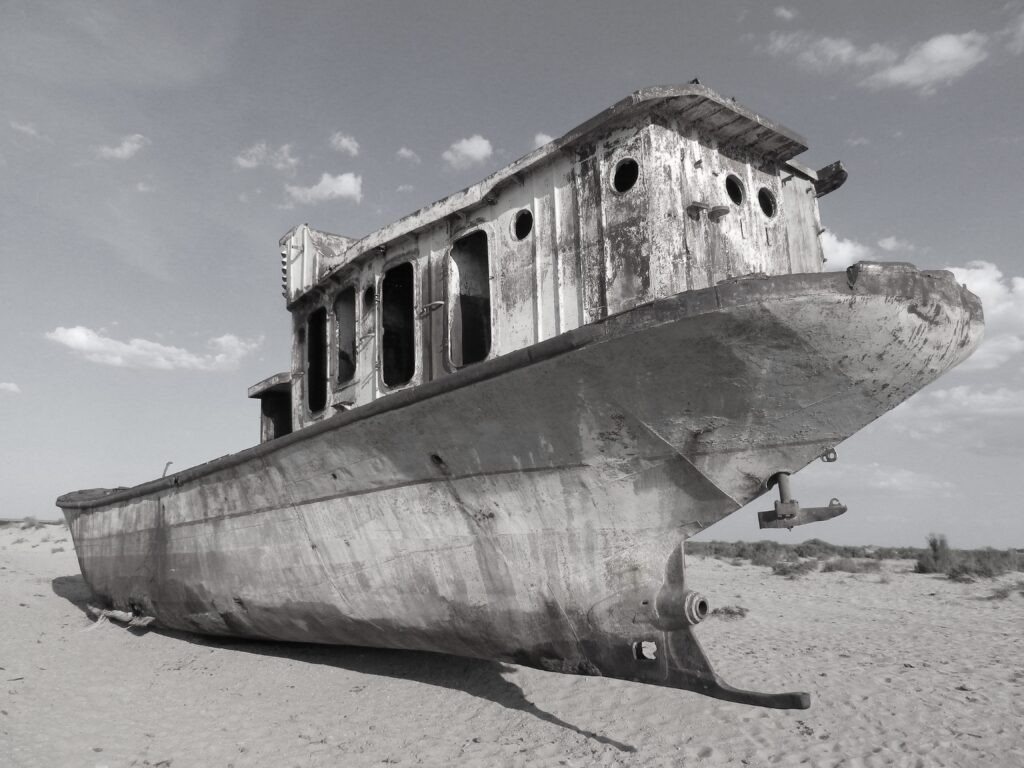
Kazakhstan and Uzbekistan will jointly improve the ecological situation in the Aral Sea basin, according to members of the Mazhilis of the Parliament of Kazakhstan. At a plenary session they adopted the corresponding bill on ratification of the agreement between the Government of the Republic of Kazakhstan and the Government of the Republic of Uzbekistan on cooperation in the field of ecology and environmental protection.   The document states that cooperation between the countries will be carried out in several areas. The most important is the prevention and control of pollution affecting the air and water of the Aral Sea, as well as the Amu Darya and Syr Darya rivers. Also included are the management of solid domestic waste and the preservation of biological diversity. In addition, Kazakhstan and Uzbekistan will jointly carry out measures to improve the ecological situation and environmental monitoring in the Aral Sea basin. The agreement between the countries also implies the creation of joint educational institutions, training of personnel, and the commitment that both states will do everything necessary to avoid environmentally harmful emergencies.   Parliamentarians report that in order to comply with this agreement, Kazakhstan and Uzbekistan will create a special commission that will monitor the implementation of the bilateral agreement.

High-Profile Speakers Open B5+1 Forum in Almaty

The ‘B5+1’ platform – a group of countries comprising the five Central Asian republics and the United States – took an important step forward today, with the launch of the inaugural B5+1 Forum in Almaty.  Instrumental in the formation of the B5+1 group has been the Center for International Private Enterprise (CIPE), which aims to develop public-private partnerships in the Central Asia region. This new business platform has been created to help international and local companies to capitalize on opportunities in global business and trade – while assisting the six governments in attracting more direct foreign investment.  The theme of the opening day was “Looking within Central Asia”. It began with a panel discussion on boosting economic integration in the Central Asia region, drawing from the area's distinctive context, and successful examples like ASEAN and the EU. Recommendations, from panelists including Richard E. Hoagland of the Caspian Policy Center and Alisher Shaykhov from Uzbekistan’s National Venture Capital Fund, included integrating the region's value chain into the global economy, and promoting collaborative investment initiatives. The second panel offered perspectives from Central Asia’s business leaders. Panelists including B5+1 representatives Aziza Shuzheyeva (Kazakhstan, e-commerce) and Manusurjon Rasulev (Uzbekistan, agribusiness) gave insights into the region’s high-profile industries. Speakers advocated for policy synchronization in these sectors, as well as in tourism and trade, as a means to boost regional growth.  For the third panel, government officials voiced their support for enhancing public-private dialogue. Tajikistan was represented by its deputy minister for economy Ahliddin Nuriddinzoda; his counterpart Ainura Usenbekova spoke on behalf of Kyrgyzstan, and Turkmenistan’s minister of finance Serdar Jorayev also spoke at length. Their focus was on national reforms and regional integration. The B5+1 Forum forms part of CIPE’s program called “Improving the Business Environment in Central Asia” (IBECA). CIPE themselves are affiliated to the US Chamber of Commerce – the catalyst behind the B7 and B20 platforms – and receive funding from the US Department of State. The B5+1 Forum continues tomorrow, Friday 15 March, with a thematic day dedicated to “Central Asia’s place in the world economy”.

Kazakhstan’s Potential to Overtake China in Production of Rare-Earth Metals

Kazakhstan has become a major participant in the international race for the extraction of valuable rare-earth metals or rare-earth elements (REEs). According to an https://asiatimes.com/ interview with international development expert Javier Piedra, the republic can not only compete with China -- but even overtake it in terms of production. Mr. Piedra, a financial consultant and former representative of the U.S. Agency for International Development (USAID), reported that China currently controls 70% of the global production REEs. He also explained that because of China's tense relations with the West, Kazakhstan was in an advantageous position to develop its domestic industry in the sector. In a report by the Asia Times, Piedra stated, "Kazakhstan could be on par with China in mining such rare earth elements as scandium, yttrium and 15 lanthanides, which are used in the production of computers, turbines and cars." European and American investors are actively seeking opportunities to develop the industry outside China, and the republic's subsoil, rich in rare metals, can provide a highly valuable resource to industries such as technology and manufacturing. In addition to Western countries, India also stands to benefit from the extraction of Kazakhstan's rare earth elements and according to the Indian business press,the republic could already cover India's demand for REEs. The REE potential of Kazakhstan has been known since 2010 but was largely ignored by foreign investors in preference to developing their businesses in China. Extraction of REEs is an expensive and financially risky business. Exploration for deposits is similarly costly and markedly time consuming. However, the strategic importance of rare metals is growing. As claimed by Piedra in the Asian Times, everything may well change; "Western governments should identify alternative suppliers, including Kazakhstan, to reduce possible risks for investors and the likelihood of supply disruptions." The U.S. and the European Union (EU) are now poised to invest heavily in large-scale mining projects and are exploring alternative supply channels. Today, all consumption of yttrium and scandium in the United States depends on imports -- and the EU imports 98% of its rare metals from China. . Last September, New York hosted a presidential summit at which representatives from Kazakhstan, Kyrgyzstan, Turkmenistan, Uzbekistan and the U.S. discussed the exploration and production of critical rare metals. Mr. Piedra believes that Kazakhstan is ready to benefit from its reserves of REEs but mining would first need to be updated to meet current environmental requirements. Care would also be required when choosing potential investors. "Astana will be wary of diplomats, foreign consultants and miners with an outdated view of the world and unfounded geopolitical ambitions. Central Asian countries will discourage attempts to penetrate them 'through the back door.' Such tricks may have worked in the 90s, but not now," warned Piedra via Asia Times. Meanwhile, Kazakhstan's authorities continue to explore opportunities to utilize rare-earth deposits. Last November in Astana, Kassym-Jomart Tokayev and Emmanuel Macron discussed the extraction of strategically important minerals, and last month an alternative dialogue was held between the presidents of Kazakhstan and the...

Kazakhstan and China to Expand Trade and Economic Cooperation

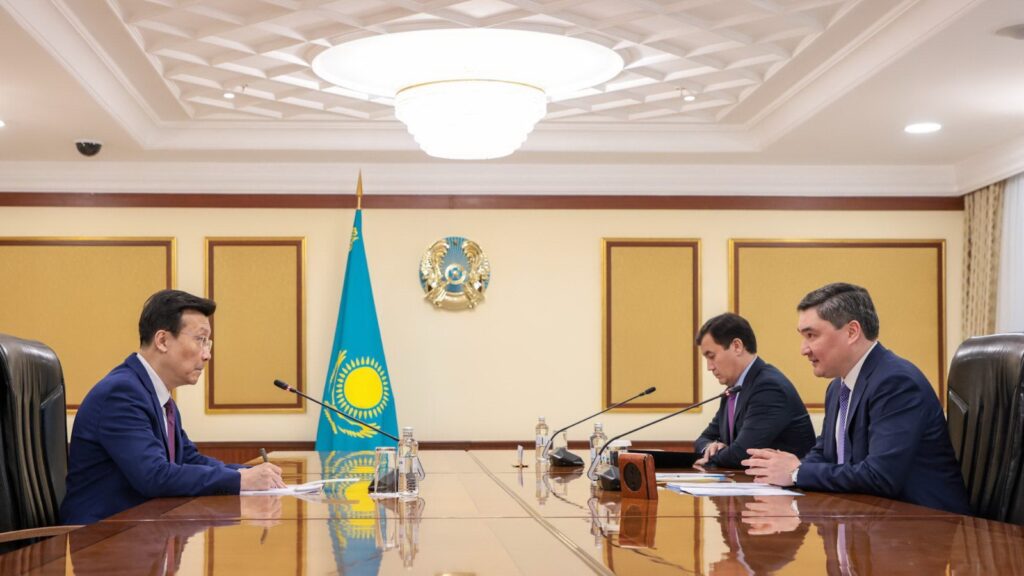
Further steps to eliminate restrictions in mutual trade, remove administrative barriers, and simplify customs procedures were discussed by the Prime Minister of Kazakhstan Olzhas Bektenov and Chinese Ambassador to Kazakhstan Zhang Xiao on March 13th. Related issues included the expansion of Chinese cargo transit via Kazakhstan along the Trans-Caspian International Transport Route, and plans to increase the supply of Kazakh agricultural produce to the Chinese market. Trade turnover between Kazakhstan and China grew by 30% last year to $31.5 billion. Over 9 months in 2023, Chinese investments in Kazakhstan’s economy amounted to $1.4 billion and 45 joint Kazakh-Chinese projects worth over $14.5 billion are currently under implementation. In January-February 2024, the volume of Chinese container traffic through Kazakhstan increased 2.6-fold, demonstrating the potential for further expansion, joint investment, and diversification of trade. The Kazakh prime minister hailed the rise in trade and economic partnership between the two countries and the successful operation of some 3,000 joint companies in Kazakhstan, with the added recommendation that future joint Kazakh-Chinese projects focus on marketable high-tech products. The Chinese ambassador confirmed the potential for cooperation in the above alongside projects on agriculture and energy transfer.