• KGS/USD = 0.01144 0%
  • KZT/USD = 0.00208 0%
  • TJS/USD = 0.10414 -0.29%
  • UZS/USD = 0.00008 0%
  • TMT/USD = 0.28571 0%
  • KGS/USD = 0.01144 0%
  • KZT/USD = 0.00208 0%
  • TJS/USD = 0.10414 -0.29%
  • UZS/USD = 0.00008 0%
  • TMT/USD = 0.28571 0%
  • KGS/USD = 0.01144 0%
  • KZT/USD = 0.00208 0%
  • TJS/USD = 0.10414 -0.29%
  • UZS/USD = 0.00008 0%
  • TMT/USD = 0.28571 0%
  • KGS/USD = 0.01144 0%
  • KZT/USD = 0.00208 0%
  • TJS/USD = 0.10414 -0.29%
  • UZS/USD = 0.00008 0%
  • TMT/USD = 0.28571 0%
  • KGS/USD = 0.01144 0%
  • KZT/USD = 0.00208 0%
  • TJS/USD = 0.10414 -0.29%
  • UZS/USD = 0.00008 0%
  • TMT/USD = 0.28571 0%
  • KGS/USD = 0.01144 0%
  • KZT/USD = 0.00208 0%
  • TJS/USD = 0.10414 -0.29%
  • UZS/USD = 0.00008 0%
  • TMT/USD = 0.28571 0%
  • KGS/USD = 0.01144 0%
  • KZT/USD = 0.00208 0%
  • TJS/USD = 0.10414 -0.29%
  • UZS/USD = 0.00008 0%
  • TMT/USD = 0.28571 0%
  • KGS/USD = 0.01144 0%
  • KZT/USD = 0.00208 0%
  • TJS/USD = 0.10414 -0.29%
  • UZS/USD = 0.00008 0%
  • TMT/USD = 0.28571 0%

Viewing results 583 - 588 of 1407

Drop in Uzbekistan’s Exports to Central Asia

Local media has reported that from January - August, Uzbekistan's exports to its four neighboring countries decreased, compared to the same period in 2023. According to data from the  Statistical Agency data, exports to Kazakhstan dropped from 950 million USD to 872 million USD; to Kyrgyzstan, from 491 million USD to 365 million USD; to Tajikistan, from 389 million USD to 329 million USD, and to Turkmenistan, from 118 million USD to 78 million USD. The share of Central Asian countries in Uzbekistan's total foreign trade turnover (FTT) in the first nine months of 2023 was 11.5%. The total FTT was worth 40 billion 45 million USD, of which 4 billion 574.3 million USD were with Central Asian countries. This year, it has decreased to 10.3%, meaning 4 billion 400.6 million USD of FTT of 42 billion 703.3 million USD are with CA countries. The Ministry of Investments, Industry, and Trade attributed the drop to an increase Uzbekistan's exports to international markets with high purchasing power, especially Europe, Arab countries, Southeast Asia, and the Americas, and explained, " due to diversification, the volume of exports to neighboring countries, which are considered a traditional market, decreased. In particular, the volume of exports to Kazakhstan decreased by 8.3%, to Kyrgyzstan by 25.6%, to Tajikistan by 15.3%, and to Turkmenistan by 36.2%."

Kazakhstan Enters Era of Peaceful Nuclear Energy

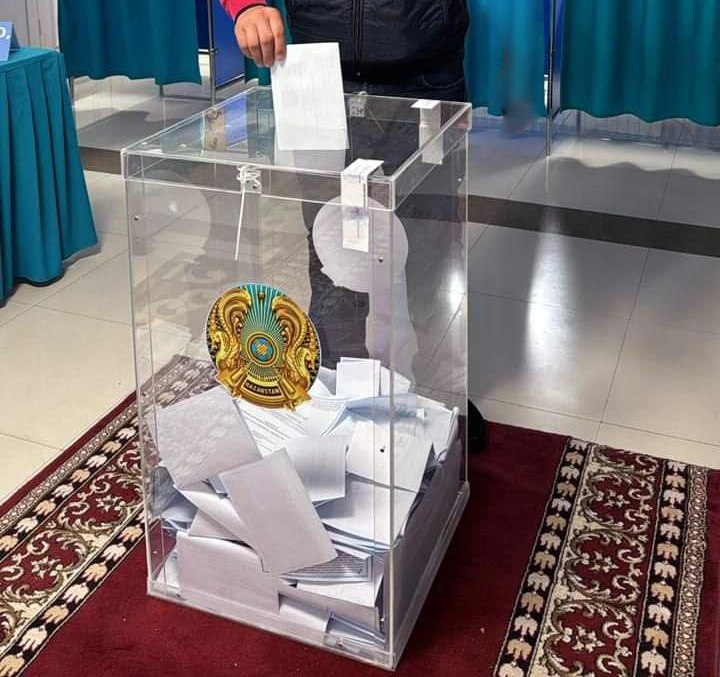
Kazakh President Kassym-Jomart Tokayev's bet on a referendum to secure citizens' consent to construct a nuclear power plant has worked. The Central Election Commission of Kazakhstan announced the final results of the referendum held last Sunday, in which 63,66% of citizens eligible to vote showed up at the polling stations. 71.12 % answered “Yes” to the question on the ballot paper about consent to constructing the nuclear power plant. Organizations engaged in sociological surveys of voters at the exit polls announced similar results on Sunday night and Monday. “The exit poll of the Institute of Complex Social Studies - Astana (SOCIS-A) called the referendum participants' decision to favor the construction of nuclear power plants in Kazakhstan. 'For' voted 69.8%, ‘Against’ - 30.2%. Similar figures were shown by the Institute of Eurasian Integration exit poll ('For' - 71.8%, 'Against' - 28.2%). According to the Institute of Public Policy of the Amanat party, 72.3% of referendum participants voted in favor of the NPP construction. In comparison, 27.7% voted against,” Kazakhstani political analyst Eduard Poletayev said on his Facebook account. His colleague Daniyar Ashimbayev, commenting on the exit poll data, emphasized that Kazakhstanis have managed to overcome old phobias related to Chernobyl and tests at the Semipalatinsk nuclear test site, as well as “enemy propaganda.” By 'propaganda', he means the agitation work of opponents to NPP construction. [caption id="attachment_24131" align="alignnone" width="300"] @ТСА/Kubaizhanov[/caption] “For many years, projects to return to nuclear energy were discussed, but there was always a lack of political will, and powerful foreign pressure prevented the decision necessary for the country. And even now, during the campaign period, we have seen the active work of propagandists paid from abroad to not only disrupt the plans for the construction of nuclear power plants but also to try to destabilize the situation in the country,” said Ashimbayev. Ashimbayev implies that the United States is putting sticks in the wheels of the development of Kazakhstan's nuclear industry. And the point here is not that American nuclear corporations were left off the shortlist, which Kazakhstan is considering, but in the usual policy of containment. Not Kazakhstan, of course, but Russia and China - Washington's main geopolitical rivals and competitors. Realizing this, Tokayev, after voting in the referendum and answering journalists' questions afterward, said that he would like the NPP to be built by an international consortium, presumably from the companies of those countries that were on the shortlist: Russia, China, South Korea, and France. “This is not an easy question. The government should engage in analysis and conduct appropriate negotiations. My vision for this issue is for an international consortium to work in Kazakhstan, consisting of global companies with the most advanced technologies. Further, as they say, life will show,” Tokayev said. Kazakhstan has turned another significant page in its history. In 400 days of discussing nuclear power plants - how long it took from when Tokayev first mentioned atomic power to the end of the campaign period - the president's team has managed the...

China and Afghanistan are the Main Importers of Kazakh Grain and Flour

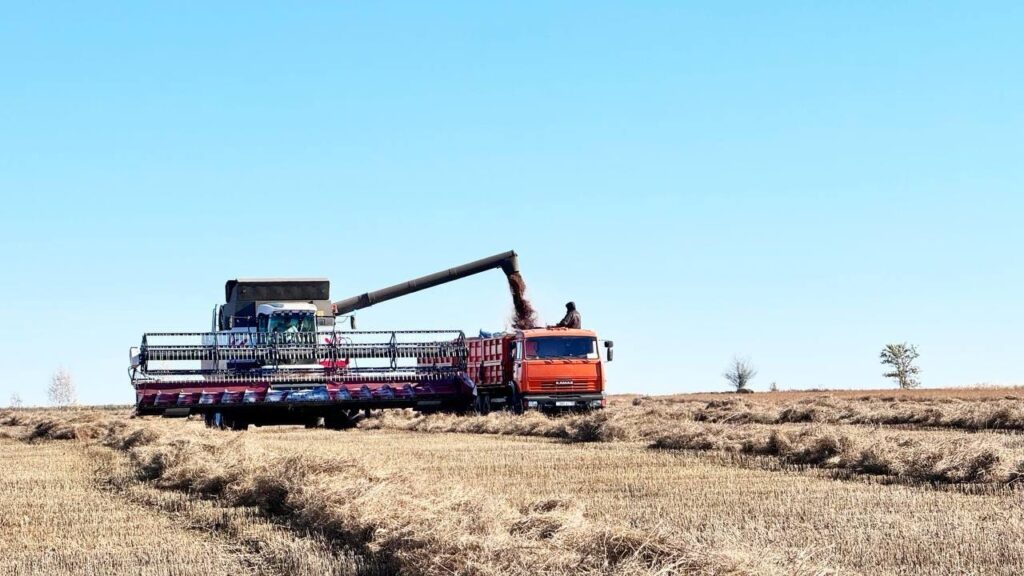
In January-September 2024, Kazakhstan’s national railways company, Kazakhstan Temir Zholy (KTZ), transported 6.6 million tons of Kazakh grain and 2.7 million tons of flour. Of that amount, 5 million tons of grain and 2.1 million tons of flour were exported. KTZ Managing Director Bauyrzhan Urynbasarov announced this at a government meeting on October 7. According to Urynbasarov, Kazakhstan exported grain mainly to neighboring Central Asian countries (2.9 million tons), China (1.3 million tons), and Afghanistan (127,000 tons). Kazakhstan resumed grain supplies to Iran (211,000 tons), and 423,000 tons of grain were exported to Italy, Turkey, and Russia. From January to September, 495,000 tons of flour were exported to Central Asian countries, 639,000 tons to China, and 666,000 tons to Afghanistan. At the meeting, Deputy Prime Minister Serik Zhumangarin said that Kazakhstan must supply 2 million tons of grain to China this year, but the figure can be increased to 3 million tons. He also ordered an increase in flour supplies to Afghanistan. According to the Ministry of Agriculture, as of October 7, Kazakhstan had completed harvesting 93.2% of grain crops on 15.5 million hectares, and 23.5 million tons of grain had been threshed.

U.S. Ready to Participate in Construction of Nuclear Power Plant in Kazakhstan

The U.S. has expressed its willingness to participate in constructing a nuclear power plant (NPP) in Kazakhstan. Senior Vice President of the U.S. Chamber of Commerce Khush Choksi made this statement during the visit of the U.S. business delegation to Almaty, Informburo.kz reports. “The U.S. has the best technologies for nuclear power plants. And we hope there will be an open tender, allowing American companies to participate,” said Choksi, answering journalists' questions. As The Times of Central Asia previously reported, the referendum on nuclear power in Kazakhstan was held on October 6. According to preliminary data, 71.12% of Kazakhstanis voted to build a nuclear power plant, but the official results have yet to be announced. Potential participants in constructing the nuclear power plant are also being discussed. Russia, China, France, South Korea, and France are among the countries that are considered suppliers of technologies for NPP construction. These states have proposed their projects, and the Kazakhstani authorities are considering them. It is expected that the winner may be an international consortium, and the final decision will be made based on technical and financial conditions. The preliminary cost of one NPP unit is estimated at $5 billion.

Kazakhstan Referendum Approves First Nuclear Power Plant

More than 71 percent of voters have approved the October 6 referendum for constructing Kazakhstan’s first nuclear power plant (NPP). Turnout was over 63 percent, easily surpassing the 50-percent barrier for validation. This result closely tracks the results of a telephone survey conducted by the Democracy Institute on September 30 and released by the Kazakhstan Institute for Strategic Studies. That survey found 73 percent of those asked to favor construction of a nuclear power plant. It also found that 62 percent of respondents intended to vote, not far from the actual participation rate.  President Kassym-Jomart Tokayev had announced the referendum initiative in a message to the public in September 2023. In that address, he emphasized that Kazakhstan, as the world's largest producer of uranium, should also have its own nuclear-power generation capabilities. Following this announcement, a series of meetings between representatives of various government agencies and the public were organized across all regions of the country. During these meetings, the plans for constructing an NPP were discussed in detail, with an emphasis on the potential benefits of nuclear energy for Kazakhstan’s energy independence. Kazakhstan has held a significant position in the global nuclear-energy market since the late 2000s, accounting for approximately 40 percent of global uranium production. Despite this advantageous position, the country faces severe electricity shortages, which are projected to worsen by 2025, especially in the rapidly growing southern regions. Reliance on aging thermal power plants, many of which are equipped with components that have been in service for over 50 years, has only exacerbated the problem. Frequent energy shortages in multiple regions have left citizens without heat during harsh winter conditions, often with temperatures dropping well below zero. The proposed site for the nuclear power plant is in Ulken, located in the Almaty region. The shortlist of potential builders for the NPP includes companies from China, South Korea, Russia, France, and the United States. The inclusion of companies from multiple countries is aimed at ensuring competitive bidding and securing the best possible technology for the project. Tokayev has indicated a personal preference for an “international consortium made up of global companies equipped with cutting-edge technologies.” Developing an NPP will help the country to achieve energy independence and meet carbon-neutrality goals. Without an NPP, rolling blackouts will be necessary and dependence on electricity imports from Russia will continue. However, the legacy of the Semipalatinsk test site looms large, creating a challenging decision for Kazakh citizens. Kazakhstan's nuclear history spans from Soviet-era testing to present-day energy challenges. The Semipalatinsk nuclear test site, established in 1947, was where the Soviet Union conducted over 468 nuclear tests, leaving long-lasting environmental and health impacts on the local population. The fallout from these tests has burdened the national health-care system for decades, exacerbated by nuclear fallout from Chinese testing at Lop Nor. In response to these consequences, then-President Nursultan Nazarbayev closed the Semipalatinsk site in 1991, and by 1994, Kazakhstan had relinquished its nuclear arsenal and became a non-nuclear state. Nazarbayev’s rise to power...

Kazakhstan Awaits Results of Nuclear Referendum; Exit Polls Indicate a “Yes” Vote

Kazakhstan is awaiting the official results of a referendum on whether to build its first nuclear power plant, though exit polls showed “yes” voters were in the majority, according to state-run media reports. The project could ease chronic energy shortages and reduce reliance on coal-fired facilities but is fraught with concerns about costs, transparency, and the legacy of the human and environmental cost of Soviet nuclear weapons testing decades ago. Led by President Kassym-Jomart Tokayev, Kazakhstan’s political establishment has backed the idea of peaceful nuclear power as a way to move the country forward and the referendum appears aimed partly at giving people a sense of agency after the trauma of Soviet testing at Semipalatinsk. But some opponents allege that authorities restricted their efforts to organize a “no” campaign with detentions and other pressure designed to lock in an expected vote in favor. Officials results had not been announced as of early Monday morning. Voting at polling stations in Kazakhstan ended at 8 p.m. on Sunday and turnout among eligible voters was 63.87%, according to the Central Election Commission. The highest turnout was in the Kyzylorda region (82.48%) and the lowest turnout was in the city of Almaty (25.39%). Turnout in Astana, Kazakhstan’s capital, was 50.81%. “The precinct referendum commissions have begun counting the votes. The counting process at each polling station must not exceed twelve hours from the start of the count,” the commission said. Additionally, more than 7,358 Kazakh citizens voted at polling stations abroad, including in Asia, South America, Europe, and the United States, according to Roman Vassilenko, Kazakhstan’s Deputy Minister of Foreign Affairs. He noted at a briefing on Sunday night that the referendum had been monitored by observers from regional organizations, including the Shanghai Cooperation Organization, the Organization of Turkic States, and the Astana-based Conference on Interaction and Confidence-Building Measures in Asia. The heads of the observer missions said the referendum was “open, free, and legitimate, with no violations detected at any polling stations,” Vassilenko said. Kazakhstan also invited observers from the Organization for Security and Cooperation in Europe, but the OSCE declined to send a delegation “due to heavy workload,” reported the state-run Kazinform news agency. The OSCE sent a mission to observe a 2022 referendum on constitutional changes in Kazakhstan and concluded that it took place “in an environment short of genuine political pluralism.” One critic of the rules surrounding the nuclear referendum is Tamara Yeslyamova, editor-in-chief of the Uralskaya Nedelya, a newspaper that has sparred with the government over the years. A judge issued her with a fine for 110,760 tenge ($230) after she conducted video interviews about the referendum on nuclear power with half a dozen people on the street, the newspaper reported. It said the judge concluded that the interviews amounted to a public opinion survey; the law says such a poll can only be done by a state-sanctioned entity.