• KGS/USD = 0.01144 0%
  • KZT/USD = 0.00216 0%
  • TJS/USD = 0.10659 0%
  • UZS/USD = 0.00008 0%
  • TMT/USD = 0.28530 0%
  • KGS/USD = 0.01144 0%
  • KZT/USD = 0.00216 0%
  • TJS/USD = 0.10659 0%
  • UZS/USD = 0.00008 0%
  • TMT/USD = 0.28530 0%
  • KGS/USD = 0.01144 0%
  • KZT/USD = 0.00216 0%
  • TJS/USD = 0.10659 0%
  • UZS/USD = 0.00008 0%
  • TMT/USD = 0.28530 0%
  • KGS/USD = 0.01144 0%
  • KZT/USD = 0.00216 0%
  • TJS/USD = 0.10659 0%
  • UZS/USD = 0.00008 0%
  • TMT/USD = 0.28530 0%
  • KGS/USD = 0.01144 0%
  • KZT/USD = 0.00216 0%
  • TJS/USD = 0.10659 0%
  • UZS/USD = 0.00008 0%
  • TMT/USD = 0.28530 0%
  • KGS/USD = 0.01144 0%
  • KZT/USD = 0.00216 0%
  • TJS/USD = 0.10659 0%
  • UZS/USD = 0.00008 0%
  • TMT/USD = 0.28530 0%
  • KGS/USD = 0.01144 0%
  • KZT/USD = 0.00216 0%
  • TJS/USD = 0.10659 0%
  • UZS/USD = 0.00008 0%
  • TMT/USD = 0.28530 0%
  • KGS/USD = 0.01144 0%
  • KZT/USD = 0.00216 0%
  • TJS/USD = 0.10659 0%
  • UZS/USD = 0.00008 0%
  • TMT/USD = 0.28530 0%

Viewing results 553 - 558 of 1044

Kazakhstani Movies No Longer Playing Just a Supporting Role

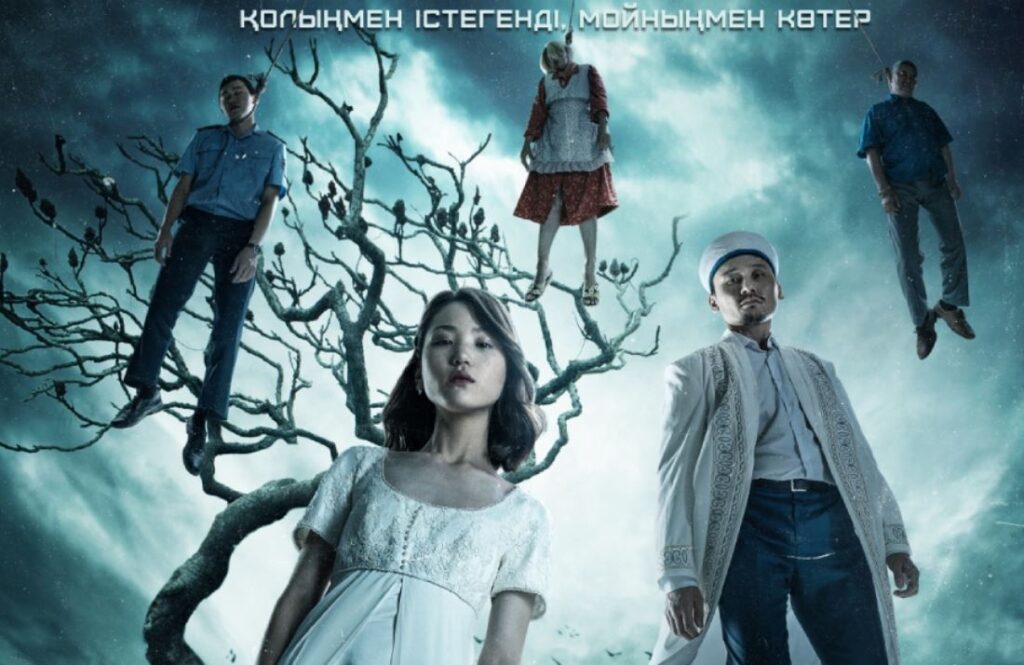
Until recently, the idea of Kazakhstani movies grossing a billion tenge ($2.5m) was a pipe dream. But in the last two years several films have earned this amount. The number of films being co-produced with world-leading studios is growing. However, domestic cinema still struggles to overcome funding and content quality problems. At the end of last year, the romantic comedy Taptym au seni (I Found You) earned more than a billion tenge in just 10 days of screenings. But the real shock came later, when the box office receipts of the suspense film Dastur (Tradition) exceeded a billion tenge after only a week of distribution. In one weekend alone it significantly outperformed Hollywood's Aquaman. In just the second half of last year, Kazakhstani films at the domestic box office earned over $14 million. One of the highest-grossing films was Kazakhstani Business in India, directed by Nurlan Koyanbayev. The film grossed over 1.25 billion tenge, and it was followed by Maghan Nazar Audar (Look at Me). The top ten includes Zhaidarman (Cordial), Zhynim Sol (My Gene) and Azhyrasam (Divorced). Domestic films now account for 30% of total box office receipts in Kazakhstan. Domestic analysts are confident that in the near future Kazakhstani cinema will overtake Uzbekistan to become the leader in Central Asia. In addition to the national Kazakhfilm studio and private studios, production is being driven forward by the State Center for Support of National Cinema. The Center allocates grants to industry figures on a competitive basis, and although there are heated discussions around the terms of the competition and the awardees, state support has a significant impact on the release of films. As for the subject matter, comedies are usually the leaders at the box office. They are often devoted to crime, drug trafficking, fraud, dishonest business, and corruption. Romance and historical figure movies remain popular as well. There is also a growing trend of condemning violence against women in the industry. Dastur, for example, tells the story of a rape victim who violently avenges not only the offender but also his neighbors, with whose tacit consent her life and dignity were devalued. Some sources are speculating that there will soon be a film adaptation of the story of the murder of Saltanat Nukenova by former minister Kuandyk Bishimbayev, which has attracted worldwide attention. A decline in the popularity of western and Russian films, which have led the box office in past decades, is also helping the growth of domestic movies. The share of international projects in the Kazakhstani film industry is growing. In March, the series Assassins Beginning, produced in Egypt, showed spectacular locations across Kazakhstan, including Charyn Canyon and Kolsai Lakes. In January Kazakhstan and Nigeria's 'Nollywood' joined forces for the first time to create a movie called Adam Bol. The film will be shown in both countries, with Nigeria steadily taking over movie markets in Africa and Asia. Joint production helps to not only create jobs in the film industry, but to support businesses as well....
Why Have Women’s Carriages Become So Popular in Kazakhstan?

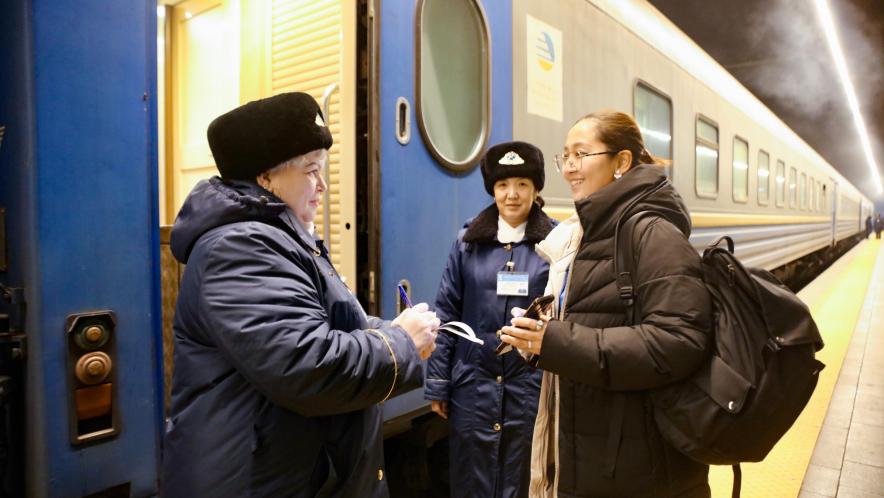
Kazakhstani women have already had time to appreciate women-only cars in trains - an innovation that seemed unthinkable in the secular country a few years ago. However, the special carriages did not appear as an indulgence to traditionalist views. Kazakhstani women now have a choice: they can ride in a regular carriage, or they can ride in a carriage that is practically closed to men - and demand for the latter service is increasing year by year. In May, the statistics of Kazakhstan Temir Zholy (KTZ), a railroad monopoly, were published, which revealed that women twice as often choose women's cars. Since 2021, more than 359,000 women have chosen this option, and since the beginning of 2024 alone, the service has been used by about 70,000 women, whereas in 2023, only 34,000 did so. Today, women's cars run in eight long-distance passenger trains, with only female conductors working in them. Male children up to seven-years-old are allowed, whilst men can go enter for a short period of time, but overnight stays are strictly prohibited. The need to ensure the safety of women in trains began to be discussed after the scandal that broke out in the fall of 2018, when two conductors raped a female passenger on the high-speed train "Talgo" on the Astana-Aktobe route. This crime resonated widely, and led to loud demands for the authorities to take action. Conductors Zhetes Umbetaliev and Kolkanat Kurmaniyazov were found guilty of rape in July 2019 and were sentenced to just 2.3 and 2.5 years, respectively, whilst Kanat Almagambetov, first deputy chairman of KTZ, apologized on behalf of the company. The first women-only cars were launched in October 2021. "This is being done primarily for the safety of women... If demand for the service increases, our company is ready to expand the geography of these routes. Apart from the female conductors, these carriages are no different from the others. They have the same pricing policy," KTZ explained at the time. The current routes were chosen because of their length, company representatives said. Kazakhstan is a large country and a trip from Almaty to Mangistau, for example, takes several days. Ainagul Kasenova, a resident of Mangistau Oblast, travels to see relatives in Almaty several times a year, and for her, women's cars have become a solution. "Now I try to buy tickets only in a separate car. You travel for a long time, so it's much more comfortable if there are only women and children around. I used to encounter men talking to me, paying me unnecessary attention; it was unpleasant. When the news about the rape of a female passenger by conductors broke, my parents didn't even want to let me go to Almaty. Now they let me go without any problem," Kasenova told TCA. According to her, both students and pensioners are comfortable in women's carriages, especially those who have to travel often, which increases the risk. "The women's carriage is always quiet, friendly atmosphere, without drinking and noise," she added....

Focus on Ethnic Germans in Kazakhstan

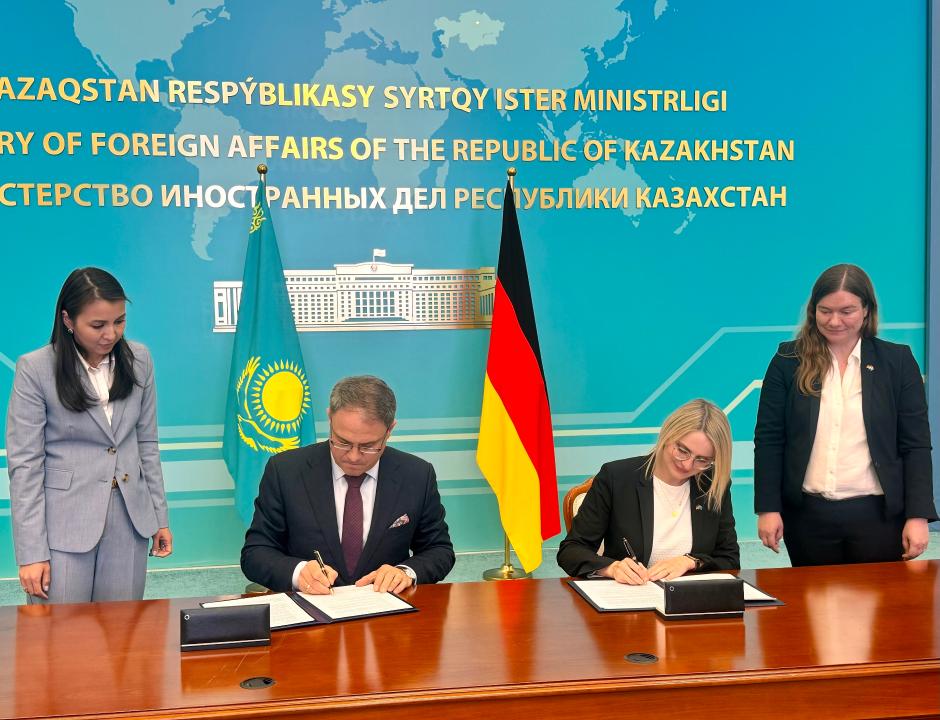
On 21 May, Astana hosted the 20th meeting of the Kazakh-German Intergovernmental Commission for the Affairs of Ethnic Germans in Kazakhstan, co-chaired by Deputy Minister of Foreign Affairs of Kazakhstan Roman Vassilenko and Germany’s Federal Government Commissioner for Matters Related to Ethnic German Resettlers and National Minorities, Member of the Bundestag, Natalie Pawlik. Representatives of the two countries’ ministries and organizations, including the Wiedergeburt (Rebirth) foundation also participated. The agenda focused on cooperation between Kazakhstan and Germany to support the cultural, linguistic, and national identity of Kazakh Germans, as well as the implementation of joint projects in science, education, and culture. The parties reiterated their mutual interest in expanding partnerships within the framework of the Intergovernmental Commission and strengthening the “living bridge” connecting Kazakhstan and Germany. During World War II, Stalin's henchman, Lavrentiy Beria supervized the mass deportation of the Volga Germans, Chechens, Ingush, Pontic Greeks, Crimean Tatars, Balkars and the Karachays, largely to Central Asia. With the crowded wagons stopping only to bury the dead in the snow, approximately 30% perished. According to statistics, 226,000 ethnic Germans reside in Kazakhstan, today, whilst some one million Germans have moved from Kazakhstan to their ancestral homeland. Emphasizing the importance of Kazakhstan’s multi-ethnic population in the successful development of the country, Vassilenko stated that: “Thousands of kilometers separating our countries do not hinder the development and deepening of Kazakh-German relations, as well as the promotion of rapprochement of our peoples. By virtue of history, Kazakhstan has a large German diaspora, while many former citizens of Kazakhstan have resettled in Germany.” Ethnic Germans are represented in all spheres of life in Kazakhstan. The Kazakh-German Center in Astana, the Kazakh-German University in Almaty, the Kazakh-German Institute of Sustainable Engineering in Aktau, the German Drama Theatre, as well as the Deutsche Allgemeine Zeitung newspaper play significant roles in strengthening cultural and humanitarian interaction between Kazakhstan and Germany. Natalie Pawlik welcomed the dynamically developing bilateral cooperation and emphasized that Germany regards Kazakhstan as a key partner in its relations with Central Asia. In her commendation of assistance provided by the German Federal Government to the Germans of Kazakhstan, she mentioned that the study of the German language in Kazakhstan can not only contribute to the preservation of the ethnic Germans’ national identity but prove beneficial to professionals engaging in joint investment projects.    

Alatau IT Hub Opens in Kazakhstan’s Almaty Region

The Alatau Hub, Kazakhstan's most recent regional  IT hub has now opened in Konaev in the Almaty region. Supported by the Ministry of Digital Development, Innovation and Aerospace Industry of Kazakhstan, the Alatau Hub is the 14th regional IT hub launched under the management of Astana Hub. Kazakhstan is now on course to establish similar hubs in all of its regions by the end of this year. During the launch, Ersultan Ermanov, director of the Information Technology Development Department at the Ministry of Digital Development, commented: “The opening of a hub in the Almaty region is a very significant event for IT specialists in the region. Our regional hubs play a key role in creating and developing an ecosystem that stimulates the emergence of new innovative projects, expansion of business activity and technological progress. In the future, Alatau Hub will become a center of attraction for young ambitious talents. It will also contribute to the emergence of new jobs, economic growth, and increased competitiveness of the country in the international arena.” The IT hubs currently in operation across 14 of Kazakstan's regions include: Abai IT Valley, Kyzylorda Hub, Digital Jetisu, Zhambyl Hub, Oskemen IT Hub, Jaiq Hub, Turkistan IT Hub, Qostanai IT Hub, Aqtobe IT Hub, Aqmola IT Hub, Pavlodar IT Hub, Terrikon Valley, Mangystau Hub, and Alatau Hub. By the end of 2024, further hubs will open in the cities of Atyrau, Shymkent, Zhezkazgan, Petropavlovsk, and Zhanaozen.      

Higher Education in Central Asia: Leaders and Outsiders

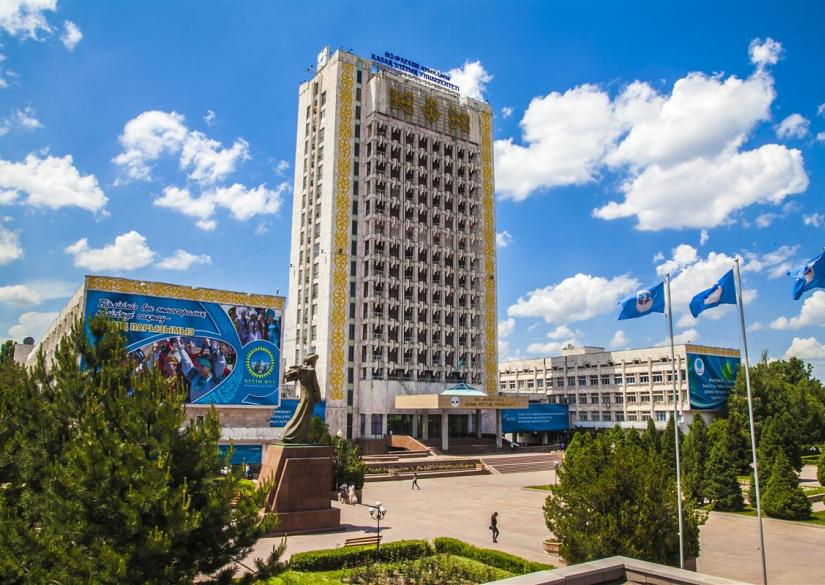
In June, it will be three years since the signing of a declaration at a forum held in the city of Turkestan between the heads of the Ministries of Education of Kazakhstan, Uzbekistan, Tajikistan, Turkmenistan, and Kyrgyzstan. According to the document, the Central Asian states agreed to expand cooperation and unite the scientific, intellectual, and creative potential of higher education institutions throughout the region. However, only Kazakhstan and Uzbekistan have made progress in terms of synergy during this time. The reason for this is the serious gaps between the Central Asian states in the level of provision of higher education for their citizens.   The pace of reform In the 1990s, the reform of education in Central Asia occurred at different rates. Although the Central Asian republics had similar problems at the time of the collapse of the Soviet Union, they began to address them depending on the degree of influence of global trends. For example, Kazakhstan signed the Bologna Declaration and joined the European Higher Education Area in 2010, while Turkmenistan switched to two-stage higher education under the "Bachelor's - Master's" system only in 2013. Some started organizing English-language curricula at their universities as soon as the early 1990s, such as Kazakhstan's KIMEP University or the University of Central Asia in Kyrgyzstan. Uzbekistan, on the other hand, only came around to the idea of the need for English-language education in the noughties. In the 2000s, universities established jointly with foreign partners, such as the Kyrgyz-Russian Slavic University and the Kazakh-British Technical University, began to open in the region. Uzbekistan was again somewhat late to the trend, first opening the International Westminster University (a branch of the University of London) and a branch of Turin Polytechnic University. In 2014, the first university established jointly with foreign partners from South Korea - Inha University, specializing in the training of IT specialists - appeared. Kazakhstan, Kyrgyzstan, and Uzbekistan are currently implementing reforms in the recognition of diplomas and attracting foreign employees and students, while Tajikistan and Turkmenistan are experiencing problems of a different nature related to low levels of enrollment in higher education.   Kazakhstan Kazakhstan has been the most successful nation in reforming higher education. Degrees have been reduced to four years, and the Unified National Testing (UNT) and credit system of education appeared, creating favorable conditions for accession to the Bologna Process in 2010. By 2016, almost every second Kazakhstani was studying at a higher education institution. Now, Kazakhstan has more than 120 universities. There are more than 600,000 students, and about 40% of Kazakhstanis are certified specialists. Kazakhstan's supremacy in this arena is confirmed by international rankings. For example, the international organization, Times Higher Education included four Kazakhstani universities in its rating for 2024: the Eurasian National University named after L.N. Gumilev; Satpayev University; the Kazakh National University named after Al-Farabi; Nazarbayev University (NU). Participating in these rankings for the first time, the latter was recognized as the best in Central Asia. NU is the first university of its...

Prospective Kazakh Citizens Must Know Country’s Language and History

Under a new law, people applying for Kazakh citizenship will be refused if they do not show at least basic knowledge of the country's language, history and constitution, reports Kursiv. Ministry of Internal Affairs representative Shyngys Alekeshev commented on the law: "The elementary level will be determined by the Ministry of Science and Higher Education. The purpose of the amendments is rapid adaptation and integration into society. Knowledge of the language, first of all, is necessary for the citizens themselves, wishing to obtain our citizenship, to more quickly integrate into society and participate in the life of the state". The ministry added that the legislative amendments are in line with global practice. Earlier it was reported that the authorities intend to teach the Kazakh language to Russian-speaking children and toddlers who have arrived from other countries. For this purpose, the Ministry of Education will create a program of "early immersion in the Kazakh language" in kindergartens and schools. Officials emphasize that this will help to form "Kazakh identity in young citizens".